

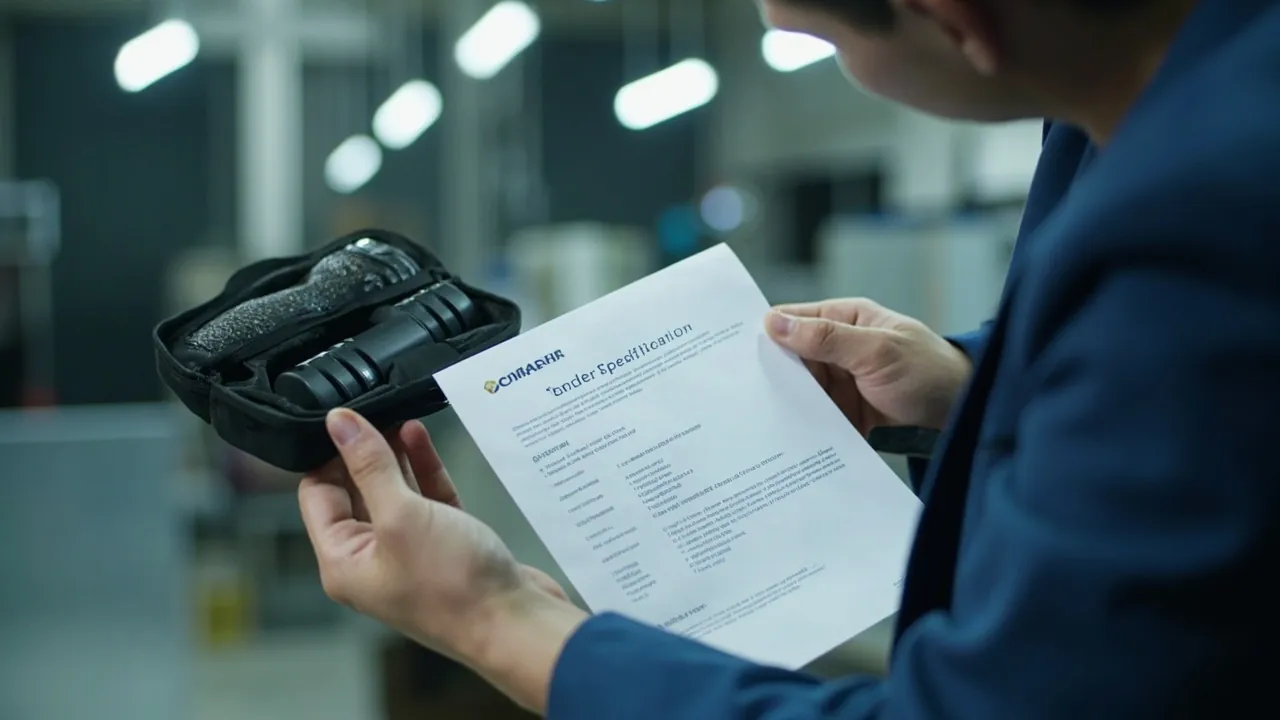
Start with the conclusion: the root cause of poor tender parameters for protective cases is writing requirements as adjectives. Phrases such as "waterproof and shockproof," "rugged and durable" or "premium engineering plastic" cannot be compared, cannot be accepted and cannot be enforced. A correct technical specification has a four-layer structure, namely operating conditions, material and structure, performance and protection rating, and inspection and documentation, and every layer must land on language that is measurable, checkable and recordable. There is really only one technique: turn adjectives into parameters, attach standard numbers to the parameters, and attach evidence to the standard numbers.
Protective cases need a technical specification more than most commodity items, because almost all of their performance is hidden. The shape of the sealing groove, the wall thickness and rib layout, the material and hardness of the gasket, the structure of the latch and hinge: none of this is visible on a finished product, and only parameters, drawings, test reports and sampling acceptance can create an obligation. A vague technical specification turns a tender into a game of "lowest price wins, then hope for the best on delivery."
This guide is written for B2B buyers, tender document writers and engineering and quality professionals. It breaks the compilation of a protective case technical specification into actionable steps: how to build the four-layer structure, what parameters belong in each layer, how to phrase a parameter so it is evaluable, how to set sampling and acceptance clauses, how to write transport packaging and delivery clauses, and how to manage review and change. The standards and figures used are common practice or typical values; the formal document should reflect project conditions, applicable standard versions and regulatory requirements.
Table of Contents
- Start With the Conclusion: A Four-Layer Structure and the "Evaluable" Principle
- The Three Most Common Mistakes in Tender Parameters
- Layer One: Operating Conditions and Duty Description
- Layer Two: Material and Structural Parameters
- Layer Three: Performance and Protection Rating Targets
- Layer Four: Inspection, Acceptance and Document Requirements
- What Makes a Parameter "Evaluable"
- Vague vs Evaluable Phrasing: A Comparison Table
- How to Set Sampling and Acceptance Clauses
- How to Write Transport Packaging and Delivery Clauses
- Review, Clarification and Change Management
- Frequently Asked Questions
- Conclusion and Related Reading
Start With the Conclusion: A Four-Layer Structure and the "Evaluable" Principle
Here is the structure first. A usable protective case technical specification consists of four layers, moving from why the case is being bought all the way to how it will be accepted.
| Layer | Question answered | Typical content | What happens without it |
|---|---|---|---|
| --- | --- | --- | --- |
| One: operating conditions | Where does the case work and what goes in it | Temperature range, humidity and salt spray, use scenario, payload, handling method | The supplier cannot select a configuration and quotes the cheapest build |
| Two: material and structure | What material and what structure | Resin grade, wall thickness range, ribs, sealing groove, latch and hinge type | The supplier can downgrade material and structure freely |
| Three: performance and rating | What performance must be met | Protection rating and standard, drop and stacking, cycle life, temperature tolerance | Nonconformance cannot be proven after delivery |
| Four: inspection and documentation | How it is proven and accepted | Sampling standard, AQL, defect classes, test reports, sealed samples, packaging spec | Acceptance has no basis and disputes cannot be adjudicated |
The principle behind the four layers is "evaluable." To test whether a parameter is evaluable, ask three questions: can it be measured? can it be tied to a standard number? can it leave written evidence? Only a parameter that answers yes to all three will hold up.
Compare two examples. "The shell shall be sufficiently strong" answers none of the three. "The main wall thickness of the shell shall be no less than 2.5 mm, measured against the drawing, with measurement records supplied with the goods" answers all three. Almost the entire quality difference between tender documents lives in that conversion.
Note that the purpose of a technical specification is not to box in suppliers but to make every bidder compete against the same ruler. The clearer the parameters, the more comparable the quotations, the easier the evaluation and the fewer the arguments later. That benefits both buyer and bidder: a real factory is happy to produce to a clear specification, and only a supplier planning to save money in the dark benefits from vagueness.
The Three Most Common Mistakes in Tender Parameters
Before the correct phrasing, look at the common mistakes, because they are easier to spot.
Mistake one: adjectives instead of parameters. Typical examples include "premium material," "high strength," "waterproof and dustproof," "rugged and durable" and "attractive appearance." Such words cannot be compared at evaluation or judged at acceptance. Worse, they hurt the buyer: when you later want to reject a shipment for a gasket that does not seal, the supplier can reply that the contract only required waterproofing and that the cases do in fact keep some water out.
Mistake two: parameters detached from a standard number. Writing "IP67 waterproof" without stating the governing standard, the test conditions, meaning immersion depth and time, and the pass or fail method. The result is that the two sides interpret "does IP67 count as met" differently. For the rating framework, see how to read IP ratings: the difference between IP67 and IP68.
Mistake three: requirements without verification. This is the most insidious mistake. The document requires drop, stacking and sealing, but does not say who verifies, by what method, with what sample size, and how nonconformance is handled. At acceptance neither side has an agreed basis, so the outcome is negotiation. The last section of a technical specification should always be about how it will be proven, not about what is hoped for.
| Common mistake | Typical wording | Resulting problem | Corrected direction |
|---|---|---|---|
| --- | --- | --- | --- |
| Adjectives instead of parameters | High strength, rugged and durable | Not comparable, not acceptable | Wall thickness, drop height, load rating |
| Parameters detached from a standard | IP67 waterproof | Divergent interpretation, unresolvable dispute | Add standard number, test conditions, pass or fail method |
| Requirements without verification | Shall meet drop requirements | Acceptance has no basis | Add sampling, method, defect classes |
| Unprioritized parameter list | Dozens of items with no tiering | Hard to evaluate, key items diluted | Separate mandatory from comparative parameters |
Layer One: Operating Conditions and Duty Description

This layer is often treated as background and written in two throwaway lines, yet it is the foundation of the whole document. The reason is simple: operating conditions set the value of every parameter that follows. The same case model used in indoor storage and on an offshore platform demands entirely different materials, gaskets, latches and inserts.
Five groups of information belong in layer one.
First, environmental conditions. Operating temperature range, for example minus 20 to plus 60 degrees Celsius as agreed for the actual duty; relative humidity; whether the case is exposed outdoors long term, which concerns UV resistance; whether salt spray or chemical media are present, which concerns material and metal part corrosion resistance; and whether the case faces sharp pressure or temperature swings, which concerns whether a pressure valve is required.
Second, use and handling conditions. Whether the case is vehicle mounted, air freighted, frequently hand carried, moved by forklift or sling, or exposed to drop risk from height. The handling method directly drives handle and foot selection.
Third, payload characteristics. Weight, dimensions, brittleness, sensitivity to static (ESD), sensitivity to moisture, and whether frequent access is required. Payload weight drives stacking and compression requirements; static sensitivity dictates that the insert must be antistatic.
Fourth, usage frequency and expected life. How many open and close cycles per day and the expected service years. Cycle frequency sets latch and hinge life requirements, and service years set weather resistance requirements for material and gaskets. For life assessment logic, see how many years a protective case typically lasts.
Fifth, procurement and application context. Whether the project is military-spec, whether it is exported, which brings in packaging and compliance, and whether explosion protection or industry-specific standards apply.
The writing rule for this layer is to state facts, not conclusions. Write "used outdoors on the south China coast, annual average relative humidity about 80 percent, exposed to summer sun, winter minimum about 5 degrees Celsius" rather than "used in harsh conditions and shall meet requirements." The more concrete the facts, the better the supplier can propose a targeted configuration and price.
Layer Two: Material and Structural Parameters
This layer is the key to writing the invisible parts into the contract. It covers three parts: material, structure and components.
Material should state four things: the main resin grade rather than a broad category such as "engineering plastic"; additive and reinforcement requirements, including whether recycled content is permitted, whether a UV stabilizer is required, and whether a flame rating such as UL94 applies; color and appearance standard, by color code or sealed sample number; and constraints on material change, requiring written notice and buyer confirmation. For material selection logic, see how to choose plastic materials for protective cases.
Structure should state the main wall thickness range, for example 2.5 to 4.0 mm for the shell as agreed by model; rib requirements, covering bottom grid ribs, circumferential ribs and corner reinforcement blocks; the sealing structure, covering groove form, gasket cross-section and compression design; and the lid closing method and limit structure. For structural strength design logic, see how the shell structure of a high-strength protective case is built.
Components should state the type, material and life requirement of the latch and hinge, the load rating of the handle, the configuration of feet and pressure valve, and the material, density and processing method of the insert. For latch selection, see how to choose a latch for a protective case, and for insert and gasket material requirements, see which material a protective case gasket should use.
The writing rule for this layer is range plus reference. Instead of "the wall shall be thick," write "the main wall thickness of the shell shall be no less than 2.5 mm, ribs shall be provided per the drawing confirmed by both parties, and measured data shall be supplied with the inspection records." The range sets a floor and the reference names the object to be checked.
Layer Three: Performance and Protection Rating Targets
This layer is the hard core of the tender parameters and the most likely source of dispute. Write it in five performance groups.
Group one: protection rating. State the rating, for example IP67, the governing standard, either IEC 60529 or GB/T 4208, the test conditions including immersion depth and duration and whether pressure or thermal cycling is included, and the pass or fail method, meaning the criterion for water ingress. If the project requires IP68, agree the immersion depth and duration explicitly, because the specific conditions for IP68 are set by agreement between buyer and supplier. For how to verify a certificate, see how to verify that an IP67 certificate is genuine.
Group two: mechanical performance. Include drop requirements, meaning drop height, impact surface and post-drop criteria; stacking requirements, meaning load value, duration and criteria; cycle life for latch and hinge; and handle load rating, both static and dynamic.
Group three: environmental tolerance. Include operating temperature range, covering low-temperature brittleness and high-temperature deformation; damp heat or salt spray test requirements where applicable; and UV aging for long-term outdoor exposure.
Group four: transport packaging performance. Where transport validation is required, specify the test items and severity levels following the approach of the GB/T 4857 series, ASTM D4169 or ISO 4180, and state the packaging format and stacking requirements. For practical guidance, see how cross-border logistics works for protective cases.
Group five: insert and payload protection performance. Include insert cushioning performance, whether antistatic material is required, and the permitted payload displacement after transport.
The writing rule for this layer is to state the conditions. A number alone is meaningless; conditions give it meaning. "Drop height 1.2 m" is only a complete statement when paired with "impact surface is concrete, drop attitude is corner drop, and the post-drop verdict follows the specified standard."
| Performance group | Example parameter (typical or illustrative) | What must accompany it |
|---|---|---|
| --- | --- | --- |
| Protection rating | IP67 | Standard number, immersion depth and time, pass or fail method |
| Drop | 1.2 m corner drop | Impact surface material, attitude, post-drop criteria |
| Stacking | Load no less than design value | Load, duration, deformation limit |
| Cycle life | No less than the agreed cycle count | Cycle speed, load state, failure criterion |
| Temperature tolerance | Minus 20 to plus 60 degrees Celsius | Hold time, functional check after test |
| Transport packaging | Per the agreed test items | Standard number, test combination, acceptance criteria |
Layer Four: Inspection, Acceptance and Document Requirements
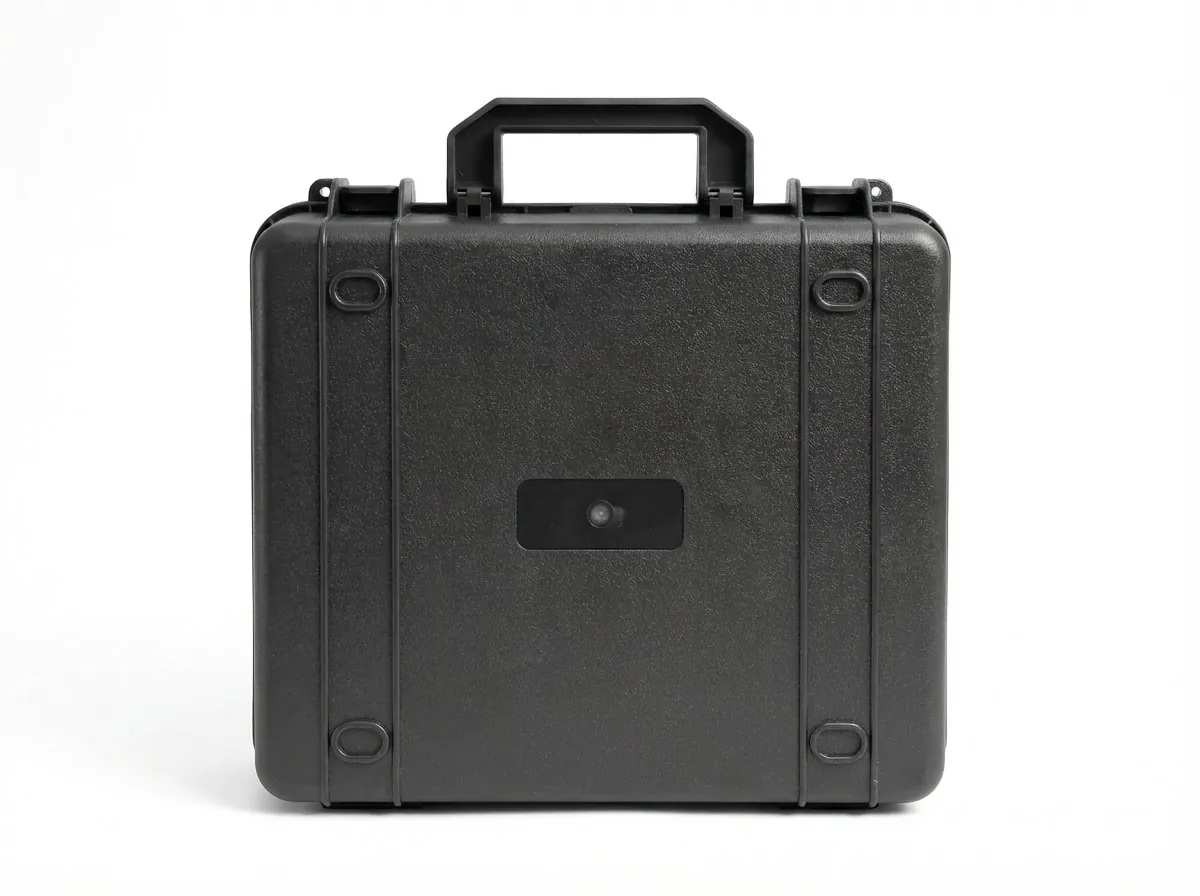
This layer decides whether the document can be executed, and it is the one most often omitted.
First, sampling and acceptance rules. State the sampling basis, either GB/T 2828.1 or ISO 2859-1, the inspection level, the AQL value, and the specific criteria for critical, major and minor defects. For sampling method, see how to sample an incoming batch inspection for protective cases, and for custom projects, see how to use AQL sampling for custom protective case acceptance.
Second, the document list accompanying the goods. Require a product drawing or specification, a material declaration including grade, outbound inspection records, test reports for critical performance with samples matching the supplied model, a packing list, and a packaging specification. For export, add the applicable compliance documents.
Third, the sealed sample requirement. Provide one approved sample and one boundary sample, signed by both parties, as the baseline for appearance, color and feel. The value of a sealed sample is that it converts a subjective appearance dispute into an objective comparison.
Fourth, packaging and marking requirements. State the inner and outer packaging formats, cushioning and corner guard specifications, pallet dimensions and stacking pattern, maximum stack layers, and the box face markings covering up-arrow, fragile, model and batch number.
Fifth, nonconformance handling. State the available paths of accept, sort, accept with concession at a reduced price, return and resubmit after correction, together with the trigger conditions. Write this clearly and the acceptance floor stops being a bargaining table.
What Makes a Parameter "Evaluable"
Reduce the writing rules above to one technique: separate mandatory parameters from comparative parameters.
Mandatory parameters are those that must be met on pain of disqualification, normally covering safety, protection rating, core performance and compliance. For example the protection rating, whether recycled content is permitted, the minimum wall thickness, the compression capacity and restricted substance compliance. Mandatory parameters should be few and precise, and each one must be verifiable. Every item written as mandatory requires someone to check it, so writing too many dilutes the priority.
Comparative parameters are those that can be scored rather than disqualifying, used to rank otherwise equivalent proposals. For example lead time, spare parts supply duration, packaging optimization proposals, cycle life levels and value-added services. Comparative parameters are where scoring happens and where a strong supplier separates itself.
A practical approach is to mark in the specification which clauses are mandatory, for example with an asterisk, and which are general. This protects the key requirements while leaving room for technical competition. The worst approach is to make everything mandatory, which makes it impossible to check all of it and strips the evaluation of flexibility.
Vague vs Evaluable Phrasing: A Comparison Table
This table is the most practical tool in the guide and can be used directly to self-check a specification.
| Vague phrasing (avoid) | Evaluable phrasing (prefer) |
|---|---|
| --- | --- |
| Uses premium engineering plastic | Main resin per the specified grade with datasheets; recycled content not permitted |
| Shell is sufficiently strong | Main wall thickness no less than 2.5 mm, measured against the drawing |
| Waterproof and dustproof | Achieves IP67 per IEC 60529 / GB/T 4208, with immersion conditions and pass criteria in the appendix |
| Shock resistant and durable | Corner drop from the agreed height; functional and free of cracking afterwards |
| Durable gasket | Silicone or EPDM, Shore A 40 to 70, compression set within the agreed value |
| Timely delivery | Delivered within the agreed days from order confirmation, with on-time delivery tracked as a KPI |
| Robust packaging | Corner guards and cushioning on each case, pallet wrapped and banded, stack limit marked on the box |
| Test report provided | Report matching the supplied model, including standard number, sample description and conclusion |
| After-sales guaranteed | Consumables purchasable separately, supplied for no less than the agreed years from the last delivery |
Scanning a specification against this table typically deletes half of the useless clauses and adds a third of the missing ones. It is the highest-value single action in compiling protective case tender parameters.
How to Set Sampling and Acceptance Clauses

Sampling clauses are what turn the specification into an executable contract and deserve their own discussion. They must answer four questions.
First, which standard. Domestic projects commonly use GB/T 2828.1 and international projects ISO 2859-1; the two share a methodological framework. State the standard version, because inspection levels and sampling tables can differ in detail between versions.
Second, which inspection level and AQL. The inspection level sets the sample size and severity. For critical defects related to safety or protection, a tightened level with a very low AQL is usual; for minor cosmetic defects a looser AQL is acceptable. The key is to write out the specific criteria for critical, major and minor defects; otherwise AQL is just a number.
Third, how the sampling plan is executed. State the sampling unit, by unit or by carton; the timing, meaning within how long after arrival; the inspection environment, covering lighting, gauges and test equipment; and how results are recorded. If the protection rating is checked by immersion or vacuum test, state who bears the test cost and sample loss.
Fourth, how nonconforming batches are handled. This is the most frequently omitted passage. State four paths: full batch rejection, acceptance after sorting with the sorting cost borne by the responsible party, acceptance with concession at a reduced price, and resubmission after correction. Also state the re-inspection rule, whether full inspection or resampling, and the final disposition if re-inspection also fails.
The value of writing this section in detail is that it turns the acceptance floor from a negotiation into an execution checklist. With clear sampling and disposition rules, the receiving team can act without escalating for approval, and no one accepts a nonconforming batch under schedule pressure.
How to Write Transport Packaging and Delivery Clauses
Transport packaging sits on the border between the technical specification and the commercial contract, and writing it clearly cuts the arrival damage rate markedly.
First, packaging format and materials. State the inner packaging, covering sleeves, corner guards and cushioning; the outer packaging, corrugated or a dedicated box; and pallet specification and stacking pattern. Cushioning and corner guard specifications should match case weight, size and shipping mode.
Second, stacking and marking. State the maximum stack layers for a pallet unit and the basis for it, the interlayer divider requirement, and the mandatory box face markings covering up-arrow, fragile, model, batch number and stack limit. Markings matter most in less-than-truckload shipping.
Third, transport validation requirements. For larger projects or complex routes, agree transport packaging validation following the test items and severity levels of the GB/T 4857 series, ASTM D4169 or ISO 4180, and write the results into the acceptance conditions.
Fourth, delivery and risk transfer. Under Incoterms 2020, terms such as FOB, CIF, DAP and DDP determine the delivery point and the node of risk transfer, and therefore who owns packaging responsibility. Under DAP and DDP the seller carries arrival risk, so packaging requirements should be raised accordingly. Under FOB the risk transfers at loading on board, leaving the buyer to attend to stacking and securing on the vessel.
Fifth, insurance and claim cooperation. Where an insured trade term applies, state the notification deadline and the obligation to cooperate on claim documents, so that a claim does not lapse through delayed paperwork.
Review, Clarification and Change Management
Writing the specification is not the end; it must pass through review, clarification and change.
Review focuses on three checks. First, completeness: are all four layers present, and are there clauses that state requirements without verification. Second, consistency: do performance parameters match the operating conditions, for example does a long-term outdoor exposure scenario include a UV aging requirement. Third, executability: does every mandatory parameter have a verification method and a responsible party. Review should involve procurement, engineering and quality together, since any missing party leaves a blind spot.
Clarification focuses on putting everything in writing. Questions from bidders and answers from the buyer must be issued in writing and become part of the document. Verbal clarification is the most dangerous kind, because it cannot be traced and is often understood differently by each side. Custom protective case projects usually also need a round of technical exchange or sample confirmation, and the clarification record should be filed with it.
Change focuses on re-confirmation. When material, structure, gasket, latch or supplier changes, trigger an impact assessment and the necessary re-validation. State the change notification obligation and the scope of re-validation in the contract; together with the spare parts and tooling clauses, this forms the stability basis for a long-term relationship. For contract essentials, see intellectual property and tooling clauses in custom protective case contracts.
Institutionalizing the review and change process is more valuable than writing one beautiful specification. Tenders repeat, and a process accumulates capability.
JUNZHJIA, manufactured by KeXin New Materials (Guangdong) Co., Ltd., serves wholesale, distribution, OEM/ODM and global supply. For tender and custom projects, JUNZHJIA provides product drawings, material declarations, inspection records and critical performance test documents, supports sealed samples and pilot batch validation, and supplies process documents within an ISO 9001 framework, so that tender owners can map the parameters in their technical specification onto verifiable evidence.
Frequently Asked Questions
Q: Which clauses in protective case tender parameters must be written as hard requirements? A: Limit hard requirements to four groups. First, the protection rating and its governing standard, because it directly determines equipment safety and a failure invalidates the whole batch. Second, material compliance, such as whether recycled content is permitted, whether a flame rating applies and whether restricted substances are present. Third, the lower limits of core structural parameters, such as main wall thickness, compression capacity and gasket material. Fourth, safety and compliance requirements, such as the military-spec standard invoked and export compliance documents. Everything else is better written as a comparative clause used for ranking rather than disqualification. The reason is that the more hard requirements you write, the higher the verification cost and the easier it becomes to challenge a rejection, which dilutes the genuinely important items. A practical approach is to mark mandatory clauses with a specific symbol in the specification and explain the consequences in the bid instructions.
Q: Is it enough to write only "IP67 waterproof"? A: No, and it is one of the most problematic phrasings. Under IEC 60529 and GB/T 4208, IP67 is a combination of dust protection level 6 and water protection level 7, and level 7 corresponds to a defined short-term immersion condition, typically one meter of water for thirty minutes, but the test equipment, the depth control method and the pass or fail method still need to be stated. The pass or fail method matters even more: visual inspection for water ingress, weighing with absorbent paper or desiccant, or requiring functionality after the test. Without clarity, the two sides can draw different conclusions from the same report. State three things in the specification: the governing standard name and version, the test conditions of depth and time, and the pass or fail method including the water ingress criterion and whether a functional check is required. If the project requires IP68, the immersion depth and duration must also be agreed, because the specific conditions for that rating are set by agreement between the parties.
Q: How should sampling and AQL clauses be written so they cannot be exploited? A: Write four things clearly. First, the sampling standard and version, for example GB/T 2828.1 or ISO 2859-1, together with the inspection level. Second, the AQL value and the defect class it applies to, and be sure to write out the specific criteria for critical, major and minor defects; an AQL without criteria hands the definition to whoever is inspecting. Third, how the sampling plan is executed, including sampling unit, timing, inspection environment and recording method, and who bears the cost and sample loss for immersion or vacuum testing. Fourth, the disposition paths for a nonconforming batch, covering full rejection, acceptance after sorting with the cost allocation, acceptance with concession at a reduced price, and resubmission after correction, plus the re-inspection rule. Write these four and the acceptance floor turns from negotiation into checklist execution.
Q: For a non-standard custom project, does the specification still need this much detail? A: A custom project needs it more, because it has far less precedent. A standard product at least has a mature datasheet to reference, while a custom project depends entirely on what the two parties agree, and once a key parameter is omitted there is almost no objective basis left. Custom projects should add three items: prototyping and sealed sample requirements, specifying sample quantity, validation items and the signing method; pilot batch validation, using real molds and lines to produce the agreed quantity and validate dimensions, sealing, structure, environment and life; and change management clauses, stating the notification obligation and re-validation scope when material, structure, mold or supplier changes. In addition, the drawings and technical agreement for a custom project should form part of the contract rather than serving as informative attachments, so that they carry binding force when a dispute arises.
Q: What is the relationship between the technical specification and the commercial contract? A: The technical specification should be a component of the commercial contract or explicitly referenced by it, not an independent technical document. Two approaches are common: include the full specification as a contract annex and state in the body that the annex has equal effect and that, where the two conflict, the interpretation favorable to the buyer prevails; or state the key technical indicators in the contract body and reference the specification for detail. Either way, align five areas: the verification method for technical indicators must match the contract acceptance clause, nonconformance handling must match the technical criteria, delivery and packaging requirements must match the trade term, change management must match the contract change clause, and spare parts and after-sales requirements must match the warranty clause. Technical drafting and commercial signing that fail to line up is the most common source of contract loopholes.
Q: Will writing parameters in detail limit competition? A: No, provided you write performance and structural requirements rather than one company's proprietary design. A sound technical specification describes functional and performance targets, such as achieving a given protection rating, compression capacity or temperature range, plus the structural baselines that must be met, such as a sealing groove and reinforcement ribs, rather than naming a brand, a proprietary model or an exclusive structural form. The real risk is wording that looks neutral but is in fact exclusive, for example citing a special dimensional standard used by only one supplier. It is also worth separating mandatory clauses from comparative clauses, keeping mandatory clauses few and precise and leaving competitive room for technical proposals. This protects the core requirements while letting capable suppliers compete on proposal, lead time, service and cost.
Q: What if evaluation reveals that none of the bid samples meet the protection rating? A: Distinguish three situations before deciding. First, the specification itself was not evaluable, causing bidders to interpret it differently. In that case suspend the evaluation, clarify or revise the specification and re-tender rather than picking the best of a bad set. Second, the specification was clear but a bid document misrepresented the facts. Treat that as disqualifying, ask the bidder to explain, and record it where appropriate. Third, the bid document was vague but the physical product may still comply. Request written clarification with verifiable evidence, and treat the clarification as part of the bid. In all cases, retain samples and technical clarification records at the evaluation stage, and avoid judging on marketing material alone. If physical verification is needed, require a test report matching the offered model, or arrange a sample test after clarification, with results recorded and confirmed by both parties.
Conclusion and Related Reading
Returning to the question in the title: how do you write tender specifications for protective cases? Organize the document in four layers, namely operating conditions, material and structure, performance and protection rating, and inspection and documentation, and rewrite every requirement from an adjective into a parameter that can be measured, checked and recorded. Operating conditions set the parameter values, material and structure set the performance ceiling, performance targets need standard numbers and test conditions attached, and inspection and documentation clauses decide whether the document can be executed. Keep mandatory parameters few and precise, leave comparative parameters for competition, and write sampling and nonconformance handling in detail so acceptance becomes a checklist rather than a negotiation.
Three actions you can take immediately. First, self-check the specification line by line against the comparison table, replacing adjectives such as rugged and waterproof with evaluable phrasing. Second, write the protection rating, material compliance, structural floors and safety requirements as mandatory clauses and everything else as comparative clauses. Third, put the sampling standard, AQL, three-tier defect criteria and nonconformance disposition paths into the specification, so the acceptance floor has a defensible basis.
JUNZHJIA, manufactured by KeXin New Materials (Guangdong) Co., Ltd., covers protective cases, tool cases, military-spec storage cases and waterproof junction boxes, serving wholesale, distribution, OEM/ODM and global supply. For tender and custom projects, the company provides product drawings, material declarations, inspection records and critical performance test documents, supports sealed samples and pilot batch validation, and delivers batches consistent with the confirmed drawings, so that tender owners can ground their technical specification parameters in verifiable, traceable evidence.
Related Reading