


Protective cases serve in marine platforms, coastal power stations, petrochemical plants, and ship decks where they face sustained salt-laden humidity. Under such conditions the metal shell, latches, hinges, and fasteners are constantly exposed to chloride attack. The salt spray test simulates a salt fog environment under controlled conditions to quantitatively evaluate how the case structure and its surface treatments resist corrosion. It is a central method for verifying the protective case shell structure and the corrosion resistance of seal strips. This article walks through the purpose, standard methods, fixture design, parameter setting, corrosion judgment, and the relationship with the protective case IP rating, building a practical and repeatable verification workflow. Designers, procurement teams, and quality inspectors can use this guide to establish a science-based acceptance basis for marine and humid service.
Purpose and Scope
The core purpose of the salt spray test is to observe the corrosion behavior of a protective case's metal parts and surface treatments inside an accelerated corrosive atmosphere, judging their long-term reliability in marine, coastal, and humid salt-bearing service. It does not evaluate the sealing or waterproof ability of the case; instead it examines whether the material itself, the coating process, the plating layer, and the joining structure show visible rust, blistering, peeling, or functional failure in the corrosive medium. For the protective case shell structure, the salt spray test can reveal weaknesses in material selection and surface treatment early, such as base material porosity, poor coating adhesion, or galvanic corrosion at dissimilar-metal contacts. It should be clearly understood that the salt spray test applies to corrosion resistance evaluation of metal materials and surface treatments, and also to the corrosion verification of metal inserts in plastic parts and latch plating, but it does not replace functional tests such as waterproof, drop, and vibration. Only by separating corrosion verification from the protective case drop test and other structural checks can one avoid one-sided conclusions drawn from a single test. The sensible practice is to include the salt spray test in product qualification and incoming inspection as a prerequisite for marine and humid environment admission.
Standards and Salt Spray Types
The most widely used salt spray types today are neutral salt spray, acetic acid salt spray, and copper-accelerated acetic acid salt spray, corresponding to different acceleration levels and applicable materials. Neutral salt spray uses a defined concentration of sodium chloride solution sprayed continuously at a constant temperature and acidity, representing the most basic corrosion check and widely applied to ordinary steel, aluminum alloy, and engineering plastic cases. Acetic acid salt spray adds acetic acid to the salt solution, lowering the pH and raising the corrosion rate, making it more suitable for evaluating decorative platings and organic coatings. Copper-accelerated acetic acid salt spray further adds copper chloride for even more aggressive corrosion, commonly used for high-grade decorative chrome layers and severe marine environment acceleration. Within the protective case ISTA test framework, salt spray is often combined with temperature and humidity cycling and vibration to reflect realistic combined environmental stress. Which type to select should be decided jointly by the claimed service environment, the customer technical agreement, and industry specifications, rather than judging quality merely by test duration. Engineering practice recommends neutral salt spray as a baseline threshold, then adding acetic or copper-accelerated salt spray for coastal and marine priority scenarios, thereby obtaining a more complete and layered corrosion evidence chain.
Sample Preparation and Fixture Design
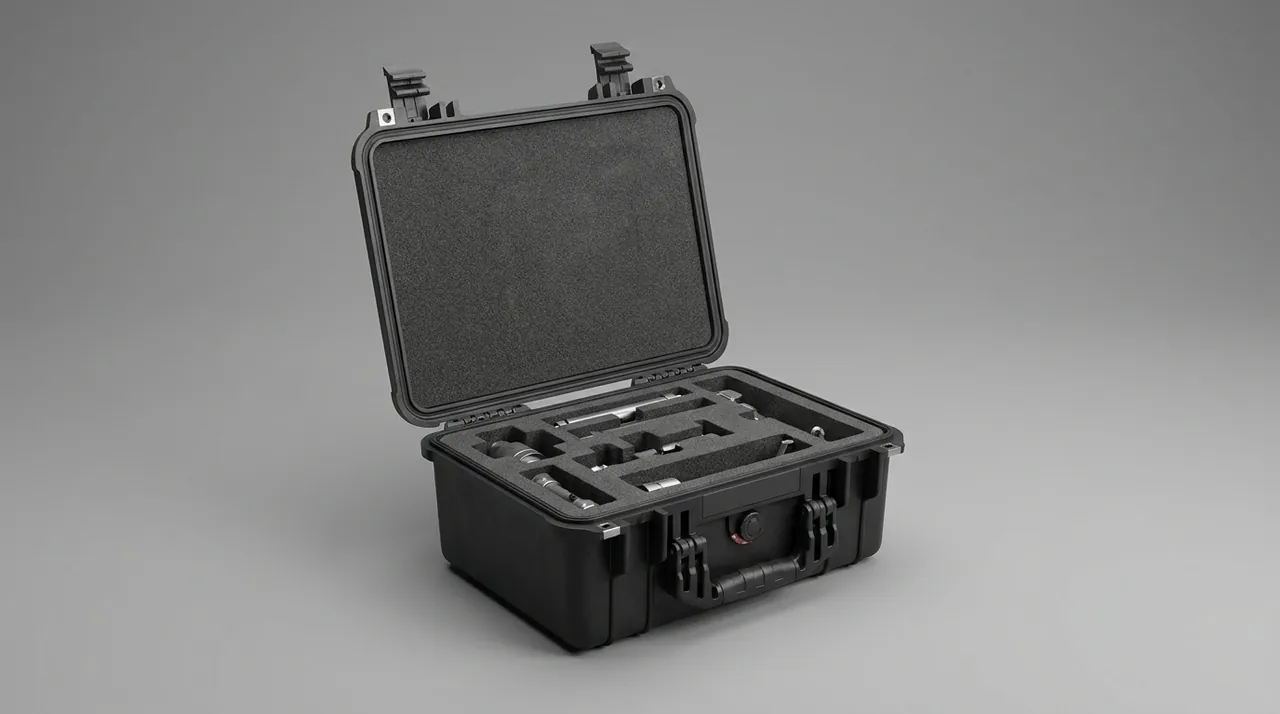
Sample preparation for the salt spray test directly determines the representativeness and comparability of results and must define the complete state of the specimen. Before testing, record the case model, batch, material, surface treatment process, and latch hinge configuration, and assemble the unit in its delivered state including the seal strip, lining, and metal fasteners, rather than substituting a bare shell for the whole-case evaluation. For protective case foam lining design, if the lining contains metal parts or support frames, those should also be included in the test scope. Fixture design must keep specimens stably suspended or supported inside the chamber, with adequate spacing between specimens and between specimens and chamber walls so that the salt fog settles evenly on every surface without mutual shadowing or liquid pooling. Cut edges, assembly holes, and latch moving areas are corrosion-sensitive zones and should be marked in the record; if necessary, seal the exposed cross-sections and state this separately to distinguish substrate corrosion from machining-section corrosion. The fixture material itself must be corrosion resistant to avoid contaminating specimens with rust stains or altering the chamber salt concentration. Standardized sample preparation and fixture layout are essential prerequisites for traceable, reproducible salt spray results and conveniently share the same specimen information with the parallel protective case stacking test.
Concentration, Temperature, and Cycle Setting
The key parameters of the salt spray test include salt solution concentration, spray collection rate, chamber temperature, test duration, and specimen placement angle, all of which must be written into the test plan and executed consistently. Neutral salt spray typically uses a sodium chloride solution within a specific concentration range, with acidity controlled near neutral, the chamber held at a constant temperature, and specimens placed at a defined inclination so that fog settles evenly and liquid does not stagnate for long periods. The spray collection amount must be checked periodically to ensure the chamber salt concentration and settling rate meet the method requirements; otherwise the acceleration factor of the test will be distorted. The test cycle is determined by the product grade and service severity, ranging from tens of hours to several hundred hours or longer, with longer cycles representing stricter checks. Engineering practice suggests using the claimed specification as a lower limit and extending moderately upward to verify a safety margin, but not prolonging without limit to depart from the real use scenario. The combination of temperature and cycle should be coordinated within the overall framework of the protective case temperature controlled solution to avoid conflict between salt spray and high-low temperature cycling. All parameter settings, process inspections, and anomaly records should be fully retained to ensure comparability across batches and provide an objective basis for later acceptance and dispute handling.
Shell Material and Surface Treatment Corrosion Keys
The metal shell material and surface treatment process of a protective case are the decisive factors in salt spray test results. Common base materials include engineering plastics, aluminum alloy, carbon steel, and stainless steel, among which the metal substrate must rely on coating, plating, anodizing, or similar surface treatment to form a barrier preventing chloride ions from reaching the base and causing rust. Aluminum alloy cases often use anodizing or powder coating to improve corrosion resistance, while carbon steel cases depend more on zinc plating, hot-dip galvanizing, or epoxy coatings. The quality of surface treatment is directly reflected after salt spray: a dense, well-adhered coating without pores can inhibit corrosion for a long time, whereas a coating with pinholes, sagging, or inadequate pretreatment will blister and peel within a short period. Dissimilar-metal contacts are prone to galvanic corrosion, so isolation should be provided between the protective case seal strip structure and metal parts. For latch, hinge, and frequently moving yet hard-to-coat areas, corrosion-resistant alloys or thicker plating should be adopted. The corrosion keys of material and process are reflected not only in passing or failing the salt spray test but also in the real multi-year service life in marine environments, so the salt spray indicator should be written into the technical agreement at the selection stage as an important basis for supplier evaluation. For long-marine-service products, an adhesion cross-cut re-test after salt spray can further observe whether the coating bond state still meets the use requirement.
Corrosion Risk of Sealing Structure and Metal Parts
The sealing structure of a protective case consists of the shell, seal strip, latch, and fasteners, among which the metal parts are the main corrosion risk under salt spray. In a salt fog environment, if latches, hinges, or screws use ordinary carbon steel with insufficient surface treatment, they often develop red rust first and may spread inward along assembly gaps, affecting opening function and appearance. The seal strip itself is mostly rubber or elastomer; although it does not rust directly, it ages and hardens faster under combined salt spray and ultraviolet exposure, leading to reduced sealing force and indirectly weakening the overall protection. Therefore the salt spray test should inspect not only the shell coating but also focus on the latch plating, hinge shafts, and screw heads in hidden areas. For the metal reinforcement in the protective case stacking corner structure, the coating completeness at edges and corners also deserves attention. To reduce corrosion risk, one can add corrosion-resistant plating to metal parts, apply protective grease in assembly seams, or avoid water-trapping grooves in design to minimize salt liquid retention. When evaluating results, the corrosion of metal functional parts and the corrosion of shell decorative surfaces should be recorded separately, because the former directly affects safe use while the latter mainly affects appearance life. Only by bringing the sealing structure and metal part corrosion risk into the assessment together does the salt spray test truly serve product reliability.
Synergy of Shell, Gasket, and Latch
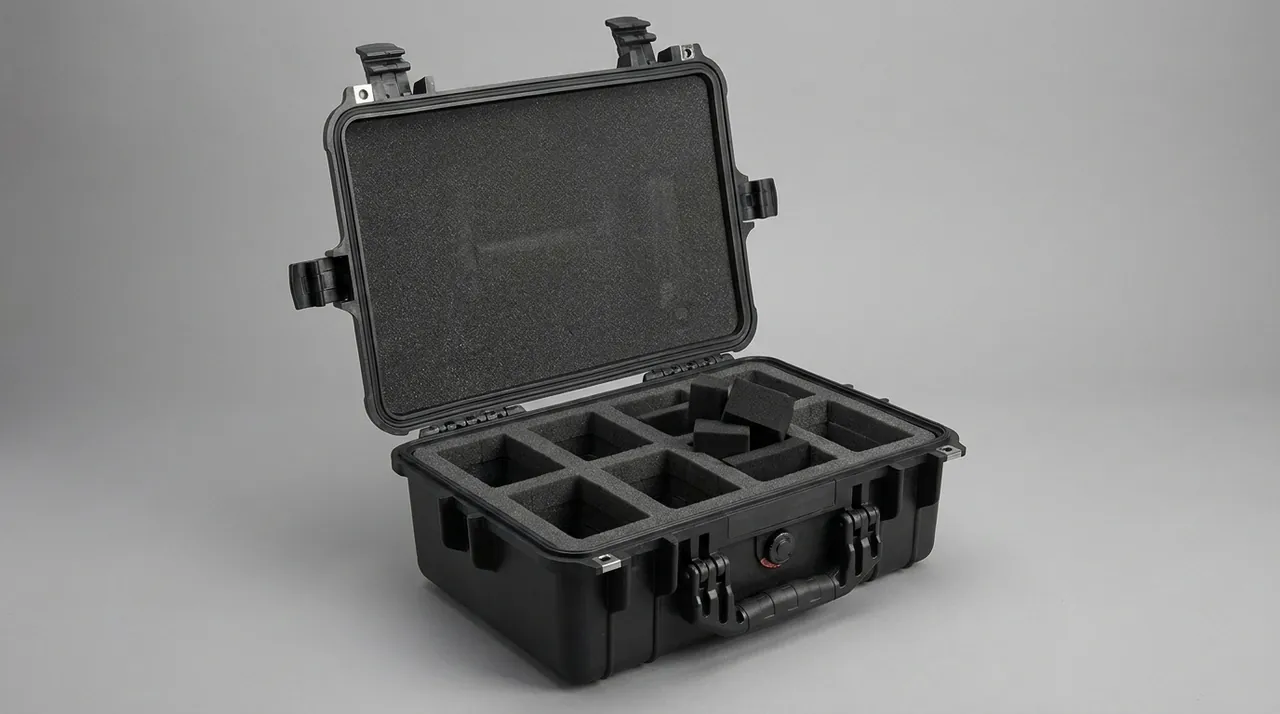
The corrosion resistance of a protective case is not the result of a single part but the synergy of shell, gasket, and latch. The shell provides the main barrier and the surface treatment blocks chloride ions; the gasket provides sealing while its groove and compression face easily accumulate salt liquid, and if the material is not salt-spray aging resistant it may fail before the shell; the latch, with its complex structure and many moving parts, becomes the corrosion weak point. The three must be designed as a system: shell edges should transition smoothly and be fully coated to avoid thin coating at corners; gasket grooves should facilitate drainage to reduce long-term salt retention; latches should use integrally corrosion-resistant materials or closed protection. In optical instrument case design, internal precision devices are more sensitive to corrosion, so the collaborative protection of external metal parts is especially critical. During the salt spray test, the states of the shell, the area around the gasket, and the latch should be recorded separately, observing whether there is salt crystallization, rust spread, or gasket discoloration and hardening. The collaborative protection concept also extends to maintenance: regularly cleaning salt deposits, replenishing protective grease, and replacing aged gaskets can significantly extend the service life of the whole case in marine environments. Bringing the three into a unified corrosion-resistant design criterion improves overall reliability more than simply upgrading a single part grade, and during design review the corrosion indicators of shell, gasket, and latch can be listed separately with assigned weights to track each improvement's contribution to the overall result.
Lining, Drainage, and Drying Anti-Corrosion Design
The lining and internal structure design of a protective case are equally important for long-term corrosion resistance in salt spray environments. If the lining uses closed-cell foam, it does not absorb water and resists salt spray aging, protecting internal equipment and reducing condensation in corrosive environments; if open-cell foam is used, it easily absorbs salt fog and moisture, and long-term retention accelerates the corrosion of internal metal parts. Therefore in salt spray related design, closed-cell structure and quick-drain quick-dry layout should be preferred to avoid salt liquid stagnation at the case bottom. In drainage design, the inner wall should avoid deep grooves, and guide channels and drain holes should be provided where necessary so that accidentally entered salt liquid can be discharged promptly rather than soaked for a long time. The drying design includes placing desiccants, setting humidity indicator cards, or using breathable valves to balance internal and external pressure and lower internal relative humidity. For the protective case temperature controlled solution, active dehumidification and passive moisture prevention need to be verified together with the salt spray check. The lining, drainage, and drying anti-corrosion design essentially add a second defense line beyond sealing, which is particularly suitable for long-term high-humidity high-salt scenarios such as coastal power stations, ships, and marine engineering, and is an indispensable component of the overall case corrosion resistance system.
Division of Work With Immersion, Drop, and Vibration Tests
The salt spray test, immersion test, drop test, and vibration test each examine different failure mechanisms and must be clearly divided without substituting for one another. The salt spray test concerns the resistance of materials and surface treatments in corrosive media, the immersion test concerns the water-blocking ability of the sealing interface under hydrostatic pressure, and the two mechanisms are completely different: a case may perform excellently in salt spray yet fail by immersion due to improper gasket assembly, or may seal well yet rust in salt spray due to non-resistant material. The drop test examines the protective case shell structure strength under shipping impact, and the vibration test examines long-haul resonance and fatigue, both focusing on mechanical damage rather than corrosion. Therefore acceptance should list salt spray together with the protective case water immersion test, the protective case drop test, and the protective case vibration test, giving criteria respectively. For marine and cross-border transport products, salt spray is also often combined with temperature and humidity cycling to simulate real combined environments. During selection, one should not infer overall reliability from passing any single test, but should assemble the various tests into a complete verification plan according to the service profile, so as to fully cover risk dimensions such as corrosion, waterproofing, impact, and vibration.

Result Evaluation and Corrosion Grade Criteria
The result evaluation of the salt spray test requires quantifiable criteria rather than subjective impression. Common evaluation dimensions include whether the base shows red or white rust, the proportion of corroded area, blistering and peeling grades, the corrosion spread width at coating scratches, and whether functional parts such as latches and hinges lose normal movement. The industry widely adopts a grade rating method that divides the corrosion degree into several levels with agreed acceptance boundaries, for example the decorative surface rust area not exceeding a certain proportion and functional parts not showing corrosion affecting use. Evaluation should be conducted under standard lighting, with magnifiers or photographs where necessary, and local enlargement comparison for key areas. For specimens with scratches or blind holes, the corrosion spread at the defect should be evaluated separately because this indicator directly reflects the protection reserve of the coating system. Result evaluation should also distinguish substrate corrosion from assembly cross-section corrosion to avoid misjudging a machined exposed surface as a material defect. Writing the corrosion grade criteria into the acceptance specification allows the protective case IP rating and corrosion performance of different batches and suppliers to be compared on a unified scale, facilitating release or return by the quality department and providing a clear basis for customer inspection.
Test Report and Acceptance Criteria Writing
A standardized salt spray test report should at least include five parts: specimen information, test conditions, process records, result evaluation, and conclusion. Specimen information records model, batch, material, surface treatment, and assembly state; test conditions list salt solution concentration, chamber temperature, spray settling rate, placement angle, and duration; process records capture daily inspection, abnormal stops, and salt collection data; result evaluation gives the corrosion grade of each area and photographic evidence according to the established criteria; the conclusion gives a clear pass or fail judgment. For products requiring third-party endorsement, original records, instrument calibration certificates, and specimen photographs should be attached for certification body review. In compliance scenarios such as the protective case UN certification, the salt spray report is often submitted together with other test reports as an attachment, so format standardization and traceability are especially important. When writing the report, parameters should be fixed to avoid incomparable conclusions across batches due to cycle drift. The acceptance criteria must be confirmed with the client before the test and written into the plan, then strictly executed afterward, preventing arbitrary post-hoc adjustment of standards. A well-structured report also becomes a reference baseline for incoming inspection and periodic re-verification, helping the enterprise maintain quality consistency across the product life cycle and supporting supplier audits with objective evidence.
Typical Industry Application Scenarios
The salt spray test is a key verification step in multiple industries with strict corrosion resistance requirements. Marine engineering and ship deck environments have high salinity and humidity, and case latches and metal parts are highly prone to corrosion, making the salt spray test a basic admission requirement. Coastal power stations, wind power, and petrochemical plants operate long term in salt-bearing humid atmosphere, and outdoor protective case applications in petrochemical scenarios need to pass salt spray checks to extend maintenance intervals. Railway transport crosses coastal and tunnel high-humidity sections, and protective case applications in rail transit scenarios must also consider the combined salt spray and vibration environment. Although mining and water conservancy facilities are not marine, some mining water mist contains corrosive ions, so protective case applications in mining scenarios also apply. Outdoor long-term deployment scenarios such as power inspection, airport ground support, water conservancy monitoring, and geological exploration also commonly use salt spray as a weathering indicator. For protective case applications in marine engineering, protective case applications in power utility scenarios, and protective case applications in airport ground scenarios, the salt spray test is often combined with waterproof and drop tests into an industry-specific verification package. Understanding typical application scenarios helps set appropriate salt spray grades and cycles according to the true environmental severity.
Standards Basis and Compliance Notes
The method selection and acceptance criteria of the salt spray test should be built on clear industry standards and customer technical agreements. Common bases cover the three method families of neutral, acetic acid, and copper-accelerated acetic acid salt spray, which can be combined with extended procedures such as temperature and humidity cycling and salt spray composites to form a layered verification system. In product qualification, incoming inspection, and third-party certification, the salt spray report should be archived together with documents such as the protective case AAR certification and the protective case transport marking specification, ensuring full-process traceability. It must be specifically stated that this article discusses only the corrosion resistance verification method of the protective case container structure under salt spray and corrosive environments, and does not involve the nature, formulation, or use of any packed goods, hazardous materials, or regulated items; the cross-border transport, export, and procurement of related products must comply with local laws, regulations, and export control requirements, and the content of this article does not constitute any compliance commitment or technical guarantee. It is recommended that enterprises confirm the applicable method and judgment threshold with the certification body before conducting the salt spray test, write the corrosion resistance indicator into the procurement technical agreement, and consolidate test data in a unified report format, thereby forming a reusable and auditable protective case weathering verification capability.
Frequently Asked Questions
Q: What is the difference between a salt spray test and an immersion test? A: The salt spray test simulates a salt fog environment to examine the resistance of the case metal material and surface treatment in a corrosive medium, focusing on corrosion phenomena such as rust, blistering, and peeling, while the immersion test submerges the whole case into still water to examine the water-blocking ability of the sealing interface under hydrostatic pressure. The two mechanisms are completely different: one emphasizes corrosion resistance and the other emphasizes waterproof sealing, so they cannot replace each other. During selection, both should be listed separately in the verification checklist, especially for marine and outdoor scenarios that require both corrosion resistance and waterproof capability, so as to fully cover the real service risks rather than inferring overall reliability from a single passing test. Treating them as complementary checks gives a more complete picture of long-term suitability. For coastal deployment, verifying both ensures the case survives both the corrosive atmosphere and accidental water exposure that frequently occur together in field service, which is the more realistic combined risk profile.
Q: How do I choose between neutral, acetic, and copper-accelerated acetic salt spray? A: Neutral salt spray has the gentlest corrosion rate and suits the basic corrosion threshold for ordinary steel, aluminum alloy, and engineering plastic cases; acetic acid salt spray adds acetic acid for more severe corrosion and is often used for decorative plating and organic coating checks; copper-accelerated acetic acid salt spray adds copper chloride for the highest acceleration and fits severe marine environments and high-grade decorative chrome layers. Engineering practice recommends neutral salt spray as a baseline, then adding acetic or copper-accelerated salt spray for coastal and ship priority scenarios, thereby obtaining a layered and sufficient corrosion evidence chain rather than underestimating long-term risk with a single method, and also providing flexible correspondence to different customer agreements. Documenting the selected method and its rationale in the test plan keeps the verification transparent and auditable across projects and suppliers, avoiding ambiguous acceptance later. Repeating the selected method in the procurement specification prevents mismatch between the supplier's test and the buyer's expectation and reduces rework.
Q: How many hours does a salt spray test generally run? A: The test cycle is determined by the product grade and service severity, ranging from tens of hours to several hundred hours or longer. Routine acceptance may use a shorter cycle as a threshold, while key scenarios such as marine engineering and ship decks often require longer cycles to expose slow corrosion. It is recommended to use the claimed specification as a lower limit and extend moderately upward to verify a safety margin, but not to prolong without limit to depart from the real use environment. The cycle setting should be written into the test plan and executed consistently to ensure comparability across batches and provide an objective reference for later acceptance, dispute handling, and supplier evaluation with consistent criteria. Reviewing the corroded specimens against photographs from a qualified baseline case further improves the reliability of the pass or fail decision and supports traceable acceptance records. A shorter qualification cycle can be used for internal screening while the full cycle is reserved for final release decisions.
Q: Does a stainless steel protective case still need a salt spray test? A: Yes. Although the stainless steel substrate is more corrosion resistant than ordinary carbon steel, in chloride-containing marine and salt spray environments, pitting and crevice corrosion can still occur if the grade is improperly selected or the surface has machining damage. In addition, accessories such as latches, hinges, and screws may not use equally corrosion-resistant materials, and their plating and assembly seams are often corrosion weak points. The salt spray test can expose hidden dangers in dissimilar-metal contacts, weld heat-affected zones, and accessory areas of a stainless steel case, so even if the main body is stainless steel, salt spray should be included in verification, with particular separate evaluation and recording of functional part corrosion. Maintaining a corrosion log per batch also helps track whether a supplier's process changes affect long-term salt spray performance and supports continuous improvement. Trending the corrosion log also helps justify a higher material grade when field returns show recurring corrosion issues that affect availability.
Q: Does the seal gasket age in a salt spray environment? A: Yes. Although rubber and elastomer gaskets do not rust themselves, under the combined salt spray, ultraviolet, high temperature, and high humidity they age faster, showing hardening, cracking, discoloration, and reduced rebound force, which in turn weakens the overall sealing ability. During the salt spray test, observe whether salt crystallization, discoloration, or hardening appears around the gasket, and check its compression recovery after the test. To slow aging, use salt-spray and weather resistant materials, avoid long-term salt retention in gasket grooves by design, and clean or replace periodically when necessary, bringing the gasket condition into the periodic maintenance items to extend the sealing service life. Selecting a gasket material validated for the target salt and ultraviolet exposure is more cost effective than frequent replacement after premature failure in the field. A qualified material data sheet should be retained as evidence during customer or regulatory audits, and revisited whenever the supplier or formulation changes.
Q: Should the lining foam be tested together in the salt spray test? A: If the lining contains metal frames, supports, or metal inserts, it should be included in the test scope because these metal parts also face corrosion risk. Pure closed-cell foam does not rust and resists salt spray aging, but open-cell foam easily absorbs salt fog and moisture, and long-term retention accelerates the corrosion of internal metal parts. Therefore the test plan should define the lining state, subject the lining with metal parts as a whole, and focus on whether pure foam absorbs water and deforms. The sensible practice is to verify the lining and case as a whole, avoiding assessing only the outer shell while omitting the hidden corrosion of internal support structures, so as to more truly reflect the overall weathering performance of the case. Specifying the lining configuration in the test plan prevents later disputes about whether a given foam variant was actually covered by the verification scope. Keeping the lining variant fixed during the test avoids mixing variables that would make the corrosion result hard to interpret or defend later.
Q: How is the salt spray test evaluated for pass or fail? A: The result evaluation should follow the grade criteria written into the plan rather than subjective impression. Common dimensions include whether the base shows red or white rust, the proportion of corroded area, blistering and peeling grades, corrosion spread width at scratches, and whether functional parts such as latches and hinges lose normal movement. Evaluation should be conducted under standard lighting with photographic records where necessary and magnified observation of key areas. Substrate corrosion should be distinguished from assembly cross-section corrosion to avoid misjudging a machined exposed surface as a material defect. Consolidating the grade criteria into the acceptance specification allows the corrosion performance of different batches and suppliers to be compared on a unified scale, facilitating release or return by the quality department. Independent review and signed records strengthen the authority of the evaluation when the result is challenged by a customer or auditor during acceptance. Clear photographic archives also speed up future comparisons when a similar case is requalified under the same or an updated specification.
Q: Which is more corrosion resistant, painting or anodizing? A: The two serve different base materials and protection mechanisms, so one cannot simply say which is better. Anodizing forms a dense oxide film on the aluminum alloy surface with strong bonding and stable salt spray performance, suitable for the natural-color protection of aluminum cases; powder coating isolates the corrosive medium through an organic coating with many color choices and complete coverage, applicable to both carbon steel and aluminum, with the key being coating adhesion and freedom from pinholes. The actual corrosion resistance depends on pretreatment quality, film thickness, and defect control rather than the process name. The salt spray test is precisely used to objectively compare the real performance of the two, and selection should be based on test results under the same method rather than the process name alone. Periodic re-verification is advisable when the production line or supplier changes, because the same process name can hide different quality levels in practice.
Q: How does the salt spray grade correspond to the real marine environment? A: The salt spray test is an accelerated corrosion tool whose grade and cycle do not directly equal the number of marine years but reflect trends through an acceleration factor. A longer neutral salt spray cycle can correspond to general coastal atmosphere, while acetic and copper-accelerated salt spray are closer to severe salt-dense environments such as splash zones and decks. The correspondence needs calibration with field corrosion data and industry experience and cannot be converted mechanically. Engineering practice recommends inferring the required salt spray grade from the true service environment severity, then using the results for material selection and maintenance cycle planning, thereby forming a corrosion management system where test and field mutually verify and improve long-term reliability. Updating the mapping as more field data accumulates keeps the selected salt spray grade aligned with actual service experience and prevents over- or under-testing. Closing the loop with field feedback is the most reliable way to keep the verification meaningful over time and to justify future method updates.