

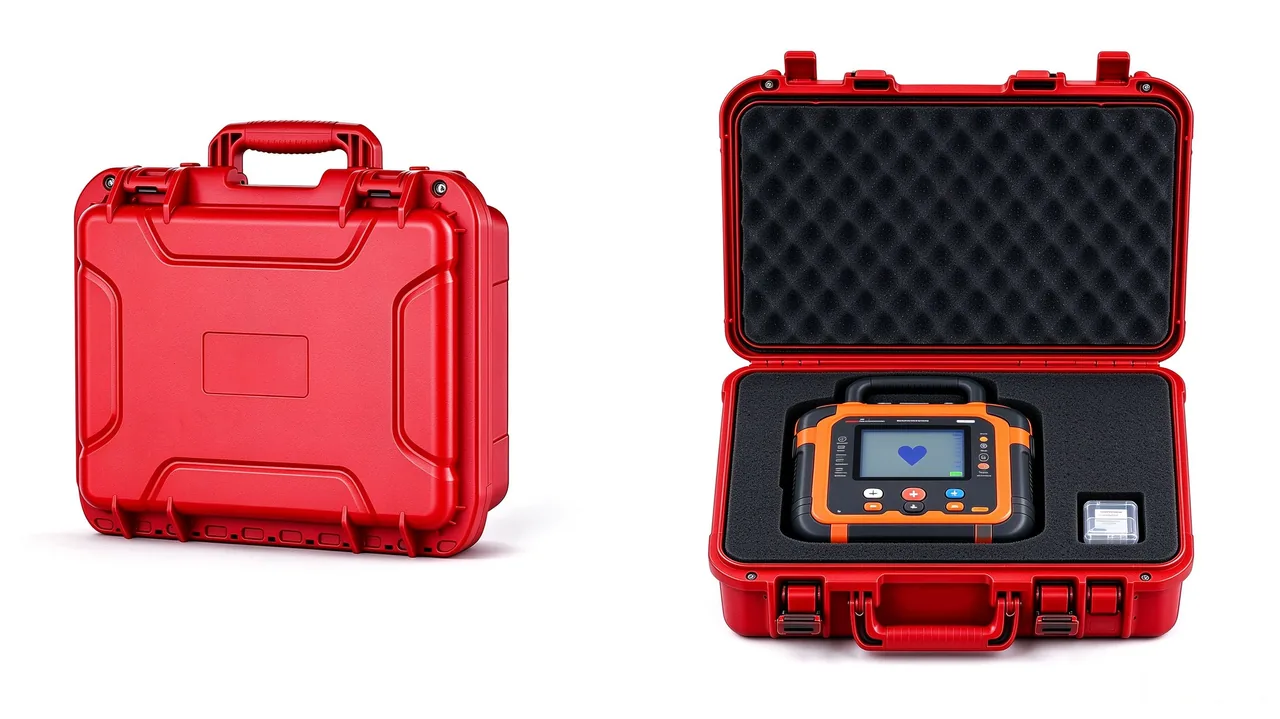
Behind every reliable day of rail service sits a logistical fact that rarely gets attention: an enormous amount of equipment has to be moved, stored and protected. Depot workshops hold wheel-measurement gauges, brake-component tools, inspection lamps and diagnostic units. Station equipment rooms and signal cabins keep relays, electronic modules, interface boards and test meters that cycle in and out for periodic servicing. Out along the line, crews carry tools, spares and portable instruments into tunnels and onto elevated structures where there is little room to work and no shelter from the weather.
What all of these situations share is a set of hard requirements. The gear cannot shift, absorb moisture, or be reached by fine dust along the way. It has to come out of its container quickly, because rail work is squeezed into short possession windows. It has to survive being stacked in a store room and carried by a single person. And it has to be identifiable, because inventory that cannot be reconciled quietly turns into a liability. A case that ignores any one of these points will end up costing time every week, whether through damaged instruments or through the minutes lost hunting for the right box.
This article deals only with the container: the shell that carries the gear, the material it is made from, the lining that keeps items in place, the seals that keep dust and water out, the hardware that makes handling practical, and the marking that makes tracking possible. It says nothing about how any instrument works on the inside, and it makes no judgement about the nature of anything that might be packed within. Cross-border transport and export questions must be assessed by the responsible organisation against local law and export-control rules; nothing here should be read as a compliance determination.
1. Use Scenarios and What the Container Must Do
It helps to lay the scenarios out plainly. Rail maintenance work falls into roughly three settings. The first is the depot and the workshop, where wheel-measurement rigs, brake tools, inspection lighting and diagnostic units live. The second is the station equipment room and the signal cabin, where relays, electronic modules, interface boards and test meters circulate for servicing and repair. The third is the line itself, where crews haul tools, spares and portable instruments into tunnels or onto viaducts with almost no space to open a case and no roof overhead.
The requirements differ across these settings but share a common floor. Nothing may shift, take on moisture, or be reached by fine dust in transit. Depots care most about load bearing and stackability; equipment rooms care most about static and electromagnetic isolation; trackside work cares most about compactness and fast access. Reading those differences correctly is the first real decision in choosing a case. Teams handling comparable problems in the power sector often reason along similar lines (utility inspection cases), though rail has its own vibration signature and its own working rhythm, so nothing should be copied wholesale.
Two more points are routinely overlooked. The first is the possession window: rail work has to fit inside a short, tightly scheduled break in service, so a case that cannot surrender the right tool within a minute or two quietly slows the whole job. The second is rotation management. Gear travels constantly between store and site, which makes the case both a container and a ledger. Once numbering and zoning drift out of order, stock-taking becomes a chore. Choosing a case is therefore not a matter of picking a sturdy shell; it is a matter of weighing shell, lining, sealing, handling and marking together, as one system.
2. Shell Materials: Aluminium, Rotomoulded Plastic and Engineering Resin
The material is the skeleton of the case. Three families dominate rail work, and each behaves differently. Aluminium builds a stiff shell with good heat conduction and a natural ability to block electromagnetic interference; a frame-and-panel construction keeps weight reasonable, which suits signal gear that is sensitive to static and interference. Its weakness is at the corners, where impacts leave dents, and in damp environments, where oxidation and galvanic corrosion need watching. Rotomoulded polyethylene produces an even wall thickness and outstanding impact resistance, so a dropped case tends to dent rather than crack, and with a gasket it can reach high dust-and-water ratings; its drawback is weight, which means precision positioning has to come from the lining.
Injection-moulded engineering resin, usually polycarbonate or a modified ABS, sits between the two on weight and cost, moulds freely, and accepts reinforcing ribs and recessed handles, which makes it well suited to cases produced in volume. Size and shape feed back into the choice as well. Trackside walkways are narrow, so a case often has to be turned sideways to pass, and an over-wide box becomes a burden no matter how good its material is. A depot store is roomier, so a squarer box can improve stacking efficiency. Aluminium and plastic also expand differently with temperature, and if the interior needs fine compartments, aluminium's greater movement has to be anticipated in the tolerances. The right answer depends on the weight of the gear, how often it travels and where the protection priority lies, not on price. It is worth starting from the basic logic of shell construction (case shell layout) and then matching it to the real duty. Note, too, that hardware usually fails before the shell does: a poorly chosen hinge, latch or handle can shorten the life of an otherwise excellent box.
3. Linings and Cushioning: How Foam Layers Work
The lining decides whether gear sits firmly or rolls around inside. The usual approach is layered. The layer closest to the equipment is soft, cut to follow the outline; the middle layer has medium density to absorb energy; the outer layer provides firmer support so the weight lands on the reinforced base of the shell. Regular tools can be given routed recesses, while irregular items or gear that is swapped frequently suit removable dividers. EVA and EPE are the two common foams. EVA rebounds well and cuts to a clean edge; EPE is lighter and cheaper but tends to collapse after repeated impacts. Thinking through the weight distribution of the contents matters more than simply ordering the thickest foam available.
A second source of cushioning is easy to overlook because it is built into the case. Reinforcing ribs on the walls, thickened corners and base feet all absorb part of the energy of a drop before the lining has to. If foam grips the contents too tightly, it can squeeze them when the material contracts in the cold; if it is too loose, items collide as the case vibrates. The right condition is one in which the gear cannot move freely but can still be lifted out smoothly. In a kit holding several items, the heaviest should sit low and near the middle so the centre of gravity stays low and centred, which prevents the case lurching when it is picked up. For guidance on lining selection, see the notes on foam lining and adjust them to the weight distribution in front of you.
4. Sealing Design: Keeping Dust and Water Where They Belong
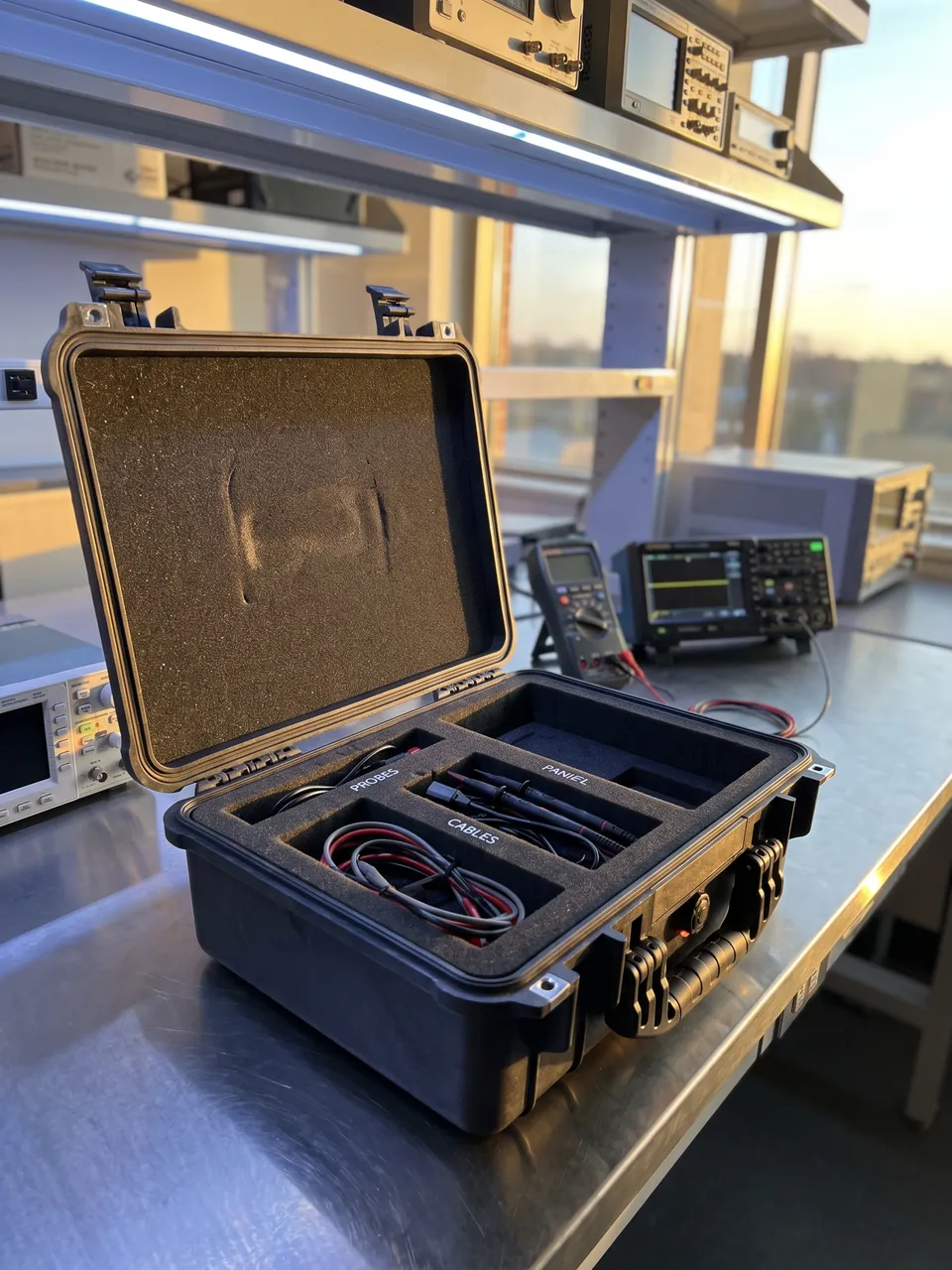
Sealing is the real threshold of a protective case. Trackside boxes face rain, tunnel seepage and wash-down hoses, while equipment-room cases worry more about fine dust and short bursts of humidity. Success rarely depends on how thick the gasket is. It depends on whether the mating faces are flat, whether the latches deliver even clamping force, and whether the groove profile matches the gasket. Solid rubber and expanded sponge are the two common gasket types. Solid rubber resists compression and ageing well; sponge accepts more compression and tolerates a less flat lid, which suits cases whose lid is not very stiff. On a large case, a single loop of gasket struggles to seal evenly, so compression ribs on the inside of the lid or a set of multiple latches become necessary.
Sealing also interacts with temperature. When a case passes through a wide temperature swing in transit, internal pressure changes and can push the lid open or pull it tight. A pressure-equalisation valve lets air move slowly in and out while still blocking liquid water and dust. Clamping force is not a case of more being better either; over-compression fatigues the gasket early and shortens its life. When choosing a sealing arrangement, do not read only the headline waterproof figure. Match it to the working environment, check the detail on gasket selection for material and profile, and then decide whether an extra sealing layer is justified.
5. Matching the IP Rating to the Job
An IP rating describes dust and water resistance with two digits, but it is a threshold, not a universal answer. A case left outdoors trackside usually needs a high dust figure so that grit cannot work into the sealing faces and wear them out. A case kept in a station equipment room is barely affected by water, so dust resistance and static control matter more. Some tasks involve brief immersion as well: a technician who sets a case down on a flooded surface on a wet day needs a box that tolerates a period under water. Matching the rating to the scenario is more prudent than chasing the highest number, because a higher rating tends to mean a heavier box, tighter latches and a higher price.
A second mistake is to fix on the rating the case had when it left the factory and ignore how it decays in use. Gaskets age, latches loosen, and repeated drops can bow a shell slightly, all of which erode a seal that was once adequate. When buying, confirm the rating claim and also agree how the seal will be maintained and re-checked. Cases from different moulds or different resin grades can behave differently too, so a first-article inspection on delivery is worth doing and its result can become the baseline for later acceptance. To understand the reasoning behind the grades, read the explanation of IP rating basics and then test the conclusion against the real conditions on the line.
6. Coping with Vibration and Impact
Train movements, track work and loading all feed vibration and impact into a case, and that energy is often repeated over long periods. The danger with sustained vibration is resonance: when the natural frequency of the case, lining and contents together approaches the driving frequency, amplitude grows, and eventually fasteners loosen, joints fatigue and precision parts drift. The countermeasures work from two directions. One is to have the lining hold the gear firmly so nothing rattles. The other is to tune the overall stiffness of the case away from the frequencies that are easily excited, for example by distributing ribs and wall thickness thoughtfully. For heavy items, the position of the centre of gravity inside the case deserves attention too, and keeping it low and central helps.
Impact is more about loading and the occasional drop. The corners and base take the first hit, and thickened, rounded geometry spreads the stress, while latches and hinges must survive the instantaneous pull without springing open. Many field failures are not cracked shells at all but popped latches and separated lids that let the contents spill out. Limit structures that stop the lid moving too far and multi-point locking between lid and body reduce this risk. To see how a case's response to vibration and impact is actually assessed, consult the notes on vibration testing and use them to set lining density and fixing method.
7. EMI Shielding and Static Dissipation for Signal Gear
Signal equipment is sensitive to electromagnetic interference and static, so the case does more than protect it physically. A metal shell forms a shield on its own, and the effect is more complete when the lid maintains continuous conductive contact with the body. A plastic case can be brought up to the same standard with conductive coatings, metallised fabric linings or conductive foam. Earthing and equipotential bonding matter just as much: if the case can be tied to the reference potential of the working area through a latch or a dedicated earth terminal, charge is less likely to build up to a level that harms the contents. The point here is the shielding and dissipation structure of the container, not the way the equipment inside operates.
The lining itself is another source of static. Some foams charge readily when rubbed, and if the equipment has no path to dissipate that charge, a discharge can occur during handling. Choosing a lining with a moderate surface resistance, or adding a conductive layer between foam and equipment, lowers the risk. Technicians in equipment rooms often wear wrist straps, and the case should carry a structure that makes earthing easy as well. Where insulating washers sit between metal parts, they can break the conductive path, so the continuity of the equipotential bond has to be confirmed at the design stage. For very sensitive gear, the continuity of shielding and dissipation matters more than any single specification. Precision optics cases handle this well (optical instrument cases).
8. Moisture and Temperature Control for Precision Instruments
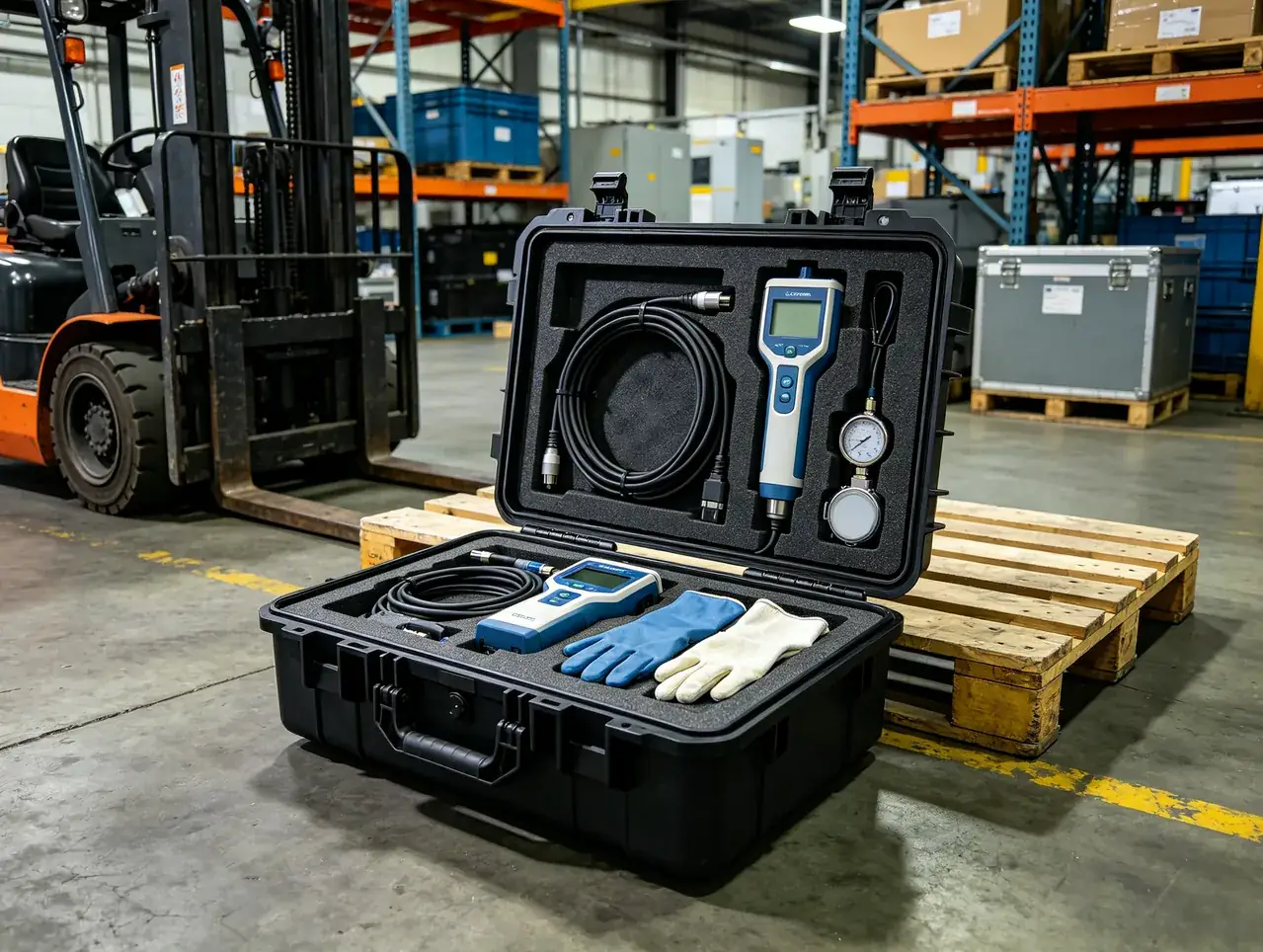
Some gear fears neither vibration nor impact but humidity and temperature. Electronic measurement units, optical parts and sensors used in track inspection can develop condensation, oxidation and even performance drift when kept in damp conditions. A case paired with desiccant or a replaceable absorption module can hold internal humidity at a low level, and a double-sealed design with an inner enclosure offers a second barrier for especially sensitive items. It is worth remembering that a better seal also traps moisture inside, so the desiccant replacement interval has to be written into the maintenance routine; a saturated module becomes a source of damp rather than a defence against it.
On temperature, most protective cases do not actively control anything, but insulation layers, reflective surfaces and sensible placement can slow the swings. At a tunnel mouth in summer, a case left in direct sun heats well above ambient; a light-coloured cover or a light-coloured shell reduces the heat taken in. Equipment can also become brittle in the cold, and careless handling during removal then does more harm than the temperature itself. Where gear must travel within a defined temperature band, dedicated construction is needed. The approach used in temperature-controlled cases is a useful reference, after which the rail-specific conditions decide the final choice.
9. Stacking, Turnaround and Warehouse Structure
Back in the store, cases are usually stacked, and stacking tests a box's resistance to load over time as well as its stability when piled. If the top and base are moulded with matching shallow channels or locating feet, a stack stays aligned instead of sliding apart, and ribs that run up to the top surface carry the weight of the boxes above down to the base rather than letting the middle sag. Stack height also has to account for aisles and access. Stack too high and staff must move the upper boxes to reach the lower ones, which is tiring and risks knocks, so warehouse plans commonly put the most-used gear at mid height.
Turnaround places the emphasis on wear and latch life. A case opens and closes repeatedly between store and site, and the latches, hinges and gaskets all accumulate fatigue. Replaceable latch and hinge designs let a case carry on after local damage instead of being scrapped. In a store corner with poor ventilation or high humidity, cases stacked for long periods should be checked periodically so damp does not affect the lower layers' seals. Where space is tight and boxes must go high, confirm that the load claim rests on evidence. The way stacking is evaluated is set out in the notes on stacking tests, which help fix a sensible limit.
10. Handles, Wheels and Latches: Human Factors in the Field
A superb case that cannot be carried or set down is not much use. Rail staff often carry a box alone from store to vehicle and then to trackside, so the position and shape of the handle directly affect effort. Ideally the load should fall on the palm rather than the fingers, the edge should be rounded, and a soft grip helps. For heavier cases, wheels and a telescopic handle cut the burden sharply, but wheels raise the base and take up space, and they are awkward on steps and sleepers, so the trade-off depends on the route. Two-person carries go more smoothly when both sides carry symmetrical handles so the box can shift onto a shoulder or a trolley.
Latches affect both safety and speed. Small latches are hard to work with gloves on, while loose ones can spring open in transit. Choosing hardware with a clear action that shows at a glance whether it is closed reduces mistakes. For cases opened frequently, drawer dividers or lids with a limited opening angle prevent the lid from falling back. Modular thinking from airport ground operations offers a useful parallel for rail teams (ground support cases), especially where several case types must share the same handling pattern.
11. Marking, Numbering and Inventory Traceability
The more equipment there is, the more marking matters. Case marking usually works on two levels. One identifies the case itself: its number, the team that owns it, the person responsible and the line it serves. The other lists the contents and their inspection validity. Fixing this information in set positions and keeping the format consistent is what allows fast cross-checking between store and site. Label material has to resist damp and abrasion, and etching, moulding or an inset card will outlast an ordinary sticker.
A numbering scheme works best when it joins the existing records. If the team already tracks tools by QR or barcode, the case should carry a clear patch for the code, placed so it never covers a latch or a sealing face. The most common failure at stock-taking is a mismatch between what the label says and what is inside, so a quick check at hand-back catches errors at the source. Cases for equipment that goes out for periodic testing can also show the next due date, which makes the servicing cycle visible at a glance. The conventions for marking and regulatory pictograms are described under transport marking and can be adapted to local record-keeping habits.
12. Test Verification: Drop, Vibration and Immersion
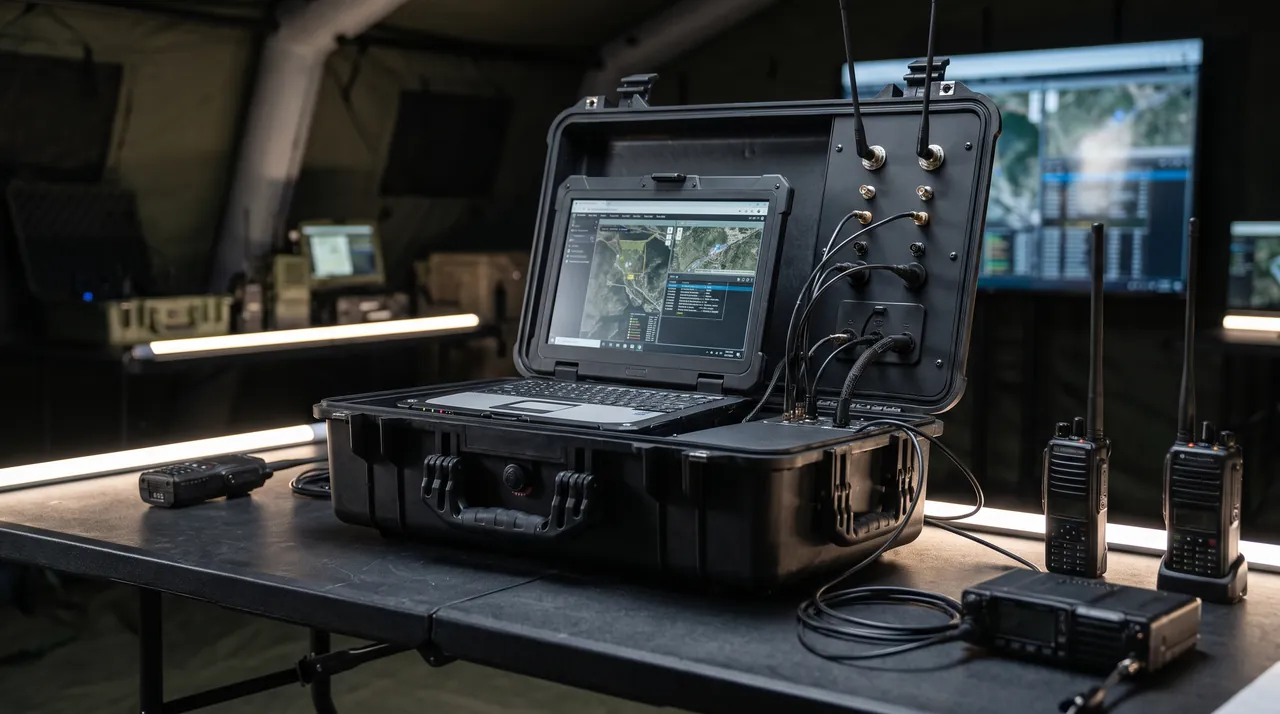
A case's protective ability cannot rest on description alone; it needs a verification that others can repeat. The drop test addresses the occasional impact of loading and handling, usually by setting conditions from weight and drop height and then observing the state of the shell, latches and lining afterwards. The vibration test reproduces the sustained input of a long journey and exposes resonance and fatigue. The immersion test checks how the seal performs under the least favourable conditions. The three look at different angles, and the best approach selects from them according to how the gear actually travels rather than applying all of them mechanically.
Beyond the test itself, credibility depends on whether the sample was representative, whether the conditions were written down clearly and how the result was judged. Buyers should ask for traceable records and agree on re-testing and sampling in the contract. Where equipment crosses regions or national borders, the choice of standard has to connect with destination rules. The methods for drop, vibration and immersion are covered in the notes on drop testing, and those can be trimmed to fit local practice so that the test does not drift away from the real duty it is meant to represent.
13. Maintenance, Cleaning and Service Life
Performance fades with age, so maintenance is what extends service life. The gasket is usually the first part to age, showing itself as hardening, cracking or lost elasticity, and any of these signals means replacement. Latches and hinges should be checked regularly for looseness, distortion or noise, and foam should be assessed for collapse, powdering or mildew that would rob it of cushioning. Cleaning should avoid strong solvents, which damage plastic surfaces and accelerate seal ageing; a mild detergent and a soft cloth are normally enough. Recording comes next. A service file for each case, noting purchase date, repairs, part replacements and any test or incident, lets managers see which units are nearing the end of their life. Cases used in corrosive conditions need more frequent checks, and the corrosion approach taken in marine engineering cases is a reasonable starting point for building the checklist. Finally, to be clear, this article discusses only the case as a container, together with its shell, lining and sealing structure, and says nothing about the nature or purpose of any goods it may hold. Any cross-border transport or export must be assessed by the responsible party under local law and export-control rules; nothing here is a compliance finding or conclusion.
Frequently Asked Questions
Q: What makes a rail transit protective case different from an ordinary industrial tool box? A: Both hold tools, but they start from different premises. An ordinary tool box mainly solves storage and short-distance carrying, whereas a rail transit protective case must protect equipment that is valuable and often precision-made through vibration, dust, humidity and the occasional impact at the same time. That pushes the emphasis onto sealing, locating the contents with a lining, load bearing under stacking, and isolation from static and electromagnetic interference. It also usually needs traceable numbering so gear can be reconciled as it rotates between store, depot and trackside. A further practical difference is the working window. Rail maintenance happens inside short, tightly scheduled breaks in service, so the case has to release the right item quickly, which shapes the choice of dividers, lid opening and latch action. When choosing, do not compare shell thickness alone. Weigh the weight, sensitivity and travel path of the equipment, and where the stakes are high, ask for test data that backs the protection claim rather than trusting a brochure.
Q: Should the shell be aluminium or plastic? A: There is no universal answer; it depends on the equipment and the setting. Aluminium is stiff, conducts heat quickly and provides some shielding on its own, which suits signal gear that is sensitive to static and interference, but its corners dent and damp conditions call for attention to oxidation and galvanic corrosion. Rotomoulded polyethylene resists impact strongly and seals easily, though it is heavy and needs a lining to hold precision items in place. Injection-moulded engineering resin balances weight and cost and suits cases made in volume, and it accepts ribs and recessed handles well. If weight is critical, lean towards plastic or thin-wall aluminium. If shielding and rigidity matter more, aluminium has the edge. Size plays a part too, because a case carried along a narrow walkway cannot be too wide whatever it is made of. Set the protection priority first, then compare options using the basic logic of shell construction; that is more reliable than judging by material name alone.
Q: Does thicker lining foam always mean better protection? A: No. Cushioning depends on the density, rebound and layering of the foam, not on thickness by itself. Foam that is too soft and thick will be pressed through when the equipment is heavy, letting load pass straight to the base; foam that is too hard will hand the shock on to the equipment unchanged. The sound approach is layered: a soft layer against the contents to follow the outline, a middle layer to absorb energy, and an outer layer to provide support, so the gear can neither move freely nor resist being lifted out. The heaviest item should sit low and near the middle so the centre of gravity stays centred. It also matters that foam can contract or harden at temperature extremes, so where the stakes are high, confirm by test that cushioning still works across the intended temperature band. A figure on paper does not by itself guarantee protection in the field.
Q: How often should the sealing gasket be replaced? A: There is no single interval; it depends on material, how often the case is used and the environment. The practical test is whether the gasket has hardened, cracked or lost its elasticity, or whether the latches now need noticeably more force to close the case. Ageing is faster where the temperature swings widely, dust is heavy or ultraviolet light is strong, so the inspection interval should be shorter there. In routine maintenance, wipe the sealing face with a soft cloth, avoid strong solvents, and check before closing that no grit or debris sits on the gasket. Over-compression is worth avoiding too, because a gasket squeezed too hard fatigues early and fails sooner than one left at its designed compression. Where the seal is safety-related, put replacement on a fixed maintenance schedule rather than waiting for water to get in. Recording each replacement in the case file also makes the interval easier to judge next time.
Q: Why does a signal equipment case need electromagnetic shielding and static protection? A: Because this kind of equipment is sensitive to interference and static, and transport and handling generate both. A metal shell forms a shield, and the effect is more complete when lid and body keep continuous conductive contact; a plastic case can be brought up to standard with a conductive coating or lining. On the static side, if the case is bonded to the reference potential of the working area, charge is less likely to build up to a level that damages the contents. The lining can be a source of static as well, since some foams charge readily when rubbed, so a material with moderate surface resistance helps. Insulating washers between metal parts can break the conductive path, so continuity should be checked at the design stage. To be clear, the focus here is the container's shielding and dissipation structure, not how the equipment works inside. For very sensitive gear, the continuity of the shielding and dissipation path usually matters more than any single component's rating.
Q: Can a case take on water because of temperature changes in transit? A: Temperature swings do affect sealing. As a case passes through a wide change, internal pressure shifts, the lid may be pushed or pulled, and the load on the gasket fluctuates with it. A pressure-equalisation valve lets air move slowly both ways while still keeping liquid water and dust out, which stops the lid being forced open or sucked tight. Sealing also depends on whether the mating faces are flat, whether the latches clamp evenly and whether the groove matches the gasket. On a large case a single loop of gasket struggles to clamp evenly, and compression ribs or extra latches are usually needed. Clamping force is not a case of more being better, since over-compression ages the gasket early and shortens its life. When selecting, match the stated waterproof figure to the actual working environment one by one instead of reading a single rating code, and re-check the seal once the case has been in service for a while.
Q: Will stacking crush the cases at the bottom of the pile? A: That depends on the load design of the case and the way it is stacked. If the top and base carry matching shallow channels or locating feet, a stack stays aligned; ribs that extend to the top surface spread the load towards the base and keep the middle from sagging. Even so, stack height should follow a warehouse plan, because a pile that is too high is awkward to reach and invites knocks during handling. Cases stored long-term in a damp corner also deserve periodic checks for moisture or distortion in the lower layers, since a softened box loses load capacity quietly. Turnaround adds a second kind of wear, as repeated opening and closing fatigues latches, hinges and gaskets, so replaceable hardware is worth having. When buying, confirm that the load claim has evidence behind it, and use stacking test results to set the limit rather than adding height by feel. A limit written into the warehouse plan is easier to keep than an informal one.
Q: How should case numbers and labels be designed for easy stock-taking? A: The principles are consistency, visibility, durability and a link to existing records. The outside of the case should carry its number, the owning team, the responsible person and the line it serves, while the inside carries a contents list and inspection validity. Label material must resist damp and abrasion, and etching, moulding or an inset card lasts far longer than an ordinary sticker. If the team already tracks items by QR code, the case should carry a clear patch for it, positioned so it never covers a latch or a sealing face. A consistent format lets staff from different shifts read a case without hesitation. The most important point at stock-taking is that the contents match the label, so a check at hand-back catches errors at source and saves considerable reconciliation time over a year. Where gear goes out for periodic testing, the next due date on the case makes the servicing cycle visible at a glance.
Q: How should a protective case be maintained so that it lasts? A: Maintenance centres on the seal, the moving parts and the lining. Replace the gasket once it hardens, cracks or loses elasticity; check latches and hinges regularly for looseness, distortion or noise; and assess foam that has collapsed, powdered or gone mouldy for whether it can still cushion. Clean with a mild detergent and a soft cloth, avoiding strong solvents that damage plastic and accelerate seal ageing. Keep a service file for each case, recording purchase, repairs, part replacements and any test or incident, so it is clear which units are nearing the end of their life. In corrosive environments, raise the inspection frequency and add checks to suit the conditions, and pay particular attention to metal hardware. Handled this way, a well-chosen case can serve for many years without hidden failures, and the records make it easier to decide when replacement finally makes more sense than repair. A simple laminated checklist kept with the case file turns maintenance from memory into routine.