


On a typical grid operations day, inspection crews and repair teams have to move a set of handheld gear to substations, switching cabinets, cable tunnels, and even tower bases on remote hillsides. That gear has to survive vehicle vibration and handling impacts, and it also has to stay ready to use through rain, snow, dust, and the temperature swing between day and night. A power utility protective case is the container built around exactly that need. It does not get involved in how the gear inside works; it focuses entirely on holding that gear steady through shell structure, cushioning, sealing, and latches. For buyers and frontline crews alike, understanding the container engineering trade-offs matters far more than memorizing any single model number. This article approaches the power utility protective case from the container side, working through shell materials, shock-absorbing liners, sealing and dust control, latch and hinge reliability, stacking and transport load paths, corrosion and environment resistance, carrying ergonomics, marking and inventory, testing and admission rules, maintenance and spare parts, and finally a selection checklist. The goal is to give readers a practical standard they can apply when choosing or reviewing a case for grid work, so that decisions rest on structure and use conditions rather than on one attractive figure. The container cannot remove those demands, but it can be engineered to meet them at a predictable level of performance. In short, the case is judged by how well it absorbs these pressures at once, not by any single feature in isolation. A clear written statement of the use case is therefore the first deliverable of any specification, and it should be agreed by the crew as well as the buyer.
1. What Grid Inspection and Repair Work Demands From a Case
Inspection and repair are two very different rhythms of work. Inspection is usually planned: a crew visits several switching stations and line sections in a single day, so gear goes in and out of the case repeatedly and has to be counted quickly. Repair is often unplanned: it starts at night, after a storm, or in freezing weather, and the case may be tossed into a truck bed and buried under other equipment. Stacked together, these two scenarios set the first requirement for a power utility protective case: resistance to transport impact and sustained vibration. Every bump the vehicle takes sends energy through the packaging structure toward the gear, which is why container design commonly uses drop and vibration testing to quantify that tolerance, as explained in the material on the drop test and the vibration test. The second requirement is fast opening and visual inventory. There is no time to unwrap things piece by piece at a repair site, so the case should open with one hand, show its contents by compartment, and make a missing item obvious at a glance. The third requirement is environmental tolerance: outdoor dust, rain, dew, and day-night temperature swings can all work their way into the interior. It is also worth noticing that the same gear faces different conditions across the seasons. In summer the interior may run noticeably hotter than the outside air, and in winter the risk shifts toward materials becoming brittle, so the container should be designed with margin against the least favorable condition rather than the average one. Translated into container language, these three requirements become five levers: shell strength, liner cushioning, sealing level, latch reliability, and marking legibility. Only after the use case is broken down clearly can selection avoid being pulled off course by one attractive number. A written statement of the use case is therefore the first deliverable of any specification, and it should be agreed by the crew as well as the buyer. In short, the case is judged by how well it absorbs these pressures at once, not by any single feature taken in isolation.
2. Shell Material and Case Body Structure of a Power Utility Protective Case
The shell is the first barrier a power utility protective case offers against outside force, and its material and cross-section shape set the stiffness, weight, and weather behavior of the whole case. Common approaches include a rotationally molded high-density polyethylene shell, an injection-molded high-impact polypropylene or engineering plastic shell, and composite structures that add a metal frame in high-stress areas. When choosing material, look at three measures together: low-temperature brittleness resistance, the aging rate after long ultraviolet exposure, and weight per unit of volume. A thicker shell is not automatically better; well-placed reinforcement ribs, rounded transitions, and thickened corners raise deformation resistance without adding much weight. The mating face between lid and body must hold stable flatness, or even the best gasket will fail to seal over time. The design points for cross-sections, ribs, and corners are worth reading through the ideas in case shell design, while the question of exactly how much dust and moisture can be kept out is described with a shared vocabulary in the IP rating material. One detail is often overlooked: ground clearance at the base and a drainage path let the case reduce bottom soaking when it briefly sits on a wet floor. Another point to keep in mind is that wall thickness is usually greater at the corners and along the ribs, because the intent is to route force through those ribs rather than let it sit on a flat panel. Getting these details right once costs far less than repeated rework later. Where a case will be stored outdoors for long periods, the surface finish deserves its own check, because a coating that fades or chalks can hide small cracks that later grow under load. A simple cross-check is to compare the material data sheet against the intended storage conditions, since a shell that performs well indoors may behave very differently in a coastal yard. The lid and body should also be checked for twist after molding, as a small warp can prevent the gasket from seating evenly.
3. Liner and Shock-Absorbing Cushion Configuration
The shell decides how much outside force the case can take, while the liner decides how much of that force actually reaches the gear. A power utility protective case usually uses a layered interior: the innermost layer is a locating cushion shaped to the gear, the middle layer absorbs energy, and the outer layer may be a hard divider that provides support. Foam density, rebound speed, and thickness together define the cushioning curve. A liner that is too soft bottoms out under a big impact and passes force straight to the gear; one that is too hard transmits vibration unchanged. Compartment design matters just as much. Placing the meters, clamps, insulated tools, and spare parts used most often into separate cells reduces part-to-part collision and makes on-site retrieval faster. When the case holds instruments that are especially sensitive to vibration and knocks, the approaches to cushion layers and locating structures in foam lining and optical instrument cases are useful references. The scale of the compartments also deserves attention. A cell that is too large leaves the item room to move inside, while one that is too small makes it hard to pull the item out, so the practical target is a cell that opens easily with one hand yet shows no obvious rattle. Note that a liner is not a one-time purchase. Foam gradually loses rebound after long compression, so users should put liner replacement on the maintenance schedule rather than waiting until gear starts to rattle loose. For gear whose weight is unevenly distributed, a layer of denser support foam at the base keeps the center of gravity near the middle of the case, and a separate shallow cell for spares stops small items from rolling against the main gear. If the liner is cut in the field rather than at the factory, keep the cut edges smooth so they do not tear under repeated loading.
4. Sealing Structure and Dust and Water Protection
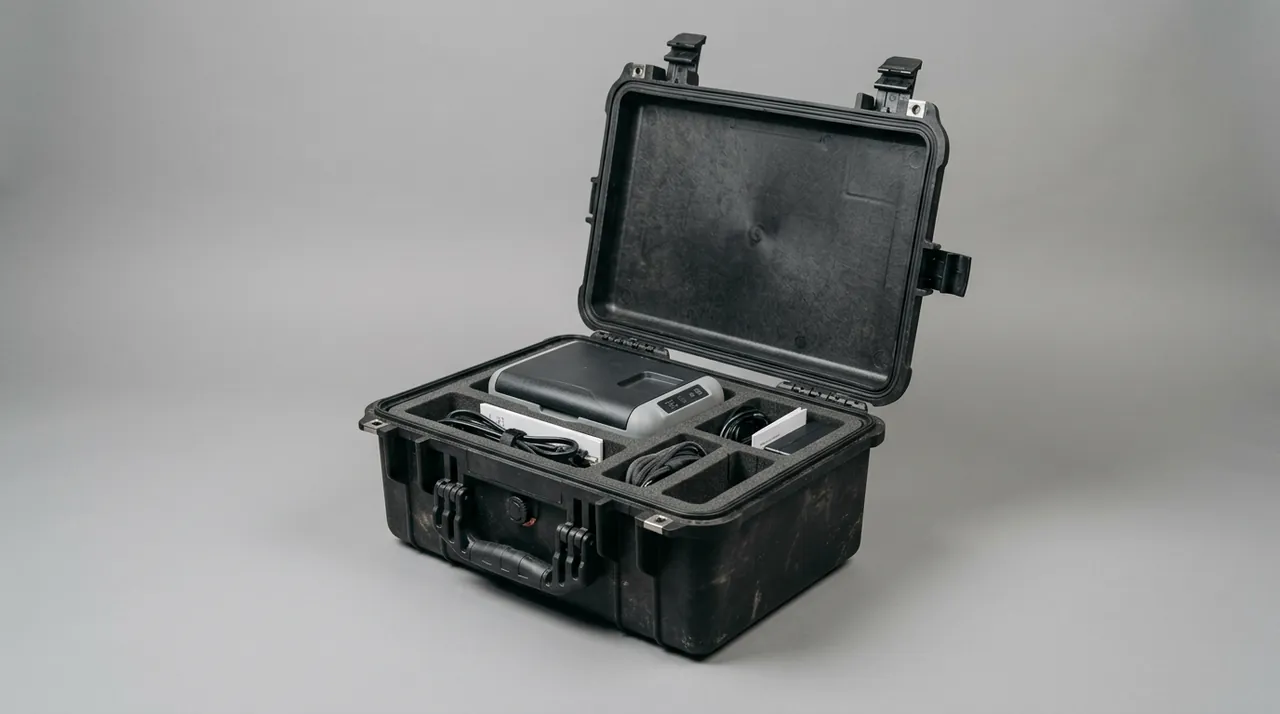
In outdoor work, the biggest worry is dust or water getting inside, and the sealing structure exists for exactly that reason. Most power utility protective cases cut a groove along the closing face and press a compressible rubber or silicone gasket into it. When the lid closes, latch pressure makes the gasket seat and form a continuous barrier across the mating surface. The cross-section of the gasket, whether round, square, or lipped, directly affects compression and sealing performance. A softer gasket can harden and lose elasticity in the cold, while a harder one needs more latch pressure at normal temperature. Dust control is often a harder design problem than water control, because fine particles creep in along tiny gaps, so the sealing face should avoid sharp corners and splice breaks. To verify whether a seal meets its target, the industry uses a water immersion test to look for leakage, and the material and replacement cycle of the gasket itself are covered in the seal strip material. Sealing reliability also depends on how clean the mating face stays, since even a single grain of sand caught in the groove can open a path for water. One point is easily forgotten: as internal and external pressure change, a very tight seal actually becomes harder to open, so some designs add a pressure-equalizing feature that passes air but not water, which is especially useful for hill-country inspection routes with frequent elevation changes. The compression between gasket and mating face should stay even: too tight accelerates rubber fatigue, while too loose leaves a path for water. After assembly, a quick check by feel at closing and a simple water spray can confirm the fit before the case goes into service. Records of the closing pressure at different temperatures are worth keeping, since a seal that works in summer may behave differently in a hard frost. A gasket that has stiffened in the cold is easy to miss until the first wet day, so checking it during the coldest week of the year is a practical habit.
5. Reliability of Latches, Hinges, and Handles
Latches, hinges, and handles are the most frequently used parts on a power utility protective case, and they often fail earlier than the shell ever cracks. A latch has to provide enough clamping force in a small volume while still engaging stably after hundreds or thousands of cycles. A hinge must carry the lid's own weight and the torque from one-sided hold-open positions. A handle must carry the whole loaded case and still stay secure in a wet hand or a gloved hand. In design, latches are usually placed near the corners of the gasket so pressure spreads more evenly and the gasket does not bulge in the middle. Hardware should favor corrosion-resistant materials or surface treatment to reduce rust and sticking caused by outdoor moisture. During stacking and handling, the corners take the most concentrated load; corner reinforcement is discussed in stacking corner design, while the load capacity of a stacked case connects to the logic used in the stacking test. When selecting, it helps to do one loaded open-and-close trial: let the crew cycle the case at real weight and feel whether the latches are smooth and the handle digs into the hand. That physical feedback comes closer to field reality than any drawing. Hinges and latches should also avoid sharp edges that pinch fingers or snag clothing, since these small choices shape the crew's experience over years of daily use. The number of latches should match the case size, since too few leave part of the gasket under-compressed and too many slow every opening. Hinge pins are best made from corrosion-resistant material and checked from time to time for axial play. It also helps to standardize the latch type across a fleet, so a broken part on one case can be swapped from another and the crew needs to learn only one opening action. Spare latches and hinge pins kept in the toolkit reduce downtime when a part finally gives way.
6. Stacking and Transport Load Design for a Power Utility Protective Case
Equipment stores, repair truck beds, and temporary command points all share the same problem: space is limited, so cases can only go up. This requires a power utility protective case to have predictable load capacity in the vertical direction, with a lid that can carry the weight of the case and gear above it without permanently deforming under long pressure. Stacking capacity depends on the compressive stiffness of the shell, the flat support area of the lid, and the load path between the corners. A well-designed case routes the weight of the upper case mainly through the corners and side ribs rather than onto the middle of the lid. Transport then splits into three modes: manual carrying, trolley movement, and mechanical lifting. Manual carrying favors handle placement and case dimensions that match a natural walking stride, while mechanical lifting requires reliable load points on the body. For gear that is transferred across regions, the load and restraint ideas in AAR certification are relevant, and outward-facing hints such as this-side-up, fragile, and keep-dry can be expressed with the conventions in transport marking. One reminder: stacking height should not rely on paper data alone, but should also account for warehouse humidity and storage duration. Under long compression, moisture speeds up slow creep in the material, so a damp warehouse calls for fewer stacked layers. If a case will sit in an open or half-covered yard for long periods, a rain shield reduces the combined effect of standing water and ultraviolet light on the lid, helping the stack keep its shape through a wet season. A clear load rating printed on the case, combined with a simple height marker in the store room, keeps daily stacking within the design limit without extra calculation. Where cases are moved by forklift or crane, standardizing the lifting points across a fleet also shortens handling time.
7. Handling Moisture, Dust, and Temperature Swing
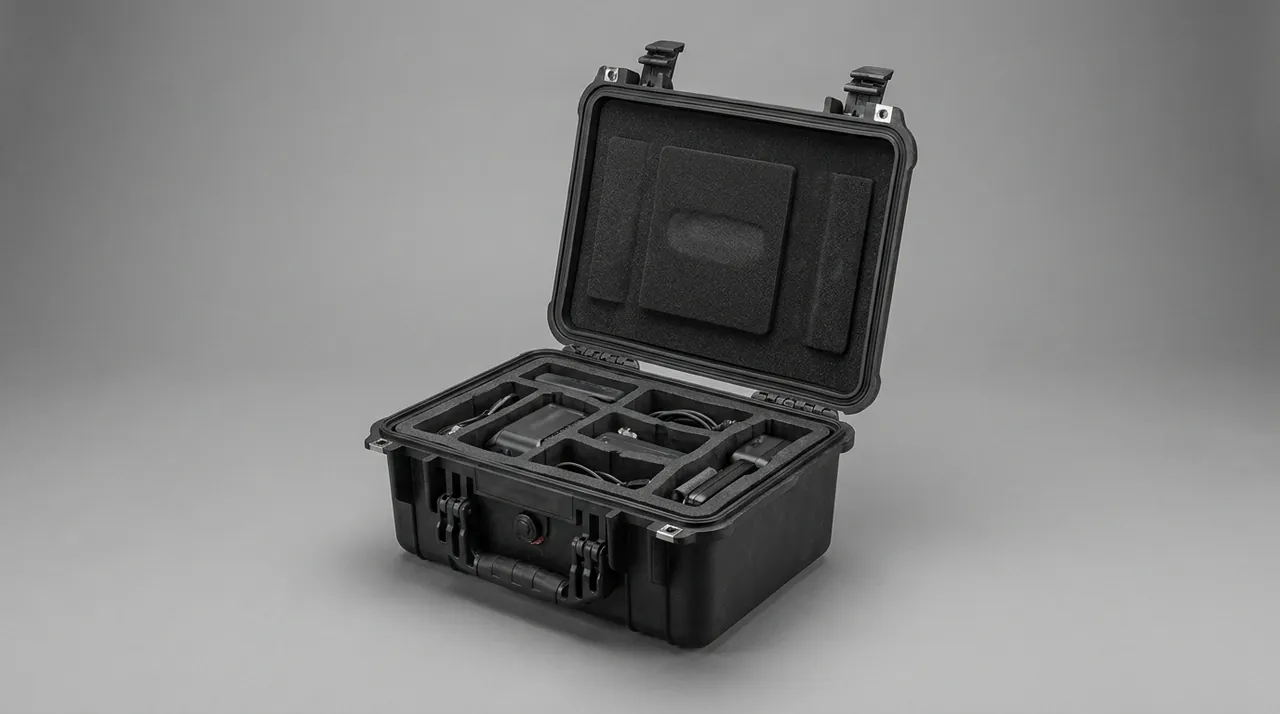
Substations, cable trenches, and hillside towers often combine high humidity, heavy dust, and large temperature swings, and these three attack the container together rather than separately. Moisture accelerates hardware corrosion and keeps the interior damp over long periods. Dust wears the sealing face and clogs venting features. Day-night temperature swings cause condensation inside the case, leaving droplets on gear surfaces. The response works in three layers. The first is to seal well and reduce moisture entry. The second is to give the interior some moisture-buffering ability, for example a dedicated place for a desiccant component inside the liner. The third is to avoid temperature-sensitive materials so the case does not turn brittle in the cold or soften in the heat. For cases exposed to salt spray or strongly corrosive settings over long periods, material and coating need dedicated assessment, following the approach in salt spray test, while offshore or coastal work can reference the environment practices in marine engineering cases. When condensation cannot be eliminated entirely, users should build a habit of periodic ventilation and inspection so moisture is removed before it causes damage. In highland areas or regions with sharp day-night shifts, a humidity indicator card inside the case lets a crew judge the internal condition quickly the moment the lid is opened. During the rainy or humid season, a crew can open the lid briefly after a shift to let moisture escape. For spare cases left unused for a long time, add a desiccant and replace it on schedule, so a well-sealed case does not simply lock damp air inside. Material selection plays a quiet but important role here, because a plastic that behaves well in a mild climate may craze or soften once the case is used where temperatures routinely swing far more than the design assumed. Keeping a spare gasket and a small drying kit with the case turns a slow environmental problem into a routine ten-minute task.
8. Ergonomics of Field Carrying and Vehicle Transport
No matter how good the case is, if it is awkward to carry or stow, field efficiency suffers. Ergonomics focuses on whether case dimensions, weight distribution, and carrying method match real working motions. For single-person carrying, case width should suit shoulder width and the center of gravity should sit close to the body; for longer walks, a shoulder strap or wheels are often better. For vehicle transport, the case shape should sit well against other cases in the truck bed and reduce sliding and collision while driving. For fast-moving inspection work, the compartmented, quick-access approach in airport ground cases is a useful reference. For foot patrol in areas with poor road conditions, the trade-offs in lightweight design and carrying comfort connect to the thinking in border patrol cases. In practice, let frontline staff take part in the trial: load the case to real weight, walk a stretch, and climb in and out of a vehicle once. Whether the case presses into the waist or the handle slips is the kind of feedback no specification table can replace. When a crew must work in a narrow cable trench or on a tower platform, whether the case opens with one hand and can be hung temporarily often matters more than raw capacity. Handles and wheels should also stay clear of the ground and the edges of a truck bed to avoid direct abrasion, and wear-resistant corner guards help where contact is unavoidable. For work that needs several short relays, a matched wheel and pull handle noticeably eases the load on the crew. For crews that travel by small vehicles, the case should also fit a standard rack or footwell without blocking access to safety equipment, since a case that is awkward to stow often ends up loose on the floor. A brief trial among several crew members of different builds is more telling than a single test by the strongest person on the team.
9. Marking, Inventory, and Asset Management
A repair team can easily carry several cases, and the gear inside often looks similar, so it must be quick to tell which case holds what and whether anything is missing. The first layer of the marking system is an external category label, using large type and high contrast to separate purposes. The second layer is an asset number or QR code on the case for registration and tracking. The third layer is internal compartment labels that let users return items to the right cell. External handling hints and regulatory labels must be expressed in a standard way, and the exact pictograms and wording are set out in transport marking. When gear needs to be stored or moved under a specific temperature condition, the marking should also reflect the temperature requirement, and the container structure can follow the approach in temperature-controlled cases. A label may look like nothing more than information stuck onto a case, but it directly determines handover efficiency and error rates, so the marking plan should be designed alongside the case at the procurement stage rather than added after the fact. Where conditions allow, linking the labels to an inventory system so a quick scan confirms the registered list can further reduce counting mistakes. Color and typeface should also be readable at night and in rain, where reflective patches or high-contrast backing help. Place labels away from areas of heavy rubbing and standing water so they are less likely to peel or blur. Keeping one spare label sheet with the case lets a defaced label be replaced at once rather than left unreadable for weeks, and a simple rule that every case carries both a name and a number removes most ambiguity during handover. Marking conventions should also be reviewed when the fleet grows, since a scheme that works for five cases may break down at fifty. Finally, the person who applies the labels should be the one who understands how the gear is actually used, so the categories match real retrieval habits.
10. Testing and Compliance Verification Path for a Power Utility Protective Case
A finished case is not the same as a usable one; a power utility protective case needs a series of checks to prove its structure is reliable. Typical verification covers individual tests such as drop, vibration, stacking, sealing, and salt spray, as well as a transport test that directly simulates the whole logistics process. The point of these tests is not to attach a pass label to the case, but to reproduce the worst conditions the field might present on a test rig and expose design flaws early. The way transport stages are simulated can follow the process design in the ISTA transport test. If the case will later hold items governed by specific transport rules, the packaging container must also be admitted under the applicable regulations, and the general route is described in UN certification. It is important to stress that a test conclusion applies only to the specific structure and configuration that was submitted. Once material, dimensions, or process change, the earlier result may no longer hold. Buyers should therefore keep complete test records and check that delivered batches match the submitted sample, avoiding the trap of a passing sample and a drifting production run. For complex cases used under severe conditions, a small pilot batch before finalizing the design can use real-world data to cross-check the test conclusions. Where resources allow, record a few key dimensions before and after testing to see whether the case has taken any residual set, since that comparison reveals long-term behavior better than a single pass result. A short test summary kept with each case helps new crew members understand why a particular structure was chosen, and it makes later complaints easier to trace to a specific assumption. Testing is most useful when its results feed back into the next design revision rather than sitting in a file.
11. Maintenance and Spare Part Replacement
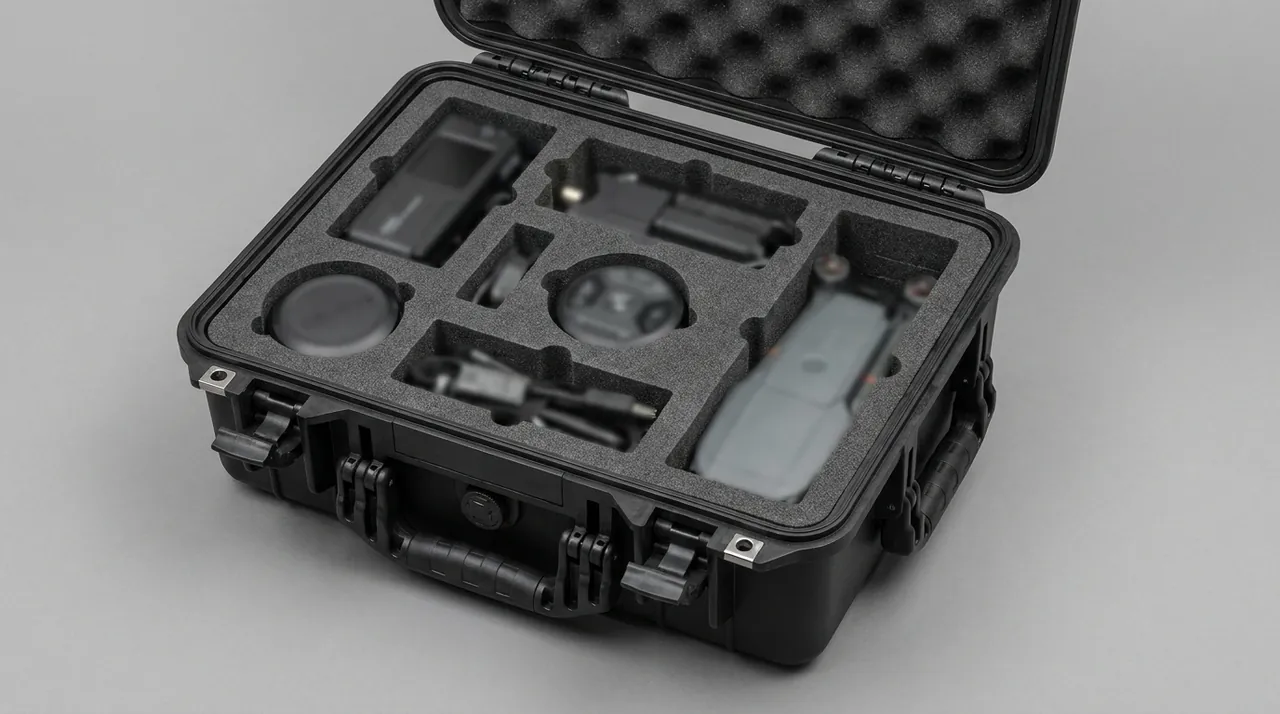
A protective case is a long-term asset, and whether it reaches its expected service life depends heavily on routine maintenance. Maintenance usually concentrates on parts that age: gaskets lose elasticity over time and compression, foam liners lose rebound after repeated loading, and hinges and latches become stiff from wear and corrosion. Users should keep a simple maintenance sheet and set inspection points by usage frequency, recording whether the gasket has hardened or cracked, whether the liner has collapsed, and whether hardware sticks. For gear that needs low-temperature or constant-temperature handling, also watch the integrity of the case's insulating structure, following the notes on insulation and temperature concerns in cold chain cases. Cases stationed in the field for long periods can draw on the moisture and cleaning experience in water conservancy cases. Replacing gaskets and liners is routine; keep spares that match the original specification, because forcing in a generic part with the wrong size can break the sealing fit rather than fix it. Maintenance records carry value of their own. They show the buyer which parts are replaced most often, so the next selection round can ask the supplier to strengthen those weak points. For cases in frequent use, raise the inspection frequency for gaskets and liners and keep one or two sets of wear parts in the spares cabinet. When the same part fails again and again, discuss a structural improvement with the supplier instead of simply replacing it more often. Cleaning habits matter too, since grit left on a sealing face will slowly grind away the rubber each time the case is closed, and a few seconds spent wiping the groove after a muddy shift adds years to the seal. A dated sticker inside the lid recording the last gasket change gives the next user a clear starting point. Spare parts stored in a dry place also last longer, which matters when replacements are ordered only once a year.
12. Selection Checklist and Procurement Points
Facing a wide variety of cases on the market, buyers can use a checklist to organize the selection logic. The checklist should cover the work scenario, whether inspection or repair dominates; the gear list per case and total weight; whether a compartmented liner is needed; exposure time outdoors and the type of contamination; whether stacking is required; the carrying method; and whether any specific transport admission will be needed later. Once the needs are written clearly, compare shell material, sealing level, liner structure, and hardware specification item by item against supplier data sheets. For cases used over long periods in heavy dust or strongly corrosive settings, the dust and vibration orientation in mining cases is a useful reference. For areas that may involve flammable or explosive working environments, the case should focus on anti-static and non-sparking structure, and the explosion-proof design thinking in petrochemical cases is worth understanding. In negotiation, besides unit price, write into the contract the spare part supply, marking printing, batch consistency, and warranty scope, so price and total cost of ownership can be compared on the same sheet. When the volume is large, a small trial order before the full batch lets field feedback confirm whether the assumptions in the checklist actually hold. The checklist should also carry clear priorities: list sealing level, load capacity, and carrying method as must-haves, and treat color and extra accessories as optional, so the discussion does not stall on secondary details. It is also worth asking each supplier to explain how their case meets the two or three most critical items on the list, because a clear answer reveals whether the design was thought through or simply copied from a catalogue. A short supplier scorecard kept over time turns a one-off purchase into a repeating, comparable process. Finally, the whole list should be revisited after the first season of use, since field experience often changes which requirements matter most. That review is what keeps the checklist a living tool rather than a formality.
13. Common Misconceptions and Engineering Advice
Several misconceptions recur in the use and procurement of power utility protective cases. The first is treating higher water resistance as always better, while ignoring that a stricter seal usually means harder opening and greater reliance on a pressure-equalizing feature, so over-design can hurt field efficiency. The second is comparing only shell thickness and ignoring the liner and hardware, so the case ends up very strong while the gear inside comes loose under repeated impact. The third is treating the liner as permanent and forgetting the aging replacement cycle of foam and gaskets. The fourth is treating a certification label as a universal proof and forgetting that the label matches only the one submitted configuration. A more reliable approach is to let design, procurement, and frontline users settle the specification together, run one loaded open-and-carry trial, and then confirm structural reliability with test records. Finally, note that this article discusses only the structure, liner, sealing, hardware, and load design of the case as a container, and does not involve the nature, composition, or internal construction of any packed item. Where cross-border transport, export declaration, or packaging of regulated items is involved, the user and the responsible party must assess and handle the applicable formalities under local law and applicable export-control requirements; nothing here may serve as a compliance determination or a legal or compliance conclusion. Once these misconceptions are cleared away, what remains is a plain conclusion: let the container structure match the real working conditions, rather than asking the working conditions to fit the container. A small habit that prevents many problems is to record, for each case, the conditions it is expected to face, so that any later change in the working environment triggers a review of the container rather than a silent mismatch. In the end, the case is only one part of a wider materials-handling routine, and it works best when the routine is planned with the same care. That is the practical meaning of matching the container to the job.
Frequently Asked Questions
Q: What kinds of inspection and repair gear can a power utility protective case protect?
A: From the container protection standpoint, a power utility protective case suits small gear of similar size that must be used repeatedly outdoors, such as handheld meters, insulated tools, clamps and fittings, spare batteries, lighting, logbooks, and a few spare parts. What it protects is the physical condition of that gear, preventing damage from knocks, dust, rain, and crushing so the items stay intact when taken out. It is important to stress that the case design only cushions and locates items according to their dimensions, weight distribution, and sensitivity; it does not change the nature of the items, nor does it mean the packed goods may be transported freely. Before loading, users should confirm the storage conditions and regulatory requirements of the gear, then choose a suitable compartment layout and sealing level, so the case's protection really lands where it is needed. For gear of very different sizes, a modular insert that can be rearranged is usually more practical than one fixed layout, because the mix of tools tends to change with the task and the season.
Q: Is rotational-molded polyethylene or injection-molded engineering plastic the better shell material?
A: Each material has its strengths, and the choice depends on the use scenario rather than a simple ranking. A rotational-molded polyethylene shell has even wall thickness and good impact toughness, making it suitable for larger cases that must take heavy stacking and rough handling. Injection-molded engineering plastic makes it easier to create fine structures and ribs, is lighter, and holds tighter dimensional accuracy, which suits cases that are carried often and opened quickly. When judging, focus on low-temperature brittleness, ultraviolet aging resistance, and overall weight, then factor in the real handling intensity of the crew. If the environment has large temperature swings and drops are likely, impact resistance and low-temperature performance come first. If foot carrying dominates, light weight and grip comfort matter more. There is no absolute answer; matching the scenario is the correct logic. If a supplier offers trial samples in both materials, compare them at the same dimensions and weight before committing, since the real difference often shows up only when the case is carried and opened under load.
Q: Should the liner be a single block of foam or a compartmented structure?
A: It depends on the number of items, how much their shapes differ, and how often they are used. If the case holds only one or two types of regular-shaped items in a stable quantity, a single cut foam block gives a tight fit and direct, stable cushioning. If the items vary in type and shape and are taken out one by one, a compartmented structure reduces item-to-item collision and makes it easier to put things back. In practice the two are often combined: an outer block of cushioning foam absorbs energy, while an inner set of compartments or cradles locates specific items. The design should also leave room for the hand and a retrieval gap so items do not jam and become hard to remove on site. Whichever approach is used, keep some cushioning margin between the liner and the wall rather than pressing items directly against the hard shell, or impact will bypass the liner and reach the gear.
Q: Is a higher dust and water resistance rating always better?
A: Not always. A higher sealing level usually means a tighter mating face, higher latch pressure, and greater reliance on a pressure-equalizing feature, which can become a burden in scenarios with frequent opening and closing. For most inspection and repair work, a rating that resists rain spray and dust ingress is often enough. Only when the case is exposed for long periods to strong wash-down or continuous high humidity is it worth pursuing a higher sealing performance. What matters more is the long-term stability of the sealing face: however high the initial rating, if the gasket hardens and cracks or the mating face deforms, real protection drops quickly. Selection should therefore consider the rating together with the maintenance cycle, so protection stays dependable across the whole service period. In short, the right rating is the one that meets the field conditions without making the case hard to use, and it is worth reviewing again whenever the working environment changes.
Q: At a repair site with heavy dust and rain, how can the case stay sealed over time?
A: The key lies in the design of the sealing face and the serviceability of the gasket. The closing face should avoid sharp corners and splice breaks so the gasket forms a continuous loop. The gasket needs suitable compression and hardness so it stays elastic in the cold and is pressed evenly by the latches at normal temperature. In dusty conditions, fine particles may cling to the sealing face each time the case is opened, so clean the mating face with a soft cloth regularly to prevent particles from embedding and forming tiny grooves. In areas with heavy rain wash, letting the case sit slightly tilted or off the ground during storage reduces standing water near the mating face. A gasket is a consumable; inspect and replace it on a schedule tied to usage, managing the seal as a maintainable system rather than assuming it never changes. Keeping the sealing face clean is a habit as much as a design issue, and a brief wipe after each outdoor shift is often enough to prevent the slow buildup that shortens seal life.
Q: How should gear inside the case be fixed to reduce vibration damage?
A: The idea is to do two things at once: limit movement and control cushioning. Limiting movement relies on locating structures shaped to the gear so it has almost no free play inside the case. Controlling cushioning relies on foam of suitable density and thickness so vibration energy is absorbed layer by layer as it travels. If the gear is heavy, keep its center of gravity low and near the center of the case to reduce swinging during transport. For instruments that are especially vibration-sensitive, add a layer of soft transition material between the liner and the gear to further damp high-frequency vibration. Keep in mind that over-tightening carries its own risk, because hard contact passes impact straight through, so leave some cushioning margin. After loading, give the case a gentle shake; if the contents rattle noticeably, the fixing still has room to improve. A simple check is to tip one corner of the case and listen for shifting, since even small movement can grow into damage across many trips.
Q: What load concerns matter during stacking and transport?
A: The core is to route weight down through the corners and side walls rather than onto the middle of the lid. Before stacking, confirm the lid has enough flat support area and the corners are reinforced enough to avoid permanent dents under long pressure. During transport, distinguish manual carrying, trolley movement, and mechanical lifting; handles and load points must match the load, and mechanical lifting should confirm reliable lifting points on the body. After loading a vehicle, use straps to secure the case against sliding and tipping that cause secondary impact. Stacking height should not rest on paper data alone but should combine warehouse humidity, storage duration, and upper load. In humid environments, cases deform slowly under long compression, so reduce the number of layers or add support. Treat load capacity as something to verify on site, not merely a number written in a specification. When in doubt, keep the stack lower than the theoretical maximum and place a rigid board between layers to spread the load more evenly.
Q: What tests or certifications does a protective case need to be considered acceptable?
A: Test items should correspond to real risks rather than simply being numerous. In general, start with individual tests such as drop, vibration, stacking, sealing, and salt spray, which map to handling impact, transport vibration, warehouse storage, rain and dust ingress, and corrosive environments. If a full logistics process must be simulated, a complete transport test plan can be used. If the case will later hold items governed by specific transport rules, the packaging container must be admitted separately under the applicable regulations. Be clear that any test conclusion applies only to the one submitted structure and configuration; once material, dimensions, or hardware change, the earlier result may not hold. Buyers should therefore check that delivered batches match the submitted sample and keep complete test records as the basis for later quality tracing. It also helps to match the test scope to the risk profile of the task, so effort goes into the conditions that actually threaten the gear rather than into checks that are easy to run but rarely relevant.
Q: How should a protective case be maintained, and how often should seals be replaced?
A: Maintenance should focus on parts that age, with a fixed inspection rhythm. Gaskets, foam liners, hinges, and latches change first; set inspection points by usage frequency and watch whether the gasket hardens or cracks, whether the liner collapses, and whether hardware sticks. Clean with a soft cloth and a mild detergent, avoiding strong solvents that attack rubber or plastic. There is no single number for the seal replacement cycle, since it depends on exposure, open-close cycles, and storage conditions; replace the gasket as soon as it loses rebound or shows cracks rather than waiting for a leak. Use spares that match the original specification, because a generic part of the wrong size may break the intended compression and defeat an otherwise reliable sealing structure. A short log of replacements over a year will show whether the interval should be tightened or can be relaxed, giving the maintenance plan a basis in real use rather than guesswork.