


A petrochemical protective case is a specialized container structure designed for flammable and explosive work environments such as refining, chemical processing, and oil and gas handling. Its core value lies in engineering measures at the container level, including static dissipation, flame-retardant sealing, and reliable latching, which provide physical isolation for internal equipment during transfer and temporary storage in hazardous areas. The design focus is not the chemical nature of the contents, but whether the Case Shell: Structural Materials and Molding Process of Protective Cases and the Waterproof Seal Strip: Structure and Selection for Protective Cases can maintain a safe container boundary where combustible vapor, dust, or static risk exists. Compared with the dust and water protection emphasized in IP Rating: Decoding Ingress Protection Grades for Protective Cases, the petrochemical scenario cares more about the case surface not generating ignition sources, the shell not accumulating dangerous static charge, and the opening process not producing mechanical sparks. For teams that must move tools frequently between units, tank farms, and loading platforms, a properly designed explosion-proof storage container significantly reduces derived risks during operations.
Purpose and Scope
The primary purpose of a petrochemical protective case is to control the controllable ignition risks that the container itself may introduce in flammable environments, mainly static accumulation discharge, metal impact sparks, and excessive shell surface temperature. For tool cases and equipment cases that enter explosive hazard zones with patrol, maintenance, and emergency teams, the container must eliminate these controllable risks at the structural level. In terms of scope, the petrochemical case is better suited to the function of physical isolation and transfer protection of equipment, and its evaluation object is the case material, grounding path, sealing interface, and latch action rather than the hazardous nature of the contents. Design should confirm through Drop Test: Structural Verification of Protective Cases Under Shipping Impact that the case will not crack or burst its latch under drop impact, thus avoiding secondary ignition sources in hazardous areas. It must be stated that a qualified container structure is only one link in the safe storage chain, and the user must still constrain actual operation by the site hazard zone division and work permit system.
From the perspective of condition differences, refining units, oil and gas gathering stations, and chemical warehouses have different combustible media forms, and their requirements for the case also differ. For example, places with combustible dust emphasize that shell seams do not accumulate powder and the surface is easy to clean, while places with combustible vapor emphasize sealing and pressure balance. In either case, the Stacking Corners: Stacking Corners and Limit Structures for Protective Cases should use non-sparking metal or engineering plastic to avoid impact sparks during stacking collision. Writing the requirement boundary into the technical agreement and then selecting materials and structure accordingly is an effective path to avoid the mismatch of grade passed but still inapplicable, and it is also the basis for subsequent acceptance and responsibility tracing.
Standards and Grade Framework
The container structure evaluation of a petrochemical protective case is usually developed based on the general principles related to the enclosure of explosion-protected electrical equipment, and its core idea is to treat the case as a shell that needs to control surface ignition risk. It is common in the industry to use explosion protection marks and hazard zone division grades to define the protection level the shell should have, for example by explicitly requiring shell surface temperature, enclosure protection grade, and grounding continuity. These frameworks always focus on the container itself rather than the reactivity of the contents, so during selection the purchaser should require the supplier to provide structural verification documents matching the declared grade. For products that need to circulate across borders, the external marking of the package should also be unified with reference to Transport Marking: Protective Case Shipping Marking Specification so that the transport link can identify the special management requirements of the case. It must be emphasized that different countries or regions have differences in the specific clauses of the explosion protection framework, and the purchaser should follow the system recognized by the target place of use.
In engineering implementation, it is recommended to include the explosion protection grade, protection grade, and material certificate in the acceptance list together, avoiding judging safety only by promotional terms. If the case also needs to meet the corrosion resistance represented by Salt Spray Test: Corrosion Resistance Verification for Protective Cases, the shell in marine or coastal petrochemical environments should also have anti-salt-spray aging ability, preventing the exposed metal from becoming a corrosion and spark hazard after surface treatment failure. For storage and transport packaging that needs to meet UN Certification: Transport Safety Certification for Protective Cases, the explosion-proof structure verification is often arranged in parallel with the transport safety verification, and the supplier should be able to provide traceable original records. Aligning the grade framework with the real medium environment avoids both over-design and safety gaps, keeping the container stable in its explosion-proof boundary throughout its life cycle.
Material Selection and Static Dissipative Structure
The primary goal of material selection for a petrochemical protective case is to prevent dangerous static charge from accumulating on the shell surface to an ignitable level. Although metal cases have high strength, if the surface resistivity is too high or the grounding path is incomplete, they may still become a static hazard. Therefore, the whole is often treated with conductive processing or the surface is coated with a conductive layer, making the shell a continuous static dissipation path. Engineering plastic cases can use intrinsically antistatic or conductive filler formulations, keeping the surface resistance in the static dissipation range rather than the insulation range. Material selection should also consider the stability of Case Shell: Structural Materials and Molding Process of Protective Cases under impact and temperature change, avoiding shell cracking caused by low-temperature embrittlement or high-temperature softening. Regardless of the base material, the key principle is that the shell surface should not become an isolated insulator, but should form a dischargeable network together with the grounding path.
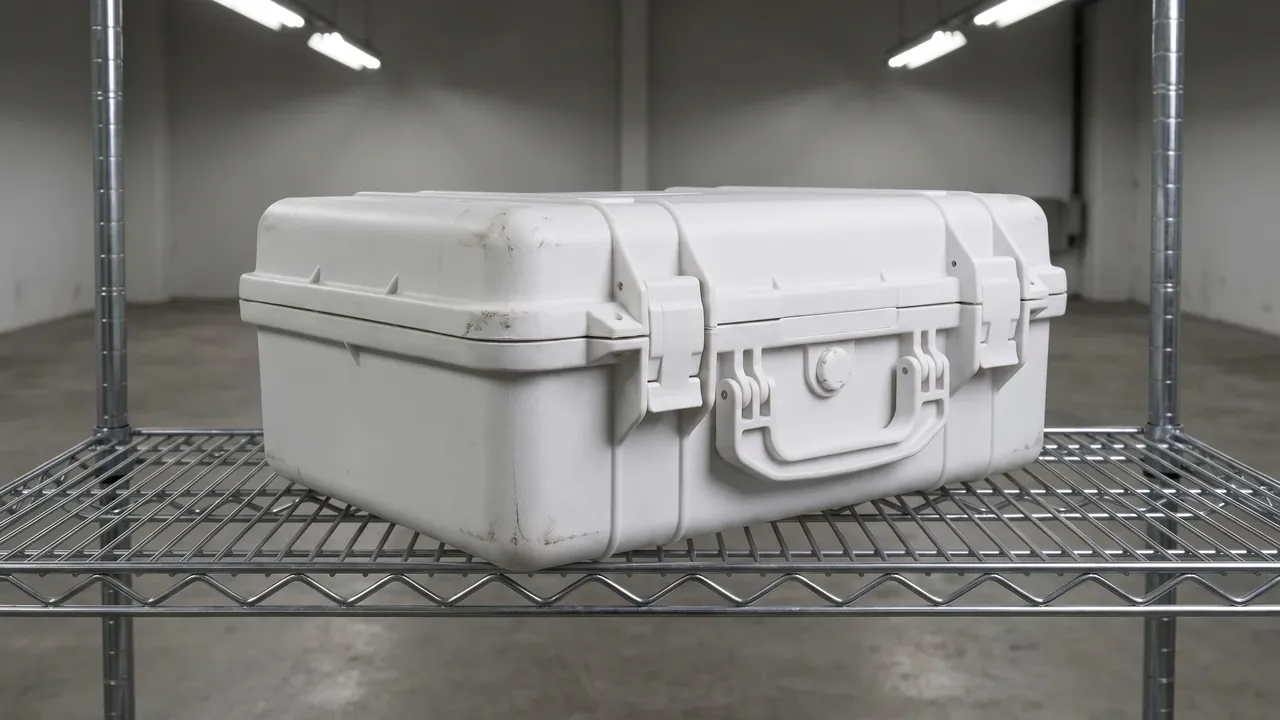
In structural details, the joint surface between lid and body, the latch mounting seat, and the metal reinforcement parts should all be included in the static continuity design, avoiding local interruption by insulating coating or non-metal inserts. For cases with ventilation or pressure relief structures, the edge of the opening also needs to guarantee conductive continuity to prevent the formation of isolated charged zones at the opening. When coordinated with Foam Lining: Cushioning and Custom Layout for Protective Case Interiors, the lining material should also use antistatic foam to avoid the inability to export static charge generated by friction of internal equipment. The final criterion of material selection is that the shell can maintain a low-resistance path from any outer surface to the grounding terminal in the fully assembled state, and this indicator should be measured and recorded in the factory inspection rather than inferred only from the material grade.
Grounding and Equipotential Bonding Design
Grounding is the most direct engineering means for a petrochemical protective case to eliminate static ignition risk. By setting a dedicated grounding terminal on the case and using a low-resistance conductor to connect the shell, metal latch parts, and lining support frame into an equipotential whole, the static charge accumulated by the case can be safely released before it is transferred to the hazardous area. The design should ensure that the continuity of the grounding path is not interrupted by detachable parts; for example, the lid and body should maintain electrical connection through conductive hinges or grounding braids rather than relying on occasional contact. For cases that need to be opened for operation, the grounding terminal should be located on the body so that the remaining structure remains equipotential during the opening process. This idea echoes the conductive continuity requirement of Stacking Corners: Stacking Corners and Limit Structures for Protective Cases, and the stacking contact surface should not become an insulating breakpoint either.
At the operation level, the marking of the grounding terminal should be clear and easy to connect quickly, and the connection point itself should not increase contact resistance due to corrosion. If the case serves long term in the salt spray environment represented by Salt Spray Test: Corrosion Resistance Verification for Protective Cases, the grounding metal parts must be corrosion resistant, otherwise the rust layer will raise the resistance and destroy the equipotential. For cases transferred with vehicles, the connection between the vehicle grounding and the case grounding should also be considered, so that the moving process can continuously release charge. It needs to be explained that the grounding structure only solves the static boundary of the case itself, and the user must still complete reliable bonding at the hazardous area entrance according to the site procedure, and the container design cannot replace the on-site grounding operation.
Sealing Structure and Flame-Retardant Seals
The sealing of a petrochemical protective case must not only block water and dust, but also suppress the penetration of external hazardous gas and prevent the accumulation of possible internal combustible vapor in places where combustible media exist. The seal strip should give priority to flame-retardant and oil and solvent resistant elastomers to avoid accelerated aging and hardening under hydrocarbon vapor or lubricating oil contact. The matching of the gasket cross section and groove determines the reliability of compression sealing, and selection can refer to Waterproof Seal Strip: Structure and Selection for Protective Cases, but the petrochemical scenario needs additional evaluation of the flame-retardant grade and medium compatibility of the material. Because of curvature change, the transition of the shell corners is prone to tiny gaps and is a weak point of sealing, so continuous compression of the gasket at this place should be guaranteed in the structural design. The integrity of the sealing interface is the premise for the case to maintain an explosion-proof boundary that is not penetrated by combustible media.
In addition, openings such as cable pass-through holes, quick connectors, and pressure valves are the intersection of sealing and ignition risk. If the pressure valve is used to balance internal and external pressure, its interior should be reliably closed in immersion or external combustible environment, and its material and moving parts should not produce sparks. The sealing of such openings should be verified separately rather than judged together with the main gasket. For cases with cable interfaces, the sealing ring of the interface flange and the torque of the compression nut need to be included in the special inspection. Combined with the grade label of IP Rating: Decoding Ingress Protection Grades for Protective Cases, the sealing goal of the petrochemical case is to superimpose the constraint of not introducing ignition sources above the declared protection grade, so the seal material selection must put flame retardancy and medium resistance in the same important position as waterproof, and form traceable material proof.
Latches, Hinges, and Non-Sparking Hardware
Latches, hinges, and fasteners are the most frequently actuated structures on a petrochemical protective case and the most likely to introduce mechanical sparks. Ordinary carbon steel latches may produce impact sparks when opened and closed quickly or impacted, so cases used in hazardous areas should give priority to beryllium copper, stainless steel, or explosion-treated alloys to avoid sparks becoming ignition sources. Hidden parts such as hinge shafts and screw heads also need explosion-proof and corrosion-resistant treatment to prevent friction sparks from rusted action. The multi-latch design helps distribute the compression force evenly along the perimeter of the lid closure, improving sealing uniformity and reducing the shell stress concentration caused by single-point over-compression. This part of the structure, together with Case Shell: Structural Materials and Molding Process of Protective Cases, determines the safety boundary of the case during the opening and closing process.

In explosion-proof treatment details, the metal surface should avoid sharp edges and high-hardness pairing to reduce the spark energy during collision. Moving parts can be filled with explosion-proof grease to reduce friction temperature rise. For cases that need verification by Drop Test: Structural Verification of Protective Cases Under Shipping Impact, the latch should not break off or deform to produce ignitable sparks after impact, so the latch mounting seat should have sufficient strength. The connection between the shell and metal reinforcement parts should also guarantee equipotential continuity to prevent isolated charged parts formed by screw connection. Writing the explosion-proof treatment of latches, hinges, and metal parts into the technical agreement and checking them by batch in incoming inspection can make the case continuously meet the use requirements of hazardous areas throughout its life cycle, and also provide objective evidence for subsequent disputes.
Lining Cushioning and Antistatic Foam
The lining of a petrochemical protective case not only undertakes the cushioning and positioning function, but also participates in the static boundary management. If the lining uses ordinary open-cell foam, the static charge generated by the friction of internal equipment during movement is difficult to export and may be released at the moment of opening. Therefore, the petrochemical scenario should give priority to antistatic closed-cell foam, so that the lining itself is in a dissipative state. If the support frame of the lining is a metal part, it should be connected to the grounding path of the case to avoid forming an isolated charged structure. The layout design can refer to Foam Lining: Cushioning and Custom Layout for Protective Case Interiors, but the petrochemical version needs to additionally mark the surface resistance range and flame-retardant grade of the material. A reasonable lining protects precision equipment and also avoids its interior becoming a static accumulation cavity.
In damage reduction design, the bottom of the lining can be provided with a guide groove so that accidentally entered liquid can collect and drain rather than being locked by the foam, thereby reducing the risk of combustible liquid remaining in the case. For cases carrying electronic detection instruments, the lining should also consider the shock-proof positioning requirements similar to Optical Instrument Case: Protective Cases for Optical Instruments to avoid internal device collision generating sparks or damage during transport vibration. It must be emphasized that the antistatic lining is a component of the container explosion-proof structure, and its material certificate and surface resistance measured value should be archived together with the case. The user must also use the same explosion-proof grade material when replacing the lining, and must not replace it with ordinary foam without authorization, otherwise the static boundary of the whole case will be destroyed.
Stacking Corners and Transport Stacking Safety
Petrochemical protective cases often need multi-layer stacking in storage and transport. The stacking corners must bear vertical loads and avoid generating sparks during collision or tilt. The corners and limit structures should use non-sparking metal or high-strength engineering plastic, and their contact surface should ensure conductive continuity to be included in the equipotential network. The design can refer to Stacking Corners: Stacking Corners and Limit Structures for Protective Cases, but the petrochemical version needs to additionally evaluate the integrity of the corner under drop and vibration to prevent the bottom case from shell cracking due to upper impact. The stacking stability also depends on the limit cooperation between the case bottom and the lid, and the limit surface should avoid hard metal-to-metal impact, and buffer pads can be used to reduce spark risk.
In transport stacking, the case should also confirm the deformation and instability boundary under the rated stacking layer number through Stacking Test: Protective Case Stacking Load Verification. For petrochemical cases transferred by vehicle for long distances, the stacking fixing method should avoid the metal buckle of the binding belt directly scratching the shell to produce sparks, and antistatic binding belt and isolation pad should be used when necessary. It needs to be explained that stacking safety is a container structure problem, and the user must still control the stacking height and center of gravity according to the vehicle loading specification. The stacking strength of the case itself cannot replace the transport binding scheme. Including corner strength, limit cooperation, and equipotential continuity in the design together can make the case maintain a stable explosion-proof boundary throughout the storage and transport process.
Temperature, Humidity, and Pressure Relief Structure
A petrochemical protective case may experience internal temperature rise near sunlight or equipment. If there is combustible vapor inside and the shell surface temperature is too high, it may constitute an ignition risk, so the container structure needs to constrain the temperature rise and surface temperature. The ventilation or pressure relief structure is used to balance the internal and external pressure difference and avoid sudden ejection when opening, but its opening must be set without breaking the explosion-proof boundary, for example by using a flame-arresting breathable element or a reliably closed valve. Similar to the idea of Temperature-Controlled Case: Active Temperature Control and Insulation, the petrochemical case can reduce external heat input through the insulation layer, but any active structure should not introduce electric spark sources. Temperature and humidity management is also related to the reliability of internal equipment, and reasonable passive ventilation can alleviate condensation without breaking the seal.
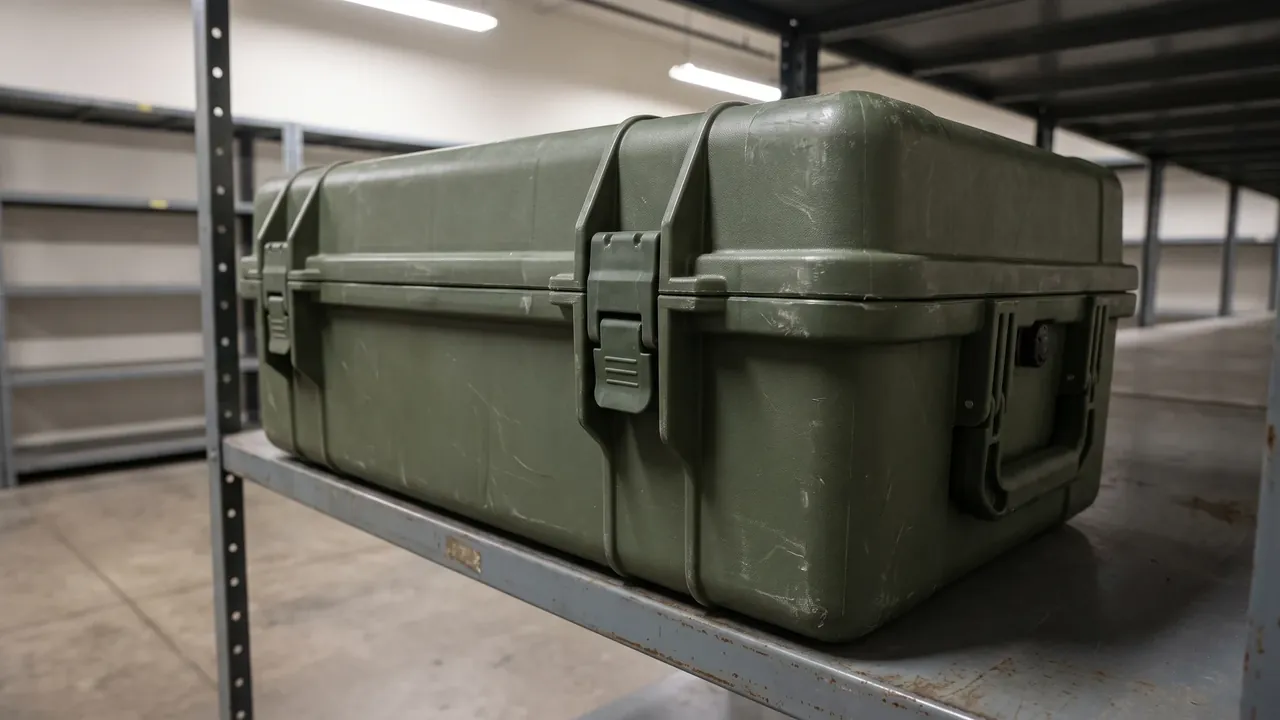
In pressure relief details, the orientation of the relief channel should avoid the operator and potential ignition sources, and the relief part itself should be an explosion-proof certified structure rather than an ordinary breathable film. For cases that need verification by Vibration Test: Random Vibration Verification for Protective Cases, the ventilation and pressure relief parts should not loosen or fail after vibration, otherwise the explosion-proof boundary will be destroyed. The control of the shell surface temperature also needs to combine external heat insulation and material thermal conductivity, so that the shell does not exceed the temperature in the nominal ambient temperature range. It must be clarified that ventilation and pressure relief only solve the pressure difference and temperature rise, and the user must still control whether combustible vapor is allowed inside the case according to the medium characteristics. The container structure cannot replace the storage management of the internal items.
Division of Work With Drop, Vibration, Salt Spray Tests
The verification of a petrochemical protective case cannot rely on a single test, but should combine three types of assessment: structure, environment, and explosion-proof boundary. The drop test answers whether the shell and latch are intact under impact, the vibration test answers whether long-distance bumping causes loosening, the salt spray test answers whether the metal parts fail in corrosive environment, and the explosion-proof structure verification answers whether the container introduces a controllable ignition source boundary. The four mechanisms are different and cannot replace each other: a case may pass Drop Test: Structural Verification of Protective Cases Under Shipping Impact but still have static hazards because the grounding path is interrupted by insulating coating, or it may seal well but produce sparks when opening due to improper latch material. Therefore, the qualified assessment should include the above tests and the explosion-proof special item in the list together.
In the verification sequence, structural tests are usually done first to confirm that the case has no irreversible deformation, and then environmental and explosion-proof checks are done to avoid structural damage interfering with subsequent criteria. For products that need to meet ISTA Test: Transport Test Procedure for Protective Cases or UN Certification: Transport Safety Certification for Protective Cases, the test combination needs to be executed strictly according to the standard. When reviewing the report, the purchaser should pay attention to whether each item is independently qualified rather than only looking at the overall conclusion, so as to accurately identify whether the short board is on the sealing, material, grounding, or structure side, thereby building the explosion-proof boundary of the petrochemical protective case on a complete evidence chain.
Transport Marking and Compliance Documents
A petrochemical protective case needs clear marking in the circulation link to inform transport and operation personnel of its special management requirements. The external marking should indicate the container grade related to explosion protection, surface resistance warning, and prohibited matters, and be consistent with the general requirements of Transport Marking: Protective Case Shipping Marking Specification so that the railway, road, and port links can quickly identify it. The marking material should be weather resistant and oil resistant to avoid falling off or blurring in the petrochemical environment. In addition to the external marking, the documents with the case should also include material certificate, grounding continuity measured value, seal flame-retardant grade, and factory inspection record. These documents are necessary attachments for compliance scenarios such as UN Certification: Transport Safety Certification for Protective Cases and are also the basis for customer inspection and responsibility tracing.
In document management, it is recommended to archive the explosion-proof structure verification, Salt Spray Test: Corrosion Resistance Verification for Protective Cases, and Drop Test: Structural Verification of Protective Cases Under Shipping Impact reports by batch to form a traceable quality file. The language and symbols of the transport marking should cover the main management requirements on the circulation path to avoid misoperation caused by unrecognized marking during cross-border transfer. It needs to be explained that the marking and documents only describe the management attributes of the container itself, and the user must still handle the corresponding procedures according to the nature of the contents. The case documents cannot replace the transport compliance documents of the internal items, and the two should be collected and reviewed separately.
Typical Petrochemical Application Scenarios
Petrochemical protective cases have clear uses in multiple sub-scenarios. Patrol and maintenance teams in refining units need to carry tools and detection instruments in explosive hazard zones, and the case provides a container boundary of static dissipation and flame-retardant sealing. Oil and gas gathering and storage stations often move equipment between tank farms and pump areas, and the case needs to balance the dust and water protection of IP Rating: Decoding Ingress Protection Grades for Protective Cases with explosion-proof requirements. Chemical storage and filling areas emphasize antistatic lining and easy cleaning to avoid dust or residual liquid accumulating at seams. For coastal or offshore petrochemical facilities, the case should also pass the salt spray resistance related to Marine Engineering Case: Protective Cases for Marine Engineering Equipment so that the shell does not fail in the salt spray environment. The commonality of these scenarios is the existence of controllable ignition source risk, and the case structure is precisely used to control this risk.
In addition, gas stations, oil and gas field field operations, and the explosive risk areas in Power Utility Case: Protective Cases for Power Utility Equipment also rely on such cases to maintain equipment availability. Even in the combustible dust link involved in Mining Case: Protective Cases for Mining Equipment, its shell explosion-proof and antistatic ideas are highly connected with the petrochemical scenario. Understanding typical scenarios helps to set appropriate material, sealing, and grounding grades according to the real medium form, avoiding directly applying general cases to hazardous areas. When preparing industry solutions, it is recommended to compare the scenario medium, hazard zone grade, and case explosion-proof structure item by item, and gradually establish a selection baseline for specific processes.
Standards Basis and Compliance Notes
The explosion-proof storage scheme of a petrochemical protective case should be built on a clear grade framework and customer technical agreement. Common bases cover the general principles related to explosion-protected enclosures, hazard zone division documents, and the technical specifications signed by both supply and demand parties, and can be archived together with protection grade, corrosion resistance, and transport safety verification to form a layered evidence system. In product finalization, incoming inspection, and third-party certification, the relevant reports should be retained together with documents such as AAR Certification: Protective Case Railway Intermodal Certification and Transport Marking: Protective Case Shipping Marking Specification to ensure full process traceability. It must be specifically stated that this article only discusses the application method of the protective case container structure in flammable and explosive environments such as petrochemical, and does not involve the chemical nature, formula, reaction, or hazardous characteristics of any contents. The cross-border transportation, export, and procurement of related products must comply with local laws, regulations, and export control requirements, and the responsible party shall separately conduct compliance assessment. The content of this article does not constitute any compliance conclusion. It is recommended that enterprises confirm the applicable method and judgment threshold with the certification body before selection, write the explosion-proof structure indicators into the technical agreement, and precipitate data in a unified report format, thereby forming a reusable and auditable petrochemical protective case storage capability.
Frequently Asked Questions
Q: Can a petrochemical protective case directly hold flammable chemicals? A: No. The petrochemical protective case discussed in this article is an explosion-proof and static dissipative design for the container structure itself. Its function is to control the ignition source risk introduced by the case during transfer and temporary storage in hazardous areas, and it does not change or contain the hazardous characteristics of the contents. If you need to transport flammable and explosive chemicals themselves, you should use dedicated dangerous goods packaging and complete the corresponding permits. The case structure cannot replace the packaging compliance requirements of dangerous goods. The user should clearly distinguish the boundary between equipment protection container and dangerous goods packaging, and avoid mistakenly using an ordinary explosion-proof structure case as a chemical container, which would bring safety risks and compliance responsibilities beyond the design scope. Always confirm the contents classification before use, and keep the case role limited to physical isolation and transfer protection of non-chemical equipment and tools.
Q: What is the difference between static dissipative and antistatic? A: Both point to controlling static charge, but the engineering meanings are slightly different. Static dissipative usually means that the surface resistance of the material falls in a range that can slowly and safely release charge, avoiding sparks generated by rapid discharge. Antistatic is a broader term covering all measures that suppress the generation or accumulation of static charge. The petrochemical case emphasizes dissipation rather than insulation or rapid conduction, because complete insulation accumulates charge and complete conduction may introduce other risks in high-current environments. In design, the shell, latch, and lining frame should be connected into an equipotential whole through the grounding path, so that the charge is released before being transferred to the hazardous area rather than staying on the case surface to form an ignitable static field. This distinction matters for material selection and testing, and should be specified as a measured surface resistance range in the acceptance criteria rather than left as a vague claim.
Q: Must the case shell be made of metal? A: Not necessarily. Metal shells have high strength and are easy to make continuous grounding, but need surface treatment and explosion-proof material selection. Engineering plastic shells using intrinsically antistatic or conductive filler formulations can also maintain a static dissipation path, and are lighter and do not produce impact sparks. The selection depends on the scenario: places with strong impact or high strength requirements can use metal with explosion-proof treatment, and places with corrosion or light weight requirements can use conductive engineering plastic. The key is that regardless of the base material, the shell surface to the grounding terminal should maintain a low-resistance continuous channel, and this indicator should be measured rather than inferred only from the material grade, so as to ensure the case has a stable static boundary in the fully assembled state. Both options are valid provided the continuity is verified by factory test on every representative unit, and the chosen base material should also suit the expected impact, temperature, and cleaning regime of the deployment site.
Q: Why does the seal strip emphasize flame retardancy? A: Because in petrochemical environments, external combustible vapor may contact the strip, and if the strip itself is combustible or decomposes flammable gas at high temperature, it becomes an additional risk. At the same time, gasket aging and hardening weakens the main seal and allows external media to penetrate. Therefore, petrochemical case strips give priority to flame-retardant and oil and solvent resistant elastomers, and their flame-retardant grade and medium compatibility are evaluated during selection. The strip also undertakes the function of blocking external combustible vapor from entering the case, and its cross section and groove matching determine the compression sealing reliability. Putting flame retardancy and medium resistance in the same important position as waterproof, and forming material proof, makes the sealing interface truly serve the explosion-proof boundary rather than only serving waterproof. This is a core difference from general cases, and the strip certificate should travel with the case archive so that the material grade can be rechecked during periodic maintenance and before any spare part replacement in the field.
Q: How can the grounding terminal remain effective during transport? A: The grounding terminal should be set on the case body and clearly marked so that it can be quickly bonded at the hazardous area entrance. For vehicle transfer, the connection between vehicle grounding and case grounding should also be considered, using low-resistance conductors to maintain continuous release during the moving process. For cases that are frequently opened, the lid and body should maintain equipotential through conductive hinges or grounding braids to avoid the remaining structure becoming an isolated charged part when opened. The grounding metal parts need corrosion-resistant treatment to prevent salt spray rust from raising contact resistance. It needs to be explained that the grounding structure only solves the static boundary of the case itself, and the user must still complete reliable bonding according to the site procedure. The container design cannot replace the on-site grounding operation, which remains mandatory, and the measured resistance should be recorded on the transport document for audit.
Q: What structures are added compared with ordinary cases? A: Three types of structures are mainly added: first, static dissipation and grounding path, keeping the shell to grounding terminal low resistance continuous. Second, flame-retardant and medium-resistant sealing and ventilation parts, avoiding the gasket and valve becoming ignition sources. Third, explosion-proof treated latches, hinges, and stacking corners, avoiding mechanical sparks. Ordinary protective cases focus on waterproof, impact resistance, and cushioning, while the petrochemical version superimposes the constraint of not introducing ignition sources on this basis. The two are connected in basic verification such as IP Rating: Decoding Ingress Protection Grades for Protective Cases and Drop Test: Structural Verification of Protective Cases Under Shipping Impact, but the petrochemical version needs additional verification of static continuity and material explosion-proof attributes, and cannot replace each other. These differences should be written into the acceptance list, and each added structure should have its own measurable pass criterion rather than a generic description, so that incoming inspection can verify the explosion-proof attributes independently of the basic protective case tests.
Q: Is the salt spray test meaningful for petrochemical cases? A: Yes. Coastal and offshore petrochemical facilities have severe salt spray. If latch, hinge, or grounding metal parts corrode, it not only affects function but also raises contact resistance and destroys equipotential, thereby weakening the static boundary. The salt spray test can expose corrosion hazards of surface treatment and dissimilar metal contact, and is an important supplement to the reliability of the explosion-proof structure. But it does not examine sealing waterproof, nor does it examine the explosion-proof grade itself, so it should be included in the verification list together with immersion, drop, and explosion-proof special items. In engineering, it is recommended to combine salt spray with protection grade and grounding continuity measurement into an industry-specific verification package, so as to comprehensively cover corrosion, waterproof, and static risks, avoiding inferring overall reliability from a single pass. This package improves field life significantly and reduces unplanned maintenance in corrosive zones, while keeping the documented evidence chain aligned with the declared hazard zone and medium of the actual deployment.
Q: Will the ventilation and pressure relief structure destroy the explosion-proof boundary? A: If improperly designed, yes. Ordinary breathable film or normally open holes allow external combustible media to enter freely and destroy the container boundary. The correct approach is to use a flame-arresting breathable element or a reliably closed valve to balance the pressure difference without breaking the explosion-proof boundary. The relief part itself should be an explosion-proof certified structure, its orientation should avoid the operator and potential ignition sources, and it should not loosen after Vibration Test: Random Vibration Verification for Protective Cases. It must be clarified that ventilation and pressure relief only solve pressure difference and temperature rise, and the user must still control whether combustible vapor is allowed inside the case according to the medium characteristics. The container structure cannot replace the storage management of the internal items, and the boundary between the two must be clearly distinguished during both design and operation to remain safe and compliant with site rules.
Q: What should be written into the technical agreement during selection? A: The container indicators related to explosion protection should be quantified one by one into the agreement: the surface resistance range of the shell and the measured value of grounding continuity, the flame-retardant and medium-resistant grade of the seal, the explosion-proof and corrosion-resistant treatment of metal parts such as latches and hinges, the strength of stacking corners, and the corresponding verification method and acceptance criteria. At the same time, indicate the applicable hazard zone grade and the transport marking requirements on the circulation path. Align these indicators with compliance frameworks such as UN Certification: Transport Safety Certification for Protective Cases and require the supplier to provide traceable original records, so that cases from different batches and suppliers have a unified comparable scale, facilitating the quality department to release or return, and also providing an objective basis for subsequent maintenance and dispute handling. This makes acceptance repeatable, auditable, and defensible during customer inspection and third-party review of the procurement.