

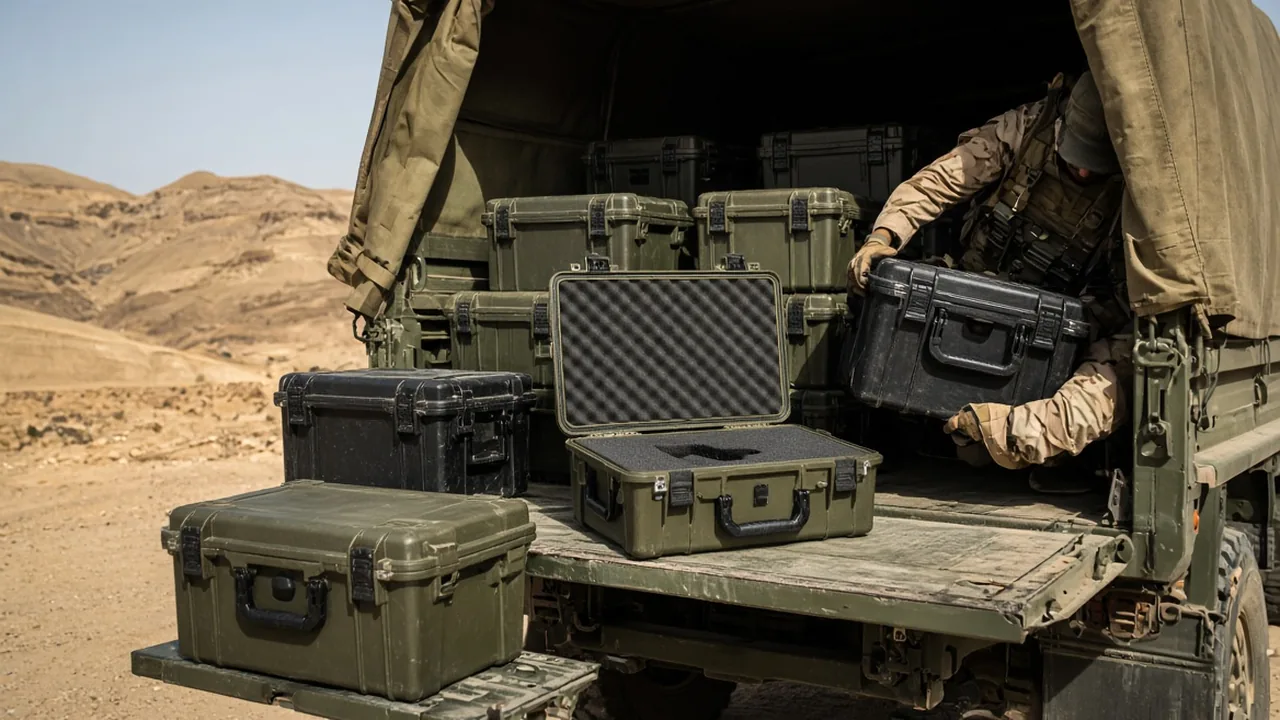
The AAR certification for protective cases refers to the set of structural, safety, and traceability admission requirements that a reusable rail intermodal packaging container must satisfy before it is allowed into the railway freight network. This certification typically centers on the load-bearing capacity of the Case Shell: Structural Materials and Molding Process of Protective Cases and the lifting adaptation of the Case Stacking Corner: Load-Bearing and Alignment Hardware for Stacked Cases, confirming that the case keeps its structural integrity during hump-yard lifting, long-haul marshaling, and multimodal transshipment. For instruments, tools, and spare parts that must travel by rail, a compliant container lowers the risk of damage, overturning, and cargo-loss claims during transit, so the certification is often written into the technical agreement as a precondition for arrival acceptance. Unlike the sealing metric explained in IP Rating: Decoding Ingress Protection Grades for Protective Cases, the rail intermodal certification stresses the long-term reliability of the container under dynamic loads and frequent handling.
Purpose and Scope of AAR Certification
The AAR certification, rooted in the specifications issued by the Association of American Railroads for reusable steel shipping containers, uniformly constrains the safety of rail packaging containers during line operation and yard handling. For protective cases, the scope first covers "reusable rigid containers" rather than single-use wooden crates or cartons, which means the case must withstand hundreds or thousands of lifts, stacks, and transfers without unacceptable deformation. At the boundary, the certification examines the structural performance of the container itself, such as shell stiffness, corner casting strength, and latch durability, and does not evaluate the function or nature of the contents. When a case is used for scenarios such as Rail Transit Case: Protective Cases for Rail Transit Equipment that require frequent cross-bureau transport, the certification serves as a shared acceptance baseline and reduces disputes caused by inconsistent standards. It must be stressed that a passing certification only means the container meets the admission threshold under specified test conditions, not that it can be used without limit in any overload scenario.
In practice, the reference value of AAR certification also appears at the level of cross-border mutual recognition. The North American rail network and multimodal system are highly standardized, and containers meeting the relevant specifications are more easily accepted during cross-railroad transfer, port transshipment, and highway continuation, lowering the probability of rejection due to non-compliant packaging. For manufacturers, certification is also a sign of design maturity: it forces engineering to consider corner casting layout, wall thickness distribution, and stress concentration at the stage of Case Shell: Structural Materials and Molding Process of Protective Cases rather than reworking after a sample cracks in testing. Therefore, even when not mandated by the purchaser, certified containers are often more convincing in bidding, which is a common reason the requirement appears on admission checklists.
Core Demands of Rail Intermodal on Packaging
The core demands of rail intermodal on packaging containers can be summarized as three points: stackable, liftable, and shock resistant. Stackable means the case can be stably layered several levels high in warehouses and railcars without crushing the bottom layer, relying on the locating and load interface provided by the Case Stacking Corner: Load-Bearing and Alignment Hardware for Stacked Cases. Liftable means the top and bottom corner castings must withstand repeated grasping by lifting gear, forklift attachments, and automated yard equipment, with the tensile and shear capacity of the castings as the key check. Shock resistant points to the continuous random vibration and coupling impact of long-haul marshaling, requiring good vibration isolation between the Case Foam Lining: Cushioning and Customization of Case Interiors and the shell. These three demands together determine whether the container can circulate safely in the rail network and are the logical source of the certification test design.
From an operational view, rail intermodal also has the characteristic of "high-frequency transshipment": the same case may first be delivered by road trailer to a container terminal, then lifted onto a rail flatcar, and after arrival transferred by forklift into a warehouse. Each transshipment is a load event, and the accumulated fatigue effect far exceeds a single shipment. Therefore the certification looks not only at static strength but also at cumulative damage under repeated handling, consistent with the thinking behind Drop Test: Structural Verification of Protective Cases Under Shipping Impact. When reviewing, purchasers should require suppliers to provide a complete evidence chain covering lifting, stacking, and vibration rather than confirming usability from a single strength calculation, so that the core demands are truly turned into acceptable metrics.
Key Requirements of the AAR 2037-1 Specification
Within the specification system for reusable steel shipping containers, AAR 2037-1 is a frequently cited technical clause that gives specific requirements around corner casting strength, stacking load, lifting safety, and marking traceability. The corner casting section usually specifies the limit capacity of top and bottom corner castings under tension, compression, and shear, and requires no visible cracks in the connection zone between castings and shell. The stacking section gives the uniform load under rated stacking layers and confirms the crush margin of the bottom case when fully loaded and stacked, which is highly related to the criteria of Stacking Test: Compliance Verification of Warehouse Stack Load and can be seen as a strengthened version of the generic stacking test for rail scenarios. When understanding the clause, distinguish "rated value" from "test value" to avoid mistaking the minimum admission threshold for a recommended working condition.
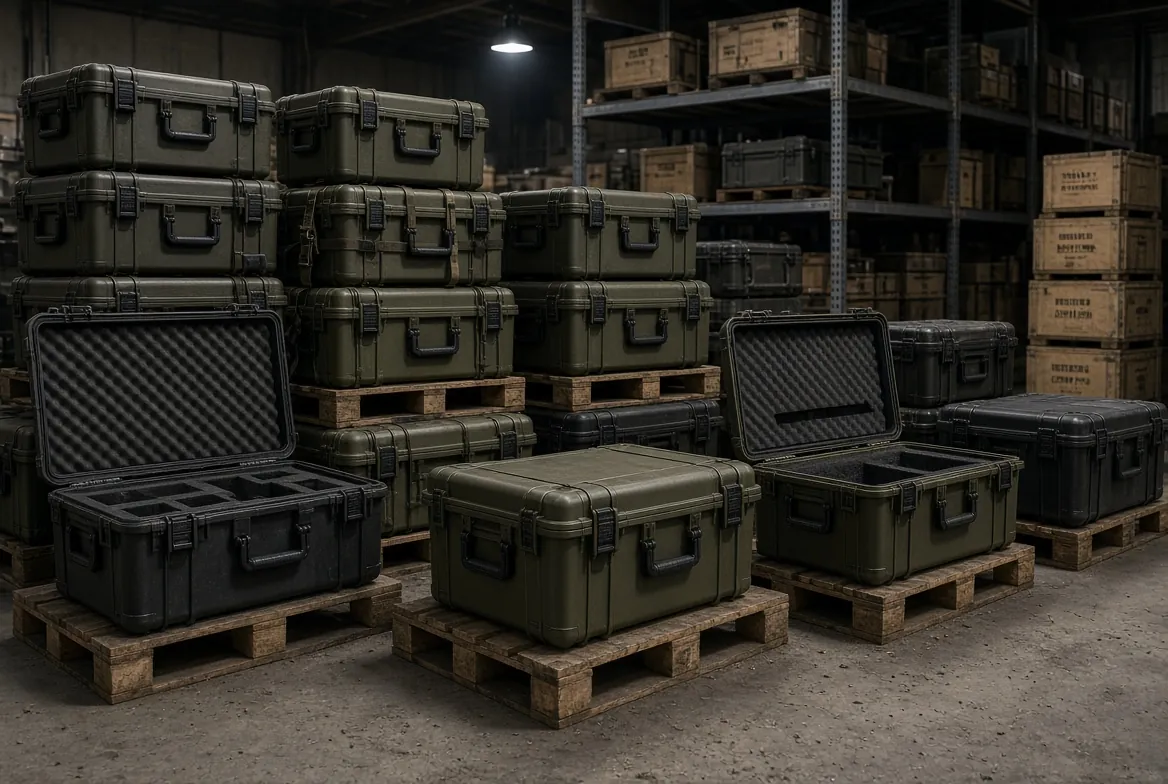
Beyond strength clauses, AAR 2037-1 also emphasizes the maintainability of the container over its life cycle: for example, the replaceability of latches and hinges, and the recoverability of worn parts after maintenance. This is especially important for protective cases because field operations inevitably cause knocks, and if key connectors cannot be disassembled and replaced, the case will be scrapped early. The specification also requires a stable identification area on the case for registration and traceability in the intermodal ledger, echoing the marking integrity stressed in Protective Case Transport Marking: Handling Pictograms and Regulatory Labels. For containers entering the North American rail network, meeting this clause is almost a precondition for admission, so manufacturers usually check each item against the clause before design freeze to pass third-party verification on the first try and avoid repeated rework, delivery delay, and extra cost.
Container Structure and Material Admission
Container structure and material are the hardware foundation of rail intermodal certification. The shell often uses steel, aluminum alloy, or high-performance composites, where steel leads in load-bearing, aluminum in weight saving, and composites in corrosion resistance and electromagnetic shielding. Regardless of material, the Case Shell: Structural Materials and Molding Process of Protective Cases must make local reinforcements at the corner casting connection zone, latch beam root, and bottom stiffener to absorb the concentrated stress from lifting and stacking. Material admission also requires providing material grade, mechanical properties, and welding procedure qualification records to ensure batch products are consistent with the design sample. For containers operating in cold regions, the low-temperature impact toughness of the material must also be considered to prevent brittle cracking in winter marshaling yards.
In structural details, corrugated sidewalls, stiffener layout, and bottom plate thickness jointly determine overall stiffness. Corrugation improves bending resistance without significant weight increase and is a common lightweight reinforcement for rail containers; stiffeners spread local loads evenly to corner castings and avoid shell depression near lifting points. When the container needs to accommodate the waterproof interface of Case Seal Strip: The Key Waterproof and Dustproof Accessory for Protective Cases, the flatness of the shell closing flange must also be included in the admission check, because an uneven flange directly weakens the uniformity of seal compression. Therefore material admission is never an isolated "material pass" but a system pass after material, structure, and seal interface work together, and the certification test is the final confirmation of this synergy.
Latches, Hinges, and Sealing System Checks
Latches and hinges are the key moving parts of rail containers that bear repeated opening and vibration fatigue. In certification checks, the latch must prove it keeps compression after multiple cycles, and the hinge must not loosen or break under swing and impact. For sealed protective cases, the compression set rate of the Case Seal Strip: The Key Waterproof and Dustproof Accessory for Protective Cases is also included in the associated assessment, because latch aging that reduces compression will directly affect seal failure. The check usually combines cycle opening with post-vibration functional inspection to confirm the moving parts remain usable at the simulated end of life. For multi-latch designs, the force balance of each latch must also be verified to prevent gaps from under-compression at the far end.
The sealing system itself is not the sole direct object of AAR clauses, but in rainy, snowmelt, and washing environments, the sealing performance of rail containers significantly affects the usability of internal items. Therefore, in certification preparation, manufacturers often submit the verification of IP Rating: Decoding Ingress Protection Grades for Protective Cases as supporting evidence in parallel with structural certification. The hinge area should also focus on anti-loosening design, such as lock washers, thread-locking adhesive, or split pins, to avoid gradual slack from long-haul vibration. Treating latches, hinges, and seals as a linked subsystem for checking reflects the real reliability of the container in railway operations better than looking at any single part alone, and is the proper way to write a high-quality admission document.
Adaptation to Stacking, Lifting, and Forklift Work
Stacking, lifting, and forklift work are the three types of load events that rail containers face every day, and the certification has clear requirements for the adaptation of all three. Stacking requires the case not to deform beyond limit at the bottom layer under rated layers with a safety margin; lifting requires the top corner casting not to produce permanent elongation or cracking under tension; forklift work requires the bottom structure to withstand local jacking of the forks and ground impact. These three events correspond to different force modes, and the Case Stacking Corner: Load-Bearing and Alignment Hardware for Stacked Cases plays a connecting role because it is both the locating baseline for stacking and the force interface for lifting. Design should avoid treating corner castings as decorative parts and instead calculate their transmission path from the perspective of the overall strength chain.

In forklift adaptation, the spacing of the bottom longitudinal beams should match common fork widths, leaving enough support surface between beams to prevent local "point contact" plastic depression when the case is jacked. For heavy steel containers, the safety of single-person operation should also be calculated, and rollers or skids should be configured when necessary to reduce on-site handling difficulty. When the container is used for scenarios such as Water Conservancy Case: Protective Cases for Hydrology and Water Conservancy Monitoring that require temporary outdoor stacking, the corrosion protection and drainage of the stacking base should also be considered to avoid early rust of the bottom layer after long-term moisture. Designing stacking, lifting, and forklift work in the same load spectrum produces a container that truly adapts to rail intermodal rather than a sample that barely meets a single test.
Load-Bearing Design of Corner Castings and Stiffeners
Corner castings are the most important load interface of rail intermodal containers, and their design directly determines lifting and stacking safety. A qualified corner casting should meet the specification limits in tension, compression, and shear, and the connection weld or rivet zone with the shell should have sufficient fatigue reserve. Stiffeners spread local loads to the entire shell: a ring stiffener near the top corner casting prevents lifting tension from concentrating on the sidewall thin plate; a load beam near the bottom corner casting transmits stacking pressure steadily to the bottom plate. These ideas are closely related to the molding process choice in Case Shell: Structural Materials and Molding Process of Protective Cases, and the difference between rolling, welding, or integral molding affects the final effect of the stiffener.
In design checking, besides static strength, the stress concentration factor and fatigue life should also be considered. The corner casting hole, weld toe, and stiffener end are typical stress concentration areas; without fillet transition or local thickening, cracks will initiate and grow under repeated handling. For containers requiring long-term cross-border turnover, it is recommended to combine finite element analysis with physical cycle tests to confirm that the damage accumulation of key parts is controllable within the expected life. When the container also carries the load of Case Foam Lining: Cushioning and Customization of Case Interiors, the stiffener should also reserve an interior fixing interface so the damping structure does not weaken the main load path. Treating corner castings and stiffeners as the skeleton of the load system is the foundation of stable rail admission.
Compliance Considerations for Lining and Damping
The lining and damping structure does not directly bear the main lifting load, but it determines the safety of the contents under long-haul marshaling vibration, so it is also an associated object of certification evaluation. A compliant lining should ensure it does not loosen or shed debris under rated vibration and forms a stable limiting relationship with the shell so the internal equipment is constrained in any posture. When selecting the Case Foam Lining: Cushioning and Customization of Case Interiors, closed-cell foam should be preferred for moisture resistance and dimensional stability, and a checkable gap should be left between lining and shell for maintenance inspection of the damping layer. For precision instrument containers, the zoning and groove accuracy of the lining directly affect the isolation effect and must be fixed in the design drawing.
On the other side of compliance, the lining should not become a "cushion" that hides structural defects. If the shell stiffness is insufficient and the corner castings are loose, simply thickening the foam to absorb vibration only hides the problem and brings greater risk under extreme conditions. Therefore the certification-oriented approach is "structure first, then lining": confirm the Case Shell: Structural Materials and Molding Process of Protective Cases and corner casting system meet the load requirement, then use the lining for fine isolation. For temperature-controlled containers, the lining should also coordinate with the insulation layer of Temperature-Controlled Case: Achieving and Validating Thermal Stability to avoid the damping structure and insulation layer competing for space and weakening both functions. This layered design lets the lining truly work within the compliance framework.
Environmental Adaptability and Corrosion Protection
Rail containers circulate year-round in outdoor marshaling yards, tunnel humidity, and coastal salt spray, so environmental adaptability is a dimension of admission that cannot be ignored. Corrosion protection usually starts from two lines: material selection and surface treatment. On material, corrosion-resistant steel or aluminum alloy is preferred; on surface treatment, galvanizing, plastic spraying, or dacromet processes improve the corrosion grade. For cross-sea intermodal containers, the results of Salt Spray Test: Corrosion Resistance Verification for Protective Cases should also be referenced to confirm the life of the coating system under alternating salt spray. Corrosion around the seal interface is especially dangerous because it destroys the fitting foundation of the Case Seal Strip: The Key Waterproof and Dustproof Accessory for Protective Cases, so the protection of the flange and latch periphery should be higher than general areas.
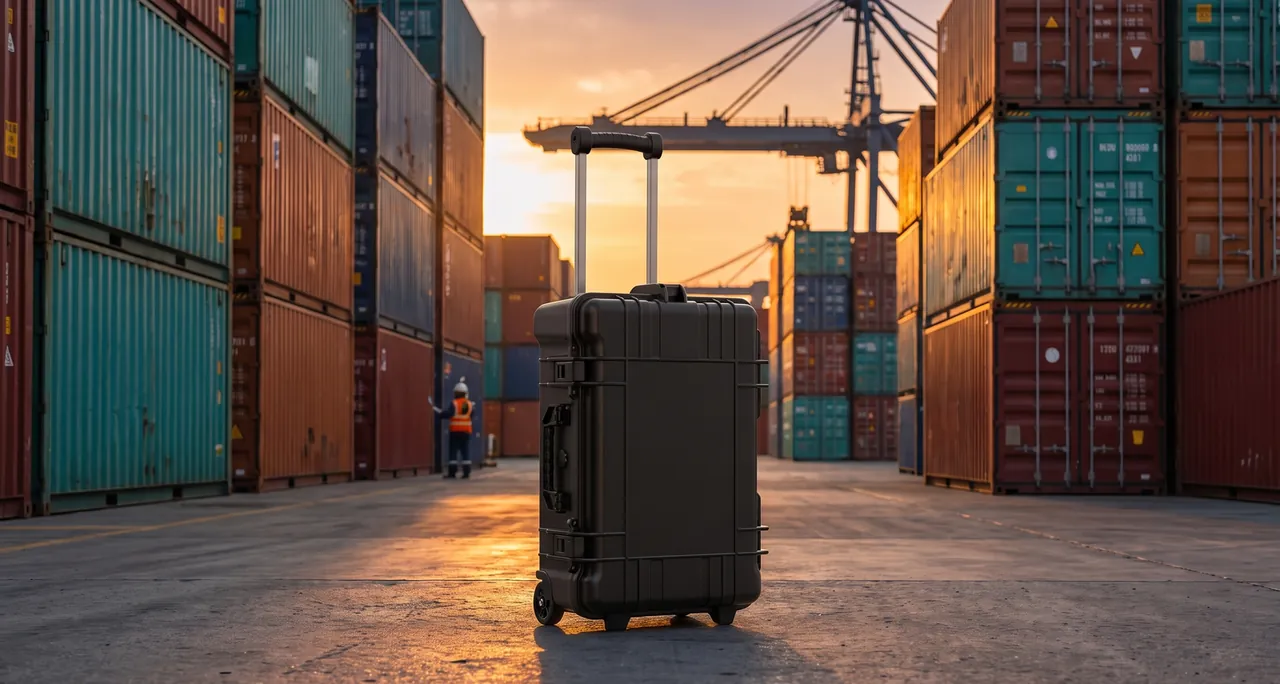
Environmental adaptability also includes temperature alternation and ultraviolet aging. The low temperature in northern winters may make plastic parts brittle and gaskets hard, while the high temperature and humidity in southern summers may accelerate metal electrochemical corrosion, so certification preparation often includes high-low temperature cycle pretreatment in sample checks. For containers requiring long-term service in harsh environments such as Marine Engineering Case: Protective Cases for Marine Engineering Equipment, the corrosion margin should be larger and the periodic inspection interval clearly stated in the maintenance manual. Treating environmental adaptability as an admission dimension parallel to strength significantly reduces the failure probability of the container over its life cycle and gives purchasers a basis for acceptance, avoiding the use of "can be lifted" as the only standard while ignoring hidden durability risks.
Marking, Documentation, and Traceability
Marking, documentation, and traceability are easily overlooked yet extremely critical parts of rail intermodal certification. The container should fix a nameplate or silk-screen at a prominent position recording model, rated load, stacking layers, production batch, and unique serial number for registration and traceability in the intermodal ledger. This, together with the pictogram integrity stressed in Protective Case Transport Marking: Handling Pictograms and Regulatory Labels, forms the "identity" of the container. On documentation, the manufacturer must provide material certificates, welding procedure qualification, third-party test reports, and maintenance instructions to form an auditable evidence package. Traceability also requires key parts such as corner castings and latches to have batch numbers so that common defects can quickly locate the same batch of products.
In practice, the durability of the marking itself must also be tested: outdoor sunlight, rain, and mechanical friction make paper labels fail quickly, so rail containers mostly use etching, riveted nameplates, or weather-resistant ink. Document management should be electronically archived with product delivery so that subsequent inspection, resale, and cross-border declaration can retrieve original records. For products requiring UN Certification: Transport Safety Certification for Protective Cases or customer factory audit, a complete marking and document system is the entry point for compliance review. Treating marking and documents as part of the product rather than accessories allows the container to always "state its origin and trace its responsibility" throughout its life cycle, which is also the basic requirement of modern rail logistics for packaging.
Interface With UN Certification and ISTA Testing
Rail intermodal certification is not isolated; it often forms a multi-dimensional compliance puzzle with UN certification and ISTA testing. UN certification focuses on the safe transport of dangerous goods packaging, examining the container under specific drop, stacking, and sealing conditions; AAR certification focuses on structural admission within the rail network, examining the reliability of lifting and marshaling; and ISTA Test: Transport Test Procedure for Protective Cases provides a set of general test procedures simulating distribution environments. Their criteria differ and applicable links differ, but they complement each other on the goal of "safe arrival of the container". Manufacturers should choose the combination according to the target market and transport chain rather than doing only the easiest one to pass.
In the interface strategy, it is recommended to use structural tests as the base, first confirming the Case Shell: Structural Materials and Molding Process of Protective Cases and corner castings meet rail load, then stacking sealing and environmental verification. If the container also needs to cross borders, UN Certification: Transport Safety Certification for Protective Cases should be a shipment precondition to avoid discovering non-compliant packaging at the port. For e-commerce or project procurement, the combined report of Drop Test: Structural Verification of Protective Cases Under Shipping Impact and vibration test also enhances buyer confidence. Placing different certifications in a compliance matrix saves repeated test costs and avoids acceptance deadlock caused by mutual contradictions, which is the common practice of mature suppliers.
Typical Rail Industry Application Scenarios
Rail intermodal certification has practical significance in multiple industry scenarios. Rail transit operation and maintenance need Rail Transit Case: Protective Cases for Rail Transit Equipment to load signaling, communication, and maintenance equipment, with frequent lifting and transshipment during cross-bureau transfer, where qualified container structure directly relates to equipment being usable on arrival. The power utility field's Power Utility Case: Protective Cases for Power Utility Facilities often transports spare parts between substations and lines, where heavy load and outdoor storage require the case to resist stacking and weather. Mining and Mining Case: Protective Cases for Mining Equipment equipment transport emphasize impact and dust resistance, and rail shipment is one of the main ways for long-distance allocation. The common point of these scenarios is "high frequency, long distance, multiple transshipments", which is exactly where certification value is most prominent.
In addition, Petrochemical Case: Protective Cases for Petrochemical Equipment during inter-plant transfer, Geological Exploration Case: Protective Cases for Geological Exploration Equipment during field site rotation, and Airport Ground Case: Protective Cases for Airport Ground Support during transfer between terminals and maintenance warehouses all rely on compliant containers to maintain operation continuity. Even products like Cold Chain Case: Protective Cases for Cold Chain Logistics with temperature control still need the shell to meet rail load admission, otherwise the best internal thermostat will fail due to shell damage. Aligning the certification grade with the real scenario avoids the mismatch of "sample passes but batch fails", letting the container serve stably in real rail logistics rather than only in laboratory conclusions.
Test Verification and Acceptance Criteria Writing
Test verification is the final step to implement admission requirements, and its core is to compile repeatable and auditable acceptance criteria. A standardized verification scheme should include six parts: specimen information, test equipment, load parameters, process records, judgment method, and conclusion. Specimen information records shell material, corner casting batch, and latch status; test equipment describes lifting fixtures, stacking platform, and vibration table; load parameters list rated stacking layers, lifting point force, and vibration spectrum; process records document deformation, abnormal sound, and functional changes on a timeline; judgment method references the predefined pass threshold; conclusion gives clear pass or fail. The writing can refer to the format of Stacking Test: Compliance Verification of Warehouse Stack Load to ensure consistent external statements.
The writing of acceptance criteria should avoid vague expressions; for example, "no obvious structural damage" should be quantified as "no visible cracks in the corner casting connection zone and residual bottom deformation not exceeding a certain millimeter". For products requiring third-party endorsement, the report should also attach original records, photos, and instrument calibration certificates for review by bodies such as UN Certification: Transport Safety Certification for Protective Cases. Purchasers can stipulate in contracts that the certification report is a required document for arrival acceptance, thereby solidifying the quality threshold in the supply chain. It must be specifically stated that this article only discusses the verification and application method of the protective case container structure under rail intermodal admission, and does not involve the nature, formulation, or use of any contents; the cross-border transport and export of related products must comply with local laws, regulations, and export control requirements, and the responsible party should separately assess compliance, and this article does not constitute any compliance conclusion.
Frequently Asked Questions
Q: What is the difference between AAR certification and a normal stacking test? A: AAR certification is a complete set of admission requirements for reusable rail intermodal containers. Besides stacking load, it also covers corner casting lifting strength, repeated handling fatigue, marking traceability, and maintenance replaceability, focusing on the structural safety of the container throughout its rail life cycle. A normal stacking test usually only verifies the compression resistance of the case under rated layers, with a narrower scope and a more single load event. The two cannot replace each other: passing the stacking test only means the container can withstand static stacking, not that it can withstand repeated grabbing by yard lifting gear and long-haul vibration. Therefore, protective cases used for rail shipment should take the AAR-type admission as a more complete acceptance baseline, treating the stacking test as one sub-item in the overall evidence chain rather than using one test to replace all requirements. For purchasers, this distinction prevents the costly mistake of approving a case on a single static test while ignoring the dynamic handling it will actually face in service.
Q: Can a protective case be used indefinitely after passing rail certification? A: No. Rail intermodal certification gives the admission threshold of the container under rated load and expected life, not a guarantee of unlimited use. In real operations, lifting knocks, salt spray corrosion, and vibration fatigue gradually consume the safety margin of the container, and corner castings, latches, and welds have clear inspection cycles. The user should establish a regular inspection system and promptly stop or repair cases with cracks, permanent deformation, or latch failure. Passing certification only means the sample meets the requirement under test conditions, and the actual state of batch products diverges with use intensity and maintenance level. Treating certification as an "inspection-free license" is dangerous; the correct approach is to treat it as a starting point, combined with on-site spot checks and life management, so the container maintains a qualified level throughout its service life rather than only at the moment of delivery. A written maintenance plan that schedules periodic re-verification of corner castings, latches, and welds keeps the qualification record auditable over the whole service period.
Q: Can an aluminum alloy case obtain rail intermodal certification? A: Yes. Rail intermodal certification checks the structural performance of the container rather than a specific material, and aluminum alloy is often adopted in links that need to control self-weight and reduce fuel consumption due to its lightweight advantage. But the aluminum case must pay special attention to stiffness compensation in design: at the same thickness, the elastic modulus of aluminum is lower than steel, so reinforced ribs, corrugated sidewalls, and local thickening of corner castings are needed to maintain the load chain. In surface treatment, aluminum should be well anodized or coated to resist outdoor salt spray and avoid galvanic corrosion. As long as it passes the corresponding lifting, stacking, and vibration verification and retains material and welding records, the aluminum protective case can also obtain admission. The core of material selection is to balance weight, strength, and corrosion resistance rather than blindly pursuing one material, which is the mature engineering choice for rail containers.
Q: Will the lining foam affect the judgment of rail certification? A: Yes, but it participates as an associated evaluation object rather than a main load-bearing part. The pass criteria of the certification mainline target structural parts such as shell, corner castings, and latches, while the lining foam must remain non-loosening and non-shedding under vibration and impact, and form a stable limit with the shell, otherwise even if the main structure passes, the internal equipment may still be damaged during long-haul marshaling. In design norms, "structure first, then lining" should be adhered to: first confirm the Case Shell: Structural Materials and Molding Process of Protective Cases meets the load, then use closed-cell foam lining for fine isolation. If the shell's own stiffness overload is absorbed by simply thickening the foam, it only hides structural defects and brings greater risk under extreme conditions. Therefore the lining should be regarded as an auxiliary layer that improves system redundancy and cannot replace the precondition that the main structure passes.
Q: Why are corner castings the most critical part of a rail container? A: Because corner castings are the only force interface between the container and the rail operation system: the lifting gear grabs the top corner castings during lifting, the load is transmitted layer by layer through the bottom corner castings during stacking, and forklifts and automated equipment also locate around the corner castings. Once the corner casting fails under tension or shear, the case may fall and be destroyed, or worse, endanger operators and adjacent cargo. The corner casting also bears fatigue from repeated handling, and cracks easily initiate at the hole and weld toe, so its material, connection process, and fatigue reserve are listed as core inspection items of certification. A qualified corner casting design places a ring stiffener near the top corner casting and a load beam near the bottom corner casting to spread local loads smoothly to the shell. It can be said that strong corner castings mean a stable container, and weak corner castings mean overall risk, which is why it is repeatedly emphasized.
Q: Will missing marking cause certification failure? A: In a strict sense, marking and documents are part of traceability admission, and missing or unreadable marking is regarded as a non-conformity that affects the overall qualified conclusion. Rail containers need to fix a nameplate at a prominent position recording model, rated load, stacking layers, production batch, and unique serial number for registration and traceability in the intermodal ledger. In outdoor environments, paper labels fail easily, so etching, riveted nameplates, or weather-resistant ink should be used. On documents, material certificates, welding qualification, and third-party test reports should be delivered with the product and archived electronically. Although marking does not directly determine structural safety like corner casting strength, it is the basis of responsibility definition and batch recall, and is often checked first during factory audit and cross-border review, so it should not be underestimated or made up afterward. A complete marking system is the entrance to every downstream compliance check.
Q: Can rail certification be done together with UN certification? A: Yes, and it is usually recommended to coordinate. The two target different links: AAR-type rail certification focuses on the structural admission of the container within the rail network, while UN certification focuses on the safe transport of dangerous goods packaging. Although the criteria differ, both revolve around the goal of "safe arrival of the container". Mature suppliers use structural tests as the base, first confirming the shell and corner castings meet rail load, then stacking sealing and environmental UN drop-stacking verification to avoid repeated disassembly and multiple sample rounds. In cross-border chains, UN certification is often a shipment precondition, and rail certification is the precondition for station acceptance, so writing both into the technical agreement is the most stable. The key to coordination is to establish a compliance matrix clarifying the certification and criteria served by each test, preventing contradictions that cause acceptance deadlock and delivery delay, which is the practice of experienced suppliers managing multimodal compliance.
Q: Does a temperature-controlled case also need to meet rail structural certification? A: Yes. The temperature control function relies on the internal insulation and active conditioning system, but the case body itself must maintain structural integrity during rail lifting, stacking, and vibration, otherwise the best thermostat will fail due to shell damage. Therefore the verification of Temperature-Controlled Case: Achieving and Validating Thermal Stability should be parallel with rail structural certification: first confirm the shell, corner castings, and latches meet load admission, then stack the inspection of the insulation layer and through-wire sealing. Weak points such as cable pass-through holes and interface flanges also need separate sealing verification to avoid becoming water or heat-loss channels. For cross-sea temperature-controlled cases, the salt spray and high-low temperature cycle results should also be referenced to confirm weather resistance life. Placing temperature control and structure in the same admission list produces a complete case that is both thermally stable and rail-durable rather than a partial product that fails in real logistics.