

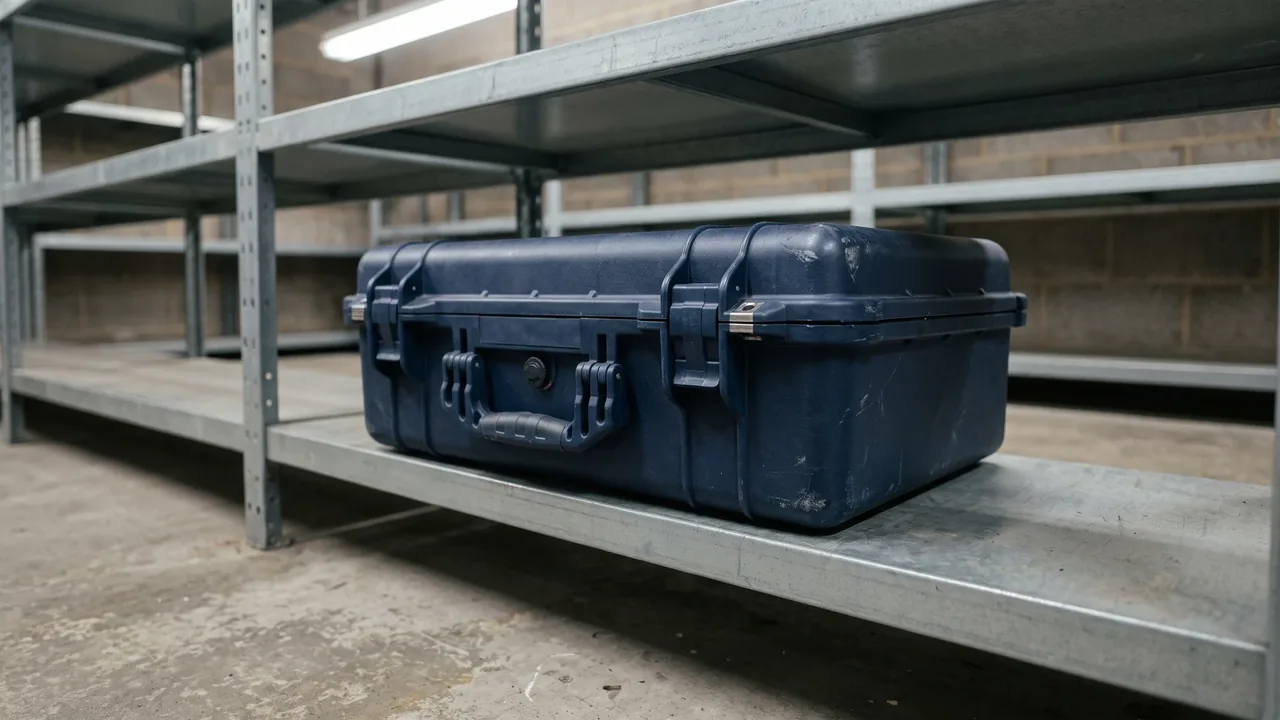
The border patrol protective case is a purpose-built container developed for border line patrol, post duty, and mobile patrol tasks, and its core goal is to provide reliable protection and convenient carrying for communication devices, observation equipment, first-aid kits, and individual tools at the lowest possible empty weight under conditions that combine long-distance hiking, off-road vehicle transfers, and complex weather. A sound lightweight program must balance the weight-reduction design of the Case Shell: Structural Materials and Molding Process of Protective Cases with the compact cushioning of the Case Foam Lining: Cushioning and Customization of Case Interiors, so the case keeps necessary rigidity and sealing while reducing the burden. Working with the protection metrics defined in the Protective Case IP Rating, a lightweight carry design lowers the physical consumption of patrol personnel while keeping equipment usable through wind, snow, sand, and wading sections. This article explains how container structure, rather than the internals of any device, delivers that protection through material choice, lining, sealing, and carry systems.
Application Scenarios and Carry Requirements
Border patrol often takes place in environments such as mountain passes, gobi, woodland, border rivers, and alpine grassland, where the patrol group must carry equipment from the base to the post or transfer by off-road vehicle for a long time before hiking into the responsibility zone. In this profile the empty weight of the case directly becomes the physical burden of personnel; excessive weight shrinks the patrol radius, slows response, and even raises the risk of non-combat attrition. Therefore the primary requirement of a border patrol case is lightweighting, but it must not come at the cost of protection: the case still has to resist bumping vibration, accidental drops, rain, and dust intrusion. When defining requirements, carry weight, protection grade, and access speed should be considered together rather than maximizing any single indicator, so the case truly serves the combat rhythm of patrol duty.
In specific missions patrol equipment is usually divided into four categories, namely communication, observation, first aid, and tools, each with slightly different protection needs. Communication devices fear moisture and shock, observation devices fear dust and pressure, first-aid kits demand quick access, and tools emphasize drop and impact resistance. To address these differences the case should distinguish them through internal zoning and custom lining instead of mixing all equipment in one cavity. Referring to the verification conclusions of the Protective Case Drop Test: Structural Verification Under Shipping Impact and the Protective Case Vibration Test, reliability under real road conditions can be confirmed under lightweight premises, upgrading the design goal from as light as possible to reliable enough within the target weight, which is exactly what distinguishes a border patrol case from an ordinary carry bag.
Lightweight Material Selection and Shell Weight-Reduction Design
The first step toward lightweighting is the reasonable selection of shell material and molding process. Engineering plastics such as modified polypropylene and glass-fiber reinforced composites are clearly superior to traditional metals in specific strength, and through rotomolding or injection molding they can form shells with uniform wall thickness and controllable weight, becoming the mainstream direction of border case weight reduction. In the Case Shell: Structural Materials and Molding Process of Protective Cases design, weight reduction should not rely on simply thinning the overall wall, but should locally thicken at stress concentration zones and thin at non-load zones through topology optimization, using internal ribs to distribute load so rigidity per unit weight is maximized. This reduces empty weight while avoiding local weakness that causes collapse or cracking.
Shell weight reduction must also coordinate with the carry structure. If handles, shoulder-strap anchors, and wheel bays use metal parts, they offset the weight savings of the plastic shell, so these positions should also prefer high-strength engineering plastic or lightweight aluminum alloy fittings. The lid and body closure edge should adopt a narrow-edge high-rigidity design that reduces material use while keeping the sealing compression face complete. For cases needing airdrop or helicopter lift, weight reduction directly improves transfer efficiency, but the corner impact must be re-checked by the Protective Case Drop Test: Structural Verification Under Shipping Impact after weight reduction. Building weight reduction on structural simulation and physical verification avoids the hidden risk of light for the sake of light, letting the border patrol case achieve a trustworthy balance between light and strong.
Dustproof Sealing and All-Weather Protection Structure
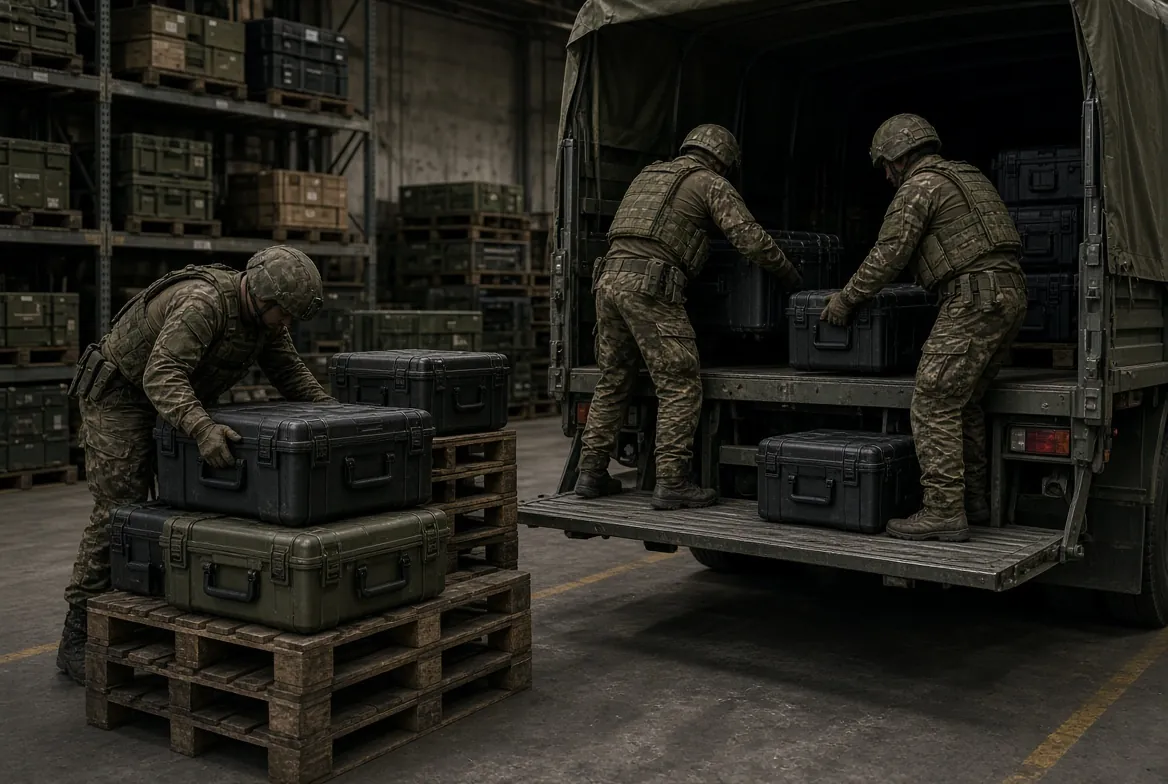
The border front line often faces wind sand, rain, snow, and large day-night temperature swings, so the case must have all-weather protection capability, with dustproofing and waterproofing as two parallel main lines. The sealing system is formed by the ring seal strip, multi-point compression latches, and pressure equalization valve; the cross-section shape and rebound performance of the seal strip determine long-term reliability. When selecting the Case Seal Strip: The Key Waterproof and Dustproof Accessory for Protective Cases, closed-cell elastomer materials should be preferred to ensure they do not harden at low temperature, do not soften at high temperature, and withstand compression fatigue after repeated opening. The seal groove should be a smooth, easy-to-clean structure to avoid becoming a secondary dust intrusion channel after sand accumulates, which matches the long-term field cleaning habit.
All-weather protection must also handle auxiliary openings. Patrol cases often have a pressure equalization valve to balance the pressure difference from high-altitude ascent and descent; the valve interior should be equipped with a washable dust filter so breathing and dust blocking are achieved simultaneously. Weak points such as cable pass-through holes and drain plugs need dedicated plugs closed during operation and opened when idle. Mapping the protection grade to the characteristic digits in the Protective Case IP Rating and doing spray and dust simulation verification at arrival prevents judging protection by claims alone. Only by treating the main sealing interface and auxiliary openings as one complete system can the case truly keep bad weather outside the equipment at wind-swept or sand-filled border sites, safeguarding the continuity of duty.
Shock Isolation Lining and Equipment Fixation Layout
Bumping off-road vehicles and hiking collisions during patrol both impact equipment, and the shock-isolation lining is the key layer absorbing that energy. Closed-cell foam, shaped by die cutting or routing into cavities fitting the equipment contour, builds elastic isolation between equipment and the hard shell, converting vibration and shock into micro deformation of the foam. In the Case Foam Lining: Cushioning and Customization of Case Interiors design, support points should be customized according to the weight, center of gravity, and vulnerable direction of each type of equipment, so communication hosts, observation lens assemblies, and first-aid bottles never make rigid contact with the shell in any attitude, keeping transmissibility within a safe range and avoiding precision parts loosening or failing from long-term vibration.
The shock-isolation lining also performs fixation and anti-shift functions. Patrol equipment comes in varied shapes, and the lining should be grooved to the equipment outline so each item has a dedicated seat and will not collide or slide during transport. For sensitive equipment with displays, lenses, or glass parts, foam should be thickened at the corresponding position or a rigid divider added to form local rigid support, preventing the weight of upper equipment from transmitting downward. The moisture resistance and aging resistance of the lining also matter; foam absorbing water in long-term cold-wet environments changes buffer parameters, so closed-cell low-water-absorption types are preferred and used with drying measures in contexts related to the Temperature-Controlled Case: Achieving and Validating Thermal Stability. Making shock isolation, fixation, and moisture proofing work together keeps patrol equipment precisely usable after long transfers.
Stacking Corners and Vehicle Stacking Alignment
Border patrol vehicles have limited space, and protective cases are often stacked in multiple layers to save cabin volume, so the stacking corner becomes the key accessory deciding on-vehicle stability. The stacking corner is a reinforced structure protruding from the four corners of the case; its top recess engages the corresponding boss of the lower case so the whole column resists slipping or toppling during turns and bumps. In the Case Stacking Corner: Load-Bearing and Alignment Hardware for Stacked Cases design, the material strength, the connection method with the shell, and the single-layer load rating should be confirmed to avoid plastic deformation or difficult closure of the bottom case under long-term pressure. Reasonable stacking corners also leave ventilation gaps between cases, reducing internal condensation induced by airtight stacking.
Stacking alignment also affects quick loading and inventory before patrol. When several identical cases are stacked, missing clear engagement makes them prone to misalignment and falling on hard braking or pothole sections, damaging the cases and threatening occupants. Color marks or numbering positions can be added beside the stacking corners so team members quickly identify stacking order and ownership. For cases needing long-distance vehicle mobility, the stacking corners should also coordinate with tie-down and slide-rail interfaces to prevent excessive local load during sharp turns. Combined with the verification conclusion of the Protective Case Stacking Test, stacking height, load, and alignment accuracy can be written into the technical agreement at procurement, making on-vehicle layout more orderly and transfer safer, and facilitating quick setup of equipment storage at temporary posts.
Internal Zoning and Duty Equipment Organization
Border patrol carries many categories of equipment, from communication stations, night-vision devices, and first-aid kits to prying and lighting tools. If all are mixed in one cavity, access becomes chaotic and mutual friction causes loss. Internal zoning divides the case into functional regions such as communication, observation, first aid, and tools through removable dividers, mesh pockets, and independent foam cavities, giving each item a home. Drawing on the thinking of the Optical Instrument Case: Zoned Protection and Shock Isolation for Precision Optics, optical-sensitive parts such as night-vision, aiming, and lens devices should have independent compartments with anti-pressure top plates to prevent the weight of upper equipment from transmitting to fragile elements. Zoning also reduces internal exposure area when the lid opens, shortening the contact time of precision parts with outside sand and moisture, fitting the time-critical access need during patrol.
The core of equipment organization is each item in its place and orderly access. Custom foam cavities should leave no play up, down, left, or right after the device is placed, while the pull-out force is moderate, neither so tight as to hinder access nor so loose as to lose fixation. For cables, batteries, and small accessories, elastic straps or transparent pockets help organize them and prevent tangling or loss during transport. In low-temperature environments foam hardens and elasticity drops, so the zoning structure should reserve margin for the hardened material at the design stage. Verifying the zoning fixation effect together with the Protective Case Vibration Test can confirm that after long bumping the equipment remains in place with no mutual scraping, turning zoning organization from a paper plan into trustworthy field performance and raising the equipment management level of the patrol group.
Single-Soldier Handle and Backpack Carry System
Border patrol relies heavily on individual hiking, and the comfort of the carry system directly determines patrol mileage and personnel state. The handle design should align the grip with the case center of gravity so single-hand lifting causes no deflection or wrist twist and remains fatigue-free over long carries; the backpack design needs ergonomic shoulder straps, chest buckles, and waist belts integrated on the case exterior to distribute weight evenly across both shoulders and hips. Under lightweight premises the carry system should deploy and stow quickly, staying flush with the case outline when stowed and not affecting stacking, yet deploying rapidly when needed. A reasonable Case Shell: Structural Materials and Molding Process of Protective Cases provides solid anchor points for the carry structure, preventing strap tearing or loosening under heavy load and safeguarding mobility on rugged mountain roads.
The carry system must also adapt to border terrain. On steep slopes, snow, and rubble sections, adjustable chest and waist straps significantly improve stability and reduce side-to-side sway of the case against the body; in wading and muddy sections, strap material should be quick-drying and mildew resistant. For larger cases, auxiliary side handles can be added to help two people cooperate over obstacles or shoulder the load. All stitching and buckles of the carry structure should pass fatigue testing, because the high-frequency access of patrol work repeatedly pulls these positions. Treating the carry system as part of the overall case structure rather than an add-on accessory puts easy carrying into practice in the real border area and lets the protective case truly reduce the burden on patrol personnel instead of becoming a new encumbrance.
Lightweight Integration of Wheels and Handle in Transfers
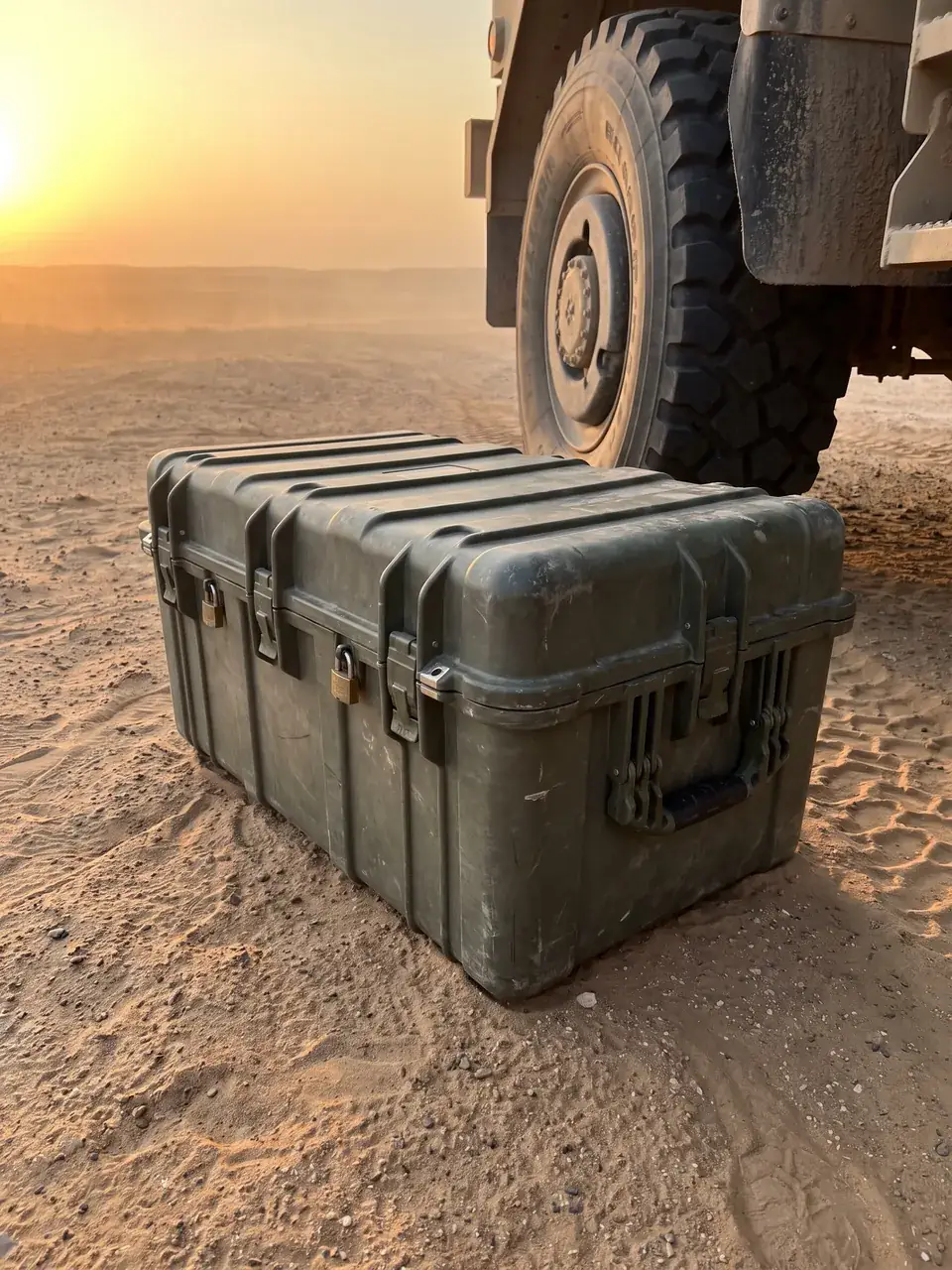
When the total weight of patrol equipment exceeds the comfortable single-person carry range, or when long-distance dragging on flat sections is needed, wheels and a handle become key to reducing physical effort. Lightweight integration requires adding mobility without raising the empty weight and profile of the case. Wheels should be wear-resistant, impact-resistant silent types with dust seals at the axle to prevent wind-blown sand from entering the bearing and causing seizure; the handle should adopt a retractable dual-tube structure that sits flush with the case surface when retracted, affecting neither stacking nor being easily damaged during handling. When laying out the Case Stacking Corner: Load-Bearing and Alignment Hardware for Stacked Cases, ensure the wheels and handle do not disturb the stacking engagement face after retraction so the wheeled case can still be stacked normally.
The reliability of the wheel system is especially sensitive at the border. Gravel roads, mud, and ditches all test the passability and sealing of the wheel set; if the axle takes in water or sand, rolling resistance rises quickly or the wheel jams completely. Therefore the wheel bay should be a washable structure with drain holes and dust caps. The lock mechanism of the handle must hold firmly at every height step to prevent sudden retraction that injures the hand during towing. Verifying wheels, handle, and shell as a whole, and examining the integrity of corners under impact in the retracted state through the Protective Case Drop Test: Structural Verification Under Shipping Impact, can eliminate good-looking but impractical schemes at procurement and let the mobility of the case truly serve the transfer efficiency of the patrol group on flat patrol roads where physical strength is better saved for the hiking sections.
Quick-Open Structure and On-Site Rapid Access
Patrol duty emphasizes response speed, and whether equipment can be taken out within seconds often relates to handling timeliness, so the quick-open structure is an important feature of the border patrol case. Quick opening does not mean weakening sealing; rather, through single-hand operable latches, flip-open lid supports, and clear internal zoning, it lets team members locate and extract target equipment quickly even with gloves, insufficient light, or tension. On the premise that the Case Seal Strip: The Key Waterproof and Dustproof Accessory for Protective Cases closes reliably, the latch should balance compression force with opening convenience, avoiding requiring both hands to pry open the lid and delay the moment. A equipment list or reflective mark pasted on the lid interior further improves access efficiency in dim light.
Rapid access is also directly related to lining layout. High-frequency equipment such as first-aid kits and communication radios should be placed at the nearest and easiest-to-pull position after opening, distinguished by color marks or contour labels; less-used tools can be stored in the bottom layer or side pockets. The quick-open structure should also consider cold-region use: metal latches may become sticky at low temperature, so low-temperature materials or larger operation margin should be selected, and structural gaps that ice up and jam should be avoided. Combined with the sealing ability verified by the Protective Case Water Immersion Test, quick-open design can be built on a reliable airtight foundation, preventing speed from being pursued at the cost of protection. Unifying quick-open with reliable protection makes the border patrol case both fast-responding and all-weather guarding.
Temperature, Humidity, and Anti-Condensation Design
Border patrol often crosses regions with extreme day-night temperature differences; daytime exposure and nighttime cooling easily form a cold bridge inside and outside the case and induce condensation, whose harm to electronic devices and metal parts is no less than direct water entry. Moisture-proof design first sets a reasonable air layer or insulation layer between lining and shell to slow external temperature swings from conducting inward; second, it places a replaceable desiccant compartment or humidity indicator card inside the case so team members can directly monitor internal humidity. In technologies related to the Temperature-Controlled Case: Achieving and Validating Thermal Stability, active or semi-active humidity control ideas can also be migrated to high-end patrol cases, stabilizing relative humidity in a safe range through the synergy of moisture absorption and breathable valves, reducing the risk of circuit moisture short circuit and metal corrosion.
Drying design must also coordinate with the sealing system. If the case is sealed too tightly without pressure balance, the pressure difference during high-altitude ascent and descent may press humid air into micro-gaps; conversely, too-loose sealing lets wind sand enter freely. Therefore dustproofing and moisture proofing are a pair of contradictions needing balance, reconciled through the combination of pressure equalization valves and dust filters. For cases storing batteries or medicines long term, desiccant should be replaced periodically and humidity curves recorded as a basis for equipment health management. Combined with the sealing ability verified by the Protective Case Water Immersion Test, moisture-proof design can be built on a reliable airtight foundation rather than discussing desiccant in isolation, maintaining stable usability of equipment in border cold-wet environments.
Corrosion Resistance and Border Salt-Spray Environment Treatment
Some border sections lie near the coast, river estuaries, or salt-containing wetlands, where suspended salt particles in the air accelerate rust on metal latches, hinges, and fasteners of the case. Although the shell is mostly plastic, latches, hinges, and screws often contain metal, and once these rust they directly affect opening smoothness and sealing compression. Anti-salt-spray treatment starts with material selection: latches preferably use stainless steel or corrosion-resistant alloys treated with dacromet or zinc plating, and hinge shafts are coated with protective grease and formed into a closed structure. Referring to the verification logic of the Protective Case Salt Spray Test, even if the main body is non-metallic, metal accessories should still be included in the corrosion resistance check separately to avoid the awkward situation of an intact shell with rust-seized latches, safeguarding the reliability of the patrol case in long-term coastal duty.
Corrosion-resistant design should also extend to details. The case bottom and edges contacting the ground most easily accumulate salt-containing mud and water, so deep grooves and water-logged dead corners should be avoided in these areas, with guide channels opened when necessary so accidentally entered liquid drains promptly. For cases operating long term in salt-spray environments, a simple cleaning and grease-maintenance process after each mission can move corrosion risk forward to daily upkeep. Drawing on the collaborative protection experience of the Marine Engineering Protective Case, treating shell, metal parts, and seal strip as one corrosion-resistant system can significantly extend the service life of the border patrol case in harsh environments and reduce equipment exposure risk caused by accessory failure, thereby supporting the continuous readiness of the patrol group.
Coordinated Verification With Drop and Vibration Transport Tests
A border patrol case must pass a verification plan matching the real distribution profile before delivery, rather than being judged by appearance alone. The drop test examines structural integrity under accidental falls, and the vibration test examines fatigue and loosening under long-haul random vibration, answering respectively whether it stays intact under impact and whether it loosens under bumping. Combining the Protective Case Drop Test: Structural Verification Under Shipping Impact with the Protective Case Vibration Test and comparing lining fixation and seal compression before and after the tests can expose hidden dangers invisible to visual inspection, such as loose latch points, misaligned gaskets, or collapsed foam cavities, ensuring lightweight design does not trade away hidden structural strength.
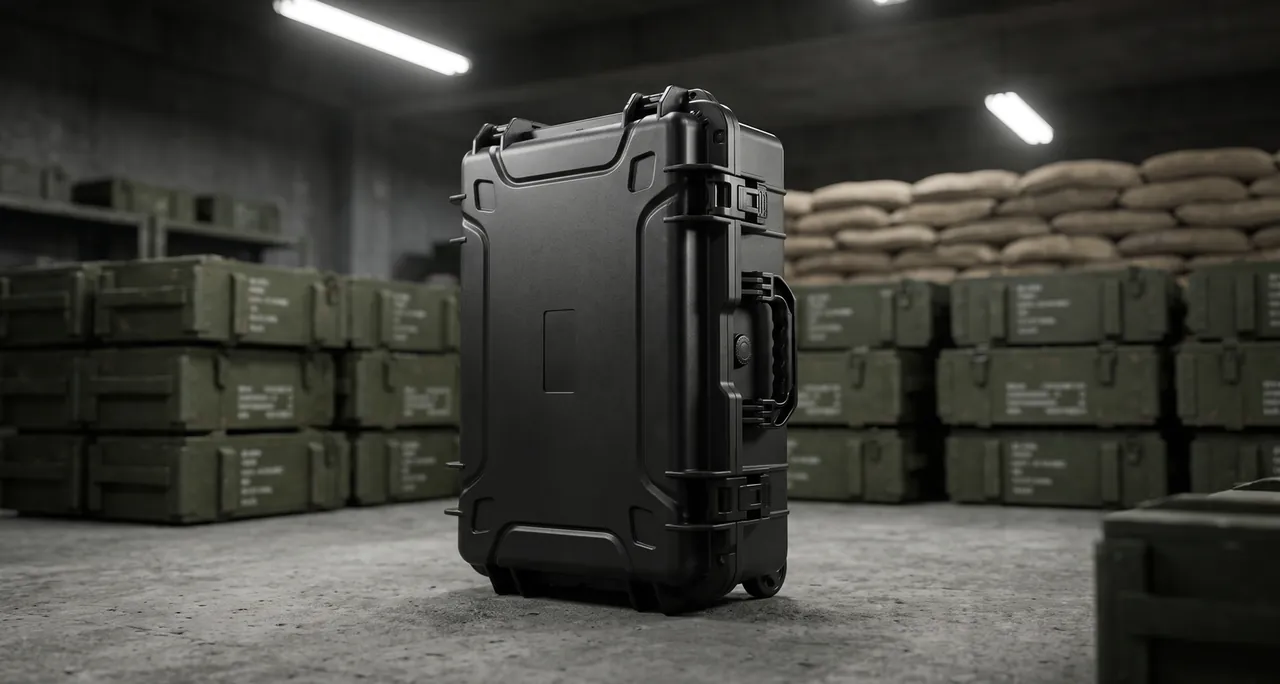
Coordinated verification should also form a complete chain with protection grade, stacking, and salt spray tests. A sensible order is to do structural tests first to confirm no irreversible deformation, then environmental tests to avoid damage disturbing the criteria, consistent with the distributed verification thinking advocated by the Protective Case ISTA Test. For patrol equipment needing cross-border or multi-modal transport, the report can also cite the Protective Case AAR Certification or Protective Case Transport Marking as supporting basis. When reviewing, purchasers should pay attention to whether each test passed independently rather than only the overall conclusion, so as to accurately identify whether the short board is on the shell, lining, or seal side and provide a clear direction for later batch improvement, making the lightweight carry scheme stand up to the test in border combat practice.
Standards Basis and Compliance Notes
The selection and acceptance of a border patrol case should be built on traceable standards and clear technical agreements, with common bases including dust and water protection grade specifications, transport and environmental test methods, and technical attachments confirmed by both parties. The testing organization should retain specimen information, test parameters, and original records for review during customer factory audit or third-party certification. It must be specifically stated that this article discusses only the application method of the protective case container structure for lightweight carrying and protection in border patrol scenarios, and does not involve the nature, formulation, or use of any packed goods; the cross-border transport, export, and procurement of related products must comply with local laws, regulations, and export control requirements, with compliance assessed separately by the responsible party, and the content of this article does not constitute any compliance conclusion. It is recommended that enterprises write carry weight, protection grade, and access speed into the technical agreement before procurement, and consolidate test data in a unified format to form a reusable, auditable case selection capability.
Frequently Asked Questions
Q: Why does a border patrol case put lightweighting first? A: Because border patrol relies heavily on individual hiking and long-distance off-road transfers, the empty weight of the case directly becomes the physical consumption of personnel, and excessive weight shrinks the patrol radius, slows response, and raises the risk of non-combat attrition. In harsh profiles such as mountains, snow lines, and gobi, every kilogram saved means the patrol group can go farther and respond more calmly. But lightweighting is not unlimited weight cutting; it must still meet dustproof, waterproof, shock, and drop resistance within the target weight. Therefore a qualified border patrol case targets meeting the required protection grade within a limited weight through structural optimization rather than simple thinning, making light and strong coexist on the same container and truly serving the combat rhythm of patrol duty rather than just showing a lower number on the spec sheet. The design discipline is therefore to weigh every feature against the kilograms it adds, keeping only what genuinely protects the patrol ability to move and respond. Q: Will lightweighting make the case easier to break? A: Reasonable lightweighting will not, but unreasonable weight reduction will. The key difference is whether the weight reduction is built on structural simulation and physical verification. By locally thickening at load zones and thinning at non-load zones through topology optimization and using internal ribs to distribute load, rigidity can be maintained or even improved while reducing weight. Conversely, simply thinning the overall wall or omitting key structures such as stacking corners and latch points sacrifices drop resistance. Whether lightweighting is reasonable should be judged by whether it passes drop, vibration, and stacking verification, and the corner impact should be re-tested after weight reduction. A qualified border patrol case, even lighter, should keep smooth closure and intact sealing after multiple drops rather than cracking at the first fall, proving that light and strong were designed together rather than traded off. The practical takeaway is to judge any lightweight case by its test evidence rather than its labeled weight, because only verified performance earns trust in the field. Q: Does the patrol case need zoning like an optical instrument case? A: If the case mixes optical-sensitive equipment such as night-vision, aiming, or lens devices inside, it should borrow the zoning thinking of the optical instrument case. Such elements are extremely sensitive to pressure and vibration and should be isolated through independent compartments, anti-pressure top plates, and custom foam cavities to prevent the weight of upper equipment or transport bumps from transmitting to fragile parts. Even if the main load is communication and tools, zoning still reduces mutual friction, eases inventory and access, and shortens the exposure time of precision parts to sand and moisture when the lid opens. Therefore zoning is not a patent of optical cases but a general practice improving the reliability of any multi-equipment case, with the only difference being the number of compartments and the protection grade level, and the border patrol case equally benefits from clear zoning organization across its loaded contents. The payoff is fewer damaged items, faster setup at the post, and a clearer inventory that helps the patrol account for every piece of critical equipment under pressure. Q: Will the quick-open structure sacrifice sealing and waterproofing? A: No, provided quick-open and sealing are designed as one unified system. Quick opening is mainly achieved through single-hand operable latches, flip-open lid supports, and clear zoning for fast access, while sealing relies on the ring seal strip and pressure valve filter, acting on different structural levels. As long as the latch opening convenience is optimized on the premise that the Case Seal Strip: The Key Waterproof and Dustproof Accessory for Protective Cases closes reliably, both speed and protection can be balanced. What must be avoided is weakening latch compression or enlarging seal gaps just to pursue faster lid opening, which truly sacrifices waterproofing. A qualified quick-open design should pass immersion and spray verification to confirm it keeps the rated protection grade after frequent opening, letting rapid response and all-weather guarding coexist rather than conflict on the same border patrol container. When done correctly the patrol gains seconds in an emergency without giving up the all-weather seal that protects the contents during long exposure to the elements. Q: What role does the pressure equalization valve play on the patrol case? A: The pressure equalization valve balances the pressure difference inside and outside the case caused by drastic altitude or temperature changes, preventing the case from being sucked in or bulged and affecting closure and sealing. This pressure difference is especially obvious when the border crosses mountain passes and plateaus. Its dustproof and moisture-proof dimension requires the valve to intercept dust and moisture while breathing, so a quality solution sets a washable dust filter inside the valve body. If the filter is missing or failed, the valve instead becomes the main dust entry channel. In missions with frequent ascent and descent, the valve core action and filter cleanliness should be checked regularly and the filter replaced with the mission when necessary, treating pressure balance and dustproofing as a linked design rather than treating the valve as an isolated breathing hole, thereby maintaining a stable micro-environment inside the case through changing border terrain.
Q: Can a wheeled patrol case still be stacked normally? A: Yes, provided the wheels and handle do not protrude from the stacking engagement face after retraction. A well-designed wheeled case retracts wheels into a shell recess and shrinks the handle flush with the surface, keeping the top face flat so it does not affect the up-down engagement and alignment of the stacking corners. At procurement the retracted state should be actually demonstrated and a stacking test done to confirm the bottom case is not affected in closure under pressure and the wheel bay shows no deformation from stacking weight. If wheels stay exposed long term, stacking is unstable and the wheels are easily crushed when stacked. Therefore the stacking ability of a wheeled case should be specified in the technical agreement and confirmed by a stacking test for its load and alignment accuracy under multi-layer stacking in real vehicle and post storage conditions. Confirming this before purchase prevents the common disappointment of a wheeled case that cannot be loaded efficiently with the rest of the equipment on a crowded vehicle. Q: Can the lining foam be washed directly with water when dirty? A: It depends on the foam material. Closed-cell foam has a dense surface and can be wiped with a damp cloth or rinsed with water and air-dried in shade, generally without water absorption deformation; but open-cell foam is highly absorbent, and after washing it is difficult to dry thoroughly, easily keeping high humidity inside the case and breeding odor or mold, so direct water washing is not recommended. Regardless of material, the foam should be completely air-dried before reinstalling to avoid sealing moisture inside the case. For foam stained with silt, shaking off dry sand first and then local wiping is more efficient. If the foam shows obvious collapse, cracking, or loss of rebound, it should be replaced promptly, because damaged foam directly reduces shock isolation and positioning and leaves equipment without the buffer protection it needs during transport, affecting the equipment integrity rate of patrol duty. A simple rule is to match the cleaning method to the foam type and to never seal a damp liner back into the case after any cleaning or rain exposure. Q: How to judge whether the seal strip needs replacement? A: Judgment can be made from both appearance and function. In appearance, if the seal strip shows obvious cracking, hardening, discoloration, permanent compression marks, or local missing, its elasticity and fit ability have declined; in function, if after closure a sheet of paper can still be easily inserted at a certain gap, or dust traces are found inside after opening with serious groove sand accumulation, it indicates possible seal failure. The seal strip is a consumable and a replacement cycle should be set based on mission frequency, with its compression recovery checked at every maintenance. When replacing, a model consistent with the original cross-section and hardness should be selected to ensure groove matching, avoiding substituting approximate parts that cause local under-compression and form a dust or water channel, thereby preserving the systemic effect of the whole-case dustproof and waterproof design across its service life in the field. Regular attention to this small part prevents the much larger cost of equipment contamination or water damage that a failed seal would otherwise allow. Q: What are the daily care points for a border patrol case? A: The first task of daily care is cleaning; after each mission, sand grains, mud spots, and plant debris in the shell gaps and seal grooves should be removed to prevent hard objects from pressing the gasket or scratching the contact face at the next closure. Latches and hinges should be periodically coated with protective grease to keep opening smooth and block corrosive media, and lining foam stained with mud and water should be taken out and air-dried in shade. The shoulder strap stitching, wheel bearings, and pressure valve filter of the carry system are high-frequency wearing parts and should be quick-checked before departure. For long-term storage the case should be placed in a cool dry place with the lid half-open for ventilation, preventing permanent deformation of the seal from long-term compression. Drawing on the management experience of the Water Conservancy Protective Case and the Power Utility Protective Case, check-listing maintenance can significantly reduce field failure rates and keep the patrol case ready when the mission demands it.