

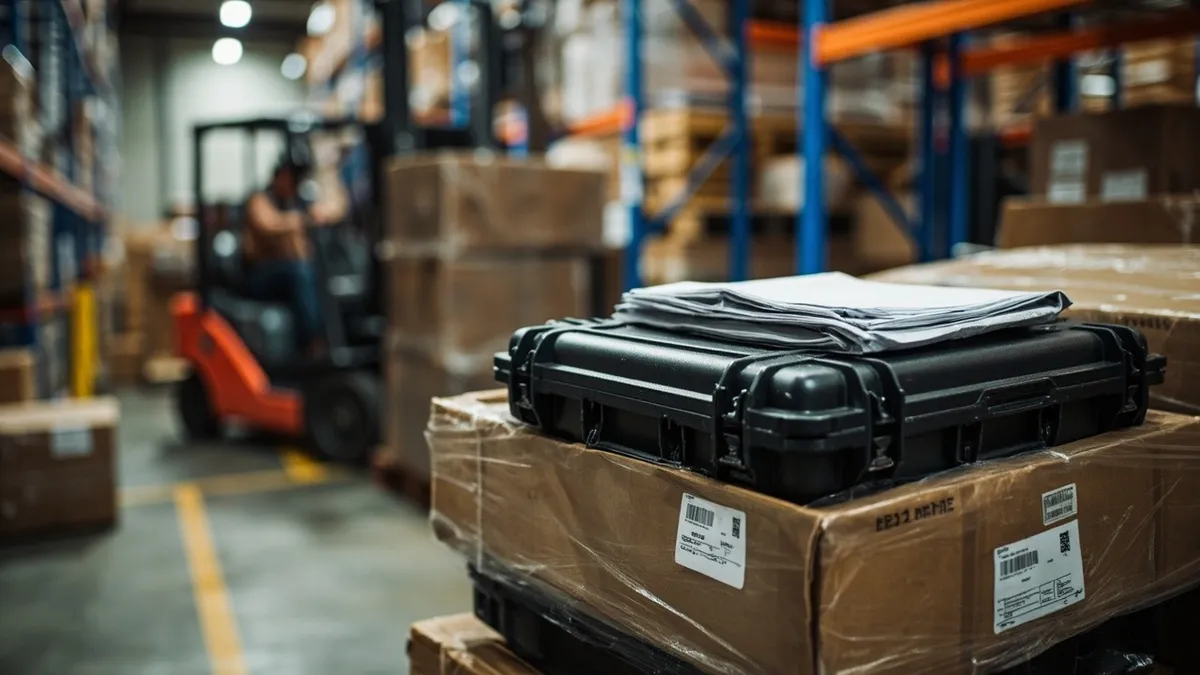
ISPM 15 governs wood packaging material in international trade: pallets, crates, dunnage and any solid wood thicker than 6 mm must be treated and carry the IPPC stamp. Heat treatment means a 56 °C core temperature held for at least 30 continuous minutes. Plastic cases and moulded containers fall outside the standard entirely, which removes a whole compliance step from export lanes.
ISPM 15 in Plain Terms
The rule exists because untreated wood can carry invasive insects and nematodes. It is enforced by national plant protection organisations, and non-compliant wood packaging can be refused entry, re-treated at the importer's cost, or destroyed. Enforcement is not theoretical: Australia alone intercepted more than 37,000 shipments at the border for biosecurity non-compliance in 2023, a significant share of it packaging-related.
| Treatment code | Method | Requirement | Status |
|---|---|---|---|
| HT | Heat treatment | Wood core reaches 56 °C for at least 30 continuous minutes | Universally accepted; the default choice |
| DH | Dielectric heating | Microwave treatment reaching 60 °C for 1 minute | Accepted since the 2013 revision |
| MB | Methyl bromide fumigation | Chemical fumigation | Being phased out; banned or restricted in the EU, Canada, Australia and others |
| SF | Sulphuryl fluoride | Chemical fumigation | Recognised under the standard |
What Is Exempt — and Why Plastic Cases Simplify Export
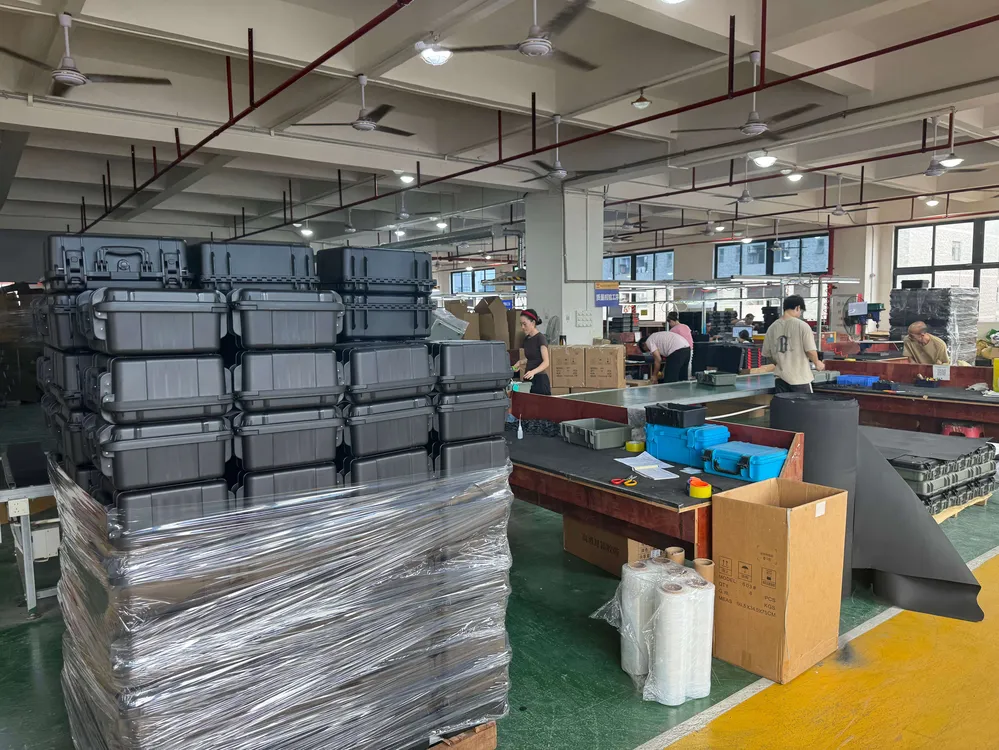
ISPM 15 applies to wood packaging material. Everything else is out of scope, which is why moulded plastic containers are a pragmatic choice on export lanes.
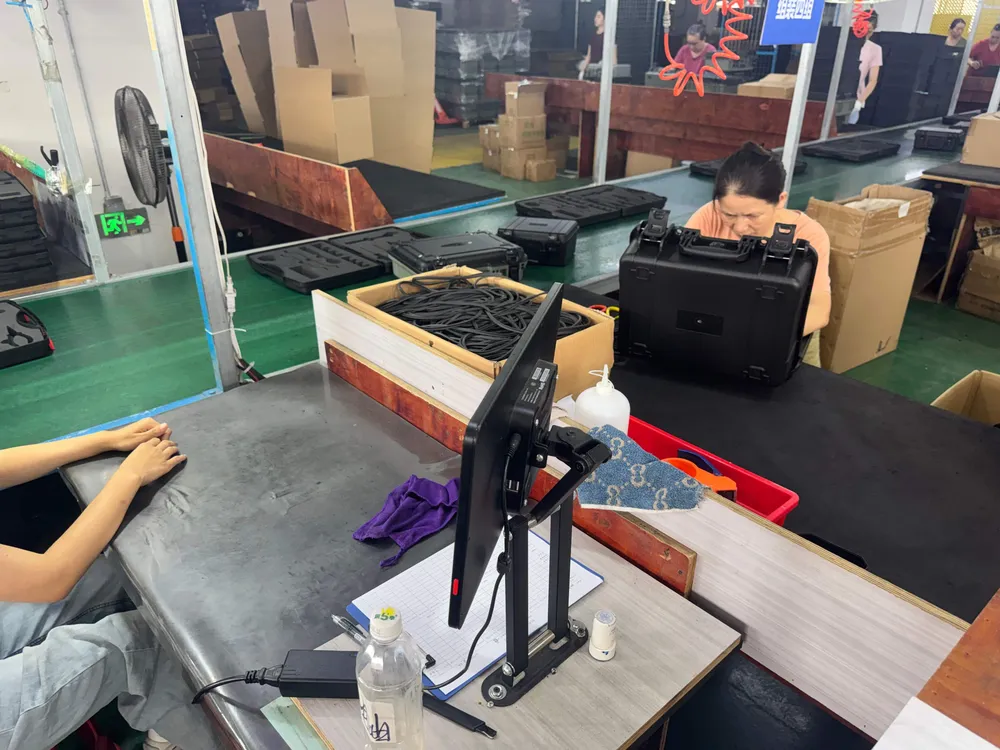
- Plastic pallets, plastic cases and plastic crates — outside the scope of ISPM 15
- Metal containers and corrugated fibreboard — outside the scope
- Plywood, particle board, OSB and veneer — exempt, because heat and adhesive in manufacture eliminate pests
- Wood 6 mm thick or less — exempt
- Watch the hidden risk: untreated wood bracing or blocking added inside a container still counts as WPM and must be treated
The IPPC Stamp
A compliant mark has four elements and cannot be applied by the exporter: the IPPC wheat-ear symbol, the two-letter ISO country code, the unique producer or treatment facility number issued by the national plant protection organisation, and the treatment code. An incomplete or illegible stamp is treated as non-compliant, and inspectors check every wooden component in the consignment, not just the pallet.
Shipping Marks and Destination Labeling
Packaging material is only half of export compliance; the paperwork on the outside has to agree with the paperwork in the file. Labeling mismatches are one of the most common reasons a perfectly legal product sits in a bonded warehouse.
| Element | Requirement | Common failure |
|---|---|---|
| Shipping marks (outer) | Consignee, destination port, package number, gross weight, handling instructions | Marks that do not match the bill of lading and packing list |
| Country of origin | Made in [country] per destination rules | Missing or ambiguous origin statement |
| Destination language | EU: official language of the destination member state; others vary | Using only the exporter's language |
| Product marking | CE for regulated EU products, FCC for US electronics, KC for Korea, CCC for China, PSE for Japan, SASO for Saudi Arabia | Assuming one mark covers all markets |
Pre-Shipment Checklist
- Decide packaging material first — choosing plastic cases or crates removes ISPM 15 from scope entirely
- If wood is used, confirm the treatment code is HT and the IPPC stamp is present and legible on every wooden component
- Check that dunnage, bracing and blocking are treated, not just the pallet
- Match shipping marks exactly to the bill of lading and packing list
- Confirm destination labeling requirements, including language, origin and any product conformity mark
- Photograph the packed consignment and the marks before the container is sealed
Planning an export programme? Browse moulded case options that fall outside ISPM 15, review the factory and packing capability, and read OEM and ODM custom protective cases for how packaging is specified at order stage.
Related Products
- 8 Series — Gun Cases; Military Equipment Cases; Camera Equipment Cases; Drone Cases; Watch Cases; Knife Cases; First Aid Cases; Electronics Equipment Cases
- WL8-2812 PP Gun Case — model WL8-2812
- All protective cases and toolboxes: 7 series, 158 models