

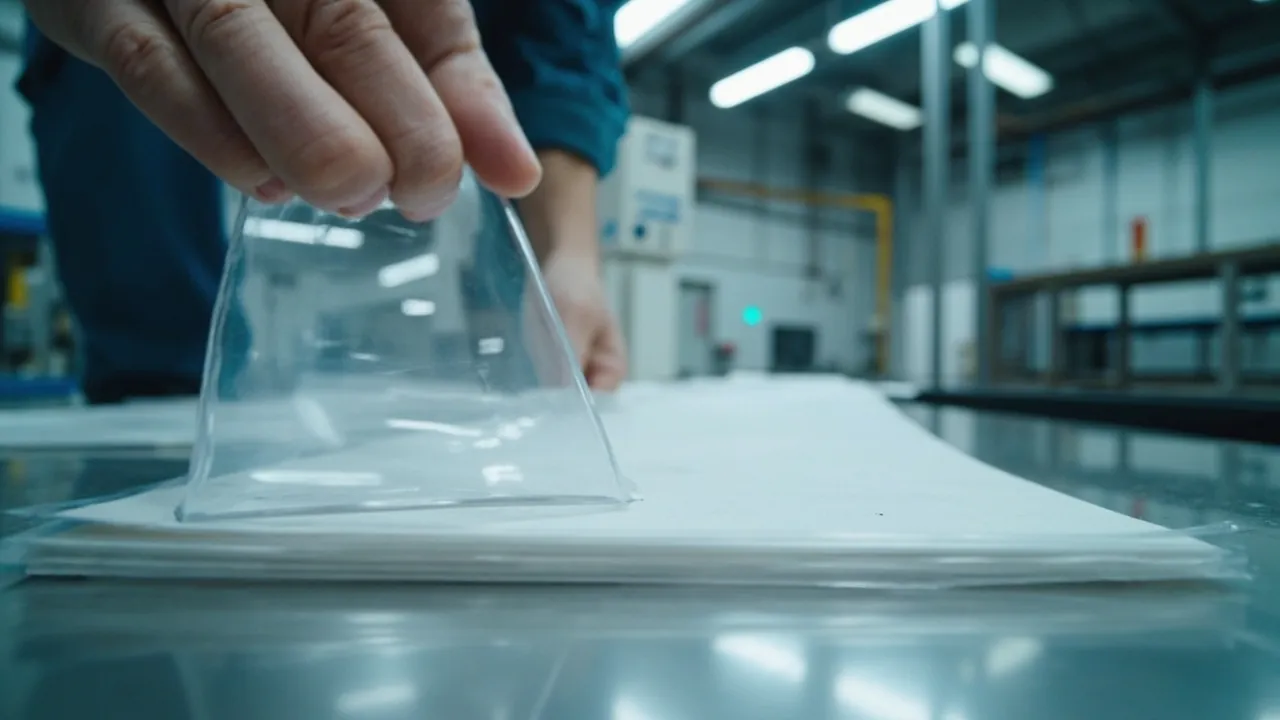
Short answer: a protective case does have recoverable value, but its value is not set by how heavy it is — it is set by three things: whether the main polymer is single and identifiable, whether the structure can be easily disassembled, and whether the recycled material has a compliant reuse outlet. A case built mainly from copolymer polypropylene (PP) or polycarbonate (PC), once the liner and hardware are separated, has genuinely high physical recovery value for the shell, and under good conditions the material recovery rate can exceed 80 percent. Once the product is a multi-material composite, with foam bonded firmly to the shell and metal parts that are hard to separate, the practically recoverable fraction drops sharply. EPE and EVA foams, sealing gaskets and mixed-colour parts generally end up in downgraded use or energy recovery. So the honest answer to "can a protective case be recycled" is not yes or no — it is "according to which material, through which reuse pathway, and whether the economics and compliance maths actually work out".
In real procurement and operations, recycling is often treated as an end-of-life chore — "when it breaks, sell it to the scrap dealer" — until a company starts calculating total cost of ownership, facing a customer ESG audit, or meeting packaging and plastic-waste rules in an export destination. At that point it becomes clear that recycling can be designed in, agreed in advance and priced in from the start. The same case can be a recoverable asset at retirement if material and structure were decided well at the design and sourcing stage, or a disposal cost if they were decided casually. This article is written for protective-case buyers, equipment maintenance teams and manufacturers. It sets out the logic of engineering-plastic recycling: material-by-material recyclability, resin identification codes and classification standards, the crushing-washing-pelletising-modifying process route, blended-ratio control and property loss, the four reuse pathways of closed-loop, downgraded, energy and chemical recycling, and finally an executable recycling workflow plus trade-in commercial design. Ratios and figures quoted are industry empirical values; actual material, test results and local regulations govern.
Table of Contents
- Where the recycling value of a protective case comes from: three value dimensions
- Recyclability of engineering plastics, material by material
- Resin identification codes and sorted recycling: ASTM D7611 and ISO 15270
- The recycling process route: crushing, washing, pelletising, modifying
- Can recycled material go back into a protective case? Property loss and blended-ratio control
- The four reuse pathways: closed-loop, downgraded, energy, chemical
- The economics of recycling: when it actually pays
- Environmental compliance and systems: where ISO 14001 and GB/T 24001 apply
- Design for Recycling (DfR): thinking about recovery at the drawing stage
- A procurement and operations view: trade-in and total cost of ownership
- Common recycling misconceptions: five plausible-sounding claims
- In practice: how a company builds a protective-case recycling workflow
- FAQ
- Closing remarks and related reading
Where the recycling value of a protective case comes from: three value dimensions
Before debating "recycling value", split value into three dimensions, or it is easy to confuse environmental meaning with how much money the material fetches.
The first is material value — the price of the regenerated pellet after physical recycling. This is set by material type, cleanliness, colour consistency and batch size. Clean, single-material, solid-colour PP regrind is worth several times what a mixed-colour stream contaminated with foam adhesive and metal swarf is worth. A protective-case shell is usually thick-walled and material-intensive, so the plastic weight per case is not trivial; once a stable recycling batch can be formed, the material value is meaningful.
The second is compliance value — the value of satisfying regulations and customer requirements. As packaging and plastic-waste requirements tighten and brand customers start writing recycled content into purchase contracts, being able to offer a recycling route or recycled-content declaration has commercial value in itself. For a manufacturer this means capability in recycled-material blending and traceability can become a tender and audit advantage, not just a small material saving.
The third is operations value — the value of recycling to the user's asset management. In rental, circulation and trade-in models, whether retired cases have a smooth disposal channel directly affects unit usage cost. If recycling is agreed at the sourcing stage — who collects, at what price, under what conditions — the operations team does not have to treat retired cases as pure burden.
| Value dimension | Mainly determined by | Beneficiary | Typical magnitude |
|---|---|---|---|
| --- | --- | --- | --- |
| Material value | Material type, cleanliness, colour, batch size | Manufacturer, recycler | Priced at regrind market rates; clean single-grade far above mixed |
| Compliance value | Regulations, customer ESG clauses | Brand owner, exporter | Convertible into tender credit and contract access |
| Operations value | Retirement volume, disposal channel, commercial terms | User, lessor | Shows up as lower unit usage cost |
In one sentence: the recycling value of a protective case is "how much the material sells for + how much compliance saves + how much operations recovers". Looking only at material price understates the commercial value of recycling; talking only about the environment ignores the precondition that recycling must pay.
Recyclability of engineering plastics, material by material
The engineering plastics and liner materials used in protective cases differ widely in recyclability. Going material by material is the first step in judging feasibility, and the information a buyer should pin down when agreeing recycling terms with a supplier.
Thermoplastics (PP, PC, ABS, PE) can in principle be melted and reprocessed repeatedly and are the mainstay of physical recycling. PP, with a lower melting point, good flow and a mature recycling route, is one of the higher-value shell materials; PC offers strength and clarity, but regrind is sensitive to molecular-weight loss and discolouration, so blending ratios must be conservative; ABS loses toughness noticeably after recycling and mostly goes to downgraded uses.
Thermosets and foamed materials (PU foam, cross-linked PE and similar) cannot be melted and reprocessed — physical recycling is limited, and they usually go to energy recovery or landfill, with only some PU foams recoverable by chemical depolymerisation. EPE and EVA are thermoplastic foams that could in theory be remelted, but in practice their low density, large volume and high transport cost make recycling economics generally poor, so they are more realistically reused as secondary cushioning.
| Material | Typical location in a case | Physical recycling (remelt) | Value grade | Main reuse pathway |
|---|---|---|---|---|
| --- | --- | --- | --- | --- |
| Copolymer PP | Shell, main body | Feasible, mature process | High | Closed-loop, downgraded |
| PC | Shell, clear lid | Feasible, ratio must be controlled | Medium-high | Downgraded, non-optical parts |
| ABS | Structural parts, panels | Feasible, toughness loss clear | Medium | Downgraded |
| HDPE | Some bodies, circulation parts | Feasible, mature | High | Closed-loop, downgraded |
| EVA / EPE foam | Liner, cushioning | Theoretically feasible, practically hard | Low | Secondary cushioning, energy recovery |
| Silicone gasket | Seal groove | Cannot be remelted | Low | Downgraded, energy recovery |
| Metal latches and hinges | Hardware | Metal recycling mature | High (but separation first) | Metal regeneration |
The rule: the more single-material, the easier to disassemble, and the more concentrated the colour, the higher the recycling value. This is precisely why recovery can be planned at the material-selection stage — see the comparison in protective case plastic materials and the difference between PP, ABS and PC cases.
Resin identification codes and sorted recycling: ASTM D7611 and ISO 15270
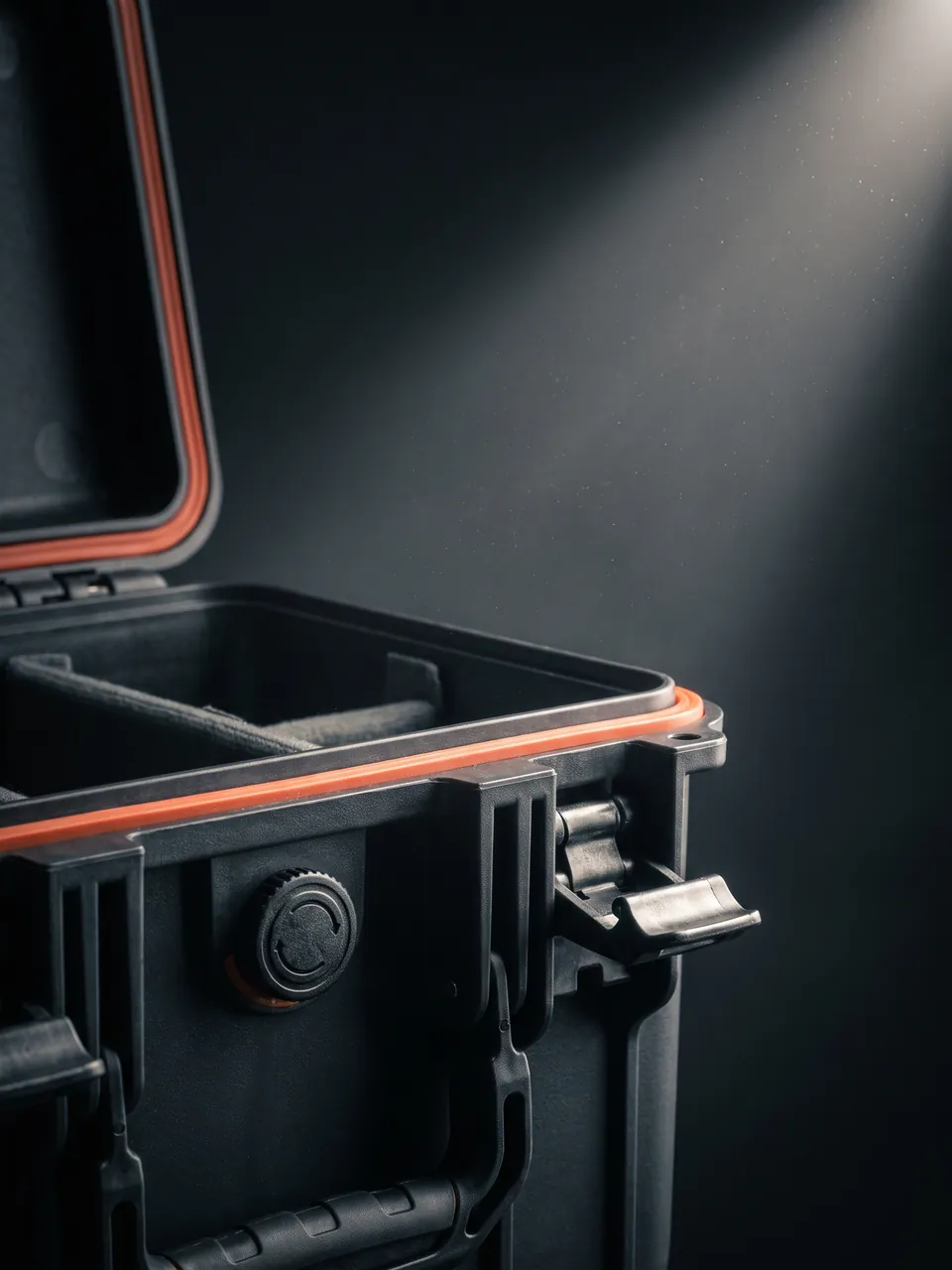
For recycling to be practical, material must be identifiable. The international practice is to mark resin identification codes on products under ASTM D7611; China has a corresponding plastic recycling mark requirement, commonly reflected in the GB/T 16288 series of marking specifications. The point of marking is that when retired cases reach the recycling stage they can be routed quickly to the right regeneration process instead of being lumped together as mixed scrap.
Materials commonly marked on protective cases include PP, PC, ABS and HDPE. Note that the identification code itself does not mean "recyclable"; it is only a routing basis. Actual recyclability depends on cleanliness and available facilities. On principles, ISO 15270 gives a framework for the terminology, pathways and quality requirements of plastics recycling and reuse, and is a sensible reference when writing a company recycling procedure.
Practical value for buyers: if you want future cases to be easy to recycle, write "main plastic parts shall carry resin identification codes" into the technical agreement or procurement requirement. It is a low-cost, high-return clause that takes seconds to fulfil and materially improves routing efficiency at retirement. For manufacturers, a marked, traceable material system is the foundation for turning recycling capability into commercial capability (audit it together with material control under an ISO 9001 quality system, as described in how to audit a case factory).
The recycling process route: crushing, washing, pelletising, modifying
Physical recycling normally has four steps, and how well each is done directly affects regrind quality and recycling value.
Step one is disassembly and sorting. Separate the liner, gasket, latches, hinges and labels from the shell. This is the most easily overlooked step and the one with the greatest impact on recycling value. Metal left in the stream damages the pelletiser screw and contaminates the regrind; foam left behind causes bubbles and black specks.
Step two is crushing. Break the shell into flakes with a crusher and control flake size uniformity. Group by colour before crushing, because mixed colour can only go into dark or black products, and value drops clearly.
Step three is washing. Remove soil, oil, label adhesive and residue. Poor washing is the main cause of black specks, odour and inconsistent strength. For protective cases used outdoors for years and caked in mud, this step matters especially.
Step four is pelletising and modifying. Extrude into regrind pellets, then modify by adding compatibilisers, antioxidants and tougheners, or blend with virgin material at a set ratio. Whether modifying capability exists decides what grade of product the regrind can return to — low-end mixed parts, or a non-load-bearing structural part.
| Process step | Key control point | Common problem | Effect on recycling value |
|---|---|---|---|
| --- | --- | --- | --- |
| Disassembly and sorting | Complete metal and foam separation | Hardware not removed, foam residue | Determines whether pelletising is possible at all |
| Crushing | Uniform flake size, colour grouping | Mixed colour, uneven flakes | Affects downstream colour and properties |
| Washing | Decontamination, de-labelling, salt removal | Black specks, odour, reduced electrical properties | Affects regrind price and application |
| Pelletising and modifying | Ratio, compatibiliser, antioxidant | Molecular-weight loss, embrittlement | Decides the highest viable application |
Can recycled material go back into a protective case? Property loss and blended-ratio control
This is the question buyers and manufacturers care about most: can regrind be made into a protective case again? The answer is yes at a controlled blend ratio, but it depends on which layer it goes into and what load it carries.
Under repeated heat history and mechanical shear, polymer chains degrade, showing up as a shift in melt flow rate, lower impact strength and darker colour. PP tolerates this relatively well; PC and ABS are more sensitive to heat history. Three principles follow for regrind reuse:
- Partition by function. Regrind should go first into non-load-bearing, non-visible, non-sealing locations, such as internal dividers and base blocks, and never into seal-groove surfaces, load-bearing hinge seats or clear lids.
- Control the blend ratio. Blend regrind into virgin material at an empirical ratio, validate step by step, rather than blending without limit. A higher ratio lowers cost but shrinks the strength margin and requires re-validation of the structure.
- Re-validate. After blending regrind, verify at least the critical items (drop, stacking, seal-face fit) and retest the ingress protection rating if necessary. Verification methods are covered in IP67 protective cases, sealing and verification.
It is worth stressing that "recycled material" and "refurbished or remelted scrap" are not the same thing. Compliant regrind comes from a controlled source and has been sorted and washed; scrap of unknown origin may contain other grades, flame retardants or contaminants with uncontrollable properties, which is exactly the root of the "real versus fake material" problem in the market. For judging material reliability, see how to tell virgin from recycled case material and identifying refurbished versus virgin material.
The four reuse pathways: closed-loop, downgraded, energy, chemical

Recycling is not a single action but a hierarchy of pathways. The industry usually splits reuse into four pathways, ranked from highest to lowest value below.
First, closed-loop (primary) recycling. The shell of a retired case is regenerated and used again for the same or a similar application. Value is highest, but so are the demands on material consistency, cleanliness and modifying capability. Suited to single-material cases with a stable recycling channel.
Second, downgraded (open-loop) recycling. Regrind goes into lower-demand products such as tote boxes, blocks, non-visible parts, garden and municipal products. This is the most common and most realistic pathway. The great majority of actual protective-case regrind travels this route.
Third, energy recovery. Mixed material, foam and heavily contaminated streams that cannot be physically recycled are incinerated to recover calorific value. It works in compliant incineration facilities but is the lowest-value option and must meet emissions requirements.
Fourth, chemical recycling. Depolymerisation, pyrolysis and similar methods reduce plastics to monomers or oils for repolymerisation. They tolerate mixed and contaminated streams better and attract growing attention, but cost is relatively high and industrial maturity is limited, so they complement rather than replace physical recycling.
| Pathway | Suitable material | Technical demand | Value | Practical maturity |
|---|---|---|---|---|
| --- | --- | --- | --- | --- |
| Closed-loop | Single clean PP, HDPE | High (sorting, modifying, validation) | Highest | Conditionally feasible |
| Downgraded | Mixed-colour PP, PC, ABS | Medium | Medium | Most common |
| Energy recovery | Foam, mixed scrap | Requires compliant incineration | Low | Common at the end of life |
| Chemical | Mixed, contaminated | High (depolymerisation/pyrolysis plant) | Medium (depends on oil price) | Industrialising |
A practical priority for buyers: pursue closed-loop or downgraded physical recycling first, keep energy recovery as a fallback, and track chemical recycling without relying on it as a primary commitment. When negotiating recycling-content commitments with a supplier, distinguish "physical recycling rate" from "overall utilisation including energy recovery" — the two are very different and the contract must state which applies.
The economics of recycling: when it actually pays
Recycling is not automatically worthwhile. It has to clear several cost thresholds: disassembly labour, crushing and washing energy, transport volume cost, and the spread between regrind and virgin material. Recycling only makes economic sense when "regrind sale value + disposal cost avoided + compliance benefit" exceeds the total cost of recycling.
Four conditions dominate the economics:
- Whether the batch is big enough. Recycling is a scale business; a single case is uneconomic, a bulk retirement has value.
- How concentrated the material is. Single-material, solid-colour streams fetch high prices; mixed colour and mixed material collapse in value.
- Whether the transport radius is sensible. Empty cases and foam are bulky and low-density, so a long haul eats the value. This is the fundamental reason foam recycling economics are poor.
- The spread between regrind and virgin. The wider the spread, the stronger the incentive. When the spread narrows, recycling is driven more by compliance and ESG.
For the user, folding these conditions into sourcing decisions is exactly the life-cycle view. Total cost of ownership should include end-of-life disposal cost, not just purchase unit price — see total cost of ownership of protective cases and breaking down protective case cost structure.
Environmental compliance and systems: where ISO 14001 and GB/T 24001 apply
To turn recycling from an ad-hoc act into a stable capability, a management system is needed. The internationally recognised environmental management system is ISO 14001, and China's corresponding standard is GB/T 24001, identical in technical content. For protective-case manufacturers and users, the system has three main landing points:
- Waste classification and traceability: register plastic parts, foam, metal parts and seals separately, traceable to the generating step and disposal route.
- Regrind purchasing and use control: record the source, batch and blend ratio of incoming regrind to keep it traceable, consistent with incoming inspection logic under ISO 9001 material control.
- Compliance declarations and documents: provide material statements, recycling marks and disposal guidance for export customers.
For industries such as automotive and electronics with explicit traceability requirements for recycled materials, supply chains often draw on IATF 16949 change-management and traceability thinking to manage regrind use (referenced here for comparison only; protective cases themselves normally do not mandate that system). In one sentence: the value of a system is turning "recycling depends on someone watching" into "recycling is recorded, traceable and auditable".
Design for Recycling (DfR): thinking about recovery at the drawing stage
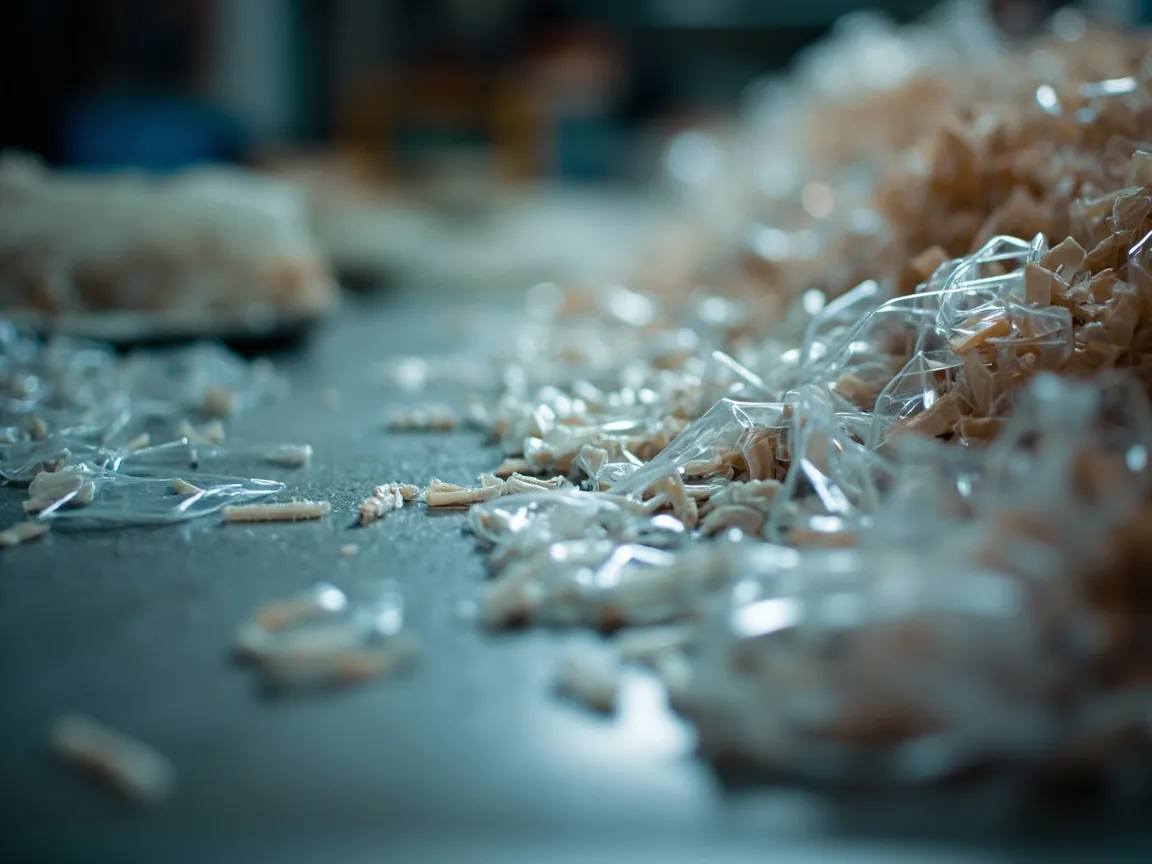
Recycling difficulty is decided at the drawing stage. Design for Recycling offers several actionable rules:
- Reduce the number of materials. If the shell can be single-material, keep it single; avoid "PP shell + ABS panel + PC window" type combinations, because composites are hard to separate and low in recycling value.
- Avoid irreversible bonding. Fix liners mechanically or with removable structures rather than full-face bonding; see the removable design thinking in protective case liners and foam selection.
- Mark materials. Apply resin identification codes to main plastic parts to help routing at retirement.
- Make hardware removable. Design latches and hinges to be detachable so metal does not enter the crusher.
- Converge colours. Reduce the number of colours per model, or use one base resin with different masterbatch, to cut mixed-colour losses.
These rules add little cost but cut disposal cost at retirement. For custom projects they can be written into the technical agreement with the supplier, covering material marking and removable structure — exactly the kind of recyclability clause that can be included in a protective case tender specification.
A procurement and operations view: trade-in and total cost of ownership
From a procurement and operations standpoint, recycling can be designed as a commercial mechanism rather than environmental talk. Three common approaches:
One, trade-in. The supplier gives a credit against a new order based on the number of old cases, which enter its recycling system. For the user, retired cases gain a value outlet; for the supplier, regrind gains a stable source. The key is to agree the criteria in advance: which old cases qualify, how much credit, who pays freight, and whether the liner must be removed.
Two, rental and circulation recovery. In a rental model the cases belong to the lessor, so end-of-life recovery falls naturally to the lessor and the user simply returns them as agreed. This is especially cost-effective for short projects; see the economics comparison in renting versus buying protective cases.
Three, spares and repair first. Often "recycling" should be preceded by "repair and part replacement". Aged gaskets, broken hinges and torn liners can all be fixed with replacement parts, and extending service life is the most effective waste reduction — see protective case repair and spare parts and protective case cleaning and maintenance.
Recommended order: repair usable parts first, then recycle material, and only then scrap. This priority saves money and reduces waste, and is the most practical principle for operations teams.
Common recycling misconceptions: five plausible-sounding claims
Misconception one: "It's plastic, so it must be recyclable." Plastics divide into thermoplastics and thermosets, and foamed and composite structures are hard to recycle. Recyclability must be judged material by material.
Misconception two: "Cases with recycled content are always worse." The key is ratio and application. At a controlled ratio, in the right location and after validation, regrind products can meet requirements; the problem lies in uncontrolled scrap and excessive ratios.
Misconception three: "Recycling is dropping the case in a recycling bin." Without disassembly, sorting, crushing and washing, recycling is only a gesture. Metal and foam contamination ruins a whole batch of regrind.
Misconception four: "Recycling always saves money." Recycling carries disassembly, washing and transport costs. It only pays when batch size, material concentration and the price spread line up; foam usually does not.
Misconception five: "Writing an environmental pledge into the contract settles everything." State the definition: physical recycling rate or overall utilisation including energy recovery, whether traceable documents exist, and how it is verified. A vague pledge is no pledge.
In practice: how a company builds a protective-case recycling workflow
Turning the above into an executable process takes six steps:
- Take stock. Count protective cases in use by material (check markings or ask the supplier), quantity, location and expected retirement date.
- Classify. Sort into three tiers by material and condition — repairable, recyclable, to be disposed of.
- Repair before recycling. Replace parts on repairable units to extend service life.
- Agree the channel. Fix the recycling price, conditions, freight and documentation with a supplier or recycler.
- Consolidate batches. Group by material to avoid mixing and reach an economic batch size.
- Keep records. Log generation, destination and disposal evidence to satisfy system and customer audits.
Put the recycling clause into the procurement contract up front: state end-of-life responsibility, recyclability requirements (such as material marking), the trade-in mechanism and document provision. Then recycling turns from "a hassle at retirement" into "a term agreed at purchase".
JUNZHJIA, manufactured by KeXin New Materials (Guangdong) Co., Ltd., covers protective cases, toolboxes, military-spec storage cases and waterproof junction boxes, serving wholesale, distribution, OEM/ODM and global supply. On traceable materials, disassemblable structures and identifiable marking for recycling-oriented design, the company can provide material statements, part-separation guidance and spare-part replacement support, and welcomes further discussion of recycling and reuse schemes.
FAQ
Q: Do protective cases really have recycling value? A: Yes, but the value depends on three conditions, not simply on "being plastic". First, whether the main material is single and identifiable: shells based on copolymer PP or HDPE have relatively high recycling value; multi-material composites are low. Second, whether the structure can be easily disassembled: physical recycling is only possible when hardware, gasket and foam separate cleanly from the shell; bonded or mixed structures can only be downgraded or used for energy recovery. Third, whether a compliant reuse outlet exists: a stable recycler, an agreed price and documentation. Taken together, a single-material, disassemblable case can reach a material recovery rate above 80 percent under good conditions, while a multi-material composite drops sharply. Also separate three value dimensions: material value (what regrind fetches), compliance value (satisfying customer ESG and regulatory requirements) and operations value (whether end-of-life disposal saves cost). Looking only at material price usually understates the commercial value of recycling. Figures quoted are empirical; actual material, testing and local regulations govern.
Q: Which is easier to recycle — a PP, PC or ABS protective case? A: Overall PP is better than HDPE, which is better than PC, which is better than ABS, with foam and sealant worst of all. PP has a lower melting point, good flow and a mature recycling route, making it one of the higher-value shell materials with feasible closed-loop or downgraded reuse. HDPE is equally mature and mostly goes into circulation-type products. PC offers good strength but regrind is sensitive to heat history, showing noticeable molecular-weight loss and discolouration, so blend ratios must be conservative and regrind typically goes into non-optical, non-clear parts. ABS loses toughness clearly after recycling and mostly goes to downgraded uses. EVA and EPE foams could theoretically be remelted, but low density, large volume and high transport cost make recycling economics generally poor; secondary cushioning use or energy recovery is more realistic. Silicone gaskets cannot be remelted and generally go to downgraded use or energy recovery. Metal latches and hinges are easily recycled, provided they are separated cleanly from plastic first. The rule of thumb: the more single-material, the more easily disassembled, and the more concentrated the colour, the higher the value.
Q: Which standards cover resin identification codes and recycling? A: Three groups mainly apply. First, resin identification codes. The international practice is to mark plastic products under ASTM D7611; China has a corresponding plastic recycling mark requirement commonly reflected in the GB/T 16288 series of marking specifications, used to designate PP, PC, ABS, HDPE and other material codes. Second, recycling principles. ISO 15270 provides a framework for the terminology, pathways and quality requirements of plastics recycling and reuse, a sensible reference when writing a corporate recycling procedure. Third, environmental management systems. The internationally recognised environmental management system is ISO 14001, with China's GB/T 24001 identical in technical content. Note that an identification code only means "material identifiable" — it is a routing basis, not proof of "certainly recyclable". Actual recyclability also depends on cleanliness, disassembly difficulty and whether local recycling facilities exist. For buyers, the practical value is that the technical agreement can state "main plastic parts shall carry resin identification codes": a low-cost clause fulfilled in seconds that noticeably improves routing efficiency at retirement.
Q: Can recycled material be made into a protective case again, or does performance suffer badly? A: At a controlled blend ratio, yes, but it depends on which layer and what load. Under repeated heat history and mechanical shear, plastics degrade, showing a shift in melt flow rate, lower impact strength and darker colour; PP tolerates this relatively well, while PC and ABS are more sensitive. Three principles follow: partition by function, putting regrind first into non-load-bearing, non-visible, non-sealing locations such as internal dividers and base blocks, and never into seal-groove surfaces, load-bearing hinge seats or clear lids; control the blend ratio, blending regrind into virgin at an empirical ratio and validating step by step, since a higher ratio lowers cost but shrinks the strength margin; and re-validate, verifying at least drop, stacking and seal-face fit after blending, and retesting the ingress protection rating if necessary. Also distinguish "compliant regrind" from "scrap of unknown origin": the former comes from a controlled source and has been sorted and washed, with controllable properties; the latter may contain other grades, flame retardants or contaminants. The conclusion is that regrind is not unusable — it simply cannot be used without control.
Q: Does recycling a protective case pay, and when is it not worth it? A: It does not pay automatically; it has to clear several cost thresholds. Recycling costs include disassembly labour, crushing and washing energy, transport volume cost and the spread between regrind and virgin. It only works when "regrind sale value + disposal cost avoided + compliance benefit" exceeds total recycling cost. Four conditions dominate: batch size, since a single case is uneconomic and a bulk retirement has value; material concentration, since single-material solid-colour commands a high price while mixed colour and mixed material collapse; transport radius, since empty cases and foam are bulky and low-density so a long haul eats the value, the fundamental reason foam recycling economics are poor; and the regrind-versus-virgin spread, wider spread meaning stronger incentive, with compliance and ESG driving recycling when the spread narrows. Typical "not worth it" scenarios: foam-dominated recycling, very small scattered retirements, mixed colour and mixed material scrap, and low-density material hauled too far. For these, secondary cushioning use (for foam) or compliant energy recovery is preferable, leaving physical recycling for concentrated, sufficiently large shell-type scrap.
Q: How should recycling clauses be written into procurement? A: Four items should be stated in the contract or technical agreement. First, recyclability design requirements: main plastic parts marked with resin identification codes (following the ASTM D7611 / GB/T 16288 approach), no full-face bonding, removable hardware and converged colours. Second, end-of-life responsibility: who handles recycling, at what price, who pays freight, and which disposal documents are provided. Third, the trade-in mechanism: which old cases qualify, the credit standard and the assessment method (for example, whether the liner must be removed). Fourth, the definition of the commitment: state whether it is a "physical recycling rate" or an "overall utilisation including energy recovery", because the two are very different, and require traceable documents. Note especially that putting the recycling clause into procurement up front is the lowest-cost approach. Waiting until cases are retired to find a recycler leaves you passive and with little negotiating room. For high-volume users, the recycling clause can also be tied to total cost of ownership accounting; see the articles on total cost of ownership and cost structure breakdown.
Q: Is trade-in better than repair and part replacement? A: The priority should be "repair usable parts first, then recycle material, and only then scrap", so repair and part replacement is usually better than trade-in. Many so-called failures can be fixed: aged gaskets can be replaced, broken hinges or latches can be swapped, torn liners can be partly re-foamed, and minor shell cracks can be repaired. Replacement cost is usually far below whole-case replacement, and extending service life is the most effective waste reduction. When is trade-in better? When damage is structural and severe (extensive cracking, failure of load-bearing areas), when a large batch retires at once, or when the supplier offers an attractive credit. A practical recommendation is a tiered disposal flow: tier one repairable (part replacement and continued use), tier two recyclable (into the recycling system), tier three to be disposed of (compliant scrapping). This neither wastes repairable cases nor fails to consolidate what cannot be repaired, balancing cost saving and waste reduction. Relevant part replacement and repair points are covered in the articles on case repair and spare parts, and cleaning and maintenance.
Q: What recycling requirements apply to exported products? A: Three areas mainly. First, packaging and plastic-waste regulations: some export destinations set explicit requirements on packaging recyclability, recycling marks and producer responsibility, covering material marking and disposal guidance for plastic parts. Second, customer ESG requirements: a growing number of brand customers require suppliers to explain material recyclability, recycled content and disposal schemes, with traceable documents. Third, compliance declarations and documents: material statements, resin code information and compliance declarations must be available. For manufacturers, the advice is to make traceability real: record the source, batch and blend ratio of incoming regrind, consistent with ISO 9001 incoming inspection logic, and provide material and disposal guidance documents with shipments to export customers. For buyers, the advice is to include recycling and material-marking requirements in the enquiry stage to avoid rework after mass production. Where industries such as automotive and electronics have explicit traceability requirements for recycled materials, supply chains often draw on IATF 16949 change-management and traceability thinking (referenced for comparison only).
Q: How can you tell whether a supplier's claim of "using recycled material" is genuine? A: Focus on three verifiable points. First, ask for material and ratio documents. A reputable supplier can provide the source, batch and blend-ratio records of regrind; a vague "we used some" is usually untraceable. Second, look for physical evidence. Regrind products tend to be slightly darker with larger batch-to-batch colour variation; if critical load-bearing parts or seal faces show abnormal mottling or brittleness, the ratio may be too high or the material misapplied. Third, run validation. Test the critical items of regrind-blended parts (drop, stacking, seal-face fit) and retest the ingress protection rating if necessary; a same-condition comparison against virgin parts will reveal differences. Be careful to distinguish three materials: compliant regrind (controlled source, sorted and washed), refurbished material (old parts re-pelletised, mixed origin) and remelted scrap (different grades and contaminants mixed). Their performance and compliance differ greatly. Relevant identification methods are covered in the articles on telling virgin from recycled material and identifying refurbished versus virgin material; at system level, check the supplier's incoming inspection and traceability records.
Closing remarks and related reading
Back to the question in the title: protective cases do have real recycling value, but not because "plastic must be recyclable" — it depends on whether the main material is single and identifiable, whether the structure is easy to disassemble, and whether regrind has a compliant outlet. In terms of sequence, judge recyclability material by material (PP and HDPE ahead of PC and ABS, with foam and sealant worst), then use resin identification codes and standards such as ISO 15270 as the routing and framework basis, then understand the crushing-washing-pelletising-modifying chain and blend-ratio control, and finally choose among the four reuse pathways — favouring closed-loop or downgraded physical recycling, with energy recovery as a fallback and chemical recycling tracked. Economically, recycling only pays when batch size is sufficient, material is concentrated, the transport radius is sensible and a price spread exists; foam usually does not qualify.
Three executable recommendations: first, move recycling forward into the design and sourcing stage, using material marking, disassemblable structures and colour convergence as Design for Recycling rules to cut end-of-life disposal cost. Second, manage cases in use with a "repair, then recycle, then dispose" tiered flow, replacing parts to extend life on repairable units and consolidating the rest for recycling. Third, state the definition of the recycling commitment clearly and keep documents, separating physical recycling rate from overall utilisation and folding it into total cost of ownership accounting.
JUNZHJIA, manufactured by KeXin New Materials (Guangdong) Co., Ltd., offers protective cases, toolboxes, military-spec storage cases and waterproof junction boxes, serving wholesale, distribution, OEM/ODM and global supply, and can support customers with material statements, part-separation guidance and spare-part supply.
Related reading