

The short answer: telling a genuine protective case from a fake is not about how closely the logo is copied. It is about two things, whether the material is virgin resin or reprocessed recycled resin, and whether the structure is a complete design or a stripped-down imitation. Four kinds of evidence actually work: visible processing traces, physical tests by hand and by scale, material and test documents you can cross-check, and a cross-section plus a weight check that verifies the supplier's claims. Once a buyer locks down three pieces of evidence, the material grade, an actual cross-section, and a test report, most cases of substitution expose themselves well before delivery.
This guide is written for B2B procurement, quality engineers, equipment managers, and distributors. It breaks the identification of fake or degraded protective cases into executable steps: first the sources of recycled resin and the real performance gap, then methods by appearance, by hand and weight, by structure, by marking and documents, by price logic, and by accessories, then a rapid on-site checklist, and finally the process for handling a suspected counterfeit. The performance differences and values quoted here are typical values or rules of thumb; the binding basis for any judgment is the agreed drawing, golden sample, standard version, and test report. For environmental claims about recycled content, the general framework is the environmental labeling guidance of ISO 14021. If you are about to inspect an incoming batch of protective cases, this article can be used directly as an on-site checklist.
Table of Contents
- The Short Answer: Material Source and Structural Integrity
- What Recycled Resin Is: Three Sources and a Quality Gradient
- How Large Is the Performance Gap Between Virgin and Recycled Resin
- Appearance Identification: Color, Gloss, Sink Marks, Weld Lines
- Hand and Physical Identification: Tap, Press, Weigh, Density
- Structure and Process Identification: Cross-Section, Walls, Ribs, Groove
- Marking and Document Identification: Nameplate, Batch, Reports, Traceability
- Price Identification: The Cost Logic Behind an Abnormally Low Quote
- Gasket and Accessory Identification: Recycled Rubber and Cheap Latches
- How Procurement Prevents Fakes: Incoming Inspection and Validation
- A Rapid On-Site Identification Checklist
- Handling a Suspected Counterfeit or Material Substitution
- Frequently Asked Questions (FAQ)
- Conclusion and Further Reading
The Short Answer: Material Source and Structural Integrity
Start with the logic. A protective case is a classic functional enclosure: what it sells is not appearance but four performance families, sealing, strength, weathering, and service life. These four share one trait. When they fall short in normal conditions, appearance gives almost nothing away. A case made with blended recycled resin and a case made with virgin resin may be indistinguishable on a desk; the difference only appears after immersion, after a low-temperature soak, or after one winter.
So identification has two main lines. The first is material source: does the shell and the load-bearing parts use virgin resin, or a blend that includes recycled resin. Material is the underlying performance ceiling of the case, and no downstream process can buy back what the material saved. The second is structural integrity: whether the design's full wall thickness, ribs, seal groove, and locating features were actually built, or quietly stripped in places no one looks.
These two lines map to four kinds of evidence: processing traces in appearance, physical behavior by hand and scale, a structural cross-section for physical verification, and documents for material and testing. Lock down those four and the judgment no longer depends on feeling. For systematic material comparison, see how to choose protective case plastic materials and the difference between PP, ABS, and PC cases.
| Evidence type | What it can expose | When to request or perform | Key action |
|---|---|---|---|
| --- | --- | --- | --- |
| Processing traces | Recycled color variation, sink marks, weld lines, dull surfaces | Sample review and delivery | Compare samples side by side in daylight and raking light |
| Physical behavior | Abnormal density, brittleness, poor resilience | Sampling and delivery | Weight comparison, tap test, press test |
| Structural cross-section | Thin walls, fake ribs, poor seal groove | Sampling and first batch | Section one case and measure |
| Marking and documents | Vague resin grade, mismatched report, missing batch | Quotation and first batch | Cross-check grade, sample, standard number |
| Price logic | A quote below the material cost line | Quotation | Reverse-engineer the cost structure |
The most useful column here is "key action." Identification is not a suspicion; it is an evidence action you can photograph and file.
What Recycled Resin Is: Three Sources and a Quality Gradient
"Reprocessed resin" is not a strict materials term but an industry catch-all for recycled plastics. Understanding its sources explains why two things both called "regrind" can differ enormously.
Source one, in-house factory scrap. Gates, runners, and rejects generated during injection molding, ground and blended back into virgin resin at a fixed ratio inside the same plant. This regrind has a single, controllable composition and little contamination, making it the best of the three. In a reasonable ratio, commonly understood in the range of the low teens to low twenties percent, its effect on performance is regarded as limited. The key questions are the ratio and whether it is declared.
Source two, post-consumer recycled resin. Comes from end-of-life plastic products, with mixed composition, inconsistent color, and possible impurities and contaminants. It must go through sorting, washing, and pelletizing, and quality depends on the level of the recycling process. When used for protective cases, it often needs a dark color or color masterbatch to mask variation, and its performance is more variable.
Source three, mixed waste of unknown origin. Composition unknown, possibly blending different resins, fillers, and even metal fragments. This is the cheapest material and the most damaging to toughness, weathering, and dimensional stability. It is the typical raw material behind cheap, low-quality cases.
| Recycled source | Composition control | Typical use | Performance impact | Identification difficulty |
|---|---|---|---|---|
| --- | --- | --- | --- | --- |
| In-house scrap | High | Blended back with virgin at ratio | Limited effect at a reasonable ratio | Harder (appearance is close) |
| Post-consumer | Medium | Reprocessed pellets for non-structural parts | Lower toughness and weathering, visible color variation | Medium |
| Mixed unknown waste | Low | Blended to cut cost | Toughness, low-temperature performance, and life drop sharply | Easier (odd appearance and odor) |
What this table says is that not all recycled resin is poison. Two things matter: whether it is declared in the contract, and whether it is used in load-bearing or sealing-related locations. Undisclosed use, or use in sealing and load-bearing parts, is the real definition of substitution.
How Large Is the Performance Gap Between Virgin and Recycled Resin
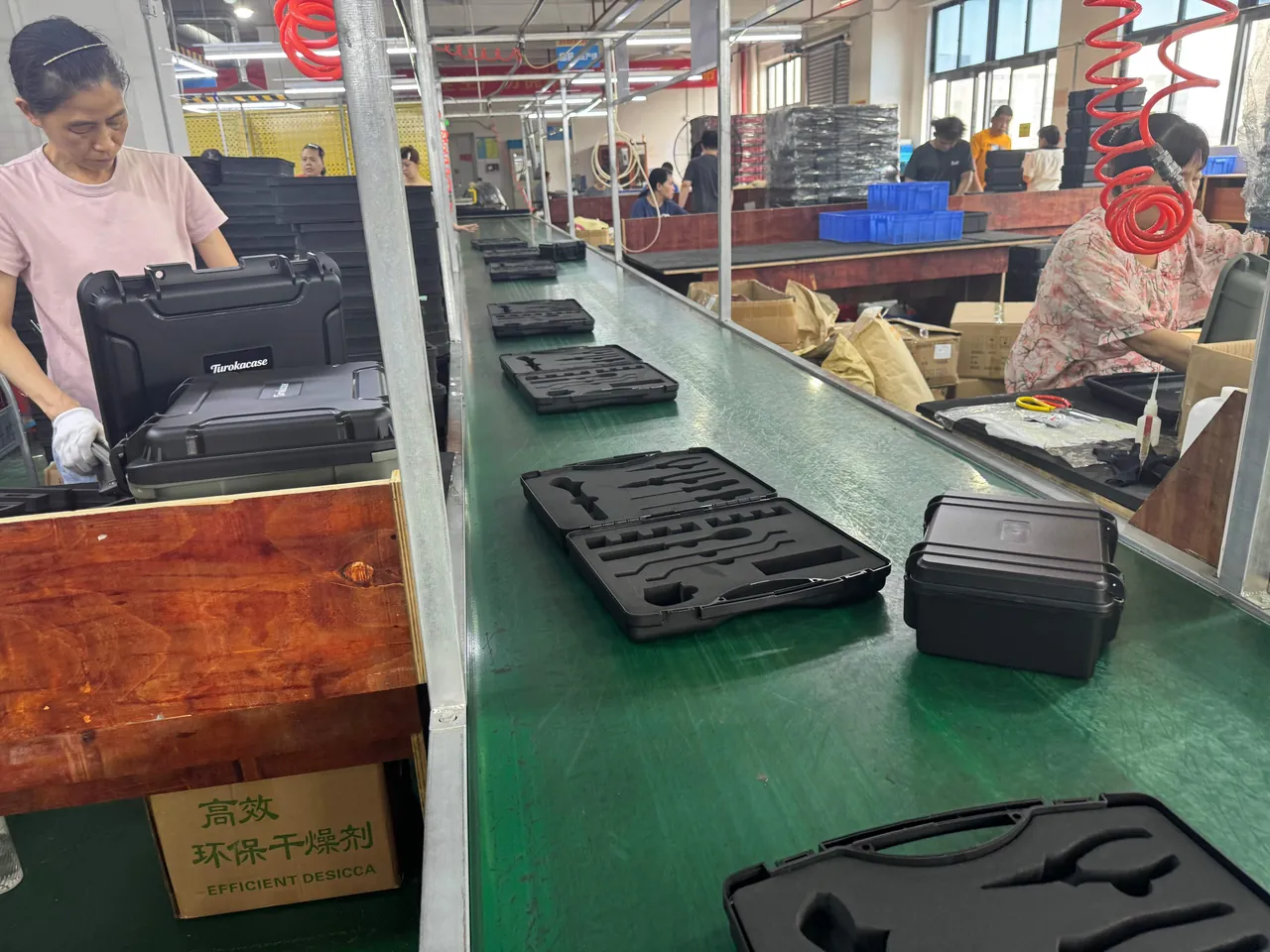
With sources understood, the performance gap explains why this must be taken seriously.
First, toughness and impact resistance. After multiple heat histories, polymer chains degrade, and impact strength typically falls as recycling cycles and blend ratio rise. In practice, the case cracks more easily on impact, especially at low temperature. Common industry methods for impact performance include Charpy and Izod impact tests, such as GB/T 1043 and ISO 179 for the impact properties of plastics; the gap between virgin resin and a high-ratio recycled blend is often clear in such tests.
Second, weathering. Recycled resin often carries residual catalysts, impurities, and aging products, which accelerate degradation under ultraviolet and hot-humid conditions. Common weathering evaluation methods include damp heat exposure and artificial weathering tests, such as ISO 4611 for the exposure of plastics to damp heat.
Third, color and appearance consistency. Recycled resin is colored and contaminated and must be masked with masterbatch. Color variation between batches is more likely to show, and dark and light parts behave differently. For projects with brand appearance requirements, color variation is itself a nonconformity.
Fourth, dimensional stability and odor. Mixed material shrinks more inconsistently after molding, so dimensions vary more. Some recycled resin also brings a pungent odor, very noticeable in the insert and the enclosed interior.
Fifth, service life and reliability. Taken together, a case that uses a high-ratio recycled blend typically has a noticeably shorter real service life than a virgin-resin product. For life judgment, see how many years does a protective case last. For the compliant way to handle recycled material in an environmental context, see protective case recycling and reuse.
One line to summarize: the gap between virgin and recycled resin is not about whether it works today, but whether it still works three years from now. That is exactly why it is hard to detect on the day of delivery.
Appearance Identification: Color, Gloss, Sink Marks, Weld Lines
Appearance is the fastest and cheapest step, but it needs method, or a dark color will hide everything.
First, color variation. In daylight and raking light, place cases from the same batch side by side and look for slight unevenness, dullness, yellowing, or mottling. Unevenly blended recycled resin often shows cloud-like streaks or local color patches. Light parts reveal problems more readily than dark parts, so request a light-colored sample for inspection.
Second, gloss. Virgin-resin parts have even, clear surface gloss; a high-ratio recycled blend often looks dull, wooden, or hazy. Distinguish the mold's own texture from material-driven loss of gloss by comparing with the golden sample.
Third, sink marks and weld lines. Sink marks appear where walls are thick, on the back of ribs, and at boss roots, showing as local depressions. Weld lines appear near ribs, openings, and the seal groove, showing as faint linear traces. Recycled resin flows less consistently, so sink marks and weld lines are often more pronounced and more irregular. A weld line is itself a weak point, and the risk is higher if it lands in a load-bearing or sealing area.
Fourth, surface defects. Silver streaking, flow marks, black specks, and non-design contamination points all signal impure material or poor drying. Black specks deserve special caution, since they often come from foreign matter or carbonized material.
Fifth, edges and detail. Whether the parting line is clean, whether flash is trimmed properly, whether the silkscreen is sharp, and whether the color matches the golden sample. Low-end imitations are usually rough in exactly these details, which are a direct measure of process investment.
Hand and Physical Identification: Tap, Press, Weigh, Density
Appearance can be masked; physical behavior is much harder to fake. This group needs only a hand and an electronic scale.
Listen to the tap sound. Tap the wall with a knuckle. Virgin-resin parts usually sound crisp with clean resonance; a high-ratio recycled blend or an over-filled part sounds dull and dispersed. This is an empirical method and should be used to compare within the same batch, not against memory.
Run a press test. Press the wall and the center of the base with the palm and feel whether the rebound is clean. A sound case recovers quickly with no obvious bulge or soft sag. Slow rebound or local collapse points toward thin walls or low material modulus.
Compare weight. This is the most objective step. For cases of the same nominal model, a weight difference usually reflects one of two things: different material density from fillers or recycled content, or reduced wall thickness. Write a weight tolerance into the procurement document and sample-weigh on arrival. Note that lighter is not automatically worse, since sensible lightweighting is a virtue. But if a supplier claims virgin resin while the part is clearly light, feels soft, and taps dull, that combination warrants further investigation.
Run a simple drop and low-temperature check. Drop from an agreed height, or condition at low temperature for the actual duty cycle and then drop, watching for cracking, deformation, or damage to the seal face. Do this at the sampling stage and run one cycle under real conditions; it is more convincing than any verbal assurance.
Smell the part. Some recycled resin carries a pungent plastic odor, especially noticeable when the case interior is opened after being closed for a while. Odor is not decisive evidence, but it is a reasonable trigger for further checks.
Structure and Process Identification: Cross-Section, Walls, Ribs, Groove

If appearance and hand feel are the first screen, the structural cross-section is the definitive step. There is an industry saying worth remembering: the places a supplier does not want you to cut open are usually the places where he saved money.
Request a cross-section drawing or a cut sample. The most effective action is to ask for a section drawing and, at sampling and first batch, to cut one case open and measure wall thickness directly. For a medium protective case, the main wall thickness is typically in the 2.5-4.0 mm range, depending on material modulus, case size, and load requirement. Measure with a caliper and do not trust a verbal number.
Examine the rib layout. Ribs, including bottom grid ribs, hoop ribs, and corner blocks, are the pillars of compression, torsion, and drop resistance. Check three things: whether rib height and spacing are reasonable, since too dense causes sink marks and too sparse gives no bending resistance; whether the rib-to-wall junction has sufficient radius to avoid stress concentration; and whether the rib roots show severe sink marks, since deep sink marks indicate a process or material problem. For the design logic of structural strength, see how the shell structure of a high-strength protective case is built.
Examine the seal groove and locating features. The seal groove constrains the gasket from moving laterally, and the locating feature determines how much the gasket is compressed when the lid closes. A sound sealing design has three elements: seal groove, gasket cross-section, and compression. If the rim is just a flat face relying on the lid's own weight, with no groove and no compression design, it most likely has no real sealing capability. For gasket material selection, see what material is used for protective case gaskets.
Examine metal inserts and critical joints. Hinge pins, latch shafts, and threaded inserts are load-bearing and moving parts. If these use poor metal or a thinned structure, life drops sharply.
| Inspection point | Sound behavior (typical) | Suspicious signal | Verification action |
|---|---|---|---|
| --- | --- | --- | --- |
| Main wall thickness | 2.5-4.0 mm range by model | Clearly thin, uneven | Section and measure |
| Ribs | Reasonable layout, radius at root, minor sink | Very shallow, breaks easily, deep sink | Section and visual check |
| Seal groove | Full groove with locating feature | Flat face, no compression design | Request section drawing |
| Hinges and latches | Defined material, positive engagement | Loose action, no life data | Opening and closing life test |
| Unit weight | Within agreed tolerance | Clearly light and soft | Sample weighing |
| Surface finish | Even gloss, no black specks | Dull, hazy, specks, silver streaks | Compare with golden sample |
The core logic of this table is turning feeling into measurement. Cutting one case open costs far less than a batch failing together.
Marking and Document Identification: Nameplate, Batch, Reports, Traceability
Documents are the most overlooked and the most decisive part of identification, because an imitation can copy appearance but struggles to keep producing real, cross-checkable, traceable documents.
First, the resin grade must be explicit. "High-strength engineering plastic" on a quotation says nothing. Require the specific grade, the supplier name, and the property data for that grade. If the answer is only "PP material," the supplier may itself be using the cheapest general-purpose or recycled resin.
Second, nameplate and batch must be consistent. The model and IP marking on the nameplate should match the contract, and the batch number system should be traceable to production date and inspection records. A missing or chaotic batch number is a clear signal that quality traceability will be difficult.
Third, the test report must correspond. IP rating should be judged within the framework of IEC 60529 or GB/T 4208, and the report must be cross-checked on four points: the standard number and version cited; whether the sample description is your specific model; whether test conditions such as immersion depth and duration are stated; and whether the issuing body and date are traceable. If the supplier can only produce a "waterproof certificate" image with no standard to check against, that is a classic sign of an inflated rating. For how to verify reports, see how to verify an IP67 test report.
Fourth, environmental and recycled content claims must be compliant. If a supplier advertises "eco-friendly recycled material" or "contains recycled content," the wording should follow the general framework for environmental claims, such as ISO 14021: claims should be substantiated, not exaggerated, not misleading, and should be able to state the source and proportion of recycled content. Eco should never be a reason to quietly lower performance.
Fifth, the quality management system and inspection records. A supplier with a quality management system such as ISO 9001 can usually provide incoming, first-article, in-process, and outgoing inspection records. Those records are themselves part of the evidence chain.
Price Identification: The Cost Logic Behind an Abnormally Low Quote
Price is not a sufficient condition for judging authenticity, but it is an excellent trigger signal. When a quote falls clearly below the material cost line, only two possibilities exist: the supplier has extraordinary efficiency, or it saved money somewhere.
Reverse-engineer the cost structure. A protective case cost is mainly raw material, injection molding, tooling amortization, accessories such as gasket, latches, hinges, and insert, labor and overhead, testing and packaging, and a reasonable margin. Raw material and accessories are the most elastic items. For a detailed breakdown, see protective case cost structure breakdown.
See where the low price saves. In practice it concentrates in four places. First, material, where general-purpose or recycled resin replaces a weathering grade, with almost no visible difference but clearly lower toughness, weathering, and low-temperature performance. Second, wall thickness and ribs, thinning the main wall and reducing bottom grid ribs. Third, the gasket, replacing silicone or EPDM with cheap rubber. Fourth, the insert, replacing PE or EVA foam of the specified density with low-density sponge. All four savings are in invisible performance.
Distinguish a reasonable low price from an abnormal one. Scale production, mature molds and supply chain, and reasonable payment terms all support a legitimately low price. What deserves caution is a quote so low that normal costs cannot explain it, which usually points to downgraded material or a stripped structure. For how price differences form, see where waterproof box price differences come from.
A practical rule: a low price is not the problem; the problem is whether the low price comes with a downgraded specification. The right move is to take the low quote and require the supplier to confirm the four specifications of material, wall thickness, gasket, and insert in writing.
Gasket and Accessory Identification: Recycled Rubber and Cheap Latches

Accessories are the easiest part of a protective case to downgrade and the easiest to overlook. They are small and cheap, but their weight in overall performance is high.
Gasket identification. A sound gasket must satisfy weathering resistance, low compression set, and suitable hardness, typically in the 40-70 Shore A range depending on the design. Ask for the material, such as EPDM, silicone, NBR, or CR, request aging and compression set data, and run a tear and rebound test: poor rubber whitens at the tear and rebounds slowly, and recycled rubber often has an odd odor and a rough surface. For aging judgment and replacement cycles, see how often should the gasket be replaced.
Latch and hinge identification. First, material: latches are commonly PA or POM, and hinge pins are metal or high-strength engineering plastic, so require it in writing. Second, structure: a good latch has positive engagement and a secondary lock, and a hinge should have axial retention. Third, feel: a new part should open and close consistently, without the rapid decay from tight to loose after a dozen cycles. Fourth, life validation: ask for opening and closing life data or run your own test. For latch selection, see how to choose protective case latches.
Insert identification. Look at density, rebound, closed-cell content, and bonding. Poor sponge has low density and poor rebound, powders and sheds after a year or two, and can contaminate the equipment inside; flocking that is poorly bonded lifts and peels after repeated handling. Request a small physical sample and press it, rub it, and smell it.
How Procurement Prevents Fakes: Incoming Inspection and Validation
Identification is after-the-fact judgment; prevention is designed in advance. Moving anti-counterfeit actions earlier in the procurement process is the cheapest and most effective approach.
Step one, lock down the specification. In the quotation and contract, state the resin grade, wall thickness range, gasket material, IP rating and the standard used to judge it, and insert density and material. A written specification is the baseline for all later verification.
Step two, make golden samples. One pass sample and one limit sample, signed by both parties, as the baseline for appearance, feel, and assembly gap.
Step three, agree on inspection rules. Invoke a counting sampling standard such as GB/T 2828.1, agree on the inspection level and acceptable quality limit (AQL), and define critical, major, and minor defects with their disposition. For a practical incoming inspection workflow, see how to sample inbound protective case batches.
Step four, run incoming validation. For the first batch, four checks are recommended: weight comparison, cross-section measurement, seal verification such as a negative-pressure quick check or sampling immersion, and an initial opening and closing life check. All four are low cost but stop most substitution.
Step five, evaluate the supplier and keep records. File the result, defect distribution, and disposition of each inspection to build a supplier quality file. For the evaluation system, see how to build a protective case supplier evaluation system.
A Rapid On-Site Identification Checklist
Here is the condensed checklist for taking to the site and ticking off item by item.
| No. | Item | Method | Pass criteria | Record form |
|---|---|---|---|---|
| --- | --- | --- | --- | --- |
| 1 | Color and gloss | Daylight and raking light comparison | No cloud streaks, no dullness, even gloss | Photo plus golden sample comparison |
| 2 | Sink marks and weld lines | Visual check of ribs and boss backs | Minor sink, no weld line in load area | Photo |
| 3 | Surface contamination | Visual check for specks, silver streaks, flow marks | No obvious contamination points | Photo |
| 4 | Tap sound | Knuckle tap on the wall | Crisp, clean resonance (compare within batch) | Written note |
| 5 | Press rebound | Press wall and base center | Clean rebound, no soft sag | Written note |
| 6 | Unit weight | Sample weighing on an electronic scale | Within agreed tolerance | Weighing record |
| 7 | Wall thickness | Section and measure | Within agreed range | Section photo plus measured value |
| 8 | Sealing structure | Request section or cut open | Groove and compression present | Section photo |
| 9 | Material documents | Request grade and property data | Specific grade plus supplier | Specification sheet |
| 10 | Test report | Cross-check standard and sample | Standard, sample, conditions match | Report copy |
| 11 | Gasket | Material plus tear and rebound | 40-70 Shore A, normal rebound | Material statement plus sample |
| 12 | Latches and hinges | Feel and life check | Positive engagement, consistent action | Life data |
The way to use this checklist is to leave evidence for every item. If any item cannot produce evidence, do not release it on the basis that it "looks fine."
Handling a Suspected Counterfeit or Material Substitution
If a suspected counterfeit or blended-material product is found on arrival or in service, the key is to fix the evidence first and negotiate responsibility second.
Step one, retain samples and records. Photograph and video the suspect areas, keep batch and quantity information, and if necessary seal part of the samples so the evidence cannot be swapped or removed.
Step two, define the nature of the problem. Distinguish a material problem (blended or wrong grade, systemic), a structural and process problem (thin walls, sink marks, batch-related), a document problem (mismatched report, missing batch, compliance-related), and transport damage (a delivery issue). Each maps to a different claim path.
Step three, run third-party verification. For disputes over material composition or performance, the strongest approach is to commission an accredited third party to run composition analysis or performance testing, of the kind covered by ISO 175, ASTM D543, GB/T 1043, or ISO 179, and let the data speak instead of arguing.
Step four, check the contract clauses. Based on the agreed defect classification, sampling standard, and disposition of nonconforming batches, raise the claim: return, sort and resupply, concession with a price reduction, or rework and resubmit.
Step five, document and eliminate. Put the outcome in the supplier quality file as the basis for future negotiation and elimination. The ultimate anti-counterfeit measure is not a single claim but removing a nonconforming supplier from the supply base.
JUNZHJIA is manufactured by KeXin New Materials (Guangdong) Co., Ltd., serving wholesale, distribution, OEM/ODM, and global supply, with a product line covering protective cases, toolboxes, military-spec storage boxes, and waterproof junction boxes. The company configures material, sealing, latches, and insert to the duty cycle, provides resin grade statements, property data, inspection records, and test documents, and supports long-term supply of wear parts, making it easy for buyers to write material specification, IP rating, and acceptance standards into the technical agreement.
Frequently Asked Questions (FAQ)
Q: Can appearance alone really reveal whether a case uses virgin or recycled resin? A: Appearance is a first screen, not a verdict, but it can eliminate a fair number of poor products. The effective approach is to standardize the observation: in daylight and raking light, compare cases from the same batch side by side, focusing on color variation, gloss, sink marks, weld lines, and surface contamination. Unevenly blended recycled resin often shows cloud-like streaks, local color patches, and a dull, wooden gloss; sink marks and weld lines tend to be more pronounced and more irregular; black specks and silver streaks indicate impure material or poor drying. One practical tip: request a light-colored sample, because light parts reveal blending and color variation more readily while dark parts hide much. But note that good appearance does not prove good material, since well-processed regrind can also look fine. So appearance should only decide whether to trigger further checks; the conclusion comes from weighing, cross-section measurement, and material documents together.
Q: Why is weight such a useful indicator when judging a protective case? A: Because weight is relatively objective, easy to measure, and directly tied to material density and wall thickness. For cases of the same nominal model, a weight difference usually reflects two possibilities: different material density, since fillers or recycled content change density, or reduced wall thickness, which directly cuts material use. The measurement is simple: sample-weigh a few units on an electronic scale and compare with the golden sample or the agreed weight. To make this operational, write a weight tolerance into the procurement document, for example no more than a certain percentage above or below, and specify sample weighing on arrival. One caution: lighter does not automatically mean a quality problem, since sensible lightweighting is a genuine advantage. But if a supplier explicitly claims virgin resin while the part is clearly light, feels soft under pressure, and taps dull, that combination of signals justifies a closer look at material and wall thickness. Weight is a trigger, not the only evidence.
Q: A supplier provided an IP67 test report. How do I know whether to trust it? A: The key is whether the report corresponds to your product. Check four points. First, whether the standard number and version cited, IEC 60529 or GB/T 4208, are explicit. Second, whether the sample description in the report is your specific model and specification, rather than a vague "similar product" or "same series." Third, whether the immersion depth and duration of the water test are stated, since that is exactly where IP67 and IP68 differ. Fourth, whether the issuing body and date are traceable and the body is qualified. If the supplier can only produce a "waterproof certificate" image with no standard to check, or the report sample cannot be mapped to your model, treat it as an inflated rating risk. A fallback is to agree in the contract on arrival seal verification with defined return and compensation terms for nonconformity. Then even if the report is doubtful, physical verification keeps the risk under control.
Q: Where do low-priced protective cases usually cut costs? A: In practice, in four places. First, material: general-purpose or recycled resin replacing a weathering grade, with almost no visible difference but clearly lower toughness, weathering, and low-temperature performance, cracking more easily on impact. Second, wall thickness and ribs: thinning the main wall and reducing bottom grid ribs directly saves material and cycle time and is invisible from the outside. Third, the gasket: cheap rubber replacing silicone or EPDM, normal in the short term but possibly hardening and crazing within six to twelve months. Fourth, the insert: low-density sponge replacing PE or EVA foam at the specified density, prone to powdering and shedding. All four savings are in invisible performance, so a low price is not the problem; the problem is whether the low price comes with a downgraded specification. The right approach is to require the supplier to confirm these four specifications in writing and compare on specification rather than price. If the supplier avoids specification confirmation, the risk signal is clear.
Q: Are protective cases made with recycled resin automatically unusable? A: Not automatically, and it helps to separate three dimensions. First, source and ratio: in-house factory scrap has a single, controllable composition and its effect is limited at a reasonable ratio, whereas post-consumer and unknown mixed waste are far more variable. Second, location: use in non-structural, non-sealing cosmetic parts carries relatively manageable risk, while use in the main wall, sealing-related areas, or load-bearing latches and hinges raises risk significantly. Third, declaration and compliance: if a supplier advertises "eco-friendly recycled material" or "contains recycled content," the wording should be truthful, substantiated, and not misleading, following the general framework of environmental claims such as ISO 14021. Taken together, recycled resin is not inherently a sin; the problem is undisclosed blending or using it in performance-sensitive locations. The right procurement posture is to define material requirements and the obligation to declare recycled content in the contract, rather than either rejecting everything or trusting everything.
Q: If cutting a case open is not possible on arrival, how can structure be checked without destructive testing? A: Several non-destructive methods can be combined. First, sample weighing against the golden sample or the agreed weight, since abnormal lightness often signals a density or wall thickness issue. Second, press and tap: press the wall and base center to feel for clean rebound, and tap with a knuckle to hear whether the sound is crisp, always comparing within the same batch rather than from memory. Third, open the lid and inspect the seal face, checking whether a full seal groove exists, whether the gasket cross-section is full, and whether the rim has an obvious locating feature; a flat face relying only on its own weight raises a sealing design concern. Fourth, compare against the supplier's section drawing or structural description, checking whether openings, bosses, and ribs are actually where they are supposed to be. Fifth, ask for first-article inspection records and measured data on key dimensions. None of these replaces a cross-section, but together they screen out high-risk batches, and destructive sectioning can then be applied to the sampled unit.
Q: If a case has been confirmed as blended or counterfeit, how should it be handled and compensated? A: Fix the evidence first, then negotiate. Step one, retain samples and records: photograph and video the suspect areas, keep batch and quantity information, and if necessary seal samples so the evidence cannot be removed. Step two, define the nature: distinguish material problems, structural and process problems, document problems, and transport damage, each mapping to a different claim path. Step three, run third-party verification: commission an accredited body to analyze composition or performance, using methods such as ISO 175, ASTM D543, GB/T 1043, or ISO 179, and let data speak. Step four, check the contract: based on the agreed defect classification, sampling standard, and disposition of nonconforming batches, raise the claim, whether return, sort and resupply, concession with a price reduction, or rework and resubmit. Step five, document the outcome in the supplier quality file as the basis for future negotiation and elimination. Putting every step in writing serves both this claim and the long-term quality of the supply base.
Q: How can the procurement process systematically prevent buying fakes? A: Move the anti-counterfeit actions to five earlier nodes. First, at quotation, lock down the specification: resin grade, wall thickness range, gasket material, IP rating and the standard used to judge it, and insert density and material, each in writing. Second, at sampling, make golden samples: one pass and one limit sample signed by both parties as the baseline for appearance, feel, and assembly gap. Third, at contract, agree inspection rules: invoke a counting sampling standard such as GB/T 2828.1, agree the inspection level and AQL, and define critical, major, and minor defects with disposition. Fourth, at first batch, run incoming validation: weight comparison, cross-section measurement, seal verification, and an initial opening and closing life check, all low cost but able to stop most substitution. Fifth, long term, evaluate the supplier and keep records, filing the result and disposition of each batch to build a quality file. Systematic prevention lies not in a single inspection but in linking specification, golden sample, sampling, and record-keeping into one complete evidence chain.
Conclusion and Further Reading
Back to the title question: how do you tell a genuine protective case from a fake? By identifying two lines at once, material source and structural integrity, and lighting them up with four kinds of evidence. Appearance and hand feel screen; cross-section and weight define; documents and reports cross-check; price logic triggers caution. Combined, they make the judgment independent of feeling.
Three actions you can take immediately: First, make "resin grade, section or cut sample, and test report" a gate for both quotation and delivery, and exclude suppliers who cannot produce all three. Second, write a unit weight tolerance and acceptance sampling rules into the procurement document, so blending and stripping have nowhere to hide. Third, run four incoming validations on the first batch, weight, cross-section, sealing, and latch and hinge life, to stop risk before mass production at minimum cost.
JUNZHJIA is manufactured by KeXin New Materials (Guangdong) Co., Ltd., with a product line covering protective cases, toolboxes, military-spec storage boxes, and waterproof junction boxes, serving wholesale, distribution, OEM/ODM, and global supply. The company configures material, sealing, latches, and insert to the duty cycle, provides resin grade statements, property data, inspection records, and test documents, and supports long-term supply of wear parts, helping buyers write material specification, IP rating, acceptance standards, and recycled content declarations into the technical agreement.
Further Reading