

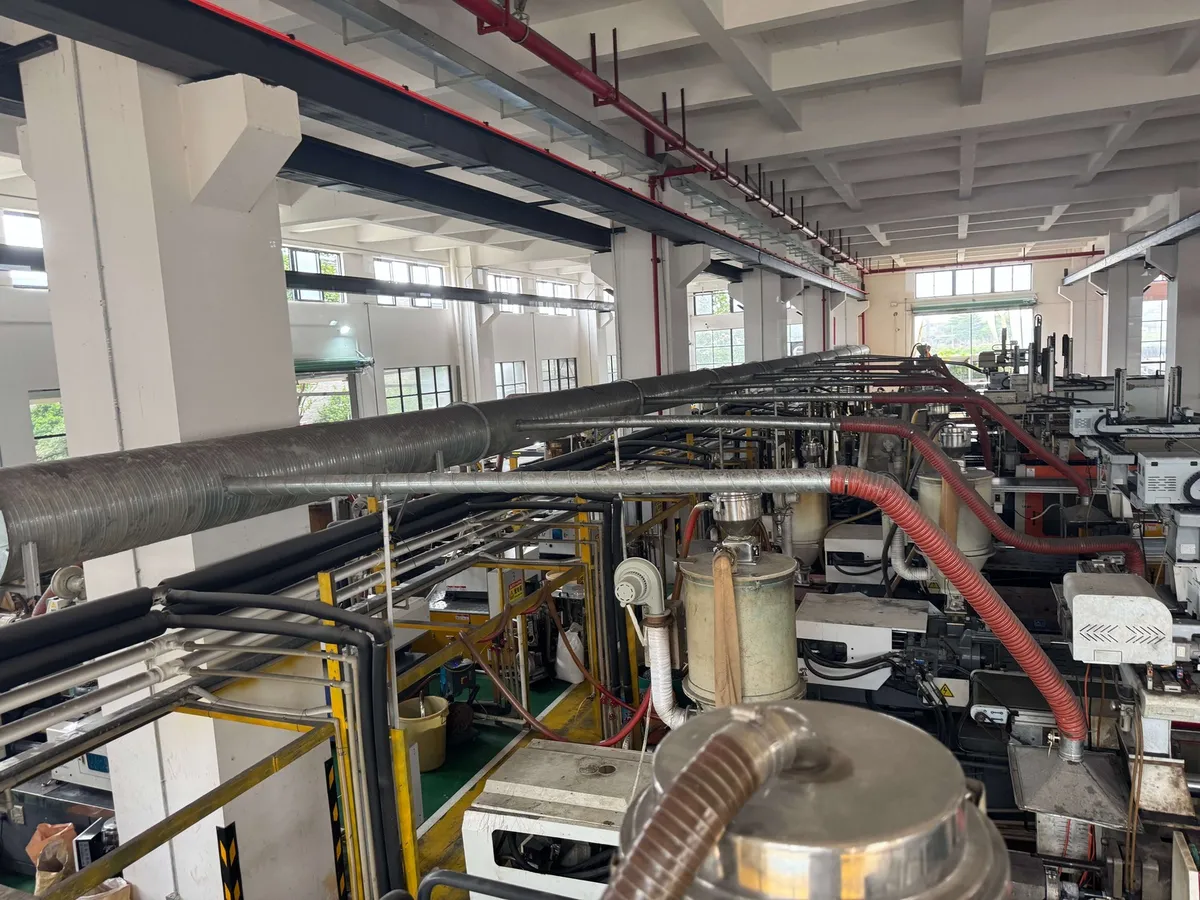
The purpose of an audit is narrow and specific. You are not assessing whether a factory is impressive; you are establishing whether its process will repeat the sample you approved, at your volume, on your schedule, next year as well as this one.
Six areas that carry the signal
| Area | What to ask for | What good looks like |
|---|---|---|
| Mould management | Maintenance log with shot counters for the mould running your part | Recorded shot counts, cleaning intervals, refurbishment history, tools stored with rust protection |
| Incoming material | Resin lot records and incoming inspection results | Lots identified and traceable, material stored dry and sealed, supplier certificates on file |
| In-process control | First-piece and patrol inspection records for the current run | Records completed at the time of inspection, with actual measured values rather than ticks |
| Measurement | Calibration status of the gauges in use | Calibration labels in date, gauges stored properly, a defined calibration interval |
| Testing capability | Evidence of the tests the quotation claims | Equipment powered and in use, test records tied to specific part numbers and dates |
| Non-conformance | Recent rejection records and corrective actions | Rejections are recorded, root causes are stated, and corrective actions are closed with dates |
Walking the floor: what to look at
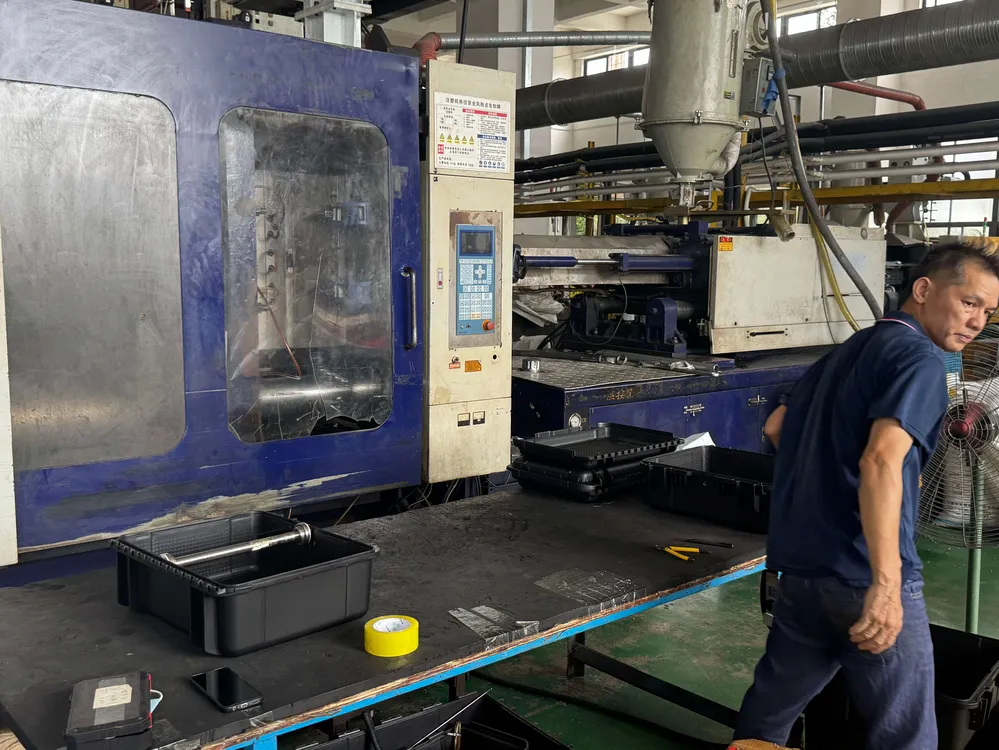
Documents tell you what the system says. The floor tells you whether the system is used. Walk it in production order and let the process show you its own weak points.
- Material store. Is resin sealed and identified? Is it dry? Nylon and some grades of ABS absorb moisture and must be dried before moulding; a store without drying capability will produce inconsistent parts and the cause will not appear in any document.
- Moulding machines. Are process parameters displayed and consistent between identical machines running the same part? Wide parameter variation between machines producing the same item is a sign that settings are operator-dependent rather than controlled.
- Tool storage. Are moulds stored clean, closed, and protected? A tool left open on the floor accumulates damage that appears later as flash or dimensional drift.
- Secondary operations. Foam cutting, printing, assembly. Are these in-house or subcontracted? If subcontracted, ask how the subcontractor is controlled - that is where your schedule risk lives.
- Packing line. Is there a defined packing method and a check that the right quantity and the right accessories are in the carton? Mix-ups at packing are a common and entirely preventable source of claims.
- Reject area. Is there one, and is it segregated? A factory with no visible rejected material is either perfect or not sorting.
Ask an operator, not a manager, what happens when a part fails inspection. The answer you want is a specific action - tag it, put it in that bin, tell that person. The answer you do not want is a shrug, or "we don't really get that".
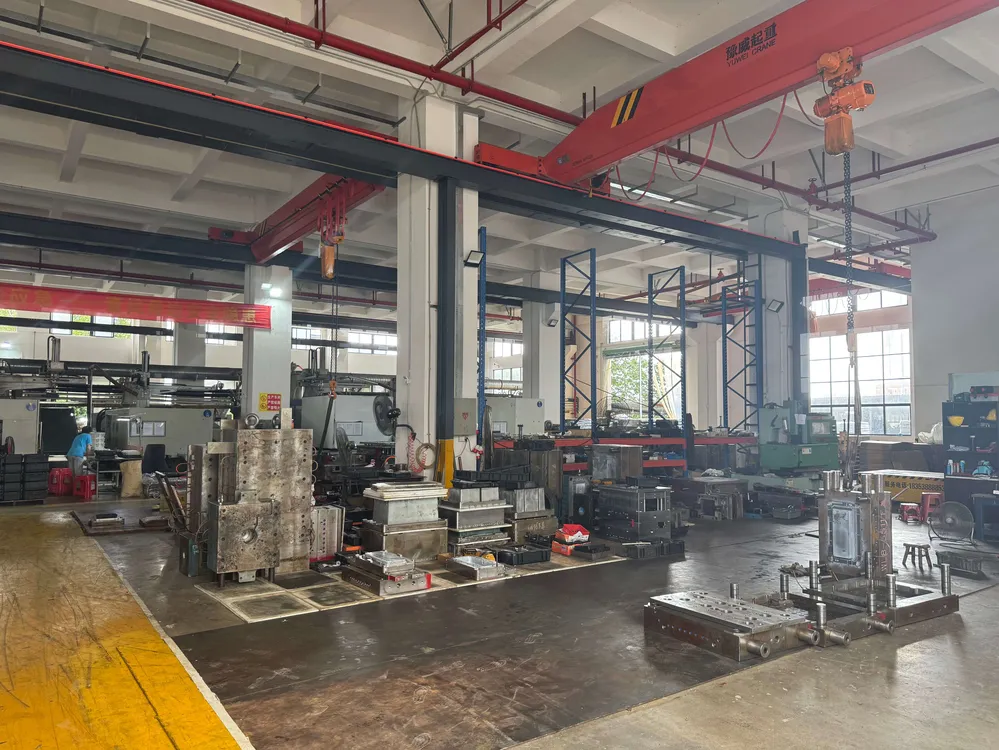
Capacity: the question behind the question
Stated capacity is nearly always optimistic because it assumes an empty schedule. What you need to know is available capacity for your order in your window, which is a different number.
- How many machines, and what tonnage range - does your part fit the machines they actually have, or only their largest?
- What is the current order book cover, in weeks, for machines of the size your part needs?
- How many shifts, and what is the plan if the order slips?
- Which operations are single-points of failure - one printing machine, one foam cutter, one technician who alone can set a particular tool?
- What happens at peak season, and when does peak season start for them?
Red flags worth acting on
- Records completed in advance, or all in the same pen at the same time.
- A test report that covers a different part number or configuration than the one quoted.
- Reluctance to show a mould or to run a shot during the visit.
- No lot traceability on incoming material or on finished goods.
- Key operations subcontracted without disclosure.
- A sample noticeably better finished than anything on the production floor.
None of these is automatically disqualifying - every factory has gaps, and a good supplier will tell you where theirs are before you find them. What matters is the response when you raise one: a specific corrective action with a date, or a reason why it does not apply. For a JUNZHIJIA programme, audits are welcomed and the documents above are available for review; what is confirmed on a visit depends on which production line and which stage of your order are running that day, which is why visits are scheduled against a live run rather than a showroom.
Related Products
- 8 Series — Gun Cases; Military Equipment Cases; Camera Equipment Cases; Drone Cases; Watch Cases; Knife Cases; First Aid Cases; Electronics Equipment Cases
- WL8-2812 PP Gun Case — model WL8-2812
- All protective cases and toolboxes: 7 series, 158 models