

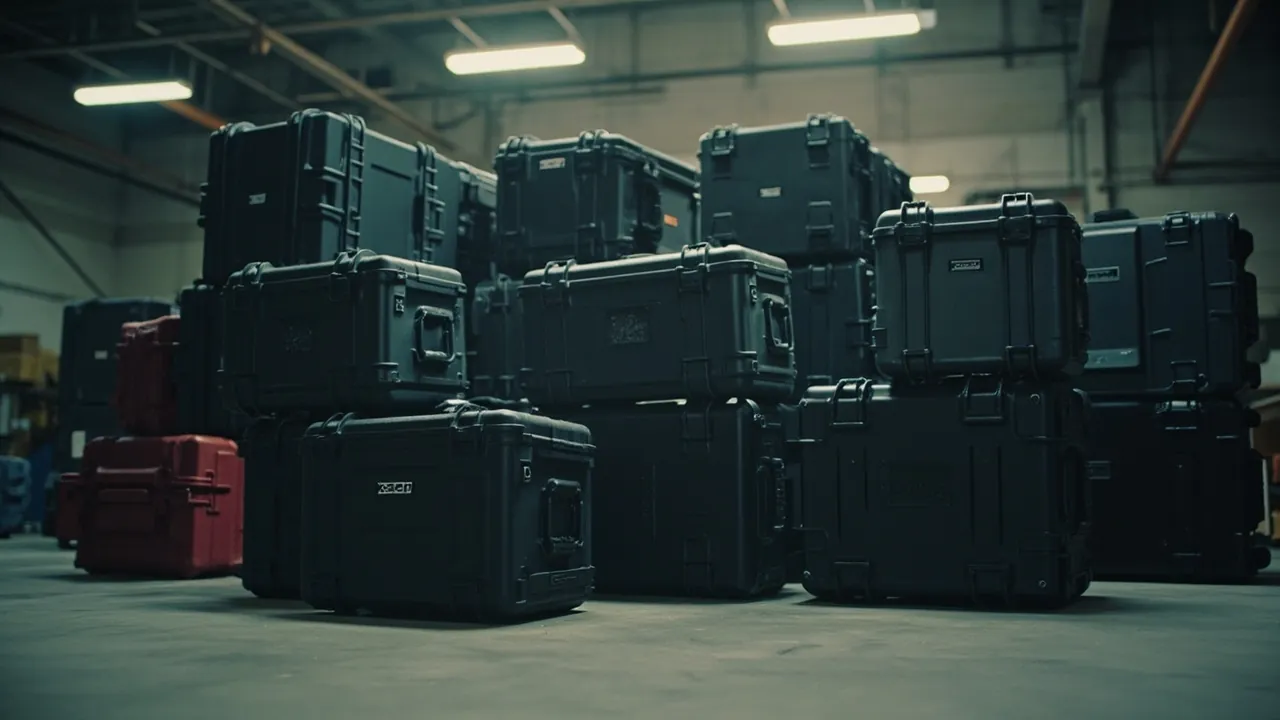
The short answer: renting versus buying a protective case comes down to cost of use versus cost of ownership. Renting turns a one-time outlay into a predictable period expense, which suits short, fluctuating, and administratively light projects. Buying amortizes the cost per use and preserves residual value, which suits long, high-frequency, self-managed projects. The dividing line is not whether rent or buy is more expensive in the abstract, but three variables: the actual holding period, the reuse frequency, and the residual value at the end. Run one reusable break-even formula and the better answer for a short-term project usually becomes clear within ten minutes.
This guide is written for project procurement, equipment management, live events and film production, engineering survey, temporary exhibitions, and emergency support. It turns "rent or buy" into a calculable decision method: the three acquisition models, the six core variables plus a break-even model, a full comparison of visible and hidden costs, the boundaries where each option wins, the key clauses for a rental contract, residual value management, and a rapid decision table. Rental rates, residual value rates, and storage and maintenance costs quoted here are typical values or rules of thumb; the binding basis for a decision is the actual quote, usage plan, and financial convention. If you are holding a project with only three months of use, this article will help you settle the conclusion within half a day.
Table of Contents
- The Short Answer: Cost of Use Versus Cost of Ownership
- Why Short-Term Projects Overspend on Protective Cases
- Three Acquisition Models: Buy, Rent, and Buy Plus Resale
- The Six Core Variables of an Economic Comparison
- How to Calculate the Break-Even Point: A Reusable Model
- Visible and Hidden Costs: A Full Comparison
- When Renting Is More Economical
- When Buying Is More Economical
- The Hybrid Approach: Buy the Core, Rent the Peak
- Clauses a Rental Contract Must Include
- Residual Value Management and Secondary Use
- A Rapid Decision Table and Workflow
- Frequently Asked Questions (FAQ)
- Conclusion and Further Reading
The Short Answer: Cost of Use Versus Cost of Ownership
Start with the logic. A protective case is a low-frequency but mission-critical asset. In some settings it is used every day for years. In others it is used once during a three-month window and then sits in a warehouse. The same case has completely different economics in these two settings.
Buying means carrying the cost of ownership: a one-time capital outlay, storage space, maintenance and spare parts, inventory counting and depreciation management, and eventual disposal. Renting means carrying the cost of use: periodic rent, possibly a deposit, and custody responsibility during use. The comparison is not a simple price comparison; it is a difference in how cost is distributed over time.
So the dividing line is three variables. First, the actual holding period: after the project ends, is there another use for the case? Second, reuse frequency: how many times is each case used during the holding period? The higher the frequency, the lower the cost per use of buying. Third, residual value at the end: can the case be resold or redeployed internally when the project finishes? If two of the three point to short, low, and none, renting usually wins. If two point to long, high, and yes, buying usually wins.
| Dimension | Buying | Renting | Note |
|---|---|---|---|
| --- | --- | --- | --- |
| Cash flow shape | One-time concentrated outlay | Predictable periodic expense | Renting is friendlier to cash flow |
| Ownership | Buyer | Lessor | Affects residual value and disposal rights |
| Storage and management | Borne by the user | Partly or fully borne by the lessor | Lessors usually centralize storage |
| Maintenance and spare parts | Borne by the user | Usually borne by the lessor | The main source of hidden cost difference |
| Adaptability to demand swings | Poor | Good | Renting is more flexible when demand varies |
| Long-run cost per use | Low | High | Buying wins at high frequency |
| End-of-period value | Retains residual value | None | Residual value drives the comparison |
The key to this table: renting buys flexibility, while buying buys unit cost and residual value. The decision is about which one the project needs more right now.
Why Short-Term Projects Overspend on Protective Cases
Short-term projects rarely overspend because the unit price was negotiated badly. They overspend because they ignore "afterwards." Four situations are most common.
First, buying too many. The project buys to peak demand, for example 200 cases for an exhibition floor, but only 50 need to stay in service after the project, leaving 150 as a storage burden. The gap between peak demand and baseline demand is exactly the range that renting handles best.
Second, buying the wrong specification. Short-term projects are often urgent, leaving no time for thorough selection, so the case bought has the wrong size or IP rating and cannot be reused or resold afterwards. A purchasing mistake costs more than a rental mistake, because a rental simply ends at expiry while a purchase mistake settles into an asset.
Third, ignoring hidden costs. Procurement compares only the unit price, without counting storage space, counting labor, maintenance and spare parts, and potential damage. For a project with only a few months of use, storage and management can be a substantial share of total cost.
Fourth, forgetting residual value. Conversely, many teams underestimate the residual value of a protective case. A sound case still has meaningful second-hand value after a project, or can be redeployed elsewhere in the group. If a purchase decision does not count residual value, it is systematically overestimated.
One line to summarize the short-term trap: buy while counting only the unit price, use without counting management, and sell without counting residual value. Fix all three stages and the rent-or-buy answer becomes far clearer.
Three Acquisition Models: Buy, Rent, and Buy Plus Resale
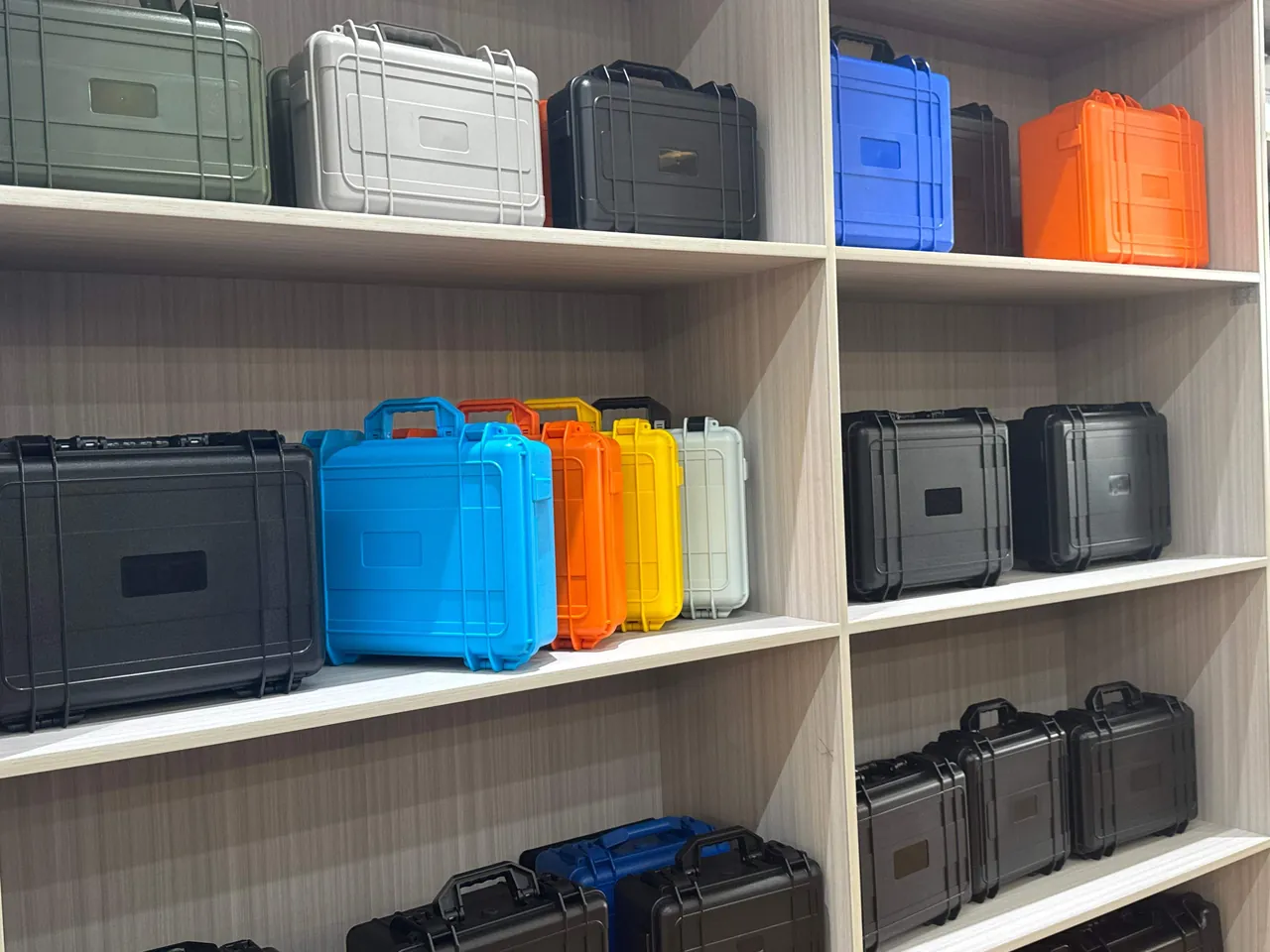
Strictly speaking, there are more than two ways to acquire a protective case; there are three combinations, and in practice more.
Model one, outright purchase. A one-time payment secures ownership, after which storage, maintenance, spares, counting, and disposal fall to the user. The advantages are asset control, low cost per use over the long run, and freedom to customize. The drawbacks are a large upfront commitment and idle assets when demand fluctuates.
Model two, rental. Rent is paid by the agreed period and quantity, the user holds the right of use during the term, and the cases are returned at expiry. The advantages are turning capital outlay into a predictable period expense, flexible quantity adjustment when demand fluctuates, and maintenance and centralized storage usually carried by the lessor. The drawbacks are no asset accumulation, a high long-run cost, and dependence on the lessor's models and stock.
Model three, buy plus resale, or buy plus internal redeployment. This is a "build your own residual value" approach: buy for the project, then recover part of the cost through second-hand resale or internal transfer within a group when the project ends. Its economics sit between the first two models, and the key is whether a stable resale channel or internal reallocation mechanism exists.
| Model | Cash flow shape | Flexibility | Long-run cost | Residual value | Best fit |
|---|---|---|---|---|---|
| --- | --- | --- | --- | --- | --- |
| Outright purchase | One-time | Low | Low at high frequency | Buyer | Long, frequent, custom |
| Rental | Periodic | High | High at low frequency | Lessor | Short, volatile, temporary |
| Buy plus resale | One-time plus recovery | Medium | Medium | Buyer, partly | Defined term, resale channel |
| Buy plus redeployment | One-time plus internal transfer | Medium | Low within group | Group | Multi-project, multi-department sharing |
This table points to a fourth path that is often overlooked: internal redeployment. For an organization with several projects or departments, managing protective cases as assets that flow between projects is often more economical than deciding project by project.
The Six Core Variables of an Economic Comparison
To make the comparison solid, define six variables first, or the result will not survive review.
Variable one, the actual holding period T. This is not the project duration but the calendar time from acquisition, or start of rental, to final disposal or return. Many project cases sit in a warehouse for six to twelve months after the project, and that tail should count toward the holding period.
Variable two, reuse frequency N. How many times each case is actually used during the holding period. The higher the N, the lower the cost per use, because fixed cost is spread across more uses.
Variable three, purchase unit price P and quantity Q. Use the landed price including tax and freight, and account for volume tiers. For how unit price is composed and what room there is to negotiate, see protective case cost structure breakdown and where waterproof box price differences come from.
Variable four, rental rate r and rental term. Usually priced per case per period, whether per day, per week, or per month, and influenced by term length and quantity. Longer terms and larger quantities usually lower the unit rate.
Variable five, period cost C. This covers storage, counting labor, maintenance and spare parts, insurance, and damage and loss. In the purchase model the user carries all of it; in the rental model most of it shifts to the lessor, though custody during use remains with the user.
Variable six, residual value S. This covers second-hand resale value or internal transfer value. The residual rate depends on brand, model commonality, condition, and whether a stable second-hand channel exists. For service life and condition judgment, see how many years does a protective case last. For compliant reuse and recycling, see protective case recycling and reuse.
| Variable | Symbol | Direction of effect | Typical focus |
|---|---|---|---|
| --- | --- | --- | --- |
| Actual holding period | T | Longer T favors buying | Include post-project storage time |
| Reuse frequency | N | Higher N favors buying | Cost per use falls with N |
| Purchase unit price | P | Higher P favors renting | Compare on landed price |
| Quantity | Q | Larger Q gives scale advantage | Volume tiers and phased delivery |
| Rental rate and term | r | Higher rent favors buying | Long-term and volume discounts |
| Period cost | C | Higher C favors renting | Storage and maintenance dominate |
| Residual value | S | Higher S favors buying | Brand and model commonality |
Define these six variables before calculating. Many "cannot figure it out" situations are really a matter of variables that were never defined.
How to Calculate the Break-Even Point: A Reusable Model
With the variables defined, a simplified model supports break-even analysis. The idea is to compare the total cost of buying over the holding period with the total cost of renting.
Total cost of buying (TCO_buy) can be approximated as:
TCO_buy = P x Q + C_buy x T - S
where P x Q is the one-time purchase, C_buy is the annual period cost for storage, maintenance, spares, counting, and insurance, T is the holding period in years, and S is the residual value at the end.
Total cost of renting (TCO_rent) can be approximated as:
TCO_rent = r x Q x T_r + C_rent x T_r + D
where r is the unit rental rate per case per year, T_r is the rental term, C_rent is the period cost the user still carries during the rental, usually far below the purchase model, and D is the cost of deposit tie-up or damage compensation.
The break-even condition is TCO_buy = TCO_rent, which solves for the critical holding period T*, the point beyond which buying wins:
**T* is where (r x Q x T_r + C_rent x T_r + D - S) equals (P x Q) plus C_buy x T**
The formula need not be exact. Its value is in pointing to four directions: a higher residual value S shortens the critical holding period, making buying worthwhile sooner; a higher rental rate r lengthens it, making renting less attractive; a higher period cost C_buy makes buying less attractive, because an idle case keeps generating cost; and a lower purchase price P makes buying more attractive.
| Scenario | Holding period | Reuse frequency | Residual rate (typical) | Lean |
|---|---|---|---|---|
| --- | --- | --- | --- | --- |
| Three-month exhibition | 3-6 months | 1-2 times | High, near-new | Rent |
| Six-month engineering survey | 6-12 months | High | Medium | Case by case |
| On-site project over one year | 12 months or more | High | Medium | Buy |
| Equipment package over three years | 36 months or more | Very high | Low, depreciated | Buy |
| Emergency support, unpredictable | Uncertain | Uncertain | Uncertain | Rent or hybrid |
The way to use this table is to read the lean first, then refine with the model. A clearly leaning project, such as a three-month exhibition, can be decided from the lean alone; a project in the middle, such as a six-month survey, deserves one run of the formula.
Visible and Hidden Costs: A Full Comparison

What really separates renting from buying is hidden cost. List both categories fully to avoid a choice that looks cheaper but is actually more expensive.
Visible costs include the purchase outlay or rent, freight and landed cost, deposit, and customization such as insert cutting or silkscreen. These are easy to compare.
Hidden costs include at least six. First, storage: a protective case is bulky, and storage is often underestimated; the lessor usually carries centralized storage in the rental model. Second, maintenance and spare parts: gaskets, latches, handles, and feet wear, requiring stock and replacement. For a spare parts list, see protective case spare parts stocking list. Third, counting and management labor: the more assets, the higher the counting cost, which is precisely the value of asset marking and tracking, covered in how to set protective case inventory and safety stock. Fourth, damage and loss: field work is rough and losses happen; in the rental model this risk is usually inside the rent or the compensation clause. Fifth, cost of capital: funds tied up in a purchase have a financial cost. Sixth, disposal cost: resale channel fees, removal, or scrapping. For storage practice, see protective case warehouse storage rules; for handling damage, see how to repair a cracked protective case shell.
| Cost item | Borne by in purchase | Borne by in rental | Easy to overlook |
|---|---|---|---|
| --- | --- | --- | --- |
| Purchase outlay or rent | User | User | No |
| Freight and landed cost | User | Usually user | Partly |
| Storage | User | Usually lessor | Yes |
| Maintenance and spares | User | Usually lessor | Yes |
| Counting and management labor | User | Partly lessor | Yes |
| Damage and loss | User | Shared by agreement | Yes |
| Cost of capital | User | User, inside rent | Yes |
| Disposal and resale cost | User | Lessor | Yes |
The most important information here is that the "easy to overlook" column is almost entirely "yes." That explains why so many short-term purchase decisions look more expensive in hindsight than they did at the time.
When Renting Is More Economical
In the following five situations, renting is usually more economical, and the advantage is fairly robust.
First, a short and defined holding period. The project has a clear end date and no further use for the cases afterwards. Residual value cannot be absorbed internally and disposal costs money, so rental flexibility wins.
Second, large swings or a clear peak. For example exhibitions, temporary live shows, and event support, where demand spikes then returns to zero. The difference between peak and baseline is most economically covered by renting.
Third, no appetite for storage and maintenance. For organizations without a dedicated equipment management function, or with tight storage space, shifting storage, maintenance, and spares to the lessor removes a significant management burden.
Fourth, short-term access to high-specification product. When a project needs a military-spec, air-transport-spec, or special IP case for only a short time, buying a high-spec product means a high unit price and uncertain residual value, whereas renting delivers on demand.
Fifth, when availability matters more than condition. Emergency support and breakdown repair need cases available on demand rather than owned. The key is "we can get enough cases when we need them," not "we own them."
The economics of renting is essentially trading flexibility for unit cost. When flexibility itself is valuable, meaning short, urgent, and volatile, that trade is worth making.
When Buying Is More Economical
In the following five situations, buying is usually more economical.
First, a long holding period with high reuse frequency. For a project of a year or more used weekly or monthly, the cost per use falls quickly and total rent easily exceeds the purchase cost.
Second, stable and predictable demand. With steady use and no peak to absorb, idle risk is low and capital efficiency is high.
Third, an internal reuse or redeployment mechanism. A group or multi-project organization can move cases between projects, effectively converting one project's residual value into another project's asset. This internal reuse mechanism is one of the strongest sources of buying economics.
Fourth, customization is required. Custom inserts, new tooling, and silkscreen are project-specific investments that renting rarely covers and that usually force a purchase. For how custom investment is composed, see how to estimate custom protective case mold cost.
Fifth, long-term asset tracking and compliance management are needed. Medical, laboratory, defense, and aviation settings often require specific assets to be numbered, tracked, and inspection-recorded, which the purchase model supports better. For the asset ledger and inventory practice, see how to set protective case inventory and safety stock.
| Situation | More economical | Reason |
|---|---|---|
| --- | --- | --- |
| Short holding period, no later use | Rent | Residual value cannot be absorbed internally |
| Large swings, clear peak | Rent | Peak difference is cheaper to rent |
| No storage or maintenance capability | Rent | Responsibility shifts to the lessor |
| Long holding period, high frequency | Buy | Low cost per use |
| Stable, predictable demand | Buy | Low idle risk |
| Multi-project redeployment mechanism | Buy | Residual value converts internally |
| Custom insert or tooling needed | Buy | Custom investment is project-specific |
| Long-term tracking and compliance | Buy | Easier numbering and records |
The Hybrid Approach: Buy the Core, Rent the Peak
Real projects are rarely purely buy or purely rent. The most common and most economical approach is to split by demand layer.
The layering principle is to buy to baseline demand and rent the peak difference. If a project needs 80 cases in normal operation and 200 at peak, buy 80 to 100, covering the baseline with a small buffer, and rent the remaining 100 to 120 for the peak window. This captures the low unit cost of ownership for long-term use while avoiding the idle inventory created by buying to peak.
The second principle is to buy standard models and rent special specifications. Common standard models are bought for long-term on-demand use, while high-spec or unusual sizes needed occasionally are rented, avoiding a high unit price and low residual value for a one-time need.
The third principle is to buy core assets and rent or outsource accessories and services. For example, buy the cases but outsource insert customization, cleaning, and spare parts replacement as services. For maintenance and spare parts cost management, see protective case spare parts stocking list.
The key to landing a hybrid approach is clean data. You must be able to answer three questions: the baseline quantity, the peak quantity, and how many cases remain usable after the project. This requires a basic asset ledger and usage record, or the hybrid approach degrades into guessing.
Clauses a Rental Contract Must Include
If you choose to rent, contract clauses directly determine whether extra costs appear at the end. Include at least eight items.
First, a description and specification of the rented item. Model, size, IP rating, material, accessory list, and a condition baseline, ideally with photos or a sealed sample. Without a specification baseline, a condition dispute at return is almost unavoidable.
Second, the rental term and renewal mechanism. Start and end dates, how renewal is priced, and whether early return reduces the rent.
Third, rent and deposit. The billing method, whether per day, week, or month, volume discounts, the deposit amount and refund conditions, and how overdue items are handled.
Fourth, wear determination criteria. Define what counts as "normal wear" and what counts as "compensable damage" with operational criteria, such as whether function is affected or whether the IP rating is affected, rather than a blanket "damage paid at full value." For repair and damage judgment, see how to repair a cracked protective case shell.
Fifth, loss and compensation limits. Set the compensation standard and cap for loss, so an old case is not compensated at the price of a new one.
Sixth, transport and delivery responsibility. Who arranges transport, who carries the risk, and how delivery and return are inspected. For the acceptance method on delivery and return, see how to sample inbound protective case batches, and write the criteria in advance.
Seventh, maintenance and spare parts responsibility. Who cleans and maintains during use, and who replaces wear parts such as the gasket.
Eighth, insurance and liability allocation. Whether insurance is required, who pays the premium, and how force majeure is handled.
| Clause category | What must be clear | Common risk |
|---|---|---|
| --- | --- | --- |
| Item description | Model, spec, condition baseline, accessories | Condition dispute at return |
| Term and renewal | Start and end, renewal pricing, early return | Early return still charged for the full term |
| Rent and deposit | Billing method, discounts, refund conditions | Deposit not refunded for a long time |
| Wear determination | Objective criteria for normal wear vs damage | Overly broad "damage paid in full" |
| Loss compensation | Standard and cap | Old case compensated at new price |
| Transport responsibility | Carrier, risk bearer, inspection method | Unclear responsibility for transport damage |
| Maintenance and spares | Cleaning and wear part responsibility | User forced to carry all maintenance |
| Insurance | Insurance requirement, force majeure handling | Uncovered risk exposure |
The value of this table is that it moves disputes forward. Most rental disputes are not caused by harsh clauses but by vague ones.
Residual Value Management and Secondary Use
If you choose to buy, residual value management is the variable that decides the economics.
First, choose models with strong commonality. General sizes and mainstream IP ratings have stronger second-hand demand and higher residual rates, while heavily customized models have a narrow second-hand market and low residual rates.
Second, maintain condition. Regular cleaning, timely replacement of wear parts, and avoiding dragging and rough handling all raise end-of-period condition. For stocking and replacing wear parts, see protective case spare parts stocking list.
Third, build an asset ledger and tracking. Numbering and recording use and repair history supports internal redeployment and gives a credible condition record for resale. For inventory and ledger practice, see how to set protective case inventory and safety stock.
Fourth, prefer internal reuse, then external resale, then recycling. Internal transfer avoids transaction cost and is usually the most efficient way to realize residual value; external resale needs a channel and negotiation; cases beyond use should be recycled properly, with attention to the compliance of environmental claims, following the framework of ISO 14021. For recycling and reuse, see protective case recycling and reuse.
Fifth, watch life and replacement rhythm. Residual rate falls with years of service, so considering "when to replace" together with "how much residual remains" optimizes overall asset cost. For life judgment, see how many years does a protective case last.
JUNZHJIA is manufactured by KeXin New Materials (Guangdong) Co., Ltd., serving wholesale, distribution, OEM/ODM, and global supply, with a product line covering protective cases, toolboxes, military-spec storage boxes, and waterproof junction boxes. The company configures standard models and custom inserts to the project cycle, provides resin grade statements, inspection records, and test documents, and supports long-term supply of wear parts, making it easier for project owners to make an auditable choice between buying and renting based on holding period, reuse frequency, and residual value.
A Rapid Decision Table and Workflow
Here is the condensed decision table, followed by a simplified workflow.
| Question | If yes | If no |
|---|---|---|
| --- | --- | --- |
| Does the case have a clear use after the project? | Lean buy | Lean rent |
| Is the holding period over one year? | Lean buy | Lean rent |
| Is reuse frequency at least monthly? | Lean buy | Lean rent |
| Is there a clear peak difference? | Rent the peak portion | Buy to baseline |
| Is there an internal redeployment or resale channel? | Lean buy | Lean rent |
| Is storage and management capability available? | Lean buy | Lean rent |
| Is a custom insert or tooling required? | Lean buy | Consider rent |
| Is long-term asset tracking and compliance needed? | Lean buy | Consider rent |
The workflow reduces to four steps. Step one, determine the holding period T, reuse frequency N, and residual value S. Step two, run the break-even formula once to get the critical holding period. Step three, read the table for a lean; if the lean and the model agree, decide directly. Step four, if the lean and the model conflict, use the hybrid approach of buying the baseline and renting the peak.
One line to summarize the decision: short, low, and no residual value means rent; long, high, and residual value means buy; in between means a layered hybrid.
Frequently Asked Questions (FAQ)
Q: For a project with only three months of use, should I rent or buy? A: In most cases renting is more economical, but check three variables. First, does the batch have a clear later use after the project? If not, the residual value of a purchase cannot be absorbed internally and disposal and storage costs remain, so the rental advantage is clear. Second, how high is the reuse frequency? A three-month project used daily with fast handling also wears cases faster, and the rental usually includes maintenance and replacement, keeping risk contained. Third, does the case need customization? A standard model can be rented, but if a custom insert or tooling is required, renting rarely covers it and a purchase is usually forced. Taken together, a three-month, standard-model, no-later-use project points to renting; if the cases can be reused by another department or a later project, recalculate, since buying may be more economical. A practical method is to score short, low, and none across the three variables; two or more pointing that way means decide on renting.
Q: What rental rate is normal, and how do I judge whether rent is reasonable? A: Rental rates depend on term length, quantity, product specification, and condition requirements, and the common industry billing modes are per day, per week, and per month, with longer terms and larger quantities usually lowering the unit rate. The most practical way to judge is not comparison shopping but a rent-versus-buy comparison: multiply the unit rate by term and quantity to get total rent, then compare against the purchase unit price times quantity minus residual value. If total rent clearly exceeds the net cost, renting is uneconomic or the rate is high. Note that the value of renting is not only "using the case" but also maintenance, spare parts, centralized storage, and the flexibility to adjust quantity on demand, so the hidden costs of the purchase model should be included for a fair comparison. If a lessor cannot explain what the rate includes, ask for a service list.
Q: If the cases will still be nearly new when the project ends, is buying always more economical? A: Not necessarily, because what matters is whether the residual value can actually be realized. A nearly-new case only means the theoretical residual is high. Realization depends on three conditions: whether a stable second-hand channel or internal redeployment demand exists; whether the model is common, since heavily customized models have narrow second-hand demand; and whether the time and transaction cost of disposal are worthwhile. If all three hold, buying is indeed more economical, because the end-of-period residual directly offsets net cost. But if there is no later use and no resale channel, "nearly new" is only a number on paper and turns into storage and disposal cost. So the more accurate approach is to estimate the realizable residual conservatively, then run the break-even formula on net cost. In practice, a conservative residual estimate guides a correct decision better than an optimistic one.
Q: How do I implement the hybrid approach of buying the baseline and renting the peak? A: The precondition is clean data; you must be able to answer three questions: baseline demand, peak demand, and how many cases remain usable after the project. Step one, fix the baseline demand as a stable number, for example weekly actual use plus a sensible buffer, and buy to that. Step two, subtract baseline from peak to get the quantity to rent. Step three, sign a short-term rental for the difference, covering the peak window with a buffer. Step four, build a ledger recording purchased quantity, rented quantity, return time, and return condition, to avoid confusing ownership. Note three points: the rented portion should use the same specification as the purchased portion so inserts and accessories are interchangeable; the wear determination and loss compensation clauses should be explicit to avoid disputes at return; and the return should be counted and inspected promptly with written records.
Q: During a rental, if a case is damaged or lost, how is it usually handled? A: The handling method should be agreed in the contract in advance rather than negotiated afterwards, which is the key to avoiding disputes. The common approach is to distinguish normal wear from compensable damage, with the former usually not compensated and the latter compensated per the agreed standard. The criteria should be operational, such as whether function is affected, whether the IP rating is affected, and whether future rental is affected, rather than a blanket "damage paid in full." Loss compensation is usually set at a fixed amount or a proportion, with a cap, so a case in service for years is not compensated at the new price. Also address whether the renter must carry insurance, who bears transport risk, and how force majeure is handled. For damage judgment and repair, see how to repair a cracked protective case shell. Writing the boundary between "repairable" and "scrap" into the contract markedly reduces the chance of dispute.
Q: What is the typical residual rate of a protective case, and how can it be raised? A: The residual rate depends on brand, model commonality, condition, and the second-hand channel, and there is no single number. A conservative estimate method works better for decisions: estimate the realizable resale price rather than the theoretical remaining usability. There are four ways to raise residual value. First, choose models with strong commonality and mainstream IP ratings, which have stronger second-hand demand. Second, maintain condition with regular cleaning, timely replacement of wear parts, and avoiding dragging and rough handling. Third, keep an asset ledger and usage record so that resale can present a credible condition and maintenance history, which matters to second-hand buyers. Fourth, prefer internal reuse or group redeployment, which usually has lower transaction cost and higher realization efficiency than external resale. Cases beyond use should be recycled properly, with attention to the compliance of environmental claims under the ISO 14021 framework.
Q: How do I decide between buying everything, renting everything, or a hybrid? A: Judge in three steps. Step one, compare baseline and peak. If they are close, demand is stable and you can choose between buying all and renting all; if the peak is clearly higher than the baseline, a hybrid is preferable. Step two, look at holding period and reuse frequency. A holding period over one year with reuse at least monthly usually gives a lower net cost for buying; otherwise renting is better. Step three, look at whether an internal redeployment or resale channel exists. If it does, the residual value of a purchase can be realized and buying is more economical; if not, residual value is hard to materialize and renting is safer. Stacking the three steps gives a direction: stable demand, long holding period, and a residual channel means buy all; stable demand, short holding period, and no residual channel means rent all; clear volatility with in-between conditions means hybrid. When necessary, run the break-even formula once so the conclusion has data behind it.
Q: Can rented cases be given a custom insert or silkscreen? A: Usually not advisable, and written consent from the lessor is required beforehand. There are three reasons. First, custom inserts, holes, and silkscreen change the original state of the case and at return may be judged as damage or as a change to the rented item, triggering compensation or rejection. Second, the customization investment is project-specific and cannot be taken away at the end of the term, so the cost is sunk and uneconomic. Third, if holes or structural changes are involved, the IP rating may be affected, devaluing the lessor's asset. If the project truly needs customization, the right approach is to design the custom insert to be removable and reversible, such as separate foam blocks rather than bonding or cutting into the shell, and to use removable labels or film for branding; or simply buy the part that needs customization and rent the standard part, which is exactly the hybrid approach. Whichever path you take, the contract should clearly state the permitted scope of modification.
Q: What other costs do short-term projects tend to overlook on protective cases? A: At least five. First, freight and landed cost, especially for cross-border projects, where transport can be a substantial share of total cost and where the party bearing freight in a rental must be made explicit. Second, storage and floor space, since cases are bulky and short-term projects often lack dedicated storage, making temporary storage easy to underestimate. Third, counting and labor, since counting, cleaning, and re-shelving after the project all take labor. Fourth, cleaning, maintenance, and spare parts, because even a short project needs cleaning after water or mud exposure and possible gasket replacement. Fifth, disposal cost, including resale channel fees, removal, and scrapping. Once all these are listed and the model rerun, it often turns out that the real rental advantage is larger than first estimated, or that the buying advantage was overstated. For how to manage spares and storage, see protective case spare parts stocking list and protective case warehouse storage rules.
Conclusion and Further Reading
Back to the title question: should a protective case be rented or bought? The answer is not in the unit price but in three variables: holding period, reuse frequency, and residual value. A short, low-frequency project with no later use makes renting the controllable choice for both cash and risk. A long, high-frequency project with an internal redeployment or resale channel makes buying the cheapest per use. Projects in between are best served by the layered hybrid of buying the baseline and renting the peak, which captures both advantages.
Three actions you can take immediately: First, score the project on holding period, reuse frequency, and residual value, and if two or more point to short, low, and none, decide on renting. Second, list the visible costs and the six hidden costs before comparing, and never omit storage, maintenance, and disposal. Third, whether renting or buying, write wear determination, spare parts responsibility, and residual value ownership into the contract or the asset ledger, so the economics calculated on paper actually materializes at the end.
JUNZHJIA is manufactured by KeXin New Materials (Guangdong) Co., Ltd., with a product line covering protective cases, toolboxes, military-spec storage boxes, and waterproof junction boxes, serving wholesale, distribution, OEM/ODM, and global supply. The company configures standard models and custom inserts to the project cycle, provides resin grade statements, inspection records, and test documents, and supports long-term supply of wear parts, making it easier for project owners to make an auditable choice between buying and renting based on their own holding period, reuse frequency, and residual value.
Further Reading