

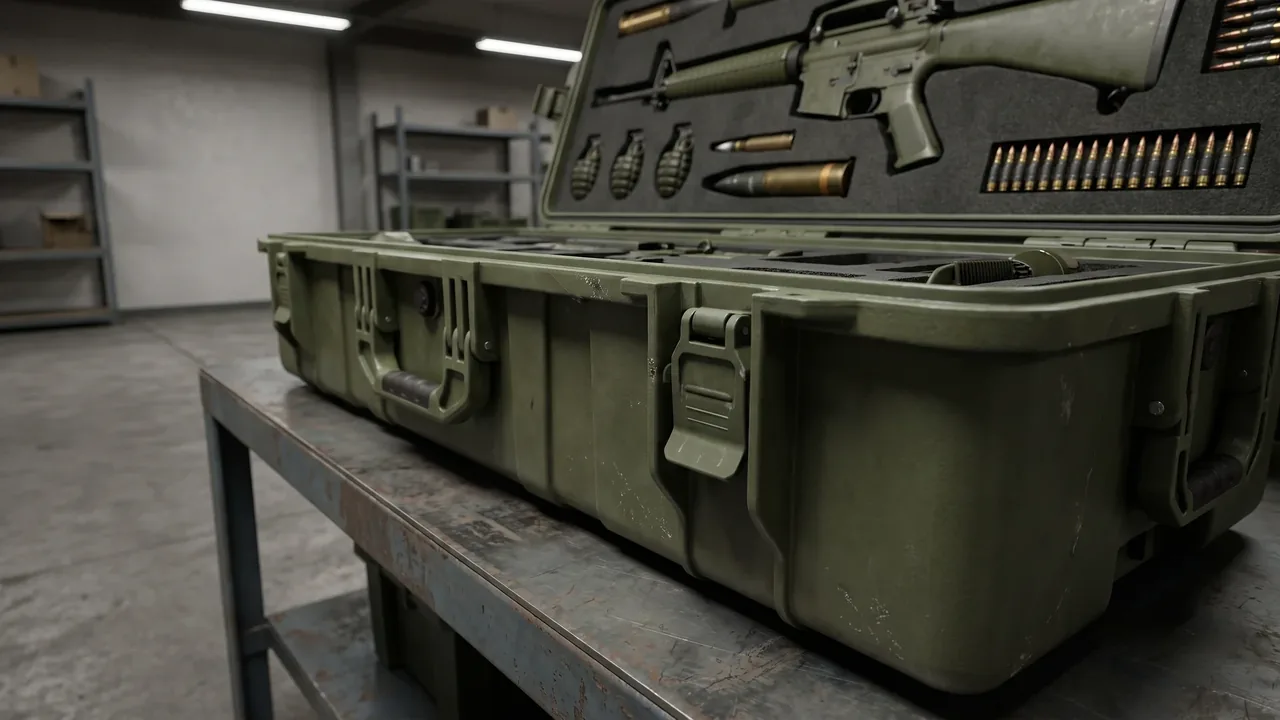
Faced with the wide variety of protective cases on the market, procurement staff often fall into the dilemma of not understanding parameters, mismatching scenarios and being unsure about price. Scientific protective case selection should start from the real storage and transport scenario, build a decision checklist around seven dimensions of size, material, protection rating, liner, function, certification and cost, and then compare item by item with a standardized method, so as to avoid buying wrong or using at a loss. This article provides a practical selection framework covering the complete chain from requirement sorting to supplier evaluation.
1. Requirement Sorting Before Purchase
The first step of purchase is not to look at products but to write down requirements. Clarify what the stored object is, the weight and shape of a single piece, the transport mode (land, air, sea), the environmental temperature and humidity and whether wading is involved, the drop and stacking risks, and whether constant temperature or antistatic is needed. List this information into a requirement table, and all subsequent parameter comparisons take it as the criterion. Vague requirements lead to over-configuration or insufficient protection. It is recommended to refer to the Toolbox Selection Four Parameters to build a basic judgment. The requirement table should also mark priorities, distinguishing "must satisfy" from "nice to have", to facilitate trade-offs when the budget is limited.
2. Size and Volume Planning
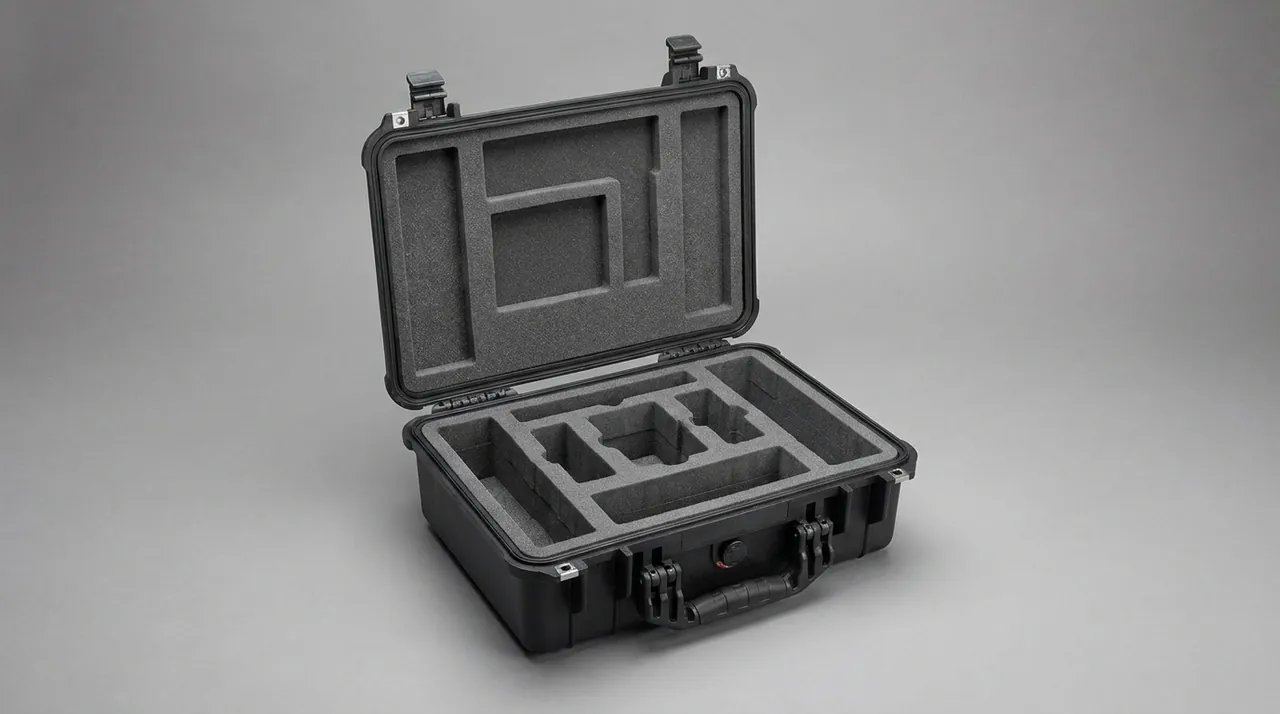
Size planning should avoid two extremes: too large wastes space and weight, too small cannot accommodate equipment or liner. The correct approach is to reverse the internal net size from the equipment shape plus liner thickness, then add ten to twenty percent margin. Consider the taking and placing direction of equipment, stacking method and transport container matching. For irregular equipment, making a cavity template before deciding the case shape is more efficient. Air consignment also needs to check consignment size and weight limits. For size calculation methods, consult How to Size a Protective Case. Volume planning also affects cost and portability and should be locked at the requirement stage.
3. Material Selection
Mainstream protective case materials include modified engineering plastics (such as polypropylene, acrylonitrile butadiene styrene, polycarbonate) and aluminum alloy. Engineering plastics are light, impact resistant and low cost, suitable for most general scenarios; aluminum alloy has high strength, good heat dissipation and strong texture, suitable for heavy load and high-value equipment, but higher weight and cost. Material also affects temperature resistance, weather resistance and flame-retardant performance. Selection should weigh against equipment value, usage frequency and budget. The performance difference of different plastics can refer to Protective Case Plastic Materials and PP ABS PC Case Difference. For harsh outdoor environments, further see Outdoor Case Material Selection.
4. Structural Strength and Protection Rating
Structural strength determines whether the protective case can withstand drop, stacking and vibration, with common references including transport packaging and military environmental test methods. The protection rating determines dust and water resistance and should be selected based on whether wading is involved, see Protective Case IP67 vs IP68. Wall thickness, reinforcement ribs, rounded corners and latch layout jointly affect strength. During selection, request drop and stacking test reports rather than judging only by wall thickness. For military or harsh environments, refer to Military Protective Case Selection. Strength and sealing need to be verified cooperatively to avoid seal line cracking under impact.
5. Liner and Cavity Positioning
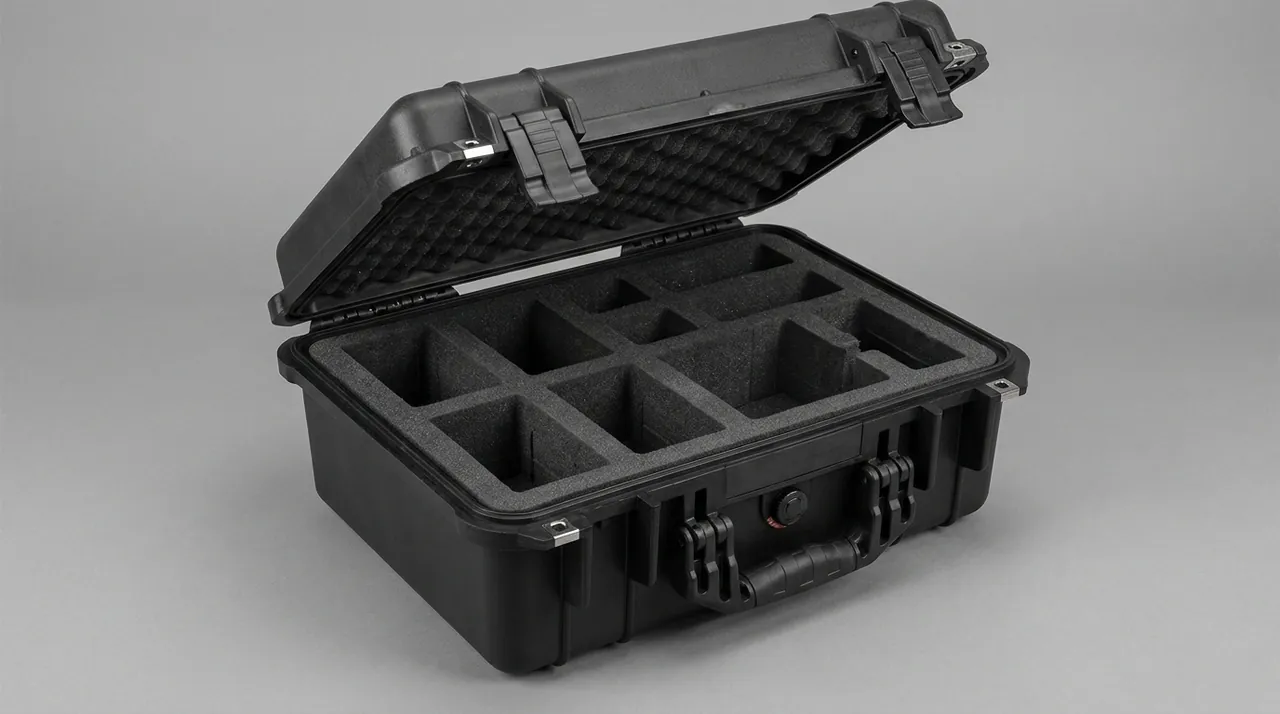
The liner undertakes three roles of cushioning, positioning and temperature equalization. For multiple or irregular equipment, a custom foam cut to cavity profiles can significantly improve protection and access efficiency. Materials can be cross-linked polyethylene, polyurethane and static-dissipative foam; electronic devices should use antistatic type. Liner design should reserve sealing margin to avoid pressing against the lid and weakening protection. For liner selection, see Custom Foam Lining and Case Internal Foam Types. Before customization, provide three-dimensional size for computer-controlled cutting to ensure accuracy. The liner and case should be accepted as a whole rather than evaluated separately.
6. Temperature Control and Special Functions
If the stored object is temperature sensitive, consider active or passive temperature-control schemes. The active scheme such as Active Temperature-Control Protective Case can bidirectionally regulate constant temperature, while the passive scheme relies on insulation and cold storage. Special functions also include antistatic, electromagnetic shielding, explosion proof and pressure equalization. Function stacking increases cost and complexity and should be traded off by requirement priority. Temperature-control cases also need to consider endurance and power supply. For electronic and flammable scenarios, separately check static dissipation and explosion-proof compliance. Improper function selection causes resource waste or protection blind spots, so be sure to return to the requirement table to confirm item by item.
7. Lock and Portability
The lock affects theft prevention, seal compression and fast open-close. Common types are clasp lock, lock hole and TSA lock; for customs-related transport, TSA-certified locks are preferred. In terms of portability, wheel sets and pull rods reduce handling burden but increase volume and failure points; backpack style suits hiking scenarios. The ergonomics of locks and handles affect long-term use experience and should be measured on the sample case. The life of hinges and latches needs to match the whole-machine life to avoid early failure. For frequent open-close conditions, prioritize metal hinges and replaceable latch design. For details see Case Latch Selection.
8. Certification and Test Documents
Compliance is a part of protective case procurement that cannot be ignored. Depending on the use, it may involve electrical safety, electromagnetic compatibility, protection rating, flame retardancy and environmental directives. Pharmaceutical and food chains also need cold-chain verification and temperature records. During procurement, require the manufacturer to provide corresponding third-party test reports and check the qualification of the institution, the standard version and the representativeness of the sample. Export products need to confirm destination regulations. The certification list should be confirmed item by item based on material attributes and usage region. Related basics can refer to CE RoHS Certification for Cases. The contract should stipulate re-inspection rights and non-conforming disposition to prevent inconsistency between submission and shipment.
9. Custom and Standard Product Decision
Standard products deliver fast, low cost and easy spare parts, suitable for general scenarios; custom cases fit equipment better and protect more, but require mold opening, minimum order quantity and lead time. The core of decision is quantity, frequency and equipment uniqueness. Small batch or one-time projects prioritize standard products plus general liner; large batch or dedicated equipment consider customization. The decision framework can refer to Custom vs Standard Case Decision. Customization also needs to evaluate mold cost and intellectual property clauses. Regardless of the choice, mark it on the requirement table and clarify acceptance criteria with the supplier to avoid later disputes.
10. Supplier Evaluation
Supplier capability directly determines delivery quality. Evaluation dimensions include production qualification, mold and injection or machining capability, testing equipment, past cases, lead time and after-sales. It is recommended to audit the factory on-site or remotely, viewing the points of How to Audit Case Factory. Prioritize manufacturers with both research prototyping and batch delivery capabilities, and request sample-case measured data. For custom projects, also evaluate their engineering response speed and confidentiality capability. Establishing a Case Supplier Evaluation System helps long-term cooperation. Price is not the only standard; comprehensive quality, lead time and service are more reliable.
11. Cost and Life Cycle
The cost of a protective case should not only look at the unit price, but also include liner, accessories, maintenance, spare parts and replacement cycle, that is the total life-cycle cost. Low-price cases may require frequent replacement due to fragility and end up more expensive. Total cost of ownership should be calculated combined with usage frequency and life expectation. Refer to Total Cost of Ownership Cases. For repairable designs, spare parts availability is particularly important. During procurement, strive for tiered prices and spare parts packages to reduce long-term holding cost. Putting cost in a life-cycle perspective enables economically reasonable choices.
12. Common Procurement Pitfalls
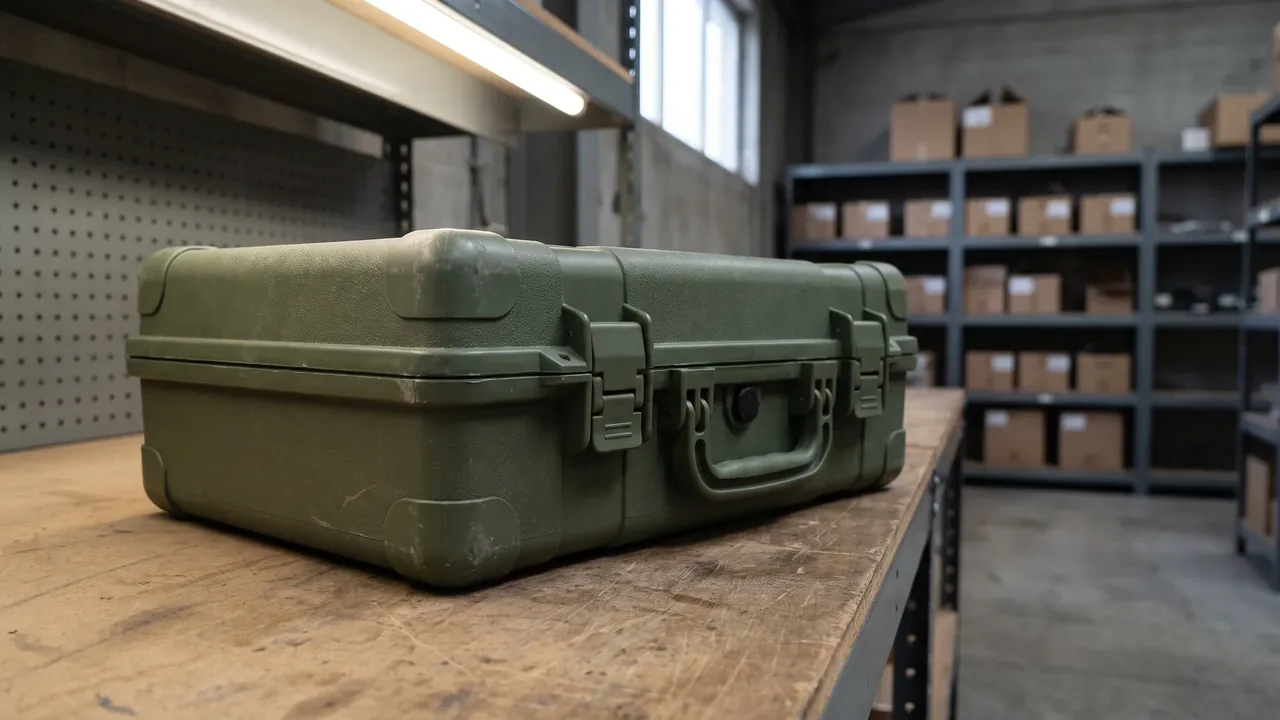
Common pitfalls include being misled by promotional labels and ignoring measured reports; only looking at wall thickness and ignoring structure and testing; purchasing liner and case separately causing mismatch; blindly pursuing high protection rating and wasting budget; ignoring certification and customs clearance requirements; and contracts not stipulating re-inspection and after-sales. The avoidance method is to build a standardized selection checklist and check item by item, referring to Case Procurement Pitfall Checklist. Also keep sample cases and test reports on file for traceability. For critical equipment, insist on load acceptance rather than only testing empty cases. A systematic process is more reliable than deciding by experience.
13. Scenario-Based Recommendations
Different scenarios have different emphasis: field survey emphasizes portability and protection rating; vehicle equipment emphasizes vibration and fixation; medical supplies emphasize temperature control and compliance; electronic devices emphasize antistatic and cushioning; military equipment emphasizes strength and confidentiality. Can be compared with Military Protective Case Selection and Industrial vs Household Toolbox. The same unit with multiple scenarios can be configured by grade, with critical parts high-configured and auxiliary parts standard. The final recommendation should return to the requirement table to ensure every goal has corresponding parameter support rather than applying a general template.
14. Selection Checklist and Implementation Template
To turn the preceding dimensions into executable actions, it is recommended to establish a standardized checklist, ticking item by item and leaving traces. The checklist is divided into seven columns: the scenario column fills transport mode, environmental temperature and humidity and whether wading is involved; the size column fills equipment shape, liner thickness and margin; the material column fills plastic or aluminum alloy and the corresponding test report number; the rating column fills protection rating and third-party report; the function column fills whether constant temperature, antistatic or shielding is needed; the certification column fills required standards and document list; the cost column fills unit price, spare parts and life-cycle estimation. Each column should have verifiable attachments rather than verbal conclusions.
The implementation template can advance in four stages: requirement, preliminary selection, prototyping and acceptance. In the requirement stage, lock priorities and distinguish must-satisfy from optional optimization; in the preliminary selection stage, use the checklist to compare three to five schemes horizontally and eliminate obviously non-compliant ones; in the prototyping stage, require the supplier to provide sample cases and measure, focusing on drop, sealing and liner fit; in the acceptance stage, confirm item by item according to contract terms and retain test reports and temperature records. For custom projects, mold and intellectual property clauses should also be written into the technical agreement. The value of the template is to transform subjective judgment into objective records for traceability and re-inspection.
In practice, two types of deviation are common: one is over-configuration, paying high cost for extremely low-probability risks; the other is under-configuration, sacrificing key protection to save money. The correction method is to return to the priority of the requirement table, with zero compromise on must-satisfy items and trade-offs on optional optimization by budget. When multiple scenarios coexist, adopt graded configuration rather than unified high configuration, which can ensure critical-part safety under controllable total cost. Combined with the specialized knowledge of Custom Foam Lining and Protective Case IP67 vs IP68, complete the checklist into the organization's internal selection specification, and long-term reuse can significantly reduce procurement error rates and improve supplier collaboration efficiency.
15. Supplier Collaboration and Contract Key Points
Selection implementation ultimately needs to be completed with supplier collaboration, and the contract is the key document binding both parties. It is recommended to transform each item of the preceding checklist into contract clauses: technical parameters attached with test conditions and thresholds, clarifying who provides the third-party report; delivery nodes including sample case, first batch and full batch, setting milestone acceptance; intellectual property clauses stipulating mold ownership and confidentiality scope, especially for custom projects to prevent design leakage; after-sales clauses listing spare parts supply cycle, warranty scope and response time; re-inspection rights and non-conforming disposition clearly stating sampling ratio, rectification time limit and return responsibility. Writing these in detail can greatly reduce performance disputes.
Collaboration efficiency is also important. Prioritize manufacturers with both research prototyping and batch delivery capabilities, and establish a fixed contact window to shorten the communication chain. For multi-variety small-batch units, promote suppliers to establish standard cavity libraries and general liner templates, reusing to reduce design and mold costs. Regularly organize technical reviews, feeding field failure cases back to the manufacturer to promote improvement, forming a positive cycle. For strategic materials, a framework agreement can be signed to lock prices and capacity, avoiding no cases available for sudden demand. Beyond the contract, establish a supplier performance ledger, scoring from quality, delivery and service dimensions as the basis for subsequent share allocation.
The purchaser itself also needs capacity building: cultivate selection engineers who understand parameters, standards and testing, unify internal selection specifications, and avoid specification fragmentation caused by everyone buying separately. Incorporate supplier collaboration into the overall supply chain management system, connecting with inventory, maintenance and scrapping links, to achieve the optimum of the protective case life cycle. Ultimately, selection is not a one-time transaction, but a continuous process of growing together with reliable suppliers. Only through system plus collaboration can every budget point be transformed into real storage and transport safety.
FAQ
Q: What should be determined first when selecting a protective case? A: The first thing to determine is the real storage and transport scenario and equipment attributes, not product appearance or brand. Clarify the stored object, single-piece weight and shape, transport mode, environmental temperature and humidity and whether wading is involved, drop and stacking risks, and whether constant temperature or antistatic is needed, then list them into a requirement table. Vague requirements cause over-configuration or insufficient protection. The requirement table should distinguish must-satisfy items from optional optimization items to facilitate trade-offs when budget is limited. All subsequent comparisons of size, material, rating and function should take this table as the only criterion to avoid being led astray by sales rhetoric. Only with clear requirements does parameter decision make sense. A good habit is to fill the table with the people who will actually carry, load, and use the case daily, because their observations about handling, stacking, and access frequency often decide which parameters matter. Freeze the table once confirmed and manage later changes formally, so supplier quotations can be compared on identical assumptions. When budget is tight, rank the must items by failure consequence: protect what would be expensive or irreplaceable first, and let optional comfort features compete for the remainder. This discipline turns selection from a negotiation about preferences into a verification against documented needs, which is faster, fairer, and much easier to defend internally. Review and archive the table after each major project, because a well-kept library of past requirement tables becomes the fastest starting point for the next procurement.
Q: How to choose between engineering plastic and aluminum alloy cases? A: The key is equipment value, usage frequency and budget. Engineering plastics are light, impact resistant and low cost, suitable for most general and frequent handling scenarios; aluminum alloy has higher strength, better heat dissipation and stronger texture, suitable for heavy load, high-value equipment and scenarios requiring electromagnetic shielding, but higher weight and unit price. Also consider temperature resistance, weather resistance and flame-retardant requirements. If equipment is light and budget is limited, prioritize engineering plastics; if long-term heavy load or harsh environment is needed, consider aluminum alloy. Decide by weighing material with structural strength and portability, and request corresponding test reports rather than judging by material name alone. For mixed fleets, a two-tier strategy works: aluminum or reinforced designs for the heaviest and most valuable items, quality engineering plastic for the rest, which concentrates spending where failure hurts most. Check the plastic grade and additives, because two cases labeled with the same polymer can age very differently under sunlight and temperature cycles. Ask for sample cases and run a loaded drop on concrete before committing, since real behavior reveals joint quality that datasheets never show. Also weigh resale and repair: aluminum can be re-welded and refinished, while cracked plastic usually means replacement, which changes the life-cycle math for long-service fleets. Document the reasoning behind each tier so the split stays consistent as the fleet grows and staff change over the years. Two tiers usually cover ninety percent of fleets.
Q: Is a higher protection rating always better? A: No. Higher rating often means higher sealing cost, weaker heat dissipation and worse open-close convenience, and may even sacrifice maintainability. First judge whether wading is truly involved: only heavy rain, shallow water or accidental drops, IP67 is usually sufficient; only for long-time underwater operation is IP68 needed with declared depth checked. Pursuing high rating beyond actual need is typical waste. Rating should be coordinated with structural strength, liner and temperature control to avoid sealing failure under impact. Include rating into the complete selection checklist and use measured reports as acceptance basis to make a reasonable decision rather than blindly trusting labels. A practical rating decision starts from the worst credible event, not the average one: define the deepest and longest exposure the case may realistically meet, add a safety margin, and accept the rating that covers it with documented evidence. Watch the hidden trade-offs that follow high ratings: heavier lids, more latches, slower access, and more demanding inspection routines every day of service life. For most field equipment, the combination of IP67 sealing plus good gasket maintenance outperforms a neglected IP68 case in real reliability. Re-verify the rating after any repair or modification, because a replaced gland or added port can silently invalidate the original certificate. Write the chosen rating and its test evidence into the purchase specification so every later order inherits the same standard. A margin of twenty percent over the worst event is a common engineering choice.
Q: How to decide between standard and custom cases? A: The core of decision is quantity, frequency and equipment uniqueness. Standard products deliver fast, low cost and easy spare parts, suitable for general or small-batch one-time projects with general liner; custom cases fit equipment better and protect more, but require mold opening, minimum order quantity and longer lead time, suitable for large batch or dedicated equipment. Also evaluate mold cost, intellectual property clauses and manufacturer engineering capability. If equipment shape is special and used in large quantity long term, custom is more economical; if only temporary or small quantity, standard product plus custom liner is more flexible. Regardless, mark on the requirement table and clarify acceptance criteria to avoid later disputes and rework. A staged payment structure reduces risk on custom orders: one milestone at mold approval, one at first-article acceptance, and one at batch delivery, so each phase carries its own quality gate. Negotiate mold ownership explicitly, because owning the tooling lets you move production without redesign if the relationship ends. Keep lead-time discipline by agreeing on a prototype date and treating slips as contract events rather than verbal apologies. For items between the two paths, semi-custom approaches such as standard cases with cut-foam liners deliver most of the fit benefit at a fraction of the tooling cost, and they scale up or down with your real demand. Archive the drawing revision history together with the mold records to keep every future reorder unambiguous. Semi-custom also shortens the path when equipment changes between generations.
Q: Why cannot general sponge liner be bought casually? A: General sponge often cannot fit irregular equipment, with poor cushioning and positioning, so equipment easily shifts, collides or even presses against the lid during transport, weakening sealing. Custom foam cut to cavity profiles fixes each item and leaves cold-air bypass channels, balancing cushioning, positioning and temperature equalization. Material also needs matching: antistatic foam for electronic devices, high-resilience cross-linked polyethylene for fragile items. Liner also needs reserved sealing margin to avoid over-thickness affecting closure. Provide three-dimensional size for computer-controlled cutting before customization for stable accuracy. Accept liner and case as a whole to exert cooperative protection rather than purchasing separately. Start the liner decision from the equipment list, not the case: each item's fragility, weight, and handling frequency determines whether it needs a fixed cavity, a soft cradle, or shared space. Photograph the loaded first article and keep it with the acceptance documents, because the photo settles any later dispute about fit. For evolving equipment sets, choose a liner system that can be extended or recut, protecting your investment across generations. Test access with gloved hands if field crews wear them, since a cavity that is easy bare-handed can be frustrating in winter conditions. A well-planned liner usually outlasts two equipment cycles, so treat it as infrastructure rather than packaging. Keep the cutting files with your own records so replacements never depend on one supplier's archive. A liner map laminated inside the lid speeds daily packing.
Q: What is the focus of supplier evaluation? A: Focus on production qualification, mold and injection or machining capability, testing equipment, past cases, lead time and after-sales response. It is recommended to audit the factory on-site or remotely, checking whether it can provide sample-case measured data. Prioritize manufacturers with both research prototyping and batch delivery capabilities; for custom projects also evaluate engineering response speed and confidentiality. Price is not the only standard; comprehensive quality, lead time and service are more reliable. Establish a supplier evaluation system for long-term tracking. For critical equipment, insist on load acceptance and random re-inspection rights, and stipulate non-conforming disposition in the contract to prevent risks from inconsistency between submitted samples and actual shipment. Structure the audit around evidence rather than presentations: walk the incoming inspection area, watch a foam cut and a case assembly, and ask to see the most recent calibration certificates of their test equipment. Request three reference customers with similar order sizes and call one of them. For custom projects, evaluate how quickly engineering responds to a drawing change, since responsiveness during sampling predicts the whole cooperation. Score each candidate on quality, lead time, and service with a simple weighted sheet, and review the scores annually. Keeping two qualified suppliers for the same case family preserves negotiating balance and protects delivery when one line has problems. Share the audit findings with the supplier afterwards, because transparent feedback improves cooperation faster than silent scoring. Annual scoring keeps the evaluation alive instead of ceremonial.
Q: How to calculate the real cost of a protective case? A: The real cost is the total life-cycle cost, not only the unit price, but also including liner, accessories, maintenance, spare parts and replacement cycle. Low-price cases that are fragile and need frequent replacement end up more expensive long term; repairable design with spare parts availability is more economical. Calculate total cost of ownership combined with usage frequency and expected life, and strive for tiered prices and spare parts packages to reduce holding cost. Put cost in a life-cycle perspective rather than only comparing quotations. For large-batch projects, mold amortization and lead-time stability also significantly affect comprehensive cost and should be included in the evaluation framework for economically reasonable choices. Build the calculation on real usage data: expected trips per year, observed failure rates of current cases, cost of a single equipment damage event, and the residual value at replacement. Spread mold and tooling costs over the realistic order quantity, not the optimistic one, and include the internal labor spent on handling and maintenance, which often outweighs small price differences. When comparing offers, normalize everything to a cost-per-trip figure so unequal service lives become comparable. Reserve a small annual budget for gaskets, latches, and liner refresh; a case maintained on schedule can double its service life, which is usually the single largest saving in the whole calculation. Recheck the model whenever usage patterns change materially, since costs shift with every new route or handling method. Cost-per-trip makes unequal offers finally comparable.
Q: What are the easiest pitfalls in procurement? A: Common pitfalls include being misled by promotional labels and ignoring measured reports; only looking at wall thickness and ignoring structure and drop stacking tests; purchasing liner and case separately causing mismatch; blindly pursuing high protection rating and wasting budget; ignoring certification and customs clearance requirements causing acceptance or export obstruction; and contracts not stipulating re-inspection and after-sales. The avoidance method is to build a standardized selection checklist and check item by item, and keep sample cases and test reports on file for traceability. For critical equipment, insist on load acceptance rather than only testing empty cases. A systematic process is more reliable than deciding by experience, significantly reducing the probability of buying wrong or using at a loss. The deepest pitfalls share one root: decisions made on impressions instead of records. Counter them with simple documents: a requirement table frozen before quotations, a comparison sheet with weighted scores, and an acceptance report signed at delivery. Keep every test report with its number and validity, and re-verify before each repeat order rather than assuming continued compliance. Train buyers to pause when a number seems too good, then ask for the underlying test condition, because exaggerated ratings usually hide unrealistic depths or durations. These low-cost habits accumulate into an organizational memory that protects every future purchase, which is exactly why systematic teams rarely repeat expensive mistakes. Review the checklist itself once a year and add any new trap your team has encountered. One page per supplier keeps the record usable.
Q: How do scenario-based recommendations differ? A: Scenario emphasis differs significantly: field survey emphasizes portability and protection rating; vehicle equipment emphasizes vibration resistance and fixation; medical supplies emphasize temperature control and compliance documents; electronic devices emphasize antistatic and cushioning; military equipment emphasizes structural strength and confidentiality. The same unit with multiple scenarios can be configured by grade, with critical parts high-configured and auxiliary parts standard to balance cost. Recommendations cannot apply a general template and must return to the requirement table to ensure every protection goal has corresponding parameter support. Can be compared with military selection and industrial household differences, but the final decision should still be based on own real working conditions rather than copying. Build a scenario library over time: each new project records its requirement table, chosen configuration, and field performance, so future selections start from evidence instead of scratch. Cross-check the library annually against actual incidents, and adjust the recommended defaults where reality diverged from expectation. When a unit faces a genuinely new scenario, run a small pilot with instrumented cases before full deployment. Encourage teams to share failure stories across departments, because a lesson learned in one workshop often prevents a loss in another. Over a few years this library becomes the most valuable procurement asset, shortening decisions from weeks to days with documented confidence. Assign a librarian for the scenario library, because unowned archives decay quickly into unusable folders. Ten minutes of filing per project is enough.