

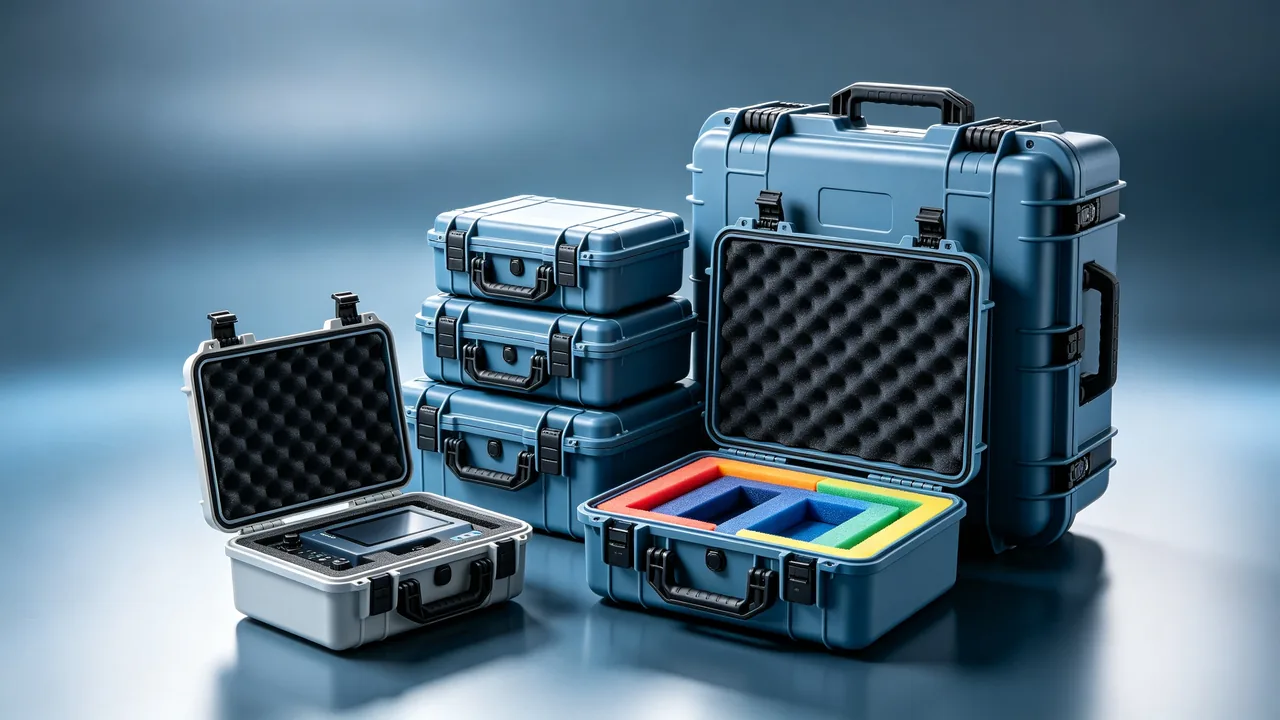
In outdoor, vehicle and wading operation environments, the dust and water resistance of a protective case directly determines the safety of internal equipment. Both IP67 and IP68 represent complete dust protection and short-term water immersion, yet they differ essentially in test conditions, immersion depth and duration. Confusing the two during selection will lead to protection failure or cost waste. Based on the international electrotechnical commission standard and its domestic equivalent, this article disassembles the technical boundary between the two ratings and provides sealing selection advice for procurement and design.
1. Basics of IP Rating Standard
The IP rating, namely ingress protection, consists of two digits plus optional letters. The first digit characterizes dust protection and the second characterizes water protection. The internationally common basis is the protection grade standard for electrical enclosures, and the domestic equivalent is the enclosure protection grade standard, with equivalent technical content. The first step to understanding IP ratings is to clarify that a larger number means stronger protection, but digits in different positions cannot be simply added for comparison; for example, IP68 does not automatically outperform all scenarios of IP67. During procurement, require the manufacturer to provide a third-party test report corresponding to the rating rather than relying on promotional labels. For the overall concept of protection ratings, refer to the IP Rating Guide.
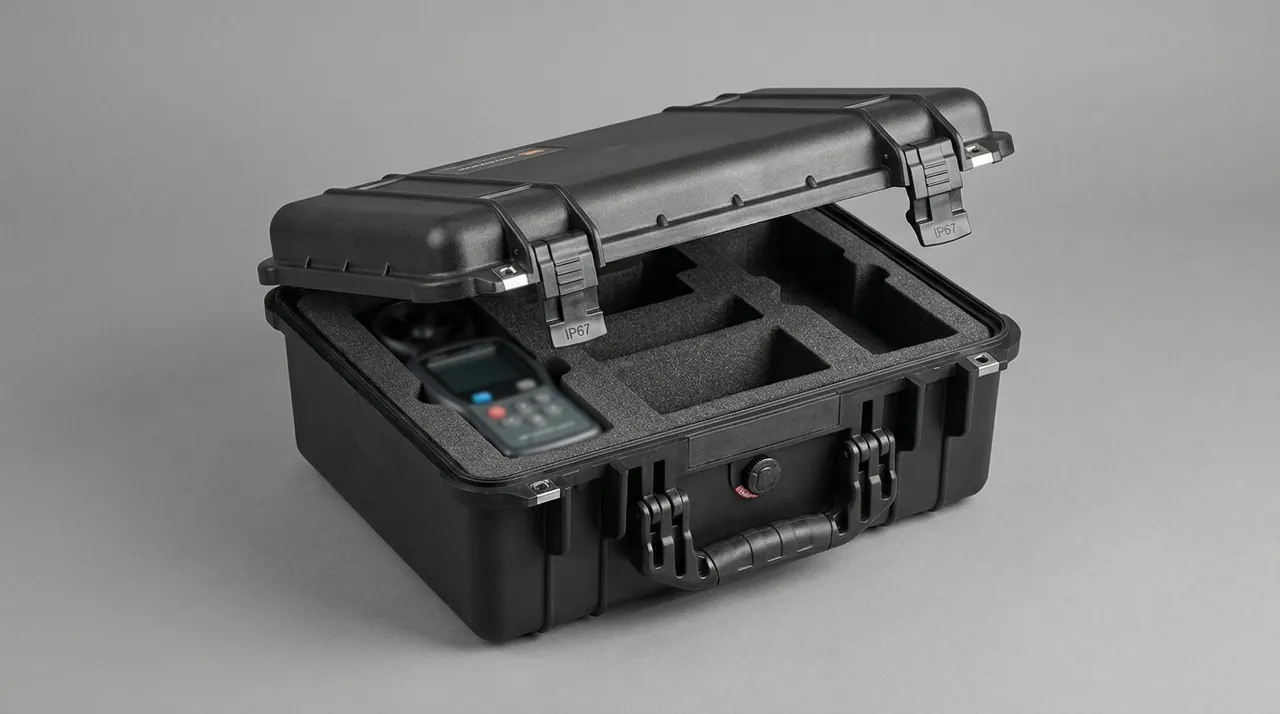
2. Meaning of the Digits in IP67 and IP68
In IP67, the first digit 6 means complete prevention of foreign objects and dust intrusion, that is dust-tight; the second digit 7 means protection against short-time immersion, with no water ingress after immersion at one meter depth for thirty minutes under standard conditions. In IP68, the first digit is also 6 representing dust-tight, and the second digit 8 means protection against continuous submersion, whose specific depth and time are negotiated between manufacturer and user, usually deeper than one meter and longer than thirty minutes. Thus the dust ratings are identical and the core difference lies in the test definition of the second water-protection digit. It must be emphasized that IP68 is not "infinitely deep and infinitely long" but valid only within the declared parameters, so selection must clearly see the depth and duration declared by the manufacturer.
3. Dust Protection Comparison
The first digit of both IP67 and IP68 is 6, representing complete protection against dust, which is especially important in dusty construction sites, deserts and material environments. Dust-tight does not mean absolutely zero breathability, but means that under standard test conditions dust cannot enter the interior in an amount that affects safe operation. For a protective case, dust and water protection share the same sealing system, so the compression force of the door seal and latch directly determines dust performance. If the case is often in a dusty environment, even if the water rating is satisfied, the seal groove should be cleaned regularly to prevent accumulated dust from weakening the fit. The gradient difference can be understood by comparing with IP65 IP66 IP67 Difference.
4. Water Protection Difference
The second digit is the real divergence. The 7 of IP67 represents short-time immersion, typically one meter for thirty minutes, suitable for accidental drops in water, heavy rain soaking and shallow water crossing. The 8 of IP68 represents continuous submersion, with manufacturer-declared depth possibly several meters or deeper and duration several hours, suitable for underwater operation, long-time wading or drifting transport. A common misunderstanding must be corrected: IP68 is not superior in all scenarios, because if the manufacturer declaration targets only a specific depth, exceeding that depth may still fail; whereas the one meter thirty minutes of IP67 is a deterministic indicator convenient for lateral comparison. For wading equipment, further view System Level IP67 Design.
5. Test Conditions and Depth Time Requirements
The standard defines the 7 digit as immersion at one meter for thirty minutes, with water temperature and sample temperature difference controlled within a reasonable range to avoid negative-pressure water absorption. For the 8 digit, the standard does not specify a uniform depth, requiring the manufacturer to declare and note it in documents; common practice is to conduct continuous immersion testing at a depth higher than one meter. During acceptance, check the actual depth, duration and water temperature in the test report and confirm they match the own usage scenario. If the transport chain includes river crossing, beach or temporary flooding risk, priority should be given to ensuring the measured depth covers the worst condition. The immersion verification process can also refer to Water Immersion Test Guide.
6. Relationship Between Sealing and Temperature-Control System
The sealing of a protective case is not only waterproof and dustproof but also the basis for maintaining the internal micro-environment. For equipment requiring constant temperature, sealing performance affects temperature-control efficiency and energy consumption; for example, the Active Temperature-Control Protective Case relies on good door seals to reduce heat leakage. Poor sealing allows moisture to continuously penetrate and condense on cold surfaces, damaging electronic devices. Therefore, even if the procurement target is IP67, sealing should be regarded as part of system performance rather than an isolated indicator. During design review, it is recommended to include seal material, compression amount and replacement cycle into the technical agreement to avoid passive later maintenance.
7. Seal Strip and Door Seal Design
The door seal is the weakest link of a protective case for waterproof and dustproof performance. The common structure is an elastic strip around the lid that forms a continuous sealing line after the latch is compressed. The strip material needs to balance low-temperature softness and aging resistance, commonly ethylene propylene diene monomer rubber or silicone; excessive compression accelerates permanent deformation, while too little results in poor fit. Double seals and labyrinth structures further improve reliability, especially for IP68 continuous submersion. The compression force of the latch should be evenly distributed to avoid local warping. For frequent open-close conditions, the strip wears faster, and the Custom Foam Lining plan should consider open-close life synchronously.
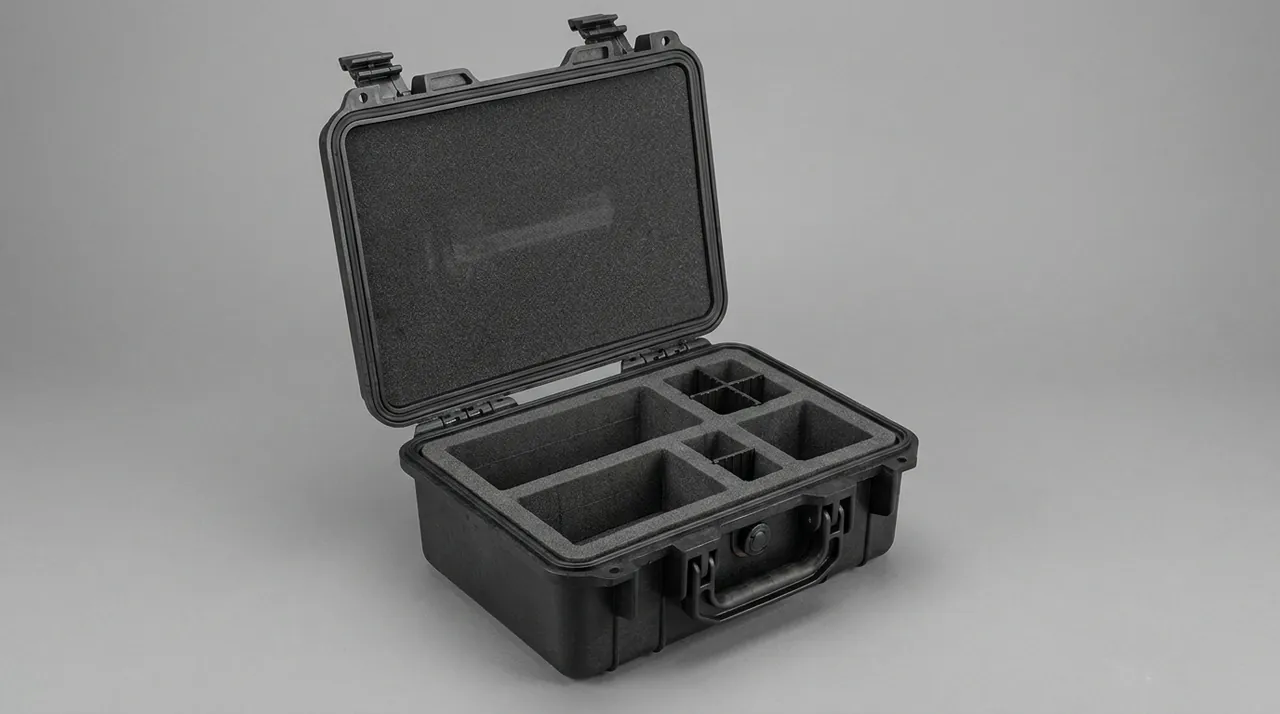
8. Function of Pressure Equalization Valve
When a protective case experiences altitude change, abrupt temperature change or deep-water pressure difference, a pressure difference is generated inside and outside, which may suck the door seal tight, bulge or even seep water. The pressure equalization valve, which breathes but is watertight, balances the pressure difference through a waterproof breathable membrane to protect the sealing system. In air consignment, high-altitude transport and submersible recovery scenarios, the pressure equalization valve is almost essential. Note that the valve itself also has a protection rating; choose a product matching the case rating and regularly check whether the membrane is blocked or damaged. For selection of this component, refer to Pressure Equalization Valve Guide.
9. How to Judge Whether IP67 or IP68 Is Needed
Selection should return to the real usage scenario rather than blindly pursuing higher ratings. If equipment is only in heavy rain, shallow water or accidental drop scenarios, IP67 is usually sufficient and lower cost; if long-time underwater operation, drifting or repeated flooding is required, then IP68 should be required with clear declared depth and duration. The trade-off of weight, heat dissipation and open-close convenience should also be considered, as excessively high sealing ratings may sacrifice heat dissipation and maintainability. It is recommended to list the worst-condition checklist and then match the rating, using the measured report as acceptance basis. Combined with the parameter decision method of the Protective Case Selection Guide, a complete selection logic can be formed.
10. Common Misreadings and Certification Traps
Common market misunderstandings include treating IP68 as "diving at any depth", using promotional labels instead of third-party reports, testing only empty cases without load and liner, and ignoring the rating decay after strip aging. In terms of certification traps, verify the qualification of the testing institution, the validity period of the report and the representativeness of the sample to prevent "sending excellent samples for test but shipping defective products". For export products, also confirm whether the destination recognizes the testing system. The procurement contract should stipulate re-inspection rights and non-conforming disposition clauses. To verify authenticity, refer to Verify IP67 Certification.
11. Overall Relationship with Protective Case Selection
The sealing rating is only one of many parameters of a protective case and should be considered together with structural strength, liner, temperature control, material and certification. A case with high-level sealing but fragile structure may still fail sealing under drop impact. Therefore, it is recommended to include the IP rating into the decision checklist given by the Protective Case Selection Guide, evaluated alongside volume, cavity and endurance indicators. For equipment requiring constant temperature, the coupled design of sealing and temperature control is particularly critical. Overall selection should also refer to the scenario analysis of Why IP67 for Outdoor Equipment.
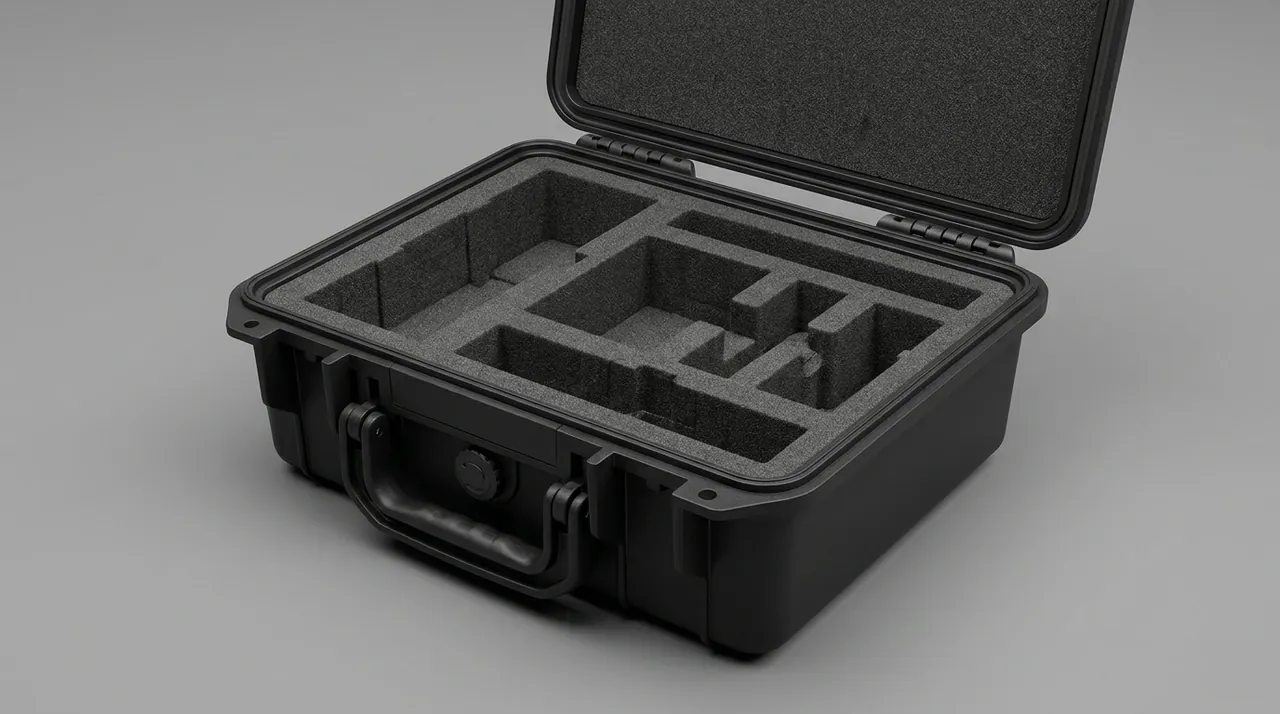
12. Maintenance and Seal Aging
The seal strip gradually ages with light, ozone and temperature-humidity cycles, manifesting as hardening, cracking or permanent deformation, leading to rating decay. Maintenance points include regularly cleaning the seal groove and strip, avoiding contact with oil and solvents, storing in a cool dry place, and replacing the strip by cycle. Silicone and ethylene propylene diene monomer rubber have different lives and the replacement cycle should be marked in technical documents. Perform visual inspection and simple immersion sampling before each use; re-enable after long idle should first do seal verification. For the aging mechanism, view the Case Seal Aging topic.
13. Application Scenario Suggestions
IP67 suits field survey, vehicle equipment, emergency rescue and general wading transport; IP68 suits underwater detection, drifting equipment, maritime operation and material support with long-time flooding risk. In the same project, different equipment can be configured by grade, with critical parts using IP68 and auxiliary parts using IP67 to balance cost. Regardless of rating, sampling verification under real conditions should be done rather than relying only on labels. For electronic equipment, also use antistatic liner and desiccant. Related waterproof basics can be found in Waterproof Case and What Is IP67 Rating.
14. Rating Selection Quick Reference and Rectification Flow
To facilitate rapid on-site decision making, common scenarios and suggested ratings can be made into a quick-reference table: indoor or dry storage only, no high waterproof needed, ordinary protection is enough; daily outdoor and light rain, suggest a basic waterproof rating; heavy rain, shallow water and accidental drops, choose the seven rating; long-time wading, drifting or underwater operation, choose the eight rating and check the declared depth; high-altitude air transport, regardless of rating, must be equipped with a pressure equalization valve; frequent open-close with harsh wading, prioritize double seals and replaceable strips. The quick-reference table is only a starting point, and the final acceptance must still be based on measured reports rather than rating digits alone.
When the existing case sealing fails to meet the standard, the rectification flow can be divided into four steps. The first step locates the leak: use dye or pressure leak detection to find the interrupted door seal, warped latch or unsealed interface. The second step replaces or adjusts the seal: if the strip is aged, replace the whole ring and check the compression amount; if the latch is uneven, level and compress. The third step reinforces weak openings: add independent sealed covers or waterproof connectors to charging ports and breathable ports. The fourth step retests: do immersion sampling at the usage depth, verify with load and liner, and confirm no more water ingress. After rectification, record depth, duration and conclusion in the ledger as the baseline for subsequent re-inspection.
At the procurement document level, it is recommended to write rating requirements as verifiable clauses: clarify the standard version, test depth and duration, testing institution qualification, sample representativeness, re-inspection rights and non-conforming disposition. Avoid vague words such as only "waterproof". For critical equipment, require the manufacturer to provide a special immersion report with load and liner state rather than only an empty-case conclusion. Incorporating these clauses into the contract can systematically reduce the risk of protection failure. Combined with the overall framework of the Protective Case Selection Guide, the sealing rating should be evaluated alongside other parameters to form a closed-loop selection and acceptance system, ensuring every protection point is evidence-based and accountable.
15. Industry Application Cases and Rating Matching
Different industries have significantly different needs for protection ratings, and several typical matches are given below. Field survey and geological sampling equipment often operate in mud, water and showers, prioritizing the seven rating plus double seals and a pressure equalization valve for altitude changes. Vehicle and rail transit equipment face vibration and splashing; the seven rating is usually sufficient, with the focus instead on latch anti-vibration and fixation. Maritime and diving equipment requires long-term submersion or high-pressure water washing, must use the eight rating with clearly declared depth, and independently seal interfaces. Emergency rescue and firefighting equipment emphasize fast access and weather resistance; the seven rating with aging-resistant strips is adequate. Military and special operations have extremely high reliability requirements, often superimposing structural reinforcement and confidentiality design on a high rating.
A common misunderstanding is to treat the rating as the only indicator and ignore the complexity of the use condition. For example, with the same seven rating, desert dusty environments need more attention to dust prevention and strip abrasion resistance, while seaside salt spray needs attention to metal corrosion resistance and strip ozone resistance. Rating matching should be judged comprehensively by temperature and humidity, salt spray, ultraviolet, vibration and chemical exposure, rather than only looking at the waterproof digit. For existing equipment modification, first locate the weak point according to the rectification flow above, then decide whether to strengthen locally or replace the whole case. The supplier should clearly declare test conditions and applicable boundaries in the scheme, and the purchaser writes the boundaries into acceptance. Through horizontal comparison of industry cases, a rating baseline suitable for own scenario can be established faster, reducing trial-and-error cost.
FAQ
Q: Which protects better, IP67 or IP68? A: It cannot be simply said which is stronger; the key is the usage scenario. Both have the highest dust rating 6, that is fully dust-tight; the difference is in the second water-protection digit. IP67 is short-time immersion, standard one meter thirty minutes; IP68 is continuous submersion, with depth and duration declared by the manufacturer, usually deeper and longer. If the manufacturer declares only a specific depth for IP68, exceeding that depth may still fail, whereas the one meter thirty minutes of IP67 is a deterministic indicator convenient for lateral comparison. Therefore for accidental drops and heavy rain soaking, IP67 is often sufficient and economical; only for long-time underwater operation is IP68 needed with declared parameters checked, so do not blindly pursue higher ratings. In practice, a two-step screen works well: write down every water-related event your equipment may meet across its service life, from rain on a truck bed to a river crossing, then mark which events are brief and shallow versus prolonged or deep. The first group maps to IP67, the second to IP68 with declared parameters. This simple exercise converts an abstract digit comparison into a concrete scenario list that procurement, engineering, and quality teams can all read the same way, and it produces the worst-case list that acceptance testing will later verify. When the two groups overlap in one project, configure ratings per equipment class instead of forcing one rating on everything. Repeating the exercise yearly keeps the list current.
Q: Can IP68 dive at unlimited depth? A: No. The 8 digit of IP68 is only the grade of "continuous submersion", and the specific bearable depth and duration must be clearly declared by the manufacturer in documents; the standard does not specify a uniform value. Common declarations may be two meters, three meters or deeper, but may also be a limited depth just over one meter. Exceeding the declared parameters, protection may still fail. During procurement, obtain a third-party test report stating depth and duration, and check it against the own worst condition, rather than understanding IP68 as unlimited waterproof. Blindly trusting promotional labels while ignoring declared boundaries is a common cause of protection failure. A reliable habit is to copy the declared depth and duration from the report directly into your purchase specification, so the number travels with the contract rather than staying in a brochure. Ask the supplier which laboratory performed the test and whether the sample came from a regular production batch, because hand-prepared samples often outperform volume production. When your usage includes deeper or longer exposure than declared, either negotiate a custom test or move to a housing designed for that condition. Treating the declared boundary as a hard limit, like a load rating, keeps expectations aligned with what the certificate actually proves. Small paperwork habits prevent large field disappointments.
Q: Why is a pressure equalization valve needed when we already have IP67? A: The pressure equalization valve solves the pressure difference problem rather than the water ingress problem. A protective case in air consignment, high-altitude transport or deep-water environment will generate significant internal-external pressure difference, which may suck the door seal tight, bulge or even seep water from weak points, even if the static sealing rating is qualified. The pressure equalization valve has a built-in waterproof breathable membrane that balances internal-external pressure without water penetration, protecting the sealing system. Note that the valve itself also has a protection rating and should match its case rating, and the membrane should be checked regularly for blockage or damage, otherwise it becomes a water inlet channel. Installation position matters as much as the part itself: mount the valve away from low spots where water can pool and keep it reachable for inspection. After flights or deep immersions, listen and feel for airflow through the membrane; a clogged valve silently recreates the pressure problem it was meant to solve. Carry spare membranes for long expeditions, and log every check in the case maintenance record. For fleets, standardize one valve model across cases so inspection routines and spare inventory stay simple, and train crews to equalize pressure after altitude or temperature changes before forcing a lid open, which otherwise strains hinges and latches. A five-second valve check after each mission is enough.
Q: How often should the seal strip be replaced? A: The replacement cycle depends on material, environment and usage frequency, with no unified fixed value. Ethylene propylene diene monomer rubber and silicone have different aging resistance; long-term light, ozone and temperature-humidity cycles accelerate hardening and cracking. Engineering recommends writing the replacement cycle into technical documents and determining it with visual inspection and regular sampling. When the strip hardens, cracks, has excessively deep permanent indentation or fits poorly, it should be replaced. Perform seal visual and simple immersion sampling before each enablement; re-enable after long idle should first do seal verification. Listing the strip as a consumable and establishing a replacement ledger is an effective practice to ensure long-term sealing reliability. A practical ledger records strip installation date, material, observed condition at each inspection, and the date of replacement, so aging trends become visible across your fleet. Store cases unlatched when idle for long periods to avoid permanent indentation at the compression points, and keep them away from direct sunlight and ozone sources such as electric motors. When ordering spares, buy complete gasket sets for each model rather than cut lengths, because joints in the strip are weak points. These habits cost little attention but extend the reliable service window of the seal by seasons, which directly protects the certification value of the whole case. Label each case with its next strip-change date.
Q: The report says IP68, so why does water still enter in practice? A: Water ingress usually comes from several causes: first, the report only targets the specific depth and duration of the submitted sample, while actual use exceeds the declared boundary; second, shipped products are inconsistent with submitted samples, with "excellent samples for test but defective products shipped"; third, the strip ages or latch compression is uneven, interrupting the seal line; fourth, additional openings such as interfaces and charging ports are not individually sealed. Therefore acceptance cannot only look at labels; check the depth duration in the report, the qualification of the testing institution and the representativeness of the sample, and stipulate re-inspection rights in the contract. For critical equipment, do sampling immersion verification with load and liner rather than only testing empty cases. A structured acceptance flow closes these gaps: verify the report number on the laboratory website, compare the tested model and configuration with your order, and witness or record a sample immersion in the declared depth before shipment. Keep the signed test record with the delivery documents, and schedule your own periodic spot checks because seals age in service. When a discrepancy appears, pause payment and document everything in writing; this preserves your remediation options. Over multiple orders, track supplier consistency in a simple scorecard, since a vendor whose reported ratings always match field behavior is worth a premium. Consistency across orders is the real quality signal.
Q: Should I prefer IP67 or IP68 when purchasing? A: Prefer the real usage scenario rather than the level of the digit. First list the worst condition: whether wading, wading depth, duration, whether high altitude or drop impact. If only heavy rain, shallow water or accidental drops, IP67 is usually sufficient with lower cost and better heat dissipation and maintainability; if long-time underwater operation, drifting or repeated flooding is required, then require IP68 with clear declared depth and duration. At the same time, the sealing rating should be coordinated with structural strength, liner and temperature control to avoid sealing failure under drop impact. Include the rating into the complete selection checklist and use the measured report as acceptance basis to make a reasonable decision. Build the decision around a simple matrix: list each equipment item, its water exposure, its criticality, and the cost of failure, then assign the rating per item instead of per project. Mixed fleets benefit from standardized external dimensions so different rated cases still stack and transport together. Remember that higher sealing demands better discipline in closing and inspection, so match the rating to your team's real operating habits, not the ideal ones. Finally, revisit the choice annually: if field events show gaps, upgrade only the affected class rather than the entire inventory, keeping the budget focused where risk actually sits. Document the reasoning so future teams inherit the logic.
Q: Does a lined protective case affect the IP rating? A: Yes. If the liner is improperly installed, it may compress the door seal, block the drainage channel or form a gap when the lid closes, thereby weakening the seal. The cavity-cut Custom Foam Lining should reserve sealing margin to avoid over-thick pressing against the lid. Verification of the IP rating should be performed in the real state with liner and load rather than only testing empty cases, otherwise the conclusion is distorted. In addition, the water absorption rate of the liner material also affects internal humidity and condensation. During customization, review the liner size and case closure gap together to ensure the seal line is continuous and complete, and if necessary do sample-case immersion testing to confirm. Design the liner with a perimeter gap so it never contacts the gasket path, and check the fit after every recut or modification. High-absorption foam can hold water against the shell after wet missions, extending drying time and encouraging corrosion, so prefer closed-cell, low-absorption materials for wet service. During acceptance, weigh the liner before and after a mock immersion to quantify uptake. Keep a spare liner for mission-critical cases so a damaged insert never delays a deployment. When ordering replacements, send the supplier the original cutting files together with the measured closure gap of your specific case, because small production variations matter at the seal. Even small gaps matter at the seal.
Q: Can an IP67 protective case completely prevent condensation? A: Not completely. The IP rating solves external water and dust intrusion, while condensation comes from the dew point reached by the moisture content in the internal air on a cold surface, belonging to the internal micro-environment problem. Even with completely external sealing, if equipment or liner brings moisture, condensation will still occur in low-temperature environments. Solutions include drying before transport, placing desiccants, optimizing air ducts to avoid direct exposure of cold surfaces, and doing temperature control for constant-temperature equipment. A well-sealed case is more likely to accumulate moisture, so it often needs dehumidification design. Attention to condensation control should be planned and verified independently of the IP rating as part of micro-environment control. Practical humidity control is inexpensive: silica gel packs sized to the case volume, a humidity indicator card visible at opening, and a routine to recharge or replace desiccant after each wet exposure. For electronics, log humidity across seasons to learn your real moisture load, then size the desiccant accordingly. Avoid opening a cold case in a warm room until contents equilibrate, since sudden warm air on cold surfaces is the classic condensation trigger. For long storage, cyclic inspection every few weeks catches rising humidity early. These measures work alongside the IP rating, not instead of it, because sealing and moisture control solve different halves of the same problem. Check the indicator card at every opening.
Q: How to distinguish true from false IP rating claims by manufacturers? A: The core method is to request a numbered third-party test report, check the qualification of the testing institution, the standard version, the sample model and the validity period of the report, and confirm that the sample is consistent with the actual shipment. Require the contract to stipulate random re-inspection rights and non-conforming disposition clauses to prevent inconsistency between submission and shipment. For critical equipment, it is recommended to do load immersion sampling verification by oneself or by entrustment. In addition, beware of vague words such as "waterproof" replacing clear ratings, and non-standard tests replacing standard tests. Systematically verifying documents and physical objects is more reliable than simply trusting promotional labels; related methods can refer to the verify IP67 certification topic. Beyond document checks, a short functional probe is persuasive: submerge a random purchased case to the declared depth for the declared time with a paper towel inside, then inspect. Legitimate products pass easily; inflated claims fail quickly. Keep a record of such spot checks per supplier and share results within your procurement network, because pooled field data raises the cost of exaggeration for everyone. When a supplier resists verification or offers only brochures, treat it as information about their compliance culture. The minutes spent verifying a report number online are the cheapest insurance in the entire purchase. This verification takes minutes and saves months of disputes.