

The short answer: a plain protective case with no electrical components normally does not need a "CE certificate" to enter the European Union, because it falls outside the scope of most EU directives. What genuinely binds it are two material regulations: RoHS 2011/65/EU, which restricts ten hazardous substances, and REACH, which triggers SVHC communication and SCIP database obligations. Only when a case integrates a power supply, a charging port, USB power delivery, LED lighting or a wireless module do the Low Voltage Directive 2014/35/EU, the EMC Directive 2014/30/EU or even the Radio Equipment Directive 2014/53/EU come into play, and only then does CE marking become mandatory. If a case is also delivered as part of a machine, with latches, handles and wheels forming a functional mechanism, the Machinery Directive 2006/42/EC may apply as well. There is therefore no single answer to "does a protective case need CE?" The correct question is: which directives apply, and what compliance route follows from that determination?
The second misconception to clear up is that CE is not a certificate issued by an authority. It is the manufacturer's own declaration of conformity with the applicable directives. Except for a few high-risk categories that require a Notified Body, protective cases almost always follow the "self-declaration plus technical file" route. A third-party certificate is, in most cases, a voluntary commercial document that does not legally replace the manufacturer's own declaration. This article is written for export buyers, trade managers and structural engineers. It separates the compliance question into five workstreams — directive applicability assessment, materials testing, technical documentation, DoC signing, and verification of factory paperwork — and provides checklists and tables you can adapt directly.
Contents
- Start Here: Separate Mandatory Law from Commercial Preference
- What CE Actually Is: A Declaration, Not a Certificate
- Which EU Directives Can a Protective Case Fall Under
- The Machinery Directive 2006/42/EC Decision Logic
- When the Low Voltage and EMC Directives Are Triggered
- What RoHS 2011/65/EU Regulates in Case Materials
- REACH, SVHC and the SCIP Database Obligation
- What a Technical File (TCF) Must Contain
- Writing the EU Declaration of Conformity and CE Marking
- Packaging Regulation and the WEEE Boundary
- Typical Test Scope, Lead Times and Cost Structure
- The Document Checklist to Request from Your Factory
- Frequently Asked Questions
- Conclusion and Related Reading
Start Here: Separate Mandatory Law from Commercial Preference
EU compliance requirements fall into three layers, and most disputes come from confusing them.
| Layer | Nature | Typical examples | Consequence of ignoring it |
|---|---|---|---|
| --- | --- | --- | --- |
| EU legislation (mandatory) | Legal duty, enforced by customs and market surveillance | RoHS, REACH, Machinery Directive, LVD, EMC, Packaging Directive | Delisting, fines, recall, personal liability |
| EU standards (voluntary but expected) | Presumption of conformity, the evidence route | EN ISO 12100, EN 60529, EN IEC 63000 | Not directly required, but you cannot demonstrate compliance |
| Customer or platform requirements (commercial) | Contract or marketplace conditions | Third-party CE certificate, ISO 9001, GS, TUV report, EN 71 | Lost orders, but not a legal breach |
The rule of thumb: address the mandatory layer first, then the commercial layer. When a European importer asks for a "CE certificate," it is usually because they have not worked through applicability and have bundled three different obligations into one sentence. The most valuable response is not to rush out and buy a certificate, but to produce a directive applicability statement that explains, clause by clause, why a given model does or does not fall within each directive. That statement is itself part of the technical file and is the foundation for everything that follows.
This is also why the same factory can ship a domestic version and an EU version of the same case with different bills of materials. For the EU version, flame retardants, stabilisers, pigments and process aids must be screened against RoHS and REACH, and the scope includes PC and ABS pellets, gasket compounds, EVA foam, metal hardware, screen-printing inks and label adhesives. The compliance risk in a case rarely sits in the shell itself; it sits in the overlooked auxiliary materials — label adhesive, ink, masterbatch and over-moulded soft-touch trim are historically the highest-frequency failure categories. For the material selection logic itself, see Protective Case Plastic Materials and PP, ABS and PC Compared; the earlier the material is fixed, the shorter the compliance path.
What CE Actually Is: A Declaration, Not a Certificate
CE marking means that the manufacturer declares the product conforms to all applicable EU harmonisation legislation and takes full responsibility for that claim. It consists of exactly three things.
- A signed EU Declaration of Conformity (DoC) listing the applicable directives, the standards applied, manufacturer and authorised representative details, and the signatory and date.
- A technical file capable of demonstrating conformity, retained for 10 years after the product is placed on the market.
- The CE mark applied to the product or its packaging, with a defined geometry, minimum height (commonly 5 mm), and no distortion or confusion with other marks.
The threshold for CE is therefore not "buying a certificate" but "keeping the evidence." For a low-risk product such as a protective case, correct applicability assessment, testing against the cited standards, and a complete technical file are sufficient for the manufacturer to self-declare. Conversely, even with a certificate in hand, if the DoC cites the wrong directive, the technical file is missing, or the referenced standard has been withdrawn, the product is still non-compliant.
Three details are routinely overlooked:
First, the DoC must be in the language of the member state where the product is placed on the market, or at least accompanied by a translation; in practice this means English plus the local language. Second, "placing on the market" means the first making available of the product in the EU, including free samples and demonstration units, so trade-show exhibits and customer samples must also comply. Third, the importer is treated as the entity placing the product on the market and carries the same burden of proof as the manufacturer, which is why well-organised European buyers archive the technical file rather than simply collecting a one-page certificate.
Which EU Directives Can a Protective Case Fall Under
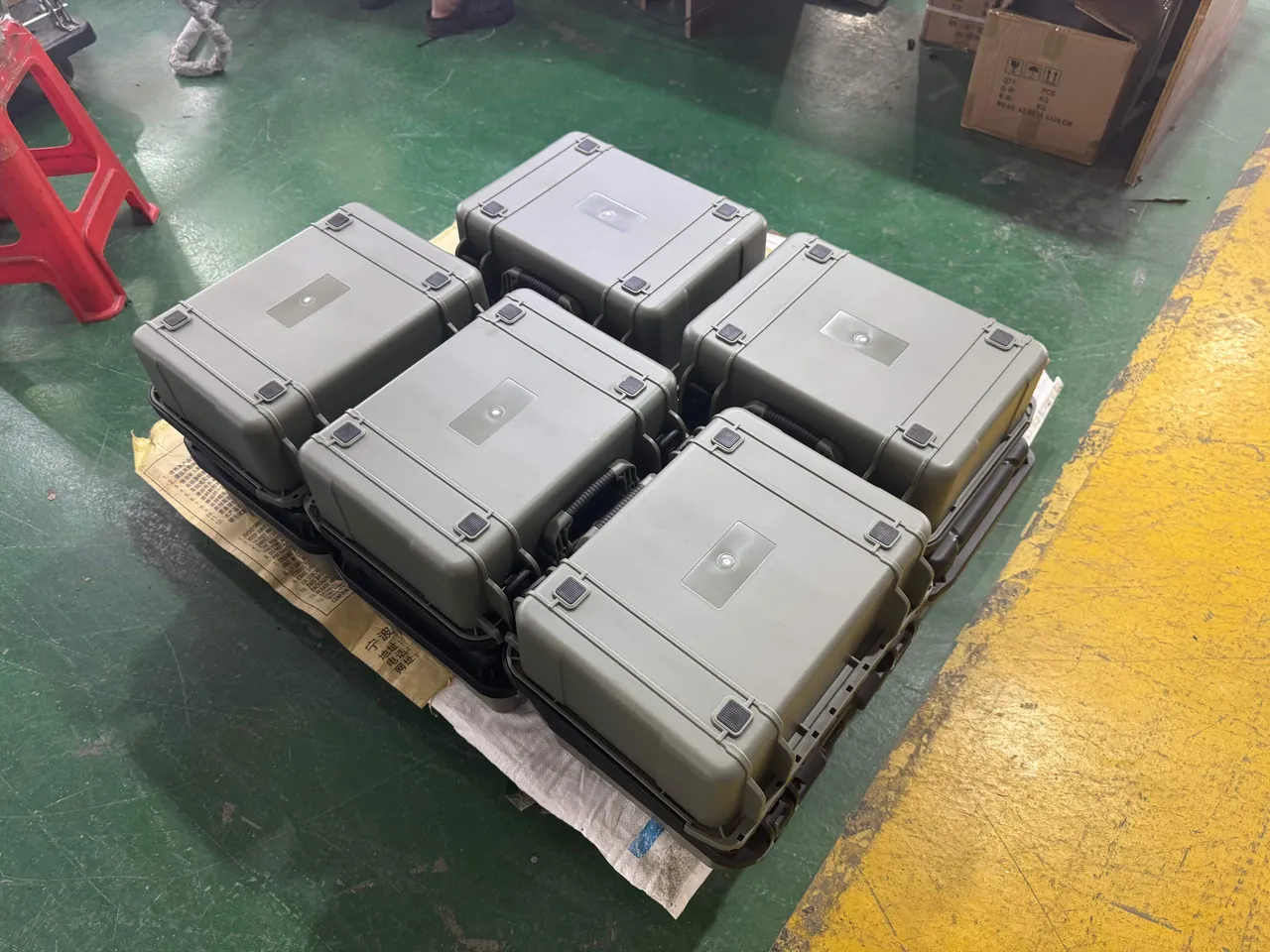
The table below orders the relevant legislation by how often it is actually triggered and can serve as the starting point for an applicability assessment.
| Legislation | Reference | Commonly triggered for cases? | Trigger condition |
|---|---|---|---|
| --- | --- | --- | --- |
| RoHS | 2011/65/EU as amended by (EU) 2015/863 | Yes, in most projects | Product is electrical equipment; buyers commonly require full compliance |
| REACH | (EC) No 1907/2006 | Yes | SVHC above 0.1 percent requires notification; articles require SCIP submission |
| Machinery Directive | 2006/42/EC | Depends on delivery form | Latches, hinges, handles and wheels delivered as machinery or machinery parts |
| Low Voltage Directive | 2014/35/EU | Only with electrical parts | Integrated electrical parts operating between 50 and 1000 V AC or 75 and 1500 V DC |
| EMC Directive | 2014/30/EU | Only with electrical parts | Motors, switching power supplies, control boards, wireless charging modules |
| Radio Equipment Directive | 2014/53/EU | Only with wireless | Bluetooth, GPS, RFID or LoRa transmitters or receivers |
| Packaging and Packaging Waste Directive | 94/62/EC | Yes | Cartons, pallets, cushioning, labels |
| WEEE | 2012/19/EU | Only with electrical parts | Product is electrical equipment and requires recycling registration |
| Batteries Regulation | (EU) 2023/1542 | Only with batteries | Lithium cells trigger labelling, removability and due diligence duties |
The decisive line in this table is whether the case contains electrical parts. A purely mechanical case with foam inserts concentrates its compliance work in materials legislation. The moment a case integrates LED lighting, a USB charging panel or a wireless tracking module, the workload multiplies, because LVD, EMC or RED applies, WEEE registration and the Batteries Regulation may apply, and each directive requires its own harmonised standards to be cited in the DoC. Many projects lose control of schedule and budget precisely because the decision to "just add a charging port" is taken after the design is frozen.
The Machinery Directive 2006/42/EC Decision Logic
Whether the Machinery Directive applies depends on whether the product is machinery, interchangeable equipment, a safety component or a lifting accessory. A protective case is normally classified as a container, not machinery. Three situations change that conclusion.
- The case is delivered as part of a machine and performs guarding, load-bearing or motion-limiting functions — for example a rack-style transit case supplied with a test instrument and treated by the OEM as a machine part.
- The case contains its own powered movement, such as a motorised lifting instrument case or a case with powered drive wheels.
- The case serves as the enclosure of a safety component, such as an emergency stop or interlock housing, which may bring it under both the Machinery Directive and LVD.
Where the case itself relies on ribs and load-bearing structure to carry its rated load, the strength argument should be archived as separate technical evidence, as described in High-Strength Case Structure; verification of the sealed main compartment belongs to the IP67 protective case technical line. The two are listed separately in the test scope table below.
If the Machinery Directive applies, the manufacturer's duties include a risk assessment referencing EN ISO 12100, identification of the applicable essential health and safety requirements, a technical file meeting Annex VII, a signed DoC, and CE marking where required. For a pure transit case, the usual practical conclusion is that the directive does not apply because the product contains no drive mechanism and performs no forming or handling function, with that reasoning recorded in the technical file.
Note that a "not applicable" conclusion must be argued, not merely asserted. The standard approach is an applicability matrix in the technical file: the left column lists directive clauses, the right column records "applies / does not apply" with the reason and the supporting evidence. This matrix is the first document a market surveillance officer or a buyer asks to see.
When the Low Voltage and EMC Directives Are Triggered
LVD 2014/35/EU applies to electrical equipment with a rated voltage between 50 and 1000 V AC or 75 and 1500 V DC. In practice:
- 5 V, 9 V or 12 V DC lighting or USB panels sit below the LVD lower threshold, so LVD does not apply — but EMC almost certainly does.
- Integrated 220 V AC sockets, mains input or switching power supply modules bring both LVD and EMC into scope, assessed against EN 62368-1 for audio, video and IT equipment, or the EN 60335 series.
- Wireless charging, Bluetooth locking or GPS tracking trigger RED 2014/53/EU, requiring radio and EMC testing against harmonised standards such as EN 300 328 and EN 301 489, usually with Notified Body involvement.
The EMC test is whether the product may generate or be affected by electromagnetic disturbance. Products containing switching supplies, motors or pulsed drivers always qualify. Even a passive LED board with a current-limiting resistor is often asked for an EMC statement, because neither a buyer nor a customs officer can tell from the outside whether an oscillator is present.
The engineering recommendation is straightforward: keep the electrical portion modular and separable. Build the electrical function as a removable module whose supplier carries the LVD, EMC or RED obligation and issues its own DoC, leaving the case body subject only to materials legislation and structural standards. The compliance boundary stays clear, responsibility is traceable, and changing module suppliers does not force a full re-assessment of the case. When JUNZHJIA runs OEM and ODM projects for European customers, the structural review stage typically recommends separating the electrical bay from the sealed main compartment, which simplifies compliance and also makes field replacement easier.
What RoHS 2011/65/EU Regulates in Case Materials

RoHS restricts ten substances at the level of homogeneous material, expressed as a percentage by weight. The unit of assessment is the smallest material that cannot be mechanically separated further — not the average across the product. Gasket compound, printing ink, plating and masterbatch are each assessed independently.
| Substance | Limit | Typical source in a protective case |
|---|---|---|
| --- | --- | --- |
| Lead (Pb) | 0.1 percent | Stabilisers in legacy PVC gaskets, leaded solder, brass fittings |
| Mercury (Hg) | 0.1 percent | Button cells, some relay contacts |
| Cadmium (Cd) | 0.01 percent | Plating, pigments, stabilisers — the lowest limit, needs close attention |
| Hexavalent chromium (Cr VI) | 0.1 percent | Passivation layers and zinc-plated hardware |
| Polybrominated biphenyls (PBB) | 0.1 percent | Flame retardants, legacy material risk |
| Polybrominated diphenyl ethers (PBDE) | 0.1 percent | Flame retardants, legacy material risk |
| DEHP | 0.1 percent | Flexible PVC, cable insulation, soft-touch trim |
| BBP | 0.1 percent | Plasticisers |
| DBP | 0.1 percent | Plasticisers |
| DIBP | 0.1 percent | Plasticisers |
The first six come from the original directive 2011/65/EU; the four phthalates were added by amending directive (EU) 2015/863, applicable since 22 July 2019 for most categories. The two most common traps in protective cases are cadmium and phthalates: cadmium residues in low-cost pigments and plating, and phthalate plasticisers in soft trim and cable. Both are recurring notification categories.
The standard evidence route is to build the technical file around EN IEC 63000, obtain third-party test reports from material suppliers using the IEC 62321 series (XRF screening followed by ICP-OES or GC-MS quantification), consolidate them into a material compliance declaration, and spot-check high-risk parts per batch. An email stating "our product complies with RoHS" has no value in a market surveillance inquiry. Valid evidence must trace to a specific material, a specific batch and a specific report number.
REACH, SVHC and the SCIP Database Obligation
REACH imposes two core duties on articles.
- SVHC notification: if a Substance of Very High Concern is present above 0.1 percent by weight in an article and the annual import volume exceeds one tonne, notification to the European Chemicals Agency is required.
- SCIP database submission: since 5 January 2021, articles containing an SVHC above 0.1 percent must be reported to ECHA's SCIP database before being placed on the EU market, even where the notification threshold is not met.
The difference from RoHS matters. RoHS is a limit: exceeding 0.1 percent makes the product non-compliant. REACH SVHC is a communication duty: the substance may be present, but sufficient information — at minimum the substance name — must be passed downstream, and notification or submission duties apply. A case can therefore pass all ten RoHS substances and still require a SCIP submission, typically driven by a specific plasticiser or flame retardant in cabling, soft trim or a flame-retardant part.
The SVHC candidate list is updated twice a year, usually in January and June, and continues to grow. Compliance is therefore not a one-off action but a dated, recurring duty. A robust approach records the list version and verification date in the technical file and re-screens newly listed substances after each update, producing a versioned compliance ledger.
What a Technical File (TCF) Must Contain
The purpose of the technical file is to let a third party determine compliance without contacting you. For a protective case, a workable TCF contains at least the following.
| Document | Required content | Common gap |
|---|---|---|
| --- | --- | --- |
| Product description and drawings | Model, construction, bill of materials including auxiliaries, declared IP rating | Assembly drawing only, no material list |
| Directive applicability matrix | Clause-by-clause applies / does not apply with reasoning | Missing entirely |
| Risk assessment | Identification and mitigation per EN ISO 12100 | A single line stating "no risk" |
| Materials evidence | Ten-substance RoHS reports, REACH SVHC statement, SCIP number | Expired reports or mismatched part numbers |
| Test reports | Sealing, IP rating, strength and stacking against cited standards | Internal test records with no standard reference |
| Labels and instructions | Content, languages, warnings, version number | English only, missing member state languages |
| DoC | Applicable directives, cited standards, signatory | Wrong directive numbers or withdrawn standards |
| Change log | Impact assessment for structure, material and supplier changes | No version control, silent material substitution |
A practical test: hand the file to an engineer who does not know your product. Can they decide within thirty minutes whether the model complies? If yes, the file is adequate. When it fails, the usual cause is a BOM that omits auxiliary materials, or test reports that carry no standard number and no validity date.
Writing the EU Declaration of Conformity and CE Marking
The DoC is not a template exercise; it is a legally consequential document. A complete DoC contains:
- Product identification: model, batch or serial number logic, ideally with a photograph fixing the appearance.
- Manufacturer name and full address, plus the authorised representative in the EU where the manufacturer is outside it.
- A statement that the declaration is issued under the sole responsibility of the manufacturer.
- The list of applicable EU legislation, with numbers and amendment versions.
- Full references of the harmonised standards or other technical specifications applied, including the version year.
- Notified Body details where applicable: name, number, scope of assessment, certificate number.
- Place and date of issue, name and function of the signatory.
Three frequent errors: citing the directive by name without a number; citing a standard without its version year; and applying the CE mark to a product that falls under no directive at all, which is misleading marking and can be treated as a breach in some member states. The CE mark may only be applied to a product covered by at least one directive. It is not a generic "shipping to Europe" sticker.
Packaging Regulation and the WEEE Boundary
The Packaging and Packaging Waste Directive 94/62/EC restricts heavy metals in packaging — combined lead, cadmium, mercury and hexavalent chromium must not exceed 100 ppm — and requires compliance with essential requirements including design for recycling. Outer cartons, cushioning, pallets, stretch film and labels all fall within its scope, and buyers typically request a packaging material statement.
WEEE 2012/19/EU applies only when the case qualifies as electrical and electronic equipment. It then requires producer registration, the crossed-out wheeled bin marking, and recycling information. A purely mechanical case is out of scope; a case with a USB panel, LED lighting or a battery is very likely in scope, with registration required in each member state — a recurring cost that is frequently underestimated.
Practical note: describing the "case" and the "electrical accessory" as two separate articles in customs and compliance documentation can, in many situations, confine WEEE and battery obligations to the accessory rather than the whole case. Confirm the approach with your importer and a local compliance adviser, since enforcement practice differs between member states.
Typical Test Scope, Lead Times and Cost Structure
The table below lists the evidence most often requested for EU-bound protective cases. Lead times and costs are empirical ranges and depend on sample count, laboratory scheduling and whether expedited service is used.
| Item | Reference standard (example) | Typical samples | Indicative lead time | Cost drivers |
|---|---|---|---|---|
| --- | --- | --- | --- | --- |
| RoHS ten substances | IEC 62321 series | 1 to 3 complete cases | 5 to 10 working days | Number of material types, disassembly required |
| REACH SVHC screening | Candidate list comparison plus instrumental confirmation | 1 to 3 cases | 7 to 15 working days | Number of substances screened, quantification needs |
| Ingress protection | IEC 60529 / GB/T 4208 | 1 to 2 units | 3 to 7 working days | Rating level, whether IPX9 is included |
| Material flammability | UL 94 / IEC 60695-11-10 | 5 to 10 bars per set | 5 to 10 working days | Number of thickness variants |
| UV ageing | ISO 4892-2 / ASTM G155 | Project specific | Depends on exposure duration | Xenon hours, number of evaluation criteria |
| Transport packaging | ISTA series | 1 to 3 cases | 5 to 12 working days | Test sequence, stacking included or not |
Cost optimisation principle: make materials compliance a platform capability, not a project activity. When a factory maintains a unified compliance database for its standard PC, ABS and PP grades, gasket compounds and EVA inserts, and reviews it annually, the incremental cost of a new project applies only to genuinely new part numbers instead of repeating testing for every order. This is a concrete advantage that a manufacturer holds over a trading company.
The Document Checklist to Request from Your Factory
The most effective risk control is to obtain and cross-check the documents before placing the order, not after the container arrives.
Mandatory request list:
- RoHS ten-substance test report from a third-party laboratory, showing laboratory name, report number, sample description and date.
- REACH SVHC statement stating the candidate list version date relied upon, plus the SCIP submission number where applicable.
- Ingress protection test report including test conditions, duration, verdict and conclusion.
- Material flammability evidence where required, such as a UL Yellow Card or third-party report.
- Draft DoC for cases with electrical parts, plus the separate DoC of the electrical module supplier.
- Packaging material compliance statement.
- A contractual commitment to notify changes before material or supplier substitutions.
Four verification steps:
- Check identity consistency. Do the applicant, sample name and model on the report match what you are buying? A private-label model with no matching report is the single most common problem.
- Check validity dates. Is there an explicit test date, and how old is it? Material regulation reports are generally refreshed within 24 months.
- Check standard versions. Are the cited standards current? A withdrawn standard cannot support a conformity claim.
- Check coverage completeness. Tick every part number on the BOM against the samples in the reports, with particular attention to label adhesive, ink and soft-touch trim.
JUNZHJIA maintains a compliance document pack for every shipping model, archiving material reports, test reports and DoCs by model and batch so that customers can retrieve them by model number instead of requesting documents order by order. For OEM projects shipped under a customer's own brand, the full technical basis needed to issue a DoC in the customer's name is provided alongside.
Compliance is never a paper exercise completed before loading. It is a continuous activity spanning material selection, structural design, supplier management and documentation. Move it upstream into the quotation and prototyping stage and the route to the EU market actually becomes shorter.
Frequently Asked Questions
Q: Does a plain plastic protective case need CE certification to enter the EU?
A: It depends on whether the product falls within at least one EU directive. A purely mechanical case with no electrical parts and no powered mechanism normally falls outside the Machinery Directive, LVD, EMC and RED, so CE marking is not legally required. Compliance duties then come mainly from RoHS, REACH and the Packaging Directive. Three caveats apply. First, a "CE not required" conclusion must rest on a documented applicability assessment kept in the technical file, otherwise you cannot answer a customs or market surveillance query. Second, even where the law does not require it, European buyers often contractually require compliance with "CE-related requirements," which is a commercial obligation you still have to meet. Third, adding mains input, a switching supply, a wireless module or a battery usually reverses the conclusion immediately. Run the assessment in writing at project kick-off rather than deciding days before shipment.
Q: Does a RoHS report need to be renewed for every order, and how long is one valid?
A: RoHS testing is organised by part number, not by order. As long as the formulation, supplier and process are unchanged, the report for a given part number remains usable, and a review interval of 24 months is common practice, because suppliers can change additives or masterbatch without notice. Retesting is required when a material supplier or grade changes, when pigments or the flame-retardant system change, when plating or surface treatment changes, or when a customer introduces new substance restrictions. For a stable product line, the more economical route is a materials compliance database organised by material family, so a new project only needs to verify newly introduced part numbers rather than retesting a complete case. Pair this with a contractual change-notification clause for suppliers, which is the cheapest and most effective single control you can put in place.
Q: If an SVHC exceeds 0.1 percent, is SCIP submission always required under REACH?
A: Two distinct duties are involved. Notification applies where an SVHC is present above 0.1 percent by weight in an article and the annual volume placed on the EU market exceeds one tonne. The SCIP data submission duty is different: since January 2021, articles containing an SVHC above 0.1 percent must be reported to ECHA's SCIP database before being placed on the market, regardless of whether the one-tonne threshold is met. So even a small importer that never triggers notification still needs a SCIP submission if the article contains an SVHC above the threshold. In protective cases the more common SVHC sources are plasticisers in cables and soft trim, certain flame retardants and some plating substances. Because the candidate list is updated twice a year, record both the list version and the verification date in the technical file and set up a periodic review.
Q: A customer insists on a "third-party CE certificate." How should we respond?
A: Start by establishing whether one is genuinely needed. Step one is the applicability assessment. If the product falls under no directive, the correct response is a written statement explaining the reasoning clause by clause, supported by RoHS, REACH and packaging evidence, rather than buying a certificate that corresponds to no directive. Step two, if a directive does apply — for example a case with mains input triggering LVD and EMC — the manufacturer signs the DoC and retains the technical file, and may commission a third-party laboratory to test against the harmonised standards as supporting evidence; whether a Notified Body is required depends on the directive and the risk class. Step three is understanding the legal position: what carries legal weight in market surveillance is the manufacturer's DoC together with the technical file, and a third-party certificate does not replace it. If the customer needs a third-party document for internal procurement reasons, provide a "CE compliance assessment report" or a "technical file review opinion" and state its legal status clearly so it is not mistaken for an official authorisation.
Q: The equipment inside the case already has CE. Does the case still need its own compliance file?
A: Yes. They are separate compliance objects. The equipment's CE marking shows it conforms to its own directives, while the case, as an independent article, is still subject to RoHS, REACH and the Packaging Directive and needs its own materials evidence. This is easily missed when the case ships together with the equipment: the equipment maker's DoC covers the equipment, not the substances in the case. Conversely, if the case is judged to be an integral part of the equipment — the way a cabinet can be inseparable from the host machine — the equipment manufacturer includes it in a single technical file, and no separate case DoC is issued, though the case materials still must satisfy RoHS. The practical dividing line is whether the case can be placed on the market as an independent article. If it has its own model number, can be sold alone and can be replaced separately, treat it as an independent article. Confirm this boundary with the importer in writing at the start of the project.
Q: Which RoHS substances fail most often, and how can design avoid them?
A: The three most common failures are cadmium, hexavalent chromium and phthalates. Cadmium appears in low-cost pigments and plating, and its limit of 0.01 percent is the strictest of the ten, so a trace impurity can exceed it. Hexavalent chromium is found in passivation layers and zinc-plated hardware, so any supplier using a chromate conversion process is exposed. The four phthalates come mainly from flexible PVC and soft-touch over-moulding. Three design-stage measures help. First, write the substance restrictions into the technical agreement and make them an incoming inspection item with reports required with each shipment. Second, prefer platform materials that already hold valid compliance reports rather than introducing unknown recycled material to save cost. Third, reduce decorative soft trim and complex plating in the structure, using in-mould colour or non-plated hardware instead, which removes high-risk part numbers at the source. For uncertain parts, screen with XRF first and confirm suspect items quantitatively — faster and cheaper than testing the finished case.
Q: If the product ships to several EU member states, must the compliance file be redone each time?
A: The technical basis does not need to be repeated, but local obligations do. EU-level legislation — RoHS, REACH, LVD, EMC, RED, the Machinery Directive and the Packaging Directive — is implemented across member states, and the technical file and DoC remain the same set; testing is not repeated country by country. The following items do vary: the DoC and instructions generally need the destination language; WEEE and packaging producer responsibility require registration in each member state; the SCIP submission is filed once at EU level and is not repeated; and a few member states impose additional market surveillance notifications or labelling. The sensible approach is to keep two ledgers: one "EU-wide technical file" prepared once and reused, and one "member state administrative obligations" list handled per destination. Include registration and translation costs in the quotation so testing is never paid for twice and no shipment is held up by a missed national registration.
Q: If we order now, how quickly can a complete EU compliance pack be delivered?
A: It depends on whether platform-level compliance already exists, and there are normally three cases. First, if the structure and materials are already in the compliance database, as with a mature export model, RoHS reports, REACH statements, IP reports and a draft DoC can be provided within days, with the time going mainly into document review and signature. Second, with new part numbers or a new structure, additional material testing and trials are needed, typically from several working days to two weeks depending on laboratory scheduling and sample count, longer if xenon-arc ageing or other long-duration tests are involved. Third, with electrical modules or wireless functions, the module supplier's independent compliance documents and, where applicable, Notified Body involvement extend the timeline substantially, so plan early. In every case, the single most time-saving action is to freeze the final bill of materials and structure version at the prototyping stage; late changes force documents to be redone. Treat document availability as one of the acceptance criteria for design freeze and you will never be chasing paperwork before loading.
Conclusion and Related Reading
Compliance for EU-bound protective cases comes down to three steps: determine directive applicability, test the materials against the applicable legislation, then fix the evidence in a technical file and DoC. For a purely mechanical case, the weight of the work sits in RoHS, REACH and the Packaging Directive. Add electrical or wireless functions and LVD, EMC, RED, WEEE and the Batteries Regulation multiply the effort. "CE" is not a certificate you can buy; it is the manufacturer's own declaration of responsibility for the applicable legislation, and its force comes from the technical file, not from a stamp. Build an applicability matrix, a materials compliance ledger, test reports and a change log into a version-controlled pack, and you will both survive market surveillance inquiries and give customers a reason to stay when they consider switching suppliers.
Related Reading