

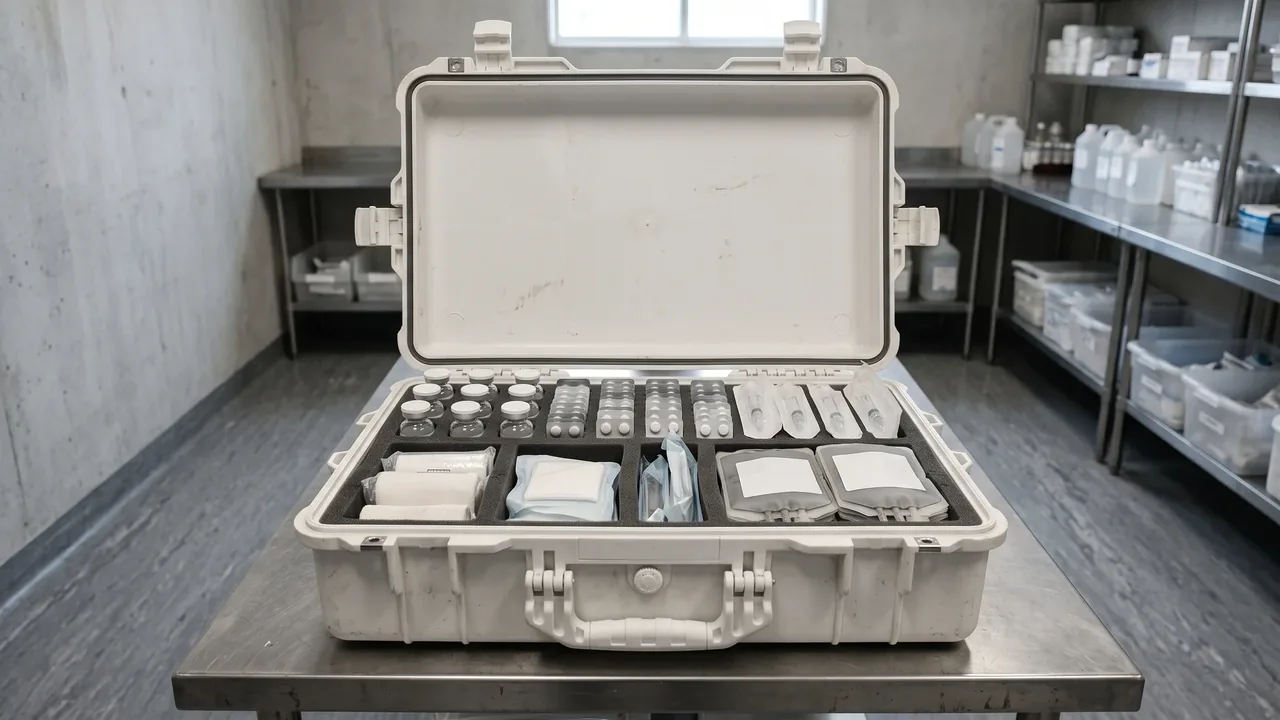
A reusable transit case program is not a purchasing event. It is an operating system that spans several departments, requires continuous measurement, and improves only through iteration. Supply chain teams really have to answer three questions: where the cases come from, where they flow, and how many trips it takes before they pay for themselves. Teams that treat returnable cases as a simple substitute for one-way packaging, without flow calculation, asset records, or reverse logistics design, often see a pilot look successful and then watch the program stall at scale as loss rates climb, cleaning falls behind, and data goes dark. Experience shows that completing flow calculation and baseline data collection first, proving the design on a single closed loop, and launching unique coding, cleaning nodes, and loss-rate metrics at the same time, produces a far higher replication success rate than rolling out widely and skipping the pilot. This guide follows the sequence of current-state audit, pilot design, case and stacking standardization, coding and asset records, cleaning and maintenance, reverse logistics, cost model, scale-up, KPIs, supplier coordination, and standards, with parameters and steps a logistics director or circular packaging team can apply directly.
1. Current-State Audit and Flow Calculation
The first step is to quantify what already exists. The audit covers the units that will circulate, the one-way packaging currently in use, the transport and warehouse nodes, and the labour hours, damage, and scrapping records tied to them. Start from the bill of materials and record six fields for every unit: part number and name, unit dimensions and weight, sensitivity, current packaging form and cost per shipment, monthly outbound frequency, and the nodes at both ends. Only with these fields filled can a team separate the units that should move to returnable packaging from those that should stay on one-way materials. Do not audit the outbound side alone. The receiving dock, the line-side buffer, and the return channel are usually where cases sit longest, and missing any of them understates the fleet size badly.
Flow calculation decides case quantity and investment. The basic formula is: average daily case flow on a lane equals the outbound frequency of the units included, multiplied by cases per shipment, multiplied by a peak factor. Take the peak factor from the busiest shipping week, typically one point three to one point six times the daily average. Multiply daily flow by the number of days in the closed loop to get the total fleet required in transit and on site. The loop cycle is the sum of transit time, handling and staging at both ends, and cleaning and inspection time. Any delay in any of these segments raises the fleet requirement and the capital tied up in it, so measure each segment before discussing purchase quantities.
Dimension modules constrain the calculation. Case outer dimensions should fall inside the rigid rectangular transport packaging series defined in GB/T 4892 and should form integer multiples of the pallet footprint in GB/T 2934, so forklifts, pallets, and racks need no modification. Where cases enter an automated warehouse or fixed racking, case height must also match the clear opening and the planned stacking tiers. For module and stacking allowance planning, see the discussion of dimension series in the stackable container standard, and move dimensional constraints to the front of selection rather than discovering a pallet mismatch after delivery.
Close the audit with a one-page decision matrix: loop radius and trip frequency on one axis, packaging cost and cargo value on the other. Units with a short loop, high frequency, and high one-way packaging cost go first. Units with a long loop, low frequency, and low value can wait. This matrix becomes both the budget argument for management and the shared language that explains the rollout order to business units, which cuts early communication cost considerably.
2. Pilot Design: One Lane, One Category, and Baseline Data
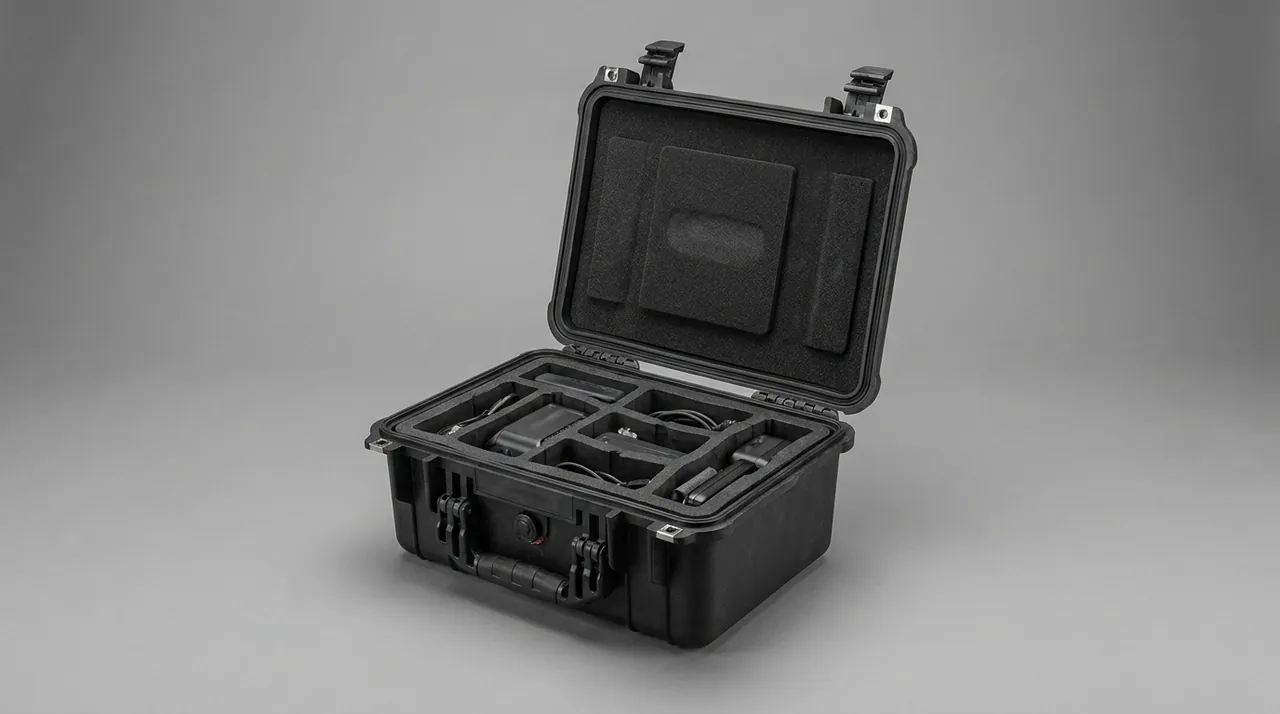
The purpose of a pilot is to expose problems at the lowest possible cost, so the design rule is the narrowest scope that still tests the concept: keep the range tight, the loop short, and the number of participants small. Choose a fixed round trip between one plant and one site, include three to five unit categories, and standardize on a single case size where possible. Resist introducing multiple sizes and multiple liner designs at the start. Limit participants to one shift at each end so handover responsibility stays traceable. An oversized pilot is the most common failure mode, because too many variables make it impossible to tell whether a problem comes from the case design, the process, or the way people work.
Collect the full baseline before switching cases, or the savings can never be proven. Five categories matter: unit price and monthly volume of the one-way packaging, packing and unpacking labour, loading and palletizing labour, transport volume and trips, and cargo damage or moisture loss. Run the collection for at least one complete business cycle, usually four to six weeks, and deliberately include a peak shipping week so the data is not flattering. Keep the baseline in one controlled table confirmed jointly by the project team and finance, so nobody later disputes the measurement basis.
Set explicit review gates after go-live. Hold an inventory count and review in week four and again in week eight, watching four curves: the gap between physical case count and theoretical fleet size, loading and handling labour per shipment, damage records for cases and cargo, and first-pass yield of cleaning and inspection. If week eight shows loss rates rising quickly or cleaning queues lengthening, correct the process node rather than buying more cases. For tracking design during the pilot, apply the ledger field structure in case asset QR code tracking so every case movement lands in a queryable data source.
Close the pilot with a written conclusion covering three points: whether the lane met the preset cost and efficiency thresholds, which process nodes must be written into standard work, and whether case size or liner needs adjustment. Without a clear conclusion, the pilot cannot support a second lane, and treating "it felt fine" as a result is the root cause of repeated rework during scale-up.
3. Case Selection and Stacking Standardization
Select cases by working backward from the load unit instead of picking a box and then deciding what to put in it. First fix the internal dimension: take the largest load unit plus cushioning and handling clearance as the lower bound, because excess internal volume lets contents shift and collide in transit. Second fix the outer dimension and its module relationship so cases arrange in clean integer patterns on the pallet with minimal footprint loss. Third fix the height, balancing centre of gravity, stacking tiers, and manual handling limits; where a loaded case exceeds a safe single-person lift, provide handling aids or split the load across two cases.
On form factor, a collapsible case returns with a small empty volume and suits lanes with unbalanced flow and longer loops, while a rigid case gives better stiffness and stacking stability on high-frequency pallet lanes. On material, injection molded cases hold tight dimensional tolerance and a consistent appearance, which suits automated lines and automated storage; rotomolded cases resist impact and scale to large sizes, which suits heavy parts and outdoor conditions. Compare the structure notes in rotomolding versus injection molding and then decide based on your own handling equipment and level of automation.
Stacking standardization is what lets returnable cases work with existing logistics equipment. A fully loaded bottom case should sustain a long-term static load of at least four times its own loaded weight without permanent deformation. The top face needs anti-slip ribs or locating bosses, and the base needs matching recesses or stack posts so multiple tiers self-align instead of relying on friction. Stack height should generally stay within four times the case short side, because a higher centre of gravity destabilizes the unit during handling and hard braking. Work through the load and pallet calculations using the approach in case stacking and pallet planning and validate static load together with pallet dimensions.
To cut administrative complexity, compress the range to two or three size families early and adapt contents with dividers or liners rather than developing a dedicated case for every cargo type. Fewer size families mean simpler stacking combinations, easier cleaning and spare parts management, and clearer loss tracing. For units needing cushioning, separation, or static dissipation, a manufacturer with engineering capability can supply molded liners and divider modules, keeping the shell a standard platform and the liner a replaceable module so a change in cargo does not force a change in case.
4. Unique Coding and Asset Ledger Traceability
The defining difference between a returnable case and one-way packaging is that the case is an asset with an identity, so unique coding underpins every management action. The coding rule should include a program identifier, case type code, batch, and serial number, giving one permanent identity per case that maps one-to-one to ledger and system fields. Apply the code by weather-resistant laser marking, screen printing, or a durable label, always on the same less-worn face so machines or people read it quickly. Once fixed, the rule should not change often, because a change breaks historical data and makes trip counts and loss rates impossible to track continuously.
Choose the reading technology from the reading scenario. QR codes cost little and print flexibly, which suits manual scanning and mobile workflows, and they fit handover, counting, and goods receipt steps where cases are confirmed one by one. RFID reads in batches without line of sight, which suits forklift lanes and gates where a full pallet must be verified quickly, and it cuts counting labour sharply, but it is sensitive to metal and liquid and needs tag selection, mounting position, and read power adjusted to avoid shielding. Most programs combine the two: a durable QR code carries the unique identity on the case itself while RFID at key gates does batch verification, with both feeding one ledger. Whichever technology is chosen, keep the rule of one permanent code per case and mount it on the same less-worn face, so a lost label never breaks the historical record.
Ledger fields determine whether data can support decisions. At minimum record the unique code, case type, issue date, current node and responsible person, accumulated trip count, most recent cleaning and inspection date, repair and replacement history, and status such as in use, under repair, awaiting cleaning, or retired. Goods receipt, transfer between nodes, and dispatch for cleaning must all post a transaction; any "move first, document later" habit corrupts the ledger. Set a variance threshold for counts and trigger a targeted investigation when it is exceeded, instead of quietly adjusting system stock to match reality.
The ledger only lives if it connects to business systems. A program that maintains a standalone spreadsheet loses touch with the floor quickly. Linking codes to warehouse and transport management documents allows the team to trace a case by route, count trips by lane, and locate cases stuck at a node. For teams running multiple lanes and warehouses, the degree of coding and ledger consistency sets the practical management radius during scale-up, a conclusion echoed in the operations chapter of the circular packaging program guide.
5. Cleaning and Maintenance Node Layout
Every returnable case passes through cleaning and inspection on its way back, so node layout determines both turnaround speed and fleet size. A centralized cleaning station needs less investment, applies one process, and enforces one inspection standard, but it adds transport and queue time. Decentralized cleaning points sit close to the work and turn cases faster, but require duplicated equipment and a disciplined common process. A common approach is a tiered layout: the main lanes feed a central station that performs deep cleaning and inspection, while end nodes only decant, dust off, and do a visual first check, which reduces deep-clean frequency without lowering cleanliness.
Define the cleaning process from the cargo carried and document it in work instructions. A typical sequence is emptying residue, pre-rinse, detergent brushing or spray, clean-water rinse, drying, and inspection. Water temperature, detergent type, and drying time should be validated, because excessive heat deforms cases and ages seals faster. Food and pharmaceutical applications also need a dedicated cleaning line and disinfection step with records kept to the applicable hygiene rules. Apply the process points in case cleaning and maintenance for food-grade applications.
Spare parts management is the other half of the cleaning node and is often overlooked. The wearable items on a returnable case are the seal, latches or catches, hinges, wheels, and handles, and these parts decide whether a case can keep carrying loads safely. Keep a small spare parts cabinet beside the cleaning station, set safety stock from actual throughput, and define repair criteria: replace a seal that has hardened or cracked, replace a broken catch, tighten or replace a loose hinge, and withdraw any case with a through-crack in the shell. Set the parts list and replenishment cycle using the classification logic in the case spare parts stocking list, basing stock levels on consumption rate rather than impression.
Write cleaning and repair records back to the ledger against the case code. The team can then analyse cleaning yield by case type, damage rate by lane, and whether a production batch shows a design defect. Without records, wear is blamed vaguely on "the floor not caring," with no way to trace it to a case type, a load condition, or a handling step, and no improvement action can be targeted. Spare parts supply deserves to be locked in early as well. A maker with OEM/ODM capability such as JUNZHIJIA can match seals, catches, and hinges to the case type and recommend a spare parts list with stock levels, so a case is not retired early simply because no matching part could be found on site.
6. Reverse Logistics and Loss Rate Control
Reverse logistics is where a returnable program separates itself from a conventional packaging project. Three models dominate. Same-vehicle return works on fixed round trips and is cheapest when the returning vehicle has spare volume. A third-party pooling provider handles open loops with many customers and nodes and takes on cleaning and dispatch. A hybrid model has the internal team run the main lanes and outsource collection at scattered end points. The choice follows the loop shape and internal control capability, not unit price alone, because reverse logistics is a substantial share of total program cost.
Handover responsibility must be drawn on the process map. Every handover records time, quantity, responsible person, and case condition, ideally by scanning so the data posts automatically. Across company boundaries, deposits, guarantees, or volume reconciliation clauses strengthen the return obligation, and the contract should state how variances are handled and compensated. On site, mark and delineate the case storage area so cases are not repurposed as general-purpose containers, which happens constantly in plants and warehouses and is a hidden driver of high loss rates.
Set and publish loss targets in stages. During the pilot, when the process is still settling, a looser threshold is reasonable. Once operations are stable, tighten it gradually and use it as a shared metric for the program team and each node. When a variance appears, check first whether the process or the system missed a transaction, then whether cases were repurposed or mis-shipped on site, and only then discuss compensation. For floor rules in logistics and warehousing, apply the site requirements in logistics and warehouse case management and fold case storage, handover, and counting into daily work standards.
The most effective loss controls are procedural rather than rhetorical. Writing the return obligation into the carrier contract, adding case counts to the driver handover sheet, and running an immediate empty-for-full exchange at high-frequency nodes all shorten the time cases spend outside controlled areas. Track dwell time per node and target the node with the longest dwell and the most frequent variances. Correcting two or three critical nodes usually lowers the overall loss rate noticeably.
7. Cost Model and Break-Even Point
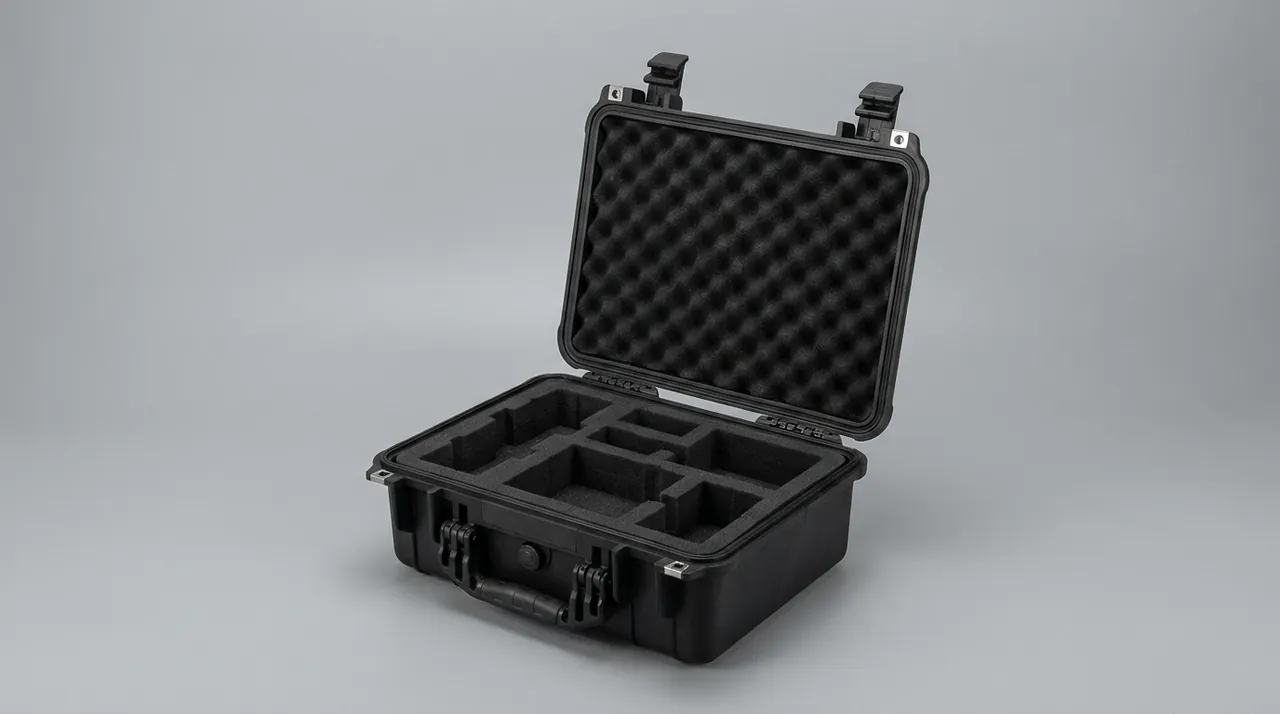
A returnable packaging cost model must be built on cost per use, not on the purchase price of a case versus a carton. Cost per use has five components: case purchase price amortized over the service life, cleaning and inspection, reverse transport, repair and spare parts, and loss and scrap amortization. The first four come from measured program data. The fifth depends on loss and scrap rates and is usually the largest source of difference between options. Add the five and divide by expected trips over the service life to get a comparable cost per use.
The break-even point reduces to a simple relationship: the program enters profitable territory when cost per use of the returnable case falls below the total cost per use of the one-way packaging it replaces. Because the case purchase is a fixed up-front investment while one-way packaging cost accumulates linearly with use, the two curves must cross, and the trip count at that crossing is the break-even trip count. Write that number down and compare it against lane flow and loop cycle to judge whether the lane can reach it within a reasonable period. Where trip frequency is too low, no amount of case quality will amortize the up-front investment.
Sensitivity analysis matters more than a single point estimate. The three most influential variables are usually whether the trip count reaches target, whether loss rate stays controlled, and whether reverse transport rides on existing backhauls. In practice, raising trip count by twenty percent or halving the loss rate moves cost per use more than shaving ten percent off the case price. Procurement effort should therefore go first into higher trip frequency, shorter loop cycles, and stronger return accountability rather than price pressure alone. Build the full total-cost framework from the structure in case total cost of ownership and confirm each basis before communicating savings.
Watch the comparison boundary. Both options must include the same scope: packaging material, disposal, packing and unpacking labour, storage footprint, and transport volume. Comparing material cost alone systematically overstates the advantage of returnable packaging, and once management finds the basis is skewed, program credibility suffers badly. Have finance and the project team confirm the model together and record the key assumptions in the program file so later reviews can trace how the basis changed.
8. Scale-Up Rhythm and Organization
A successful pilot does not produce a scaled program by itself; replication needs a repeatable method. Consolidate everything the pilot produced into a replication pack: case and liner list, dimension and stacking rules, coding and ledger fields, cleaning and repair standards, handover process and responsibility matrix, counting and variance rules, and baseline data templates. The more specific the pack, the shorter the launch time for the second lane, and the less likely that local practice differences make the data incomparable.
Sequence the rollout from near to far and from similar to different. Replicate first to lanes or business units with a similar loop shape and comparable floor discipline, leaving the most different scenarios for later. Add only one or two new variables per wave, such as one new case type or one new third-party carrier, instead of changing case design, systems, and process simultaneously. Run a short review after each wave and write new findings back into the pack so experience accumulates instead of being consumed repeatedly.
On organization, define three layers. A program owner sets targets, budget, and cross-department coordination. A circular packaging specialist runs the ledger, data, and daily operations. Node contacts handle handover, counting, and exception reporting at their own site. All three matter, and node contacts are often part-time roles inside a team, so their scope and performance link must be explicit. Otherwise all work funnels into the project team and the model collapses as soon as volume grows. For the general coordination path, see the rollout approach in the circular packaging program guide.
Change management is equally decisive. Returnable cases change what people at both ends actually do, including how they unpack, where they stage, and which documents they complete. Without training and short-term incentives, the floor drifts back to old habits. Run a practical training session before each new node goes live and keep inspection frequency high for two weeks afterwards, correcting obvious deviations early instead of discovering accumulated problems at the monthly count.
9. KPI System and Data Dashboard
Program KPIs should cover efficiency, assets, quality, and sustainability, and every metric must be readable straight from the ledger or a system. Efficiency metrics include cases per shipment, packing and unpacking labour, and vehicle volume utilization. Asset metrics include trip count, loss rate, average loop cycle, and the split between cases in use and idle. Quality metrics include cleaning first-pass yield, case serviceability, and cargo damage rate. Sustainability metrics include one-way packaging avoided and carbon footprint change. Keep the core set to eight or fewer so each metric has an owner.
Define the measurement basis before collecting data. Trip count, for example, must state whether it counts complete round trips per case in the period or cumulative movements. The loss-rate denominator must be either cases issued in the period or the theoretical fleet size. A vague basis destroys comparability between departments and lets conclusions drift with the definition. For carbon metrics, define system boundary and functional unit along the lines of ISO 14067 and include manufacturing, cleaning, transport, and end-of-life in one basis rather than reporting material weight alone. Apply the boundary method in the packaging carbon footprint guide.
Design the dashboard in tiers. The floor level watches today's handover counts and exceptions. The lane level watches loop cycle, cleaning yield, and loss-rate trends. The program level watches savings, carbon reduction, and payback progress. Align review cadence with the business rhythm, with monthly data verification and quarterly strategy adjustment. Base decisions on trends rather than single readings, which prevents a one-off change in counting basis from being misread as a change in program health.
KPIs also need a feedback loop. Every metric off target should map to a specific corrective action and owner, with the effect verified at the next review. Without that loop the dashboard becomes a display, metrics stay red with nobody acting, and the program gradually loses credibility and internal support.
10. Supplier Coordination and Contract Terms
The supplier relationship in returnable packaging is more complex than in one-way materials, because the deliverable is not just a batch of cases but ongoing service. Three purchasing models are common. Outright purchase leaves the asset with the user and gives the strongest control, but also the largest up-front investment and operating burden. Rental charges per case per day, with the supplier holding the asset, which suits light-asset starts. Pooling has the provider take on cleaning, dispatch, and repair on a per-use basis, which suits multi-node or cross-company open loops. Choose according to operating capability and loop shape, not the headline rate.
Whatever the model, the contract should cover six clause groups: case specification and acceptance criteria, service scope and response time, cleaning and inspection standards, spare parts supply and repair responsibility, compensation basis for loss and damage, and exit plus asset disposal. Compensation is where disputes concentrate, so set it in tiers by remaining value and lost quantity and define how a counting variance is confirmed and by when. Rental and pooling contracts should also state service levels and remedies, attaching the response time, cleaning yield target, and minimum available case quantity.
Supplier evaluation should go beyond price. Score four dimensions: capacity and delivery reliability, quality and completeness of test documentation, spare parts and repair network coverage, and customization and coordination capability. Test documentation completeness decides whether the program passes internal acceptance and compliance review, and it is routinely underweighted. Use the scoring structure in case supplier evaluation system and fix dimensions and weights before tendering so a single low bid cannot dominate the evaluation.
Build a joint improvement mechanism for long-term collaboration. The team and supplier can review case life, cleaning process, stacking design, and digital interfaces on a fixed cadence and feed field data back into case design iterations. This coordination usually produces more substantial cost reduction than price pressure alone, and it is the core value that separates a returnable case program from ordinary packaging procurement.
11. Standards and Test Documentation
Program technical documentation must rest on verifiable standards rather than supplier assurances. Standards directly relevant to the case itself include the rigid rectangular transport packaging dimension series in GB/T 4892, which constrains outer dimensions and modules; the general-purpose flat pallet dimensions and tolerances in GB/T 2934, which fix the case-to-pallet relationship; the GB/T 4857 series and ISTA 3E transport packaging test methods, which validate stacking, vibration, and drop performance; IEC 60529 and GB/T 4208, which define ingress protection; and ISO 14067, which frames packaging carbon footprint accounting. The technical basis of a program only holds when each indicator maps to a standard and a test condition.
Verifying test documentation takes three checks. First, relevance: the report must cover the specific case type and batch of the program, not a generic claim about a product family, or it cannot serve as acceptance evidence. Second, explicit conditions: the report must state sample condition, test conditions, and conclusion, such as the load and duration for a stacking test, the loaded mass and drop height for a drop test, and the immersion depth and time for an IP test. Third, reproducibility: sample and re-test key items at goods receipt to confirm results match the report. Set the sampling and judgement method using the process in case batch incoming inspection and record re-test results on the acceptance sheet.
Acceptance should also cover assembly and appearance details: whether the lid opens and closes smoothly, whether latches engage fully, whether the seal compresses evenly, whether stacking self-aligns, and whether markings and codes stay legible and durable. For configurations with wheels, liners, or dividers, verify fastening and interchangeability item by item. Any failure here becomes downtime and rework cost during operation, and one rigorous re-test at acceptance is far cheaper than ten corrections later.
On customization, a manufacturer with engineering experience can supply molded liners, divided compartments, printed markings, and code application, and can match seals and wear parts to the case type. In the JUNZHIJIA practice, for example, the program team submits the load unit list and access-path requirements at selection stage, and the supplier returns a liner proposal together with the list of test documents it can provide, followed by prototyping and finalization. Where several business units need a unified appearance, colour management and marking rules can enter the OEM/ODM scope as well, so the case serves both load handling and asset identification. This kind of coordination turns a general container into an operating tool fitted to the process; use the parameters in case custom foam factors for liner and process selection.

12. Risk Register and Common Failure Modes
Returnable packaging programs rarely fail for a single reason; they fail because several small deviations accumulate. The most typical risk is an oversized pilot that mixes too many case types, nodes, and cargo categories so the data cannot be attributed. The second is incomplete baseline data, which leaves the program unable to prove savings and gradually erodes budget and organizational support. The third is a ledger that drifts from reality, so paper quantity and physical quantity stay apart for months and loss statistics lose meaning. The fourth is cleaning capacity that lags the issue rate, so cases queue at nodes, the fleet must be enlarged, and payback stretches out.
A second group of risks is organizational. Returnable packaging spans purchasing, logistics, warehousing, production, and finance. Without a named program owner and a decision mechanism, delay in any one function translates into an overall slip. A third group is commercial, including vague compensation terms, unquantified service levels, and undefined exit conditions, all of which can trigger disputes or a mid-program stop. The fourth group is technical: a case that does not match the pallet, a stack height that destabilizes the unit, or a liner that does not limit cargo properly. These problems usually appear together in the first one to two months after go-live.
Against these risks, prepare a countermeasure list at kickoff: set a scope boundary the pilot may not exceed; name an owner and a deadline for baseline collection; put ledger accuracy into node performance metrics; configure cleaning capacity in step with the issue rate; write compensation terms and service levels into the contract and stress-test them; and validate stacking and transport physically before go-live. Fold the management framework in the green supply chain guide into program documents so efficiency, cost, and compliance stay under control together.
Maintain the risk register as a living document. Update it after every replication wave, adding newly observed deviation types and closing items that have stabilized. After three or four waves the team holds a risk map fitted to its own business, which is worth more than any generic template.
13. Maintenance, Renewal, and Retirement Recycling
The maintenance system sets the long-run cost curve of the program. Organize it in three tiers. Daily, the floor performs a visual check during handover, looking at catches, handles, wheels, and shell cracks. Weekly, the cleaning node performs cleaning and a functional check of seals, hinges, and stacking features. Quarterly, the program team samples cases for load and stacking verification, recording deformation and aging trends as the basis for batch replacement. Records from all three tiers post back to the ledger so the condition of every case stays traceable.
Renewal and retirement need written criteria rather than floor judgement. Withdraw a case when any of the following occurs: a through-crack or visible deformation that compromises stacking stability; a latch or catch failure that cannot be repaired; a case that no longer self-aligns when stacked and poses a toppling risk; or a case that cannot meet the hygiene requirement of its cargo after cleaning. Retired cases should not be discarded casually; sort them by material, establish a stable reuse channel, and let the sustainability value of returnable packaging show across the whole life cycle rather than only in the use phase. Apply the classification approach in case recycling and reuse.
Design iteration matters as much as retirement. After several waves the team usually knows which case types wear fastest, which nodes concentrate damage, and which liner designs keep failing. Feed those conclusions back to the supply side to improve wall thickness, reinforcement ribs, latch structure, and liner design, so the next purchase fits real operating conditions better and extends the life cycle while lowering cost per use. This step tests the engineering responsiveness of the supply side, and the custom liner program and prototyping process at JUNZHIJIA can serve as a reference model for that kind of collaboration. The competitiveness of a returnable program ultimately shows up in this ability to iterate continuously.
Over a longer horizon, maintenance and retirement data also support compliance and disclosure. Accounting for packaging reduction, recovery ratio, and carbon emissions requires a verifiable ledger. Folding maintenance, retirement, and recycling records into the data system supports internal management and lets the team produce documentation when needed, giving the program a real data foundation for environmental compliance and ESG reporting.
FAQ
Q: Where should a reusable transit case program start?
A: Start with a current-state audit and flow calculation, not with case selection or price comparison. First build the unit list and record six fields for each item: part number, dimensions and weight, sensitivity, current packaging form and cost per shipment, monthly outbound frequency, and the nodes at both ends. Once the data is complete, decide which units can move to returnable packaging. Second, calculate flow: multiply the outbound frequency of included units by cases per shipment and then by a peak factor to get average daily case flow, then multiply by the days in the closed loop to size the fleet. Third, build a decision matrix of loop radius and trip frequency against one-way packaging cost and cargo value to set the rollout order. Only after these three steps can the team present a credible case quantity and investment figure and defend the payback period in a budget review. Skipping the audit usually produces a case that does not match the pallet and a fleet size unrelated to real flow, which shows up as idle or short supply during the pilot itself.
Q: How should the pilot lane and observation period be set?
A: Follow the narrow-scope, short-loop, few-participants rule. Choose a fixed round trip where one shift handles both ends, include three to five unit categories, and standardize on one case size, avoiding multiple sizes and liners at the start. Collect baseline data over four to six weeks including one peak shipping week, then observe for at least eight weeks after the switch, with a count and review in week four and week eight. Define the decision gates in advance: if week eight shows a fast-rising loss rate or lengthening cleaning queues, fix the process node instead of buying more cases. An oversized pilot is the most common failure mode, because too many variables leave the team unable to tell whether a problem comes from the case design, the process flow, or operator habits, which removes the value of exposing problems at small scale. Keep a written scope boundary so a request to add one more lane or one more case type mid-pilot is answered with a scheduled second wave rather than immediate expansion, and record the actual dates of every review so the sequence stays auditable when management asks how the pilot conclusion was reached.
Q: Which parameters must be fixed in stacking standardization?
A: Four groups. First, dimension modules: outer dimensions should fall inside the GB/T 4892 series and form integer multiples of the GB/T 2934 pallet footprint, so forklifts and racks need no modification. Second, stacking structure: anti-slip ribs or locating bosses on the top face with matching recesses or stack posts on the base, so multiple tiers self-align instead of relying on friction. Third, load capacity: a fully loaded bottom case should sustain a long-term static load of at least four times its own loaded weight without permanent deformation. Fourth, height limit: stack height should generally stay within four times the case short side, so the centre of gravity does not destabilize the unit during handling or hard braking. Write these four groups into the technical specification and work standards, and validate once with physical stacking and transport testing before go-live so no deformation or toppling appears under real conditions. Because these parameters interact, changing one usually forces a review of the others, so freeze them before the case drawing is released and treat any later change as a formal engineering change with a re-test rather than a field adjustment.
Q: How should QR codes and RFID be chosen?
A: Choose from the reading scenario rather than from technical sophistication. QR codes are inexpensive and print flexibly, which suits manual scanning and mobile workflows at handover, counting, and goods receipt, where cases are confirmed one at a time. RFID reads in batches without line of sight, which suits forklift lanes and gates where a full pallet must be verified quickly and counting labour must be cut sharply, but it is sensitive to metal and liquid and needs tag selection, mounting position, and read power adjusted to avoid shielding. The economical pattern for most programs is combined use: a durable QR code carries the unique identity on the case while RFID at key gates performs batch verification, with both feeds landing in one ledger. Whichever technology is used, keep one permanent code per case mounted on the same less-worn face so a lost label never breaks the historical record. Test the chosen technology on the real cargo before committing, because read performance on a full pallet of metal parts or liquid containers is very different from read performance on an empty case in a meeting room.
Q: Should cleaning be centralized or decentralized?
A: It depends on loop shape and volume, and most programs land on a tiered layout. Main lanes feed a central station that performs deep cleaning, disinfection, inspection, and repair, which keeps the process uniform, uses equipment efficiently, and enforces one inspection standard. End nodes only decant, dust off, and do a visual first check, which lowers deep-clean frequency without reducing cleanliness. To decide whether a node needs its own cleaning capability, compare three costs: transporting cases from that node back to the central station, the fleet growth caused by queue time, and the duplicated investment in local equipment. When a node handles enough volume and backhaul is inconvenient, decentralized cleaning is more economical; otherwise central cleaning is easier to keep consistent. Document the process in work instructions with water temperature, detergent, rinse, and drying time, and give food and pharmaceutical use a dedicated line with records. Whatever layout is chosen, keep one written standard so a case cleaned at an end node and a case cleaned at the central station are both acceptable to the receiving customer.
Q: What loss rate is reasonable to target?
A: There is no universal number; a reasonable target is staged and matched to process maturity. During the pilot, when the process is still settling, set a looser threshold to observe the trend. Once operations stabilize, tighten it gradually and make the loss rate a shared metric for the program team and each node. The handling sequence matters more than the number itself. When a variance appears, check first whether the system missed a transaction or a handover document, then whether cases were repurposed or mis-shipped on site, and only then discuss compensation. Experience shows that writing the return obligation into the carrier contract, adding case counts to the driver handover sheet, and running an immediate empty-for-full exchange at key nodes all shorten the time cases spend in uncontrolled areas, and the loss rate usually drops noticeably after correcting a few critical nodes rather than by adding administrative headcount. Publish the target so every node sees the same number, and review the trend monthly instead of waiting for the annual program review.
Q: How is the break-even point in the cost model calculated?
A: Unify the basis to cost per use before comparing. Returnable cost per use has five components: case purchase amortized over service life, cleaning and inspection, reverse transport, repair and spare parts, and loss and scrap amortization. Add the five and divide by expected trips to get cost per use. One-way packaging cost per use consists of material, disposal, packing and unpacking labour, volume occupation, and damage loss. Because the case purchase is a fixed up-front investment while one-way cost accumulates linearly with use, the two curves must cross, and the trip count at that crossing is the break-even trip count. Compare that number against lane flow and loop cycle to judge feasibility within a reasonable period, and run a sensitivity analysis, which usually shows that trip count, loss rate, and access to backhaul capacity move the result far more than the case price itself does. Revisit the model once a year with actual trip and loss data, because assumptions made at kickoff rarely survive the first full season of operation.
Q: Which step fails most often during scale-up?
A: The most common failure is an incomplete replication pack combined with missing organizational roles. The pack should contain the case and liner list, dimension and stacking rules, coding and ledger fields, cleaning and repair standards, handover process and responsibility matrix, counting and variance rules, and baseline data templates. Missing any item stretches launch time and makes lane data incomparable. On organization, three layers are required: a program owner who sets targets and coordinates across departments, a circular packaging specialist who runs the ledger and daily operations, and node contacts who handle handover and exception reporting at their site. Without node contacts, all work funnels into the project team and the model cannot support growth. Returnable cases also change daily work at both ends, so without training before go-live and intensive inspection for two weeks afterwards, the floor drifts back to old habits and the savings never persist.
Conclusion and Further Reading
A reusable transit case program succeeds when cases are run as assets with identity, a ledger, and a maintenance regime rather than as a one-off purchase. Quantify current flows, prove the design on one closed loop, expand lane by lane with a replication pack, and bring coding, cleaning, and loss metrics online together. For the wider operating and accounting framework, see the circular packaging program guide and case total cost of ownership.