

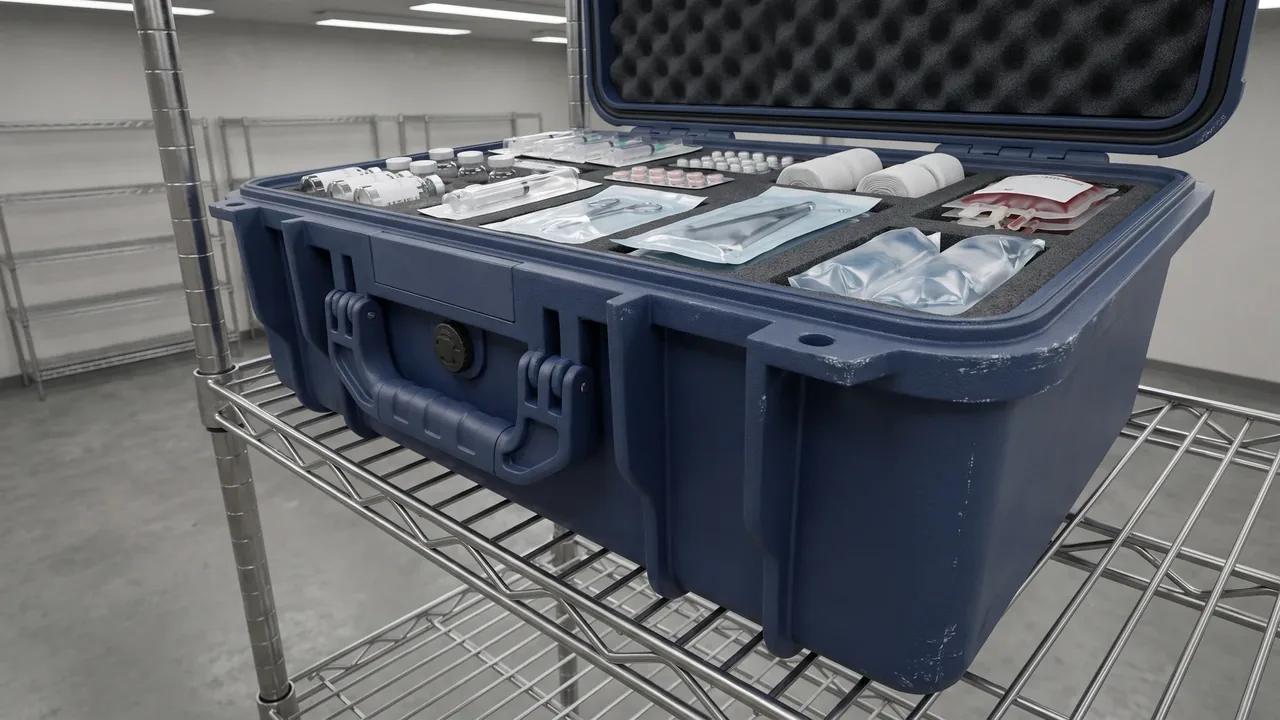
In industrial logistics and equipment support, single-use corrugated boxes and wooden crates are steadily being replaced by rigid containers that are stronger and longer-lived. A circular packaging protective case is a hard reusable container engineered for many round trips inside a closed-loop logistics system; its body is integrally molded from engineering plastic or metal by injection or rotomolding, paired with a gasket, latches, interior lining and identification system, and used repeatedly to carry instruments, components, gear and supplies along a managed circuit. The core value of a circular packaging protective case is that it converts the linear "buy-and-discard" model of single-use packaging into a closed loop of lease, recover, wash and reuse, so that a single unit can circulate dozens or even over a hundred times in its service life, driving per-trip cost well below that of single-use cartons while keeping damage, moisture and loss rates inside a controllable band. Building a standardized turnover system around such cases has become a shared choice across automotive parts, precision electronics, medical supplies and military or police support. This article walks through fourteen dimensions - definition, economics, materials, structure, sealing, lining, hardware, identification, washing, verification, certification, comparison, deployment and customization - to explain how to select and operate a circular packaging protective case system.
1. Definition and Positioning of the Circular Packaging Protective Case
A circular packaging protective case is a rigid container designed for repeated transit. Its body is molded in one piece from engineering plastic or metal, and it is fitted with a seal, latches, an interior cushion and an identity label so it can carry instruments, parts, equipment and materials again and again inside a closed circuit. The biggest difference from a single-use carton is not appearance but intent: from the first design sketch the case is defined as a measurable-life fixed asset rather than a consumable. In the turnover system every unit carries a unique identity code and circulates between suppliers, warehouses, production lines and recovery points, scheduled, washed and repaired by a dedicated operator.
From a circular-economy perspective the case internalizes the external cost of packaging: the cartons that many receivers would each throw away become a centrally managed, repeatedly used asset. Its position sits between a simple storage bin and a transport wooden crate - it stresses stacking strength, shock isolation and sealing more than a bin, yet emphasizes lightweight, washability and traceability more than a crate. Common forms include lidded totes, collapsible totes, wheeled transit cases and cavity-lined precision instrument cases. The overall program path is described in the reusable transit case program guide.
In military, police and emergency support, circular packaging protective cases also carry reserve stocks, maintenance spares and medical kits in modular packs, enabling whole-pallet stacking and whole-case counting to cut open-box tally time. The case does not replace all single-use packaging; rather it builds a reliable container base for high-value, high-frequency, high-cleanliness loops.
2. The Economic Basis of Reusable Cases (Life-Cycle Cost)
Whether a circular packaging protective case pays off cannot be judged on purchase price alone; the cost must be amortized by life-cycle cost (TCO) down to each trip. A typical rule-of-thumb formula is: per-trip cost approximately equals (case purchase price plus amortized tooling and labeling) divided by planned trip count, plus per-wash energy and labor, plus empty-box return freight, plus annualized repair and spare parts. Once the planned trip count exceeds about thirty, the per-trip cost of most sizes already falls below the combined cost of an equivalent single-use carton plus stretch film, desiccant and cushioning. When trips rise to eighty or over a hundred, the unit-cost advantage widens further.
The economy only holds if the closed-loop rate is high enough. The loop rate is the share of issued cases that are actually recovered and reused; if many cases sit at customer sites, get repurposed or go missing, the cost spread across the remaining cases climbs fast. Therefore the model must also input loss rate, average dwell days and return radius. Experience shows the most cost-efficient loops are managed by a dedicated scheduler within roughly two hundred kilometers; cross-region, long-radius loops need higher trip counts or denser nodes to absorb empty-backhaul cost.
Beyond direct purchase comparison, count hidden gains: cartons soften and collapse in humidity, causing cargo loss and claims; wooden packaging needs phytosanitary treatment and crossing borders adds compliance cost. Because the case body is washable and reliably sealed, cargo loss and quarantine risk drop. For companies that disclose emissions, combine the method in the packaging carbon footprint guide to replace one-way manufacture-and-discard emissions with amortized multi-cycle emissions for a better carbon account.
3. Case Body Materials: Engineering Plastics and Recycled Content
The most common body materials for a circular packaging protective case are polypropylene (PP) and high-density polyethylene (HDPE), both with good impact, acid-alkali and weldability. PP is stiffer with a wider temperature span, suiting heavier parts that must hold shape; HDPE is tougher with better low-temperature impact, suiting northern or cold-chain scenes. Premium models use copolymer PP or glass-fiber-modified composites for stiffness. For lightweight aviation or individual-carry scenes, a composite material protective case or carbon-fiber structure can be chosen, at clearly higher cost.
Recycled content (PCR, post-consumer or industrial recycled) is a defining feature of circular packaging. Using a controlled ratio of recycled material in non-load-bearing parts cuts virgin plastic without breaking overall performance. Experience suggests the main load-bearing shell stay mostly virgin, with recycled content in the ten to thirty percent band and verified for melt-flow, impact and color consistency; liners and dividers can carry higher recycled ratio. Whether virgin or recycled, the body must meet the restricted-substance list in chemical compliance for cases to avoid phthalates, heavy metals and brominated compounds exceeding limits.
Material choice also covers weathering and flame retardancy. Outdoor long-exposure bodies need UV stabilizer and antioxidant to slow yellowing and brittlement; cases moving electronics or near electrical equipment should reach a UL 94 rating (such as V-2 or V-0) with the test method and sample thickness stated. JUNZHIJIA can supply material-source declarations and batch-consistency test files for recycled-content cases, easing the buyer's compliance archiving and audit trail.
4. Body Structure and Stacking Load
A circular packaging protective case is stacked in warehouses and trucks, so structural stiffness sets the safety ceiling. Key designs are even wall thickness, external reinforcement ribs, four-corner stacking load structures, and a locating tongue between lid and base. Experience puts injection walls at two point five to four millimeters and rotomolded walls at five to ten millimeters; thicker walls raise unit weight, so strength and self-weight must be balanced. Ribs run grid or longitudinal to lift bending stiffness without letting large flat faces cave under negative pressure.
Stacking load is stated separately as static stack load and dynamic transit load. Static is the total weight the bottom case bears at rest, with a typical three-to-one safety factor; dynamic is the equivalent load per layer under vibration and braking, usually a two-to-one factor. Design should use FEA to find stress concentrations and then validate with a protective case stacking test. The stacking corners (bosses or inserts) on base and lid must align so load travels vertically to the floor, not onto latches or sidewalls.
Structure must also fit standard units. Prefer outlines that align with EUR or GB pallets (such as twelve-hundred by one-thousand or twelve-hundred by eight-hundred millimeters) so whole pallets stack without overhang or skew. See the stackable container standard for stacking strength and space efficiency, and the protective case stacking guide for layer height and pallet planning, folding single-case design into the whole-pallet system.
5. Sealing and Dust-Water Rating
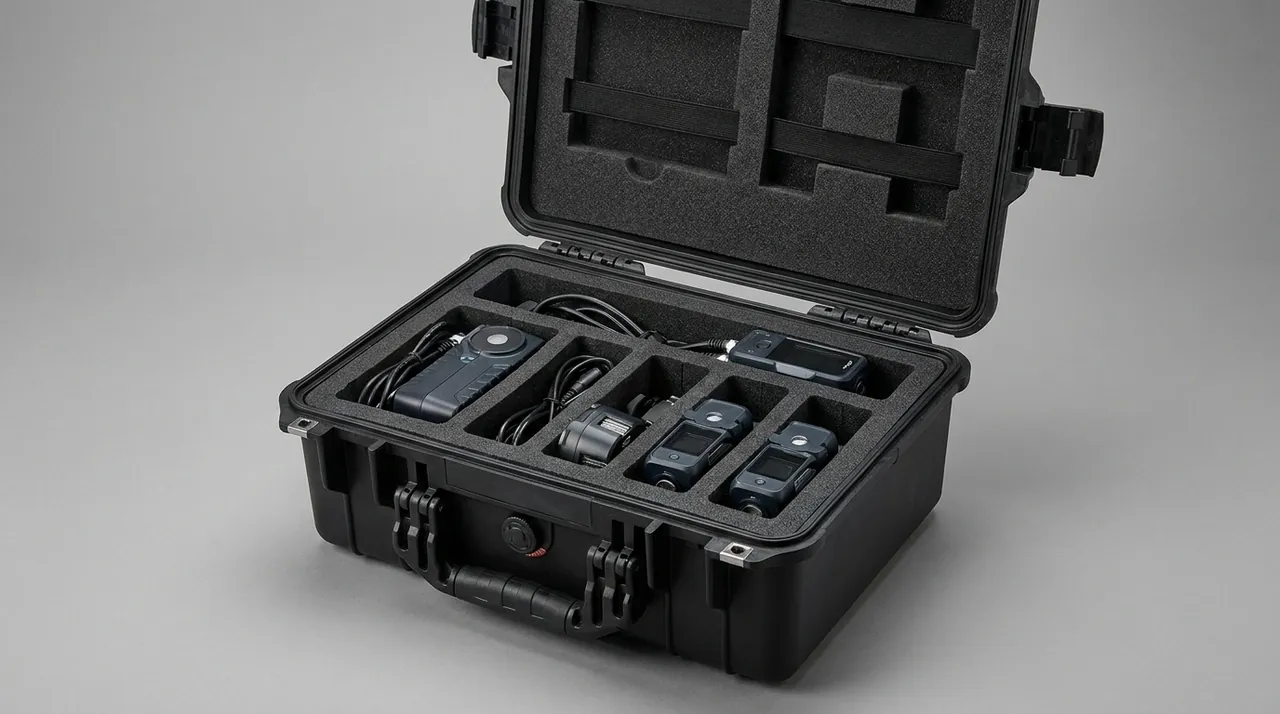
On cross-plant, cross-border and outdoor loops a circular packaging protective case meets rain, spray and high humidity, so seal rating is a hard selection item. China follows GB/T 4208, aligned with IEC 60529, using the IP code for dust and water. IP65 means dust-tight and protected against low-pressure water jet; IP67 means dust-tight and immersion to one point five meters for thirty minutes; IP68 means no ingress under deeper, longer conditions agreed by the maker. For water-float or high-pressure wash scenes, see the protective case IP68 rating and protective case IP67 vs IP68 for graded selection.
Sealing relies on an elastic gasket in the lid channel. Common materials are EPDM, TPE and neoprene; EPDM excels in weathering and ozone for long outdoor use, while TPE is more recyclable and fits the eco positioning of circular packaging. Control the gasket compression: too loose leaks, too tight ages fast and raises closing force. After closure the gasket should sit in controlled compression and be verified by a protective case water immersion test. Structural detail is in the case seal strip guide.
Note that an IP rating describes only the body's dust-water ability, not full interior climate control. Humidity-sensitive loads still need desiccant, humidity indicator cards or active dehumidification, and the gasket must be checked for deformation, dislodging or dust at return to keep the rating.
6. Interior Lining and Cushion System
The interior lining decides how precisely the cargo is positioned and how well it is isolated from shock. Circular packaging protective cases mostly use polyurethane (PU), polyethylene foam (EPE) or EVA, cavity-cut or compartmented to the part shape. The closer the cut, the less in-transit shift; for multi-piece kits use one-slot-one-item layout to avoid knocking. For irregular or varying batches, use the cavity-cut solution in the custom foam lining guide or the pick-and-pluck foam guide to carve slots yourself.
Cushion design controls peak acceleration at the cargo. Experience keeps peak g from transit vibration and drop below a threshold set by the cargo fragility; foam thickness, density and cut shape together set energy absorption - too low density gives large permanent set, too high loses resilience. Medical and food-contact scenes also need low-odor, low-emission lining; see the eco-friendly lining material guide for low-odor foam to avoid contaminating loads or hurting cleanliness.
The lining must also survive reuse. Repeated handling wears slot walls, so thicken or overlay wear-resistant layers at hot spots; when slots no longer fit a new part, replace the liner module instead of scrapping the whole case - this is exactly the circular logic of long-life body and replaceable lining.
7. Latches, Hinges and Pressure-Equalization Valve
Latches decide closure reliability and theft resistance. Circular packaging protective cases commonly use press latches, butterfly latches and 316 stainless multi-point locks that resist salt spray and accept seals or padlocks. Latch life is measured in open-close cycles; quality latches reach tens of thousands of cycles in experience, so select per the case latch guide and verify with the latch cycle life testing method, logging cycles into the asset record.
Hinges link lid and base and concentrate load. Prefer embedded metal-pin hinges or integrally reinforced hinges over thin plastic live hinges that crack under long heavy use. When a case moves from cold high altitude to warm low altitude, or through aircraft hold pressure differences, the internal-external pressure gap makes the lid hard to open or even damages the seal; fit a pressure equalization valve to balance pressure while staying waterproof. Related hardware is in the protective case accessories guide covering wheels, handles and valves.
For sealed loops the latch should have a seal hole so each issue and return can verify seal integrity, preventing mid-route opening or substitution. The seal number is logged with the case identity to build a traceable flow record.
8. Identification and Asset Management: QR and RFID Tracking
As a measurable asset, a circular packaging protective case must be one-case-one-code. Common practice embeds a durable label zone on lid or sidewall, printing a QR code or adhering a tear-resistant RFID tag linked to model, serial, owner, cumulative trips and last service date. A scan calls the full-life archive, closing the issue, recover, wash, repair and retire states. Implementation is in the case asset QR code tracking and case labeling asset tracking guides.
The label itself must survive the loop: outdoor fade-proof, friction-proof, wash-proof. Use laser-engraved or weatherproof-ink QR; encapsulate RFID inside the body or under a cover to avoid metal-rack shielding or wash loss. Content must also meet the packaging labeling compliance guide for label content and printing, adding recycle marks and material codes where useful for end sorting.
The asset system turns "where is the case, what state" into decisions. Through recovery rate, average cycle, dwell at each node and repair frequency, the operator finds dwell points, tunes recovery routes and forecasts spares, lowering loss and lifting loop rate so the section-two economy truly holds.
9. Washing, Disinfection and Return Flow
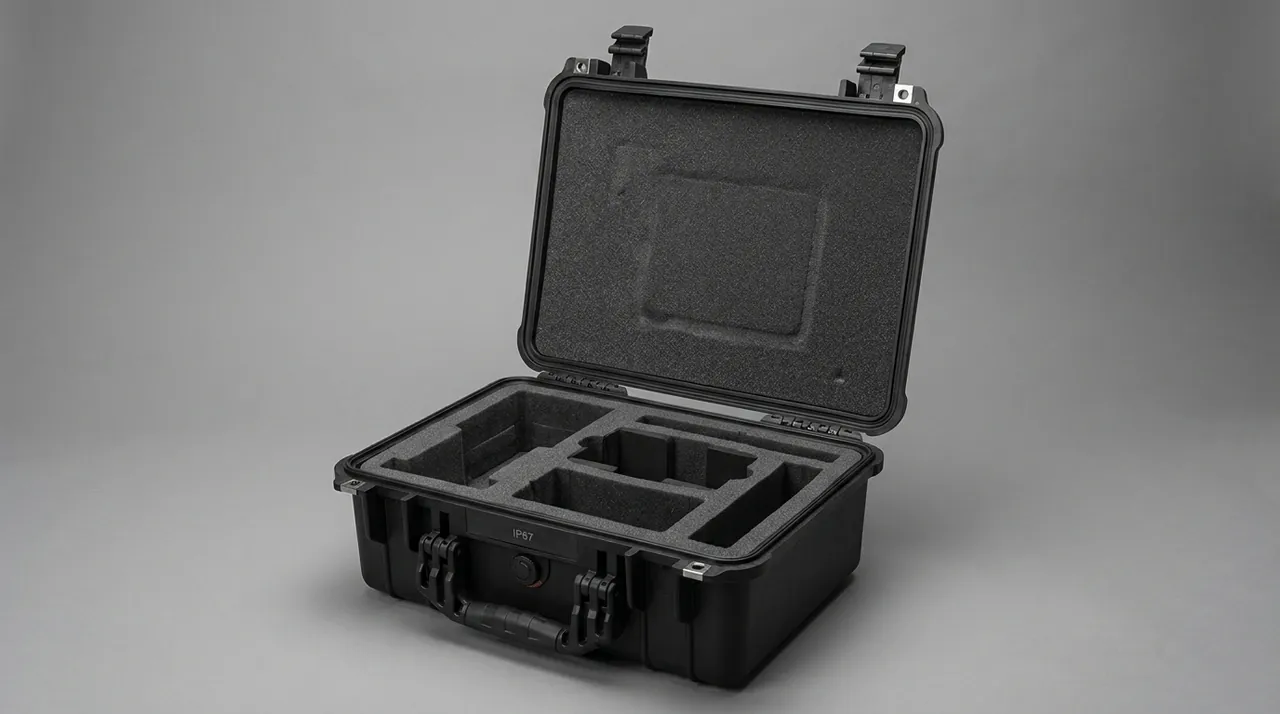
A circular packaging protective case must be washed after every recovery or it cross-contaminates the next load with dust, oil or bio residue. Standard return flow: empty recovery, dump residue and pre-check, water or neutral-detergent rinse, local treatment of stubborn stains, clear-water rinse, drain or low-temp dry, appearance and seal check, then into good stock or repair. Food, medical and lab scenes also disinfect after wash and keep wash records for traceability. Method is in the protective case cleaning guide.
Wash design feeds back into body structure: rounded inner corners rinse cleaner than right angles, smooth walls hold less soil than rough texture, removable liners clean more thoroughly than fixed ones. So "is it easy to wash" should be a front-loaded selection condition, not an afterthought. Wash temperature and agents must suit the material; PP and HDPE resist common neutral cleaners but avoid long contact with strong solvents that cause stress cracks.
Return check is the key life-management node. After each wash, visually check gasket seating, latch binding, cracks or deformation, and log against the asset file. Cases hitting the repair threshold go to the protective case maintenance guide to replace gasket or latch, avoiding sick reuse and cargo loss.
10. Trip Count and Life Verification: Drop, Vibration and Salt Spray
The claimed "dozens of trips" must be supported by tests, not guessed. Routine verification has three types: first a protective case drop test per GB/T 4857 or ISTA, free-falling from a set height to check for shell crack, latch loosening or liner failure; second a protective case vibration test on a shaker simulating road and rail random spectra to assess fatigue and cargo shift; third a salt-spray corrosion test for metal latch and hinge durability in coastal or humid use.
Military or high-reliability scenes can cite MIL-STD-810H methods for combined temperature, vibration and drop, placing the unit under stresses closer to real missions. Though circular packaging is mostly industrial, its verification logic matches general protective-case standards: define the duty, pick the method, then judge by failure criteria. Stress that a "pass" means the sample passed that duty, and real life still depends on use intensity and maintenance, so state conclusions as empirically verified values, not promises.
To turn verification into management, set a sampling re-test system: after a fixed trip batch or time, re-test a share of in-service cases on key items, plot the decay curve and set a forced-retire threshold. This keeps safety while avoiding "replace before broken" waste, extending the eco intent.
11. Standardization and Certification: CE, RoHS, REACH and UL 94
Circular packaging protective cases entering the EU or multinational supply chains need conformity files. The CE mark shows compliance with EU essential health-safety requirements; cases usually fall under general-product or machinery-related frameworks, with the path in the protective case CE certification guide. On chemicals, electronics-related loops need RoHS restricted substances, while general chemicals watch REACH declaration and supply-chain information, detailed in the chemical compliance for cases guide.
On flame retardancy, if the case carries or sits near electrical equipment, the shell should reach a UL 94 rating (such as HB, V-2, V-0) with sample thickness and extinction time stated. Material safety also references the recycled material protective case guide for recycled-plastic compliance boundaries, keeping sources traceable and substances within limits. For EU export, also watch the EU packaging directive for cases and EPR compliance for cases registration duties.
JUNZHIJIA, when taking a custom circular packaging project, can supply material declarations, flame-rating reports and restricted-substance declarations to help the buyer pass onboarding audit and annual compliance review, lowering the bar for cross-border and multinational supply chains.
12. Comparison with Wooden Packaging and Single-Use Cartons
Single-use corrugated cartons are cheap, one-way and need no recovery, but soften when wet, vary widely in strength, cannot be traced and generate large paper and film waste. Wooden packaging carries heavy and odd shapes yet needs phytosanitary treatment and fumigation marks per the wood packaging quarantine case guide, plus an phytosanitary certificate across borders, and wood splinters and cannot be washed. The circular packaging protective case sits between: higher upfront for dozens of reuses, washable, traceable and stable in rating.
On reduction, replacing cartons with rigid totes is the classic packaging reduction design path, cutting pulp use and disposal; for loops that used wood, the wooden case alternatives guide evaluates replacement conditions. Objectively, circular packaging is not always optimal: low-frequency, long-distance, one-way flows may see empty-backhaul erase reuse gain, so single-use stays economic there.
Decide by flow traits, not ideology. High-frequency, short-radius, high-value or high-cleanliness loops favor the circular case; low-frequency, one-way, low-value, hard-to-recover flows keep single-use or pilot only locally. The art of system building is to classify by loop, not replace all at once.
13. Deployment Scenes: Automotive, Electronics, Medical and Support
In automotive manufacturing, circular packaging protective cases run parts loops between plant and suppliers: engine parts, electronic modules, glass and panels are cavity-located, moved by AGV and trailered between lines, with empty boxes towed back, washed and reissued. Gains are zero carton waste, zero part knocks, whole-case counting. In precision electronics, cases pair anti-static lining and sealing to carry boards and sensors, lowering open-box defect. The whole operation references the reusable transit case program guide from pilot to scale.
Medical and lab scenes stress clean and traceable: reagents, consumables and samples turn over in a laboratory sample transport case guide structure, washed and disinfected and scanned each time for an auditable chain. Military, police and emergency support load reserve stocks, spares and medical kits into standardized circular cases for whole-pallet stacking and rapid launch. JUNZHIJIA can provide part-shape custom lining and compartment plans plus optional seals and asset codes so the case fits the existing flow directly.
A shared premise of deployment is interface standardization: case size aligns to pallet, label aligns to asset system, lining aligns to part list. Only when the three are defined together at design does the circular packaging protective case truly enter the turnover system instead of becoming another isolated container.
14. JUNZHIJIA Customization and Selection Advice
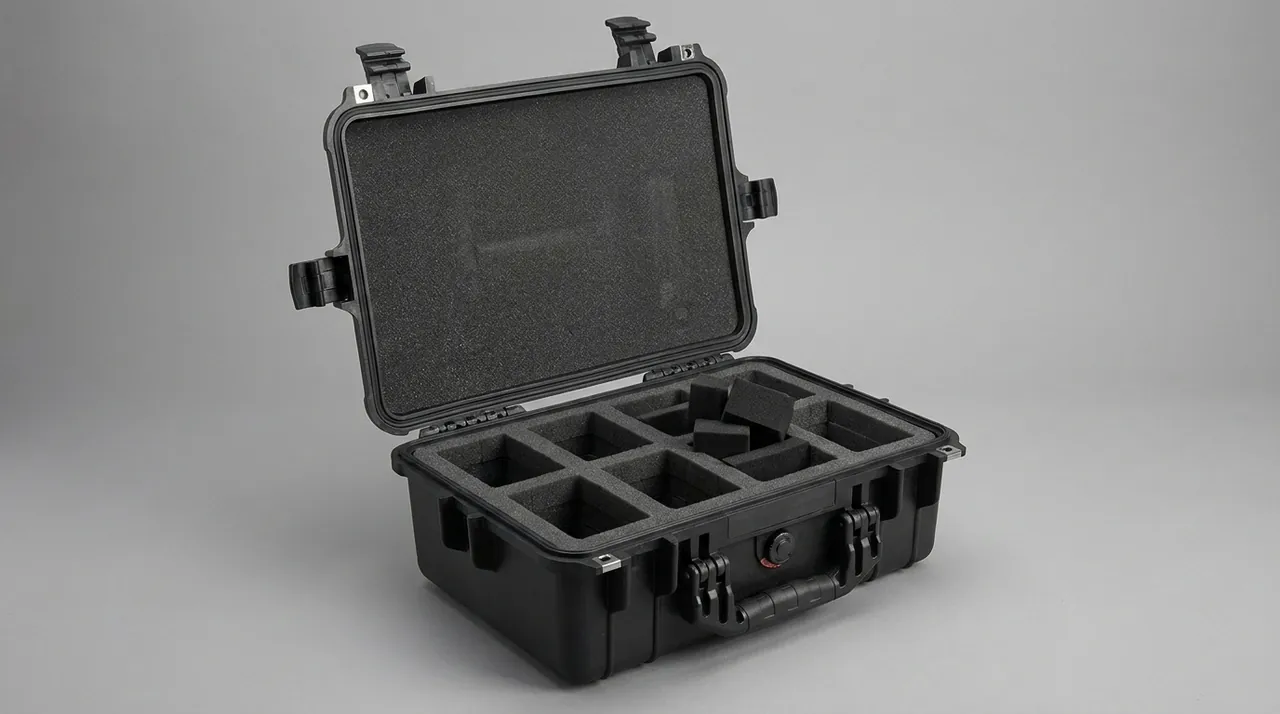
Build a circular packaging protective case system in five steps: flow inventory, duty definition, sample verification, small-batch pilot, scale rollout. First inventory flow frequency, radius, value and cleanliness to find reuse-fit loops; then define duty such as stack height, temperature-humidity, vibration and seal rating; then make a sample and verify by drop, vibration and seal tests; in pilot watch recovery rate and dwell days; finally decide scale-up by data. At selection, write wall thickness, gasket material, lining form and label plan into the spec.
JUNZHIJIA integrates injection and rotomolded bodies, custom foam lining, and latch and valve accessories, takes OEM/ODM custom work, fits seals by model and supplies material and test files to help the buyer archive compliance across borders. For operators wanting lower upfront, evaluate a lease or buy-back model from the maker so asset responsibility is clearer.
Finally, the result depends on system, not single unit. Even the toughest case, without recovery scheduling, washing capacity and an asset system, becomes idle yard stock. Only by binding container, process and data can the circular packaging protective case keep delivering cost, cargo-loss and carbon triple gains and truly build a reusable turnover system.
FAQ
Q: What is the essential difference between a circular packaging protective case and an ordinary storage bin? A: The essential difference is design intent. An ordinary storage bin is built for static keeping and rarely must meet multi-layer stacking, transit vibration tolerance or washable recovery; a circular packaging protective case is designed from the start as a measurable-life circulating asset that must satisfy five requirements at once - stacking strength, dust-water sealing, shock lining, washability and traceability - backed by a unique asset code and a recovery flow. Even when they look alike, they differ sharply in wall thickness, latch cycle life, gasket compression set and identification system. A bin may use thin single-wall plastic and a friction lid; a transit case uses reinforced corners, a compression gasket channel and metal or composite latches rated for tens of thousands of open-close cycles. Buyers should ask the maker for stacking and drop test reports to confirm the unit was engineered for transit duty, not merely static storage. Only cases meeting circulating duty suit a closed-loop turnover system for long-term reuse, and only they deliver the per-trip cost, cargo-loss and carbon gains that justify the higher upfront investment over disposable packaging.
Q: How do I judge whether a flow fits conversion to a circular packaging protective case? A: Judge by four parameters: trip frequency, return radius, cargo value and cleanliness need. High-frequency, short-radius, high-value or high-cleanliness loops fit best, because high trip counts, low empty-backhaul cost and costly cargo loss make the economy easiest to prove. Experience shows planned trips above thirty already match the combined cost of single-use cartons plus film, desiccant and cushioning. Conversely, low-frequency, one-way, long-distance and hard-to-recover flows let empty backhaul erase the reuse gain, so keep single-use or pilot only locally. Before committing, run a flow inventory: grade each loop by those four parameters, estimate the closed-loop recovery rate, and then sequence conversions starting with the strongest loops. A small-batch pilot of four to eight weeks should track recovery rate, dwell days and wash cost per trip, giving real numbers rather than assumptions. Avoid blanket replacement that strands assets; classify by loop and scale only where the data supports it. This disciplined scoring prevents over-investment in loops that will never pay back and keeps the rollout focused on proven value.
Q: Does using recycled material in the body hurt strength? A: With a sensible ratio the effect is controllable. Recycled content, often called PCR, brings melt-flow variation and impurity risk; used directly in the main load-bearing structure it can lower impact strength and dimensional stability. Good practice keeps virgin material in the main load-bearing shell, places recycled content in the ten to thirty percent band with batch-consistency tests for melt index, impact and color, and lets liners and dividers carry a higher ratio. Critically, all materials must meet RoHS and REACH restricted-substance rules, with source declarations from the supplier, because recycled streams can concentrate phthalates or heavy metals. For strength-sensitive loops, re-test drop and stacking on samples comparing virgin and recycled versions, and keep the test report in the asset file. Once verified, recycled-content cases cut virgin-plastic consumption without sacrificing safety, and they strengthen the circular story. The key is verification, not assumption: treat the recycled ratio as a spec item, not a marketing claim.
Q: How to choose between IP67 and IP68, and is higher always better? A: Higher is not always better; choose by real duty. IP67 means dust-tight and immersion to one point five meters for thirty minutes, enough for rain, spray, floor water and routine wash; IP68 means no ingress under deeper, longer conditions agreed by the maker, suiting water-float, high-pressure wash or long wet soak. Most industrial loops are fine at IP67, and pushing to IP68 needlessly raises seal cost, closing force and gasket compression, with no matching gain. Select per GB/T 4208 aligned with IEC 60529, and require an immersion test report rather than a verbal claim, so the rating is documented for audit. Also understand that an IP code only governs water entry, not interior humidity; moisture-sensitive loads still need desiccant, humidity cards or active dehumidification, and the gasket must be inspected for deformation or dislodging at each return. Match the rating to the worst credible exposure, then stop - over-specifying wastes budget that could go to tracking or washing capacity instead.
Q: Which foam lining lasts longer and can it be replaced repeatedly? A: Durability depends on density and slot design. PU, EPE and EVA each have traits: EPE springs back well and costs less for general cushioning; EVA is fine and compressive for precision instruments; PU can be die-cut for the best fit to complex shapes. Repeated handling wears slot walls, so thicken or overlay wear-resistant layers at hot spots, and choose closed-cell foams that resist compression set over many cycles. The advantage of circular packaging is exactly long-life body and replaceable lining - when the part changes or slots wear, swap the liner module instead of scrapping the whole case, extending body life and lowering total cost. Food and medical scenes should pick low-odor, low-emission eco foam to avoid contaminating loads or failing cleanliness audits, and the liner should be washable or replaceable to keep the loop hygienic. Specify foam density, thickness and cut tolerance in the technical specification so replacements stay consistent across the asset fleet.
Q: What certification does a circular packaging protective case need for EU export? A: Mainly three conformities. First the CE mark for EU essential health-safety requirements, with cases usually placed under general-product or machinery-related frameworks; the exact path depends on what the case carries and where it is used. Second, chemical compliance: electronics-related loops need RoHS restricted substances, while general chemicals watch REACH registration, authorization and supply-chain information passed down the chain. Third, flame retardancy: if the case carries or sits near electrical equipment, the shell should reach a UL 94 rating such as V-2 or V-0, with sample thickness and extinction time stated. Also watch the EU Packaging Directive and the EPR, or producer-responsibility, registration and reporting duties that apply to packaging placed on the market. In practice, require the maker's material declaration, flame report and restricted-substance declaration, store them in the asset file, and fold them into an annual compliance review so cross-border and multinational supply stays onboarded and auditable without last-minute scrambles at the border.
Q: How do I lower case loss and raise the closed-loop recovery rate? A: Loss rate is the key variable, addressed by identification, scheduling and incentive. On identification, one-case-one-code with laser-engraved QR or encapsulated RFID makes every issue and return checkable, and the code should survive wash, sunlight and abrasion. On scheduling, the asset system tracks dwell at each node to find long-stay points and tune recovery routes, while alerts flag cases that miss their expected return window. On incentive, set recovery-rate targets or a deposit for customers to curb private use or discard, and log seal holes and seal numbers to prevent mid-route substitution. Experience shows loops managed by a dedicated person within two hundred kilometers have the highest loop rate. Where theft or loss is chronic, geofenced return points and periodic physical audits help. Only when loop rate stays high does the life-cycle cost model hold, because every lost case shifts its unamortized cost onto the remaining fleet and quietly destroys the savings the system was built to capture.
Q: What happens at end of life, and is it eco-friendly? A: The body is thermoplastic and at the forced-retire threshold should enter recovery, not landfill. Paths include reselling or reallocating to lower-duty loops while still sound, which extends useful life before any material is lost; shredding and regranulating as recycled content for non-load-bearing structures, closing the material loop; or handing to a qualified plastic recycler for regranulation. This matches the packaging waste management guide for scrapping and recycling, and echoes the recycling mark cases guide for material marking and sorting. Before retirement, log the unit in the asset system, remove or overwrite the identity code, and record the reason and destination to avoid market confusion or unauthorized reuse. Overall, with a recovery channel in place, the full-life environmental gain of circular packaging clearly beats single-use packaging, because the embodied energy of molding is spread across dozens or hundreds of trips instead of one. Design the retirement step into the system from day one, not as an afterthought.
Q: Is a self-built turnover system or a leasing operator model better? A: It depends on scale and capability. Self-built suits large firms with stable high-volume flows and a dedicated scheduler and wash site; assets are controlled and data stay private, but upfront capital and ongoing operations duty are heavy, and the operator owns repair, loss and compliance. Leasing or operator models suit small scale or pilot phase, with the provider supplying cases, recovery, wash and repair for per-trip or periodic fees, lightening initial burden but yielding some data and relying on the vendor network's coverage. A practical path starts with leased pilot loops to verify recovery and economy before deciding self-buy expansion, so capital is committed only on proven numbers. Either way, container, process and asset system must be built together, or even many cases fail to form a real closed loop. The decision is not ideological but financial: compare total cost per trip under each model at your actual volumes, then choose the structure that keeps loop rate and wash capacity ahead of case count.