

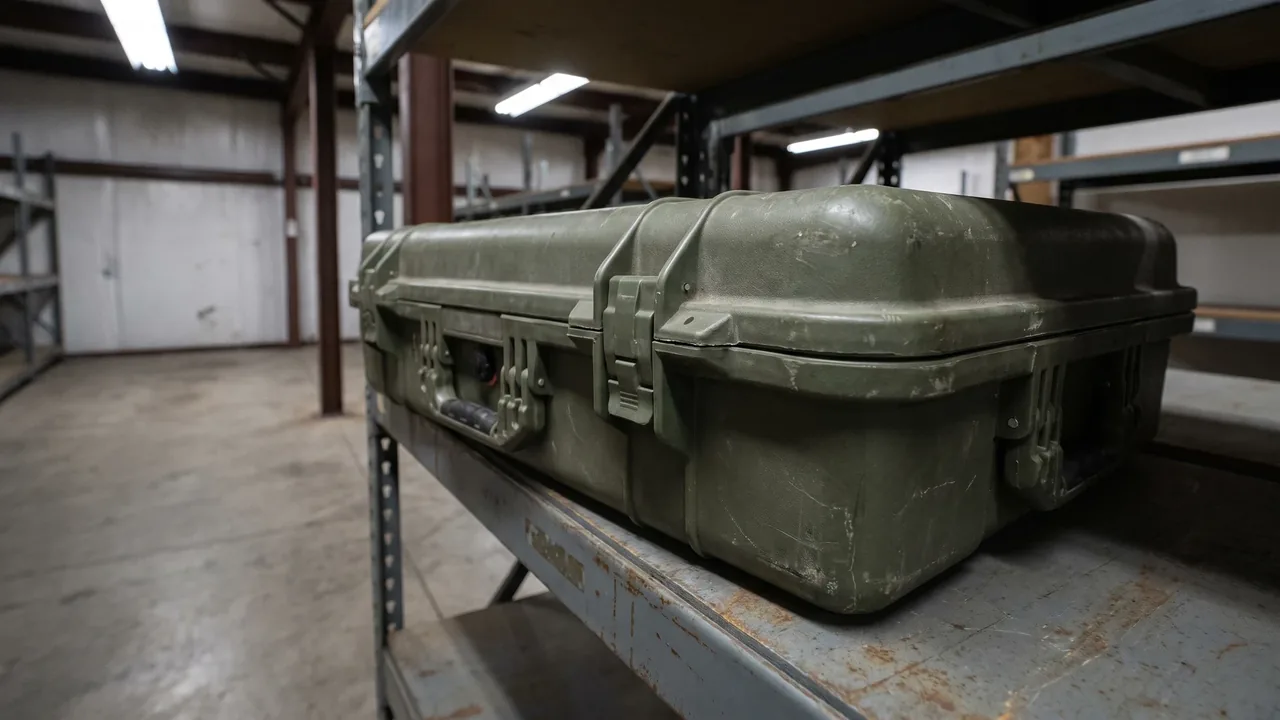
As industrial equipment storage and transport containers exported to the European Union, protective cases cannot bypass the CE certification compliance threshold. For protective cases aimed at the EU market, CE certification is not a single product test but a compliance system built on EU directives, centered on technical documentation and a declaration of conformity, proving the product meets health, safety, and environmental requirements, and serving as the precondition for customs clearance and shelf access. This article focuses on the case itself and its compliance chain, systematically reviewing the legal nature of CE, applicable directives, technical files, assessment process, material restrictions, marking rules, and common misunderstandings, helping manufacturing and trade teams build a practical EU market access path and avoid returns or penalties from compliance gaps.
1. Basic Concept and Legal Nature of CE Certification
CE is the abbreviation of the French "Conformité Européenne," meaning European conformity marking, a mandatory compliance symbol for products to circulate freely within the European Economic Area. It must be clarified that CE is not a quality certification nor an arbitrary third-party "certificate," but the manufacturer's self-declaration and assumption of responsibility that the product complies with applicable EU regulations. Affixing the CE mark means the manufacturer declares the product meets all relevant EU directive essential requirements. For protective cases, typically without complex electronics and not high-risk containers, most situations follow the self-declaration path, yet still must be built on genuine technical files and necessary third-party testing. Legally, CE places compliance responsibility on manufacturers and importers, traceable if something goes wrong. On case-related CE and RoHS combined compliance, the CE RoHS certification for cases article is a reference.

2. Main Directives Involved for Cases Entering the EU
Protective cases exported to the EU may involve multiple directives, judged item by item by product composition. Common ones include the Machinery Directive, applicable if the case carries latch mechanisms, wheeled trolleys, or other mechanical parts needing basic health and safety evaluation; the RoHS Directive limiting hazardous substances in electrical and electronic equipment, applicable if the case contains electronic accessories such as temperature loggers or positioning modules; the REACH regulation controlling chemical registration and restrictions, covering plastic additives, coatings, and adhesives; the Packaging Directive concerning transport packaging recycling and heavy metals; and if the case integrates wireless or electronic modules, the EMC Directive and Radio Equipment Directive may also apply. The principle is "look at actual configuration"; an empty case and a case with electronic modules apply different directives. Engineering recommends first making an applicability list, then preparing evidence per item. For systematic material environmental compliance, the RoHS Reach compliance cases article extends the discussion.
3. Relationship Between CE, Self-Declaration, and Notified Bodies
CE compliance has two main lines: self-declaration, the supplier's declaration, and conformity assessment involving a Notified Body. For most ordinary protective cases, because they do not involve high-risk machinery or categories requiring mandatory third-party intervention, the manufacturer can complete the conformity assessment and sign the EU Declaration of Conformity, then affix CE. But if the case integrates regulated electronic modules, falls within directive scope requiring third-party intervention, or the customer requires it, a Notified Body must issue an attestation or certificate. The key is that regardless of path, technical documentation must be complete and traceable. A common misunderstanding is treating "getting a CE certificate" as the endpoint, while the real core is continuously maintaining consistency between technical files and the DoC. On how test reports support compliance, the CNAS CMA test report guide is a reference.
4. Composition and Archiving of Technical Documentation
The EU requires manufacturers to keep Technical Documentation proving product compliance with relevant directives. For protective cases, typical content includes product description and model variations, assembly drawings and key component lists, applicable standards and directive lists, material declarations and substance test reports related to RoHS and REACH, structural design notes and risk assessment, test reports where applicable, instructions and warning markings, and a DoC copy. Archiving typically requires continued retention for several years after production ends, commonly ten years, and timely provision when regulators request. Documentation quality directly determines CE credibility; structured document management mapping each compliance requirement to evidence is recommended. Export packaging compliance details can be archived together with the export packaging compliance cases article.
5. Conformity Assessment Process and Key Steps
A practical CE conformity assessment process: step one, determine all applicable EU directives and harmonized standards; step two, compare essential health and safety requirements item by item and identify gaps; step three, test materials and components or collect supplier declarations such as RoHS, REACH, and flame retardancy; step four, send samples for third-party testing or Notified Body assessment where necessary; step five, compile or update technical files; step six, sign the EU Declaration of Conformity; step seven, affix the CE mark on product and packaging and retain records. Each step should leave a trace, especially test and declaration dates consistent with technical files. For first-time exporters, a checklist is recommended to avoid missing any directive. Related pre-shipment inspection can serve as a backstop, seen in the pre-shipment inspection cases article.
6. RoHS and REACH Restrictions on Case Materials
The RoHS Directive restricts lead, mercury, cadmium, hexavalent chromium, polybrominated biphenyls, and polybrominated diphenyl ethers in electrical and electronic equipment; if the case carries electronic modules it must comply, and even empty cases are often required by markets or customers to provide material harmlessness declarations. REACH controls broader chemicals, involving plastic plasticizers, flame retardants, specific coating substances, and adhesives. For case material selection, require suppliers to provide material certificates and third-party tests, avoiding recycled or inferior coatings containing restricted substances. Particularly, masterbatches and stabilizers used in rotomolding and injection may contain restricted components and must enter incoming control. Building a solid RoHS and REACH evidence chain is among the most frequently inspected CE compliance aspects. The systematic review is in the RoHS Reach compliance cases article.
7. EMC and Protective Cases With Electronic Accessories
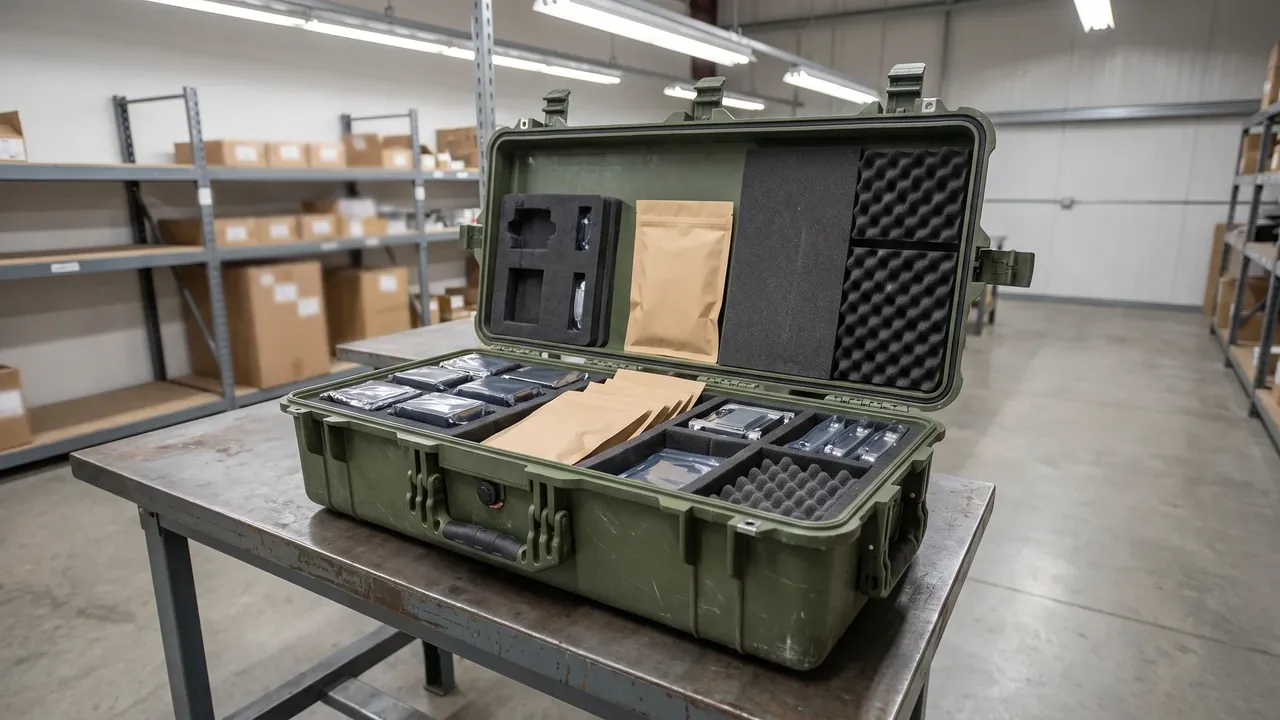
When a protective case integrates electronic accessories such as built-in temperature loggers, GPS positioning, wireless beacons, or battery management, it may fall under the EMC, electromagnetic compatibility, directive scope, requiring proof that the device neither emits excessive electromagnetic interference nor is susceptible to external interference. The case design itself also affects EMC: metal cases shield naturally well, while plastic cases may need windows or special treatment to preserve signal. The compliance path is usually emission and immunity testing per harmonized standards, completed by a Notified Body or self-declaration. Note that a purely plastic case without electronic modules generally does not directly apply the EMC directive, but adding modules triggers it. On EMC and shielding case design, the EMC shielding case guide and the EMI shielding case guide are references.
8. Packaging and WEEE Related Requirements
Protective cases exported to the EU are bound by the Packaging and Packaging Waste Directive, requiring reduced packaging weight and volume, improved recyclability, limited heavy metals, and assuming recovery responsibility. If the case itself is deemed electrical and electronic equipment with modules, the WEEE, Waste Electrical and Electronic Equipment, directive may apply, requiring recycling marks and registration. In practice, trade must prepare packaging material declarations, recycling marks, and necessary registration numbers, and confirm whether logistics and importers have completed local recovery system registration. For purely empty cases, the focus is packaging directive compliance; for module cases, WEEE and battery regulations must also be considered. On cross-border logistics and packaging, the export packaging compliance cases article provides a more complete checklist.
9. Key Points for Writing the DoC
The EU Declaration of Conformity is the core legal document of CE compliance, signed by the manufacturer declaring the product meets relevant directives. Key points: clearly state product identification such as name, model, and batch; list applicable EU directives and harmonized standards with versions; state Notified Body information if applicable; note signatory, address, and date; the declaration text must match the actual product configuration. The DoC should be in an understandable language, usually English or the sales country language, and kept with technical files. Common errors are templates that omit actually applicable directives or mismatch test report versions, blocking customs. Recommend binding the DoC to each shipment, "one model one declaration, re-sign on each update."
10. Standardized Use of Marking, Nameplate, and CE Mark
The CE mark has strict visual rules: fixed proportions, height usually not less than 5 millimeters, clear and durable, not deformed or given other meanings. The protective case should affix CE on the body or a permanent nameplate, which should also contain manufacturer name and address, model, batch, and electrical parameters if applicable. If other marks such as recycling or fire-rating coexist, place them in separate zones to avoid confusion. It must be emphasized that the CE mark cannot be affixed "first and patched later" when the product is clearly non-compliant, which is a violation. Marking durability and readability should also be checked after transport. On case marking and asset tracking, the case labeling asset tracking article extends the discussion.
11. Compliance Responsibility of Supply Chain and Importers
New EU rules strengthen importer and distributor responsibility: importers must confirm the manufacturer completed CE, keep DoC and technical file copies, mark their own contact on product and packaging, and bear joint obligations for compliance. For protective case traders, this means you cannot simply sell to an EU customer and be exempt; you should proactively provide a complete compliance package and confirm the importer completed local registration. Upstream suppliers, such as plastic resin and electronic module providers, supply material and test declarations that are the evidence base of the whole chain; building a qualified supplier list and incoming verification is recommended. On cross-border trade documents, the export document HS code cases article assists customs declaration.
12. Common CE Compliance Misunderstandings and Risks
Common misunderstandings: first, treating CE as a third-party quality certificate and ignoring the responsibility nature of self-declaration; second, complying only for empty cases while omitting EMC and RoHS after adding modules; third, missing or outdated technical files with no evidence on spot checks; fourth, DoC templates omitting applicable directives; fifth, non-compliant CE mark size or proportion; sixth, ignoring packaging and recovery responsibility. Risk consequences include customs detention, return, fines, and market bans. The avoidance method is to treat CE as a full-process system spanning design, procurement, production, and shipment, rather than a paper filled before export. For multi-directive products, a compliance matrix with evidence per directive and periodic review is recommended.
13. Connection Between CE and Other International Certifications
CE is EU access, but protective cases are often sold to multiple regions, requiring certification connection. For example, the US market focuses on UL flame retardancy and FCC wireless compliance, referenced in the US import case certifications article; dangerous goods transport involves UN certification, seen in the UN certification guide; rail and specific industries have AAR and others, seen in the AAR certification guide. The connection strategy is "directives as the framework, standards as the bridge," prioritizing the intersection of EU harmonized and internationally common standards to reduce duplicate testing. For module cases, EMC and wireless compliance differ greatly between Europe and the US and should be evaluated separately. Building a global compliance archive turns a single CE investment into reusable multi-market access assets.
14. Building Internal CE Compliance Process
CE is not a paper filled before shipment but should be embedded in the full process of R&D, procurement, production, and shipment. It is recommended to appoint a compliance owner or team who, at the new-product initiation stage, makes a directive applicability list and assigns RoHS, REACH, machinery, packaging, and EMC items to design tasks; procurement requires suppliers to provide material certificates and test declarations included in incoming verification; production retains process records and batch traceability; shipment binds the DoC and compliance package. Thus when regulators spot-check or customers audit, the evidence chain can be retrieved quickly. The export packaging compliance cases article supports the packaging leg.
Internally, build a compliance matrix ledger listing applicable directives, corresponding standards, evidence files, and validity per model, with expiry reminders and review mechanisms. For multi-market sellers, archive CE together with UL and UN shared data, referenced in the US import case certifications and the UN certification guide, to lower duplicate test cost. Treating compliance as an auditable management system rather than a one-time action is the fundamental way to avoid passive rectification in the EU market, and it also lets you issue compliance proof quickly when customers inquire, raising deal efficiency.
15. Typical CE Compliance Risk Cases and Responses
Common risk cases in practice include: a factory exported an empty case as ordinary packaging, then the customer added electronic modules without supplementing EMC and RoHS, and it was detained on arrival; a batch used an old DoC template omitting a newly added radio directive, blocking customs; a supplier's recycled material contained restricted plasticizer, failing RoHS sampling and causing whole-batch return; a company had inaccurate CE mark proportions and omitted importer information, and was ordered to rectify by market supervision. These cases show compliance gaps often appear in four links: configuration change, document version, material incoming, and marking detail. The RoHS Reach compliance cases and the pre-shipment inspection cases articles help close those links.
In response, adopt change management: any configuration or material adjustment triggers a compliance review; build a qualified supplier and incoming test card; bind the DoC to each batch with dual verification; use a checklist before shipment to verify marks, nameplate, and documents. For cross-border documents, combine the export document HS code cases article to complete customs data. Moving risk forward to design and procurement is the lowest-cost compliance strategy.
As a supplement, the sustainability of CE compliance depends on dynamic tracking of versions and standards: EU directives and harmonized standards are revised, so manufacturers and importers should build update reminders to avoid failure from using obsolete versions. For product lines with multiple models and configurations, manage with a four-dimensional matrix of model, directive, standard, and evidence, where any configuration change triggers a compliance review, eliminating omissions at the source. At the same time, digital technical documentation and DoC management significantly improve responsiveness to customer audits and customs checks. The export packaging compliance cases article supports the packaging dimension.
In the market, compliance should not be only a customs tool but also a trust endorsement for sales: proactively providing a compliance package summary during inquiry shortens the decision cycle. For companies planning to expand into North America, Asia-Pacific, and other markets, plan the connection between CE and UL, FCC, and UN certifications early, reusing material environmental and structural safety data to lower global compliance cost. Embedding CE into a normal management system is the underlying capability for long-term stable operation in the EU market. The us import case certifications and the un certification guide articles help map adjacent markets. Moreover, as importer and distributor responsibilities strengthen, proactively delivering a complete compliance package and confirming local registration turns responsibility into verifiable nodes.
Finally, treat the Declaration of Conformity as a living document rather than a one-time form: re-sign it whenever the model, components, or applicable standards change, and keep it bound to each shipment batch. This discipline, combined with a centralized evidence library, makes CE a repeatable process instead of a recurring fire drill, and it protects the brand when regulators or major customers scrutinize the supply chain. In the long run, mature compliance capability becomes a quiet competitive advantage that opens doors larger competitors take for granted.
FAQ
Q: Can I just pay an organization for a CE certificate and be done? A: No, that understanding is wrong. CE is essentially not a third-party quality certificate but the manufacturer's self-declaration and assumption of responsibility that the product complies with EU regulations. Most ordinary protective cases can follow the self-declaration path, where the enterprise completes the conformity assessment and signs the EU Declaration of Conformity before affixing CE, but this must be built on genuine, complete technical files and necessary testing. Only if the case carries regulated electronic modules or falls within scope requiring Notified Body intervention is third-party involvement needed. The real core is the continuous consistency of technical documentation and declaration, not a paper certificate. Treating CE as "buying a certificate" often leads to missing files, and when customs or regulators spot-check, the lack of evidence brings returns and penalties, so the compliance focus should be on the evidence chain. In daily operations, this means assigning a named owner for the technical file, scheduling periodic reviews of directives and harmonized standards, and keeping version control over every test report and declaration. Buyers in the European Union increasingly ask for the DoC and supporting evidence before issuing a purchase order, so a well-organized compliance package shortens negotiations and builds trust. Treat the file as a living asset that grows with the product, and each new order will reuse the work instead of repeating it. A quarterly internal audit against the checklist keeps the system honest and highlights gaps early.
Q: Are CE requirements the same for empty cases and cases with electronic modules? A: No, it depends on actual configuration. An empty case mainly looks at packaging, material environmental aspects such as REACH chemicals, and possible mechanical part safety, not directly triggering EMC. Once the case integrates temperature loggers, GPS, wireless beacons, or battery management modules, it may fall under RoHS, REACH, EMC, or even the Radio Equipment Directive, significantly increasing compliance requirements. Therefore the principle of judging directive applicability is "look at the actual product composition"; the same shell with different modules applies different directives. In trade quotation and compliance preparation, lock the final configuration first, then build the directive list and evidence, avoiding the situation where you thought it was an empty case before packing but shipped with modules and missed key compliance items. To operationalize this, keep a configuration register for every model, recording which modules, batteries, or electronic accessories are installed in each variant, and update the register whenever engineering changes occur. Share the register with your freight forwarder and importer so customs paperwork matches the physical goods. When a customer requests a custom variant, run a quick applicability check against the directive list before confirming the order. This small routine prevents the most common failure mode in case exports: a compliant shell shipping with an unassessed module inside, which can hold the entire shipment at the border. Document each check with date and reviewer so the trail is complete.
Q: What do RoHS and REACH actually control for cases? A: RoHS restricts lead, mercury, cadmium, hexavalent chromium, polybrominated biphenyls, and polybrominated diphenyl ethers in electrical and electronic equipment; if the case carries electronic modules it must comply, and some customers also require harmlessness declarations for empty cases. REACH controls a broader range, involving plastic plasticizers, flame retardants, specific coating substances, and adhesives under registration and restriction. For case material selection, risks often lie in masterbatches, stabilizers, recycled materials, and surface coatings used in rotomolding and injection, which may contain restricted components. In practice, require suppliers to provide material certificates and third-party tests, building a solid restricted-substance evidence chain. This is among the most frequently inspected CE compliance aspects, so set a checkpoint at incoming material control. Practically, this checkpoint has three layers: request a full material disclosure from resin and coating suppliers, commission periodic third-party screening on finished shells, and keep batch-linked retention samples so any future inquiry can be answered with the exact lot. Pay special attention to color masterbatches and recycled feedstock, because restricted plasticizers and stabilizers tend to enter through these channels. When a supplier changes a formulation, require a renewed declaration before the next production run. A documented, batch-level material archive answers most market surveillance questions in days rather than weeks, protecting both delivery schedules and customer confidence.
Q: How long must technical files be kept, and what if they are lost? A: The EU typically requires technical files to be retained for several years after production ends, commonly ten years, and provided promptly when regulators request. Technical files are the "evidence base" of CE compliance, containing product description, drawings, standards and directive lists, material declarations, test reports, instructions, and DoC copies. If lost or unavailable, you cannot prove compliance, and regulators may deem the product non-compliant, with consequences including ordered rectification, removal, fines, or even market bans. Structured document system management by model, mapping each compliance requirement to specific evidence, is recommended; when the company is renamed, relocated, or the product modified, update files synchronously to ensure they are always retrievable. A practical retention setup stores scanned originals in a controlled digital archive with access rights, change logs, and off-site backup, while a paper index maps each model to its folder. Assign a successor owner when staff rotate so files never depend on one person. Before any audit or shipment, run a completeness check against the applicable directive list, and archive superseded versions with their effective dates instead of deleting them. Regulators value the ability to show the full history of a product, including why and when documents changed, so an orderly, time-stamped archive is itself evidence of a functioning compliance system.
Q: Is there a problem if the CE mark size or position is wrong? A: Yes. The CE mark has strict rules: fixed proportions, height generally not less than 5 millimeters, clear and durable, not deformed or confused with other meanings. If the size is too small, proportions distorted, blurred or fallen off, or affixed "first and patched later" when the product is actually non-compliant, all are violations, and customs and market supervision may question the compliance of the whole batch. The correct approach is to affix CE together with a permanent nameplate on the case body, with the nameplate also containing manufacturer name and address, model, batch, and other information, placing other marks in separate zones. Include mark size and position in pre-shipment inspection, and recheck readability after arrival to ensure compliant visibility throughout. When designing the nameplate, reserve a dedicated zone sized for the CE mark at its minimum legal height, and specify embossing, molding, or laser marking rather than adhesive labels where abrasion is expected. Keep a golden sample of the approved marking for every production site, because multi-site manufacturing often drifts in font and proportion. Photograph the marking on each first article and on random production samples, and file the images with the technical documentation. If the product is later modified in size or shell design, recheck the marking placement first, since a redesigned surface can invalidate the original position and durability assumptions. This habit protects long-life products that ship for many years.
Q: Who bears greater CE responsibility, the importer or the manufacturer? A: Both bear legal obligations, and the EU has recently strengthened importer and distributor responsibility. The manufacturer completes the conformity assessment, signs the DoC, establishes and keeps technical files, and correctly affixes CE; the importer must confirm the manufacturer complied, keep DoC and technical file copies, mark own contact on product and packaging, and bear joint liability for compliance. In practice you cannot think "selling to an EU customer means exemption"; traders should proactively deliver a complete compliance package and confirm the importer completed local recovery and registration. Upstream supplier material and test declarations are the evidence base of the whole responsibility chain; building a qualified supplier list and incoming verification is recommended, placing responsibility on verifiable nodes. A useful division is to define deliverables in the sales contract: the manufacturer supplies the DoC, test reports, and material declarations with each shipment, while the importer confirms registration in national recovery systems and keeps records for the legally required period. Keep written confirmations of these handovers, because verbal agreements rarely survive a dispute or a customs query. For distributors and resellers, provide a short compliance guideline so downstream parties do not alter the product or remove markings in ways that break the declaration. Clear, documented boundaries turn shared responsibility from a legal risk into a competitive advantage when tenders audit suppliers.
Q: Can CE and other certifications such as UL or UN replace each other? A: They cannot replace each other but can be connected and reused. CE is EU access; the US focuses on UL flame retardancy and FCC wireless compliance; dangerous goods transport involves UN certification; rail and specific industries have AAR and others. Different markets have different access requirements and cannot be equated. But strategically you can use "directives as the framework, standards as the bridge," prioritizing the intersection of EU harmonized and internationally common standards to reduce duplicate testing. For example, module cases differ greatly in EMC and wireless between Europe and the US and need separate evaluation, while many material environmental and structural safety tests can share data. Building a global compliance archive turns a single CE investment into reusable multi-market assets and lowers overall certification cost. Map your target markets at the start of the year, list the certificates each one requires, and identify tests whose data can be shared, such as drop, vibration, and material screening performed by accredited laboratories. Sequence applications so the most demanding market goes first, because its evidence usually satisfies less strict ones with little extra work. Watch validity periods and standard revisions with a shared calendar, and renew the certificates that support your largest revenue streams first. Coordinated this way, certification becomes a planned investment with predictable cost, instead of a series of urgent, overlapping expenses triggered by individual orders. Start small and iterate each season.
Q: What pitfalls do first-time EU exporters of protective cases most easily hit? A: The easiest pitfalls are six: treating CE as a third-party certificate and ignoring self-declaration responsibility; complying only for empty cases while omitting EMC and RoHS after adding modules; missing or outdated technical files with no spot-check evidence; DoC templates omitting actually applicable directives; non-compliant CE mark size or proportion; and ignoring packaging recovery and importer registration responsibility. The avoidance method is to treat CE as a full-process system spanning design, procurement, production, and shipment, make a compliance matrix covering all applicable directives, implement evidence per item, and review periodically. For first export, engage an experienced compliance advisor or use a checklist, leaving traces at every step, to avoid passivity during customs or customer audits. Beyond the checklist, build a short internal training for sales and engineering teams so the people who quote and design products understand what configuration changes trigger new obligations. Review every incoming modification request, such as adding a data logger or changing a foam adhesive, against the compliance matrix before accepting it. Keep a lesson-learned log of near misses and returned shipments, and revisit it each quarter. Over a few quarters these habits compress the compliance lead time from weeks to days, which itself becomes a selling point when European buyers compare suppliers on both product quality and regulatory readiness. Small, steady improvements compound into a durable market advantage.