

RoHS and REACH are often spoken about together, but they work differently. Understanding the distinction tells you which evidence to ask for and why a supplier's general claim of compliance is not enough.
The Two Frameworks
| Framework | Nature | What it means in practice |
|---|---|---|
| RoHS | Restricts a defined list of substances in specified product categories | Restricted substances must be below set limits; scope depends on the product category |
| REACH | Broad chemicals regulation covering registration, evaluation, authorisation and restriction | Obligations around substances of very high concern and any substance-specific restrictions |
RoHS restricts a specific list — historically including lead, mercury, cadmium, hexavalent chromium and certain brominated flame retardants, with several phthalates added in later revisions. REACH is broader and dynamic: the candidate list of substances of very high concern is updated over time, so a declaration that is accurate today may need refreshing later.
What This Means for a Moulded Case
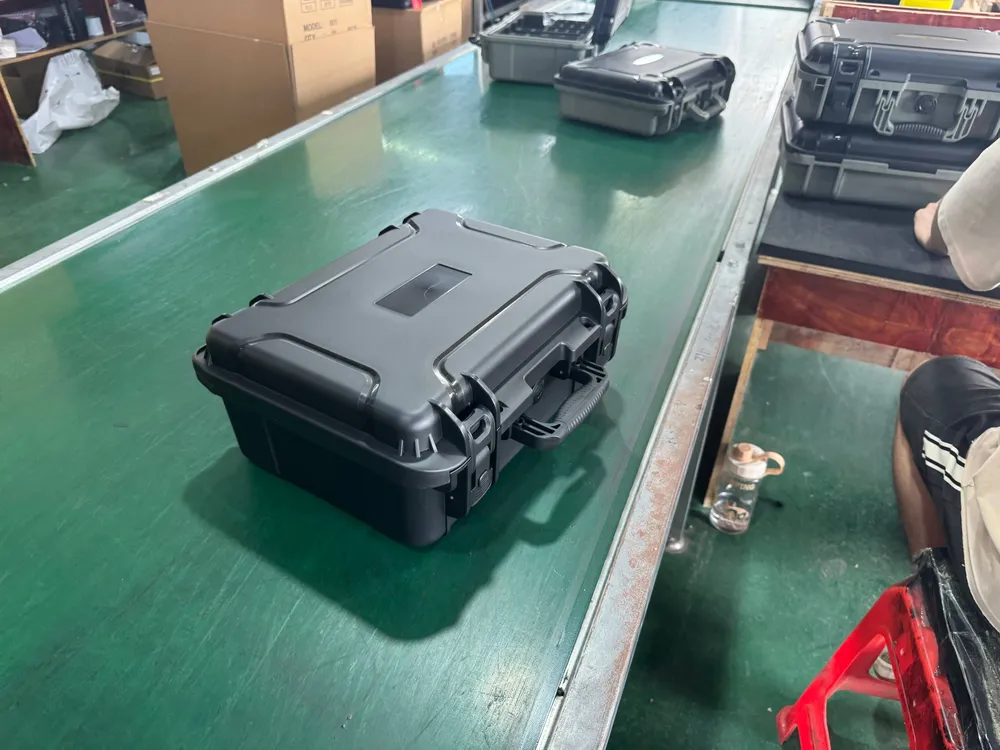
A case is an assembly, and compliance is assessed on the materials that make it up. That includes more than the base polymer:
- Base resin and any recycled content — recycled streams can carry substances the virgin grade does not.
- Colourants and additives — pigments, stabilisers and flame retardants are common sources of restricted substances.
- Hardware — metal latches, hinges, fasteners and plating.
- Gaskets and foam — elastomers and foam formulations have their own substance profiles.
- Printing, coatings and labels — inks and surface treatments are part of the finished article.
Declare the finished assembly, not just the shell. A compliant shell with non-compliant hardware or ink is not a compliant product.
Evidence to Request
- Material declaration covering the whole assembly, ideally at part level.
- Test reports from an accredited laboratory where testing is the appropriate evidence, with report dates and scope.
- Confirmation of which substances were screened, not simply a statement of compliance.
- Recycled-content disclosure, since it changes the risk profile.
- A commitment to notify changes, because a reformulation can alter compliance status.
A Note on Scope
Whether RoHS applies depends on the product category and how the article is placed on the market; a case sold as a general container and the same case supplied as part of electrical equipment can be treated differently. Confirm the applicable scope with your compliance adviser or the customer whose requirement you are meeting, and request evidence against that specific scope.
Recycled content interacts with this directly — see virgin versus recycled material for the controls that make recycled streams predictable.