

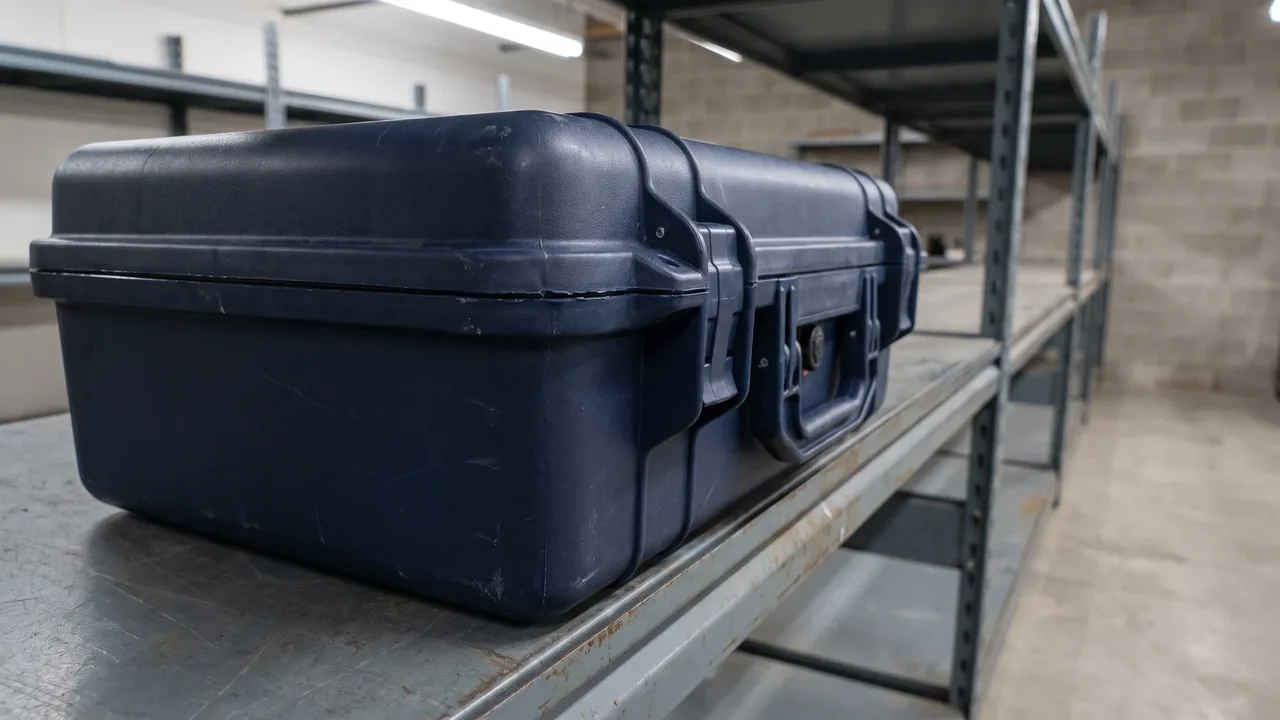
In military support programs, aerospace structural part logistics and lightweight equipment operations, case weight and protection strength have long been a contradiction: metal cases are reliable but heavy, rotomolded cases are light but limited in stiffness, and the more precision instruments and portable systems dominate an inventory, the sharper this contradiction becomes. A sandwich construction solves it structurally: thin, strong skins carry the bending loads while a lightweight core holds the skins apart, so the panel achieves bending stiffness far beyond any homogeneous material of equal weight - this is the fundamental reason a composite material protective case can be both lightweight and highly protective. This article walks through the sandwich principle, core material selection, skin materials and layup, molding processes, impact behavior and damage modes, damping performance, comparisons with rotomolded, injection molded and aluminum cases, weathering, repair, and finally cost structure and selection boundaries. The goal is to give military, aerospace and high-end equipment buyers a workable decision framework, so that a purchase is justified by structural reasoning and test evidence rather than by slogans that equate lightness with goodness or price with strength.
1. What Is Sandwich Construction
A sandwich panel consists of three basic elements: two high-strength skins, a low-density core between them, and an adhesive layer that bonds the three into a single structural unit. Its mechanics can be compared to an I-beam - the flanges carry bending tension and compression while the web carries shear and holds the flanges apart. In a sandwich panel the skins act as flanges and the core acts as the web: the farther the skins sit from the neutral axis, the larger the section moment of inertia and the higher the bending stiffness, while the core itself weighs almost nothing. For a protective case, this means the wall can be only three to eight millimeters thick yet offer several times the flat-panel bending resistance of a conventional homogeneous plastic wall. Understanding this mechanism is the premise for everything that follows: sandwich performance does not come from any single material but from the cooperation of skins, core and adhesive, and if any link fails, the whole panel degrades to its weakest component. During supplier reviews, do not stop at asking what fiber the skin uses; also ask about core density, adhesive process and interface quality, because these determine whether the theoretical stiffness ever reaches the delivered case. For the wider context of structural strength, compare Wall Thickness Structural Design.
2. The Bending Stiffness Principle: Why Sandwich Is Light Yet Strong
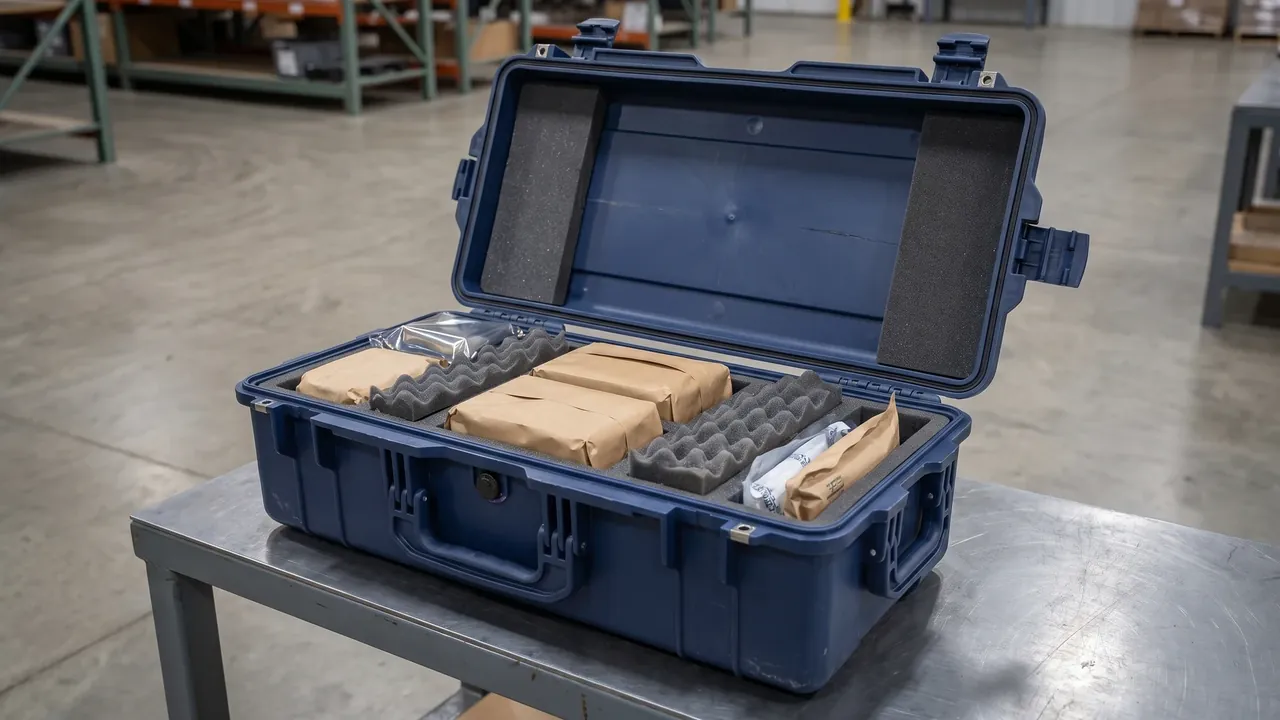
The bending stiffness of a plate equals its elastic modulus times its section moment of inertia, and the moment of inertia grows with the cube of plate thickness. This means that separating two one-millimeter skins with twenty millimeters of core multiplies bending capability by orders of magnitude, while the added weight is only that thin, light core layer. As a typical engineering figure, a sandwich panel with glass fiber skins and a polyurethane foam core, at a total skin weight of roughly four kilograms per square meter, can reach bending stiffness close to a steel plate of equal weight - an efficiency no homogeneous structure can match. For a protective case this delivers two direct benefits: large flat walls resist dishing under stacking, drops and foot traffic, and thinner walls free up weight budget for foam liners and hardware. The caveat is sensitivity to process defects: skin-core debonding, water in the core or local core crushing will collapse that cubic advantage instantly, which is why quality control of the core and its interfaces deserves more audit time than the material datasheet itself. Buyers planning weight-critical programs should combine this principle with the Lightweight Protective Case Guide to turn theory into comparable parameters across suppliers.
3. Core Material Comparison: PU Foam, PVC Foam, Aluminum and Aramid Honeycomb
The core determines shear performance, compressive strength and cost band, so selection should be driven backward from the duty case. Polyurethane foam typically runs from forty to one hundred kilograms per cubic meter, is inexpensive, easy to machine and bonds well to skins, which makes it the workhorse core for general protective cases, though its shear modulus is modest and it suits stacking and ordinary drops rather than high concentrated loads. Cross-linked PVC foam offers higher mechanical properties, high closed-cell content and low water absorption, and is frequently specified for humidity-sensitive aerospace-type applications at moderate cost. Aluminum honeycomb is one of the performance ceilings: at thirty to eighty kilograms per cubic meter it provides very high shear modulus and compressive strength with good creep and temperature resistance, but it is strongly anisotropic, corrodes if water enters, and carries higher machining scrap rates, so it is reserved for premium military and aerospace cases. Aramid paper honeycomb combines low weight, high strength and good flame behavior, making it a common choice for aerospace structural part cases, at the highest price point. Paper honeycomb is cheap and recyclable, mainly for one-way or low-cycle packaging. A practical method is to list load type (distributed or concentrated), humidity and temperature exposure, and cycle count, then match these against typical core property tables; for the cushioning side of the interior, compare Case Foam Material Comparison.
4. Skin Materials and Layup Design: GRP, Aramid and Glass-PP
The skins are the part of the sandwich that actually works, so material and layup set the strength ceiling. Glass fiber reinforced plastic, commonly called GRP, is the mainstream skin for protective cases, offering the best balance of performance and cost, good impact tolerance and easy repair, and different resin systems can add flame retardancy or weathering. Aramid fiber skins deliver outstanding specific strength and specific stiffness with excellent ballistic and cut resistance, weigh less than glass for equal strength, and are common in military support cases, at the cost of lower compressive strength, harder machining and higher price. Glass-fiber reinforced polypropylene is a thermoplastic composite with good toughness, recyclability and fast production rhythm, suitable for equipment cases with meaningful volume. Carbon fiber deserves only a brief mention as one skin option: it has the highest specific stiffness but a steep price and demanding impact design, so consider it only when the weight budget is extremely tight; see the Carbon Fiber Case Guide for that specialized topic. On layup, engineering practice commonly uses zero and ninety degree cross plies for balanced in-plane performance plus forty-five degree layers for shear and torsion, and critical cases may use quasi-isotropic layups; skin thickness typically falls between one and three millimeters, since thinner skins puncture easily while thicker ones erase the weight advantage. Procurement should require the supplier to declare the ply sequence and fiber areal weight in the technical agreement rather than confirm them only verbally at the sample stage.
5. Molding Processes: Hand Layup, Vacuum Infusion, Compression Molding and RTM
The same materials and structural design, produced by different processes, can differ several times in performance and cost. Hand layup has the lowest equipment investment and suits prototype and small custom batches, but fiber content and resin fraction depend on operator skill, batch consistency is poor, and porosity or resin-starved zones are common defects, so it is generally not recommended for military supply lots that demand batch stability. Vacuum infusion pulls resin through the fiber pack under vacuum, yielding low porosity, high fiber content and clearly better properties than hand layup, with moderate tooling cost; it is the cost-performance choice for small to medium batch sandwich cases. Compression molding uses matched heated metal dies, delivering fast cycle times, tight dimensional accuracy and good surface finish, ideal for stable medium-volume production of mid-size cases, but the tooling is expensive and only pays back at sufficient volume. RTM, resin transfer molding, injects resin into a closed mold, giving two finished surfaces and stable dimensions with performance close to compression molding and somewhat lower tooling cost, making it a frequent compromise for mid-to-high-end protective cases. Choosing a process is really choosing the match between batch size and quality grade: validate the structure quickly with hand layup or infusion at the sample stage, then migrate to compression molding or RTM once the design freezes and volume justifies tooling. For process boundaries in more depth, refer to the Composite Molding Case overview.
6. Impact Performance and Damage Modes: Delamination and Core Crushing
Impact resistance is the core requirement for a protective case, but composite sandwich damages differently from homogeneous materials, and understanding this is essential for both design and acceptance. Metal dents visibly under impact; a sandwich panel may look intact on the surface while the interior has already developed skin delamination or crushed core - the so-called barely visible impact damage that is the most treacherous failure form in composite acceptance. Under drop impact, the core first crushes locally, and that crush deformation absorbs energy, which is exactly the protective mechanism the design intends; but once impact energy exceeds the threshold, damage propagates into the skin-core interface, forming a debonded zone with significantly reduced residual strength. Penetration-type threats are governed by skin puncture resistance, tied directly to fiber type and areal weight in the layup. For verification, drop and shock can be organized per the relevant methods of MIL-STD-810H, while ingress protection is verified per IEC 60529 or its national equivalent GB/T 4208, and together they form the baseline test matrix of a protective case. A recommended contract clause: after drop testing, perform visual inspection plus coin-tap sounding as a first screen, and where doubt remains, ultrasonic or thermographic inspection to confirm no internal debonding - upgrading the acceptance criterion from "did not crack" to "no internal debonding after drop".
7. Damping Performance: A Natural Advantage for Precision Equipment
Damping is the most underestimated advantage of composite cases relative to metal. Metals have low inherent damping, so vibration energy reflects between walls and decays slowly; fiber-reinforced resin matrices carry several times the structural damping of metal, and the foam or honeycomb core adds further energy dissipation through shear deformation, so the overall damping ratio of a sandwich wall is, as a typical field figure, several times that of an equivalent metal structure. For users transporting precision optics, gyroscopes or electronic cabinets, this means a lower response spectrum inside the case under the same road excitation, and fewer fatigue cycles accumulated by the equipment. Structural damping does not replace cushioning liners, however: the sandwich wall suppresses the case's own vibration, while the liner isolates external shock and vibration from reaching the payload - they divide the work rather than substitute for each other. Design should also manage resonance: the case's natural frequency should stay clear of the transport platform's main excitation band, and large flat sandwich panels can be retuned by adding stiffeners or changing core density. Liner layout and case damping design should therefore be reviewed together, as described in the Custom Foam Lining Guide, avoiding overly stiff liners that transmit vibration straight into the equipment.
8. Comparison with Rotomolded, Injection Molded and Aluminum Cases
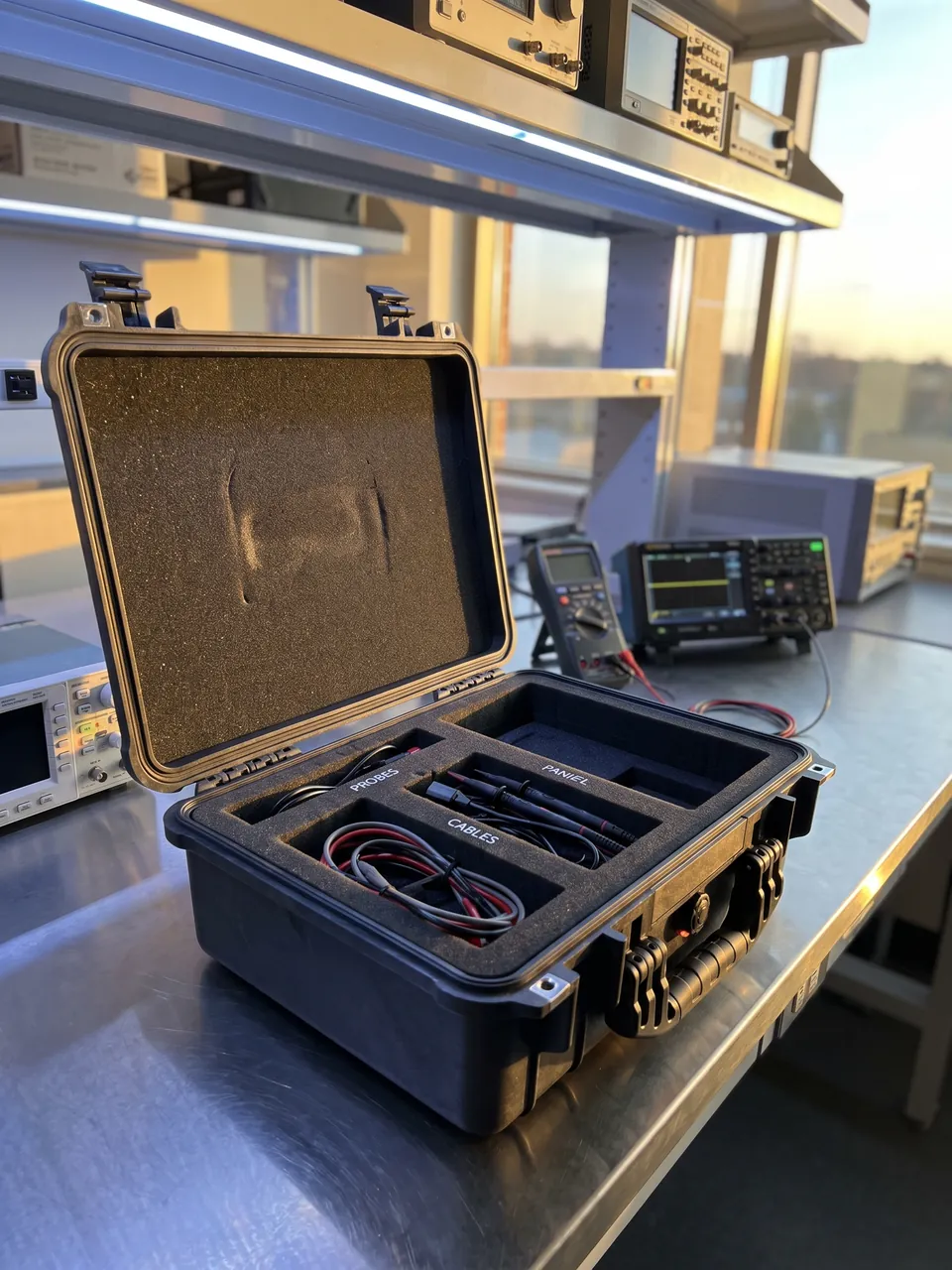
Side-by-side comparison helps buyers locate the right application band for composite construction quickly. Against rotomolded cases: rotomolding produces homogeneous low-density polyethylene at low cost with good drop toughness, but wall stiffness relies on thickness and ribs, large flat panels dish easily, and long-term stacking induces creep; a sandwich panel delivers much higher bending stiffness at far lower areal weight with less creep risk, at a clearly higher unit price and longer process cycle. Against injection molded cases: injection molding is efficient and dimensionally consistent, ideal for mass-produced small and medium cases, but large-case tooling becomes very expensive and the process cannot economically build sandwich efficiency into a wall; sandwich construction wins decisively on stiffness-to-weight for large envelopes. Against aluminum cases: aluminum is strong, wide in temperature range and good for shielding, but dense, dependent on brake-formed stiffeners for flat panels, and dents are hard to repair; a composite sandwich case is typically thirty to fifty percent lighter, insulates better and never rusts, while giving up some high-temperature capability and requiring dedicated edge and cutout design. Detailed pairwise analyses are available in the Rotomold vs Injection Case Guide and the Aluminum vs Plastic Case Guide. The working rule of thumb: for weight-sensitive, high-value, frequently cycled equipment, composite sandwich earns its premium; for low-value one-way shipping, rotomolded or corrugated solutions remain rational.
9. Weathering and UV Protection Design
Composites do not rust, a natural advantage for coastal, island and long-term field deployment, but the resin matrix is affected by ultraviolet radiation and humidity-temperature cycling and therefore needs deliberate protection. Prolonged UV exposure chalks, yellows and slowly degrades the surface of unsaturated polyester and similar resins; the standard countermeasures work in three layers: a gel coat or polyurea/polyurethane topcoat serving as a sacrificial layer that can be periodically renewed; UV absorbers and light stabilizers compounded into the resin; and an outer ply of weathering-resistant glass fabric or organic fiber. On moisture, water vapor ingress along cutout edges saturates the core over time, raising weight and lowering interface strength, so every opening and hardware hole must be edge-sealed and sealed around fasteners - a key process-quality checkpoint specific to sandwich cases. On temperature, ordinary unsaturated polyester systems tolerate lower continuous service temperatures, epoxy and vinyl ester systems higher, and aluminum honeycomb cores outperform foam cores in heat, so high-temperature programs should verify the resin system's glass transition temperature. Cases deployed outdoors also face seal aging under thermal cycling; for broader environmental adaptation see UV Weathering Outdoor Cases, and where flame behavior matters, specify resin and liner materials matched to the required UL94 rating.
10. Sealing, Hardware and System Integration Details
Sealing and hardware on a sandwich case demand more system-level design than on a homogeneous thick wall, because thin skins have limited local load capacity. On sealing, the gasket groove around the lid should be molded or laminated integrally during forming rather than machined afterward through the skin fibers; select EPDM or silicone strips with compression held in the recommended band, and verify the ingress rating per IEC 60529 and GB/T 4208, with relevant MIL-STD-810H clauses added for military programs. On hardware, latches, hinges and handles must land on pre-inserted metal inserts or locally reinforced zones - never let point loads bear directly on thin skins - and the corner load paths under stacking need the same treatment. Pressure management is not optional: altitude and temperature swings can suck a door seal shut or bulge the lid, so a pressure equalization valve belongs on any air-transported case. On the interior, cavity-cut foam or molded liners matched to the equipment, working together with the damping character of the sandwich walls, form the complete protection system that justifies choosing a composite case over a generic one. For programs that need custom liners for precision equipment or seals matched to specific case models, JUNZHIJIA provides integrated support from cavity scanning and liner cutting to seal verification, reducing interface risk across multiple suppliers.
11. Repair and Refurbishment Feasibility
Every case in long service will take knocks, so repairability directly shapes life-cycle cost - and composite sandwich performs better here than most buyers expect. Light damage such as topcoat scratches or local resin-rich whitening needs only sanding and recoating, with no structural involvement. Medium damage such as a local skin crack or shallow core crush is handled by the scarf-and-patch method: grind out the damage to healthy material, fill the exposed core with a plug of matching-density foam or honeycomb, laminate matching fabric plies layer by layer, cure under vacuum bag pressure, then sand and paint; field experience shows the repaired zone recovers most of the original design strength. Severe damage such as widespread debonding, water-saturated core or cracked primary edge frames should go back to the factory for assessment rather than field repair. Compared with aluminum, where dent removal depends on equipment and tends to leave stress concentrations, and rotomolded walls, which need no care for scratches but are genuinely hard to fix once cracked, sandwich sits in the middle: damage is bounded and the repair procedure is well defined. It is good practice to list a repair kit - resin, fabric, core plugs and instructions - as an accessory with each case and to train user-side maintenance staff briefly; for spare part management see Case Repair and Spare Parts.
12. Cost Structure and Selection Boundaries
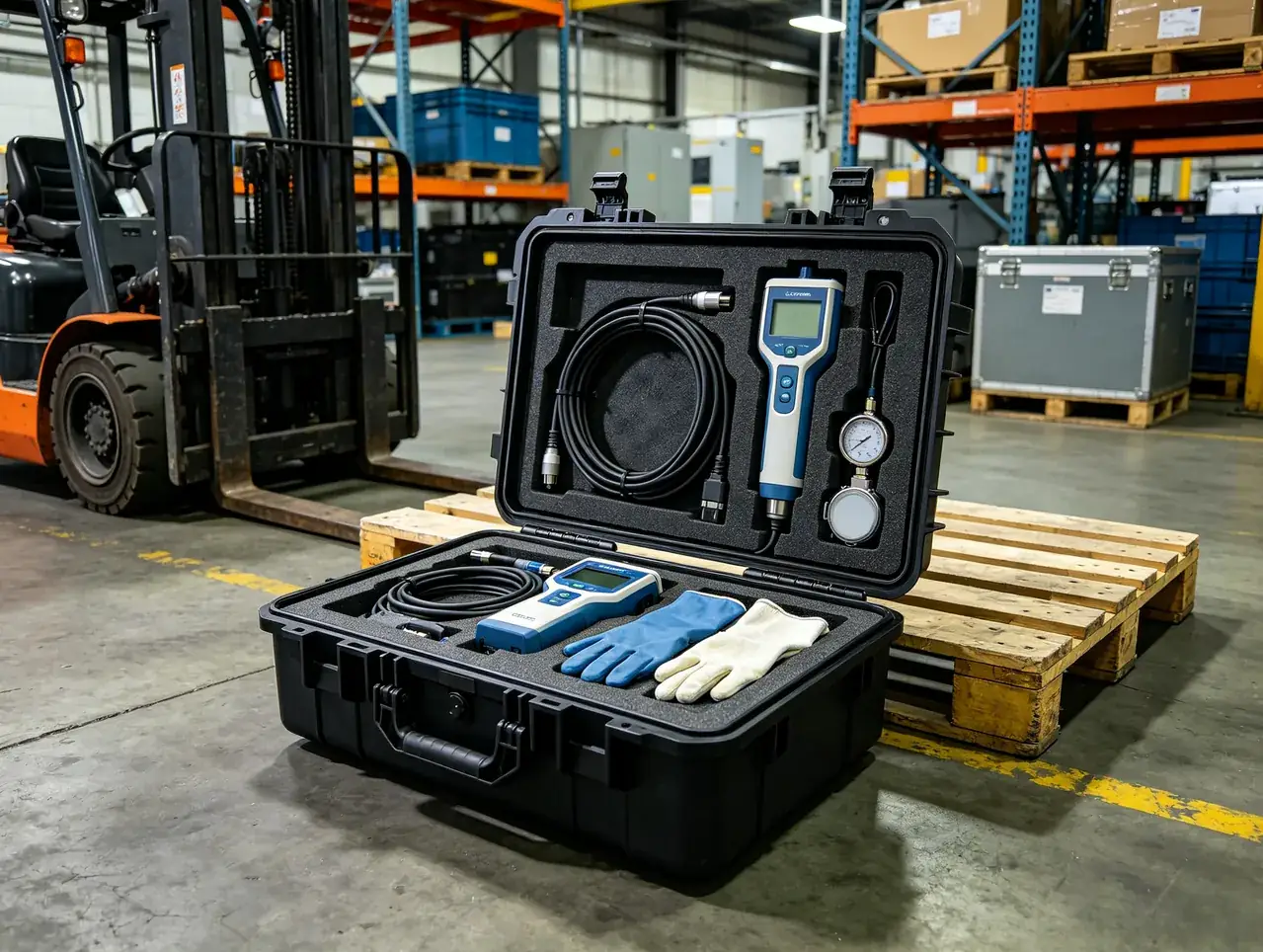
The premium of a composite protective case lies in materials and process time, and understanding the cost breakdown is what makes negotiation and boundary-setting possible. Costs fall roughly into four blocks: fibers and resins account for some thirty to forty percent; the core takes ten to twenty percent depending on type, with aluminum and aramid honeycomb clearly above foam; tooling amortization depends on batch size, with infusion and RTM tooling moderate and compression molding highest; and labor plus process time is the largest share, since hand layup and infusion curing waits stretch the schedule. From this follow the selection boundaries: small batches with complex geometry and weight sensitivity suit vacuum infusion; large batches with regular shapes justify compression molding amortization; when budgets are tight and duty is mild, rotomolded cases remain the rational choice. Beyond unit price, run the life-cycle account: a case thirty percent lighter cuts weight-billed air freight and manual handling in the same proportion, a longer cycling life lowers cost per mission, and repairability further extends replacement intervals. Upgrading the decision from "compare unit prices" to "compare total cost per cycle" is where the real value of composite construction appears - and it is the step most easily skipped when lightweight equipment programs set their packaging budget.
13. Typical Application Scenarios and Customer Segments
Composite sandwich cases deliver their best value in three customer segments. The first is military support: ammunition support equipment, fire-control spares, field communication and reconnaissance gear impose strict demands on weight, stiffness, weathering and batch consistency, and sandwich cases meet mobility requirements at low areal weight; aramid skins with aluminum honeycomb cores have mature applications in high-end programs, where accompanying documentation and batch traceability are the decisive procurement concerns. The second is aerospace structural part transport: wing leading edges, composite skin panels and rotor components are high-value, large-envelope items requiring high case stiffness, profile-cut custom cavities and humidity control, and the insulating character of sandwich walls further helps moderate condensation risk across day-night temperature swings. The third is lightweight equipment: complete UAV systems and ground stations, portable test instruments and man-portable support gear, where every kilogram saved converts directly into mobility; combined with custom liners, sandwich cases achieve system-level weight reduction without sacrificing drop protection. The three segments share one profile: high-value contents, frequent cycling, and simultaneous sensitivity to weight and reliability - exactly the sweet spot of sandwich economics. Conversely, for low-value contents under mild duty, paying for unused performance is not justified, and simpler case technologies remain the correct answer.
14. Selection Checklist and Implementation Advice
Finally, the article condenses into an executable checklist. Structure: confirm skin material and ply sequence, core type and density, and nominal wall thickness, and ask the supplier for typical bending and shear data of the sandwich panel. Process: define the molding route against batch size, request the batch consistency control method, and establish a baseline with tap and ultrasonic sampling at the approval-sample stage. Verification: check the ingress rating and its report against IEC 60529 or GB/T 4208, organize drop and shock per the relevant MIL-STD-810H methods, always with load and liner installed rather than empty-case conclusions, and confirm flame requirements per the applicable UL94 rating. Integration: verify that hardware mounting points use inserts or local reinforcement, that cutouts are edge-sealed, and that a pressure equalization valve and desiccant provisions are included. Commercial: write the repair kit and spares into the contract, and specify the supplier's obligation to deliver test documents and batch traceability. For military and aerospace programs, JUNZHIJIA supports OEM and ODM cooperation, tailoring sandwich construction and liner schemes to customer drawings and duty profiles and providing the corresponding test documentation to support acceptance filing. Use this checklist together with the general framework of the Protective Case Selection Guide: first define the duty profile and budget grade, then the structure and materials, and close the loop with test data, so that every kilogram saved stands on documented performance. Two implementation habits make the checklist stick in daily procurement. First, score candidates in a single table that lists areal weight, sandwich thickness, core type, process route, ingress rating, drop evidence and unit price side by side, so that a vendor who is strong on one axis cannot hide weakness on the others; weighted scoring forces the weight-versus-protection trade-off to be made explicitly rather than by whoever presents last. Second, keep a small reference fleet: two or three well-documented cases from an approved supplier serve as physical benchmarks for incoming inspection of every later batch, and any batch that taps or weighs differently from the benchmark is quarantined until explained. Both habits cost little, and together they convert the checklist from a one-time tender document into a living quality baseline that survives staff turnover and supplier changes across the life of the program.
FAQ
Q: What are the main advantages of a composite sandwich case over a rotomolded case? A: The core advantages are stiffness-to-weight ratio and dimensional stability. A rotomolded case is homogeneous low-density polyethylene that buys stiffness with wall thickness, so large flat panels dish under stacking and creep under long-term load; a sandwich panel separates thin skins with a light core, achieving several times the bending stiffness at equal weight, flatter panels and much lower deformation risk. In weight terms a sandwich case typically runs thirty to fifty percent lighter than a rotomolded case of the same volume, which adds up meaningfully in weight-billed air freight and manpower-limited mobility scenarios. Sandwich walls also insulate better, an extra benefit for temperature-sensitive payloads. The rotomolded case answers with lower unit price, good drop toughness and short lead times, so for mild duty and constrained budgets it remains the rational choice. The two are not substitutes but adjacent product lines divided by payload value and weight sensitivity, and the recommended final comparison is total cost per transport cycle rather than unit price alone. Run that comparison on your own fleet data and the boundary usually draws itself within one procurement round, and revisit it whenever duty profiles change.
Q: If water enters the core, does the case fail, and how do I prevent it? A: Water ingress is one of the most serious threats to a sandwich structure. Once moisture reaches the skin-core interface or the core cells, interface bond strength drops and the core gains weight; aluminum honeycomb additionally corrodes, and freeze-thaw expansion of trapped water enlarges debonded zones, so load capacity genuinely decays over time. Prevention means closing every entry path: seal cutout edges with resin or edging, insert-bond all hardware holes, inspect and replace gaskets on schedule, and forbid arbitrary post-production drilling into the panel. In design, prefer closed-cell cores such as cross-linked PVC foam, which resist vapor penetration far better than open structures. Acceptance should include humidity cycling, after which weigh the sample against baseline and run ultrasonic spot checks. In service, dry the case open in the shade after rain or immersion before closing it for storage, and treat local bulging or abnormal weight gain as a return-to-factory trigger. A simple log of case weight per cycle makes saturation visible early, and early detection is what keeps a moisture event a maintenance item instead of a structural write-off for your fleet.
Q: Can a sandwich case with impact delamination still be used? A: Judge it by severity classes rather than a blanket yes or no. If the delamination sits in a non-load-bearing area, is small, and tap and ultrasonic checks confirm it is not growing, continued monitored use is acceptable, provided the damage is recorded and added to the periodic inspection list. If it sits in corner zones, latch mounting areas or other load paths, or is extensive and accompanied by core crush, residual capacity has already dropped and continuing to cycle high-value equipment in it is a real risk, so arrange repair promptly. The standard repair is the scarf-and-patch method: remove damaged material back to healthy layers, fill with a matching-density core plug, laminate matching plies, and cure under vacuum pressure, after which field experience shows most of the original design strength returns. Front-line staff can screen with the coin-tap method - debonded areas sound dull while healthy areas ring - and anything flagged goes to the shop. Write "inspect after every drop" into the operating procedure, schedule semiannual ultrasonic sampling for critical cases, and you will catch hidden damage before it propagates instead of after, which is the entire difference between a minor repair and a lost payload.
Q: How should I choose between aluminum honeycomb core and foam core? A: Decide on three axes: load level, environment and budget. Aluminum honeycomb delivers far higher shear modulus and compressive strength than foam at equal density, resists creep and heat, and suits cases with high concentrated loads, tall stacking and wide temperature swings in military and aerospace programs; but it is strongly anisotropic with weaker transverse properties, machining scrap is higher, water ingress brings corrosion risk, edge sealing demands are strict, and it is the most expensive option. Among foam cores, cross-linked PVC offers the best all-round properties with closed-cell moisture resistance and is the balanced choice for mid-to-high-end programs; polyurethane foam is the cost-effective workhorse for general duty and larger batches; aramid paper honeycomb is light and flame resistant, typical for aerospace structural cases. The working rule: foam covers about eighty percent of ordinary requirements, and aluminum honeycomb enters where foam demonstrably fails under concentrated load or heat. List your worst stacking height, drop height and temperature range, and let the supplier propose against those numbers - selecting the core from documented duty data instead of working backward from budget is what prevents expensive mid-life surprises on the program.
Q: How are sealing and UV protection secured on a composite case? A: On sealing, the quality approach is to form the gasket groove integrally during molding, use EPDM or silicone strips with compression held in the recommended band, and verify the ingress rating per IEC 60529 or GB/T 4208 with a third-party report rather than a label; hardware points use pre-inserted, bonded inserts and breathers get a pressure equalization valve, because the whole system - not just the strip - determines sealing life. On UV protection, the standard build is a gel coat or polyurethane topcoat plus UV absorbers compounded into the resin; the topcoat is sacrificial and renewing it on a two-to-three-year cycle sustains protection for deployed cases. For acceptance, request weathering sample comparisons under the relevant aging standards, quantified by color difference and strength retention. User-side care matters equally: avoid abrasive scouring of the topcoat, cover cases stored long-term outdoors, and recoat when chalking appears. Both sealing and weathering are aging properties, so a scheduled inspection ledger - gasket condition, coating condition, weight check - protects the protection far better than a one-time perfect purchase, and the ledger costs minutes per case per quarter, which is the cheapest insurance in the entire program.
Q: Is small-batch customization compatible with composite molding processes? A: Yes, provided the process matches the batch. At quantities from roughly a dozen to a few hundred units, vacuum infusion is the first choice: tooling investment is far below compression molding, porosity is low, properties approach molded quality, and design changes remain affordable - exactly the iterate-then-scale rhythm of military and aerospace programs. One or two prototypes can even be hand laid up quickly to validate the structure at minimal cost. At stable volumes above a thousand units, migrating to compression molding or RTM trades tooling amortization for cycle time and consistency. The real cost risk in small batches is not the process but frozen drawings: core machining, layup and liner cavities are interlocked, so late design changes cascade into new core tooling, which is why the duty list, dimension chain and liner layout should be reviewed and frozen in one pass at project start. When selecting a supplier, examine small-batch consistency directly - ask for infusion batch sampling records rather than judging by one glossy sample. Small batch does not mean low quality; with the right process and frozen drawings, runs of a few to a few dozen units deliver batch-stable performance.
Q: Is repairing a composite case expensive? A: Compared with replacement, repair is usually far cheaper, and that fact belongs in the life-cycle account of any sandwich program. Light damage such as topcoat scratches is handled on the spot with sanding and recoating at negligible cost. Medium damage such as a skin crack or local core crush uses the scarf-and-patch process: material cost is modest, the main inputs are labor hours and cure waiting, and the experienced cost per repair site sits well below whole-case replacement - while avoiding the downtime of factory return and reordering, which often costs more than the repair itself in schedule terms. Only severe damage such as widespread debonding or cracked primary frames warrants factory assessment, and even then the repair-versus-replace comparison should be run explicitly. Controlling repair cost works on two fronts: prevention through an onboard repair kit and brief user training so light damage is fixed on the spot, and authorization through a damage grading scheme agreed with the supplier so minor scars do not trigger full factory workflows. Writing the repair plan into the purchase contract is effectively an insurance policy on life-cycle cost, and it converts every knock from a procurement event back into the maintenance routine it should be.
Q: Which test documents should I require when purchasing a composite protective case? A: Request documentation on four levels. Materials: the layup specification, core density, and typical bending and shear data of the sandwich panel, ideally with batch certificates. Sealing and environment: a third-party ingress report per IEC 60529 or GB/T 4208, humidity and thermal cycling records, and for outdoor deployment, aging sample comparisons. Structural verification: drop and vibration reports organized per the relevant MIL-STD-810H methods, and they must reflect the loaded, lined state - an empty-case conclusion has limited value; flame requirements come with sample evidence at the applicable UL94 rating. Commercial and traceability: the correspondence between batch numbers and test samples, factory inspection records, the repair kit list and warranty terms. Military and aerospace buyers should additionally confirm supplier qualification documents and confidentiality cooperation capability. Beyond acceptance, this file set is the performance baseline for later repairs and repeat orders, so list the documents item by item in a contract annex and check each one off at delivery before archiving. Suppliers who produce this package without prompting are telling you something important about how their factory runs, and that signal is worth as much as any single test result in the file.