

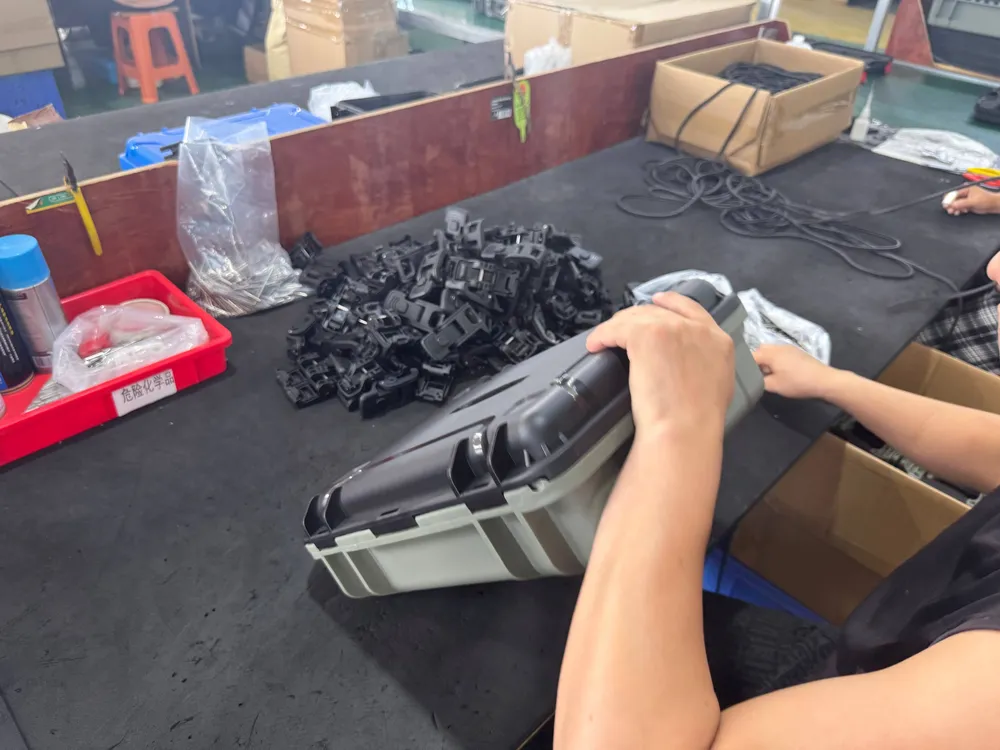
Outdoor service adds one load that indoor cases never see: sunlight. Ultraviolet radiation breaks chemical bonds in polymers, and the damage follows a recognisable sequence — visible colour change first, then a chalky surface, and finally a loss of mechanical strength that turns a tough shell brittle.
The Degradation Sequence
- Colour shift. Pigments and the polymer surface itself change, producing fading or yellowing.
- Surface chalking. The binder at the surface breaks down and releases pigment particles as a loose powder.
- Embrittlement. Chain scission reduces molecular weight, so the material loses the ability to absorb impact — the shell cracks where it previously flexed.
The dangerous stage is the last one, because it arrives quietly. A case can look only slightly faded while its impact strength has already fallen substantially.
How Accelerated Weathering Works
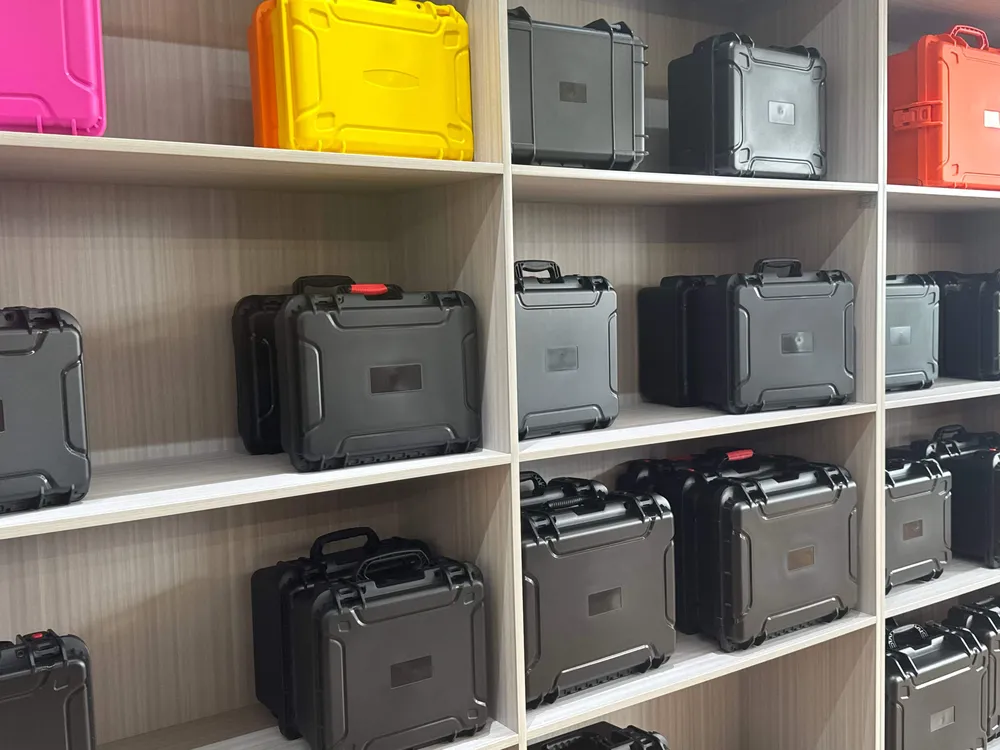
Because natural exposure takes years, laboratories use accelerated devices that cycle intense ultraviolet light with moisture and heat to compress the timeline. Fluorescent UV apparatus and xenon-arc apparatus are the two common families, described respectively in standards such as ASTM G154 and ASTM G155.
The value of these tests is comparative: run two candidates through the same cycle and you learn which holds gloss, colour and impact better. What they cannot do reliably is state exactly how many years a case will last outdoors, because real weather varies enormously by location, angle of exposure and season.
Why Black Shells Usually Last Longer
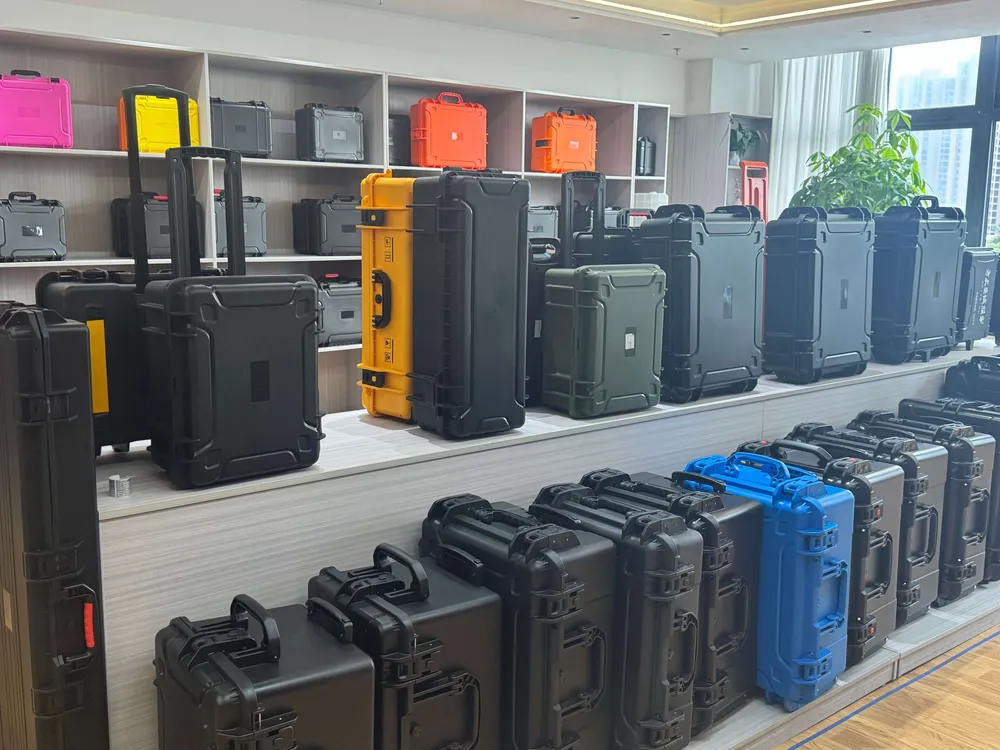
Carbon black is both a pigment and one of the most effective UV screens available for plastics. It absorbs ultraviolet radiation and dissipates it as heat before it can break polymer chains deep in the material, and it also absorbs visible light, which reduces the depth to which any radiation penetrates.
This is why black cases and black internal components are the default for long-term outdoor duty, and why light-coloured cases need a properly engineered stabiliser package to approach the same service life.
Specifying for Long-Term Outdoor Duty
| Decision | Guidance for permanent outdoor use |
|---|---|
| Colour | Prefer dark, carbon-black pigmented shells; treat light colours as a specification that needs extra justification |
| Stabiliser package | Ask what UV stabiliser system the resin carries, not just whether the case is called UV resistant |
| Impact retention | Request evidence of impact performance after weathering, not only before it |
| Seals and foam | Confirm gasket and foam are also suitable for UV and temperature cycling |
| Exposure reality | Note that reflective surfaces, high altitude and tropical sun increase effective dose |
Practical Mitigation
Specification is only half the answer. Storing cases out of direct sun when not in use, keeping them off hot reflective surfaces, and cleaning off abrasive dust all slow degradation. For fixed installations, a simple shade or cover often does more for service life than any material upgrade.