


When a case needs to be stronger, the instinct is to thicken the walls. That usually makes it heavier, slower to produce and — past a point — no better. Structural stiffness in an injection-moulded shell comes mostly from geometry: how material is distributed, not how much of it there is.
Why Uniform Wall Thickness Comes First
Molten plastic cools from the outside in. Where a section is thicker than its neighbours, the material in the middle stays molten longer and shrinks as it finally solidifies, pulling the surface inward. That is a sink mark, and in severe cases it becomes an internal void.
Uneven sections also cool at different rates, which builds internal stress and warps the part. A warped shell does not seal evenly, so the most visible symptom of a wall-thickness mistake is often a leak rather than a crack.
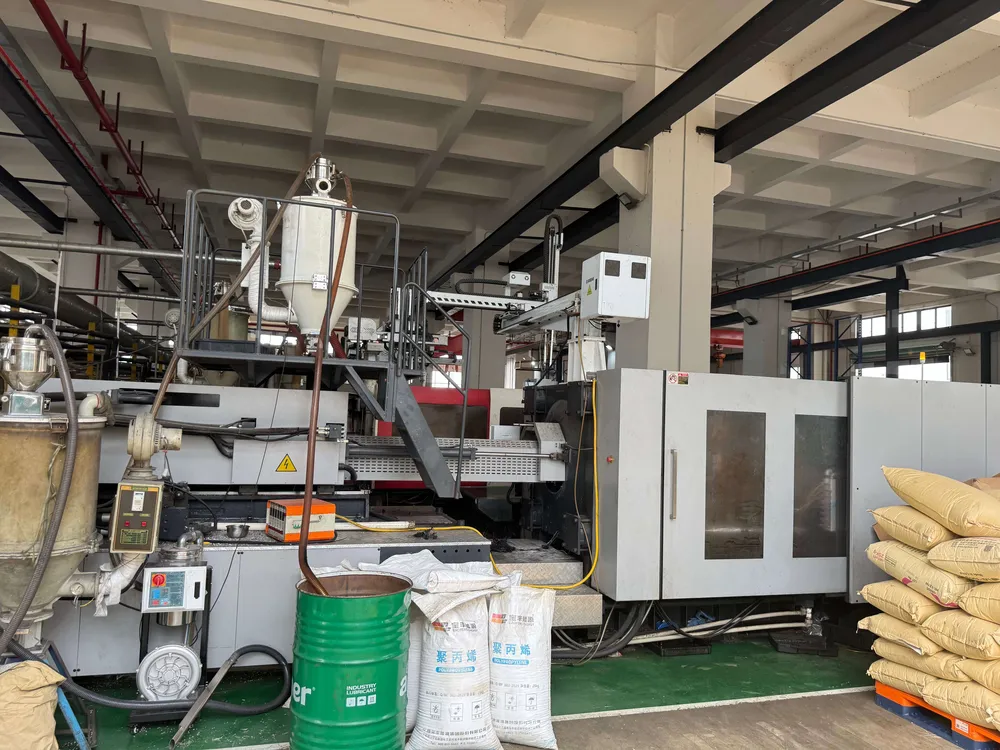
Geometry Over Thickness
| Feature | What it does | Design caution |
|---|---|---|
| Ribs | Add stiffness with little material | Too thick a rib creates a sink mark on the opposite face |
| Corner radii | Spread stress instead of concentrating it | Sharp internal corners are crack starters |
| Gradual transitions | Avoid abrupt section changes | Sudden steps in thickness cause sinks and stress |
| Draft angles | Let the part release from the tool | Insufficient draft causes drag marks and ejection stress |
| Gussets at load points | Reinforce handles, latch bosses and wheel mounts | These carry real load and should not be an afterthought |
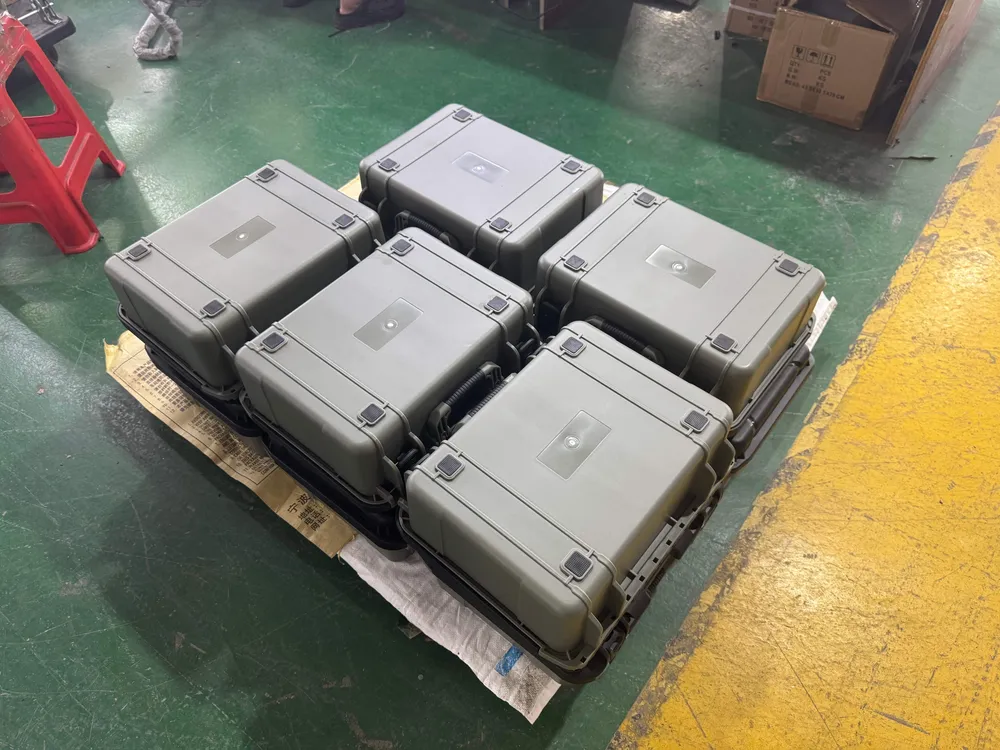
Where Loads Actually Concentrate
A case in service is loaded at particular points, not uniformly. Designing for those points is what makes a light case strong:
- Handles and lift points carry the full loaded weight, repeatedly.
- Latch and hinge bosses take clamping force and opening loads.
- Corners absorb impacts and stiffen the whole structure.
- Wheel and foot mounts concentrate load from rolling and stacking.
- Stacking surfaces carry the weight of cases above.
Reinforcing these five areas achieves more than increasing the general wall thickness, and does it without the cycle-time penalty.
The Practical Trade-Off
Thicker walls do raise impact resistance up to a point, and for very heavy-duty cases there is a legitimate case for more material. But the cost is real: more material per unit, longer cooling time per shot, greater sink and warp risk, and a heavier case to ship. The better sequence is uniform nominal wall, well-designed ribs, generous radii and reinforced load points — then increase thickness only if testing shows it is still needed.