

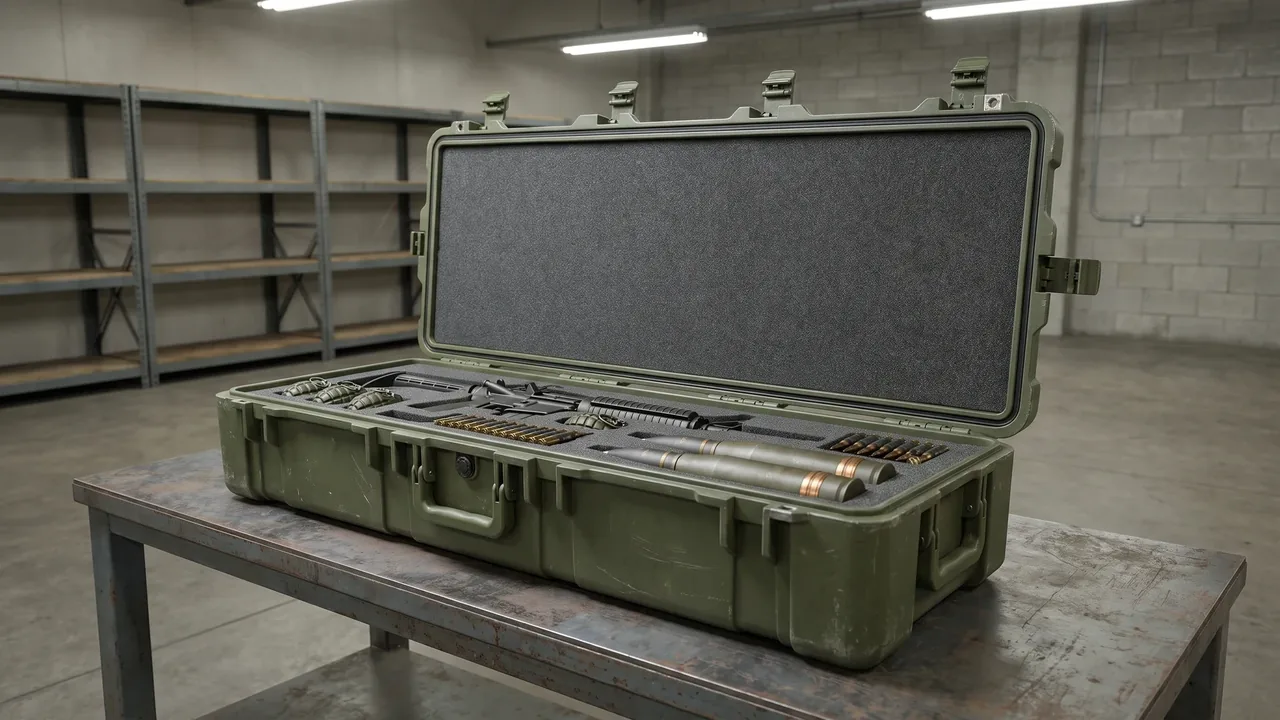
When specifying a protective case, the forming process decides wall thickness uniformity, corner strength, sealing reliability and unit cost. For batch sizes from a few hundred to a few thousand pieces where integrated shape and impact resistance matter, rotational molding usually beats injection molding on overall value; injection fits standardized products with very high volume and stable wall requirements. This article compares the two mainstream processes across process principle, tooling economy, structural behavior and selection method, giving equipment managers, procurement engineers and industrial designers a practical basis for locking the right route early, and avoiding a late discovery that structure or cost no longer matches the program after volume delivery has started.
1. Basic Definitions and Applicability Boundaries
Rotational molding, often called rotomolding, loads powdered or liquid plastic into a hollow mold, then heats while rotating on two axes so the material evenly melts and coats the cavity wall, and finally cools and demolds to yield a seamless hollow shell. Injection molding injects molten plastic into a closed steel cavity under high pressure, holds pressure, cools and ejects a solid part. The core difference is direction: rotomolding builds layer by layer from inside out, suited to large, integrated, thin wall and seamless hollow boxes; injection fills from outside in under pressure, suited to precise, high volume, compact parts.
For protective cases, rotomolding commonly serves boxes above roughly three hundred millimeters, needing integrated rounded corners and drop friendly transport. Injection commonly serves small tool boxes, instrument housings, clip on storage and standardized pieces needing extreme dimensional consistency. Clarifying this boundary is the premise of all later comparison. When a single part is large, asymmetric or must be weld free, rotomolding tolerance is clearly higher, and the cost of mold change is much lower.
Process choice should also weigh lifecycle cost. Rotomold tools are mostly single cavity aluminum or steel, with controllable cost; injection tools are high precision steel with high upfront cost but very low per piece after amortization. Therefore small batch, multi model and fast prototyping favor rotomolding, while single model and stable supply above one hundred thousand pieces favor injection. Further process comparison is available in the article on rotomolded versus injection case routes, which gives empirical ranges for size limits and economic batch.
A practical way to start the comparison is to sketch the part envelope and the expected annual quantity, then ask which process can deliver the required protection at acceptable total cost. Many programs benefit from building one reference case in each process and running the same qualification tests side by side. The test results usually reveal which process better absorbs the real handling and climate stresses the case will meet in service, removing guesswork from the decision.
2. How Rotational Molding Works
The standard rotomolding cycle has six stages: loading, mold closing, heated biaxial rotation, melt adhesion, cooling and demolding. During loading, a weighed resin powder quantity is added based on target wall thickness; after closing, the mold enters a heating chamber and rotates slowly on main and secondary axes so powder coats the whole cavity evenly under centrifugal and gravity effects, even on irregular surfaces achieving near uniform coating.
In heating, resin softens and fuses into a continuous film around two hundred sixty to three hundred degrees Celsius; rotation guarantees even thickness on complex surfaces. Cooling then moves the mold out and applies water mist or air so the shell shrinks and releases. Because there is no injection pressure, the mold sees low load, so lower cost aluminum molds are usable, with long life and simple upkeep, and a single mold can produce tens of thousands of pieces while cavity accuracy decays slowly.
Another trait is almost no gate or flash; the part surface is seamless with continuous corners, favorable for waterproofing and impact. Internal ribs, bosses and slots can be molded integrally, reducing assembly and lowering seal weak points from joining. Readers wanting the integrated behavior of rotomolded boxes can see rotomolded case structure, which lists typical wall and rib layout experience.
3. How Injection Molding Works
Injection has six steps: plasticizing, clamping, injecting, holding, cooling and ejecting. Pellets become melt in the barrel by screw shear and heat, then fill the closed cavity at hundreds to thousands of bar pressure. Holding compensates cooling shrinkage to avoid sinks and voids; after cooling, the mold opens and ejector pins push the part out, with the whole cycle often only tens of seconds to a few minutes.
Because pressure is high, the injection mold must be rigid steel with cavity accuracy near hundredths of a millimeter, so injection parts show strong consistency, smooth surface and fine clips and thin walls. For symmetric, uniform wall boxes, injection achieves excellent batch stability, and any two pieces in a batch are nearly fully interchangeable. But high pressure limits part size and shape complexity; large box molds need huge tonnage and clamp force, hurting economy.
Injection strength lies in standardization and scale, such as electronic housings, portable tool inserts and standard clips. For long term, single model, very high volume supply, injection unit cost advantage is marked. For engineering behavior of injection boxes see injection molded case features, which explains gate layout and weld line control specifically.
4. Tooling Cost and Minimum Order Quantity
Tooling is a hard constraint. Rotomold tools are mostly aluminum or cast steel; a single mold often costs only twenty to forty percent of an equal size injection steel mold, with shorter lead time and easy iteration. Injection steel molds must bear high pressure and hold precision, raising material and machining cost, with lead time counted in months and large sunk cost, demanding high demand certainty.
On minimum order, rotomolding economic quantity can be as low as dozens, fitting research prototypes, small batch equipment and custom storage boxes; injection economic quantity is usually thousands to tens of thousands, needing stable volume to amortize. For multi model, low volume industrial and special storage needs, rotomolding is clearly friendlier, able to validate with small batch before demand is fully stable.
Consider change cost too. Rotomold molds are easy to modify; adjusting wall, adding ribs or bosses finishes in short cycles. Injection molds once fixed, structural change often means re machining cavities at high price. Procurement should write expected lifecycle volume into the protective case selection guide as a process criterion, and choose the most economical forming route accordingly.
5. Wall Thickness Distribution and Uniformity
Wall uniformity directly affects strength to weight and resistance to deformation. Rotomold powder adheres evenly under rotation, theoretically giving close thickness everywhere; in practice, by controlling speed, temperature and time, key load zones can be thickened, achieving the design intent of local reinforcement. But as a coating buildup, rotomold absolute thickness precision is slightly lower than injection, usually compensated by adding safety margin.
Injection under high pressure gives near equal end of fill pressure across the cavity; with good gate layout it yields high thickness consistency and repeatability. For boxes needing stacking fit and clip interlock, this consistency is key, guaranteeing stable fit clearance among tens of thousands of pieces. But injection wall should not be too thick, or shrinkage, internal stress and longer cycle appear, requiring wall balance at design stage.
Overall, rotomolding wins on designable thickness gradient and continuous stress free corners; injection wins on precise size and stable batches. In drop and stack heavy scenarios, the continuous rotomold shell is less likely to show gate weak points. For wall and strength relation read case wall thickness and structural strength, which gives suggested wall ranges under different loads.
It is worth noting that wall thickness also interacts with weight budget. A thicker rotomold wall raises strength but also mass, so the design must balance payload against total shipping weight. Injection can hold tighter wall windows, which helps when the weight ceiling is strict. In both cases, running a simple finite element check on the loaded corners is a good habit before committing the tool, because corner stress is where most service failures begin.
6. Ribs, Corners and Radii
Corners and radii are the core of impact design. Rotomold shells naturally form continuous radii in cavity, with smooth stress distribution and no crack start under impact; meanwhile integral ribs in the mold raise stiffness without much weight. Rotomold radii can be large, friendlier to internal equipment cushioning and removal, and reducing damage from corner collision during transport.
Injection is limited by draft and ejector mechanism; sharp angles and deep ribs need careful design or molding difficulty, drag or sink appear. Complex internal ribs in injection often need sliders or inserts, raising mold complexity and unit cost. But injection is stronger at fine clips, thin walls and precise locating posts, fitting standardized internals and guaranteeing assembly consistency at high volume.
Therefore when a box stresses drop resistance, impact and integration, rotomolding freedom is higher; when it stresses precise assembly and batch interchange, injection leads. For users wanting both overall impact and internal locating, combine with the custom foam lining guide for internal compensation, using foam liner to make up for shell internal locating shortage.
7. Seal Design and Waterproof Performance
Waterproof sealing is a key metric. Rotomold boxes are seamless hollow shells; the fit face between lid and body can be integrated at mold stage to guarantee flatness and gap, then with elastic gasket reach high dust and water grades. Because the shell has no seams, the water path is short with few leak points; typical products meet IP65 to IP67, with grade definitions in the IP rating guide, which quantifies immersion depth and dust protection.
Injection boxes also achieve good sealing, but as combined parts they have more fit faces, needing stricter process control for each batch flatness and compression. For small injection housings, sealing often relies on face O ring or silicone strip, with sensitive installation dependent on operator consistency, and slightly higher batch fluctuation risk.
In long use, rotomold integrated fit face deforms more evenly under temperature, so sealing reliability decays slower; if some injection batch drifts in size, occasional leakage may appear. Whatever the process, gasket aging is the main failure mode; refer to seal material selection for periodic replacement, and sample compression set at incoming inspection.
8. Impact and Drop Resistance
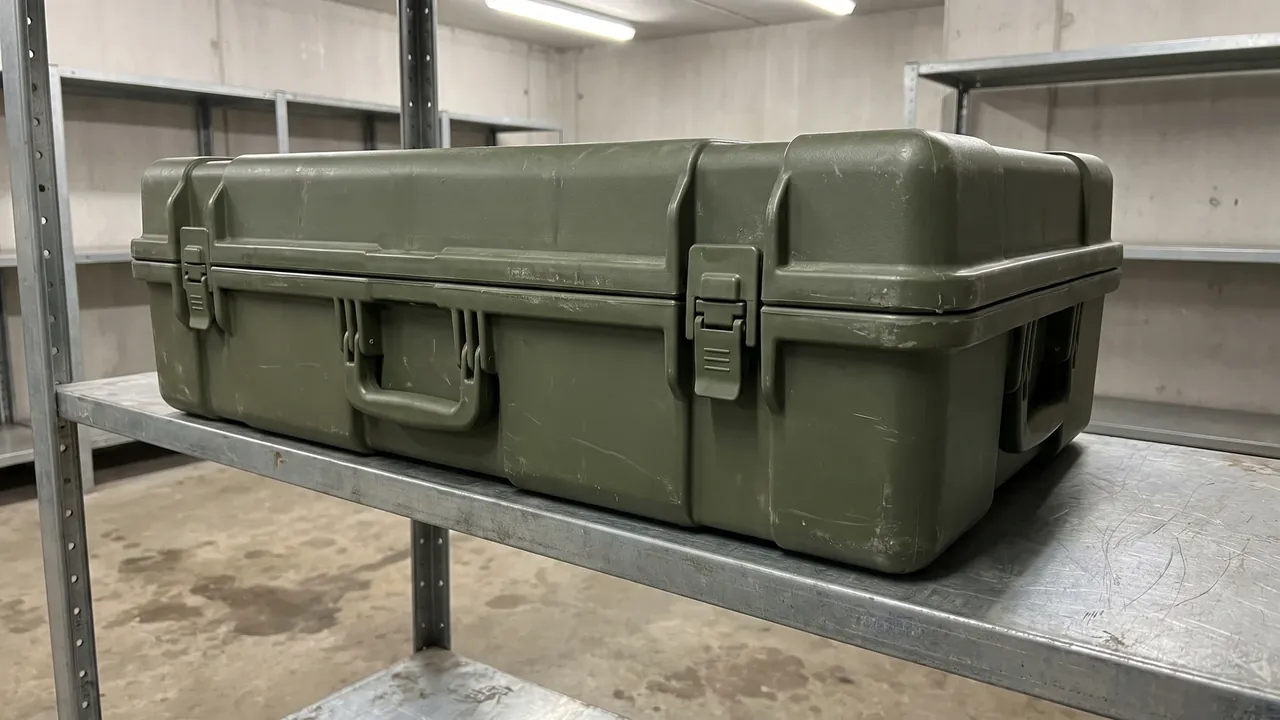
Under drop impact, box failure often starts at corners, edges and gates where stress concentrates. Rotomold shell is continuous and seamless with natural radii, so impact energy spreads through overall deformation and local peak stress stays low; empirical drop tests show well designed rotomold boxes with proper wall and ribs perform stably from one point two to one point five meters. Engineering background of impact protection standards is in MIL-STD-810H explained, which systematically describes drop procedures and orientations.
Injection boxes, when gate or weld line sits in load zone, may become crack source; but in non load zones, its high precision brings tight fit aiding overall stiffness. With good gate layout and wall transition, avoiding weld line on corners, injection boxes also gain good drop resistance, only needing higher design margin and more careful mold flow analysis.
From structural root, rotomolding continuous nature naturally helps impact; injection precise control helps consistency. For field, vehicle and airdrop strong impact, rotomold tolerance is higher; for lab and line controlled environment, injection is enough and cheaper, and should be graded by use scenario.
9. Load Bearing, Stacking and Stiffness
Stacking ability depends on top face planar stiffness and corner support. Rotomold boxes can raise stacking load by preset transverse and longitudinal ribs in lid and base and thicker corners; empirically a medium rotomold box bears several times its own weight from upper stacks. Its continuous shell deforms gently under uniform load, avoiding local collapse, fitting long haul container and shelf stacking.
Injection stiffness comes from precise ribs and walls, with good batch consistency and predictable stiffness at same design; but large injection boxes limited by clamp and shrinkage often need split assembly, where stiffness joint needs extra reinforcement, or step deformation appears under stacking load. In automated warehouse and container transport with high stacking, size consistency directly affects safety and robot picking.
Selection should derive needed stiffness from actual stack layers and gross weight, leaving safety factor. For stacking and corner structure see case stacking structure, turning process traits into verifiable load metrics, and doing stack static pressure and corner drop review at acceptance.
Do not forget the dynamic part of stacking: during transport the upper boxes transmit not only static weight but also vibration and shock through the corner posts. A case that passes a static stack test may still creep or crack under long road or rail vibration, so the stacking specification should state both the static load and the duration and spectrum of the dynamic condition. Aligning this with the transport test plan keeps the structural claim honest and defensible.
10. Compatibility with Liners and Foam
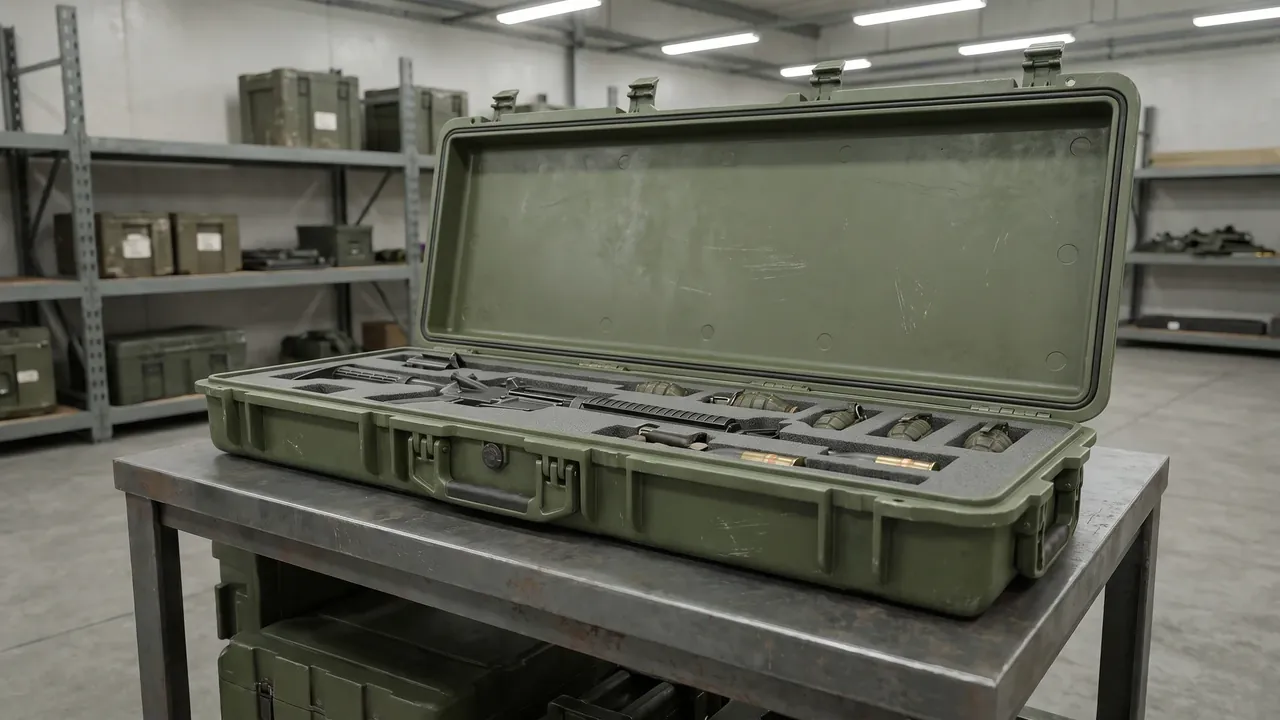
Much case value comes from internal cushion and locating. Rotomold interior is smooth and free in shape, easy for later pre cut foam, thermoformed liner or modular divider. Because shell is integral, liner can fix by hook loop, clip or inlaid slot, flexible for multi model shared one box, the one box multi use scheme, significantly reducing the variety of spare boxes for equipment support.
Injection interior often already has precise locating posts and clips, high standardization but less modification room; changing internals often means re tooling or dedicated insert, with slow response. For users with frequent equipment update and varied config, rotomold with cuttable foam is more flexible, able to quickly slot by equipment shape on site.
Either process, liner material relates to protection grade. Common foams include crosslinked polyethylene, polyurethane and nitrile, with different energy absorption and density or rebound. Liner design can refer to case internal foam types and pre cut foam, landing buffer need on concrete material and thickness, and doing drop buffer calculation by equipment weight.
11. Surface Treatment, Marking and ESD Options
Surface treatment affects weather, wear and identification. Rotomold surface is powder melt film, can be integral colored, uniform and not peeling; also can preset relief logo, model engraving and anti slip texture in mold, reducing later printing. For asset management, reserve QR nameplate or laser area, combined with case labeling asset tracking for ledger, realizing full cycle trace of inbound, outbound and maintenance.
Injection surface is smooth, fits screen print, pad print and label, and because precise, logo position is consistent; if antistatic needed, add conductive masterbatch in material for integral ESD, meeting electronic storage, with scheme in ESD antistatic protective case, which explains surface resistance and grounding requirements.
In outdoor and industrial environment, UV and chemical resistance matter. Rotomold commonly uses linear low density polyethylene with excellent weather; injection can choose engineering plastic for rigidity and temperature. Material tradeoff should combine use environment, compared with outdoor case material selection, and if necessary do UV aging and salt spray verification.
12. Lead Time, Delivery and Volume Flexibility
Production cycle decides project rhythm. Rotomold single cavity, longer cycle, each part minutes to over ten minutes, fits small batch multi variety parallel; its advantage is fast tooling and easy change, from prototype to batch often weeks. For pre qualification sample boxes and temporary support boxes, this flexibility is significant, letting development units validate storage scheme before model freeze.
Injection single part cycle is short and fast, but upfront tooling and tuning take time, fitting mass continuous production after demand locked. Once stable, daily output far exceeds rotomold, unit delivery cost drops fast with volume, fitting long term projects already fixed. But its elasticity is poor, and sunk cost is hard to recover when demand changes.
So delivery sensitive R and D and small batch prefer rotomold; cost sensitive, huge volume and fixed model prefer injection. When writing procurement, put first sample cycle, ramp cycle and annual demand together, if needed refer to custom case prototyping timeline for milestones, binding process route with project schedule.
It is also sensible to stage the order: approve a first article on the chosen process, confirm it against the spec, then release the volume. This staged release limits exposure if the field reveals an issue, and it lets the supplier stabilize process parameters on a smaller run before the full quantity. For programs with uncertain final quantity, a staged plan is cheaper insurance than a single large commitment.
13. Selection Decision Tree
Converge dimensions into a decision tree: first ask whether single box size exceeds three hundred millimeters or shape is asymmetric; if yes, lean rotomold. Second ask whether expected volume exceeds tens of thousands and model fixed; if yes, lean injection. Third ask whether stressing impact, seamless and fast change; if yes, rotomold better. Fourth ask whether stressing precise assembly, batch interchange and minimal unit cost; if yes, injection better.
Real projects often mix: shell rotomold for strength and waterproof, internals injection for locating and precision, then foam for buffer. This hybrid is common in industrial storage boxes. For users wanting both overall protection and internal precision, combine the protective case selection guide with this article to form a spec, clarifying process division of each part.
Final decision returns to certification and standard: if product must meet transport vibration, drop or environment tests, write corresponding test grade into contract appendix and require test records at delivery. Process is means; reliability satisfying use environment is the goal, and it is suggested to use actual working condition test grade as final acceptance threshold.
FAQ
Q: What is the most fundamental difference between rotomolded and injection cases? A: The most fundamental difference lies in the forming method and shell shape. Rotomolding loads plastic powder into a rotating mold, heats it to melt and coat the cavity from inside out, yielding a seamless hollow shell. Injection forces melt into a closed steel cavity under high pressure from outside in, yielding precise solid or split parts. Therefore rotomolding wins on integration, natural radii and high impact tolerance, fitting medium large size and low volume variety; injection wins on dimensional consistency, precise surface and extremely low scale cost, fitting single model high volume. Procurement should clarify size, volume and environment before deciding, avoiding focus on unit price alone while ignoring lifecycle fitness. A useful check is to compare total cost over the program rather than the first piece price, because rotomold tooling is cheap while injection tooling is expensive but amortizes at scale. If the part is large, asymmetric or must be weld free, rotomolding is usually the safer route. If the part is small, symmetric and needed in huge stable quantity, injection is usually cheaper. When doubt remains, build one sample of each process and test both against the real drop, stack and ingress requirements, then decide with measured data instead of assumption.
Q: Which process is more cost effective for small batch customization? A: Small batch customization is usually more cost effective with rotomolding. Rotomold tools are mostly aluminum single cavity, low cost and short lead, with economic quantity as low as dozens, easy to modify, fitting research prototypes, support boxes and multi model shared boxes. Injection steel molds need high upfront cost and thousands to tens of thousands to amortize, so small batch unit price is often high. If later volume grows and model is fixed, re evaluate injection long term advantage. Writing first year demand and change frequency into selection basis is pragmatic, avoiding premature heavy mold investment that ties up capital. Beyond tooling, rotomolding also saves on rework: when a fixture or bracket changes, the aluminum mold can be adjusted in days, whereas an injection steel cavity may need weeks and significant cost. For programs that iterate designs during field trial, this agility often outweighs the higher per piece cost of rotomolding at low volume, making it the lower risk choice overall.
Q: Which process gives more reliable waterproof sealing? A: Both can reach high dust and water grades, but rotomolding is structurally superior. Rotomold boxes are seamless hollow shells with few fit faces and no seams, short water path, and with elastic gasket stably reach IP65 to IP67; injection boxes are often multiple combined parts with more fit faces, needing stricter process control for each batch flatness and compression. Either process, gasket aging is the main failure, should be checked regularly and replaced per seal material selection to maintain sealing long term, and do immersion sampling before rainy season or high humidity. The advantage of rotomolding is not that injection cannot seal, but that it has fewer interfaces where a dimensional drift could let water in. In high volume injection runs, statistical variation in clamp and cooling can shift the lid seat by fractions of a millimeter, enough to change compression on the gasket. With a one piece rotomold shell, that seat is molded as a continuous plane, so the sealing behavior is more uniform across the whole production batch and across temperature cycles.
Q: Is rotomolded always better than injection in drop resistance? A: Not absolutely, only higher tolerance. Rotomold shell is continuous and seamless with natural radii, impact energy spreads through overall deformation, local peak stress low, less likely to crack in field, vehicle and strong impact. Injection, if gate or weld line sits in load zone, may become crack source, but with optimized gate layout and wall transition also gains good drop resistance. The key is selecting design margin by real use environment and referencing MIL-STD-810H explained for corresponding grade verification, judging by test data rather than intuition. In practice, a well engineered injection box with balanced wall and relocated gates can pass the same drop program as a rotomold box, so the process alone does not decide the result. What rotomolding offers is design headroom: because there is no weld line and no brittle gate, the failure mode under unexpected overload is gradual denting rather than sudden split, which is often preferable for protecting critical contents during rough handling.
Q: Can both processes accept liners and foam? A: Both accept liners and foam, only flexibility differs. Rotomold interior is smooth and free, easy for pre cut foam, thermoformed liner or modular divider, fitting frequent equipment update; injection interior often has precise locating posts, standardized but less modification room, often relying on dedicated insert. Either way, choose crosslinked polyethylene, polyurethane or nitrile foam by equipment weight and shock spectrum, referencing case internal foam types for the plan, so buffer and locating are both satisfied. The practical distinction shows up when the payload changes: with a rotomold shell you can re cut a foam insert on site and re attach it with hook loop, whereas an injection box built around fixed posts may require a new mold to change the layout. For equipment that is refreshed every few years, rotomolding keeps the outer case valid while only the cushioning is renewed, which reduces lifetime cost and waste compared with replacing the whole container.
Q: How much do the tooling costs differ? A: At equal size, rotomold tooling is typically only twenty to forty percent of injection steel tooling. The gap comes from mold load: rotomolding has no injection pressure, so aluminum molds work; injection must bear hundreds to thousands of bar, demanding rigid steel and micron precision. Thus rotomolding opens fast, cheap and iterative; injection opens slow, expensive, but per piece amortized extremely low. At project initiation, put tooling fee and expected volume together, judging by lifecycle unit cost not first piece price, and reserve budget for change in case demand shifts. As a rule of thumb, if lifetime volume is below a few tens of thousands, the rotomold route usually wins on total cost even with a higher piece price; above that band, the injection route pulls ahead as the heavy tooling is spread across more units. The crossover point depends on wall thickness, size and resin, so it should be calculated per project rather than assumed from a generic threshold.
Q: Why are large boxes rarely injection molded? A: Large boxes are rarely injection molded mainly due to clamp force and shrinkage limits. Injection pressure is high; the larger the box, the clamp force and mold volume rise by orders, with unbearable equipment and mold cost; meanwhile thick wall injection risks sinks, internal stress and long cycle. Rotomolding has no high pressure constraint, can integrally form large continuous shell with rounded low stress corners, fitting large transport and storage boxes. Insisting on injection large parts usually means split assembly, bringing fit and sealing risk, so large size prefers rotomold. There is also a quality dimension: a very large injection part cools unevenly, so warpage and sink marks are hard to control, and the required press size may simply not exist in a given factory. Rotomolding scales with oven and mold size rather than with clamp tonnage, so a big case is just a bigger mold in a bigger oven. For this reason, transport boxes above roughly six hundred millimeters are almost always rotomolded in practice, while injection stays in the small and medium range.
Q: Can shell be rotomolded while internals injection molded? A: Absolutely, and this is common in industrial storage boxes. Shell uses rotomolding for overall strength, waterproof and impact; internal locating, clips and divider use injection for precision and batch consistency; then foam completes buffer, combining both strengths. The key is interface dimension chain control: shell reserves inlay slot or clip, internals fit by tolerance. For users wanting both overall protection and internal precision, this hybrid often beats single process, and can iterate internal parts later without touching shell mold. The division of labor also helps cost: the expensive injection tooling is only for the small internal pieces that benefit from tight tolerance, while the bulky outer shell uses the cheaper rotomold tool. When the internal layout changes, you re tool a small insert instead of the whole case. This modularity shortens redesign lead time and keeps most of the existing tooling investment valid, which is why system integrators frequently adopt the mixed approach for complex equipment kits.
Q: Which process indicators should procurement write into contract? A: Suggest writing four types into spec and contract appendix. First is process and material, stating rotomold or injection and resin grade. Second is structure, including wall, ribs and stacking load. Third is protection grade, stating IP grade, drop height and vibration standard, such as citing IP rating guide and MIL-STD-810H explained. Fourth is acceptance and documents, requiring first sample confirmation, batch test records and material certificate. Quantifying indicators avoids later dispute, and third party test is suggested as arbitration basis. Beyond these four, also fix the sampling plan and the responsible party for retest if a batch fails, because vague acceptance language is where most disagreements start. Specify that the supplier provides the molding parameter record for the accepted sample, so future batches can be compared against it. Including a clear change control clause, requiring customer approval before any mold, material or process change, protects the buyer when volume production begins and keeps the delivered cases consistent with the qualified sample.