

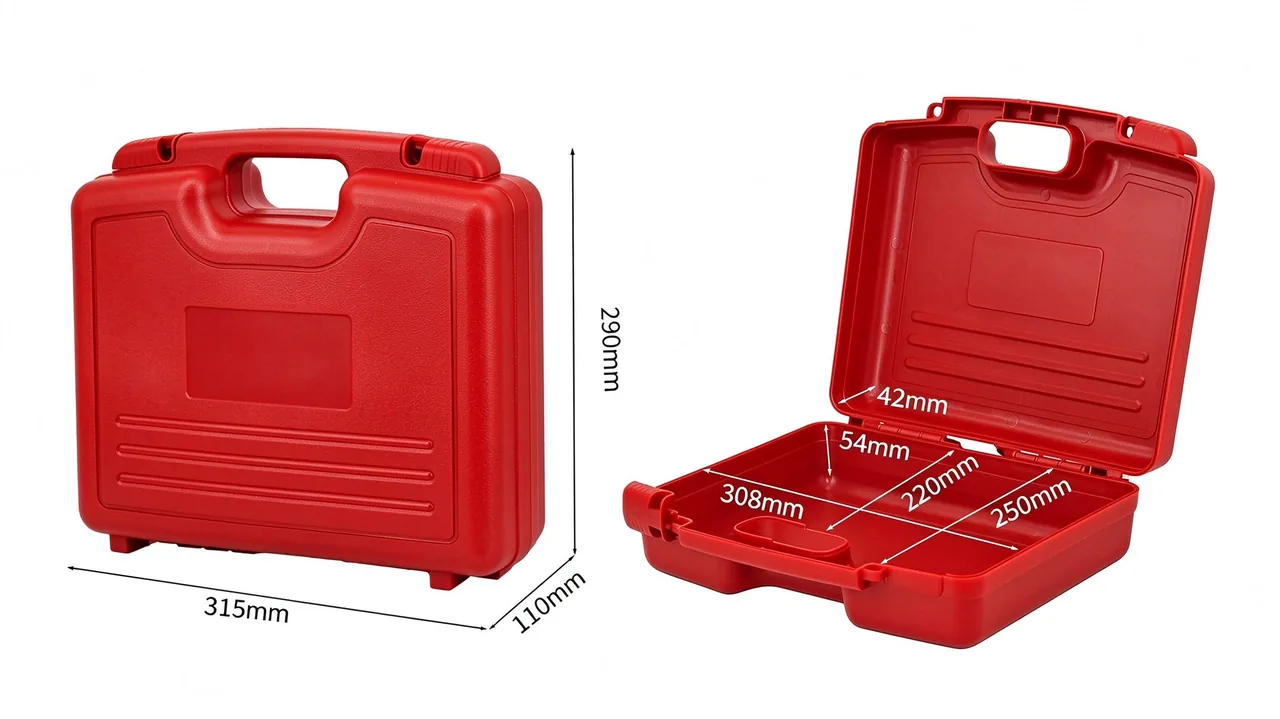
In material selection for protective cases, aluminum alloy and engineering plastic are the two most compared options. When the application stresses electromagnetic shielding, high stiffness, extreme temperature tolerance and long service life, aluminum cases have the edge; when the scenario stresses lightweight, corrosion resistance, cost control and impact buffering, plastic cases are usually more practical. This article compares the two materials across density, strength, corrosion, shielding, sealing, temperature control, process cost and maintenance, giving procurement and engineering a basis to decide between budget and performance with evidence.
1. Basic Properties and Applicability
Aluminum cases are usually built from aviation or anti rust aluminum sheet by bending, welding or integral extrusion, offering high stiffness, stable dimensions and a natural metallic electromagnetic shield. Plastic cases are formed from polypropylene, polyethylene, ABS or engineering plastics by rotomolding, injection or thermoforming, giving a seamless, light and corrosion resistant shell suited to wet, salt and chemical environments.
By boundary, aluminum fits instruments, communications, medical and defense where stiffness, shielding and life matter; plastic fits outdoor, vehicle, marine and general storage where light weight and corrosion resistance dominate. Defining the duty is step one: if the contents are precision electronics needing electromagnetic interference protection, prefer aluminum; if the contents are general equipment exposed to water and chemicals long term, prefer plastic. For an overall comparison see aluminum versus plastic case. In practice, many buyers start from the duty statement rather than the material: write down what the case must survive, whom it must serve, and how long it must last, then let those answers point to the material family. This ordering avoids the common trap of falling for a sample's look or price before the duty is even defined. It also makes later supplier conversations faster, because the specification is already half written. Keep the duty statement short enough that everyone reads it, one page at most, and attach it to every quotation request. When suppliers respond to the same written duty, their answers become comparable and the material debate usually settles itself within two rounds of questions.
2. Density and Weight
Density decides self weight at equal volume. Aluminum density is about two point seven grams per cubic centimeter, far below steel but clearly above plastic; polypropylene is about zero point nine grams, polyethylene about zero point nine five, ABS about one point zero five, all markedly lighter than aluminum. Thus on large cases the plastic weight advantage is striking, helping man portable, drone and air load applications.
But light weight is not the only metric. Aluminum with thin wall and ribs can reach higher stiffness at lower self weight, making total balance more controllable; plastic, though light, often needs thicker wall or complex ribs to match stiffness, partly offsetting the gain. Selection should compare total weight after adding rated load, not just material density. For lightweight design see lightweight protective case guide. Weighing a loaded sample is the most honest test: fill it with representative equipment, carry it the way crews actually would, and check whether stairs, vehicle loading, or aircraft limits become the binding constraint. Weight saved on the case can be reinvested in a better liner or a thicker shell wall where protection matters more, which is often the smarter allocation of the mass budget. Record the measured loaded weight for each configuration and keep it in the fleet ledger; those numbers become the baseline for transport planning and for any future redesign. Over a few years the ledger also shows whether the chosen material class actually met its weight promise in service.
3. Strength, Stiffness and Deformation
In strength, aluminum yield is far above common plastics, giving clearly higher stiffness and deformation resistance at equal wall, with less shape change under stacking and side load, fitting heavy equipment. Plastic elastic modulus is lower, deforming more under load, yet with ribs, corner thickening and sound structure it still meets most general storage needs.
Stiffness also affects internal locating accuracy. Aluminum deforms little under vibration and shock, friendlier to precision instruments; plastic deforms more, needing fuller foam buffer to compensate. For scenes needing both light and stiff, a hybrid of aluminum frame with plastic panel balances both. The weight strength balance method is in case weight strength balance. When precision optics or sensors are involved, ask the supplier for a stiffness comparison at your actual load, not a generic datasheet value; the difference between materials widens or narrows depending on span, wall, and rib layout. A short deflection test on two sample cases tells more than pages of modulus figures, and it costs an afternoon, which is cheap insurance for expensive instruments. Rib layout matters as much as material: a well-ribbed plastic panel can outperform a flat aluminum sheet of similar weight, while a poorly ribbed aluminum panel wastes its inherent advantage. Ask to see cross-sections of both options before judging stiffness on material names alone.
4. Impact and Drop Performance
Under drop impact, aluminum with high toughness rarely brittle fractures, and can keep working after local dent; but its hard surface may crack at corners under strike, so welds and bends need attention. Plastic, especially rotomolded polyethylene, has good toughness and energy absorption, releasing energy by dent or rebound, not easy to crack, fitting frequent handling and field knocks.
The two fail differently: aluminum mostly shows plastic dent or weld crack, plastic mostly local puncture or crack growth. For very high content value, set the material threshold by liner buffer and drop test grade. Relevant environment test background is in MIL-STD-810H explained, writing drop height and orientations into acceptance. Record the failure mode you can tolerate best: if a dent is acceptable but a crack is not, rotomolded plastic has the friendlier signature; if surface dents are unacceptable for presentation or sealing reasons, aluminum with a protective finish deserves a closer look. Matching the failure mode to your tolerance matters more than any single number. Share the tolerance with the supplier explicitly, because engineers can then bias the design toward your priority: thicker corners for dent resistance, tougher alloy for crack resistance, or sacrificial edge protectors that take the hits first. This conversation costs nothing at design time and saves repairs for years.
5. Corrosion, Weathering and Environment
Plastic is inherently resistant to water, salt spray and many chemicals, almost no rust under coastal, chemical and outdoor exposure, with low upkeep; aluminum can raise corrosion resistance by anodizing or coating, yet still risks pitting in chloride environments and after scratches, needing finer protection and inspection.
On temperature, aluminum tolerates a wider range and keeps strength better at high heat; common plastic drops performance in high or low brittle zones, needing temperature rated or modified grades. For extreme cold transport, care about low temperature impact toughness, with reference in low temperature brittleness cases. Overall, plastic wins on maintenance free corrosion resistance, aluminum wins on temperature and strength retention. In mixed environments, inspect the actual exposure map: a case that spends most of its life in a vehicle cabin faces milder conditions than one strapped to a deck. Matching material to the exposure profile, rather than to the single worst day, usually yields the more economical and equally safe choice. For fleets operating across climate zones, define inspection intervals per zone rather than per calendar: tropical coastal routes deserve more frequent checks than dry inland ones. This simple differentiation catches corrosion and UV aging where they actually occur, instead of wasting attention where conditions are benign.
6. Conductivity, Shielding and ESD
Aluminum is a good conductor, the case itself forms a Faraday cage shield, naturally suppressing electromagnetic interference and static, fitting storage of communications, radar and electronic countermeasure equipment. Plastic is an insulator with no native shield; if protection is needed, a conductive coating, metal mesh or conductive fabric must be added inside to form a shield liner.
For static control, plastic can reach integral antistatic by adding conductive masterbatch, meeting electronic storage; aluminum drains static by grounding. If electromagnetic compatibility is strict, aluminum is the more direct choice, or design a composite shield per EMI shielding case guide. Decision should write the electromagnetic environment grade into requirements, then infer material. Shielding performance should be verified with a real test, not assumed: place a test transmitter inside and measure attenuation at the frequencies you care about, since seams, gaskets, and ports dominate the result. Remember that every added opening, such as a charging port or valve, becomes a shield leak that needs designed treatment. Keep a shielded version of critical electronic sets even when most transports seem harmless, because interference events are rare but expensive when they strike. For fleets with both shielded and unshielded needs, color coding or marking the shielded units prevents mix-ups during fast loading.
7. Seal Structure and Ingress Grade
Both materials achieve high seal grades, but by different means. Aluminum cases usually press an elastic gasket at lid body interface, with precision machined fit face reaching IP65 to IP67; plastic cases often integrate fit face flatness at mold stage, short water path, few leak points, also reaching IP65 to IP67.
Aluminum machined face has high accuracy and strong consistency; plastic integral shell deforms more evenly under temperature cycles. Either way, gasket aging is the main failure, should follow seal material selection for periodic replacement and immersion sampling before inbound. Grade definitions are in IP rating guide. Whichever shell you choose, buy the gasket as a documented spare part with a stated replacement interval, because the seal, not the shell, is what actually keeps water out. A well-chosen plastic case with a maintained gasket will outperform a neglected aluminum case in any wet environment, which is why maintenance discipline outweighs material advantage. During acceptance, verify the seal on a loaded case rather than empty, because liner pressure and contents can change the closure geometry. Keep immersion sampling in your incoming routine for new suppliers and after any design change, so the rating you paid for is the rating you receive.
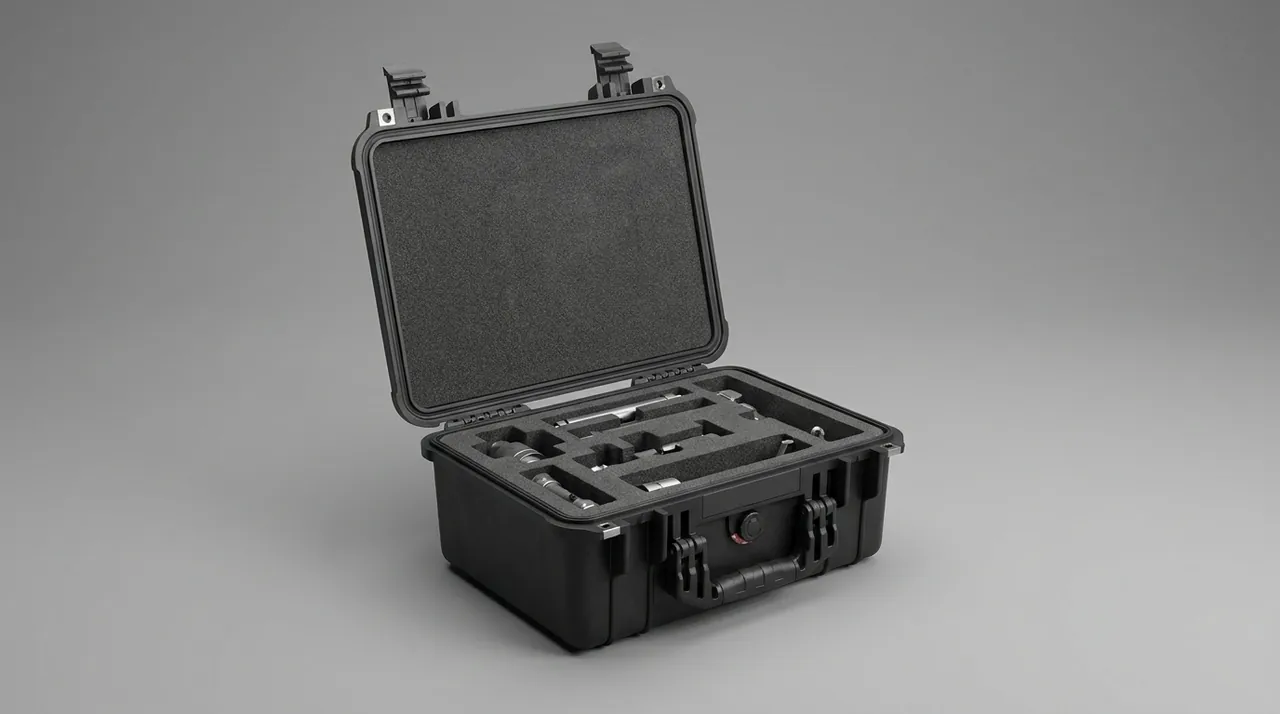
8. Insulation, Temperature and Condensation
Aluminum conducts heat fast, so internal external temperature difference transfers quickly, easily condensing on the inner wall in cold warm alternation, bad for humidity sensitive equipment; plastic has low thermal conductivity, some insulation, slowing temperature transfer and lowering condensation risk. For strict temperature control, plastic is friendlier, or add insulation liner inside aluminum.
Condensation control also uses desiccant, humidity indicator card and breathable valve. Aluminum, with good conduction, responds faster with active or passive temperature control; plastic, with good insulation, fits passive short haul warmth. Design reference is condensation control in cases. Selection should consider the allowed humidity window and transit time together. For humidity-sensitive loads, run a trial transit with a data logger before the real mission; the humidity curve reveals whether insulation, desiccant, or active control is the right lever. Aluminum cases benefit most from an insulating liner, while plastic cases often need only a correctly sized desiccant to stay inside the window. Log the humidity data after every trial and real mission, building a seasonal profile of your routes; patterns that repeat across missions justify investing in active control, while one-off excursions usually point to packaging discipline instead. Share the profile with the case supplier so the solution matches the evidence.
9. Process and Manufacturing Cost
Aluminum cases mainly use sheet metal, welding and machining, high single piece flexibility and fast change, but batch consistency relies on tooling and welder skill, and unit cost drops limited after scaling. Plastic cases mainly use mold forming, high first mold cost, but fast mass cycle and low unit cost, fitting stable high volume supply.
Cost should be seen over lifecycle: small batch, multi model, frequent change favors aluminum; large batch, fixed model favors plastic. If tooling, evaluate amortization per custom case mold cost analysis. Procurement should list first sample cycle and ramp curve to avoid later delivery loss of control. Ask each candidate for a realistic ramp curve and hold them to it: the gap between first sample and stable batch production is where delivery promises usually break. For aluminum, verify welder qualification records; for plastic, verify mold maintenance history. Both questions take minutes and predict reliability better than any brochure claim. When total volumes are uncertain, negotiate an option structure: a mold with defined per-unit pricing that remains valid if volumes grow, or an aluminum path with a documented route to partial automation later. Flexibility in the contract often matters more than a few percent on unit price.
10. Surface Treatment, Appearance and Marking
Aluminum can gain wear and corrosion resistant appearance by anodizing, sandblasting and coating, and laser engrave model and asset number for durable marking; plastic can be integral colored or screen printed, many color options, but some grades fade under strong ultraviolet, needing weather resistant material or anti UV layer. For weathering see UV weathering outdoor cases.
On marking management, aluminum engraving lasts longer in harsh environment; plastic screen print wears under frequent friction. For units needing asset tracking, combine with case labeling asset tracking for ledger, planning material trait and marking together, reducing later re marking cost. Standardize the marking layout across your fleet regardless of material, so asset numbers sit in the same place on every case and scanning routines stay simple. Choose marking methods that survive your cleaning chemicals, and verify legibility after a month of real service before rolling the scheme out fleet wide. When marking must survive abrasion from handling, prefer methods that sit below the surface, such as engraving on aluminum or in-mold labeling on plastic, over surface prints that any cleaner can attack. Test the chosen method with your actual cleaning agent on a sample before standardizing.
11. Stacking, Handling and Ergonomics
In stacking, aluminum stiffness advantage is clear, high layer deformation small and safe; plastic, if wall and ribs insufficient, may collapse at high stack, needing load based design. On handling, plastic is lighter, easier for single carry; aluminum is heavier, often needing wheels, trolley handle or two person carry.
On ergonomics, plastic improves grip by integral handle, weight reduction and soft wrap; aluminum achieves handle and pulley by structural parts. For handling accessories see case wheels and trolley handle. Selection should combine carry distance, frequency and crew, avoiding overload injury risk. Test ergonomics with the real users and the real load: walk the actual route, climb the actual steps, and load onto the actual vehicle. Handles and wheels that feel fine in a showroom can fail quickly on gravel or stairs. Collect user feedback after the first month of service and adjust handles, wheels, or balance points early. Balance matters as much as weight: a heavier case that carries close to the body often feels better than a lighter one with poor handle position. During trials, ask users to rate each case after a full workday rather than immediately, because fatigue reveals what first impressions hide.
12. Maintenance, Repair and Lifecycle
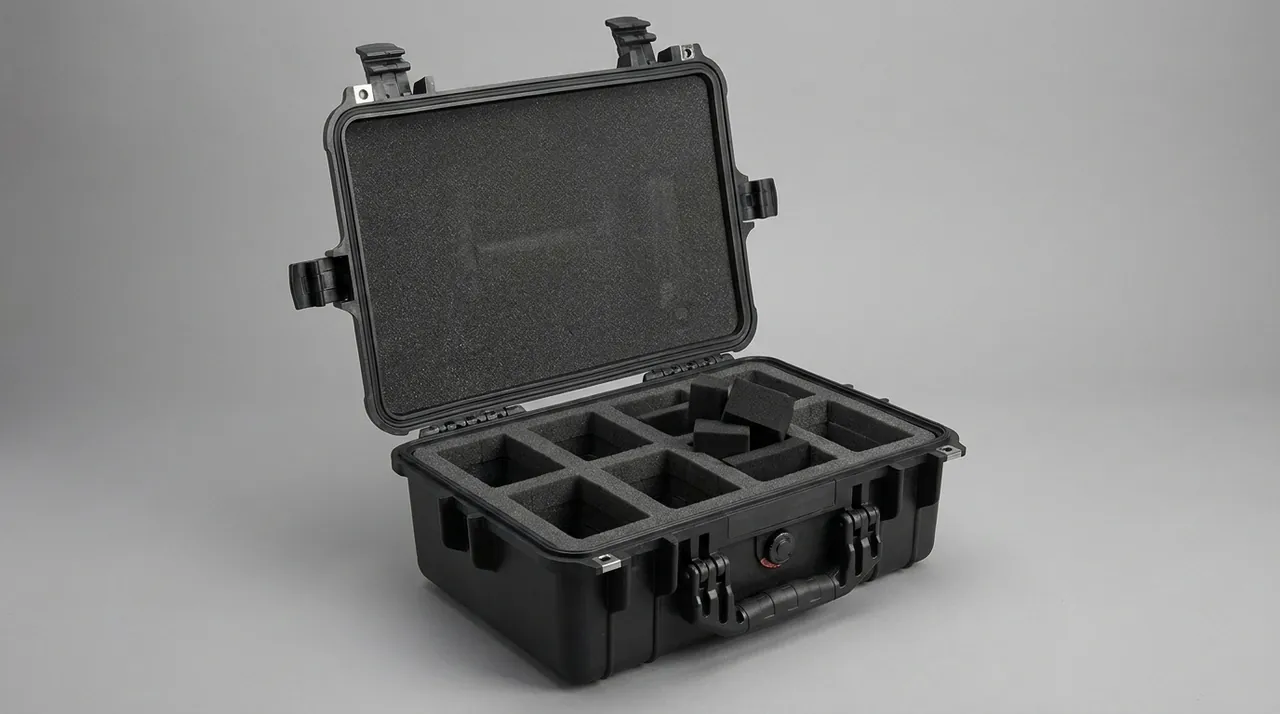
Aluminum maintenance focuses on anti corrosion and weld check; surface scratch should be repainted or anodized promptly to stop pitting growth; slight dent can be reformed, structural parts replaceable. Plastic maintenance is cleaning and gasket change; surface scratch usually does not affect structure, but crack needs timely repair or liner support replacement.
On lifecycle, aluminum theoretical service life is long, but corrosive environment shortens it; plastic is maintenance free on corrosion, but ages under ultraviolet and fatigue. Regular inspection and protective case maintenance guide extend life. For key equipment, keep spares and case spare parts stocking list. A simple service card per case, recording inspections, repairs, and gasket changes, turns maintenance from memory into data. Review the cards yearly to spot which units age faster, and retire cases on evidence rather than appearance. This habit costs minutes per case per year and materially extends fleet life at near zero cost. When a case retires, record the dominant failure cause in the ledger; over a few years the pattern shows whether your next purchase should prioritize corrosion resistance, impact strength, or seal longevity. Retiring on evidence also prevents the quiet accumulation of substandard cases in daily service.
13. Selection by Use and Budget
Converge dimensions into decision: if equipment is high value, needs shielding, wide temperature, long service and enough budget, prefer aluminum; if stressing light, corrosion resistant, low cost, impact buffer and large batch, prefer plastic; if needing both light and stiff or both shield and weight cut, use hybrid. Score item by item per protective case selection guide.
Final decision returns to certification and standard, writing IP grade, drop, vibration and electromagnetic requirements into contract appendix, requiring delivery test records. Material is means; meeting duty reliability is the goal, and it is suggested to use measured data rather than material preference as final acceptance. Keep the decision documented: one page stating the duty, the chosen material, the governing tests, and the reasons, so the next person inherits the logic instead of relitigating it. Material debates recur every few years as technologies shift, and a written rationale keeps your fleet consistent while still allowing deliberate change. Revisit the written rationale whenever equipment, routes, or budgets change materially, and retire it deliberately when it no longer holds. A decision framework that is maintained this way compounds in value, because each generation of buyers starts closer to the right answer than the last.
FAQ
Q: Which is lighter, aluminum or plastic cases? A: At equal volume, plastic cases are clearly lighter. Aluminum density is about two point seven grams per cubic centimeter, while polypropylene and polyethylene densities are mostly between zero point nine and one point zero five grams, only about one third of aluminum. Therefore on large cases the plastic weight advantage is striking, helping man portable, drone and air load uses. But light weight is not the only metric; aluminum with thin wall and ribs can reach higher stiffness at lower self weight. Selection should compare total weight after adding rated load, not just material density, and combine handling mode and load limit for a sound judgment. Field crews often understate how much daily carrying matters: a case that is two kilograms heavier feels like ten by the end of a long carry, especially on stairs or soft ground. Run a realistic carry trial with the loaded sample before deciding, and check vehicle and aircraft weight limits for your typical manifest. If weight is binding, remember the liner and fittings also add mass, so budget the whole assembly rather than the shell alone. In most general-purpose fleets the plastic advantage survives this scrutiny; in shielded or high-stiffness niches the aluminum penalty is usually worth paying. Document the measured assembly weight in the specification so later quotes are compared on equal terms.
Q: When should aluminum be chosen instead of plastic? A: When equipment is high value, needs electromagnetic shielding, works across a wide temperature window, serves long and budget allows, aluminum should be preferred. Aluminum naturally provides metallic shielding, friendlier to communications, radar and electronic countermeasure storage; its strength retention at high temperature is better, and stiffness and deformation resistance clearly exceed common plastic. If the contents are precision electronics needing interference protection, or heavy equipment needs long stacking, aluminum is safer. Conversely if light weight, corrosion resistance and cost are stressed, plastic is more practical. Before deciding, write the electromagnetic grade and temperature window into requirements, then infer material. Also weigh the ecosystem around the material: aluminum cases typically come from fabrication shops that can modify, repair, and add mounting points later, while plastic cases depend on mold designs that are fixed at the start. If your equipment evolves quickly, that flexibility has real value. On the other hand, plastic's corrosion immunity and lighter handling reduce day-to-day friction that aluminum teams pay for in every maintenance cycle. A useful exercise is to sketch your five-year scenario, including equipment changes, deployment environments, and expected damage, then ask which material absorbs those changes at lower total cost.
Q: Are plastic cases afraid of corrosion and salt spray? A: Plastic is inherently resistant to water, salt spray and many chemicals, almost no rust under coastal, chemical and outdoor long exposure, with very low upkeep, a major advantage over metal. Common polypropylene and polyethylene are stable in most corrosive environments, unlike aluminum which risks pitting in chloride environment and after surface scratch. Of course plastic should also avoid long contact with strong solvents or specific chemicals, and media compatibility should be checked before selection. For marine and salt spray environment, plastic cases are usually more worry free than aluminum, only needing periodic gasket and latch inspection. One caution: compatibility depends on the specific medium, so hand your supplier the actual chemical list and ask for written confirmation rather than assuming universal resistance. Seals and labels are usually the vulnerable points, not the shell itself, so choose gasket materials rated for your media. In coastal deployments, rinse cases with fresh water occasionally and inspect fittings, which keeps even plastic fleets healthy for years.
Q: Can aluminum cases provide electromagnetic shielding? A: Yes, and this is the natural advantage of aluminum. Aluminum is a good conductor, the case itself forms a Faraday cage shield, suppressing electromagnetic interference and static, fitting storage of communications, radar and electronic equipment. By contrast plastic is an insulator with no native shield; if protection is needed, a conductive coating, metal mesh or conductive fabric must be added inside to form a shield liner. If electromagnetic compatibility is strict, aluminum is the more direct choice, and a composite scheme can be designed per the EMI shielding case guide. Decision should write the electromagnetic environment grade into requirements, then infer material. When shielding is only occasional, a hybrid approach works: a plastic shell with a conductive fabric liner gives you light weight for daily transport and shielding when closed. Measure the assembled attenuation rather than trusting either material's datasheet, because gaskets and openings dominate the final result. For fleets with mixed requirements, standardizing on shielded liners lets one case family serve both needs.
Q: Is the sealing and waterproof ability very different between the two? A: Both materials achieve high seal grades, the difference is mainly in method. Aluminum cases usually press an elastic gasket at lid body interface, with precision machined fit face reaching IP65 to IP67; plastic cases often integrate fit face flatness at mold stage, short water path, few leak points, also reaching that grade. Aluminum machined face has high accuracy and good consistency; plastic integral shell deforms more evenly under temperature cycles. Either way, gasket aging is the main failure, should be replaced periodically and sampled by immersion before inbound, and grade definitions can be read in the IP rating guide. Compare the two shells on your own closure test: open and close fifty times, then check the seal line with pressure film. Plastic's integrated fit face usually stays consistent; aluminum's machined face holds accuracy but can transfer handling dents into the seal zone if the case is knocked. Whatever the shell, buy gaskets as documented spares and replace them on schedule, because the seal is what actually keeps water out.
Q: Which is more drop resistant and field friendly? A: Plastic, especially rotomolded polyethylene, has good toughness and energy absorption, releasing energy by dent or rebound, not easy to crack, very fitting for frequent handling and field knocks; aluminum also has high toughness and rarely brittle fractures, but its hard surface may crack at corners under strike, so welds and bends need attention. The two fail differently: aluminum mostly dents or weld cracks, plastic mostly local puncture or crack growth. For very high content value, set the material threshold by liner buffer and drop test grade, and judge by measured data rather than intuition. Set up a small drop comparison when the decision is close: load two sample cases with equivalent weight and drop them from your realistic height onto concrete, then open and inspect. The failure modes you observe, dents versus cracks, tell you which material matches your tolerance. Photograph the results and keep them with the acceptance file, since they become persuasive evidence in later fleet discussions.
Q: Which has lower maintenance cost? A: On daily upkeep, plastic cases are usually lower. They resist corrosion without rust, maintenance is cleaning and gasket change, and surface scratch generally does not affect structure; aluminum needs anti corrosion and weld check, and surface scratch should be repainted or anodized promptly to stop pitting. But plastic ages under ultraviolet and fatigue, while aluminum has longer theoretical service life. The key to lower cost is regular inspection and maintenance plan, keeping spares and spare parts stocking list for key equipment. Writing maintenance clauses into contract controls lifecycle cost effectively. Quantify the difference before committing: list every maintenance task with its frequency and cost for each material, including corrosion touch-ups, gasket changes, and inspection labor. The totals usually favor plastic on upkeep and aluminum on lifespan, so the winner depends on your horizon. A five-year view often favors plastic in corrosive settings; a ten-year view can favor aluminum where handling is careful.
Q: How to choose with limited budget? A: With limited budget and large fixed batch, prefer plastic cases, because mold mass production is fast and unit cost low, giving high overall value. If batch is small, model many and change frequent, aluminum single piece flexibility is higher and change faster, with relatively controllable upfront cost. Also compare lifecycle rather than first piece price: plastic saves on maintenance free corrosion, aluminum saves on long life and high stiffness. Procurement should list first sample cycle, ramp curve and spare strategy, and score item by item with the protective case selection guide, avoiding ordering by material preference alone. Also ask about the payment and delivery structure: plastic requires mold investment up front, so confirm the amortization terms, while aluminum allows gradual orders that track your real demand. Keep one eye on the second source: a mold tied to one supplier is a risk, while aluminum fabrication is broadly available. Whatever the path, write the decision and its cost logic into the procurement file.
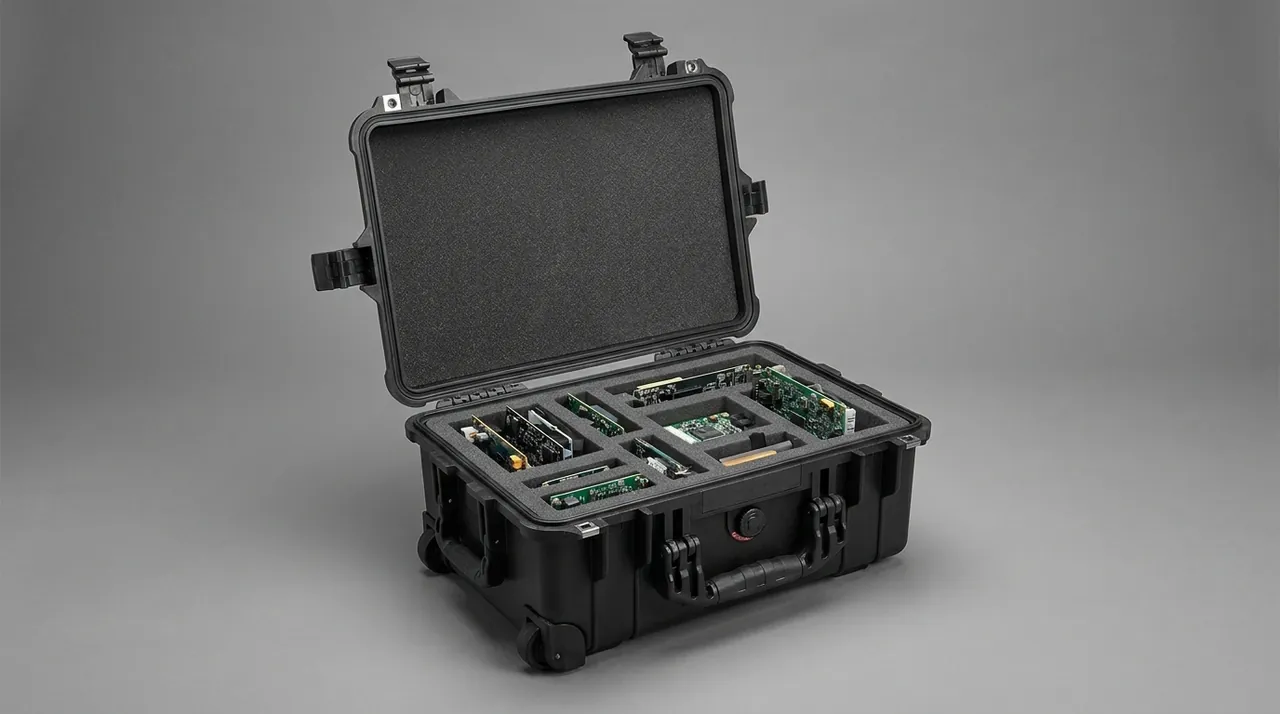
Q: Can the two materials be mixed in one case? A: Absolutely, and hybrid structure is common. Typical practice is aluminum frame with plastic panel, or aluminum shell with plastic damping liner inside, balancing stiffness, light weight and buffer; also aluminum load skeleton with plastic corrosion resistant skin. Hybrid meets composite needs of shielding, weight cut and corrosion resistance, especially for scenes needing both light and stiff, both shield and weight cut. The key is interface dimension chain control: skeleton and panel fit by tolerance, and process division of each part is clear at design stage. This way a single part can be iterated later without touching the whole mold. The hybrid path also spreads risk: each material does only what it does best, and neither must compromise. Keep the interface tolerances documented and verify the fit on first articles, because the joint between materials is where hybrids succeed or fail. For teams that cannot choose, a well-designed hybrid is usually the honest answer.