

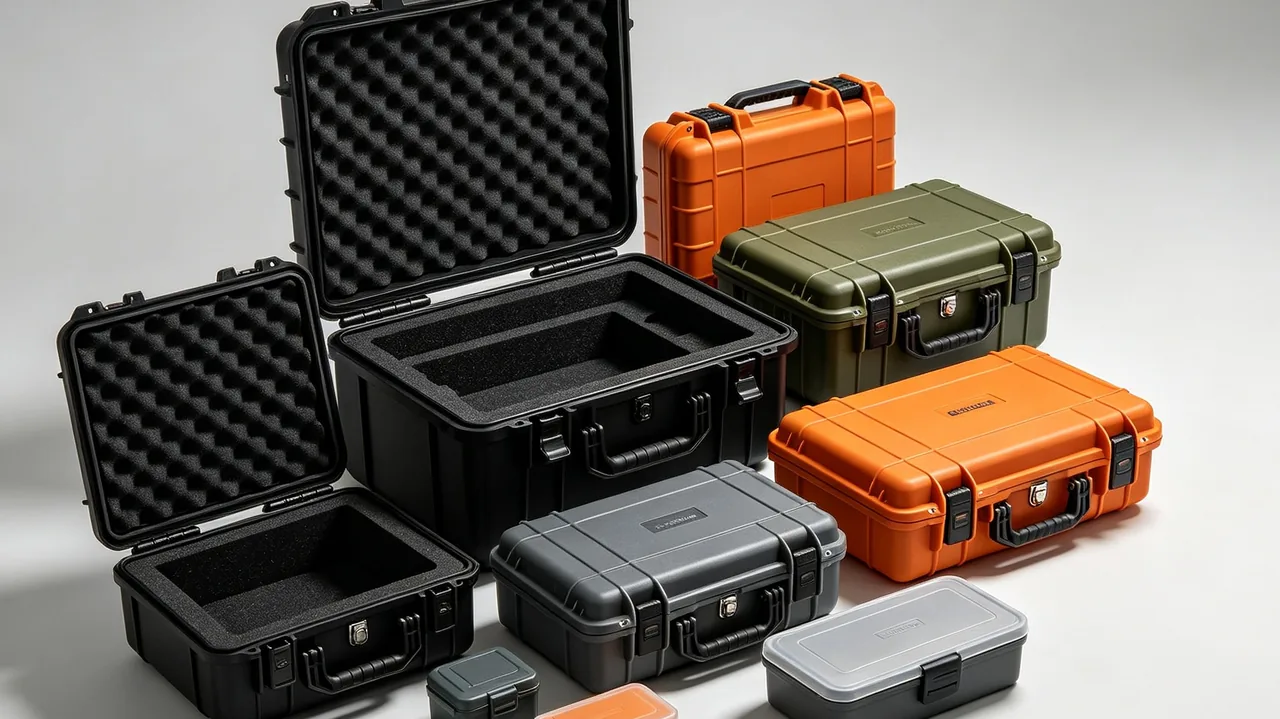
A lightweight protective case is an enclosure that cuts self-weight through composite materials, thin-wall structure and optimised design while keeping protection, so that single-soldier carry, drone lift and field transfer become more efficient. Its core value is to deliver the same impact, water and cushioning protection at less mass, letting users cut fatigue and avoid overweight penalties on long moves, checked air freight and high-altitude transport, without sacrificing the protection of precision gear. In reconnaissance, communication, medical and film field work, case weight often decides mission duration, so lightweight is not simply "thinner" but a system trade-off of material, structure and process. This article explains weight-reduction principles, composite selection, thin-wall structure, carry design, rating standards and maintenance, and gives actionable guidance for selecting, designing and using a lightweight protective case. For material comparison, see the composite material case guide.
1. What a Lightweight Protective Case Is
The lightweight protective case targets "minimum mass per unit of protection". Its shell uses polypropylene, modified engineering plastic, carbon-fibre-reinforced composite or aluminium-magnesium alloy, and its liner uses low-density open-cell foam, holding impact and seal while pushing self-weight to the floor. The difference from a normal case is "mass controlled" rather than "mere containment". A normal case pursues sturdy heft; a lightweight case must reach the rated protection grade at the lightest structure, for example an IP67 and IK-rated injection case can be more than half the mass of a same-size metal case.
In engineering the case carries single-soldier communication terminals, drone payloads, portable medical kits, field instruments and film gear. Its job is not "weaker protection" but "same protection, lighter", so the pass criterion is the combined compliance of mass, protection grade and structural strength, not whether it looks heavy. Buyers should ask the supplier for material, wall thickness, nominal mass and test grade to avoid thin brittle shells passed off as professional lightweight products. Material trade-offs combine with the aluminum vs plastic case guide.
In form the case appears as thin-wall injected plastic hard cases, carbon-fibre skin-sandwich cases and foldable soft-rigid hybrids. Whatever the form, the core standard is "no deformation, no leak, no lid crack under rated drop and stacking", not surface lightness. Batch units should combine the protective case selection guide with parameter decisions that include mass, size and protection together.
2. Engineering Principles of Weight Reduction
Weight reduction follows three paths: swap to low-density material, cut non-load-bearing wall thickness, and replace solid stock with structural ribs. In material, polypropylene density is about 0.9 and carbon-fibre composite is lower with high strength, cutting more than sixty percent versus galvanised steel; in structure, corners and edges carry load through ribs while the mid wall only encloses, saving mass without losing strength; in process, one-shot injection and thermoplastic composite cut fasteners and redundant flanges.
Weight cut must not sacrifice key performance. After thinning, the lid and latch points stay stress concentrators and need ribs and hinge overlap for stiffness, or it is light but cracks. Lower liner density must still keep cushion spring-back; too-soft foam lets gear shift in transit. The correct method is to derive required wall and rib from drop height, stack layers and inner mass, then verify with samples, not thin by guess. Carry-efficiency metrics reference the carbon fiber case guide.
Understanding the principle balances weight and life. If gear is valuable and air-dropped repeatedly, keep structural margin rather than minimal mass; if only short manual carry, push mass near the floor. Lightweight is one term in the objective function and must be optimised with protection, cost and life together, avoiding sacrificing overall reliability for one item. For powered gear, also reserve mass budget for filters and waveguides so it is "light yet usable".
3. Composite Materials and Shell Selection
Lightweight shells fall into three families. The first is modified polypropylene injection, low cost, cold-resistant, recyclable, suiting high-volume general gear; the second is ABS or PC alloy injection, better strength and dimensional stability, suiting precision instruments; the third is carbon or glass fibre sandwich, best strength-to-weight, suiting high-value and aviation scenes. None is "the lighter the better"; match threat and budget.
Material choice balances density, strength, temperature and cost. Polypropylene resists chemical and low temperature but softens when hot; PC alloy is transparent and impact-resistant but costly; carbon fibre is light and stiff but costly and hard to repair. Whatever the base, shell joints must keep seal continuous to avoid water through parting lines. Sandwich skin-to-core bond quality decides overall stiffness, explained more systematically in the composite material case guide.
For scenes needing both light and stiff, the common solution is "thin outer skin plus light core" sandwich: the skin carries bending and tension, the core resists shear and insulates temperature, and the specific stiffness far exceeds solid plate. This structure is common in aviation gear and drone payload cases but demands high bond process, with peel and ball-drop tests at sealing stage. Assemble by confirming no skin delamination first, then fix the liner, to avoid liner pressure causing skin buckling.
Cost drivers deserve a clear note. The largest variables are shell material, core type and whether metal inserts are used for latches and wheels. A carbon sandwich with metal inserts costs more up front than a polypropylene case, but its life-cycle cost can be lower on air-lifted missions because the mass saving cuts freight every trip. When budgeting, ask for a breakdown that separates shell, liner, wheel frame and spare parts, so a low headline price does not hide missing items you must buy later. The composite logic in the composite material case guide also helps weigh gram savings against repair difficulty when carbon is substituted.
4. Thin-Wall Structure and Rib Design
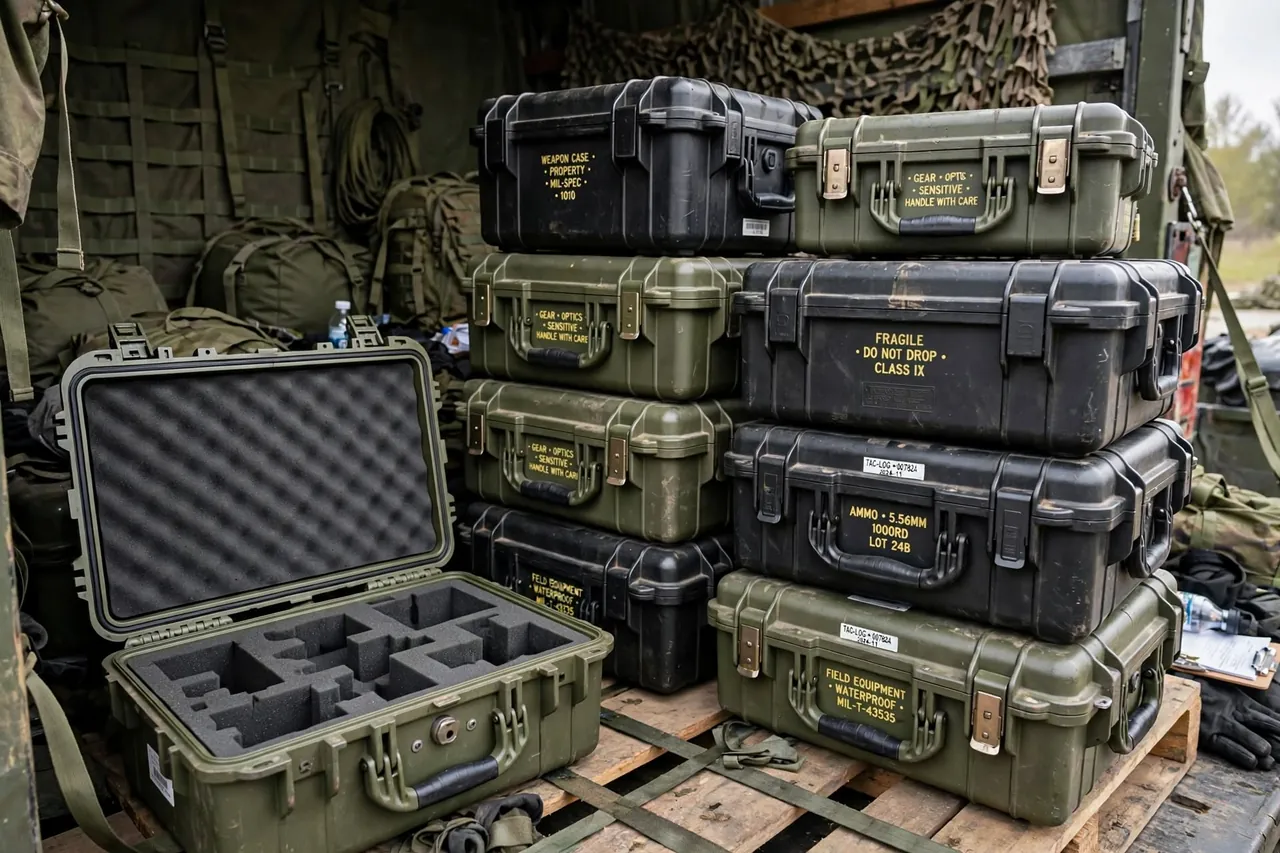
Thin-wall case strength comes from ribs, not thickness. Corners, areas around latches and wheel-axle mounts are stress concentrators and need continuous ribs and local thickening so load travels along ribs instead of crushing the thin wall. Rib direction follows the main force path, with smooth fillets at turns to avoid stress-crack. For cased wheels and trolley, the wheel frame should land on ribs or metal inserts, never hang on thin wall.
Injection wall uniformity affects warpage and internal stress. Sudden thickness change causes sink marks and warp, so keep main wall even and use ribs not thick blocks for local strength. For large lids, mid-span sags; add a centre support rib or metal inner frame. Latches, hinges and pressure valves are weak zones; surround them with continuous support and overlap. Latch selection thinking is in the protective case accessories guide.
In practice, opening treatment often sets the ceiling of whole-case stiffness. Many nominally lightweight cases go soft because of one oversized opening or unreinforced cut. At design review, calculate reinforcement for every opening, and do static-pressure and drop tests on the first article so every opening is controlled, not judging the whole by shell material. For critical gear, attach the opening list to the technical agreement and confirm each reinforcement item by item.
5. Low-Density Liner and Cushion Fixation
The lightweight case still needs cushioning, but the liner must also be light. Low-density open-cell polyethylene, polyurethane or antistatic foam is CNC-routed to the gear contour, forming a fitted cavity that locates and cuts mass. If gear is static-sensitive, the liner surface should be antistatic with resistance in a safe band. Liner design points extend in the custom foam lining case guide.
Fixation must avoid dead mass. Gear should not press a hard point on thin wall nor be held by heavy metal weights. Use embedded routed slots and elastic straps so gear is located in six directions with almost no added mass. For parts with antenna or bracket, leave a matching groove and keep the tip off the conductive wall. For mixed loads, independent routed cells locate and isolate and ease counting.
Liner and shell must be "no loosening, no added mass". Large-area heavy glue between liner and shell cancels the weight cut, so use spot glue or clips. For mixed loads, independent routed cells locate and isolate, avoiding collision damage in transit. For complex shapes, scan in three dimensions first, then program routing so cavity tolerance stays controlled while foam use is minimised.
Liner thickness should follow the drop and vibration profile, not a fixed rule. A good starting point is to size the foam so the gear sits at least ten millimetres from every wall and the cavity holds it with finger pressure but no rattle. Too thin a liner lets the gear bottom out on impact; too thick wastes space and weight. Document the foam grade, density and routed depth in the one-case-one-file so a later re-cut matches the original. Where gear has fragile connectors, add a relieved pocket and a retaining strap so the connector is supported, not cantilevered, during transit.
6. Handles, Wheels and Carry Efficiency
Carry design decides field efficiency. The handle should fit the hand with enough width to spread pressure; long carry pairs two handles or a shoulder strap; wheels and trolley suit flat transfer but their mass counts toward total, avoiding "light body, heavy wheels". For single-soldier carry, prefer cases with MOLLE or quick-release mounts that hang on the load-bearing rig without occupying hands.
Ergonomics of opening and carry is evaluated by usage. Butterfly, press and three-point linked latches are common; the three-point lock balances lid pressure and reduces corner gaps. Hinges should be continuous metal piano hinges whose long overlap forms a strength path, better than scattered hinges. For frequent transfer, keep an open-cycle log and proactively replace wear parts before rated cycles.
To raise carry efficiency, avoid stuffing unnecessary heavy items inside, and confirm the liner is not rolled or dirty before closing. For frequent transfer, label mass and centre of gravity to help the carrier predict posture. Critical-post lightweight cases can set a "mandatory overhaul on expiry" mechanism where someone re-tests structure and replaces wear parts on schedule, ensuring compliant protection at all times and turning passive repair into active support.
7. Protection Grades and Applicable Standards
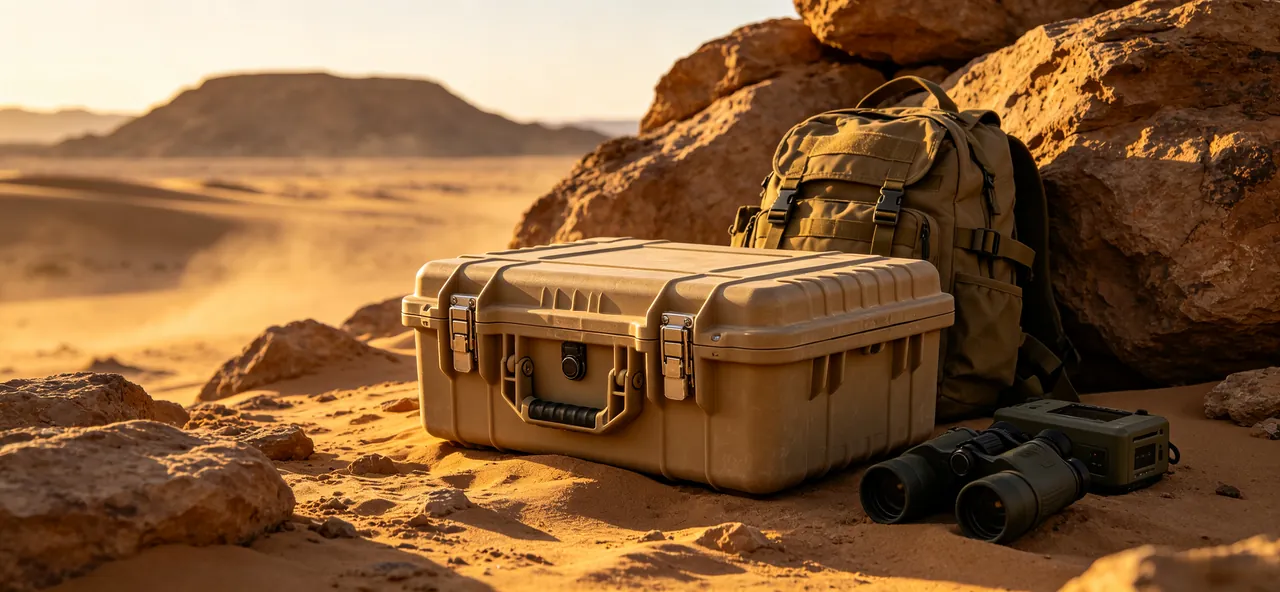
Lightweight cases usually refer to IEC 60529 (GB/T 4208) for IP, IK code for mechanical impact, MIL-STD-810H for environment and drop, and ISTA for transport simulation. Civil and industrial scenes often require IP67 and IK 08 for rain and daily drops; high-reliability scenes refer to MIL-STD-810H drop and random-vibration procedures with stricter ratings.
Testing covers static water, dynamic drop and stacking. Buyers require a CNAS- or CMA-accredited report with clear test setup including case state and mass ballast. Higher grade is not always better; over-sealing adds mass and hurts cooling, so match to gear exposure risk. Seal and grade rules compare with the IP rating guide, whose limits complement tests.
When reading a report, watch the "worst posture" not the "best". One face passing drop does not mean all postures; real risk may sit at an edge or opening. The agreement should state "whole-posture minimum protection not below a value" and keep the right to sample by worst posture on arrival, preventing suppliers hiding weak spots behind peak data. For batch units, combine first-article qualification with periodic sampling to ensure consistency.
8. Typical Carry and Transfer Scenes
In single-soldier and squad tasks, lightweight cases move communication terminals, batteries, ammunition accessories and medical kits, cutting fatigue on long moves. Drone vehicles, temporary observation points and cross-region transfer use light cases with straps and quick-release mounts to form a "light and fast" storage chain.
Medical and research field work also use them. Portable instruments, vaccine cold boxes and sample transfer cases must be hand-carried between mountains and islands, where lightweight directly decides single-trip quantity. Film and survey sites use light cases as mobile protection for cameras, lenses and mapping gear. Transport protection for electronics is in the communication electronics protective case, whose location and buffer methods also apply.
Beyond these, power inspection, emergency communication and border patrol all rely on lightweight cases to stay "light enough, protected enough" on the move. Once gear is forced to be reduced because of excess weight, the mission may suffer, so light cases pair with full-process light-load management. For air transport, also evaluate cabin vibration and checked-weight limits with the transport vibration testing cases to stop a light case sliding in the hold from insufficient ballast.
A useful pattern is to treat the case as part of a chain of custody rather than a standalone box. At each handover, record the mass, the case serial and the responsible person; on arrival, confirm the seal is intact before any field check. If the case carries a location tag, the tag itself should be outside the protected cavity so it can report position without becoming a leak path, and its battery should be isolated from the inner gear. This discipline matters more than the last gram saved, because a perfectly light case that is lost or mishandled still fails its job.
9. Difference from Heavy Case and Soft Bag
Users confuse "lightweight case", "heavy case" and "soft bag"; their goals differ. The lightweight case weights mass efficiency and carry; the heavy case weights extreme protection and stacking; the soft bag weights ultimate portability but weak protection. Structurally the lightweight case relies on thin-wall ribs and composites, the heavy case on thick wall and metal, the soft bag on foam and fabric, so materials and process differ.
Clarify the main constraint first: mass ceiling, protection floor or cost. If core is single-soldier weight limit, prioritise mass and basic protection; if core is armour-grade stacking and crash, prioritise thick wall and metal. The two families can be derived from one shell platform with different wall and liner, so stating the purpose avoids paying for unneeded capability. The detailed comparison is in the aluminum vs plastic case guide, with a chapter on material trade-offs.
With limited budget, rank by "main threat". For short in-camp move on good road, a thin-wall injection case with liner is enough; for repeated air-drop or heavy stacking, add metal inserts and thick ribs. When modifying stock cases, first assess original structure before lightening, to avoid losing protection by thinning. Any modification should re-test drop and seal and confirm it is still in the qualified band before use.
10. Stacking, Piling and Transport Fixation
Batch transport needs piling stability and total weight control. Corner ribs and locating bosses let stacked load pass along side walls instead of pressing the thin lid wall, avoiding permanent deformation under long load. Keep pile height within rated layers and use straps or pallet limits. General piling rules are in the protective case stacking guide.
Transport fixation follows "reduce vibration, prevent slip, control total mass". After gear is located by routed foam, put the case in a tray with anti-slip pads; road transport cares about random vibration and shock, rail and air about low-frequency high acceleration and weight limits. For lightweight cases, straps must not press the lid seam and break the seal. Piling and transport safety are in the seal shock case, whose buffer and locating blocks can be borrowed directly.
For cross-city or cross-border transfer, also plan the case position and buffering inside the vehicle. Place the lightweight case at the centre of a damped tray, fixed by locating blocks to avoid collision on hard braking. For long road transport, add an elastic layer between tray and floor to absorb low-frequency vibration. On arrival, re-test key structure before opening, confirm protection was not harmed. For valuable gear, measure seal and deformation before and after transport to form a comparison record, controlling risk before lid opening.
Do not overlook the tray itself. A steel tray with welded corners keeps the case square under stack load, while a thin stamped tray can rack and twist the lid seam. For air transport, the tray should be sized to the unit-load-device footprint and secured with certified restraints; for sea transport, add desiccant and a vapour barrier because the container atmosphere can swing widely. The stacking discipline in the protective case stacking guide applies here too: keep the rated layer count and never rest a second case directly on the lid of the one below.

11. Environmental Adaptation and Temperature-Humidity Control
Most lightweight cases are plastic or composite shells; at low temperature the liner hardens and the shell brittles, at high temperature it may soften and deform. The fix is a material graded for the use temperature band and controlled opening frequency so internal humidity balances slowly. For high-humidity and tropical use, the shell needs mould treatment and the liner a weather-resistant material to avoid performance drift after moisture uptake.
For temperature, a plastic shell heats up in direct sun; if the gear has an upper working limit, add a thermal shroud or avoid direct light. High-altitude air transport pressure difference is eased by a pressure-equalisation valve, but the area near the valve is still a structural weak point, so keep the overlap continuous. Co-design of temperature-humidity and protection grade is in the IP rating guide, treating lightweight, water proofing and humidity control as one system.
In extremely cold or hot regions, also watch shell and liner low-temperature brittleness and high-temperature softening. Some modified foams keep elasticity at minus forty degrees Celsius, while ordinary foam hardens and loses spring-back when cold. Cold-region selection should specify low-temperature-grade material and do a seal re-check before winter to prevent cold-induced lid leak or shell brittleness. For tropical long storage, check material weather resistance regularly so UV does not accelerate shell ageing and weight-loss failure.
Humidity control is not only about desiccant. A humidity card with six or more colour steps gives a quick visual state without opening the case to a gauge, and an electronic logger with a window lets staff read trend without breaking the seal. If the gear inside has a lower humidity limit, set the desiccant quantity from the case volume and the expected transit days, then add a margin for hot, humid legs. Remember that opening the lid in a humid bay can dump more moisture in one minute than a week of slow diffusion, so plan openings for the driest available space and keep them as short as possible.
12. Verification and Arrival Acceptance
Arrival acceptance has three steps. Step one, appearance and mass: check nominal mass and seal fit after closing. Step two, structure: after closing, visually confirm ribs have no crack and latches are engaged. Step three, send for third-party IP, IK and drop tests if needed, keeping data at different postures.
Quick field checks use a leak sample and free drop to see if it wets or cracks. In routine maintenance, re-test seal and deformation quarterly and replace liner, shell crack or loose latch promptly. Suppliers that provide model-specific test files and material certificates sharply lower acceptance risk, a compliance point stressed in the composite material case guide. Archive acceptance records as the baseline for later re-tests.
To close the loop, put acceptance results into a "one case one file" of purchase batch, arrival data, past re-tests, wear-part replacement time and responsible person. Batch units can sample a proportion for re-test to verify consistency. When a batch shows a trend of falling mass or stiffness, trace material or process change, stop loss in time and push the supplier to correct. Critical-gear cases can use a two-person acceptance check to avoid single-point error.
A practical acceptance habit is to assign each case a next-inspection date and block its use after that date until serviced, so a case is never opened in the field with an expired liner. For cases that sit unused for years, re-validate structure before returning them to service rather than assuming the last test still holds, because lightweight elastomers and thin walls age even in storage. Keep the accredited report with the purchase record and treat it as a contract deliverable, not a marketing extra, so a later dispute can be settled with data rather than memory.
13. Maintenance, Life and Spare Parts
The life weak points of a lightweight case are usually the liner, latch and shell crack. Low-density foam is best replaced every twelve to twenty-four months or by open cycles; shell scratches should be repaired promptly to stop crack growth. Spare parts list should cover liner, lock core, hinge and wheel frame.
Long-stored cases should be vented every half month and desiccant dried regularly to avoid internal damp. Retired cases with residual sensitive information must be de-magnetised or structurally destroyed before scrap. Batch units should keep a "one case one file" of purchase, test, repair and calibration for full-life traceability. Combined protection and maintenance are also in the protective case maintenance guide, whose maintenance cycle can be referenced.
Maintenance should enter budget and cycle management. Liner, desiccant and wear parts are consumables that should be stocked above the minimum to avoid shortage-driven sick use. Critical-post lightweight cases can set a "mandatory overhaul on expiry" mechanism where someone replaces the liner on schedule and re-tests, ensuring compliant protection at all times and turning passive repair into active support. For end-of-life liners, replace the whole piece rather than patch locally, preventing inconsistent hardness between old and new liner causing gear shift.
FAQ
Q: Does a lightweight protective case sacrifice protection? A: Properly designed, no, it does not trade protection for weight. Lightweight means "same protection at less mass" achieved through composites, thin-wall ribs and low-density liner, not simply thinning. A qualified product verifies IP, IK and drop grades with samples so rated protection does not drop. If one chases extreme light by cutting key ribs, protection does fall, so selection should require supplier test reports and a stated whole-posture minimum grade. The correct method is to match the weight cut to the gear exposure risk, pushing mass near the floor without breaking structural margin. After arrival, also measure the worst posture to confirm whole-posture compliance before use, avoiding misleading by peak data. For extremely valuable gear, keep some structural margin and treat weight and reliability as joint goals rather than a single target. Practically, treat the case as one layer in a chain: a perfectly light case with a broken latch still fails its job, so verify the latch at every handover and keep lid openings short in harsh bays. Re-test the structure on a fixed schedule so slow rib fatigue is caught before it crosses the protection threshold.
Q: How to choose among polypropylene, carbon fibre and aluminium-magnesium alloys? A: It depends on budget, strength and mass goal. Polypropylene is low cost, cold-resistant and recyclable, suiting high-volume general gear but softens when hot; ABS or PC alloy has better strength and dimensional stability, suiting precision instruments; carbon-fibre sandwich is light and stiff, suiting aviation and high-value scenes but costly and hard to repair; aluminium-magnesium is continuously conductive and light, suiting scenes needing shielding too. Select by balancing density, strength, temperature and repair, not by lightness alone. For most field general gear, modified polypropylene is enough; for single-soldier limit or air lift, move to carbon fibre or aluminium-magnesium. Whatever the base, keep seal continuous and ribs controlled. Combine with the protective case material selection for a full decision, and ask for material certificates and test files. A further point is to count the whole-system mass: a carbon shell with a heavy metal wheel frame may weigh more than a smart polypropylene shell with a light frame, so compare finished-case mass, not bare-shell mass, when ranking options for a given mission.
Q: Why does a thin-wall case still need reinforcement ribs? A: Because the thin wall itself has low bending stiffness and dents or cracks under direct load, while ribs guide load onto the force path with little material, making overall stiffness far above same-mass solid plate. Corners, areas around latches and wheel mounts are concentrators and need continuous ribs and local thickening. Rib direction follows the main force path with smooth fillets to avoid stress cracks. For large lids, add a centre support rib or metal inner frame to stop mid-span sag. Openings must be reinforced or one cut weakens the whole. Design review should calculate ribs and openings item by item, and confirm with first-article static-pressure and drop tests. The correct method lets "light" come from structural optimisation not material removal, so every gram saved spares key strength. A common failure is to thin the wall everywhere for mass, then bolt a heavy latch directly to the thin skin; the result is a local crack around the latch while the rest of the case is needlessly light. Put the mass where the load is, in ribs and inserts, and keep the panel thin only where it carries little.
Q: How can the liner cushion yet stay light? A: Use low-density open-cell foam CNC-routed to the gear contour, keeping only the volume needed for support and location and cutting the rest, thus cushioning and cutting mass. Keep more than ten millimetres between gear and wall, with the cavity finger-tight but not rattling. Fix with embedded routed slots and elastic straps that add almost no mass; avoid heavy metal weights or large-area heavy glue that cancels the weight cut. For mixed loads, independent routed cells locate and isolate. For static-sensitive gear, the liner is antistatic with controlled surface resistance. For complex shapes, scan in three dimensions first, then program routing so foam use is minimised and cavity tolerance stays controlled. At maintenance, replace the whole ring rather than patch, preventing hardness mismatch causing shift. Note that a liner that is too soft to save mass can let the gear bottom out on a hard drop, so size the foam grade to the drop profile rather than picking the lightest grade by default. Document the foam density in the one-case-one-file so a later re-cut matches the original protection, and add a relieved pocket for fragile connectors so they are supported, not cantilevered.
Q: Will wheels and trolley cancel the weight reduction? A: They cancel part of it, and the key is wheel-frame mass and structure. Wheels, trolley and axle have mass; heavy metal frames can eat the shell savings, giving the awkward "light body, heavy wheels". The correct method lands the wheel frame on ribs or metal inserts, achieving reliable transfer at the minimum necessary mass; fit wheels only for long flat distance, and prefer shoulder strap and quick-release mounts for mountain single-soldier carry. Buyers should count wheel-frame mass into total and check the nominal ceiling. Reinforce around the frame to avoid thin-wall crack. For hand-carry scenes, skip wheels and use light mounts, saving the mass for gear. At acceptance, weigh with wheels and confirm still within carry limit before issue. A useful check is to compare the case mass with and without the wheel set; if the wheel set is more than a quarter of the shell mass, the frame is likely over-built and a lighter design would recover meaningful carry capacity. Choose the wheel only when the mission truly needs rolling, and treat the strap mounts as the default carry path for weight-critical loads.
Q: Can a lightweight case be used as a heavy stacking case? A: Structurally they overlap but are not equal. The lightweight case is designed with thin-wall ribs; its stack layers and per-case load are below thick-wall heavy cases, and forced multi-layer heavy press will crush the thin lid or plastically deform the ribs. If stacking is needed, strictly follow rated layers with pallet limits, load along ribs not on the lid. If the task needs heavy press and crash, choose heavy or metal-insert reinforced type, not a light case as heavy. When buying both, require separate stacking and drop reports from the supplier so one qualification does not substitute for the other. For long warehouse stacking, also check shell creep resistance to prevent slow cold deformation breaking the seal. A practical rule is to mark the rated layer count on the case exterior and train warehouse staff to never exceed it; a light case stacked four high when rated for two will show lid gap and water ingress long before any dramatic failure, so the warning sign is a subtle seam opening rather than a collapse.
Q: Does transport compression that deforms the case affect protection? A: Yes, it does. Thin-wall local dent changes seal fit, and lid-seam misalignment makes liner compression uneven and creates gaps, lowering water and cushion performance. So in piling and lashing, let load pass along the reinforcement ribs and avoid point-pressing the lid seam; the transport tray should add anti-slip and buffer pads. On arrival, if shell deformation or crack is found, first re-test seal and deformation and confirm compliance before use, or repair or replace the liner. For critical gear, measure seal and deformation before and after transport to confirm with data that protection was not harmed, controlling risk before lid opening. For repairable dents, straighten and reinforce first then re-test; do not use a poorly straightened case. The same logic applies to drops: a corner impact that cracks the skin opens a water path even if the lid still closes, so include a visual skin inspection in the arrival check and photograph any deformation for the record. Where cases are reused across many trips, set a maximum allowable dent depth in the specification so wear is judged by data, not by eye alone.
Q: What to watch in long-term storage of lightweight gear? A: Long storage needs dry environment, regular ventilation and desiccant replacement to avoid moisture-driven performance drift; monthly check of latch and mount integrity with opening records; quarterly re-test of key seal and deformation state. Store away from strong UV and high-temperature sources, and stack vertically within rated layers. Keep a one-case-one-file for audit and traceability so the protection chain stays controlled end to end. Retired cases with sensitive information must be de-magnetised or structurally destroyed before scrap to stop leakage through residual media, extending management to the full-life end. Also log storage temperature and humidity and investigate any abnormal swing for impact on shell or liner state. A pre-winter re-check is especially necessary in cold regions. A practical routine is to assign each case a next-inspection date and block its use after that date until serviced, so a case is never opened in the field with an expired liner or a fatigued rib. For cases that sit unused for years, re-validate drop and seal before returning them to service rather than assuming the last test still holds, because thin walls and lightweight elastomers age even in storage.
Q: Which details are easiest to miss when purchasing? A: The easiest misses are nominal mass, opening reinforcement and third-party reports. Many quotes give only the shell price, excluding wheel frame, spare liner and test files; some suppliers use theory instead of measured values. The technical specification should state mass ceiling, protection grade, test standard, spare list and re-test cycle, and require model-specific test files. For batch purchase, also agree first-article qualification and process sampling to lower systemic risk. Write structural margin, low-temperature suitability and arrival sampling rights into the contract to avoid later disputes and protection holes from missing details. For multi-year supply, require a material-change notification obligation so suppliers cannot silently swap material and weaken weight or protection. A further blind spot is delivery state versus test state: insist the supplied case is built exactly as the tested sample, with the same rib layout and the same wheel-frame part number, and audit a unit from the production batch rather than a hand-built prototype. Closing these gaps in the contract is cheaper than discovering them after a failure in the field where the case is light but no longer protective.