


The core requirements for a communication electronics protective case come down to four points. First, full-perimeter sealing with IP67-level dust and water protection, keeping out rain, wind-blown sand, salt spray and splashing from the ground. Second, getting the trade-off right between sealing on the one hand and heat dissipation, venting and electromagnetic compatibility on the other, because a plastic shell has no conductive shielding capability of its own and sealing inherently obstructs convective cooling. Third, a low-water-absorption closed-cell cushioning insert that holds radio frequency connectors, antenna and feeder joints, screens and cables steady through vehicle vibration and repeated handling so they never strike each other. Fourth, attention to how radio equipment is actually used, which means a separate battery bay, cable routing channels, dust caps for antennas and connectors, and a pressure equalization valve whenever altitude changes. What most sets communication gear apart from other electronics is that it carries three weaknesses at once: the sensitivity of its radio frequency interfaces, since a dirty or oxidized joint directly raises standing wave ratio and degrades the link budget; the pressure of continuous operation driven by its dependence on power, since portable radios and satellite terminals run on large battery packs and lithium cells follow their own transport rules; and the absence of electromagnetic shielding in a plastic enclosure, which means shielding has to come from a conductive layer in the liner rather than from the shell. Once those three weaknesses are clear, the configuration follows almost automatically. The sections below cover equipment types and risks, the sealing versus cooling balance, electromagnetic compatibility and shielding, electrochemical corrosion and salt spray, transport and altitude, and finally insert configuration, case format and incoming inspection.
Table of Contents
- What Types of Communication Electronics Are There and What Does Each Fear Most?
- Sealing Versus Cooling: Why Communication Gear Cannot Simply Run Sealed
- Electromagnetic Compatibility Is a Weak Point of Plastic Cases: When Shielding Becomes Mandatory
- Electrochemical Corrosion, Salt Spray and Connector Aging: The Quiet Enemies of the Link
- Transport, Altitude and Pressure Change: Equalization Valves and Aviation Rules
- Insert Configuration, Case Format and Incoming Inspection Checklist
- Frequently Asked Questions (FAQ)
- Conclusion
- Further Reading
What Types of Communication Electronics Are There and What Does Each Fear Most?
The term communication electronics covers a wide span in real field work, from a handheld radio to a portable satellite terminal, and their size, weight and environmental demands differ enormously. Classifying first is unavoidable.
Typical Equipment and Points of Failure
| Equipment type | Representative devices | Main pain points | Key packing requirements |
|---|---|---|---|
| --- | --- | --- | --- |
| Portable radios and repeaters | Mobile radios, manpack radios, portable repeaters, mesh network radios | Contaminated front-panel controls and connectors, damage from pressure on the panel, worn antenna connectors | Insert protects the panel face, dust caps for connectors, no load on knobs |
| Data acquisition and transmission | Industrial routers, switches, fiber media converters, data transfer units | Dust in ports, deformed port spring contacts, broken power leads | Port covers, cable routing channels, no stack load on the port face |
| Satellite terminals | Portable satellite antennas, modems, terminal accessories | Reflector deformation, moisture-degraded feed, seized azimuth mechanism | Separate antenna bay, moisture protection for the feed, no load on the mechanism |
| Antenna and radio frequency accessories | Antennas, feeder cable, adapters, power meters, dummy loads, spectrum analyzer accessories | Connector oxidation, worn plating, mechanical damage that degrades standing wave ratio | Separate small bays, no mutual contact, dust caps fitted |
| Test instruments | Spectrum analyzers, vector network analyzers, cable and antenna analyzers, power meters | Damaged calibration standards invalidating calibration, cracked screens, worn ports | Calibration standards held in place, screen facing a soft surface, no load on ports |
| Power systems | Lithium battery packs, chargers, portable power stations, solar panels | Terminal short circuits, crushing, air transport restrictions | Isolated bay, separated from metal objects, quick to remove |
| Control terminals | Rugged tablets, laptops, commissioning handsets, hand controllers | Cracked screens, cold-related power loss, dampness | Screen protection, separate bay, insulation layer where required |
What Costs the Most Is Not the Equipment but the Downtime
That is especially obvious in emergency communications and field survey work. A single portable radio has limited value in itself, but if water in a connector interrupts the link, the entire site's dispatch, position reporting and data uplinks stop. The selection logic for a communications case should therefore not be preventing total equipment destruction, but ensuring the equipment can establish its link immediately on arrival at any site. That makes the first priority not crush strength but the reliability of interfaces, connectors and the power chain.
From Merely Fitting to Being Ready on Arrival: Three Levels of Packing
Many teams stop at the first level and discover on site that the other two were never done, so every deployment means unpacking, untangling cables and hunting for accessories, wasting precious setup time. Build them up level by level.
- Level one: it fits. Choose capacity from the equipment count and bounding volume, and this determines the case size. The method is the same as for other electronics: measure every item at its real outside dimensions including antennas, handles and connector boots, add the volumes and multiply by a margin factor of 1.4 to 1.8, where the low end means tight packing and the high end thick cushioning plus finger access.
- Level two: it is identifiable. Every device has a fixed position, positions have visual boundaries, and ideally the foam edge or a label slot carries the device number and name. Emergency sites tend to be poorly lit and short on time, so opening the case and seeing immediately which bay is empty beats any paper checklist. A laminated inventory card on the lid interior listing standard contents and quantities is also worth adding.
- Level three: it is fast to access. Devices come out one-handed without first moving something else. Cables do not tangle and pull straight out. Batteries lift out without disturbing the main unit. Easily lost small parts such as adapters and calibration standards get their own covered bin. When those three things hold, the interval between arrival and link-up genuinely drops.
Reading these three levels against the table above reveals a rule: most of the value of a communications case lies not in the shell itself but in the insert and the management design. The shell decides whether it survives rain and drops; the insert and the labeling decide how many minutes it takes to get on air.
Sealing Versus Cooling: Why Communication Gear Cannot Simply Run Sealed
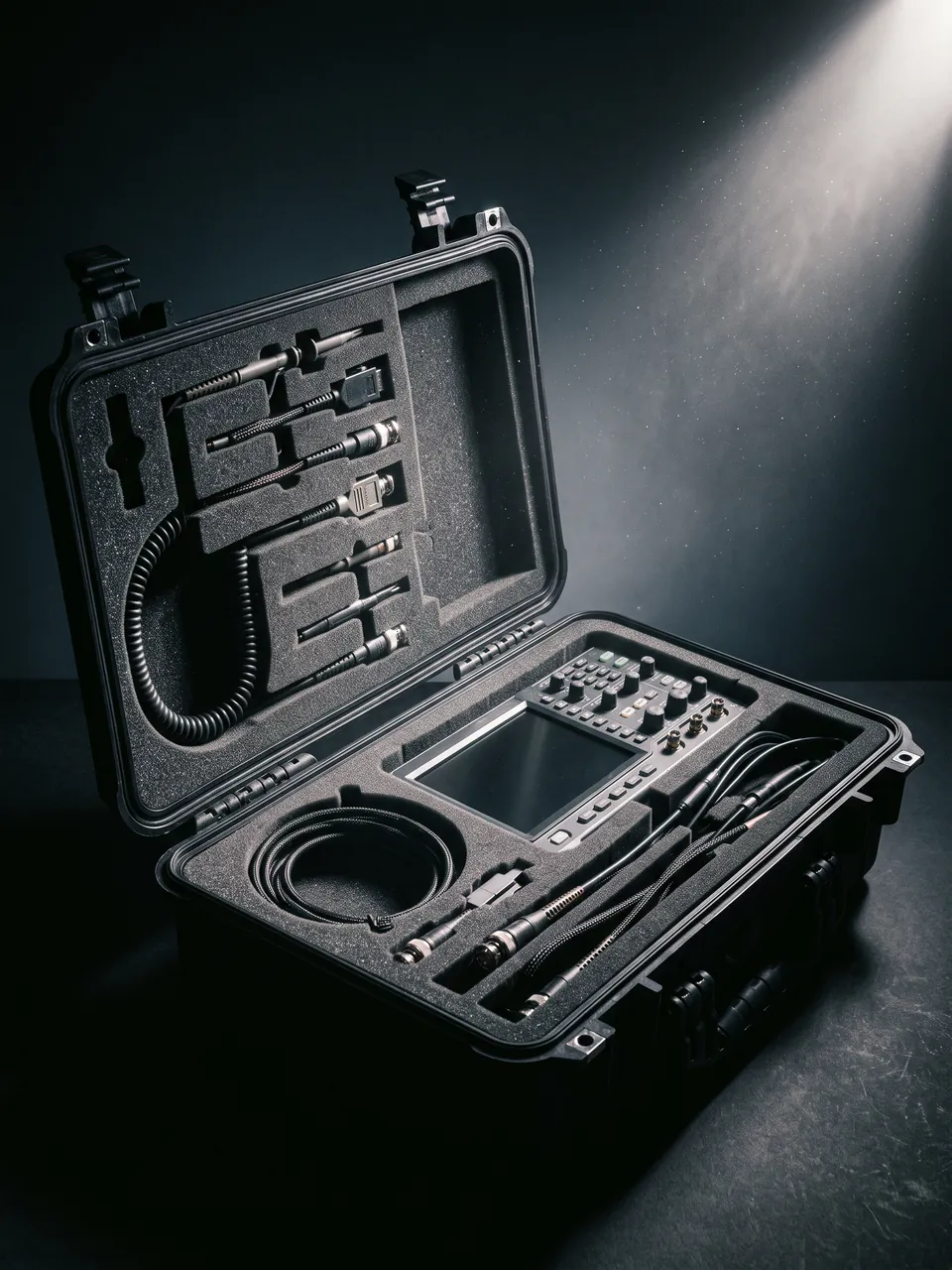
This is the point most often misunderstood about cases for communication electronics, and the one where things most easily go wrong.
Sealing Inherently Obstructs Cooling
To keep water and dust out, a case has to cut the air exchange path between inside and outside; to shed heat, electronics rely on moving air. Those two goals conflict directly in physics: in a fully sealed case with IP67 capability, equipment running inside pushes the internal temperature steadily upward until it exceeds the equipment's permitted operating temperature. That is not a product defect but the necessary consequence of sealing.
The correct approach is to pick one of three and settle it during the planning stage.
| Mode of use | Practice | Applicable scenario | Notes |
|---|---|---|---|
| --- | --- | --- | --- |
| Sealed for transport, opened for use | Equipment is removed and set up to run; the case serves only as transport and storage enclosure | Most outdoor work | Recommended; neither thermal nor sealing performance is compromised |
| Run with the lid open | Deploy with the lid open or partly open outdoors | Short duration, low heat dissipation equipment | Watch rain and dust; avoid extended open operation in heavy dust |
| Integrated run inside the case | The case becomes the integration platform and internal thermal design is required | Long-duration fixed deployment | A customization scope; thermal design must be agreed between supplier and integrator |
In one sentence: the default is sealed for transport and removed for use, which is the safest practice for communication electronics. If running inside the case is genuinely required, treat it as a thermal design problem rather than simply putting devices into a sealed box.
A Vent Valve Is Not a Cooling Opening
The flow through a pressure equalization valve is very small because its purpose is to balance slow-acting pressure differences, not to provide the convection that cooling needs. Using it as a cooling vent neither removes heat nor avoids accelerated clogging of the membrane in dusty conditions. That misconception is common and needs correcting.
Electromagnetic Compatibility Is a Weak Point of Plastic Cases: When Shielding Becomes Mandatory
After thermal management, this is the second technical point for packing communication equipment, and the limitation that plastic cases have to face honestly.
Why a Plastic Case Provides No Electromagnetic Interference Shielding
A metal enclosure shields electromagnetic interference through the Faraday cage effect of a continuous conductive body: electromagnetic waves induce currents in the conductive surface, and the energy is reflected or absorbed. Engineering plastics are insulators and cannot form a Faraday cage, so a plastic protective case provides neither attenuation nor isolation of electromagnetic interference. In most situations that is not a problem, because the equipment's own metal housing already handles shielding. It becomes exposed where the equipment is a bare module or development board, or where several interconnected parts sit together in a strong electromagnetic environment.
When Shielding Has to Be Considered
- The case holds unshielded bare boards, modules or split assemblies that interconnect with each other.
- The operating environment sits near high-power transmit antennas, radar or broadcast transmission towers with high field strength.
- Sensitive reception tests or weak-signal measurements have to be made in a high-interference environment.
- Several units are interconnected and crosstalk between them must be reduced while still managing everything as one case.
What Makes Shielding Actually Work
When shielding is genuinely needed, the answer lies in the liner layer, not in expecting anything from the shell.
- Conductive fabric or conductive foam wrap. Add a conductive layer over the insert surface to form a continuous shielding plane.
- Shielding bags or shielded liner pouches. Put sensitive items into a shielding bag before they enter the case; low cost and flexible.
- Conductive treatment of interfaces. Any shielding scheme has to deal with openings and seams, otherwise joints leak; this is the part where a larger seam means stronger leakage.
- Avoid half measures. Sticking on a single sheet of shielding fabric while leaving gaps on all four sides delivers almost no shielding and creates false confidence.
It must be stressed that shielding requirements have to be stated clearly before purchase, because adding a shielding layer affects insert thickness, volume, cutouts and accessories, and retrofitting afterwards usually means redoing the entire insert.
Electrochemical Corrosion, Salt Spray and Connector Aging: The Quiet Enemies of the Link
The reliability of a communication link depends to a large degree on inconspicuous connectors.
Why Connectors Fail
Reliable contact in a radio frequency connector rests on two things: a clean contact surface and sufficient contact pressure. Degradation in either shows up as rising contact resistance, which then raises insertion loss and degrades standing wave ratio. The three main degradation paths are:
- Oxidation and sulfidation. Copper and copper alloy contacts form oxide or sulfide films in humid sulfur-bearing environments, and those films conduct very poorly.
- Electrochemical corrosion. When two metals of different potential touch each other in the presence of an electrolyte such as a salty water film, a galvanic cell forms and the metal at lower potential dissolves faster as the anode. This is why connecting dissimilar metals directly deserves particular caution.
- Mechanical wear. Plating wears through under repeated mating and vibration fretting, exposing the base metal, which then corrodes quickly.
The most effective prevention against these three paths is also the plainest, and it reduces to three rules: fit dust caps whenever connectors are not in use, check threads and contact faces for foreign matter and discoloration before mating, and keep the storage environment dry. Writing those three actions into the team inspection sheet works better than any verbal reminder. One further note: radio frequency metrics tend to drift gradually rather than fail suddenly, so keep a record of key readings such as insertion loss or standing wave ratio results in the equipment log and judge trends, rather than waiting until the link fails completely before cleaning or replacing parts.
Three Countermeasures in Salt Spray Environments
| Countermeasure | Specific action | Effect |
|---|---|---|
| --- | --- | --- |
| Remove the electrolyte | Keep the case dry with enough desiccant and a hygrometer; cap connectors | Most effective, since electrochemical corrosion requires an electrolyte |
| Reduce direct contact between dissimilar metals | Prefer adapters of matched material or plating | Lowers the driving force of the galvanic cell |
| Cleaning and fresh-water rinsing | Rinse the case and hardware with fresh water after coastal work | Removes salt deposits from surfaces |
Plastic Has a Real Advantage Here
It is worth noting that in salt spray environments an engineering plastic shell has a natural advantage over metal: it cannot be electrochemically corroded. Metal cases rust, blister under paint and seize at fasteners near the sea, while materials such as PP and ABS do not have that problem. What does need attention is the hardware: latches, hinge pins and inserts should preferably use corrosion-resistant materials such as stainless steel or well-treated alloys, and the case should be rinsed with fresh water and dried after every coastal task.
Transport, Altitude and Pressure Change: Equalization Valves and Aviation Rules
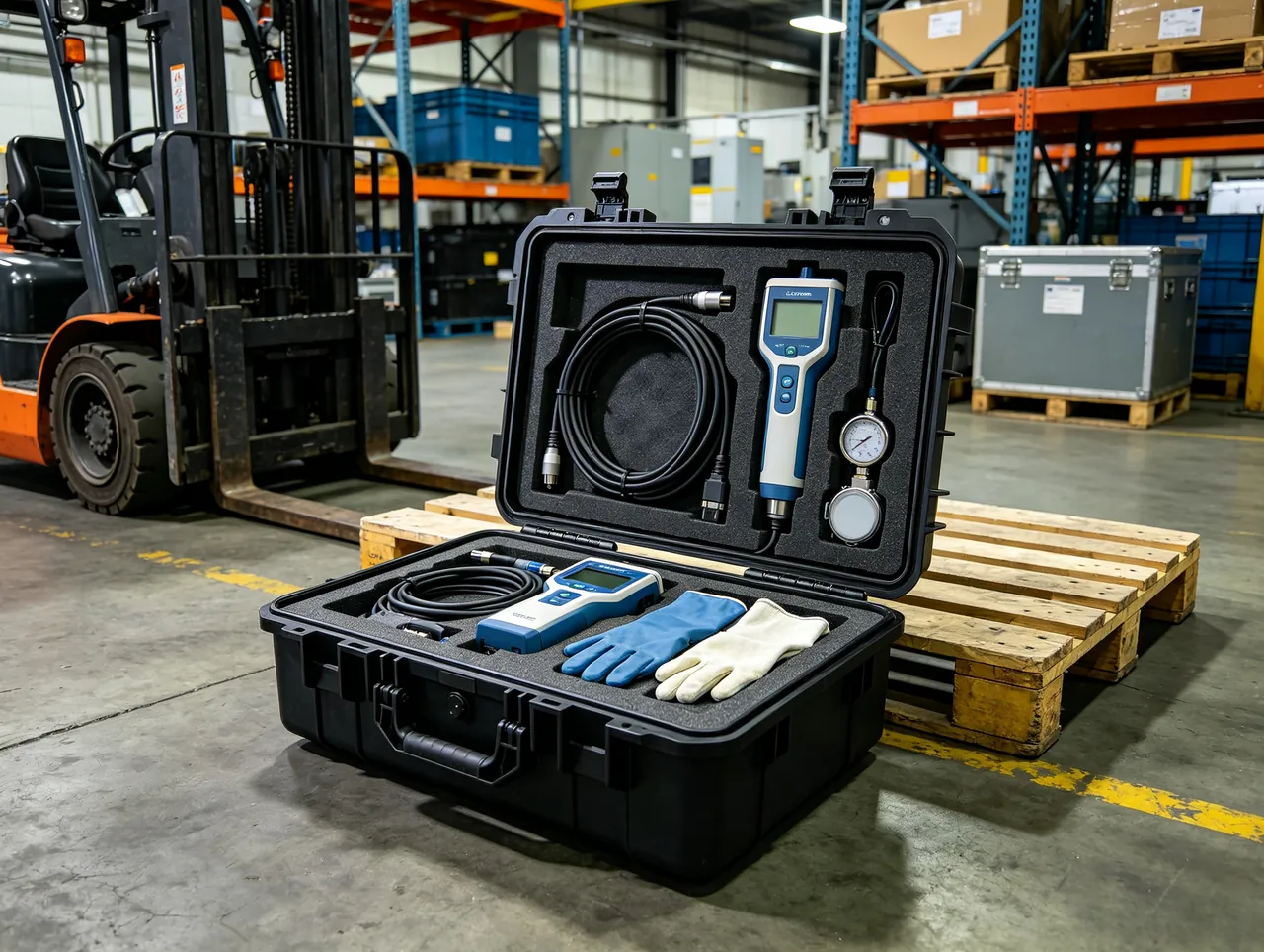
Transporting communication equipment has two peculiarities: it often goes by air, and it often goes to high altitude.
Why a Pressure Equalization Valve Is Needed
As altitude rises, outside pressure falls, and as temperature changes the air volume inside the case changes with it. If the case were completely rigid and sealed, a pressure differential would build up and show up in three ways: the lid being pushed outward or, conversely, becoming hard to open; the gasket carrying abnormal load for long periods so that permanent set accelerates; and in extreme cases deformation of the shell or latches. A pressure equalization valve uses a microporous membrane that lets gas through while blocking liquid water and dust, venting the differential automatically while retaining the seal.
For any communications case flown as checked baggage or deployed at altitude, the pressure equalization valve should be treated as mandatory equipment rather than an optional accessory. Remember at the same time that it equalizes pressure, not humidity, so desiccant remains necessary.
Lithium Battery Transport Rules
Portable communication equipment generally depends on high-capacity lithium cells, and lithium cells follow their own strict aviation requirements. No specific figures are given here because the rules update by transport mode and regulator, so the correct practice is:
- Check the current rules of the carrier and regulator before travel and follow the latest text.
- Provide a separate, quickly removable battery bay in the case for screening and inventory.
- Keep terminals away from metal objects so nothing can bridge them.
- Never ship cells that are damaged, swollen or leaking.
These four are management principles, and they do not get skipped because of someone's subjective experience.
A Short Pre-Deployment Routine
A brief routine before leaving for site prevents most of the failures described above and costs only a few minutes. Walk the inventory card against every bay and confirm nothing is missing. Look at connector faces for discoloration or foreign matter and confirm each unused port has its dust cap. Check that the battery bay closes, that the cells show no swelling or damage, and that nothing metal can reach the terminals. Read the hygrometer and confirm desiccant has not saturated. Finally, close the lid, check that the gasket seats evenly and that every latch self-locks, then confirm the pressure valve breathes. Doing this once per trip turns a communications case from a container into a dependable piece of readiness equipment.
Stacking and Securing
When multiple cases move together, they need stacking locators, the mating bosses and recesses on the top and bottom shells, or they will slide and tip over in a moving vehicle. Strap the load down after loading and recheck it after a long drive. Keep the stack height within what the case is designed for, since long-term load on the bottom case deforms the mouth slightly and thereby affects sealing.
Insert Configuration, Case Format and Incoming Inspection Checklist
Insert Materials: Why Communication Gear Must Prefer Closed Cell
| Material | Structure | Water absorption | Characteristics | Where it belongs in a communications case |
|---|---|---|---|---|
| --- | --- | --- | --- | --- |
| EVA | Closed-cell | Very low | Thermoformable, strong support | Main device bays, custom molded trays |
| EPE | Closed-cell | Low | Light, long cushioning travel | Wrapping layers, filler blocks |
| PE foam | Closed-cell | Very low | Firm, tear resistant | Dividers, structural layers |
| EPP | Closed-cell | Very low | Survives repeated impact, recovers well | Long-term vehicle vibration scenarios |
| PU sponge | Open-cell | High | Soft, conforms well | Avoid in humid conditions |
The reason closed cell comes first is direct: communication equipment fears moisture most, and once open-cell foam has absorbed water it presses that moisture against the equipment and becomes a lasting damp source.
Choosing an Insert Format
- Pick and pluck foam. Suits teams still adjusting their configuration, or one case shared across several models, since cavities can be pulled on site.
- Pre-cut foam. Adopted once the inventory is fixed, for example a standardized terminal kit; high conformity and fast access.
- Custom molded insert. Used for batch purchasing, when finger access, layered tiers or integrated desiccant pockets are needed; the best repeatability.
Six Zoning Rules for Communication Equipment
- Separate small bins for interfaces and connectors. Adapters, calibration standards and power meters belong in individual pockets away from metal tools.
- Cables go into mesh pockets or routing channels. Cabling is one of the most common failure sources in communication gear, and it must not be free to slide around and strike equipment inside the case.
- Screens face a soft surface and carry no load. A screen should not face the case wall, nor be compressed once the lid is closed.
- Batteries fully isolated. Separated from any metal object and quick to remove at security.
- Desiccant and hygrometer stay in the case. Hold relative humidity below 60 percent, ideally in the 40 to 55 percent band.
- High-frequency items on the top layer. Frequently used items should not sit buried at the bottom.
Case Format and Carrying
| Scenario | Recommended format | What to check |
|---|---|---|
| --- | --- | --- |
| Single person carrying to a field setup | Hand-carried or shoulder-carried medium case | Weight control, whether strap anchors use metal inserts |
| Vehicle-supported multi-device setup | Medium to large trolley-wheeled case | Quiet wear-resistant wheels, recessed handle, stackability |
| Air shipment of a portable terminal | High-strength checked-baggage case | Recessed latches, pressure valve, optional lock hasp |
| Fixed integrated deployment | Custom integration case | Volume, cutouts and thermal design confirmed with the supplier |
Incoming Inspection and Routine Maintenance Checklist
- Seal visual check. After closing, inspect along the lid edge to confirm the gasket is compressed evenly with no local gaps.
- Latch feel. Latches seat crisply with a clear self-lock, consistent across a batch.
- Dust caps complete. Replace any missing cap before putting the case into service.
- Battery bay check. Confirm separation from metal parts and that no bridging contact is possible.
- Desiccant and hygrometer. Fitted correctly and reading normally.
- Pressure equalization valve, if fitted. Body intact and breathing normally.
- Routine care. After coastal or dusty tasks, clean the case and let it dry before closing; wipe the gasket with clean water periodically and avoid strong solvents.
Frequently Asked Questions (FAQ)
Q: Can equipment run inside a sealed protective case? A: By default, no. A case with IP67 capability cuts off the air exchange path that electronics rely on to shed heat, so running equipment inside a sealed case pushes internal temperature steadily above the permitted operating temperature. The safe practice is sealed for transport and removed for use. If running inside the case is genuinely required, treat it as a thermal design problem and confirm ventilation, insulation and temperature rise with the case supplier rather than simply putting devices into a sealed box.
Q: Can a plastic protective case provide electromagnetic shielding? A: The plastic shell itself cannot. Shielding relies on the Faraday cage effect of a continuous conductive body, and engineering plastics are insulators that provide neither attenuation nor isolation. Where shielding is needed, solve it at the liner level: use conductive fabric, conductive foam or shielding bags to form a continuous shielding plane, and treat seams and openings, since gaps are the main leakage path. Shielding requirements must be stated before purchase because they affect insert thickness, volume and accessory layout.
Q: Why do radio frequency metrics degrade after a few trips? A: Connector degradation is the most common cause. Repeated mating plus micro-fretting in transit wears the contact plating, exposing base metal that oxidizes or sulfidizes quickly in humid sulfur-bearing air, so contact resistance rises, insertion loss grows and standing wave ratio degrades. Fit dust caps, store dry, reduce unnecessary mating cycles and avoid connecting dissimilar metals directly to limit electrochemical corrosion. Cleaning connectors periodically with anhydrous alcohol and inspecting threads is the cheapest and most effective maintenance available.
Q: How should a communications case be maintained after coastal work? A: In three steps. First, rinse the exterior and hardware with fresh water on return to remove salt deposits, then wipe dry and air out with the lid open. Second, check latches and hinge pins for early rust, since corrosion weakens latch compression and therefore sealing. Third, dry or replace the desiccant and confirm the hygrometer reading before closing the case for storage. The engineering plastic shell itself will not corrode electrochemically, so metal hardware and connectors are what need watching.
Q: Is a pressure equalization valve mandatory? A: Whenever air shipment, high-altitude deployment or regular movement between low and high elevation is involved, it should be mandatory. It automatically balances the internal and external pressure difference so the lid does not deform, the case can be opened, and the gasket is not left carrying abnormal load for long periods. To be clear, the flow through the valve is small and only balances slow-acting pressure change; it cannot serve as a cooling vent and does not replace desiccant for humidity control.
Q: Where should lithium batteries sit in the case? A: Give them a fully separate bay that satisfies three conditions: no contact with any metal object so nothing bridges the terminals; quick removal at security or inspection; and visual access for checking their condition. Before transport, check the current lithium battery rules of the carrier and regulator and follow the latest text. Damaged, swollen or leaking cells must not be shipped. Chargers and cables belong apart from the cells so the wiring is not crushed or deformed by pressure.
Q: Can equipment bought from several vendors share one large case? A: Yes, depending on how stable the inventory is. When models change often and combinations shift, pick and pluck foam is the most flexible. Once the inventory is fixed, move to pre-cut or custom molded inserts, because conformity, access speed and long-term durability are all clearly better. Watch total weight as well: above roughly 15 kg, switch to a trolley-wheeled case so handling does not lead to drops that hurt people and equipment.
Conclusion
The requirements for a communication electronics protective case trace back to four threads: sealing, thermal management, shielding and interface reliability. On sealing, take a full-perimeter sealed structure with IP67 capability as the baseline, remembering that an IP rating is the result for a new case under standard test conditions and that long-term effectiveness depends on gasket care and latch compression. On thermal management, face the fact that sealing and cooling conflict by nature, adopt the default of sealed for transport and removed for use, and never expect a vent valve to act as a cooling path. On shielding, engineering plastics provide no electromagnetic interference attenuation of their own, so where shielding is needed solve it in the liner with conductive fabric, conductive foam or shielding bags, treat the seams, and state the requirement before purchase. On interfaces and power, capping connectors, routing cables in channels and giving batteries a fully isolated, removable bay is what keeps the link available. Three things on the transport side must not be skipped: a pressure equalization valve wherever altitude changes, lithium cell management to the carrier's and regulator's current rules, and stacking locators plus strapping whenever cases are stacked. KeXin New Materials (Guangdong) Co., Ltd. was founded in 2014 and is located in Zhongshan City, Guangdong Province, with a factory of about 18,000 square meters, more than 80 machines and over 100 staff. Its protective-case line is marketed globally under the brand kexinMaterials and domestically under the JUNZHJIA product-line brand, covering more than 150 specifications, offering IP67 capability and environmental suitability validation against MIL-STD-810H. The company operates under ISO9001 and meets REACH, California Prop 65 and RoHS requirements, holds more than 20 utility model and design patents, and provides one-stop OEM and ODM customization from product design, mold manufacturing and injection molding to logo printing and tray and liner production. For bulk quotations, specification sheets or customization projects, please schedule through the contact page or inquiry form on this site.
Further Reading
- How Does an Outdoor Protective Case Protect Internal Electronics?
- What Does IP67 Mean for a Protective Case and Where Does It Apply?
- What Should You Watch When Shipping Outdoor Protective Cases at High Altitude?
- Why Does an Outdoor Protective Case Need a Pressure Equalization Valve?
- Why Does an Outdoor Protective Case Need a Dustproof Design?
- Are Outdoor Protective Cases Suitable for Air Transport?
- What Types of Foam Are Commonly Used Inside Protective Cases?
- How to Choose Internal Cushioning Material for an Outdoor Protective Case?
- Which Outdoor Applications Suit an ABS Protective Case?