

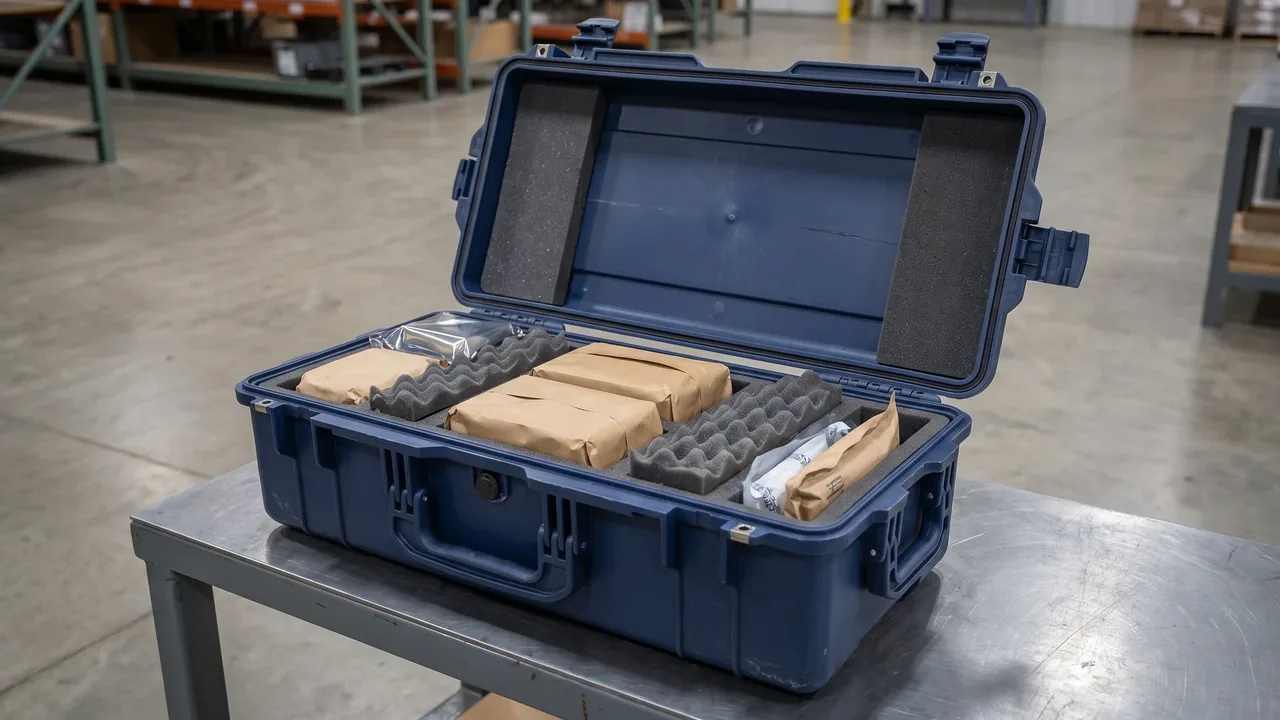
Case labeling is the most overlooked link in the export packaging compliance chain, and also the one that most often stops cargo at the port. For export packaging designers, inspection and customs teams, and brand compliance departments, the label on a case is not just logistics information: it is the legal evidence of material declaration, recycling obligations, warning duties, and producer liability. The EU mandates identification of packaging materials, the US applies trade marking and wood quarantine rules, and Japan enforces household quality labeling statutes. Missing content or a peeled-off print can turn an entire shipment into a return order. Experience shows that a label system whose elements are checked market by market and whose print durability is verified by test can markedly cut port documentation rework and leaves a readable batch record for after-sales traceability. This guide covers mandatory label content, material marking numbers, barcode traceability, printing durability, placement, multilingual requirements, and market differences, with an auditable review process and a list of common nonconformities that moves packaging labeling from after-the-fact correction to up-front design.
1. Mandatory Label Content Elements
A case label is not decoration. It carries six classes of mandatory and engineering information: material identification marks, recycling symbols, warning phrases, producer information, batch numbers, and certification marks. The first step in packaging labeling compliance is to break target-market rules into an element checklist and land every item on the case artwork.
Material identification marks state what the shell and main components are made of. The EU requires packaging material identification under Decision 97/129/EC, while China defines recycling marks in GB/T 18455; together they serve sorting and regeneration of packaging waste. The recycling symbol declares that the material can enter the recycling stream and gives its classification number, which is the visible evidence of circular-economy compliance.
Warning phrases are the floor of transport safety: stacking limits, keep dry, this way up, fragile, and center-of-gravity marks are the baseline, while export cases should add temperature-range, do-not-crush, and do-not-throw notes. Producer information must include full company name, registered address, country of origin, and contact details; it is both brand asset and the liability anchor in recalls and claims. A batch or serial number ties each case to production date, mold lot, and inspection records, forming the smallest unit of traceability. For medical and instrument cases, the batch-record logic of ISO 15378 for primary packaging materials can be extended to the case itself.
Certification marks such as protection ratings, flame ratings, and environmental statements should only be printed when supported by valid documents. Putting the mark before the file is itself a compliance risk. A controlled artwork checklist of these six element classes is the baseline document for every later audit.

2. Material Identification Marks and Numbering
Material marking numbers are the most technical and most misprinted part of a label. EU Decision 97/129/EC defines a numbering scheme: digits 1 to 7 cover seven plastics, namely 1 PET, 2 HDPE, 3 PVC, 4 LDPE, 5 PP, 6 PS, and 7 other plastics (abbreviated O); 20 to 23 cover paper and board including corrugated board, all abbreviated PAP; 40 and 41 stand for steel (FE) and aluminium (ALU); the 50 series points to wood (FOR), 60 to textiles (TEX), 70 to 79 to glass (GL), and 80 to 99 to composites such as paper-plastic and aluminium-plastic laminates. Rotomolded polyethylene cases are usually marked 4, injection-molded polypropylene cases 5, and aluminium cases 41 with an optional note on anodizing.
China GB/T 18455 uses a triangle of chasing arrows with number and abbreviation inside. The logic is largely aligned with the EU scheme, but symbol version, supplementary text, and exemptions differ. Export cases should be plated per target market instead of reusing one mark everywhere. For carbon-fibre or glass-fibre reinforced shells the number falls in the 80 to 99 range, and the label or accompanying file should state the main material so customs and recyclers do not read it as a single-material part.
Multi-material cases (plastic shell with metal fittings and foam liner) need a declared strategy. Mark the shell material and add a text note such as contains metal parts and cushioning liner, or give the full material list in the accompanying technical file. In practice, main material plus a text note is the most widely accepted compromise at ports. For the bridge between numbering and recycling schemes, see the recycling mark case guide and the EU packaging directive case guide to match each number to the applicable regulation version.
3. Warning Phrases, Producer Information, and Batch Numbers
Warning phrases should follow a necessity rule: keep only what is directly tied to transport and storage, because crowding dilutes the critical message. Stacking limits are expressed in layers and maximum load, for example max three layers and total load not above the rated value; keep-dry and this-way-up notes should appear in pairs with a matching arrow; fragile and do-not-crush notes apply to cases holding delicate instruments. Temperature-range notes matter most on cases with thermal control or phase-change materials and should state the allowed ambient band.
Producer information must be complete enough to trace: full legal name, registered address, country of origin, and contact channel. The origin marking feeds tariff and trade-remedy procedures, so the abbreviation must match the bill of lading and customs declaration to avoid doubt at document review. Once a batch number rule is fixed it should stay stable for years; a date plus mold number plus serial structure keeps every case uniquely locable long after delivery.
Batch numbers should also be bound to inspection records. Incoming, in-process, and final inspection results must be retrievable from the batch number, which can cut evidence gathering from days to hours during a customer complaint or a port spot check. For suppliers that fit seals by model and custom liners, the batch number is also the key to tracing gasket lots and liner versions. The encoding practice is detailed in the case labeling asset tracking guide.
4. Barcodes, QR Codes, and Traceability
Barcodes are the functional core of a case label. Common linear codes include EAN-13, Code 128, and GS1-128; GS1-128 carries fields such as batch, expiry, and quantity through application identifiers and suits export logistics. QR codes are dominated by GS1 DataMatrix, which saves space and tolerates damage, making it ideal for small labels. Coding rules should follow GS1 global standards so scanners work at any port.
Print quality decides traceability. Linear codes are graded to ISO/IEC 15416 and matrix codes to ISO/IEC 15415; grade C is the usual shipping floor, and key batches should reach grade B or better. Grade loss most often comes from ink spread, insufficient contrast, or low print resolution, all fixable at the proofing stage. As a rule of thumb, keep a clear quiet zone and never place a code over a dark screen-printed graphic.
Label content should connect to the information system: a scan should return batch, model, inspection status, and destination so warehouse and customs teams can verify without opening the case. For fleet users, the QR code can also carry the asset number and close the loop with the internal register. For the wider family of transport markings, see the transport marking guide, which organizes barcodes, pictograms, and text into one visual system.
Traceability also fails quietly when the physical label and the data record drift apart. The control is a single master record per batch: the label payload is generated from the same field source as the inspection report, so the code on the case and the row in the database are produced once, not typed twice. Where a manual step is unavoidable, add a scan-back verification at packing that reads the applied label and compares it to the work order before the case leaves the line. This check costs seconds per unit and closes the most common gap, the correct label applied to the wrong case during a mixed-model run.
5. Printing Process Selection and Substrate Matching
Printing process decides both label life and cost structure. Five engineering routes are common: screen printing, pad printing, laser marking, digital printing, and pressure-sensitive labels. Screen printing suits flat graphics on PP, ABS, and aluminium in small to medium batches: thick ink film, good abrasion resistance, stable overprint, and the default process for a main case graphic. Pad printing handles curved surfaces and small local text, such as a warning icon beside a latch. Laser marking needs no ink and writes directly into plastic or metal, giving excellent chemical and weather resistance, though contrast on dark plastics depends on the material recipe.
Digital printing fits multilingual, multi-batch, small-run labels: no plates, fast changeover, and the usual bridge for export cases with many artwork versions. Pressure-sensitive labels on PET, PVC, or synthetic paper carry dense information, can be pre-printed and applied on site, but durability depends on matching facestock and adhesive, and low temperature or curvature invites edge lift. Thermal transfer is efficient for variable data such as batch and date codes and is usually paired with a pre-printed fixed artwork.
Process choice must match the substrate. Polyethylene and polypropylene have low surface energy and need flame, corona, or primer treatment before printing, or ink adhesion fails. Rotomolded shells are flatter than injection-molded parts, so screen resolution should be relaxed and key data moved to laser or label carriers. Aluminium cases take screen print after anodizing or direct laser marking. For cost curves by process, compare the protective case logo printing methods and the case logo printing options tables and spend the budget on the artwork that truly needs long life.
6. Weathering and Durability Testing of Prints
Print durability must be proven by test, not by eye. Four test families matter: abrasion, adhesion, weathering, and chemical resistance. Abrasion usually follows the Sutherland rub test (ASTM D5264), counting reciprocations under a defined load until the substrate shows or the graphic breaks. Adhesion is graded by the cross-hatch tape test (ASTM D3359) on the proportion of ink peeled. Weathering uses xenon-arc exposure (ISO 4892) or UV acceleration (ASTM G154) to score fading and chalking after light, heat, and humidity cycles. Chemical resistance judges graphic integrity after wipes with alcohol, neutral cleaner, and salt spray.
Acceptance limits should be graded by use environment. Domestic warehouse and short-haul cases need adhesion and basic abrasion only. Sea-freight export cases should add salt spray and damp-heat cycling. Cases stored outdoors long term should add UV aging. As a rule of thumb, a screen-printed graphic on a sea-freight case should show no continuous substrate exposure after several hundred rub cycles, and label products should stay readable after standard aging; the exact figures belong to the supplier test file, not to a copied specification.
Testing must target this model, this batch, and this process combination, because a new ink lot, primer, or cure parameter changes the result. For OEM and ODM users, require the maker to issue print-durability documents around the specified model with test conditions, loads, and cycle counts written into the report; JUNZHIJIA normally supplies such files for export projects so they drop straight into the acceptance archive. When a test fails, fix process before material: adjust cure parameters and primer first, then change ink or facestock.
7. Label Placement and Visibility
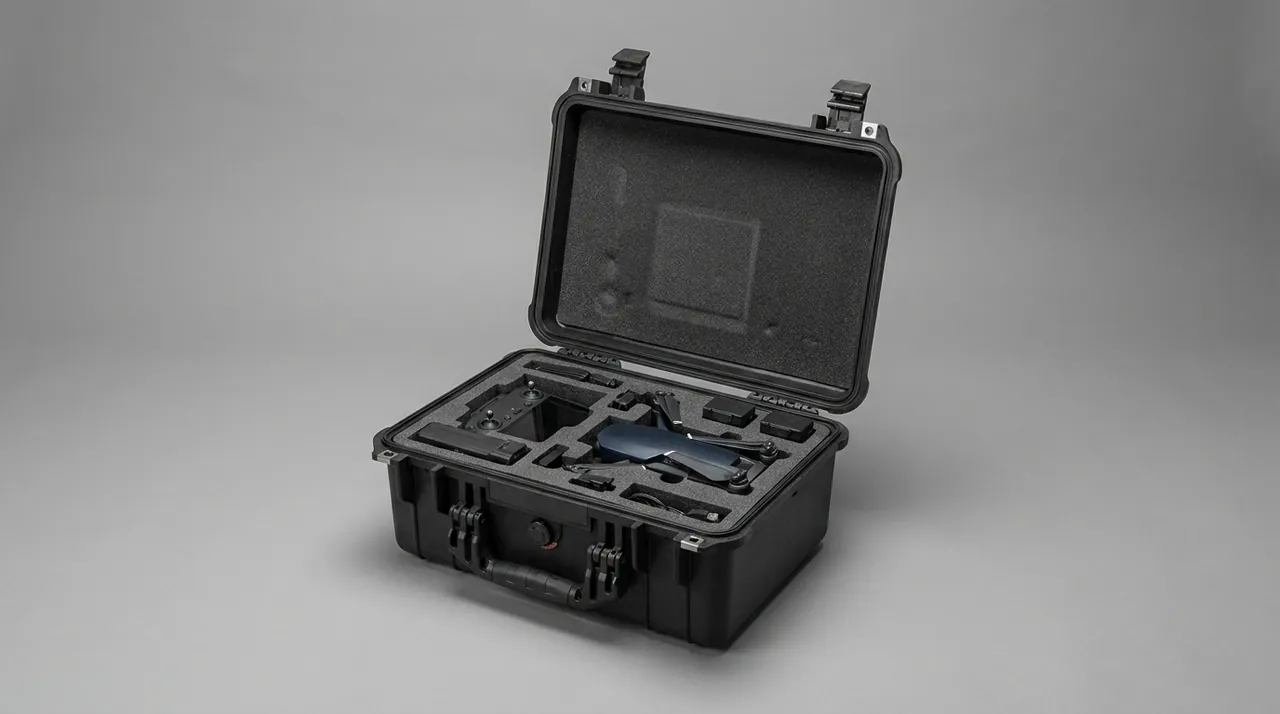
The first placement rule is visibility in normal use posture. The main label belongs on the front face or the upper front flat area, with character height readable at one metre; the inside of the lid can carry the contents list or liner map for fast access. Stacking notes sit low on a side face so a stacker can confirm them from below, and up arrows must sit on a transport face pointing the way the case actually travels.
Layout must also dodge structure interference. Corners, ribs, and hinges carry curvature that lifts label edges, and a barcode printed across a curve loses read rate. Metal fittings are the wrong place for an RFID tag because shielding shortens read distance, and latch and handle zones are gripped and rubbed, so no key warning icon belongs there. For fleet cases, adopt a three-face split: main label on the front, parameter label on a side face, logistics marking on the top, so wear on any one face never voids the whole case.
Minimum sizes are hard constraints. Main text on a transport face should not be shrunk below legibility at distance, and barcode modules must meet the scanner resolution floor. When several languages coexist, solve crowding by zoning the artwork instead of shrinking every glyph. For the general layout logic, plan label position together with the case parameters in the protective case selection guide so the label matches stacking and vehicle-mounting scenarios.
8. Multilingual Label Requirements
Multilingual work is not mere translation; it is choosing the language set and priority per market. No single EU law forces every member language, but safety and recycling statements usually need the language the destination user understands, so cases for France often carry French, Germany German, and southern Europe accepts English plus local language; Middle East shipments often need Arabic with right-to-left layout. The US runs on English with state-specific additions.
Manage multilingual artwork by zones: fixed process graphics such as recycling symbols and up arrows stay globally identical, while text zones switch by market version so a market change never forces a full redraw. Keep numbers, units, and batch formats consistent, and write dates in an unambiguous order because day-month conventions clash. Technical terms should use the industry-standard rendering of ratings and stacking limits so document review never stalls on odd wording.
For users running several markets in parallel, a base artwork plus market insert page is the robust pattern: the base carries universal information and the insert carries local language and certification marks as an applied label, so a market change swaps one insert. This controls plating cost and avoids stale language remnants. For how environmental statements sit with multilingual versions, see the circular packaging case guide on artwork organization.
9. Export Market Differences: EU and US
The EU is the most detailed market for packaging labels. Beyond Decision 97/129/EC on material identification, the packaging and packaging waste directive sets the extended producer responsibility framework, and exporters usually must register packaging and file recycling declarations in the country of sale; the newer packaging and packaging waste regulation tightens recycled content, minimization, and label information further. If the case carries CE or UKCA related statements, the label must match the conformity file, and material compliance falls under REACH and RoHS, with declarations archived alongside the packaging documents. For the overall export compliance picture, check the export packaging compliance cases and the EPR compliance case guide item by item.
The US puts labeling weight on trade and quarantine. Wood packaging must meet ISPM 15 and carry the IPPC mark or risk return or destruction; commercial packaging practice can follow ASTM D3951; military transport still leans on the MIL-STD-2073 marking system. On environmental claims, the FTC green guides require a real basis for recyclable-type wording, so vague green marks invite misleading-claim findings. California Proposition 65 warning duties should be assessed whenever in-scope substances are involved.
Both markets share one trait: the label is treated as provable evidence. The practical tool is a marking element matrix per market, listing rule clause, artwork element, version, and effective date, so a regulatory update edits the matrix first and drives artwork revision second. That turns compliance upkeep from a one-off project into a living document flow.
10. Japan and Other Asian Market Requirements
Japan legislates material and quality labeling for consumer goods, with the household quality labeling act requiring material classes for plastic parts in parallel with packaging material identification; electronic products add recycling and marking duties. Industrial case buyers in Japan weigh batch traceability and long-term marking consistency highly, and any label change should be notified in advance with old proofs retained. Wood packaging for Japan follows ISPM 15, and the phytosanitary certificate is audited strictly.
Other Asian markets differ mainly in language and paperwork. Korea requires Korean marking on certain consumer goods, Southeast Asia widely accepts English plus local language, and Middle East artwork review must clear language and symbol taboos. Markets such as India apply ISPM 15 to wood packaging with extra rules on mark position and certificate validity.
The common risk across Asia is missing language and expired document versions. Adding a version number and effective date to each market insert lets a reviewer spot stale artwork at a glance. For how regeneration statements fit regional rules, see the packaging waste management guide and the recycled material case guide to align regional demands with the global environmental narrative.
11. Label Audit Process and Common Nonconformities
An auditable label review runs through six nodes: design input, artwork review, first-article sign-off, durability sampling, batch patrol inspection, and change management. Design input converts target-market rules into an artwork element table. Artwork review locks text, graphics, and position among compliance, packaging design, and the customer. First-article sign-off freezes process parameters and color standards. Durability sampling rechecks abrasion and adhesion at a set batch ratio. Batch patrol verifies barcode grade and content consistency. Change management routes any artwork or process change through the same loop.
Common nonconformities fall into eight families: material number missing, wrong, or outdated; recycling symbol in a wrong version; batch number missing, duplicated, or unreadable; warning phrase covered by the logistics label; character height too small for distance reading; label applied on a curved or structural zone and lifting; language gaps or mixed versions; barcode grade below C. The first five are design defects and should be stopped at artwork review; the last three are execution defects controlled by first-article sign-off and patrol inspection.
The audit also needs nonconformity grading: critical items such as regulatory omissions or unreadable barcodes stop the batch for rework; general items such as position offset or slight color drift are recorded and corrected within a deadline; watch items are filed for tracking. Wood quarantine mark defects and dangerous-goods marking errors are always critical. Binding audit records to the batch number produces an evidence chain that can be produced quickly during internal audit or a customer factory inspection; for the transport compliance context, run this together with the wood packaging quarantine case guide and the dangerous goods packaging case guide.
12. Label Maintenance and Lifecycle Management
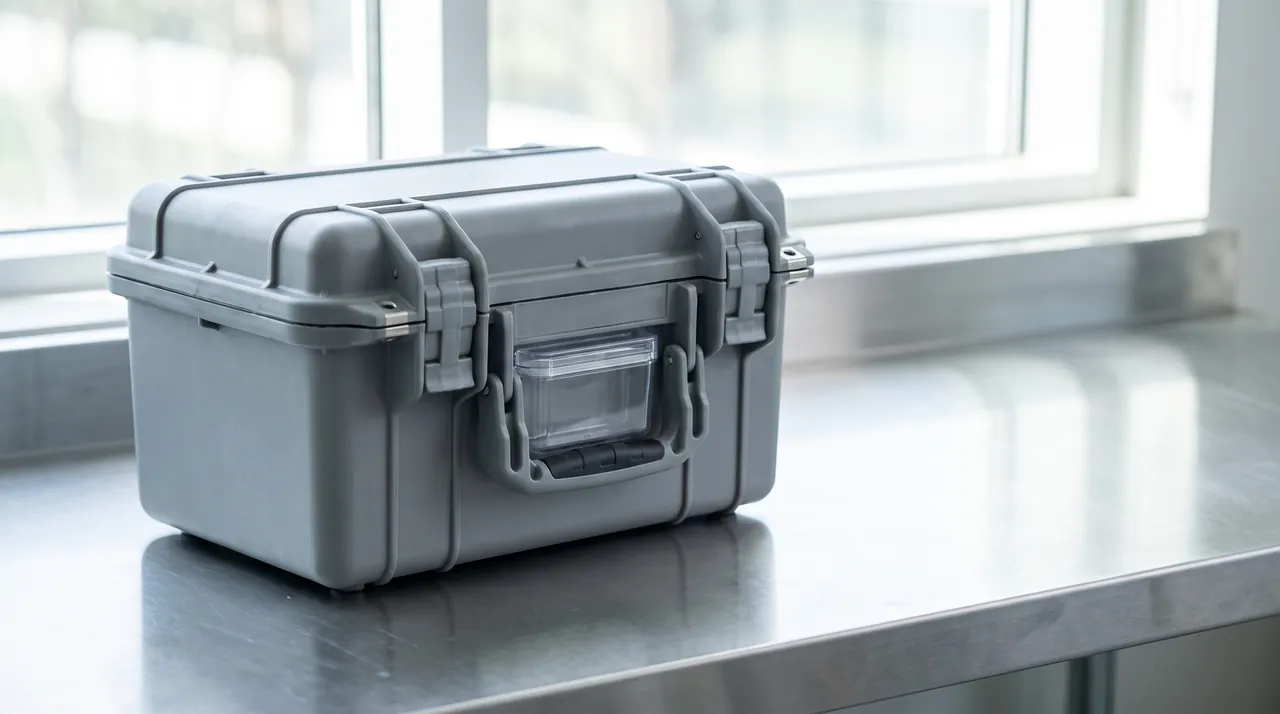
Label duties continue after delivery. Wear, water stains, and grease in storage and service can make key data unreadable, so maintenance rules must set inspection cycles and remedies: worn non-key information is logged for observation, while worn key information such as batch number, warning phrase, or barcode must be reprinted or replaced using the same process and content version, with the reprint recorded. A replaced label must fully cover the old one so two versions never coexist.
Inventory cases and in-service cases need different label regimes. Inventory cases take logistics face labels by outbound batch; in-service cases keep an asset register by asset number. The fields differ but both should share one coding rule. On cases with thermal control or seals, label maintenance should be scheduled with gasket and latch checks to avoid extra openings. Cycles and methods can follow the protective case maintenance guide.
A practical maintenance schedule ties label checks to existing touchpoints: the daily return check wipes and reads the transport face, the monthly check verifies the main label and barcode readability, and the annual review samples cases for print adhesion. Each check writes a one-line record against the asset or batch number, so wear trends become visible before a label fails outright. Where a case circulates between sites, the transfer form should include a label condition field; a case that leaves site A with a worn batch number is far easier to fix at the receiving dock of site B than after it reaches a customer or a customs warehouse.
When a case enters reuse or recycling, old labels matter. Cases moving into secondary circulation should have the original user batch and asset marks removed or covered to prevent misreading; cases entering material recycling should keep the material number legible for sorting. For the bridge between reuse and recycling, see the case recycling and reuse practice notes.
13. Selection Points and Supplier Capability Assessment
Pushing packaging labeling compliance into procurement is the cheapest control. The technical specification should carry a dedicated marking section: target market list, language requirements, material numbers and recycling symbol version, barcode format and minimum grade, print process and durability criteria, label position drawing, batch number rule, and nonconformity grading. The more precise the specification, the stronger the later basis for claims and rework.
Score suppliers on four capabilities. First, multi-market artwork management: can they maintain language versions against the rule matrix and keep historical proofs. Second, process matching: can they choose screen, laser, or label solutions by substrate and durability demand. Third, documentation: can they issue print-durability test files around the specified model and accept incoming re-test. Fourth, change response: can they complete artwork revision and fresh first-article sign-off within an agreed window after a rule update. Experienced OEM and ODM makers also fold customer numbering, color rules, and logos into one custom scope, removing a secondary processing step.
JUNZHIJIA works along these four lines: custom liner and artwork design in one pass, market-matched multilingual insert pages, print-durability and protection test files issued around the specified model, and model-matched seals and spares so label, structure, and maintenance form one technical file. For fleet exporters, validate one small-batch market end to end before extending the market list, keeping compliance risk inside an affordable envelope. For the selection frame, combine the protective case selection guide with the sustainable packaging certification guide.
FAQ
Q: Why must a case label carry a material identification number, and what happens if it is wrong?
A: The material number is the shared basis for waste sorting, regeneration, and port document review. EU Decision 97/129/EC requires packaging materials to be identifiable, and China GB/T 18455 defines the recycling mark. A wrong number sends the material to the wrong recycling stream and contaminates the batch; worse, an export shipment or customer factory audit can rule the marking nonconforming, forcing whole-batch relabeling with both cost and schedule damage. A wrong mark can also be traced back as a false statement in an environmental audit and damage supplier credibility. The number must match the real shell material, multi-material cases should mark the main material and note the other parts in text, and the full list belongs in the accompanying file so every party can self-prove compliance. In daily practice, keep a material declaration per model in the artwork library and re-check it whenever a resin supplier or mold lot changes, because a silent material substitution is the most common root cause of a numbering error found months later at a customer site.
Q: Are a recycling symbol and a material number the same thing, and how do the EU and Chinese versions differ?
A: They are related but not identical. The material number answers what the material is; the recycling symbol answers which recycling stream it enters, usually drawn as a triangle of chasing arrows with number and abbreviation. The EU scheme comes from Decision 97/129/EC and covers 1 to 7 for plastics, 20 to 23 for paper and board, 40 and 41 for metals, 50 for wood, and further ranges for textiles, glass, and composites. China GB/T 18455 follows a largely aligned numbering logic, but symbol version, supplementary text, and exemptions differ. Export cases should be plated per market rather than sharing one mark; for multi-market cases, a base artwork plus market insert lets versions coexist, and each insert should carry a version number and effective date to prevent stale-version defects. A frequent trap is mixing an old symbol file with new text after a regulation update, so artwork revision control should keep the source files under version tags and destroy retired proofs, and reviewers should verify the symbol against the current standard annex rather than against the previous shipment photo.
Q: How should barcodes and QR codes work together in case traceability?
A: The two carry different traceability layers. Linear codes suit standardized fields such as model, origin, and fixed identifiers, and scanners accept them everywhere. QR codes hold more, such as batch, inspection status, destination, and version, and win on small labels. The engineering pattern is linear for logistics and matrix for data: GS1-128 or EAN-13 on the transport face for warehouse and port scanning, GS1 DataMatrix on the management face for internal traceability fields. Coding should follow GS1 global standards, print quality is graded to ISO/IEC 15416 and ISO/IEC 15415 with grade C as the shipping floor and grade B or better for key batches, and a clear quiet zone should be kept. Content should link to the information system so a scan returns the batch archive without opening the case. When a label is reprinted for rework, the code payload must stay identical to the original record, and the reprint should be logged with reason and date; otherwise two different code families describe the same case and the traceability chain breaks at the exact moment a claim is investigated.
Q: How should screen print, laser, and pressure-sensitive labels be chosen?
A: The choice depends on substrate, information life, and batch size. Screen printing gives a thick film, good abrasion resistance, and stable overprint on flat PP, ABS, and aluminium, and is the default for main case graphics. Laser marking writes permanently into plastic or metal with no ink and excellent chemical and weather resistance, suiting batch and serial numbers, though contrast on dark plastics depends on the recipe. Labels carry dense information, can be pre-printed and applied on site, and suit multilingual inserts and small multi-version runs, but durability depends on matching facestock and adhesive, and cold or curved surfaces invite edge lift. The practical rule is to assign process by information tier: laser or screen for the main mark, laser or thermal transfer for variable data, and labels for market inserts, balancing life and cost. Before committing a process, run a coupon trial on the actual shell material with the intended ink or label stock, then re-check after a cure cycle; a process that looks perfect on a flat test panel can still fail on a textured rotomolded surface where the ink pools in the valleys and wears first.
Q: How can print abrasion and weathering resistance be verified as truly compliant?
A: Verification rests on standard tests and clear criteria. Abrasion uses the Sutherland rub test (ASTM D5264), counting reciprocations under a defined load until substrate shows or the graphic breaks. Adhesion is graded by the cross-hatch tape test (ASTM D3359). Weathering uses xenon-arc exposure (ISO 4892) or UV acceleration (ASTM G154) to score fading and chalking. Chemical resistance judges graphic integrity after wipes with alcohol, cleaner, and salt spray. Tests must target this model, batch, and process combination, because a new ink lot, primer, or cure parameter changes the result. Acceptance limits should be graded by environment: adhesion and basic abrasion for domestic warehouse use, salt spray and damp-heat added for sea freight, and UV aging for long outdoor storage. Requirements belong in the specification, and the supplier should provide reproducible test files. It also pays to keep a retained golden sample from first-article sign-off; when a field dispute arises months later, comparing the aged case against the retained sample settles the argument faster than any certificate review alone.
Q: What language requirements apply to case labels exported to the EU?
A: No single EU law forces every member language, but safety and recycling statements usually need the language the destination user understands, so cases for France often carry French, Germany German, and southern Europe accepts English plus local language, while Middle East direction often needs Arabic with right-to-left layout. Beyond language, the label must satisfy material identification under Decision 97/129/EC, extended producer responsibility registration, and the newer packaging regulation information duties, and its content must match the conformity file. The robust engineering tool is a marking element matrix listing rule clause, language set, artwork element, and version number, so a market change edits the matrix first and drives artwork revision second, avoiding full redraws and stale language remnants. Two practical details decide whether the matrix holds in the plant: translations should be locked by a named reviewer per language so re-translation never happens silently, and the insert version should be printed in small text on the artwork itself, letting a warehouse operator match sticker to market without opening the drawing folder.
Q: How does the wood quarantine mark differ from an ordinary case label?
A: The wood quarantine mark, the IPPC mark under ISPM 15, is an official mark applied by an approved treatment provider and states the treatment method and provider code, proving the wood has undergone heat treatment or methyl bromide fumigation. It is an official credential, not logistics information printed by the company. An ordinary case label carries material number, recycling symbol, warning phrase, producer information, and batch number, designed by the company per market rules. Both must be clear, durable, and correctly positioned and must match the accompanying certificates. For exports to the US, Japan, and most Asian markets, wood packaging without a valid IPPC mark faces return or destruction, so the quarantine mark should be verified as a critical item on its own. Incoming inspection should photograph the mark and certificate number for every wood shipment and file them against the purchase order, because a mismatched provider code is the defect that customs notices first, and it is far cheaper to reject a pallet at the receiving dock than to argue with a port inspection team after sailing.
Q: What nonconformities are common in label audits, and how should they be fixed systematically?
A: Common nonconformities fall into eight families: material number missing, wrong, or outdated; recycling symbol in a wrong version; batch number missing, duplicated, or unreadable; warning phrase covered by the logistics label; character height too small; label applied on a curved or structural zone and lifting; language gaps or mixed versions; and barcode grade below C. Fix them by class: design defects are stopped at artwork review with an element checklist, and execution defects are controlled by first-article sign-off and batch patrol inspection. Grade the findings: critical items such as regulatory omissions or unreadable barcodes stop the batch for rework, general items such as position offset are recorded and corrected within a deadline, and watch items are tracked. Binding every record to the batch number builds an evidence chain that can be produced quickly during internal audit or a customer factory inspection.
Conclusion and Further Reading
Packaging labeling compliance is not a print-shop step but a document engineering chain across design, procurement, audit, and maintenance. Only when element checklists, numbering rules, durability criteria, and market matrices live in controlled files can every pre-shipment review rest on solid ground. Further reading: packaging carbon label guide, case logo printing options, transport marking guide.