

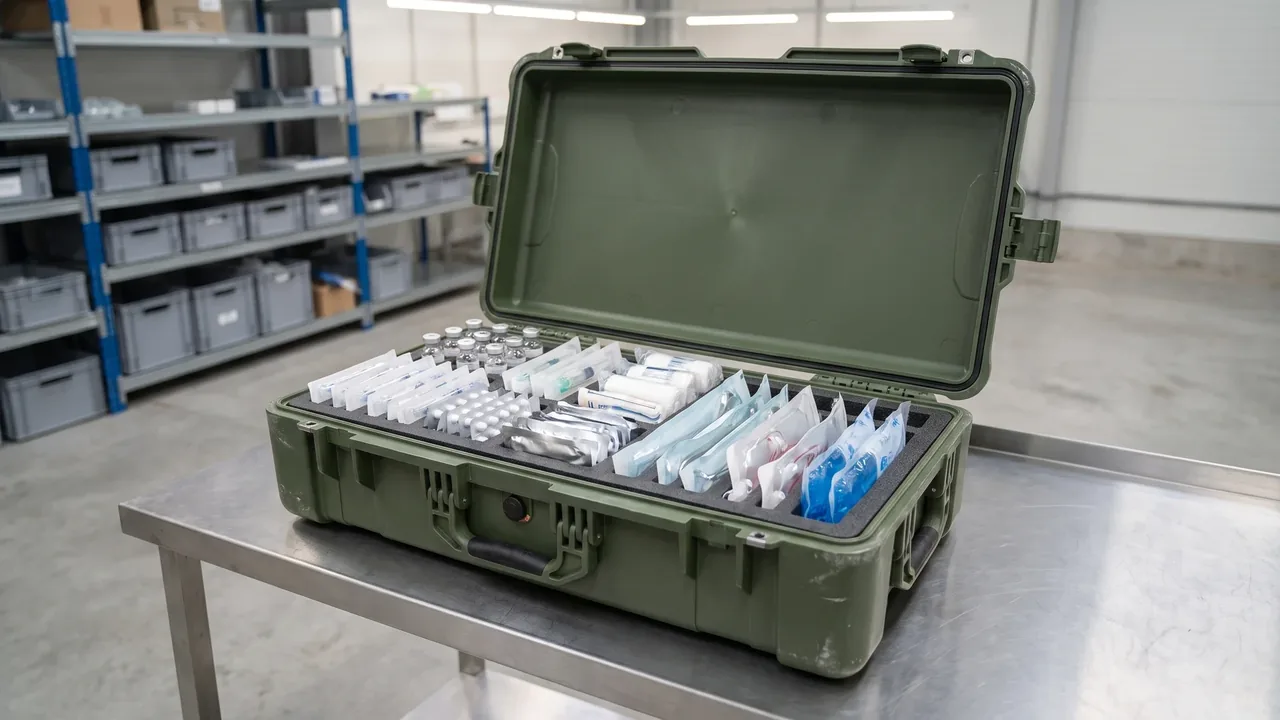
Protective cases, transit cases, and storage boxes become an industrial solid waste stream in their own right once their service life ends. Park waste-management officers, corporate environmental departments, and recycling vendors face the same questions every day: should a case be repaired or scrapped, where does each component go after disassembly, do contaminated parts count as hazardous waste, and what records will survive an audit. Packaging waste management is the discipline that links these scattered actions into one closed loop, covering scrapping criteria, component-level disassembly, material-specific recycling routes, hazardous waste identification, and vendor qualification audits. Experience shows that organizations with written scrapping criteria and component-level records can cut compliance costs for case waste by a third or more, while keeping recyclable materials inside the regeneration chain instead of mixed into general refuse. This article addresses the container itself only: the shell, liner, seals, metal hardware, and electronic parts, with parameters, workflows, and audit points.
1. Packaging Waste Management and the Case Life Cycle
The case life cycle has six stages: procurement and receipt, service, maintenance and life extension, scrapping assessment, sorting and disassembly, and final disposal. Packaging waste management sits in the last two stages, yet it decides whether the data from the first four stages can be trusted. Under the handling and utilization principles of GB/T 16716.1 for packaging and packaging waste, the priority order is reduction, reuse, and recycling, not simple removal. For cases this means scrapping is not the moment a box enters a skip; it is the starting point of a material-split decision.
The essential difference between a reusable case and a one-way carton is material complexity. A typical engineering-plastic protective case combines a rotomolded or injection-molded shell of modified polypropylene or polyethylene, aluminium corner protectors and latches, an EVA or polyurethane foam liner, an EPDM gasket, and on some models a pressure-equalization valve, an electronic lock, or tracking labels. At end of life these components behave very differently: the shell is a recyclable thermoplastic, the corners are non-ferrous metal, the foam and gasket are low-value mixed materials, and the electronic parts fall under RoHS and REACH control. Disposing of the assembled case as one lump buries all of that recovery value in a single movement.
Two further characteristics are often missed. The first is volume: parks and warehouses scrap cases in batches of tens or hundreds, so disposal contracts and transport must be managed batch by batch. The second is data: scrapped quantity, material composition, and downstream destinations all feed the environmental management system, and ISO 14001 expects the organization to keep traceable records of waste generation, treatment, and compliance. Bringing case scrapping into the solid-waste information system, rather than letting user departments handle it ad hoc, is the gap most organizations need to close first.
2. Scrapping Criteria: Damage, Aging, and Contamination
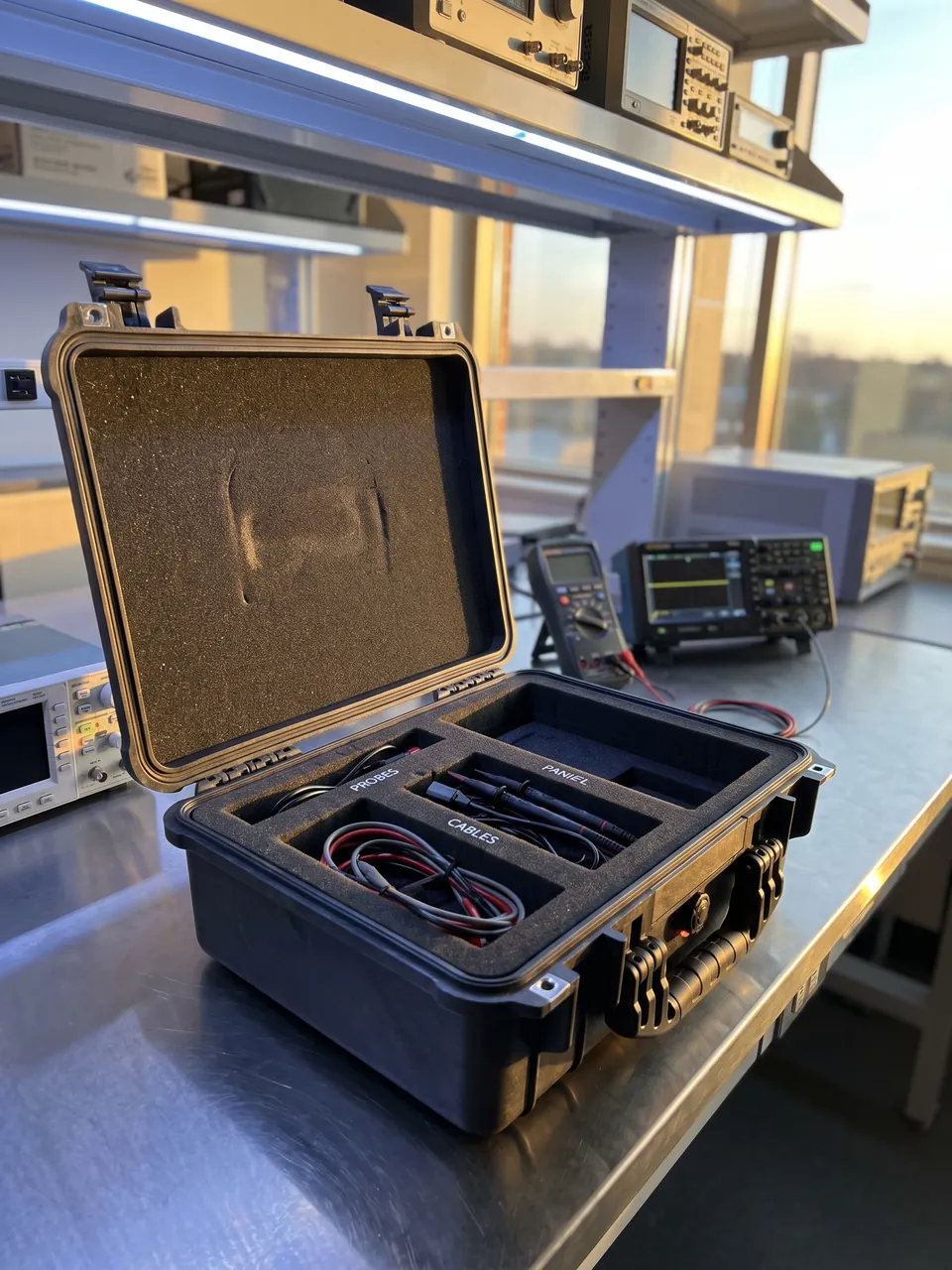
The purpose of scrapping criteria is to separate what is still usable from what is not, avoiding both extremes: premature disposal that wastes assets, and over-age service that puts the carried goods at risk. Assessment runs on three parallel criteria: structural damage, material aging, and contamination. If any one criterion reaches its threshold, the case enters the pending-scrap list; if all three stay under threshold but approach it, the case moves to the maintenance and life-extension loop for re-testing.
Structural damage criteria include: through-cracks or visible fissures longer than fifty millimetres; loss of corner reinforcement that strips the corner of protection; damaged latches, hinges, or pressure valves that cannot be restored to initial function; and liner retention failure after a loaded drop re-test, with goods displaced or marked. As a rule of thumb, if repair cost exceeds forty percent of replacement cost and remaining life is shorter than one maintenance cycle, scrapping usually wins, because cumulative repair cost and reliability loss outweigh the saving.
Material aging is judged mainly at the seals and liner. A gasket held under compression through temperature cycles will harden, take a permanent set, or lose section; once compression set exceeds twenty percent of original thickness, or the case still fails an immersion check after two gasket replacements, the groove or lid fit is worn and the whole case should be scrapped. Foam liners that powder, collapse, or lose rebound have lost cushioning, and where the liner is a non-replaceable integral structure that points to retirement of the case as well. Plastic shells should also be checked for chalking, crazing, and UV embrittlement, which are common on cases stored outdoors for years.
Contamination is the third criterion and the one that ties directly to hazardous waste identification. Cases whose shell or liner has absorbed oil, chemical residue, biological samples, or medical waste traces must not be recycled as ordinary plastic; they are identified first and split second. Contamination should be declared honestly by the user department on the scrap application, stating the last cargo category and cleaning status, so identification is not pushed entirely onto the end-of-chain recycler. For overhaul and life-extension methods, see the inspection cycle table in the protective case maintenance guide, and embed the assessment into routine maintenance records.
3. Sorting and Disassembly: Five Component Streams
Component-level disassembly creates the most value in packaging waste management. Sold as one mixed lump, a ten-kilogram case is priced as mixed waste plastic; after disassembly, the recyclable shell, non-ferrous corners, metal latches, and reusable gaskets are priced separately, and the residual value typically multiplies. More importantly, disassembly sets the feedstock purity for every downstream route, acting as the first quality gate for regranulate.
Disassembly should run at a dedicated station in a fixed order: overall cleanliness check, lid opening and interior confirmation, removal of electronic attachments, removal of latches and hinges, peeling off the foam liner, extraction of the gasket, separation of metal corners and fasteners, and racking of shells by material code. Before work begins, confirm the case has been cleaned and carries no chemical residue; operators need standard personal protective equipment, but contaminated cases must switch to the hazardous-waste work procedure. Tools are simple: screwdrivers, cutting knives, and heat guns. Avoid violent shell breaking, because irregular particle size directly hurts pelletizing quality.
Components must follow a five-stream split: plastics, metals, foam and textiles, rubber seals, and electronic or mixed parts, each into its own container. Within plastic shells, polypropylene, polyethylene, ABS, and polycarbonate differ in appearance and burn behavior; where conditions allow, split further by resin, and at minimum separate thermoplastics from glass-fiber composites, since their regeneration routes differ. Among metals, keep stainless steel, aluminium, and galvanized iron apart, because mixed loads depress both grade and price. For station layout and racking practice, see the zoning approach in the solid waste sorting case study, and design the station as a one-way flow line that limits cross-contamination.
Dust and fragments from disassembly are collected and handled as general industrial solid waste, never discharged with floor-wash water into the storm drain. Disassembly records should note case batch, component destination, and operator, forming a component-level ledger that becomes the base data for later hazardous waste identification and vendor audits. Note that disassembly depth is not an end in itself; it should match the real sorting capability of the downstream channel, because finer splits than the channel can use only add internal management cost.
4. Engineering Plastic Recycling: From Shells to Regranulate
The plastic shell is the largest mass fraction of a case, typically sixty to eighty percent of total weight, and its recycling route is the most mature. Rotomolded polypropylene and polyethylene shells are thermoplastics that can be crushed, washed, and pelletized into regranulate for products such as drainage pallets, nursery trays, and low-stress injection moldings. ABS and polycarbonate shells carry higher recovery value, but metal inserts and coatings must be removed before crushing, or particle purity suffers.
Regeneration quality is decided in pre-treatment. Silkscreen markings, protective films, metal nameplates, and residual adhesive should be removed before crushing; on shells with long outdoor exposure, the UV-degraded surface layer should be skimmed off so aged powder does not enter the main feedstock. Crushed material is then friction-washed to remove grit and oil, dewatered, and pelletized. As a rule of thumb, regrind from naturally aged protective-case shells retains roughly sixty to eighty percent of the tensile and impact performance of virgin material and suits downcycled uses; glass-fiber-reinforced grades lose fiber length during reprocessing and fall further, fitting filler-level applications.
From a design-for-recycling perspective, the shell itself should pre-enable recovery: prefer single-resin shells, reduce non-separable metal-to-plastic joints, and avoid hard-to-split composite edge banding. This logic of designing for the end of life mirrors the source-reduction thinking in the packaging reduction case study and complements the end-of-life options discussed in the degradable case material guide. For recyclers, a single-resin load with clear material coding draws both better offers and greater willingness to accept than a mixed black stream, which is the direct payoff of disciplined front-end management.
The compliance status of regranulate also needs clarity: crushed material from ordinary case shells, uncontaminated by any listed hazardous substance, is a renewable general industrial solid waste; crushed material from shells contaminated by hazardous chemicals falls under hazardous waste management. The two can look identical, differing only in front-end declaration and records, which is exactly why the ledger cannot be skipped.
5. Aluminium and Metal Component Recycling
Case metal parts are mainly aluminium corner protectors, extruded frame sections, latches, hinges, and support skeletons, with grades concentrated in 5052 and 6061 wrought aluminium plus some zinc-alloy castings. Aluminium recycling is a textbook closed-loop business: remelting consumes roughly five percent of the energy of primary production, with minimal performance loss and full recyclability. For cases, removing metal parts intact rather than crushing them with the shell is the precondition for entering the secondary-aluminium chain.
Sorted metal parts should be stored by alloy family and cleared of embedded plastic and rubber. Stainless screws, springs, and washers are collected separately, because stainless and aluminium cannot share a furnace charge. Galvanized or blackened iron parts go to ferrous recycling, but once plating is worn and the substrate heavily rusted their value is limited and general industrial solid waste disposal is acceptable. Locks containing electronic modules and circuit boards must be stripped first and routed separately, avoiding extra emissions at the melting stage.
A second route for metal parts is direct reuse. Latches, corners, and hinges in good condition can be dimensionally checked and used as spare parts for life-extension repairs on the same case model, which is far more efficient than remelting. In practice, split disassembled metal parts into reuse-candidate and remelt bags; candidates are cleaned, dimensionally checked, and function-sampled before entering the spare-parts store. When taking on case maintenance and spare supply, JUNZHIJIA typically matches latch and corner specifications to each case model and supplies matching hardware kits, so organizations can write this capability, sealing parts and hardware matched by model, into maintenance contracts and keep usable parts from scrapped cases in service.
Compliance for metal transfer is straightforward: transfers to a recycler are recorded in the ledger by quantity, destination, and receiver as general industrial solid waste; parts contaminated by hazardous chemicals, or mixed with circuit boards, fall under their respective categories. For the material trade-offs behind case metal and plastic choices, compare the material chapter of the aluminium versus plastic case guide, and reserve conditions for end-of-life sorting at the procurement stage.
6. Foam, Gaskets, and Electronic Parts Disposal
Foam liners and gaskets are the low-value but high-volume components of case disassembly, and the ones most often fudged in records. EVA, cross-linked PE closed-cell foam, and polyurethane foam are cross-linked or closed-cell materials that do not remelt on heating, so they cannot be re-pelletized like thermoplastics; the mainstream routes are pyrolysis to oil or energy recovery as refuse-derived fuel in cement kilns and power plants. Uncontaminated foam is general industrial solid waste and can go to qualified processors; once it absorbs oil or chemicals its status may change and identification comes first.
Gaskets in EPDM, nitrile, and silicone rubber are also cross-linked elastomers with similar routes: intact gaskets can be collected as rubber scrap and go to a devulcanization or regrind processor when volumes justify it, while small quantities or hardened powder go with the foam stream as general industrial solid waste. Uncontaminated gaskets of good dimension and elasticity can enter the reuse spare store, but are best limited to short-term life extension on the same model, because rubber aging cannot be judged by appearance. For gasket materials and failure signatures, use the case gasket and O-ring materials guide as the judging basis.
Electronic parts include electronic lock modules, tracking tags, sensor assemblies inside pressure valves, and small circuit boards. These must be stripped and managed separately: boards contain copper and precious metals with recovery value, and their heavy metals and flame retardants are controlled under RoHS and REACH, so they must never enter the plastic regrind stream. Small volumes go through compliant e-waste channels; larger volumes go under agreement to a qualified dismantler. For how to check environmental conformity documents, see the material declaration requirements in the RoHS and REACH case compliance guide.

7. Hazardous Waste Identification for Contaminated Case Parts
Whether a case component counts as hazardous waste is not judged by eye; it follows the national hazardous waste catalogue and the identification standards. The catalogue applies an inclusion principle: a solid waste listed in the catalogue with the corresponding hazardous characteristic is hazardous waste; unlisted wastes are assessed under the prescribed identification standards and the general rules for solid waste identification in GB 34330. For cases, four scenarios trigger identification: cases that carried oils, solvents, acids, or alkalis; cases that carried medical waste or biological samples; liners contaminated by heavy-metal salts or photographic fixer; and cases with unknown chemical residue that cannot be confirmed clean.
The practical sequence has three steps. First, clean and test: after standard cleaning, if residues of listed substances exceed the defined thresholds the parts are managed as hazardous waste; if cleaning confirms no residue, they enter the recycling route as general industrial solid waste. Second, apply the mixture rule: contaminated parts mixed with clean parts usually pull the whole batch to the stricter status, so co-bagging is prohibited. Third, check exemptions: the catalogue carries exemption clauses for some routine low-risk activities, and the environmental department should compare them clause by clause, neither missing control nor over-managing.
Once identified as hazardous waste, management escalates immediately: storage must meet the pollution control requirements of GB 18597, including a dedicated leak-proof, rain-proof, and loss-proof storage area with proper labeling; transfer must run on the hazardous waste transfer manifest system, with carrier and receiver holding the required licenses; and the ledger records each transaction by source, category, code, quantity, and destination, retained for at least five years. Foam and gaskets deserve particular attention: porous materials absorb chemicals deeply and are the most frequently missed objects in identification, even though they look identical to clean parts.
Medical scenarios need one more separation. Under HJ 421 for dedicated medical waste packaging and containers, a filled primary container goes straight into the medical waste disposal chain and does not re-enter the case recycling route, while a protective case whose liner was contaminated by medical goods has its liner parts handled under medical waste requirements. Keeping these two paths apart is the most confused step when scrapping medical transit cases; a single flow chart in the internal regulation fixes it.
8. Internal Scrapping Workflow and Record Keeping
No external network substitutes for internal workflow. Case scrapping should be a five-step closed loop: application, assessment, disassembly, disposal, and archiving, each with an accountable role and a form. The user department files the scrap application with case number, purchase date, last cargo category, and anomalies; the asset or warehouse function verifies the physical condition and issues a repair, retain, or scrap verdict; scrapped cases move to the disassembly station and produce a component list; the disposal function matches each component class to a recycling channel and collects transfer vouchers; all documents are finally filed into the environmental ledger and the asset archive.
The ledger is the evidence core of this loop. Keep two levels: case-level records of number, model, quantity, scrap reason, assessor, and date; and component-level records of output category, quantity, destination, receiving unit, and voucher number. The two levels link through the case number, so any audit can trace from one case number to where its gasket went, and from one transfer voucher back to the case batches behind it. Under the ISO 14001 framework this traceable record is both compliance evidence and input for improvement.
Digitalization need not be complex. Most organizations can extend the existing asset system with a scrap module: applications online, destinations from fixed options, voucher scans attached to the record. Smaller units can use a structured spreadsheet with annual archiving; what matters is fixed fields, timely entry, and no after-the-fact reconstruction. As a rule of thumb, organizations whose ledger lags more than one month show a markedly higher share of unclear destinations in annual audits, because staff turnover and lost documents accumulate quickly.
Cross-department duties also need definition. User departments declare truthfully and clean before disassembly; warehouse handles assessment and physical handover; the environmental function owns status identification, channel audit, and compliance filing; procurement imposes management duties on recycling vendors through contracts. Interface documents should share one format, preventing each department from building its own incompatible data set. For park-level shared case pools, refer to the responsibility split in the circular packaging case study and agree in advance on the ownership of jointly managed cases at end of life.
9. Recycling Vendor Qualification Audits
The final destination of case waste is decided by the capability of the recycling vendor. Qualification audit is not collecting a business license; it verifies item by item by disposal category. For general industrial solid waste streams such as plastics, metals, and foam, verify that the business scope covers the category, that sorting and processing facilities exist, and that a stable downstream regeneration channel is in place. For hazardous waste, the hazardous waste operating license must cover the waste code and scale of the intended transfer. For electronic waste, verify dismantling capability and environmental treatment credentials.
The audit extends to transport. Inter-provincial transfer of general industrial solid waste is not licensed, but transfer contracts and ledger entries must be retained; hazardous waste transfer must run on the manifest system and the carrier must hold dangerous-goods transport qualification. Contracts should carry four clause types: truthfulness of material and no subcontracting or resale, environmental requirements and secondary-pollution liability, monthly detailed-feedback duty, and the right to audit on site. A contract without the on-site audit right gives away back-end control.
Tiered vendor management lowers cost materially. Assess annually and grade vendors as qualified, watch, or exit: qualified vendors work normally, watch vendors get remediation deadlines and increased checks, and exit vendors stop receiving material. Assessment dimensions include voucher timeliness, ledger feedback quality, environmental violation records, and response speed on exceptions. A vendor that offers only verbal explanations and refuses detailed destination reporting should be downgraded regardless of price, because an untraceable destination means the generating organization carries the compliance risk.
When selecting vendors, write reuse preference into scoring. Some recyclers can refurbish cases or strip usable parts into second-hand circulation instead of crushing them. Their unit price may be slightly higher, but the reduction benefit is significant and consistent with the reuse-first order of GB/T 16716.1. For the wider link between recycling channels and green procurement, see the green supply chain case study, which brings end-of-life recovery into supplier collaboration.
10. Reduction and the Reduce-Reuse-Recycle Hierarchy
The highest tier of packaging waste management is not recycling but preventing scrap in the first place. For cases, the reduction levers in order of effect are: extend the service cycle of each case, raise the share of repaired and reused parts, and only then recycle. This order mirrors the reduction, reuse, and recycling tiers of waste governance and is the framework most often cited in park environmental assessments.
Extending service cycles depends on maintenance. Fixing gasket replacement, latch lubrication, partial liner replacement, and pressure-valve servicing as routine actions visibly extends case life; the key is replacing the habit of replacing a case at first fault with a repairability assessment. The assessment is direct: can protection performance be restored after replacing seals and spares; is repair cost within forty percent of replacement; does the structure retain enough strength margin. If two of the three answers are yes, repair it.
Raising reuse depends on parts flowing back. Serviceable latches, corners, hinges, and gaskets from scrapped cases enter the spare store and directly cut new-part purchases; intact cases, after cleaning and function re-testing, move down to low-frequency duty, from primary equipment case to tool transit box. This downgraded service is common in parks and warehouses, because a case too tired for vehicle transport often still handles indoor fixed storage.
Recycling is the backstop, but it should be done with discipline: components split by material, declarations truthful, and only qualified regeneration channels used. Write reduction targets into the annual environmental plan and break them down by department, such as average service years per case, share of reused parts, and share of components entering regeneration, all measurable. For the producer-responsibility background behind these data demands, see the extended producer responsibility case study, which explains why brand owners increasingly need real end-of-life data.
11. Maintenance to Extend Service Life
Maintenance is the front line of packaging waste management: a well-kept case reaches scrapping in better condition, with higher component recovery value and lower contamination probability. Maintenance focuses on three wear points: the sealing system, latches and hinges, and the liner. Inspect gaskets every twelve months or before the hot season, replacing them when hardened, cracked, or permanently set, always with spares of the original section and material plus a light film of silicone grease; lubricate and tighten latches and hinges and check metal parts for rust; replace collapsed liner modules locally instead of waiting for the whole case to fail.
The pressure-equalization valve is the most overlooked life-extension part. It keeps internal and external pressure balanced; once blocked or with a failed membrane, the case repeatedly builds negative pressure through temperature swings and the gasket carries extra load for life, aging markedly faster. A simple check: after moving a case from cold to hot surroundings, compare lid opening force with the normal state. For case fleets, keep a spares list for seals and valves and treat wear-part replacement as routine spend rather than emergency purchasing.
Life extension also runs on data. Logging every maintenance action, replaced part, and inspection result builds the picture of how much margin a case has left: a case that passes immersion checks year after year on fresh gaskets clearly outlasts one untouched for three years. These records are also the input for scrapping assessment, upgrading it from single-experience judgment to trend judgment. For large fleets, OEM/ODM-capable manufacturers such as JUNZHIJIA can typically issue spare-parts lists and maintenance advice per case model and supply matched sealing and hardware parts per model, turning maintenance from a parts hunt into an order-driven replacement.
The boundary of maintenance must also be stated: maintenance restores function, not full reliability. Cases that have suffered severe drops, structural repairs, or contamination cleaning should be downgraded in service class even after function returns, with the history noted in the file. Only when maintenance, downgrading, and retirement are all managed does the life-cycle dataset stay complete, giving the property judgment at final disposal a real basis. For detailed cycles and checklists, see the routine procedure in the protective case cleaning and maintenance guide.

12. Compliance Documents, Audits, and Continuous Improvement
Case waste management ultimately has to survive three kinds of inspection: internal environmental audit, certification-body surveillance audit, and regulator enforcement checks. All three ask for the same evidence: disposal contracts, transfer vouchers, ledger records, hazardous waste manifests, vendor qualifications, and internal regulations. Filing these by year and linking them by case number lets an audit pull evidence quickly instead of reconstructing it under pressure.
The document system has four layers. Layer one is regulations: the case scrapping and disposal procedure, defining criteria, workflow, and responsibilities. Layer two is record forms: scrap application, component list, transfer register, and maintenance record. Layer three is external evidence: disposal contracts, transfer manifests, vendor qualifications, and test reports. Layer four is improvement records: annual evaluation, corrective actions, and target achievement. The four layers connect through a numbering rule, closing the loop from policy to execution.
Statistics can drive front-end improvement in reverse. Summarizing scrapped quantity, component composition, material destinations, and reuse share by quarter reveals which case model scraps at an abnormal rate, which channel returns vouchers late, and which material carries the highest regeneration premium. These conclusions feed back to procurement and warehouse: high-scrap models may signal wrong selection or missing maintenance, and high-premium materials justify finer component splits. Improvement does not need to wait for the annual cycle; a quarterly review is enough.
Two compliance details are often missed. The first is labeling: storage containers and staging areas need clear labels stating waste category, generating department, and handling notes, so cleaning staff do not sweep recyclable components into general refuse. The second is storage duration: general industrial solid waste needs a defined on-site staging period, and hazardous waste storage must respect both the pollution control requirements of GB 18597 and the statutory storage time limit, with over-duration stock transferred promptly. Writing both into site 5S management and the environmental checklist avoids most low-level violations.
13. Common Pitfalls and an Improvement Checklist
The pitfalls in case waste management repeat across organizations, and five stand out. Pitfall one: selling assembled cases as mixed waste plastic for convenience, which discards the metal and electronic value and risks missing contaminated components. Pitfall two: substituting looks-clean for identification, when mildly contaminated foam looks almost identical to clean foam and carries the highest miss risk. Pitfall three: collecting only a license copy with no annual evaluation, leaving the generating organization liable when a vendor operates beyond scope or subcontracts. Pitfall four: reconstructing the ledger after the fact, so destinations cannot be recovered once staff change. Pitfall five: measuring only disposal volume and not reduction, which yields pretty recycling data while average service life per case keeps falling.
The improvement checklist lands on three horizons. Within thirty days: publish scrapping criteria and the flow chart, stop ad-hoc disposal by departments, set up the staging area and labels, and verify existing vendor qualifications. Within ninety days: bring the two-level ledger online and run at least one complete batch through it; build the component split and reuse spare store; contract one qualified regeneration channel. Within one year: stand up quarterly data reviews; put service years per case and reuse share into department assessments; complete a full case inventory and build a life-cycle file from number to scrap forecast.
For park-based organizations, case waste management can also be embedded in the park-wide solid waste system, coordinating collection rhythms with paper, ferrous, and electronic waste streams to cut vehicle rounds and staging pressure. For equipment brand owners, mastering case end-of-life data is becoming part of supply-chain compliance, and organizations that build this capability proactively face extended producer responsibility and packaging regulation demands with far more confidence. For the regulatory background, read the EU packaging directive case study and the recycling mark case study, and connect end-of-life management with front-end marking and material selection.
FAQ
Q: What is the real difference between selling a whole case and selling sorted components? A: The difference shows up in value, compliance, and data. On value, an assembled case priced as mixed waste plastic collapses shell, metal corners, and electronic parts into one depressed price, while sorted streams price the shell by resin, the metals by alloy family, and the electronics by precious-metal content, typically multiplying total residual value, with the gap widening as component mass share rises. On compliance, disassembly is the only reliable way to separate contaminated components from clean ones, because a single oil-soaked liner can leave the status of an entire mixed load in doubt, whereas sorted parts are identified and transferred individually with a clear risk boundary. On data, the component list is itself a component-level ledger, making the material destination of every case traceable, which is exactly the evidence ISO 14001 and environmental audits look for. The difference is not in one transaction but in reliability across years of management and audits, so whenever batch scrap volume reaches a meaningful scale, disassembly is the right choice.
Q: Which of the three scrapping criteria is most often underestimated? A: Contamination is the most underestimated, well ahead of structural damage. Damage is visible through cracks and functional failure, and aging shows through hardened gaskets and collapsed foam, but contamination often stops at a surface look. Porous foam and rubber gaskets absorb oils, solvents, and chemical residues deeply while looking almost identical to clean parts, yet their status may already have changed. The more insidious case is a case that carried a listed substance, was cleaned, and then recycled without testing, which becomes a missed control the moment residue is found. Shells add their own trap: deep scratches and recessed label pockets hold residue that a quick visual check never reaches. Declare contamination as a mandatory field on the scrap application, with the last user department signing for cargo category and cleaning status, moving identification forward to the source that actually knows the history instead of leaving it to the end-of-chain recycler or the audit site. In practice this single declaration field prevents most downstream disputes, because it fixes responsibility before the case ever leaves the user department.
Q: How should chemically contaminated case components be handled? A: The route depends on the identification conclusion, not on appearance or experience. First judge status against the catalogue and the GB 34330 general rules: a listed waste with hazardous characteristics is managed as hazardous waste; an unlisted waste may enter the recycling route as general industrial solid waste only after cleaning and testing confirm no residue. Once identified as hazardous waste, storage must meet the GB 18597 pollution control requirements, including a dedicated leak-proof, rain-proof, and loss-proof area with proper labeling, and transfer must run on the hazardous waste manifest system with qualified carrier and receiver, while the ledger records each transaction by source, category, code, quantity, and destination. Never co-bag or co-ship contaminated and clean components, because a mixture generally takes the stricter status, and one mixed bag can escalate an entire batch to hazardous waste and multiply disposal cost. Medical scenarios add one rule: contaminated liner parts may need the medical waste channel, kept separate from the case recycling path.
Q: Does component disassembly need professional equipment, or can a warehouse team do it? A: Routine case disassembly needs no professional equipment, which is why most organizations keep it in-house: a leak-proof, cleanable work station, basic tools such as screwdrivers, cutting knives, and heat guns, containers for the five component streams, and brief operator training are sufficient. A simple racking scheme by component class and a fixed sequence of steps are worth more than any machine. Two situations do call for specialized capability. Contaminated case disassembly must switch to the hazardous-waste procedure and be performed by trained personnel under controlled conditions, and removal of circuit boards and batteries from electronic-lock or sensor-equipped cases belongs to a stage with qualified electronic-waste capability. The real value of in-house disassembly is not labor saving but that the component list and destination data stay inside the organization, keeping the ledger chain intact; if disassembly is outsourced, the component list must be a contract deliverable, otherwise the data chain breaks at the handover. Either way, the station discipline matters more than the tooling.
Q: What materials should be checked when auditing a recycling vendor? A: Audit by disposal category in layers rather than glancing at a business license. For general industrial solid waste channels, verify that the business scope covers the category, that sorting and processing facilities exist, and that a stable downstream regeneration channel is in place. For hazardous waste channels, the operating license must cover the waste code and scale of the intended transfer. For electronic waste, verify dismantling and environmental treatment credentials. Transport needs the same scrutiny: hazardous waste carriers need dangerous-goods qualification, and general solid waste transfers need retained contracts and ledger entries. On top of that, contracts should carry four clause types: material truthfulness with no subcontracting or resale, environmental requirements and secondary-pollision liability, monthly detailed-feedback duty, and the right to audit on site. In operation, grade vendors annually; slow vouchers, refusal to report destinations, or violation records should trigger downgrade or exit, with price never the first weight, since an untraceable destination means the generating organization carries the risk.
Q: Foam and gaskets cannot be re-pelletized, so what are their compliant routes? A: Foam and gaskets are mostly cross-linked or closed-cell materials that do not remelt, so re-pelletizing is not an option; the mainstream routes are material recovery and energy recovery. Uncontaminated foam and gaskets are general industrial solid waste and can go to processors with pyrolysis or other recovery capability, or into cement kilns and power facilities meeting environmental requirements as refuse-derived fuel, which is the resource-recovery backstop of the waste hierarchy. Contamination decides status: once oil or chemicals are absorbed, hazardous waste management may apply, and identification precedes transfer. On volume, gaskets that are intact, elastic, and the right size for a case model can enter the reuse spare store for life-extension repair, which sits above energy recovery in the hierarchy. The practical advice is to collect foam and gaskets separately and book them separately, avoiding co-storage with shells that blurs the status of the whole bag, and to record quantity and destination in the ledger so even these low-value streams carry a complete evidence chain.
Q: How granular must internal records be to satisfy both asset management and environmental audits? A: Use two linked levels, case-level and component-level, keyed by case number; this is the smallest structure that serves both. Case-level records of number, model, quantity, scrap reason, assessor, and date serve asset management and scrap approval, while component-level records of output category, quantity, destination, receiver, and voucher number serve environmental audit and transfer traceability. Once linked, an audit can trace from a case number to its gasket destination and from a transfer voucher back to its case batches in both directions. Records must be entered on time rather than reconstructed later, because staff turnover and lost documents accumulate quickly, and organizations with a ledger lag beyond one month show a markedly higher share of unclear destinations in annual audits. Systems can extend an existing asset module, and smaller units can use a structured spreadsheet with annual archiving; the essentials are fixed fields, timely entry, and attachable vouchers, with a designated owner per step.
Q: How do you balance reducing scrap with retiring cases on time? A: The pivot is institutionalizing a repairability assessment so every case gets a structured judgment before retirement instead of relying on user instinct. The assessment answers three questions: can protection performance be restored to a usable level after replacing gaskets, latches, or liner modules; is repair cost within forty percent of replacement; and do structure and remaining life still cover one full duty cycle. With two or more yes answers, take the maintenance and life-extension route; otherwise retire decisively, avoiding repeated repairs followed by failure at a critical moment. Back this with data: log every maintenance action and inspection into the case file so scrapping judgment moves from single-experience to trend-based, since a case that passes immersion checks year after year on fresh gaskets clearly outlasts one untouched for three years. Retirement also is not scrapping: retired cases can drop to low-frequency storage or tool transit duty, placing timely withdrawal and full material use on scenario grading and status assessment respectively.
Conclusion and Further Reading
Case scrapping is not an end point but a fresh start for materials and data. Turn assessment, disassembly, identification, record keeping, and channel audit into one closed loop, and packaging waste management shifts from a cost item to a managed asset. For further reading, see case recycling and reuse and environmental certification for cases, linking end-of-life handling with front-end selection and marking design.