

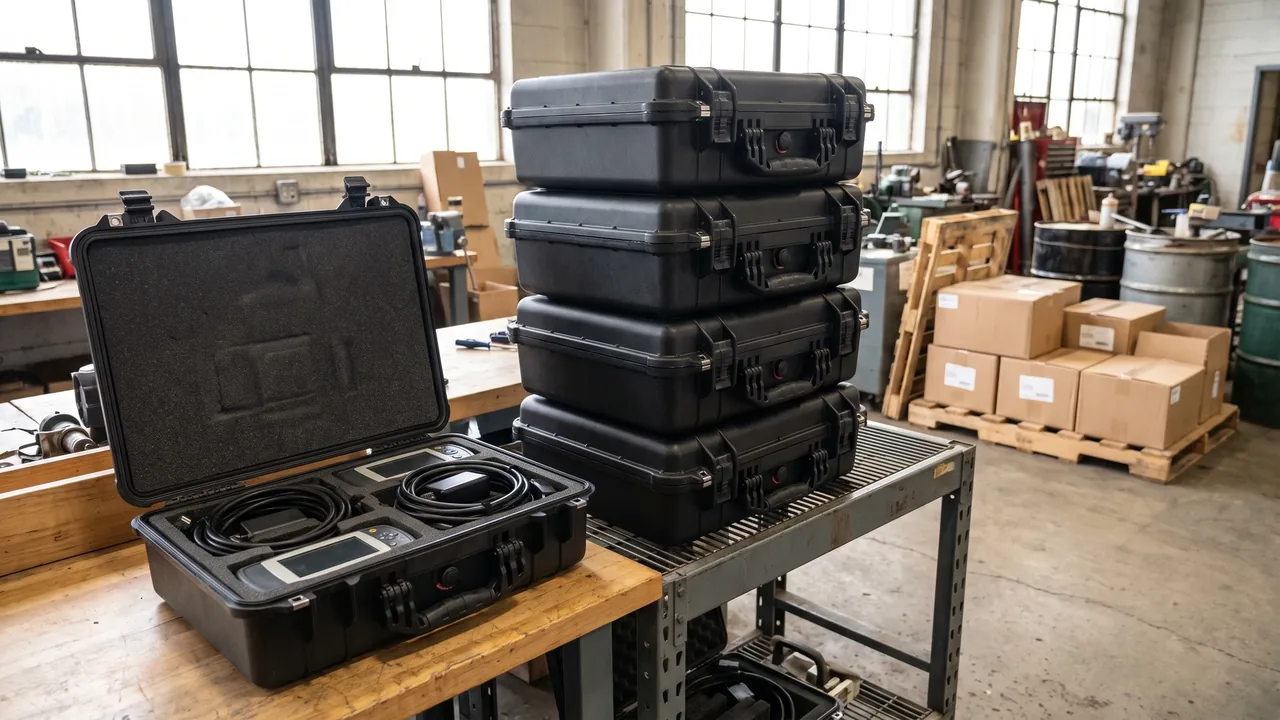
Cases exported to the European Union are not ordinary containers. Under EU law they fall within the scope of packaging, and the moment they enter the EU market - filled with equipment or delivered empty to a customer - they become subject to packaging regulation. The EU packaging framework rests on Directive 94/62/EC and is evolving toward the new Packaging and Packaging Waste Regulation 2025/40, with clear expectations on packaging minimisation, heavy metal limits, recyclability design, material identification marking, and extended producer responsibility. For case manufacturers and EU importers alike, this means shell material, pigments and plating systems, printing inks, liner foam, and metal hardware all have to be engineered to a compliance brief from the project start, not patched with paperwork before shipment. Experience shows that treating heavy metal limits, material marking, and the declaration of conformity as design inputs on the same level as sealing and drop performance keeps cases moving smoothly through EU customs and distribution, and sharply reduces post-sale rectification risk. This article walks through the regulatory framework, essential requirements, limits and testing, conformity documentation, DOC elements, recycling marks, the file relationship with RoHS and REACH, supply chain evidence, EPR registration, common non-conformities, procurement checks, and maintenance and reuse, giving readers a workable compliance workflow for EU Packaging Directive cases.
1. Regulatory Framework and Scope
The compliance boundary for EU Packaging Directive cases starts with the definition of packaging. Directive 94/62/EC defines packaging broadly: all products made of any materials of any nature, used for the containment, protection, handling, delivery, and presentation of goods, from raw materials to processed goods, from producer to user or consumer. Non-returnable items used for the same purposes count as packaging too. By function, packaging splits into sales packaging, grouped packaging, and transport packaging. An export case shipped filled with equipment is transport packaging; the same case delivered empty to an EU customer falls under grouped or sales packaging rules depending on the sales format. Either way, its regulatory identity begins the moment it enters the EU market.
As the evolution direction, Regulation 2025/40, commonly called the PPWR, upgrades the directive into a regulation that applies directly in all member states, ending divergence caused by national transpositions and tightening requirements on recyclability, recycled content, substances of concern, harmonised labelling, and extended producer responsibility. Industry is preparing for application from August 2026, with the exact date and transition rules subject to the published text and member state guidance. Two parallel boundaries matter: cases used for dangerous goods transport fall under separate dangerous goods packaging regimes, covered in the dangerous goods packaging case guide, and cases built with wooden skids, frames, or battens must additionally meet cross-border plant health requirements, discussed in the wood packaging quarantine case guide.
Commercial scenarios decide who carries the obligation. For filled transport packaging, the party first placing the filled packaging on a member state market - usually the EU importer - holds producer duties. For empty cases exported as products, the producer is the importer or the manufacturer's EU authorised representative. Reuse cases circulating inside a customer's own logistics are generally handled as reusable transport packaging, with circulation and repair records supporting the reuse position. For the factory, the output is identical in all scenarios: a model-level technical file and DOC template ready for the responsible party to cite. Treating packaging as a product with regulatory identity, rather than a free add-on, is the starting point for every later compliance step.
2. Essential Requirements: Reduction, Recyclability, Low Hazard
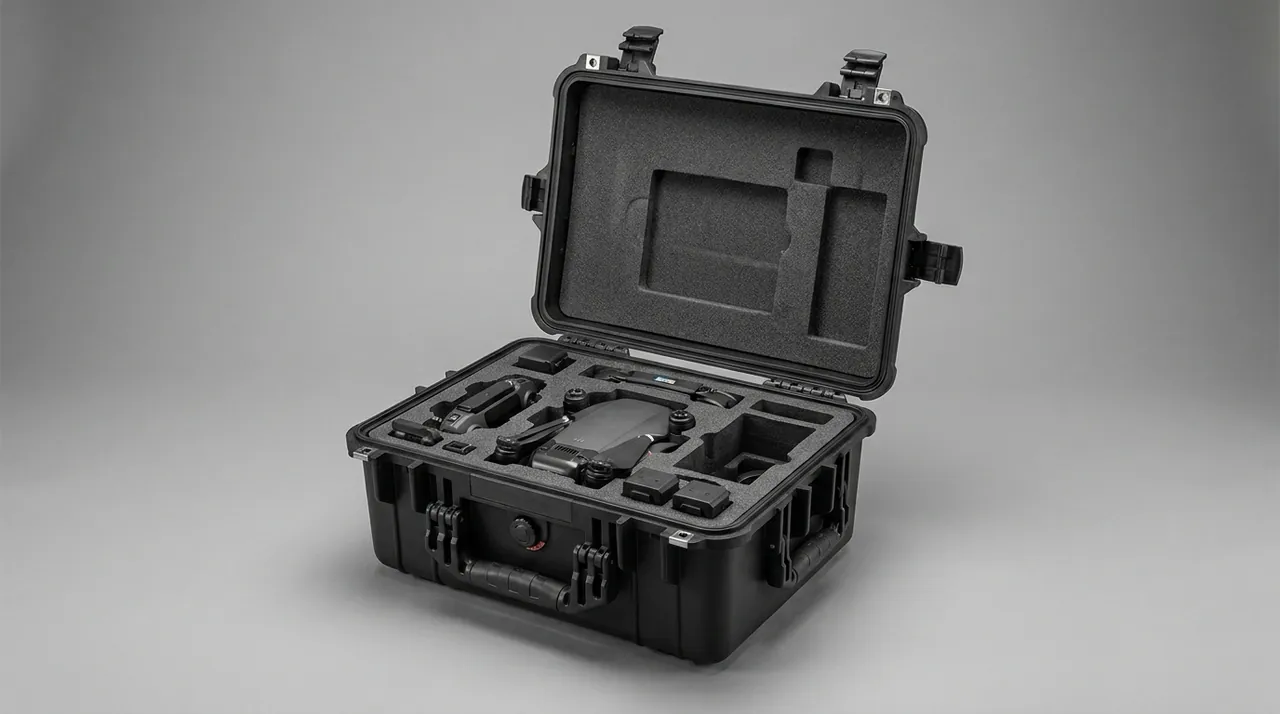
The essential requirements of the EU packaging rules reduce to three statements. Packaging weight and volume must be the minimum adequate to maintain the necessary safety, hygiene, and acceptance of the packed product. Packaging must be designed, produced, and commercialised so that it can be reused or recovered, including material recycling, while minimising its environmental impact. Packaging must be produced so as to minimise the presence of noxious or hazardous substances and to limit noxious emissions and ash from incineration or landfill. These three statements, set out in Annex II of Directive 94/62/EC, are the yardstick for every material and design decision downstream.
Conformity demonstration leans on the CEN standards family: EN 13428 for source reduction assessment, EN 13429 for reuse systems, EN 13430 for material recycling verification, and EN 13432 for composting recovery. For cases, EN 13428 and EN 13429 carry the most weight - the first helps argue whether wall thickness and cushioning are excessive, the second helps evidence how many cycles a tote completes and how it is cleaned and recovered. Under the 2025/40 direction, recyclability is moving from a soft expectation to a graded hard metric, and inseparable multi-material constructions are explicitly discouraged. The message for case design is direct: shell, liner, hardware, and seals should be designed for disassembly.
Hard-shell cases hold a favourable position in this framework. They are reusable transport packaging by nature, which aligns with the reduction direction far better than one-way cartons. The trap to avoid is over-protection: wall thickness and cushioning beyond what the contents actually require create a minimisation exposure, raise freight cost, and inflate the packaging weight that EPR reporting must carry. Workable reduction practices include contour-cut liners that eliminate dead volume, tighter external dimensions that cut transport cube, and the removal of unnecessary one-way outer packaging. For material and reduction methods, see the packaging reduction case guide and the circular packaging case guide to translate the essential requirements into case design language.
3. Heavy Metal Limits and Material Testing
Heavy metals are the most quantifiable and most overlooked clause in EU packaging law. Directive 94/62/EC caps the combined concentration of lead, cadmium, mercury, and hexavalent chromium in packaging or its components at 100 ppm, meaning the four together must not exceed 100 mg/kg. Verification can run on the whole case or component by component, and practice favours the component route because it localises risk. Regulation 2025/40 keeps the limit and pushes further on substances of concern, so material system design should build in headroom rather than sit at the ceiling.
Risk concentrates in five part families. First, pigments and masterbatches, where historical cadmium yellow, cadmium red, and lead chromate systems are the classic offenders, especially in dark and orange appearance parts. Second, lead and cadmium stabilisers in PVC items such as edge trims, cable accessories, and label bases. Third, hexavalent chromium from plating and passivation of metal hardware, which originates in post-treatment chemistry. Fourth, printing inks, where dark silk-screen and pad-printing inks are a recurring risk point. Fifth, recycled feedstock, where uncontrolled upstream input cycles metals straight back into the loop. All five families belong on the supplier audit list, with composition statements or undertakings required at the material level.
Testing follows a two-step path. The market practice is XRF screening to flag high-risk parts quickly, then quantitative confirmation on suspect items through acid digestion with ICP-based instruments; methodologically, the EN 62321 series, originating from the RoHS test framework, is widely used for heavy metal quantification. Report review needs four anchors: whether the sample description matches the actual part, whether the method is applicable, whether the detection limit sits below the limit, and whether the conclusion is unambiguous. Reports must correspond to a specific model and batch, as explained in the test report interpretation guide. Filing screening records by model is cheaper than full finished-goods testing and stands up to customer traceability far better.
4. Declaration of Conformity and Technical Documentation
The burden of proof in EU packaging compliance sits with the manufacturer and the responsible party. Annex II of Directive 94/62/EC lists the essential requirements and expects the responsible party to keep documents proving conformity; under the 2025/40 direction, this documentation set is further formalised into a declaration of conformity (DOC) backed by a technical file. The DOC states the conclusion; the technical file carries the proof. A frequent failure mode is treating the DOC as a standalone certificate: the moment an auditor asks for the underlying records, the declaration turns from asset into exposure.
A practical technical file runs to eight items: the bill of materials with supplier material declarations; shell drawings and structural notes; heavy metal screening or test records; a recyclability assessment; confirmation records for material identification marking; use, reuse, and end-of-life instructions; a substances of concern assessment; and a model-to-batch cross-reference table. Perfection is not required on day one, but every item must be genuine, traceable, and matched to the shipped batch. On retention, the directive era typically follows member state requirements, commonly not less than five years, while the 2025/40 direction points to a ten-year filing horizon; building to ten years now avoids a rebuild at the switchover.
Signing and responsibility split need early agreement. The DOC should be signed by an authorised person of the manufacturer; a non-EU manufacturer may delegate to the EU authorised representative or, by contract, to the importer. For case factories, a model-level file pack is part of the product offer. In JUNZHIJIA export practice, for example, the technical file pack is archived by model, with the material list and declarations, heavy metal screening records, marking confirmation photos, the DOC template, and annual review records under one numbering scheme, so a customer audit pulls the full chain by case number. The initial build is front-loaded, but reuse across later orders drives the marginal cost close to zero.
5. DOC Elements Item by Item
A usable packaging declaration of conformity carries eight elements. First, the manufacturer's legal name and registered address - a legal entity, not a brand. Second, the EU authorised representative's name and address where applicable, which is indispensable for empty-case exports. Third, the case model, specification, and batch identifier, the only link between document and physical goods. Fourth, the provisions met, covering at least the essential requirements and the heavy metal limit. Fifth, the names of the standards or specifications applied, written as names rather than bare years. Sixth, third-party involvement where relevant. Seventh, the declaration date. Eighth, the signatory's name, position, and signature, granted by the manufacturer.
Mapped against practice, the gaps follow patterns: model numbers written at series level with no batch, so shipments and documents drift apart; standards cited by year alone, leaving auditors unable to check versions; marketing language replacing the eight elements, which quietly reveals that no technical file exists; and signatories who are sales staff rather than authorised representatives, undermining authority. The fix is a checklist review by one person and a second-reader check by another, which beats a single drafter working in isolation.
The nature of the DOC also deserves emphasis. It is a self-declaration, but only as strong as the technical file behind it. When customs, market surveillance, or a customer audit finds the document out of step with the goods, the outcome is worse than having no document at all - a missing file can be built, while a mismatched file puts credibility in question. The DOC should therefore have an internal release gate: technical file complete, batch cross-reference consistent, signatory authorised. That gate looks bureaucratic but locks compliance risk inside the factory before shipment.
6. Recycling Marks and Material Identification
Material identification marking is the most visible compliance item in EU packaging law. Commission Decision 97/129/EC established the identification system for packaging materials: a number plus a graphic, the graphic being the Mobius loop, with numbers assigned by material - plastics 1 to 7 for PET, PE-HD, PVC, PE-LD, PP, PS, and other; paper and board 20, 21, 22, and 23; steel 40 and aluminium 41; wood 50 and 51; glass 70 to 72; composite materials 80 and above. The mark must sit on the packaging or its label, clearly visible and resistant to wear.
Applied to cases, the rule is part by part. A polypropylene injection-moulded shell is marked 5, a PC lid falls in the 7 group, aluminium structural parts are marked 41, steel hardware 40, and EVA liners can carry the material name with member state detail handled locally. Marking should use in-mould labels or silk screening, placed away from handles and hinges where wear is worst, with drawing and photo records kept. Genuinely multi-material components should be marked individually so recyclers know where each fraction goes, instead of one vague mark on the whole case.
Under the 2025/40 direction, labelling moves toward harmonisation: material identification marking across all packaging, phased-in harmonised labels for separate collection, and reusable packaging carrying a recognisable reuse mark with return guidance. The factory's job now is not to guess the final artwork but to fix three things - the mark position, the mark content, and the maintenance owner - so any later refinement is a cheap adaptation. For execution detail, see the packaging labelling compliance guide and the recycling mark case guide to land the marking requirement in drawings and process sheets.
7. Relationship with RoHS and REACH Files
Case exporters are routinely asked for packaging compliance, RoHS, and REACH files at the same time, and sorting the relationship removes most of the rework. The three legal objects differ. RoHS governs restricted substances in electrical and electronic equipment; packaging itself is outside its scope, but electrified case parts - electronic locks, thermal modules, trackers, RFID tags - need RoHS assessment. REACH treats an empty case placed on the market as an article: SVHC content above 0.1 percent triggers information duties to the recipient, articles containing SVHC engage the SCIP notification, and Annex XVII adds its own restriction list. Packaging rules govern the 100 ppm heavy metal limit and the essential requirements. All three run in parallel, and any missing file can stall delivery.
The shared asset is the bill of materials. One complete material list with supplier declarations answers three questions at once: whether packaging metals meet the 100 ppm limit, whether electrified parts satisfy the RoHS ten-substance list, and how the article stands on SVHC and Annex XVII. The recommended pattern is one master with three citations: when material data changes, all three files update together with version records. In audit practice, contradictory files invite deeper scrutiny faster than a missing file, so version consistency is itself a compliance requirement.
Two boundaries deserve attention. First, food contact: if a case is used to store or move food, food contact material rules apply on top, which standard equipment cases do not trigger. Second, battery-bearing electronic modules such as positioning or temperature logging units: beyond RoHS, the battery regulation direction needs checking. For the file interfaces, see the RoHS and REACH case compliance guide and the case CE and RoHS certification guide to keep the three file sets cleanly separated and cross-referenced.
8. Building the Supply Chain Evidence Chain
The hard part of packaging compliance is never the legal text; it is closing the evidence loop. A workable chain runs in five layers: raw material declarations, where pigments, inks, hardware, and foam each issue composition statements; incoming inspection and screening records, with XRF results filed by batch; process records linking plating and printing batches to production; finished-goods sampling reports; and finally file archiving with a model-to-batch cross-reference. Break any one layer and the whole chain loses its evidential weight, and audits always probe the weakest link.
Tier-two supplier management is the most fragile point. Compliance requirements belong in purchase contracts and technical specifications, not in verbal understandings. Change management has to be rigid: switching a pigment supplier, moving a plating line, or adjusting an ink system all require reassessment with records. A useful experience signal is inter-batch colour drift on the same material number, which usually means a formula or supplier change has already happened and calls for re-screening rather than silent acceptance. For recycled feedstock with weak traceability, demand source and screening records or decline the material.
A digital ledger cuts maintenance cost sharply. The minimal version needs only three columns kept in step: model, batch, and report number, so any shipment can be reverse-traced through the full chain; a later version can add incoming screening results and supplier declaration numbers. During customer audits or member state inspections, pulling the path from finished case back to raw material by case number turns a stressful day into a demonstration. For management method, see the case factory audit guide and the green supply chain case guide, pushing evidence chain requirements into supplier selection itself.
9. EPR Registration and Extended Producer Responsibility
Extended producer responsibility is the cost side of packaging law. The core rule: whoever places packaging on a member state market must register, report placed volumes periodically, and pay recovery fees. For export cases, the duty lands on the EU side - filled transport packaging usually sits with the importer that first places it, and empty-case exports sit with the importer or the manufacturer's EU authorised representative. A non-EU manufacturer generally cannot register on the customer's behalf, but it can supply the critical input: a material and weight data pack organised by model.
Member state mechanisms each have their own entry point. Germany centres on the Packaging Act and the LUCID register, with producers registering and commissioning a system participant. France operates under the AGEC framework through schemes such as CITEO, and packaging typically carries the Triman information mark. Italy uses the CONAI environmental mark. Spain and others run registries of their own. Entry points, reporting cycles, and fee rates follow each country's latest notices, and the customer side usually knows local requirements better than the factory side - the factory's job is to have the data ready.
The data pack content is listed by model: shell, liner, hardware, print, and seal material and weight, output in the format each member state requires. Build it once and reuse it across countries. That pack is both a customer necessity and an order-winning asset. Watch the fee trend too: under the 2025/40 direction, EPR fees are modulated against packaging recyclability grades, so poorly rated packaging pays more for years - recyclable design converts directly into the customer's holding cost advantage. For mechanism detail, see the EPR compliance case guide and the packaging waste management guide.
10. Common Non-Conformities and Rectification
A table of common non-conformities and their fixes is the most useful tool for internal training and supplier rectification. The ten items below are listed roughly by frequency, each with a rectification direction. First, no DOC and no technical file: build the model-level DOC and archive, filed to a ten-year horizon - highest priority, fastest payoff. Second, missing material identification marks: add silk-screen or in-mould marks matching the BOM, with photo records. Third, cadmium or lead in pigments: switch to cadmium-free and lead-free pigment systems, re-screen, keep records, and audit legacy stock.
Fourth, hexavalent chromium risk on plated hardware: move to chromium-free passivation, Dacromet-type processes, or stainless parts, or provide a compliant test report. Fifth, inseparable multi-material construction: redesign for disassembly so shell, liner, hardware, and seals separate and sort at end of life, avoiding full bonding and nested materials. Sixth, oversized packaging volume: re-cut liners to the contents, compress dead volume, and support the claim with measured data. Seventh, importer EPR registration or reporting missing: the factory supplies the material and weight data pack to help the customer remediate, with responsibility fixed in contract.
Eighth, missing member state marks such as the French Triman information mark: complete labels per country of sale and add them to the pre-shipment checklist. Ninth, SVHC information not passed on: issue the SVHC declaration, assess SCIP notification for articles containing SVHC, and update the BOM. Tenth, documents out of step with shipped batches: build the model, batch, and report number cross-reference, and reverse-trace by batch number on shipment. The rectification rhythm is to fix documentary evidence first, then materials and process, then write the outcome back into design specifications and supplier specs so the same defect cannot recur on the next order.
For EU Packaging Directive case projects, rectification is a health check rather than a fire drill: every non-conformity should flow back into the BOM review and the design checklist and become the default on the next generation. Teams that reach this step see compliance cost per project fall instead of paying tuition again on every export batch.
11. Material Selection and Design Front-Loading
Material selection is the upstream gate of packaging compliance: once the material route is fixed, the scale of later testing and documentation is essentially fixed too. Modified engineering plastics - PP, ABS, PC, and their alloys - dominate case production, and the compliance focus sits on the additive system: flame retardants, plasticisers, and masterbatches under incoming control, plus recycled content ratio and origin. A single-PP build is the easiest to recycle, while nested multi-material constructions owe a debt on disassembly. Aluminium cases sit in a mature recycling system, with surface treatment - anodising, coating, passivation - under review, and decorative chrome-plated parts best avoided outright. Steel and stainless hardware lasts, but plating chemistry is a hexavalent chromium hotspot and plating suppliers need separate audit.
Liner materials differ in compliance profile. EVA, EPE, and XPE foams are common and relatively controllable, with blowing agents and masterbatches under watch, and reversible attachment designs let them enter sorted recycling. Field-poured polyurethane fits irregular shapes beautifully but is hard to recycle, so long-term EU-facing projects should use it sparingly. In printing and marking, dark silk-screen inks are a recurring heavy metal risk, and coating-free finishes, in-mould decoration, or label substitution all cut the risk at source. For material selection detail, see the protective case plastic materials guide, the custom foam lining case guide, the eco-friendly lining material guide, and the recycled material case guide.
Design front-loading can be frozen into four steps: run a BOM compliance review sign-off at project start with high-risk parts on a watch list; reserve material marking and reuse marking positions on drawings; design reversible connections between liner and shell; and add mark and document checks to the outgoing inspection sheet. In JUNZHIJIA OEM and ODM practice, for example, the custom liner stage already rolls material declarations, screening records, and marking schemes into the deliverables, so the customer receives a liner that fits the equipment and carries material data ready to drop straight into EPR reporting. Front-load once, and procurement, certification, and customer audits all benefit together.

12. Document Checks in Procurement and Acceptance
From the buyer side - the EU importer or brand owner - the document pack requested from a case factory runs to nine items: a material conformity declaration; heavy metal screening or test reports matching model and batch; material identification mark confirmation by drawing or photo; the DOC template; the REACH SVHC declaration; the RoHS declaration where applicable; material and weight data for EPR reporting; supplier audit or review records; and the model-to-batch cross-reference. Not all nine must land on day one, but the technical specification should state the timing - normally first-article submission before batch delivery, then annual review updates.
Acceptance checks reduce to a three-way match: do the model and batch in the documents match this shipment, do the physical materials match the BOM, and do the marks on the shell match the drawing. Incoming XRF sampling can run on dark parts, plated parts, and printed surfaces, with results and sampling records archived as first-hand evidence for audits and inspections. For acceptance method, see the export packaging compliance case guide, the case procurement pitfall checklist, the pre-shipment inspection case guide, and the ISTA transport test guide, running packaging compliance acceptance in parallel with transport performance acceptance.
Contract clauses carry the document obligations. Four clauses are the minimum: a compliance statement and warranty clause fixing the packaging heavy metal limit and essential requirements; a document provision clause listing the nine-item pack, timing, and format; a change notification clause requiring written notice and reassessment for material, process, or supplier changes; and a non-conformity clause covering rectification and cost allocation. Tooling and intellectual property sit under separate clauses, but compliance terms should not be squeezed out by commercial terms - once missing documents trigger action against the customer in the EU market, the loss dwarfs the effort saved in negotiating the clause.
13. Maintenance, Reuse, and Lifecycle Records
Reuse is the core value that separates cases from one-way packaging and the direction EU packaging rules openly encourage. For tote programmes, the 2025/40 direction sets reuse ratio targets for selected categories, so reusable transport packaging records carry a dual identity: customer asset ledger and evidence for EPR reporting and audits. The factory's task is to design circulation, repair, re-marking, and retirement records into the deliverables, rather than patching them together when the customer asks.
Four record types cover maintenance compliance. Seal and wear-part replacement records, logged by model with accessory batch numbers, keep protection performance traceable. Repair ledgers capturing shell patching, hinge replacement, and liner re-cutting give a basis for judging whether a case still meets the reuse position. Re-marking after worn material identification marks, with marks restored to the original drawing and worn-out cases pulled for re-marking. Retirement sorting, where shell, liner, hardware, and seals enter the right recycling streams with recovery vouchers retained. Together the four types form the full lifecycle file.
Joined to the procurement and acceptance files, this produces a closed loop of placement, circulation, maintenance, and retirement: the customer can answer, by case number, where a case came from, what was repaired, and where it ended; the factory can answer, by model, what materials a batch used, what was tested, and where the files sit. For execution detail, see the reusable transit case programme guide, the case recycling and reuse guide, and the packaging waste management guide, turning reuse value into verifiable asset records.
FAQ
Q: Do cases exported to the EU need a CE mark? What is the packaging declaration of conformity? A: No CE mark is required for packaging itself. The CE mark belongs to product-safety harmonisation legislation for defined product categories, and the packaging rules - Directive 94/62/EC and its successor Regulation 2025/40 - do not list packaging as CE-marked. A case, as packaging, sits outside the CE mark scope, and the phrase CE-certified packaging is simply unprofessional. What the rules do require is documentation proving that the packaging meets the essential requirements and the heavy metal limit, and the market practice is to issue a declaration of conformity, the DOC, and archive the supporting technical file. The DOC is not a label stuck on the box; it is evidence produced on demand for the importer, market-surveillance authorities, or customer audits. Equipment inside the case may itself be CE-marked, and that file is separate but complementary. For EU Packaging Directive cases the correct posture is no CE on the shell, yes to a DOC, and a technical archive filed by model and batch.
Q: How do Directive 94/62/EC and Regulation 2025/40 relate, and which should files be built against? A: Directive 94/62/EC, adopted in 1994, is the foundation of EU packaging compliance and runs through national transpositions. Regulation 2025/40, commonly called the PPWR, upgrades the directive into a regulation that applies directly in all member states, ending the divergence caused by transpositions and tightening requirements on recyclability, recycled content, substances of concern, harmonised labelling, and extended producer responsibility. Industry is preparing for application from August 2026, with the exact date and transition rules subject to the published text and member state guidance. The practical advice is to build to the higher standard now: cover the directive-era essential requirements and heavy metal limit, and pre-allocate fields for recyclability assessment, harmonised labels, and EPR data. Running dual-track during the transition costs little and removes the scramble when customers demand new files at the switchover. For factories already exporting, the safest reading is to treat the directive baseline as the floor and the regulation direction as the target, so that no client audit finds a gap in either generation of the rules.
Q: How should the 100 ppm heavy metal limit be understood, and which case parts carry the highest risk? A: The 100 ppm limit is the combined concentration of lead, cadmium, mercury, and hexavalent chromium in the packaging or its components, the four added together staying under 100 mg/kg. It can be verified on the whole case or component by component, and practice favours the component route because it localises risk. Risk sits in five part families: pigments and masterbatches, where historical cadmium yellow, cadmium red, and lead chromate systems are the classic offenders; lead and cadmium stabilisers in PVC parts such as edge trims and label bases; hexavalent chromium from plating and passivation of metal hardware; printing inks, especially dark silk-screen and pad-printing inks; and recycled feedstock, where uncontrolled upstream input cycles metals back into the loop. Verification normally starts with XRF screening to flag high-risk parts, followed by quantitative digestion-based testing on suspect items. Listing high-risk parts in supplier audits and demanding composition statements is cheaper and more reliable than full finished-goods testing.
Q: What elements should a DOC contain, and who must sign it? A: A usable packaging declaration of conformity contains eight elements: the manufacturer's legal name and registered address; the EU authorised representative's name and address where applicable; the case model, specification, and batch identifier; the provisions met, covering at least the essential requirements and the heavy metal limit; the names of the standards or specifications applied; third-party involvement where relevant; the declaration date; and the signatory's name, position, and signature. The signatory must be authorised by the manufacturer, and a non-EU manufacturer may delegate to the EU authorised representative or, by contract, to the importer. The declaration itself is simple; what is difficult is whether the technical file genuinely supports it. Material lists, test records, recyclability assessments, and batch tables must all be traceable. Frequent flaws include series-only model numbers and year-only standard citations. The DOC earns its keep when an audit or inspection closes the loop without a single open question, and a second-reader check on those two items alone prevents most document rejections in practice.
Q: How does compliance responsibility differ between empty cases sold alone and cases shipped filled with equipment? A: The difference lies in who places the packaging on the market. When a case ships filled with equipment, it is transport packaging, and the party that first places the filled packaging on a member state market, usually the EU importer, carries the producer obligations including EPR registration and reporting. When an empty case is exported and sold, the empty case itself is packaging placed on the market, and the producer is the importer or the manufacturer's EU authorised representative. For the factory, the work is the same in both scenarios: a model-level technical file and DOC template ready for the responsible party to cite. What changes is the audience and the data use, since filled shipments feed the equipment delivery file while empty-case sales feed the customer's EPR reporting with material and weight data. Contracts should state the document list and data format so clearance and listing are never delayed for want of packaging data. Reuse cases circulating in a customer's own logistics are handled as reusable transport packaging, with circulation and repair records supporting the reuse position.
Q: What happens if EPR registration is skipped, and how should Germany's LUCID and France's marking be handled? A: EPR obliges packaging producers to register in each member state where they place packaging, report placed volumes periodically, and pay recovery fees. Skipping registration exposes the importer to customs and market-surveillance action, marketplace delisting, retroactive fees, and penalties, and can stall the whole supply chain. Germany's system centres on the Packaging Act and the LUCID register, with producers registering and commissioning a system participant. France operates under the AGEC framework through schemes such as CITEO, and packaging usually carries the Triman information mark. Italy uses the CONAI environmental mark, and Spain and others run their own registries, with details per national notices. For the case factory, the practical lever is to hand the importer a material and weight data pack listing shell, liner, hardware, print, and seal weights by model. Build it once and reuse it across countries, since that pack is both a customer necessity and an order-winning asset. Customers rarely volunteer local registration details unprompted, so the factory side should confirm entry points and label formats in writing at order stage rather than assume them.
Q: How can a multi-material protective case satisfy recyclability requirements? A: The problem with multi-material construction is not the number of materials but whether they can be separated and recycled economically. The core answer is design for disassembly, so that shell, liner, hardware, and seals separate by hand or simple tools at end of life, with each fraction entering the right recycling stream. Concretely, that means reversible liner attachment such as clips or hook-and-loop instead of full bonding, screw-fixed hardware instead of riveted-dead structures, a preference for single-material builds such as one PP grade throughout, and separate material identification marks on genuinely multi-material parts so recyclers know where each fraction goes. Recyclability also drives EPR fees, because poorly graded packaging pays more for years and recyclable design converts directly into the customer's holding cost. A quick self-test asks three questions: can it be taken apart at scrap, does anyone actually collect each fraction, and does disassembly need special equipment. Three yes answers mean the structure is broadly sound.
Q: Can RoHS and REACH files be shared with packaging compliance files? A: Yes, the underlying data should be shared, but the three legal objects differ and cannot substitute for one another. RoHS restricts substances in electrical and electronic equipment, packaging itself is out of scope, but electrified case parts such as electronic locks, thermal modules, trackers, and RFID tags need RoHS assessment. REACH treats an empty case placed on the market as an article, where SVHC content above 0.1 percent triggers information duties, articles containing SVHC engage SCIP notification, and Annex XVII adds restrictions. Packaging rules govern the 100 ppm heavy metal limit and the essential requirements. The shared asset is the bill of materials, since one material list with supplier declarations answers the packaging metal question, the RoHS ten-substance question, and the REACH SVHC question together. Manage it as one master with three citations, updating all three files when material data changes, because contradictory files invite deeper scrutiny faster than a missing file and version consistency is itself a compliance requirement.
Conclusion and Further Reading
Compliance for EU Packaging Directive cases closes three loops before shipment: material data, design decisions, and documentary evidence. Front-loaded into the BOM and design stage, one model-level technical file serves packaging law, EPR reporting, and traceability at once. Early preparation becomes delivery advantage at the Regulation 2025/40 switchover.