

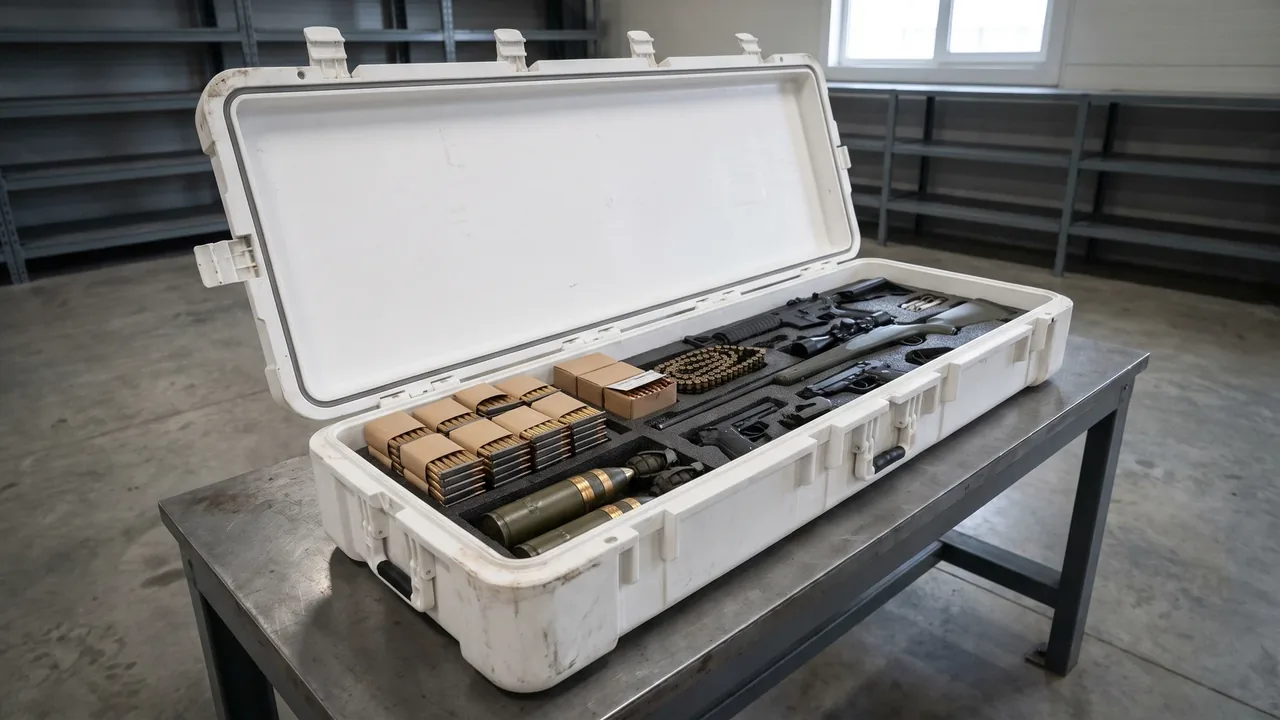
The wood packaging quarantine case is a compliance container that export declarants, wood packaging plants, and international freight forwarders meet again and again at the shipping stage: it must carry the structural protection and stacking duty of the export goods while also satisfying the phytosanitary requirements of the destination country. The core of wood packaging quarantine is simple to state: under ISPM 15, the standard issued by the FAO and the International Plant Protection Convention, every solid wood crate, pallet, and frame leaving the country must receive approved phytosanitary treatment and carry the IPPC mark so that pests do not travel across borders inside packaging material. Field experience shows that exporters who run treatment, marking, and declaration as one closed loop avoid most return, destruction, and detention costs at destination ports and keep customs clearance time inside a predictable window. This article covers treatment methods, mark rules, declaration workflow, the combined use of wood crates and inner protective cases, plastic cases as a wood-free alternative, internal treatment ledgers, and supplier management, with parameters and steps that can be applied directly.
1. Scope of Quarantine Requirements for Wood Packaging
Export wood packaging is a defined legal category, not every package that contains timber. ISPM 15 applies to solid wood packaging material used in international trade to carry, protect, or stabilize goods: crates, boxes, pallets, pallet collars, dunnage, blocking, bracing, cable drum cores, and fillers all fall inside the scope. As long as such material crosses a border with the cargo, it belongs to the wood packaging quarantine regime whether or not it touches the goods directly. The first step in understanding scope is to separate solid wood from processed panels. Plywood, veneer, oriented strand board, fibreboard, and particleboard are normally exempt because the glue, heat, and pressure of production already kill pests, so they need neither treatment nor marking. Thin wood slices below six millimetres, wood wool, and sawdust are also exempt. What does require treatment is packaging machined from solid sawn timber, plus solid wood auxiliary parts used for reinforcement and support. A frequent practical failure is leaving a few solid wood skids untreated inside an otherwise exempt panel crate, which turns the whole consignment into non-compliant cargo at the destination. Plants should therefore build a material list at the cutting and purchasing stage, record the material property of every part, and fix the exemption decision into the process document instead of leaving it to a last-minute check before customs. Forwarders should also ask about packaging composition at order intake, identify solid wood parts early, and avoid losing the treatment window after loading.
2. Phytosanitary Treatment: Heat Treatment and Fumigation
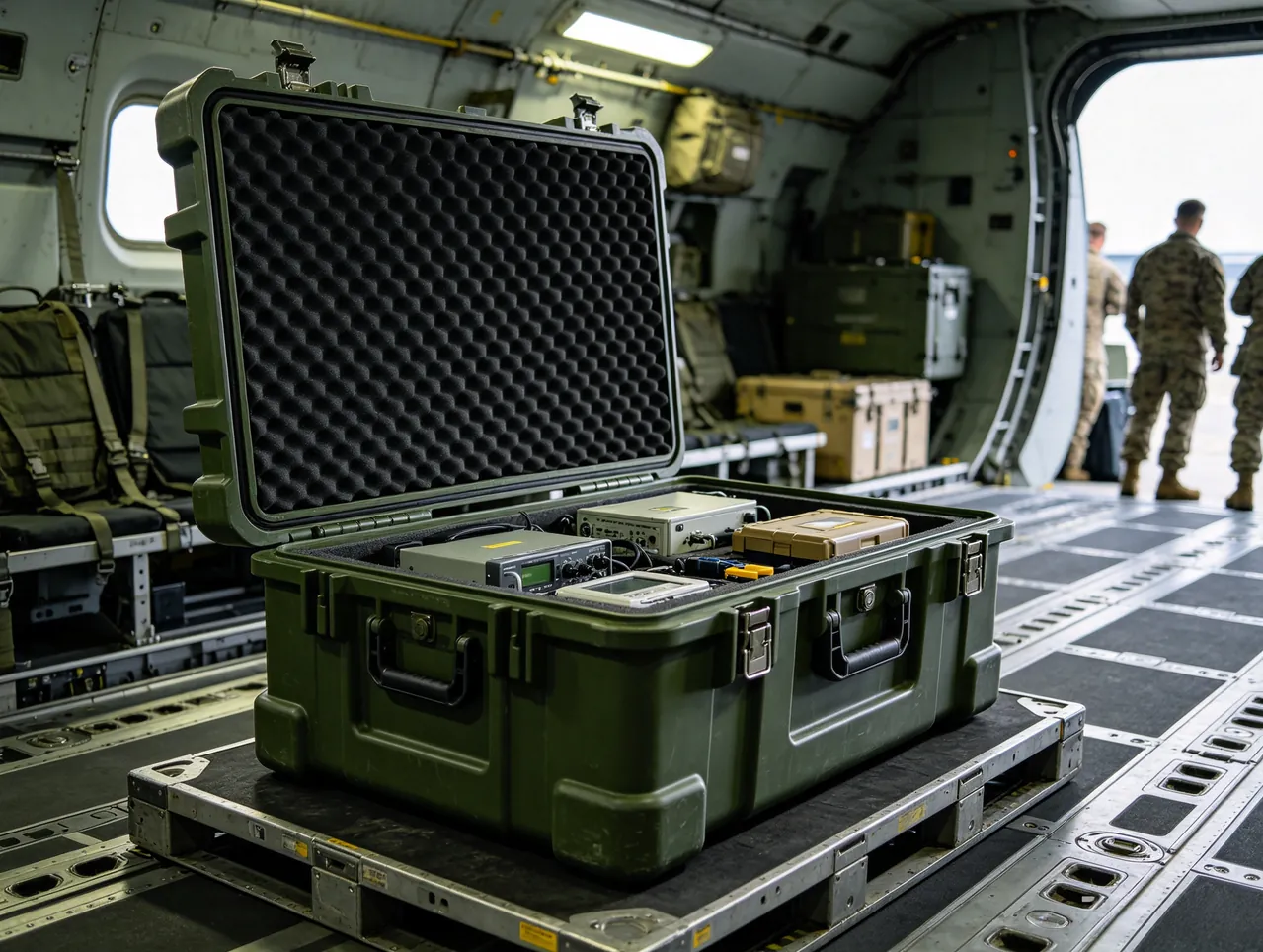
ISPM 15 recognizes heat treatment and methyl bromide fumigation as the main approved treatments. Heat treatment raises the core temperature of the wood to 56 degrees Celsius and holds it there for at least 30 minutes, normally inside a dedicated heat-treatment chamber or kiln, with temperature loggers recording the core continuously so the treatment curve can be traced afterwards. Heat treatment leaves no chemical residue and is not constrained by fumigant quotas, which makes it the mainstream route for export wood packaging today. Methyl bromide fumigation uses a sealed chamber, applies an approved dose for a defined exposure period, monitors concentration distribution with gas probes, and then ventilates until residual levels fall to a safe range. It should be noted that, under the Montreal Protocol, methyl bromide uses are being tightened worldwide and some destination countries now restrict fumigated packaging, so new treatment capacity is usually planned for heat. The choice between the two also depends on the package itself: thick boards and dense stacking extend heat penetration time, while small pallets and thin-panel crates finish quickly. Fumigation is more sensitive to wood moisture content and stacking tightness, and incomplete aeration leaves a pungent smell inside the crate that can contaminate delicate equipment. Whichever method is chosen, the work must be done by a registered facility with qualified equipment, and complete treatment records must be kept, because they are the precondition for applying the mark and issuing the compliance certificate.
3. IPPC Mark Format and Verification
After a successful treatment, the IPPC mark must be applied to the package. The mark combines the IPPC emblem, a two-letter country or area code under ISO 3166, the unique number assigned by the national plant protection organization to the treatment provider, and the treatment code, where HT stands for heat treatment and MB for methyl bromide fumigation; debarked material may add the DB suffix. The mark must be clear and durable, normally stencilled, branded, or printed on at least two opposite faces of the package in a colour that contrasts with the wood. The unique number is the key to verification: consignees, customs brokers, and forwarders can check the country code plus provider number against the registered list to confirm that the treatment provider is officially registered, and a number outside the list is almost certainly counterfeit. Common field problems include marks hidden by straps, shipping labels, or moisture barrier film, lettering worn away by friction, and marks faded during open-air storage after treatment. The correct practice is to put the mark position on the packaging drawing, forbid any overlay on the mark area, and photograph the mark before the crate is closed. Compliance for wood packaging quarantine is finally proven by the fact that every single package can be inspected, so mark control is not a printing detail but the core control point of the whole export chain. For a systematic view of label content and printing, see the packaging labeling compliance guide, which helps design the mark together with the overall label system.
4. Export Declaration and Phytosanitary Certificate Process
For exports from China, compliant wood packaging involves four stages: treatment, marking, declaration, and certification. First, the packaging must be treated by a treatment and marking enterprise registered with the customs authority, which keeps batch-level treatment records and applies the IPPC mark after a successful treatment. Second, the shipper or the agent declares the use of wood packaging during customs entry, including package type, quantity, and treatment provider, so the declaration matches the physical goods. Third, the customs authority issues the Treatment Compliance Certificate for Export Wood Packaging for qualified batches and performs inspection on the declared goods. Fourth, some destination countries also require an official phytosanitary certificate, issued against the destination requirements, to prove that the goods themselves meet the plant health conditions of the importing country. The schedule flexibility of the whole chain comes mainly from treatment queuing and certification time: in peak seasons, chamber capacity is tight, and shippers who have not booked a treatment slot in advance easily end up passive before the vessel. Forwarders should fold the treatment slot, marking, and certificate retrieval into a backward plan before booking and leave room for inspection. The United States and the European Union both inspect wood packaging at the port, and untreated, unmarked, or mismatched packaging can be returned, destroyed, or re-treated at the importer's expense, which also damages the consignee's import record. For a fuller view of the document set, see the HS code and export documents guide and the export packaging compliance guide, which align packaging compliance with the customs file.
5. Combining Wood Crates with Protective Cases
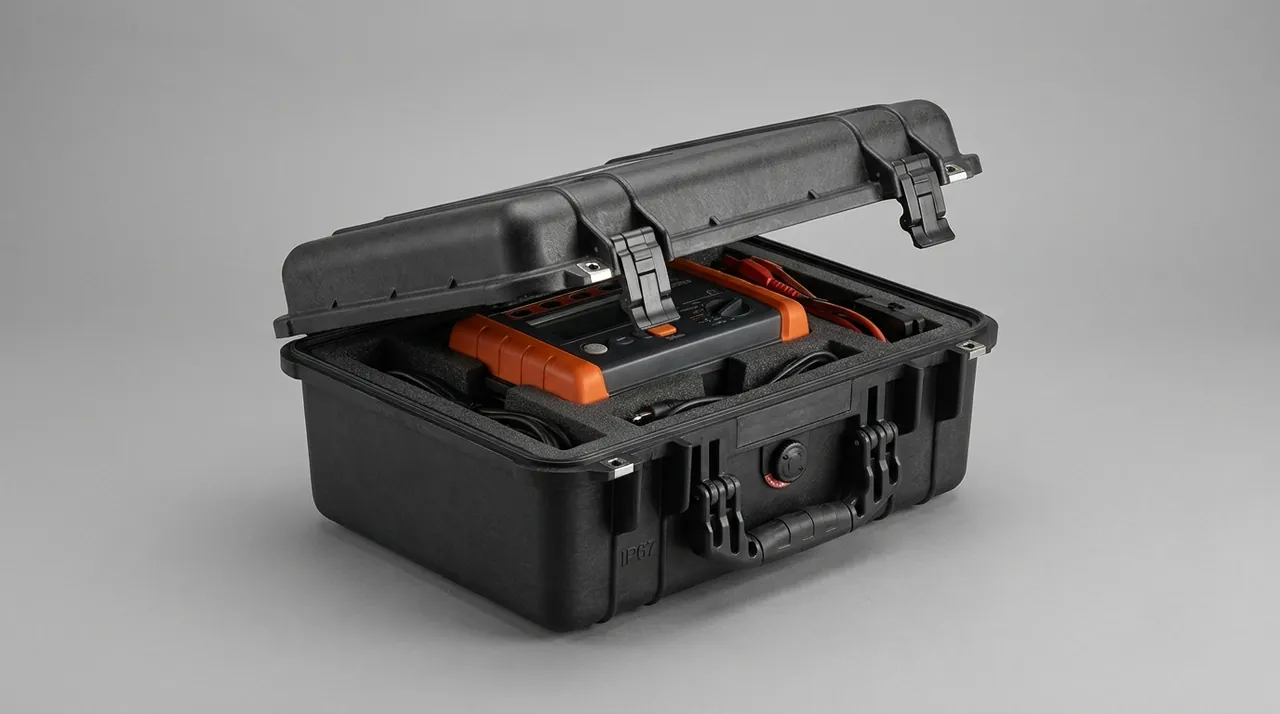
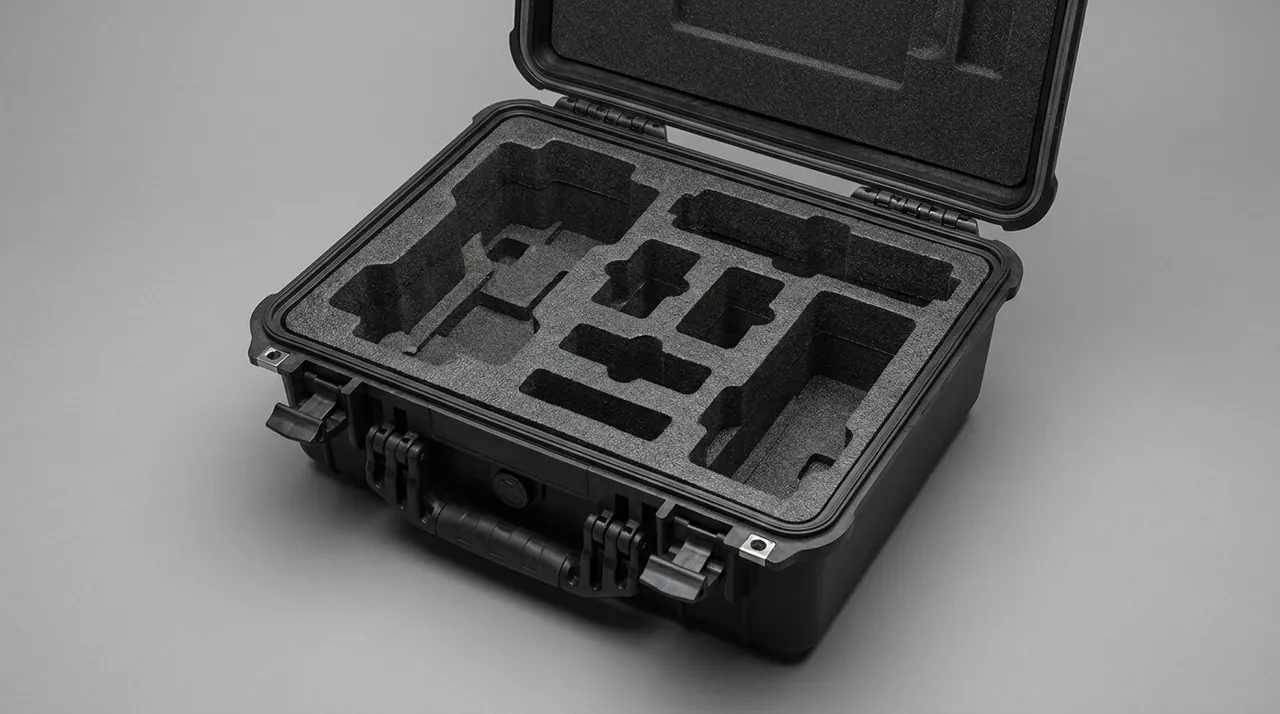
For high-value instruments, precision electronics, and medical devices, the standard export scheme is a wood outer crate plus an inner protective case. The wood crate solves three problems: structural strength and stacking, controllable cost, and legal status as compliant transport packaging once treated and marked. The inner protective case solves three others: moisture and dust exclusion, shock and vibration damping, and item positioning with fast access. The influence of wood packaging on the case system is mainly a material effect: timber absorbs moisture and releases volatile substances, and fumigated wood may carry residual odour for a short period, so goods loaded directly into a crate are exposed to damp, corrosion, and surface contamination during long humid sea legs. The inner protective case, usually a rotomolded or injection-molded engineering plastic shell sealed to IP67 with custom foam or molded inserts limiting each item, closes exactly that gap. The design key is the dimension chain: start from the internal clear size of the crate, subtract buffer and ventilation gaps, and back-calculate the maximum outer size of the inner case so it still leaves room for support. The process should also keep goods away from direct contact with wood walls, and desiccant or vapour-phase rust inhibitor can be placed inside the crate. When the equipment model is fixed, makers such as JUNZHIJIA with OEM/ODM capability can design the compartment layout from the equipment 3D data and match gaskets and spare kits by case type, keeping the combined packaging maintainable through many cycles. For more on coordinated outer and inner packaging, see the cross-border logistics case guide and the custom foam lining guide.
6. Quarantine Advantages of Plastic Cases over Wood Crates
Replacing wood crates with plastic cases is an important export packaging route, and its quarantine advantage is direct: a plastic case is not wood packaging material, so it falls outside the ISPM 15 regime, needs no phytosanitary treatment, carries no IPPC mark, and requires no treatment compliance certificate. A batch of plastic cases can go straight into production, packing, and declaration, saving treatment queuing, aeration waiting, and mark management, which typically shortens the export cycle by several days. Second, plastic cases do not absorb water, grow mould, or host pests, and they leave no fumigant residue, which suits electronic components, medical devices, and optical goods that are sensitive to humidity and chemical contamination. Third, the plastic shell can be made far more regular, with sealing, stacking, rollers, and a trolley handle integrated into one design, so repeat-use consistency is much higher than for wood. The limits are equally real: very heavy or oversized structures still need wood or steel reinforcement, and any solid wood auxiliary parts in that reinforcement must be treated and marked as wood packaging; the unit price of plastic cases is higher at the start and must be amortized over the number of cycles; and exemption from quarantine is not exemption from other destination rules on packaging material, labelling, and environment. On balance, the plastic route suits high-value, frequently cycling, humidity-sensitive equipment, while one-off, overweight, irregular cargo is better served by a wood crate plus an inner protective case. For a fuller comparison of alternatives, see the wooden case alternative guide and decide against your own cargo mix and cycle frequency.
7. Internal Treatment Ledger Management
The treatment ledger is the core record with which a wood packaging plant proves compliance, and it is the file most often requested when an exporter is audited. A usable ledger should capture the treatment batch number, treatment date, facility number (chamber or fumigation cell), temperature and humidity curves or fumigation concentration records, quantity of packages treated, the range of mark numbers applied, the operator and reviewer, the compliance certificate number, and the links to the customer order and customs declaration. The technical records are the heart of the ledger: heat treatment must show a continuous core curve at 56 degrees Celsius for at least 30 minutes, and fumigation must show dose, exposure time, and post-aeration concentration values. A retention period of at least two years is recommended, and longer destination or customer rules take precedence, because in a traceability dispute the ledger decides whether the company can clear itself. Digitization is now mainstream: bind each batch to a barcode or QR code so that scanning calls up the treatment record, mark numbers, and certificate images in one system, unifying stocktake, audit, and traceability. The ledger should also be linked to floor management: treated and untreated goods must be stored in separate zones, and marked packages must not be left in the open, so a qualified batch is never cross-contaminated by untreated pieces. For exporters, collecting and archiving the supplier's batch ledger is the key step in building their own compliance evidence chain and the most persuasive document when the destination port asks questions.
8. Supplier Management and Incoming Audits
Compliance risk in wood packaging eventually flows to the exporter, so supplier management must start early. When selecting a wood packaging supplier, verify the qualification first: registration as a treatment and marking enterprise with the competent authority, facilities inside the effective supervision scope, and unique mark numbers within the registered list. Then run an on-site audit focused on four kinds of evidence: periodic calibration of temperature and concentration monitoring equipment, complete and traceable treatment records, correct and unique mark application, bark removal and quarantine treatment of incoming timber, and separate storage of conforming and non-conforming goods. For repeat suppliers, keep a performance file that counts mark errors, missing batch records, and destination anomalies, and fold return and detention cases into the annual re-evaluation. When the packaging scheme also includes plastic protective cases, the audit covers a second line: shell material and molding process, sealing structure design capability, liner customization capability, and completeness of test documents. Makers such as JUNZHIJIA with OEM/ODM experience can usually issue sealing, drop, and transport vibration test documents for the specified model and supply gaskets and other wear parts by case type, which lets exporters fold the packaging into a long-term rotation system with low maintenance and replenishment risk. For audit tooling, use the checklists in the case factory audit guide and the supplier evaluation system, fixing qualification, records, marks, material intake, and performance into a reusable template.
9. Material Selection and Structural Craft for Wood Packaging
Material and structure for wood packaging directly affect treatment results and transport reliability. On materials, export crates commonly use pine, poplar, or eucalyptus sawn timber, with bark removed at the log stage, because bark is a breeding carrier for many pests and ISPM 15 restricts it clearly. Board thickness must match the load: light cargo can use thin panels with runner structures, while heavy equipment calls for square timber frames, thick panels, and metal corner guards at load points. Moisture content is often ignored; as a rule of thumb the board moisture content of an export crate should sit in the fifteen to twenty percent range, because high moisture content leads to mould and glue failure in humid sea transport and extends the heat-treatment cycle, while very low content raises brittleness. Structurally, nailing and locking should avoid protruding nail heads that scratch the inner case, and runners and skids must suit forklift and lifting operations with reserved strapping slots. Once the combined package is assembled, verify the whole scheme with transport packaging test methods, for example drop, stacking, and vibration tests under the ISTA series and the GB/T 4857 series, confirming that the wood crate and the inner protective case together keep impact away from the equipment. Test conditions and pass criteria belong in the procurement specification rather than in verbal custom. For methods, see the ISTA transport testing guide and the transport packaging standard guide, making package verification a routine acceptance step.
10. Mark Maintenance and Transit Damage Handling
The IPPC mark can wear away through friction, rain, and repeated handling in transit, and the crate itself can be damaged during loading. Once a mark is blurred beyond recognition, the port may treat that package as unmarked and then question the compliance of the whole batch, triggering stricter inspection. The repair rule must be explicit: marks may only be re-applied by the original treatment provider or a facility it has authorized with treatment capability; exporters, forwarders, and consignees must never stencil or copy numbers themselves, which would amount to forging a mark. In practice, the packaging drawing should forbid labels, tape, and moisture film over the mark area, and photographing the mark before closing should be a fixed item of the factory inspection. When a crate suffers structural damage, any new solid wood parts used in the repair must be re-treated and re-marked as a new batch, while replacing non-wood auxiliary parts or reinforcing without solid wood keeps the original mark valid. For packaging systems in long-term rotation, keep a package file recording each unit's number, treatment batch, and repair and re-treatment history, so compliance status is queryable at any time. The plastic route is stronger here: case marks and asset codes can be printed integrally, resist water and friction, and only need a label replacement when damaged. For the transport interface, also consult the loading and shipping precautions guide and extend package protection into handling rules.
11. Common Return Risks and Compliance Audit Points
Returns and destruction of export wood packaging usually trace back to a few preventable failures. The first is missed treatment: solid wood skids, blocking, or reinforcement hidden inside exempt panel packaging never enter the treatment scope. The second is mark problems: missing marks, numbers outside the registered list, marks covered or worn so the port cannot verify them. The third is substandard treatment: incomplete temperature records, incomplete aeration, or re-infestation of treated packages during open-air storage. The fourth is declaration mismatch: the package type and quantity on the customs entry do not match the physical packing. The cost of these failures is direct: return or destruction at destination, demurrage and container overage charges, administrative penalties, and damaged customer trust. Companies should run an internal compliance audit that samples treatment ledgers, mark records, and supplier qualifications quarterly and checks the consistency of declaration data with package files, plus at least one simulated inspection a year that traces one export order back through package batch, treatment record, and certificate to verify a closed evidence chain. Audit findings should generate corrective and preventive actions, not just on-the-spot fixes. Compliance in wood packaging quarantine is not a one-off document action but a continuous process across purchasing, production, treatment, storage, transport, and declaration, and only moving the control point into every link truly lowers port risk and protects the delivery rhythm of export orders.
12. Procurement and Cost-Based Scheme Selection
From a procurement viewpoint, the wood and plastic routes have clearly different cost structures. The wood route includes raw material, fabrication, treatment, marks and certificates, and the hidden time cost of treatment queuing. The plastic route costs more up front but skips treatment and marking and can be cycled repeatedly, so the cost per use falls with the number of cycles. For exporters, the sensible approach is to decide in layers by cargo type and cycle frequency: for one-off heavy equipment, a wood crate plus an inner protective case usually wins on cost, while for frequently cycling test equipment, communication hardware, and medical devices, plastic cases or plastic cases with metal frames are more economical. The procurement specification should state the key clauses plainly: packaging material and structure, whether solid wood auxiliary parts are included, treatment method and mark requirements, liner form and limiting requirements, transport test conditions and pass criteria, and the delivery list for marks and spare parts. In bid evaluation, fold treatment fees, certificate fees, detention risk, and reuse count into total cost of ownership instead of comparing only the ex-works price of a single package. For packaging plants, selling treatment capability, mark management, and batch traceability as services earns longer-term customers far better than price cuts alone. For a systematic selection method, see the protective case selection guide and the case cost structure breakdown, putting compliance cost and packaging value on the same sheet.
13. Maintenance and Reuse Rules
Reuse of wood packaging must never break its compliance status. A crate that has been treated and marked can be reused while the mark and structure stay intact, because its compliance travels with the mark; once repair introduces new solid wood parts, those parts must be re-treated and re-marked, and the old numbers cannot simply be carried over. Before reuse, run an intake inspection: check that marks are legible, look for bore holes and fresh insect traces, look for mould and excess moisture uptake, and test moisture content when needed. Storage should be dry and ventilated, because open-air exposure splits wood and fades marks; empty crates should sit on dunnage and a moisture barrier, never directly on the ground. For plastic systems, maintenance focuses on gaskets, latches, and rollers: inspect gaskets for aging and deformation on schedule, lubricate the latching mechanism, tighten roller and trolley moving parts, and avoid strong solvents that damage the shell and marks during cleaning. Bringing packaging into asset management, with a use and maintenance record for every unit, extends its compliant life and lowers the packaging cost per shipment. For maintenance cycles and methods, follow the protective case maintenance guide so the packaging system, like the equipment it carries, stays under control.
FAQ
Q: Must all export wood packaging be treated, and which materials are exempt? A: Not every package containing timber needs treatment; the test is whether it is solid wood packaging material as defined by ISPM 15. Crates, pallets, frames, dunnage, blocking, and fillers machined from solid sawn timber must be treated and marked whenever they cross a border with the cargo. The main exemptions are processed panels such as plywood, veneer, oriented strand board, fibreboard, and particleboard, whose glue, heat, and pressure production already kills pests, plus thin wood slices below six millimetres, wood wool, and sawdust. The most common practical failure is solid wood auxiliary parts hidden inside exempt panel packaging, for example untreated skids under a plywood crate, which makes the whole consignment non-compliant at the destination. The correct practice is to build a material list during design and purchasing, record the material property of every part, write the exemption decision into the process document, and check physical parts against the list at factory inspection. Confirming packaging composition at order intake costs far less than fixing problems afterwards and keeps vessel and clearance schedules safe from surprise inspections, which is why risk should be moved forward in this way.
Q: How should you choose between heat treatment and methyl bromide fumigation? A: Both are approved ISPM 15 routes, and the choice turns on capacity, cycle time, and cargo characteristics. Heat treatment raises the wood core to 56 degrees Celsius for at least 30 minutes in a dedicated chamber, records the core temperature continuously with loggers, leaves no chemical residue, and is not limited by fumigant quotas, which makes it the mainstream route for export wood packaging. Methyl bromide fumigation applies an approved dose in a sealed cell, monitors concentration with probes, and ventilates after exposure; it is constrained by the Montreal Protocol, its uses keep tightening, and some destination countries already restrict fumigated packaging, so new capacity rarely favours it. On cycle time, heat treatment can queue for chamber slots in peak season while fumigation adds aeration time; on structure, thick boards and dense stacks extend heat penetration, whereas fumigation is more sensitive to stacking tightness and moisture content. Either way, the work must be done by a registered facility with complete records, since that is the precondition for marking and certification. Exporters should fix the method and slot in the contract and fold the treatment cycle into the vessel plan so peak-season waiting never turns into a lost booking.
Q: What information does the IPPC mark carry, and how can you verify it quickly? A: The mark carries four elements: the IPPC emblem, a two-letter country or area code under ISO 3166, the unique number assigned by the national plant protection organization to the treatment provider, and the treatment code, where HT means heat treatment and MB means methyl bromide fumigation, with an optional DB suffix for debarked material. It should be applied to at least two opposite faces in a colour that contrasts with the wood and must stay clear and durable. Quick verification hinges on the unique number: the country code plus provider number can be checked against the registered list to confirm the provider is officially registered, and a number outside the list is almost certainly counterfeit. On-site checks also cover whether the mark is hidden by labels, straps, or moisture film and whether friction has blurred it beyond recognition. Exporters should place the mark on the packaging drawing, forbid overlays on the mark area, and photograph it before closing; forwarders and consignees should verify marks once before loading and once at pickup so problems surface before they become port penalties. The mark is the final carrier of compliance in wood packaging quarantine, so controlling the mark controls the risk outlet of the entire export chain.
Q: What are the practical benefits of combining a wood outer crate with an inner protective case? A: The combination simply lets each material do what it does best. Once treated and marked, the wood crate supplies structural strength, stacking capability, and a compliant legal identity at controllable cost, while the inner protective case uses an engineering plastic shell and sealing structure for dust and water exclusion and custom foam or molded inserts to limit each item against transport vibration and shock. The scheme suits high-value instruments, precision electronics, and medical devices especially well: timber absorbs moisture and releases volatile substances, and fumigated wood may carry residual odour for a while, so the inner case isolates those risks from the goods and sharply lowers damp and contamination probability through long humid sea legs. Design must get the dimension chain right, back-calculating the maximum outer size of the inner case from the crate's internal clear size with enough buffer and ventilation gap, and goods should never touch wood walls directly; desiccant or vapour-phase rust inhibitor can be added inside. Where the equipment model is fixed and cycling is frequent, liners and gaskets can be customized further, with the access path included in the design. Makers such as JUNZHIJIA with OEM/ODM capability can design compartments from equipment 3D data and match gaskets by case type, keeping the combined packaging compatible and maintainable.
Q: Does using plastic cases instead of wood crates really remove the quarantine step? A: It does, within clear limits. A plastic case is not wood packaging material, so it sits outside ISPM 15, needs no phytosanitary treatment, carries no IPPC mark, and requires no treatment compliance certificate; a batch can go straight into production, packing, and declaration, which typically shortens the export cycle by several days while eliminating water uptake, mould, pests, and fumigant residue, a real advantage for humidity- and contamination-sensitive cargo. The limits are three. First, if the plastic case still needs solid wood runners, frames, or pads for reinforcement, those wood parts must be treated and marked as wood packaging. Second, plastic cases cost more at the start, so the unit cost must be amortized over cycles, and one-off heavy irregular cargo may still be cheaper in wood. Third, quarantine exemption is not exemption from other destination rules on packaging material, labelling, and environment. The plastic route therefore suits high-value, frequently cycling, humidity-sensitive equipment rather than every scenario. Procurement should decide in layers by cargo type and state clearly in the specification whether solid wood auxiliary parts are included, so no one discovers the scheme is non-compliant at the moment of container loading.
Q: Which documents must be prepared for export declaration of wood packaging? A: The complete chain usually has four classes. The first is the treatment record: the batch record issued by the treatment enterprise, with a core temperature curve for heat treatment and dose plus post-aeration concentration for fumigation, which is the technical evidence of a successful treatment. The second is the treatment compliance certificate: issued by the customs authority for qualified batches and circulated with the shipment or as the port requires. The third is the customs file: the shipper or agent declares the type, quantity, and treatment provider of the wood packaging so the declaration matches the goods. The fourth is the official document: a phytosanitary certificate issued against destination requirements, proving the goods themselves meet the importing country's plant health conditions. On sequencing, book the treatment slot, marking, certificate retrieval, and customs inspection into a backward plan before booking, and lock capacity early in peak season. Forwarders should also check mark numbers against the registered list and photograph every mark before loading. A missing link anywhere can be judged non-compliant at the port and trigger return, destruction, or re-treatment at the importer's expense.
Q: What should an internal phytosanitary treatment ledger record? A: The ledger must reproduce one batch end to end, with core fields covering treatment batch number, treatment date, facility number (chamber or fumigation cell), temperature and humidity curves or fumigation concentration records, quantity of packages treated, the range of mark numbers applied, operator and reviewer, compliance certificate number, and the links to customer order and customs declaration. The technical records are the soul of the ledger: heat treatment must show a continuous core curve at 56 degrees Celsius for at least 30 minutes, and fumigation must show dose, exposure, and post-aeration values in full. A retention period of at least two years is recommended, and longer destination or customer rules take precedence. Digitization is now the mainstream approach: bind each batch to a barcode or QR code so scanning calls up the treatment record, mark numbers, and certificate images in one system, unifying stocktake, audit, and traceability. The ledger should also connect to floor management, with treated and untreated goods in separate zones and marked packages kept out of the open so a qualified batch is never cross-contaminated. For exporters, collecting and archiving the supplier's batch ledger is the key step in building a compliance evidence chain and the strongest document when the destination port asks questions.
Q: Can worn marks or damaged crates be fixed during transport? A: They can be fixed, but only by qualified hands. When a mark is worn beyond recognition, the port may treat that package as unmarked and then doubt the whole batch's compliance; the fix may only be applied by the original treatment provider or a facility it has authorized, and exporters, forwarders, and consignees must never stencil or copy numbers themselves, which would amount to forging a mark. When a crate suffers structural damage, any new solid wood parts used in the repair must be re-treated and re-marked, while replacing non-wood auxiliary parts keeps the original mark valid. Prevention matters more than repair: forbid labels, tape, and moisture film over the mark area, make photographing the mark before closing a fixed factory inspection item, and require careful handling. For long-term rotation, keep a package file recording each unit's number, treatment batch, and repair history. The plastic route is stronger here: marks and asset codes can be printed integrally, resist water and friction, and need only a label replacement when damaged.
Conclusion and Related Reading
Compliance for export wood packaging is one evidence chain from purchasing through treatment, marking, storage, and declaration. Write every control point into rules and records with named owners, and the wood, plastic, and combined schemes all stay verifiable.