

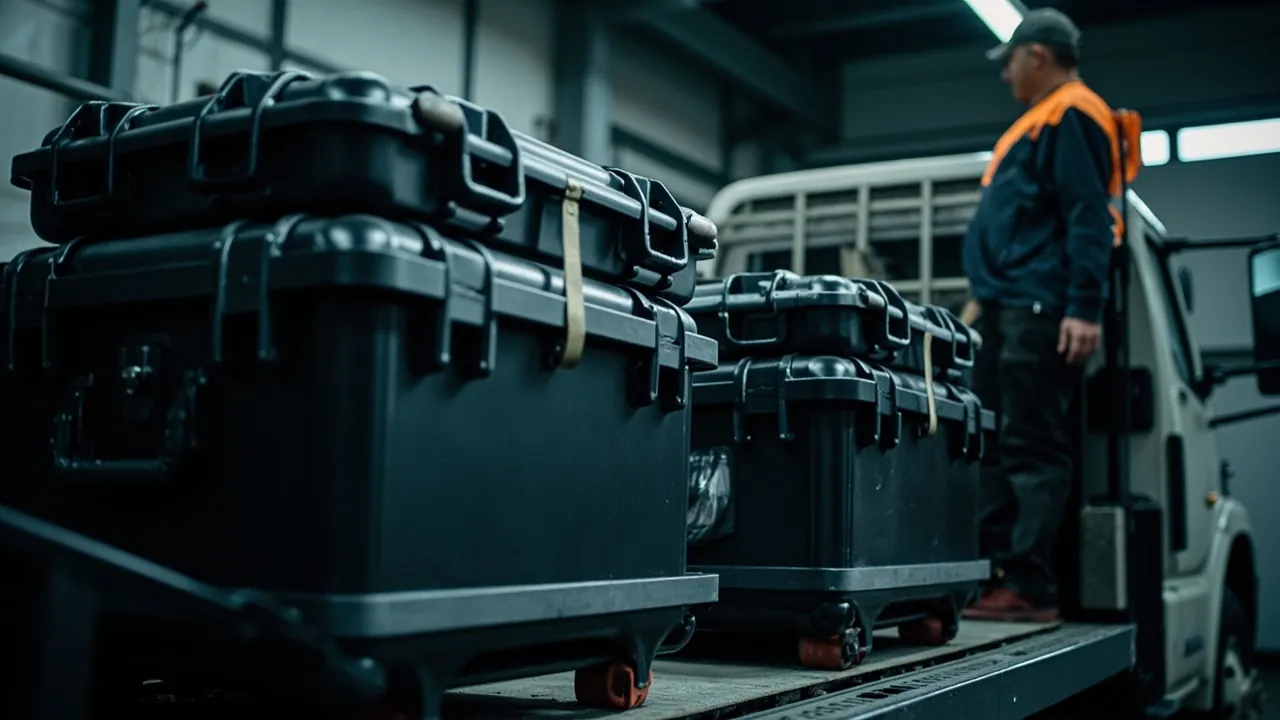
Start with the conclusion: when protective cases arrive scratched, dented at the corners, crushed at the latches or chipped along the sealing face, more than eighty percent of the time it is not a manufacturing defect but a loading problem. Full truckload (FTL) and less-than-truckload (LTL) follow two completely different loading logics. FTL can be planned as "pallet units, top-down compression, whole-load lashing." LTL must be planned as "mixed freight, repeated handling, each case carrying its own load," which shifts the priority to individual carton compression strength and stacking markings. Four levers control almost all of it: palletizing, corner guards and cushioning, a hard cap on stack height, and internal securing.
A protective case exists to protect someone else's equipment, yet in transit it is often the first thing to get hurt. This is especially true when the buyer is an engineering contractor, a systems integrator or a regional distributor receiving dozens or hundreds of cases in a single delivery. One case with a chipped sealing face, a hinge pin that has worked loose or a crushed latch can hold an entire shipment hostage at the receiving dock. What makes it worse is that such damage is usually discovered during unloading, after which the shipper, the carrier and the receiver spend weeks trading blame over a loss that nobody can properly quantify.
This guide separates the two shipping scenarios, full truckload and less-than-truckload, and walks through palletizing, stacking, cushioning, lashing, internal securing and inbound inspection. It also explains how to write these requirements into a technical agreement using transport packaging standards such as GB/T 4857, ASTM D4169 and ISO 4180, so that "handle with care" becomes an executable, traceable clause rather than a polite request. All figures below are typical or empirical values; the formal loading plan should follow the packaging specification agreed by both parties and the requirements of the carrier.
Table of Contents
- Start With the Conclusion: Where Shipping Damage Comes From
- Loading Essentials for Full Truckload (FTL) Shipments
- Loading Essentials for Less-Than-Truckload (LTL) Shipments
- Palletizing and Stacking: How to Work Out Stacking Strength
- Cushioning and Corner Guards: The Cheapest and Most Valuable Step
- Internal Securing: Inserts, Anti-Shift Measures and Secondary Cushioning
- Loading Sequence, Center of Gravity and Lashing
- Pre-Loading Checklist
- Transport Testing and the Standards Behind It
- Inbound Inspection and Assigning Responsibility for Damage
- Extra Considerations for Export Shipments
- Frequently Asked Questions
- Conclusion and Related Reading
Start With the Conclusion: Where Shipping Damage Comes From
Before discussing solutions it helps to classify the damage. Almost every protective case damaged in transit can be traced to one of four mechanical actions: static compression (stacking), impact (loading drops and collisions), vibration (long-distance road travel) and friction (relative movement between cases, or between cases and the trailer walls). Among these, static compression and vibration are chronic: they act continuously throughout the journey. Impact and friction are acute: they are concentrated in the few minutes of loading and unloading. A loading plan is essentially a set of defenses, one against each of the four.
| Damage type | Typical mechanical cause | Typical symptom | Corresponding defense |
|---|---|---|---|
| --- | --- | --- | --- |
| Static compression | Long stacking, heavy upper layers | Lid sagging, sealing face deformation, latch loosening | Cap stack height, add pallet dividers |
| Impact | Loading drops, throwing, toppling | Corner cracking, hinge pin displacement, handle fracture | Corner guards, cushioning, individual packing |
| Vibration | Long road travel, road roughness | Load shifting, insert dusting, fastener loosening | Internal securing, fitted inserts, stretch wrap |
| Friction | Cases moving against each other | Surface scratches, worn markings, coating loss | Interlayer paper, whole-unit stretch wrap, no bare loading |
One sentence to remember: full truckload fears compression; less-than-truckload fears impact. An FTL shipment is loaded once and unloaded once, so impacts are rare but the stack is tall and heavily loaded. An LTL shipment passes through multiple terminals, is loaded and unloaded repeatedly and shares the trailer with unknown freight, so the chances of impact and friction multiply. The two scenarios therefore demand entirely different priorities, and a single plan cannot cover both.
There is also a category of damage that is not mechanical but environmental: prolonged sun exposure accelerates seal aging, rainwater ingress wets the interior, and low temperatures in cold-chain scenarios make plastic parts brittle. These can be avoided at the loading stage simply by covering, avoiding open-air storage and choosing where a case sits in the trailer. The cost is negligible and the step is routinely skipped.
Loading Essentials for Full Truckload (FTL) Shipments
Full truckload means the whole shipment occupies one trailer with no transshipment. Its advantage is fewer impact opportunities and high controllability; its disadvantage is a tall stack and heavy static compression. The loading logic can be summarized in three steps: palletize first, stack second, lash last.
First, palletize. Unless the cases are unusually large or very few in number, build standard pallet units (commonly 1200 x 1000 mm or 1100 x 1100 mm, chosen to match trailer internal dimensions and forklift parameters) and load the units rather than the individual cases. Palletizing converts "dozens of loose cases" into "a small number of rigid units." The collision surface during handling shrinks dramatically, and the units can be moved with a forklift rather than by hand, which removes most of the drop-impact risk at the root.
Second, cap the stack height. The trailer's internal height sets the theoretical maximum number of layers, but the theoretical maximum is not the safe maximum. The deformation risk of a protective case under sustained load depends on its compression capacity, the duration of the load, transport vibration and temperature. Empirically, mid-sized protective cases in the 40 to 80 liter range should not be stacked more than five to six layers high as palletized units, and the bottom layer should sit on a pallet divider to spread the load. Heavy or oversized cases should be stacked lower still. For more on how compression capacity is designed into the shell itself, see how the stacking structure of a protective case is designed.
Third, lash the whole load. Once the pallet units are inside the trailer, band each unit so that pallet and cases move as one body, then use straps running diagonally to the trailer sides in the aisle spaces. Leave no empty gap at the front, the rear or the sides: a gap is where inertia begins to move freight.
One detail that is frequently overlooked in FTL loading: heavy at the bottom, light on top. When different models are mixed, arrange them by unit weight in descending order from bottom to top, rather than following the order in which the pick list was printed. If light cases end up on the bottom and heavy cases on top, the bottom layer carries a sustained load far beyond its design value.
Loading Essentials for Less-Than-Truckload (LTL) Shipments
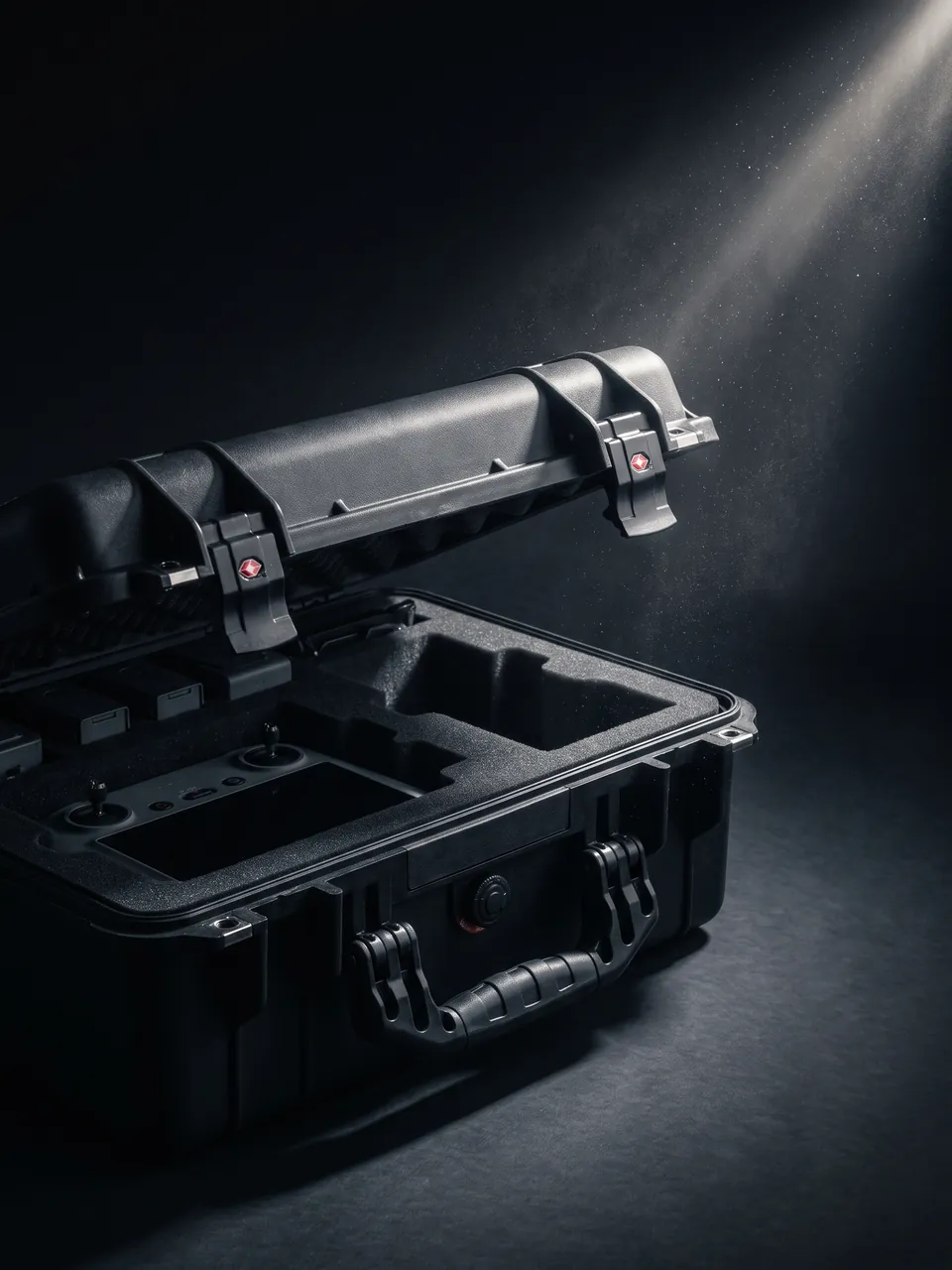
LTL deserves the closest attention because it is where protective case damage concentrates. Its defining features are mixed freight, multiple terminals and repeated handling. Your cases will share a trailer with other customers' cargo, will be clamped by forklifts, carried by hand, pressed by heavy goods and thrown sideways by emergency braking. The loading logic must therefore switch from "the load as a whole" to "each case standing alone": every case must be capable of surviving the entire journey on its own.
The first LTL requirement is individual packing for each case. Do not band bare cases together and call them a unit. Wrap each case in bubble film or EPE foam sleeve, fit corner guards on all four corners, then pack each case into an outer carton of adequate strength, either corrugated or a dedicated shipping box. The outer carton serves three purposes: it provides the outermost compression and puncture resistance; it absorbs friction and abrasion so the case surface stays clean; and it carries the printing and handling markings.
The second requirement is mandatory stack-orientation markings. Handlers in an LTL network will not study your case design; they will read what is printed on the box. Every outer carton should therefore carry clear "this side up," "fragile," "keep dry" and maximum-stack-layer markings, ideally bilingual and in pictogram form. The value of the markings is not that everyone obeys them, but that if something goes wrong you can demonstrate which party departed from the agreed handling instructions.
The third requirement is margin in the stack rating. In an LTL environment the actual stack height and the weight of the freight placed on top are uncontrollable, so the outer carton's compression strength must include a safety margin. The empirical approach is to design or select the carton for the estimated actual layer count multiplied by a safety factor of 1.5 to 2.0, and to print the maximum stack layers explicitly on the box face.
| Comparison | Full truckload (FTL) | Less-than-truckload (LTL) |
|---|---|---|
| --- | --- | --- |
| Loading unit | Pallet units | Individual case plus outer carton plus pallet |
| Main risk | Static compression, stack deformation | Impact, friction, mixed-freight squeezing |
| Handling events | One load, one unload | Possibly several at each terminal |
| Stack control | Layer count can be controlled precisely | Uncontrollable, needs safety factor |
| Marking priority | Pallet labels, lashing points | This side up, fragile, layer limit |
| First line of defense | Pallet dividers plus whole-load lashing | Corner guards, outer carton, internal securing |
Internalize this table and most LTL loading decisions follow naturally. LTL does not aim to "fill the trailer" but to "have every case arrive intact." FTL does not aim to "keep the load loose" but to "stack it steadily, carry the compression and prevent movement."
Palletizing and Stacking: How to Work Out Stacking Strength
Palletizing is the common foundation of both scenarios and deserves separate treatment. Three parameters define a pallet unit: the arrangement pattern, the number of layers and the banding method.
The arrangement pattern determines both the utilization of the pallet footprint and the stability of the unit. Three forms are common. Column stacking (aligned) gives high footprint utilization and a flat outer face that is easy to lash, but weak interlayer interlocking. Interlocked (cross-tied) stacking is more stable and resists toppling, though edges may protrude and the appearance is less neat. Rotated stacking is common for cases that are not square, balancing utilization and stability. The rule of thumb: if the route involves heavy vibration and many turns, prefer interlocked stacking; if neat appearance and exact pallet fit matter more, use column stacking and reinforce the banding.
Layer count determines the static load on the bottom cases. The arithmetic is not complicated: the load carried by the bottom case equals the total weight of everything above it divided by the contact area of the bottom layer. If one case weighs 15 kg including contents and the unit is six layers high, the bottom case carries roughly five cases, or 75 kg. Multiply by the dynamic factor for transport vibration, empirically 1.5 to 2.0, and the equivalent load it must resist reaches 110 to 150 kg. If the lid's compression rating is not sufficient, sustained transport produces sagging or deformation of the sealing face.
A responsible loading plan should therefore state two conclusions: the maximum layer count and whether dividers are required. It should not simply say "it fits." For heavier or larger case models, adding a corrugated or plywood divider every two to three layers converts point loads into distributed surface loads, and that single sheet often improves the stress state of the bottom cases markedly. For stacking and racking practice inside the warehouse, see what to consider when storing protective cases in a warehouse.
Cushioning and Corner Guards: The Cheapest and Most Valuable Step
Among all loading measures, corner guards and cushioning deliver the lowest cost per unit of protection and the most direct result. They are also the easiest to cut, because they do not change the appearance of the case and the buyer never sees them on a quotation. Yet this is exactly the item that decides whether a handling drop leaves a scuff or a cracked corner.
The most vulnerable parts of a protective case are the four corners and the lid edge. Corners are the first point of contact in a drop and the geometric location where stress concentrates; the lid edge usually sits next to the sealing groove, so a chip there can compromise sealing. The logic of a corner guard is straightforward: use a consumable material to absorb energy so that the case structure never has to.
| Cushioning material | Typical thickness | Where it fits | Characteristics |
|---|---|---|---|
| --- | --- | --- | --- |
| EPE foam corner guard | 20-40 mm | Light and mid-weight cases, LTL mixed freight | Low cost, good rebound, easy to form |
| EVA corner guard | 10-30 mm | Mid and heavy cases, export | Higher density, resists repeated compression |
| Air column bag | Variable | Large cases, air freight | Good cushioning, compact, must not be punctured |
| Corrugated divider | 3-7 mm | Between pallet layers, pallet to floor | Spreads point loads, extremely low cost |
| Stretch film | Not applicable | Whole-unit stabilization | Moisture barrier, anti-shift, prevents movement |
The selection rule is simple: the heavier the case, the greater the drop height and the more handling events, the thicker and denser the cushioning must be. In LTL, corner guards are effectively mandatory. In FTL with tightly banded pallet units they can be simplified, though corner guards on the pallet edges are still recommended to absorb forklift impacts.
One caution: more cushioning is not automatically better. Excessively thick cushioning loosens the pallet unit and makes the stack unstable, which increases the risk of toppling. The sound approach is to size the cushioning to absorb the energy corresponding to the design drop height, not to add thickness indefinitely.
Internal Securing: Inserts, Anti-Shift Measures and Secondary Cushioning
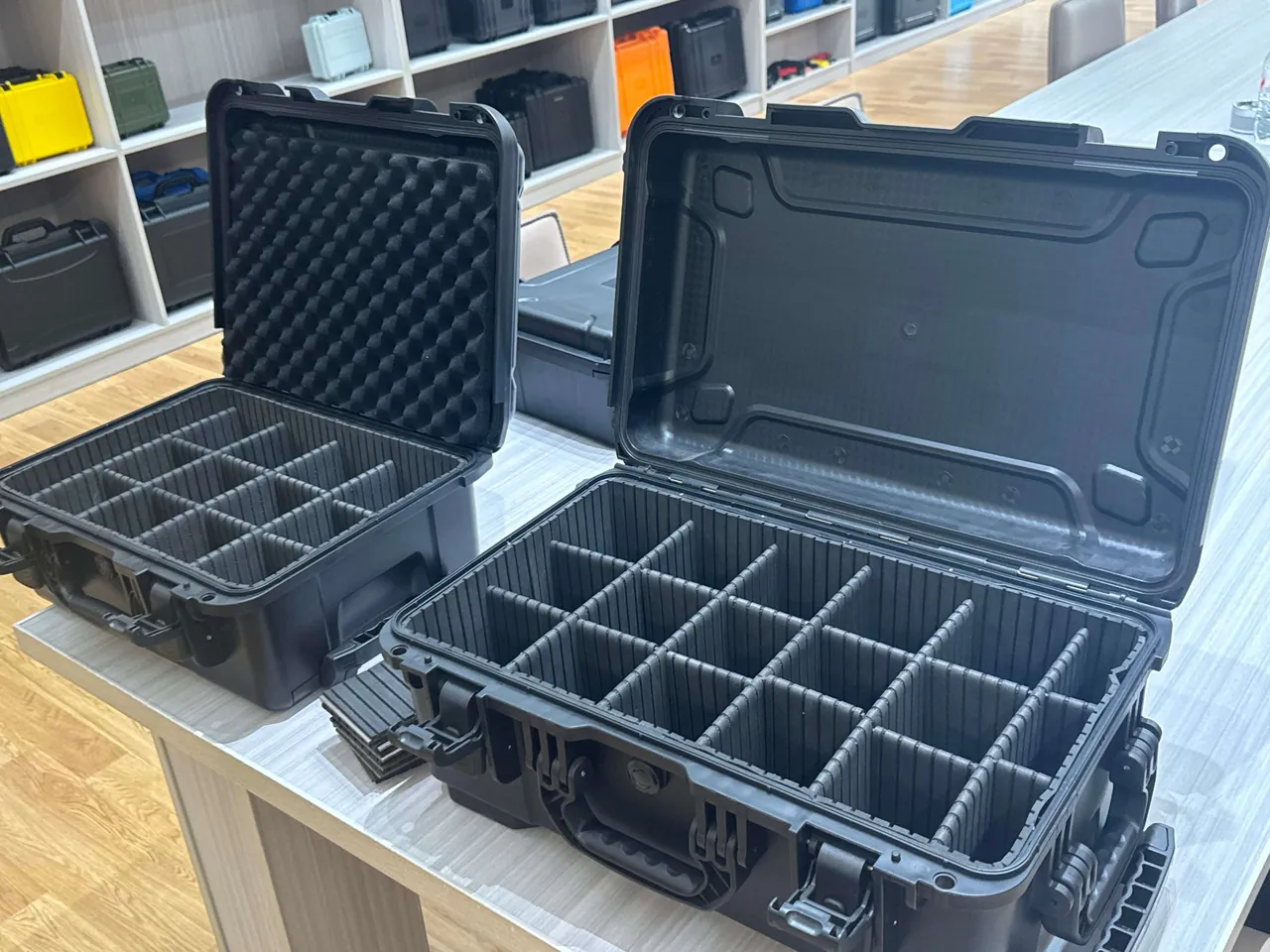
Everything above concerns the outside of the case, but the complaint a customer most often raises on receipt is about the inside: the equipment has shifted and struck the case wall in transit, or the insert has dusted under vibration and contaminated the payload. The goal of internal securing is zero movement of the payload for the entire journey.
The insert must match the weight, shape and brittleness of the payload. Three approaches dominate. Cut foam inserts (PE, EVA or PU foam routed to the equipment outline). Molded inserts (thermoformed or compression molded, suited to volume production). Adjustable divider inserts (suited to toolkits and parts with many variants). Foam density is the critical parameter. Too low and the insert rebounds poorly and dusts; too high and cushioning falls away while cost rises. For precision instruments and electronics, consider whether an antistatic (ESD) material is required so that friction-generated static does not damage components.
Beyond the insert itself, two actions are commonly missed. First, secondary restraint of the payload, for example a strap, hook-and-loop band or hold-down bar that presses the equipment into its foam cavity so it cannot jump out. Second, filling internal voids. When the payload is smaller than the case interior, the remaining space must be filled with foam or an air bladder. Otherwise the equipment drums against the case wall and the impacts concentrate in a small area.
For how to judge and replace gaskets and other consumables, see how often to replace a gasket and how to tell it is due. When the protective case is itself the cargo rather than the container, the outer carton and corner guard logic applies just as much to "case in case" shipping.
Loading Sequence, Center of Gravity and Lashing
The final piece of the plan is putting the units into the trailer correctly and holding them there. Three rules have been validated repeatedly.
Rule one: keep the center of gravity low and forward. Trailer center-of-gravity height directly affects stability in turns and under emergency braking. Heavy and large cases go on the bottom and toward the front; light and small cases go on top and toward the rear. A high center of gravity invites roll-over; a rear-biased center of gravity overloads the rear axle and encourages fishtailing.
Rule two: leave no void between cargo and cargo. Any gap inside the trailer is an invitation to movement. Fill every void with dunnage: air bags, blocking boards, empty pallets. The gap between the rearmost pallet and the trailer door is the worst offender and must be addressed first.
Rule three: lashing must both press down and pull back. Band pallet units to one another laterally, strap units diagonally to the trailer side walls, and build a three-dimensional restraint of "blocked at the front, braced at the rear, pressed from above, contained at the sides." Straps should bear on rigid parts of the pallet or unit, never directly on plastic case components, where the localized pressure would leave its own marks.
A practical self-check is to simulate emergency braking. After loading, push the pallet units hard toward the front of the trailer; visible movement means insufficient restraint. You can also probe the base of each unit with your foot for looseness. The whole check takes seconds on the loading dock and filters out most inadequate lashing before the truck leaves.
Pre-Loading Checklist
The points above compress into a checklist that can be carried to the loading dock. Every item should be photographable and recordable.
| No. | Check item | Action | Acceptance criteria (typical) |
|---|---|---|---|
| --- | --- | --- | --- |
| 1 | Outer carton condition | Visual check for damage or moisture | No punctures, no softness, no damp marks |
| 2 | Corner guards | Check all four corners | Four present, seated, not detached |
| 3 | Insert | Open a sample, check insert fit | No movement gap, no dusting |
| 4 | Layer count | Compare actual against plan | Does not exceed the plan |
| 5 | Dividers | Verify dividers are installed | One every two to three layers |
| 6 | Stretch wrap | Check whole-unit wrap | Full height, secured at the base |
| 7 | Banding | Check bands and straps | Bearing on rigid components |
| 8 | Void filling | Verify gaps are filled | No visible voids |
| 9 | Markings | Check up-arrow, fragile, layer limit | Clear, outward facing, bilingual |
| 10 | Documents | Verify packing list, quantity, model | Matches the purchase order |
The value of this checklist is that it converts experience into a process. If the dock crew ticks off all ten items and takes photographs, any subsequent damage can be traced quickly to either the loading stage or the transport stage.
Transport Testing and the Standards Behind It
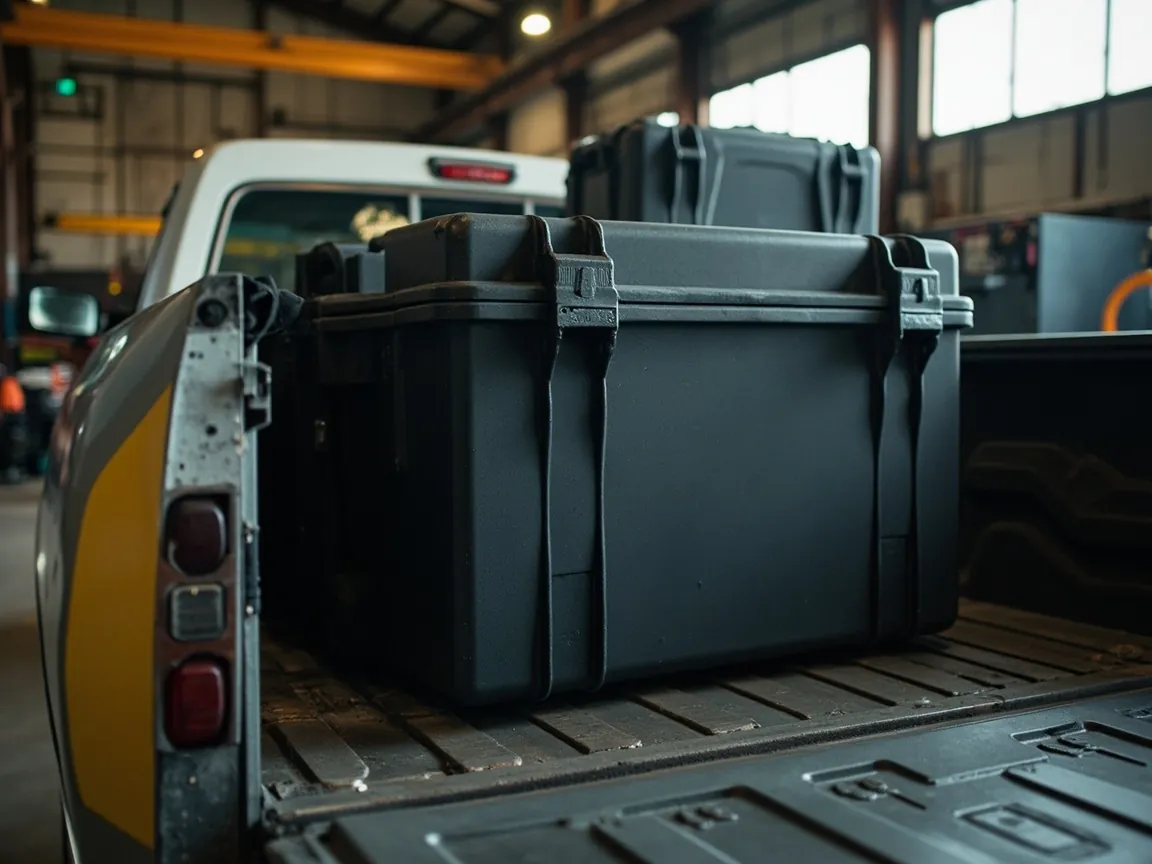
To elevate "what to watch out for in shipping" from experience to a verifiable agreement, bring in transport packaging standards. Four families are commonly used, each with a different emphasis.
The GB/T 4857 series is the Chinese family of basic test methods for transport packages, covering vibration, impact, stacking and drop. It is the default basis for validating domestic packaging plans. ASTM D4169 is the international standard for performance testing of shipping containers and systems. By defining distribution cycles and assurance levels, it prescribes combinations of vibration, drop, stacking and concentrated impact tests, which suits cross-border e-commerce and export projects. ISO 4180 provides the principles for compiling test schedules for complete, filled transport packages, emphasizing that test items and severity levels should follow actual distribution conditions rather than being applied by rote. The ISTA series sits closer to real e-commerce and parcel delivery scenarios and is often used to validate packaging for express channels.
What these standards share is a sequence: describe the real distribution environment first, then design the test items and severity levels accordingly. In practice, the right question is not "which standard do we follow" but "which channels does this shipment use, how many times is it handled, how high is it stacked, and is there an air leg?" Only then should the standard and test combination be chosen.
| Standard | Typical application | Main test items | Selection advice |
|---|---|---|---|
| --- | --- | --- | --- |
| GB/T 4857 series | Domestic transport packaging validation | Vibration, impact, stacking, drop | Default basis for domestic projects |
| ASTM D4169 | Export and cross-border distribution | Vibration, drop, stacking combined by cycle | First choice for cross-border projects |
| ISO 4180 | Compiling a test schedule | Selection of test items and severity | Cited as methodology |
| ISTA series | Parcel and small-package shipping | Drop, vibration, simulated distribution | Validation for e-commerce channels |
Writing the test conclusions into the technical agreement is far more effective than a contract clause saying "packaging shall be robust." A packaging specification carrying a standard number and test conditions settles a dispute on the spot, and that is its greatest commercial value.
Inbound Inspection and Assigning Responsibility for Damage
However good the loading, inspection on arrival cannot be skipped. Inbound inspection serves two purposes: confirming quantity and model, and detecting and documenting damage as early as possible.
The recommended sequence is outside to inside, whole to part. First inspect the trailer or pallet units for toppling, collapsed stacks or obvious depressions. Then check each pallet and outer carton for punctures, water stains or compression marks. Then open a sample proportion of cartons and inspect the cases themselves, concentrating on the four corners, the lid edge, the latches and the hinges. Finally check whether the payload and insert have shifted. The sample size can be set following the logic of GB/T 2828.1; for batch-type appearance defects such as transport damage, a tightened inspection level is usually appropriate.
The key to assigning responsibility is distinguishing a production defect from transport damage. Empirically, production defects show as sink marks, weld lines, color variation and assembly faults, scattered or with a regular pattern. Transport damage shows as chipped corners, surface scratches, one-sided compression marks and deformed latches, concentrated at load-bearing locations and corresponding to breaches in the packaging. When transport damage is suspected, photograph and video immediately and retain the outer carton, because the correspondence between the location of the carton breach and the location of the case damage is the strongest evidence chain available.
If damage has already occurred, see how to repair a cracked protective case shell to judge whether it is repairable, and how to sample an incoming batch inspection for protective cases for sampling method. One principle: secure the evidence before the goods move. Once cases are split up, dispatched or stacked in a warehouse, tracing the problem becomes practically impossible.
Extra Considerations for Export Shipments
Export projects add three more considerations to the loading plan.
First, stacking combined with temperature and humidity. A sea container experiences high heat, high humidity and sharp temperature swings on passage, affecting the dimensions of plastic parts and the performance of seals. Stack heights for sea freight should therefore be more conservative than for road freight, and desiccant packs are recommended inside the packaging to prevent condensation. For the wider cross-border flow, see how cross-border logistics works for protective cases.
Second, compliance of wooden packaging. Export wooden pallets and crates generally must meet ISPM 15 heat treatment or fumigation requirements and carry the IPPC mark, or they may be held or destroyed at destination. This directly affects palletizing choices: some projects switch to plastic or fumigation-free composite pallets for this reason.
Third, trade terms and the point of risk transfer. Under Incoterms 2020, terms such as FOB, CIF, DAP and DDP determine the node at which risk transfers, and therefore who owns loading quality. Under DAP or DDP the seller carries the risk to destination, so the loading plan must be more conservative. Under FOB the risk transfers at loading on board, so the buyer should attend to stacking and securing on the vessel.
JUNZHJIA, manufactured by KeXin New Materials (Guangdong) Co., Ltd., serves wholesale, distribution, OEM/ODM and global supply. For volume orders and export projects, JUNZHJIA can provide packaging recommendations, palletizing plans and matching corner guards and inserts by case model, together with packing lists and appearance inspection records where required, so that buyers can fold transport requirements into the technical agreement.
Frequently Asked Questions
Q: How many layers high can protective cases be stacked in full truckload shipping? A: There is no single layer number, because it depends on the compression capacity of an individual case, its size, the duration of the load and the transport conditions. The engineering logic is: obtain the design compression rating of the case, either from the supplier or through a lid-loading test; then apply the rule that the bottom-case load equals the total weight above it multiplied by a dynamic factor of roughly 1.5 to 2.0; confirm that the resulting maximum stress stays below the design rating with margin. Empirically, mid-sized protective cases in palletized units should not exceed five to six layers, and oversized or heavy models should be stacked lower. Note that the longer the stacking duration, the higher the temperature and the stronger the vibration, the more pronounced the creep deformation in plastic parts becomes, so long-distance shipments should be stacked more conservatively than short hauls. For large orders with tall stacks, add interlayer dividers to spread the load and write the layer cap into the packaging specification.
Q: Why does less-than-truckload shipping damage cases more often than full truckload? A: The core difference is handling events and co-loaded freight. An FTL shipment is normally loaded once and unloaded once, so impact opportunities are limited. An LTL shipment is loaded, unloaded and re-sorted at multiple terminals, and every transfer adds another chance for a drop, a collision or a squeeze, so the cumulative risk multiplies. At the same time, the trailer carries freight from many customers whose weight, shape and packaging strength are all unknown; your cases may sit under heavy machinery parts or be pierced by a sharp metal edge. LTL must therefore be designed around each case standing alone: wrap each case individually, fit corner guards on all four corners, pack into an outer carton of adequate strength, and mark this side up, fragile and the maximum layer count clearly. An empirical practice is to select the outer carton strength for the estimated actual layer count multiplied by a safety factor of 1.5 to 2.0. It is better to spend slightly more on packaging than to gamble the integrity of an entire shipment.
Q: Are corner guards and cushioning materials really worth the money? A: Yes, and they are the best value item in any loading plan. They follow the logic of spending a consumable to spare the structure: the cushioning absorbs the energy of a drop or a collision so that the damage is downgraded from a cracked corner to a surface scuff. In cost terms, a set of EPE or EVA corner guards costs far less than a single protective case, and far less than the round-trip freight, customer complaint and schedule impact of a return. More importantly, corner guards are effectively essential in LTL and parcel channels, where handling cannot be controlled. One caution: more is not better. Excessively thick cushioning loosens the pallet unit and makes the stack unstable, which increases toppling risk. The sound approach is to select the thickness and density that suit the design drop height, then use stretch wrap and banding to consolidate the unit.
Q: How can I tell whether damage to a case is a production defect or a shipping injury? A: Cross-check three dimensions. First, location. Production defects usually appear as sink marks, weld lines and color variation, concentrated near ribs and gates with a regular pattern; transport damage concentrates at corners, the lid edge, latches and handles, matching breaches in the packaging. Second, morphology. Production defects tend to be internal and appear gradually, such as sagging from insufficient wall thickness or brittleness from a material problem; transport damage is external, such as a chipped corner, a one-sided compression mark or a bruise left by a strap. Third, the evidence chain. If you have pre-loading photographs and a record of intact packaging, and the arriving carton has a breach whose location corresponds to the case damage, transport damage is effectively established. In handling, photograph and video immediately, retain the original packaging and carton, and raise the claim under the defect classification agreed in the contract. Recording the morphology, location and outcome of every incident in a supplier quality file steadily improves the accuracy of future determinations.
Q: What special precautions apply when exporting protective cases by sea? A: Four main ones. First, stack more conservatively than for road freight. Sea transit involves high heat, high humidity and sharp temperature swings, under which plastic parts creep more readily, and the bottom layer may take a permanent set. Second, control moisture and condensation. Containers on routes with large day-night temperature differences generate container rain, so place desiccant in the packaging and confirm the case gasket itself is intact to keep the payload dry. Third, ensure wooden packaging compliance. Export wooden pallets and crates generally need ISPM 15 treatment and the IPPC mark or they risk being held at destination; fumigation-free composite or plastic pallets are an alternative. Fourth, watch the trade term and the point of risk transfer. Under Incoterms 2020, DAP and DDP put the risk of arrival on the seller, so the loading plan must be more conservative, while FOB transfers risk at loading on board, leaving the buyer to attend to stacking and securing on the vessel.
Q: How can I quickly judge whether lashing is adequate once loading is complete? A: The most practical method is a combined emergency-braking and cornering check by eye and by hand. There are three actions. First, push the pallet units forward and sideways by hand or foot; movement should be negligible. Second, confirm that the trailer front, rear and sides are filled, paying particular attention to the gap between the rearmost pallet and the door, which is where shifting is worst, and block it with dunnage. Third, check that the straps are evenly loaded and are not cutting into plastic components; they should bear on the rigid parts of the pallet or unit. Also verify that the stretch wrap extends to the base of the pallet, that the bands are anchored to the pallet, and that the pallet itself is restrained against the trailer floor. If possible, film a short panoramic video of the loaded trailer as a record. The whole check takes only a few minutes but eliminates most inadequate lashing before departure.
Q: Should the packaging plan be written into the purchase contract? A: Strongly recommended, and it should form part of the technical agreement confirmed alongside the drawings rather than being negotiated just before dispatch. The reason is straightforward: responsibility for transport packaging usually arises after the goods have left the factory, and if the contract says only that "packaging shall be robust and suitable for long-distance transport," a damage claim descends into endless blame-shifting among supplier, carrier and receiver. An executable packaging specification should state the inner and outer packaging formats and materials, the specification of cushioning and corner guards, pallet dimensions and stacking pattern, the maximum layer count, the applicable test basis such as specific GB/T 4857 or ASTM D4169 items, the box-face marking requirements, and the appearance criteria and disposition for nonconforming batches on arrival. Writing the standard number and test conditions into the agreement makes it possible to separate a design issue from a production issue from a transport issue the moment a dispute arises. That is the only way to turn "handle with care" into an enforceable clause.
Conclusion and Related Reading
Returning to the question in the title: what should you watch out for when shipping protective cases? First separate full truckload from less-than-truckload, then build one line of defense against each of the four actions: compression, impact, vibration and friction. In FTL the core is palletizing, capping the stack height and lashing the whole load, because the enemy is compression. In LTL the core is individual packing, corner guards and mandatory stacking markings, because the enemies are impact and friction. Internal securing addresses vibration and shifting, loading sequence and lashing address center of gravity and movement, transport test standards convert experience into a verifiable agreement, and inbound inspection with evidence preservation decides whether a problem can be pinned on the right party once it happens.
Three actions you can take immediately. First, make palletizing, corner guards and a layer cap standard practice at the dock, and never send any cargo out bare. Second, write the packaging specification into the technical agreement, citing specific GB/T 4857 or ASTM D4169 test items so that "robust" becomes checkable. Third, photograph before loading and inspect appearance before splitting the shipment, preserving the traceability chain at minimal cost.
JUNZHJIA, manufactured by KeXin New Materials (Guangdong) Co., Ltd., covers protective cases, tool cases, military-spec storage cases and waterproof junction boxes, serving wholesale, distribution, OEM/ODM and global supply. The company customizes inserts and structures to project conditions, supplies case-specific corner guards, gaskets and consumable parts, and provides drawings, material declarations and inspection documents so that buyers can fold packaging and transport requirements into a single technical agreement.
Related Reading