

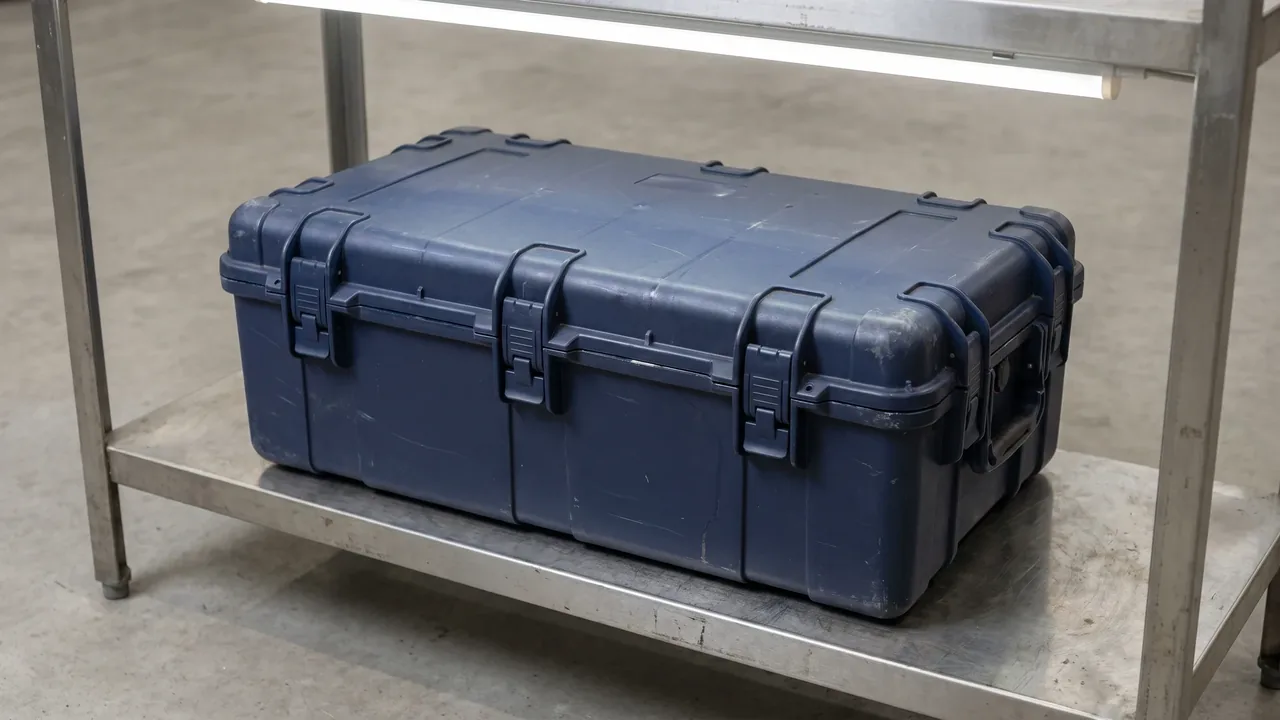
A recycling mark case is a protective case, transit case, or storage container whose shell, liner, hardware, and accessories carry systematic material identification marks. For recycling companies, plant waste-management desks, and packaging labeling teams, the difference between a retired case being diverted by material class and being dumped as mixed feedstock often comes down to a few small numbers and triangle symbols on the case wall: are they clear, accurate, and verifiable? Experience shows that cases whose shell, liner, and metal parts are individually marked with resin identification codes and carry moulded-in marks achieve teardown sorting efficiency and recycled-material sale prices thirty to fifty percent higher than unmarked mixed-load cases, and they pass packaging-waste audits on the first attempt far more often. Recycling marks are therefore not decoration but the entry data of the whole container life cycle. This article discusses only the container itself, covering resin identification codes, generic recycling symbols, component-level material makeup, moulded-in versus label marking, shell and liner marking challenges, metal and electronic parts, mono-material design, sorter friendliness, sorting guidance, compliance standards, procurement acceptance, and reuse management, with directly applicable parameters and steps.
1. Positioning of Recycling Mark Cases: From Storage Box to Traceable Material Carrier
The defining feature of a recycling mark case is that "what this case is made of" becomes information carried by the case itself rather than something that lives in a ledger or in memory. Transport marks answer "how to carry it", warning marks answer "how to protect against it", and recycling marks answer, once the case retires, "where it goes, how it is sorted, and what it is worth". For the recovery chain, material information is the first sorting input: the sorting line has seconds to decide whether the case enters the polypropylene stream, the engineering-plastic stream, or the metal stream, and the only usable basis is a mark that is visible, touchable, and still readable after wear.
Recycling marks serve three parties at once. For recyclers, clear material codes mean incoming purity is controllable and the price system can be refined to grade level. For case users, a fully marked retired case can be diverted through "five-stream separation" at end of life, and residual-value recovery is markedly higher than selling the whole case as mixed load. For regulators and auditors, marks are the most basic compliance evidence under extended producer responsibility; a mismatch between the declared material composition and the physical mark is usually the first nonconformity found in an audit. For background, see the life-cycle framework in the packaging waste management guide and case recycling and reuse, moving mark management upstream into procurement and use instead of catching up at retirement.
One misunderstanding deserves clearing: a recycling mark does not mean "this case can be recycled anywhere". It only states what the material is; whether the local recovery channel accepts it, whether the recycling process is mature, and whether contamination forces a downgrade all depend on the downstream system. Mark management should therefore be paired with sorting guidance, and Section 11 gives the complete path. For organizations building a reusable turnover system, compare the closed-loop design in the circular packaging case guide, treating marks as part of the loop asset-tracking system and planning them together.

2. Resin Identification Codes: The Meaning of Numbers 1 to 7
The resin identification code is the most widely used marking system in the recycling world. Its technical origin is ASTM D7611, the standard practice for coding plastic manufactured articles for resin identification; the corresponding Chinese standard is GB/T 16288 for the marking of plastic products. The code places the numbers 1 through 7 inside a triangle of chasing arrows: 1 for polyethylene terephthalate, 2 for high-density polyethylene, 3 for polyvinyl chloride, 4 for low-density polyethylene, 5 for polypropylene, 6 for polystyrene, and 7 for other, covering acrylonitrile-butadiene-styrene copolymer, polycarbonate, polyamide, and their blends and modified grades.
Mapping the codes onto protective cases gives the common landing points. Rotomolded polyethylene or polypropylene shells are marked 5 or 2; injection-molded polypropylene toolboxes, dividers, and clips are marked 5; acrylonitrile-butadiene-styrene shells are marked 7; polycarbonate transparent lids are marked 7; and acrylonitrile-butadiene-styrene blended with polycarbonate in safe housings also falls into 7. Code 7 is a catch-all bucket: every thermoplastic that does not fit the first six lands there, which is exactly why 7 feedstock is the least valuable in the recycling market, since it may blend several mutually incompatible resins.
Understanding what the code means is critical: it identifies the principal resin category of the article, not a promise of recyclability, and certainly not an environmental grade. A polypropylene case marked 5 still needs pretreatment if its silk-screened ink is too thick, if a pressure-sensitive protective film is applied, or if it is co-molded with metal corner caps. The European Union does not use this seven-code system; its packaging marking requirements are set separately by packaging and packaging-waste regulation, and exporters must check each destination market, alongside the multi-market differences in the packaging labeling compliance guide.
3. The Mobius Loop and the Limits of Generic Recycling Symbols
The Mobius loop, the familiar chasing-arrows triangle, was designed by Gary Anderson in response to the first Earth Day in 1970 and has since become the most recognized recycling symbol in the world. Engineers should note at least three distinct usages: the blank loop means "this article is designed to be recyclable"; a percentage inside the loop means "this article contains that proportion of recycled material"; and solid or double-loop variants carry specific meanings in some schemes. Mixing the three without written explanation is the most common misuse on case packaging today.
For case makers, three limits apply. First, never use a blank loop alone to imply recycled content; that is a classic vague green claim, now explicitly restricted for unsubstantiated environmental claims under the EU Empowering Consumers Directive, and China's advertising law and anti-unfair-competition law equally restrain false promotion. Second, any declared recycled proportion needs traceability documentation, and EN 15343 on recycled plastics recycling traceability provides the framework for content accounting and traceability that percentage claims should align with. Third, the loop must always appear together with the material code and material name, because a sorter cannot route the article from a loop alone.
The recommended minimum information set is: Mobius loop or triangle code, resin number, material name abbreviation, and, where applicable, a short phrase such as "recyclable" or "thirty percent recycled content". This set satisfies domestic sorting communication and survives export-market label review. Where declarations must align with producer-responsibility filings, read the EPR compliance case guide so that the symbols on the packaging match the material composition data in the registration file.
4. Component Material Makeup and Marking Targets
Marking requires a clear target list first. A typical engineering-plastic protective case is built from about ten component classes: upper shell, lower shell, gasket, latches and latch seats, hinges, corner caps and edge trim, liner foam, pressure-equalization valve, pull handle and wheels, nameplate label, and on some models an electronic lock, tracking tag, or temperature-humidity logger. Their material distribution is as follows. Shells are mostly modified polypropylene, rotomolded polyethylene, or injection-molded parts, with acrylonitrile-butadiene-styrene, polycarbonate, and glass-fibre-reinforced grades also common; gaskets are mainly ethylene-propylene-diene rubber or silicone; latches and hinges are stainless steel, zinc-plated steel, or zinc alloy; corner caps are aluminium 5052 or 6061, or overmolded composite parts; liners are ethylene-vinyl acetate, cross-linked polyethylene foam, or polyurethane foam; valve membranes commonly use expanded polytetrafluoroethylene.
The principle for choosing marking targets is "the smallest separable unit at teardown". Any component that can be fully removed at retirement and enter a dedicated recovery channel should carry its own material mark. Any integrally molded composite part is marked by its principal material with a composite note. For example, where a cast-aluminium hinge insert sits in a polypropylene shell and can be levered out, the shell carries only 5 and the hinge is marked separately; where the insert is nearly inseparable from the shell, the shell mark should add "contains metal insert, remove before recycling". If the liner is a modular removable structure, mark it per module; if it is field-poured and bonded to the shell, mark "composite structure, dispose as a unit".
Listing the component inventory and material codes in a table supplied with the case or its documentation is the recommended practice. This table should be written into the technical agreement at the procurement stage, and the sorting flow in Section 11 uses it directly as the teardown sequence. For general material identification methods, see protective case plastic materials and the ABS versus PP protective case comparison, aligning material selection and end-of-life vocabulary in one document.
5. Moulded-In Marks Versus Label Marking
Marking media fall into two families, moulded-in marks and label marking, and their durability and information capacity are complementary. Moulded-in marks are engraved in the tool cavity and generated with the article during injection or rotomolding; laser marking is a later-processing variant. Their great advantage is that they share the life of the part: after years of field wind, sand, salt spray, and oil, the mark is still in position, never lifting, never wearing off. The drawbacks are equally clear: a revision means tool modification, placement is constrained by draw direction, and contrast on dark shells is poor without two-shot or filler processes.
Label marking covers outdoor-grade pressure-sensitive labels, screen printing, pad printing, and hot stamping. Its strengths are large information capacity, multilingual layouts, QR codes, batch numbers, and management data, with revisions handled by remaking artwork. Its ceiling is durability: ordinary adhesive labels start lifting after three to five years under ultraviolet and humid heat, screen-print ink fades white under repeated abrasion, and in strong ultraviolet or high-salinity environments expectations should be halved.
The recommended engineering combination is "moulded-in marks for material codes, labels for management data". The material code is the hard requirement of the recovery chain and must be the most durable; management data can follow the asset system and be replaced. Quantifiable requirements for moulded-in marks include: main-code digit height not less than 5 millimetres so it stays readable at distance after wear; engraving depth not less than 0.3 millimetres so the mark is not merely on the surface; and back-printing or two-shot injection on dark shells to keep the black-white contrast at or above four to one. Label abrasion sampling is run at contractually agreed friction cycles and media, written into the acceptance document rather than chasing a single standard. For process detail, see the molding chapters of the injection molded case and rotomolded protective case guides.
6. Shell Material Marking: PP, PE, and Engineering Plastics
The shell is sixty to eighty percent of case mass and the main arena for recycling marks. Rotomolded polypropylene cases are marked 5, optionally with "PP" beside the code; if the formula contains mineral filler or recycled content, the case stays in 5, but a recycled-proportion note aligned with the EN 15343 framework is recommended, for example "thirty percent recycled polypropylene". Rotomolded polyethylene cases are marked 2 with "PE". These two are the most welcome single thermoplastics in recovery channels, their pricing systems are mature, and a clear mark converts directly into cash value.
Acrylonitrile-butadiene-styrene and polycarbonate shells are the marking difficulty: both fall into 7, so marking 7 alone is equivalent to no mark. The recommended practice is a two-line "7 plus material name", with 7 inside the triangle and "ABS" or "PC" printed beside it, so the sorter knows this is an engineering plastic that can be pelletized separately. Acrylonitrile-butadiene-styrene and polycarbonate have much higher recycled value than mixed 7 feedstock, on the condition that metal inserts and coatings are removed at teardown. Two-shot transparent lids and frames, when produced as a single part, should add "PC plus PP composite, requires separation"; glass-fibre-reinforced polyamide parts are marked 7 with "PA-GF", warning that glass fibre shortens in the recycled stream and suits downgraded use.
Two shell-marking details are easily missed. First, metal inserts and nameplates: cast-aluminium hinge seats, rivets, and metal plates should be flagged for removal in the mark, otherwise aluminium pieces entering the plastic flow after whole-case grinding directly degrade pellet purity. Second, surface decoration: large-area screen printing, plating, and applied films add pretreatment cost before grinding, so mark zones should avoid decoration zones or clearly state "remove label film before grinding". For systematic comparison at the selection stage, see the PP, ABS, and PC case differences and polycarbonate protective case material, writing recyclability into the material specification when the formula is finalized.

7. Liner, Gasket, and Soft-Component Marking Challenges
Soft components are the blind spot of recycling marks. Ethylene-vinyl acetate, cross-linked polyethylene foam, and polyurethane foam are cross-linked or closed-cell structures that no longer melt when heated, so they cannot be re-pelletized like thermoplastics and the seven-code system simply does not apply; forcing a number on them misleads the sorter. The recommended practice is to emboss or print the material abbreviation and its disposal route directly on the liner surface, for example "XPE cross-linked foam, requires pyrolysis or energy recovery" or "EVA, can be re-melted and pelletized", so the downstream knows the destination. Polyurethane foam should also warn "releases smoke when heated, do not mix into incineration streams", an effective caution for disposal units.
Gaskets are typically small parts, mainly ethylene-propylene-diene rubber or silicone, and neither belongs in the seven-code system. Where a small part cannot carry cavity engraving, pad printing or ink marks can state "EPDM" or "SILICONE", and the replacement interval can be given on the packaging or in the documentation. Because the gasket is the wear part and is replaced far more often than the shell, the mark's real value is telling the user "this old ring is made of this material, do not mix it with the new stock". If a thermoplastic-elastomer seal is used instead, the material name can be injection-molded directly, and the old seal follows the thermoplastic stream at retirement.
The general rule for soft components is "mark separately if detachable, describe as a whole if not". The great advantage of modular liners lies exactly here: each module can be marked, replaced, and diverted on its own, so retirement does not turn the whole case into a tangle of different foams. For recyclability considerations at the material-selection and liner-design stage, combine the custom foam lining guide and eco-friendly lining materials, writing "same family, easy separation" into liner requirements as a hidden indicator.
8. Metal Parts, Corner Caps, and Electronic Modules
For metal parts the marking target is not the seven codes but the alloy grade. Aluminium corner caps, edge trims, and hinge seats should be stamped or etched with "AL 5052" or "AL 6061"; stainless parts with "SS 304"; zinc-plated steel parts with "SPCC plus Zn". The grade is directly valuable to recovery: recycled-aluminum melting is proportioned by grade, and stainless or iron contamination downgrades a whole furnace, while mixed iron and aluminium is a classic reason recyclers cut prices. Experience shows that storing metal parts in grade-separated bins brings a sale price visibly above mixed loading, and cases with clear marks need almost no extra testing at teardown.
Overmolded composite parts need special treatment. Aluminium frames overmolded with polypropylene on caps and edge trim are expensive to separate; where the design cannot separate them, the mark should state "aluminium-plastic composite, downgrade as a whole", avoiding disputes where a recycler receives the part as pure aluminium. Electronic locks, radio-frequency identification tags, and temperature-humidity loggers are electronic modules that must be removed before recovery and managed under waste electrical and electronic equipment and RoHS requirements; the case mark should note "contains electronic module, remove before sorting" near the module position, reminding the teardown operator not to grind circuit boards in with the shell. For the systemic metal-versus-plastic comparison, see aluminium versus plastic cases, aluminum alloy cases, and RoHS and REACH compliance cases, placing material marks and chemical compliance in the same component table.
9. How Mono-Material Design Improves Recyclability
However good the marks are, they only solve the "visible" problem; whether a case is easy to recycle was decided at the design stage. Mono-material design, or same-family design, aims to keep the shell, clips, liner supports, and detachable parts within one material family, eliminating the burden of finer grade sorting after teardown by moving it into the design phase. The direct benefit is that a recycler receiving a single-colour, single-grade, insert-free polypropylene shell can grind and pelletize the whole batch without manual sorting, and the price is usually several times that of mixed black feedstock.
Four design moves are directly applicable. First, make clips, locating blocks, and liner supports the same polypropylene family as the shell instead of polyamide or acetal, avoiding mixing incompatible plastics. Second, change metal hinge seats and corner caps to detachable mechanical connections rather than cast-in overmolded composites, so metal and plastic separate with a single lever at retirement. Third, prefer liner materials that melt with the shell family; cross-linked foam cushions well but is doomed to energy recovery, so the choice should be weighed against the end-of-life expectation. Fourth, unify the case colour system, because light, single-colour shells avoid colour debates at recycling while dark black and multicolour mixtures are a classic reason recyclers cut prices. For the systematic design principles, see recycled material protective cases, virgin versus recycled case material, degradable case materials, and packaging reduction design.
In custom case projects, JUNZHIJIA typically writes "shell and liner same-family, metal parts detachable" into the proposal as options, letting customers reserve conditions for end-of-life recovery at the selection stage. For purchasers, these three items - same-family degree, metal detachability, and colour system - belong in the technical scoring: they look unrelated to protection performance but directly decide retirement residual value and compliance cost, and they are the most easily missed line in the total-cost-of-ownership model.
10. Legibility Design: A Three-Second Decision for the Sorter
The final reader of a mark is not an engineer but an operator at the sorting line. His decision window is seconds, so the legibility goal can be quantified: readable at one metre under normal light for the main code, and still readable after three years of natural wear. For placement, material codes should appear on at least three of the six faces in fixed corner zones, away from grip friction bands and stacking load areas; the main code and the backup code should be dispersed so a single scratch cannot destroy every copy at once.
Size and contrast have clear empirical values. The main-code digit height should be at least 5 millimetres, with the companion material abbreviation at least 3 millimetres; black-on-white or white-on-black luminance contrast should be at least four to one, and low-contrast combinations such as dark blue on dark grey are forbidden. Multilingual layouts follow the destination market: export versions use English abbreviations plus the number, domestic versions use Chinese plus the number, and a bare string of digits with no legend is never acceptable. For wear tolerance, moulded-in engraving depth should be at least 0.3 millimetres, ink marks should carry a clear protective film, and all marks should have their abrasion performance stated in the technical agreement with agreed test conditions and sampling.
Finally, the positioning of QR codes and radio-frequency identification tags must be clear: they carry asset and management data and cannot replace material codes. Asset labels can be reprinted at any time, but material codes must share the life of the part; the two are complementary, not substitutes. For marking and tracking system design on batch cases, combine the asset-management chapter of the protective case selection guide, aligning material code, asset code, and ledger so that a scan reveals the material and the part itself verifies the record.
11. Sorting Guidance: Teardown and Diversion Paths for Retired Cases
The endpoint of a recycling mark is sorting guidance. The correct disposal path for a retired protective case is "declare first, then tear down, then divert, with a ledger throughout". The first step is a declaration by the user department on the last carried goods and contamination status: a case stained with oil, chemicals, or biological samples must not enter ordinary plastic recycling and needs hazardous-waste screening first. The second step runs teardown at a dedicated station in a fixed order: remove electronic modules and batteries, unload latches, hinges, and corner caps, strip the liner foam, take out the gasket, and finally stack the shell by material code in separate zones.
Diversion follows "five-stream separation": thermoplastics bagged by code, metals binned by grade, foam and fabric baled, rubber gaskets collected separately, and electronic and mixed parts handed to qualified units. Organizations with capacity may subdivide polypropylene, polyethylene, and engineering plastics further, but teardown depth should match the actual sorting capability of the local recovery channel; subdivision beyond channel capability only adds internal cost. Dust and chips from teardown are collected as general industrial solid waste and must not enter the storm-water network; each case's batch, component destinations, and handler go into the component-level ledger, which is the core evidence in a producer-responsibility audit. For the complete framework, see the packaging waste management guide and the solid waste sorting case example.
For batch retirement, lay out the teardown station as "colour zones, one-way flow": receiving zone, electronics zone, metal zone, plastic zone, and foam zone in sequence, with cases moving in one direction only to avoid cross-contamination. Zoned stacking not only raises efficiency but also lets the service provider verify quality at a glance, which improves settlement prices directly. Latches and corner caps in good condition, after cleaning and verification, can move to the spares store and keep serving; this reuse path is more energy-efficient than remelting and belongs in the written procedure.

12. Compliance Requirements and Standards for Recycling Marks
The compliance map for recycling marks is built from four families of rules. The first covers the marks themselves: GB/T 16288 for the marking of plastic products requires plastic articles to carry the specified material name or code; ISO 15270 gives general guidelines for the recovery and recycling of plastics waste; ASTM D7611 is the origin of the seven-code system in the United States. The second is packaging and environmental regulation: the EU packaging and packaging-waste directives and their upgraded regulation set requirements for packaging marking, recycled content, and recyclability design, with the new regulation applying since August 2026 and tightening the marking requirements further, while GB/T 16716.1 requires packaging-waste handling to follow the priority order of reduction, reuse, and recovery.
The third family covers recycled material and traceability: EN 15343 defines the traceability and content-accounting method for recycled plastics and is the technical basis for any recycled-proportion claim. The fourth is chemical and electronic compliance: RoHS and REACH restrict substances in materials, and cases carrying electronic modules must also link to waste electrical and electronic equipment management. For building the compliance file, extend your reading to CE and RoHS certification for cases, RoHS and REACH compliance cases, and the EPR compliance case guide.
Two red lines must enter company procedure. First, marks and declarations must agree: the material and recycled proportion marked on the packaging must match the material composition data in the registration file and test report; a three-way mismatch constitutes a false declaration. Second, no unsubstantiated green claims: recycled proportions may not be declared without traceability documentation, and vague words such as "eco-friendly" may not substitute for specific material information. Exporters should also check destination-market differences, for example additional marking requirements for rigid plastic articles in some US states, and the fact that EU symbol conventions are not interchangeable with the domestic seven-code system, requiring separate artwork.
13. Marking Checks in Procurement and Acceptance
Writing recycling marks into the procurement file is the cheapest compliance measure available. The technical agreement should contain at least six items: a component material code table listing material, code, and disposal route per component; the marking medium, specifying moulded-in, laser, or label and its durability requirement; a marking location drawing giving the faces and corner zones for main and backup codes; an abrasion test condition naming the friction medium, cycles, and pass criterion; a recycled-content declaration requiring EN 15343 traceability documentation if recycled content is claimed; and an electronic-module list fixing removal responsibility and destination at retirement. These clauses sit alongside the protection-performance indicators as complete acceptance evidence.
Acceptance checks run in three steps. First the sample: verify that the first-article sample's mark position, digit height, contrast, and material name match the location drawing, focusing on readability on dark shells. Second the test: run the agreed abrasion and alcohol-wipe cycles, after which marks must remain complete and readable, neither blurred nor cracked. Third the documents: cross-check the material code table, test report, and RoHS and REACH declarations to confirm marks match declarations. Batch deliveries are checked by sampling plan to avoid "perfect samples, shrunken production". For supplier capability evaluation, see protective case sampling approval and the case procurement pitfall checklist.
As contract strategy, marking clauses usually offer more negotiating room than price clauses. Listing "unclear marks" or "marks inconsistent with declarations" as returnable nonconformities is more effective than after-the-fact claims; for export batches, destination-market marking requirements can be a delivery precondition, avoiding whole-batch rework at the port. Price comparison should fold retirement residual value into total cost of ownership, because cases with clear marks usually recover higher residual value at retirement, enough over the long run to cover the unit cost of the marking process itself.
14. Marking Management in Reuse and Maintenance
Once a case enters reuse or repair, mark management must not lapse. After a repair that replaces the lid, latches, or corner caps, new parts should carry the original code re-applied; if the new parts are a different grade, they must be re-marked and the component material code table updated, and mixing parts of different materials into one case under an old code is strictly forbidden. Old codes must be removed cleanly: grinding, over-labelling, or covering must be complete, because a lingering blurred digit at the sorting line is a primary source of misjudgment and is worse than no mark at all.
Cases entering a second life should carry a status note, for example "reused part" and the latest overhaul date added beside the original material code, so both recyclers and users can judge the origin. In rental and turnover systems, mark responsibility should be explicit in the agreement: the lessor maintains material-code integrity, the lessee protects marks in use, and mark readability is a return-inspection item. The asset QR code and the material code run in parallel - scan for management data, read the part for material - and the two systems back each other up. Mark-inspection actions in the maintenance cycle can be folded into the three-tier care system of the protective case maintenance guide.
Over a longer horizon, mark data is a foundational asset of the circular system. Updating the component material code table at every repair, reuse, and retirement gradually builds a complete evidence chain of "which batch used which material and where it went at end of life"; this is both the working ledger for producer-responsibility declarations and a highlight in green-supply-chain audits. For systematic rollout, combine the reusable transit case program guide with case recycling and reuse, turning the recycling mark from a string of digits on the wall into a traceable, auditable, and monetizable management loop.
FAQ
Q: How should the numeric recycling mark on a protective case be read?
A: Read the symbol style first, then the number, then the material-name abbreviation beside it. The number inside the triangle of chasing arrows is the resin identification code, 1 through 7, mapping to polyethylene terephthalate, high-density polyethylene, polyvinyl chloride, low-density polyethylene, polypropylene, polystyrene, and other; the common ones on protective cases are 2, 5, and 7. The number states only the principal resin category; it says nothing about how easy the material is to recycle or about any environmental grade. A case marked 7 should normally be paired with a material name such as ABS or PC, otherwise the sorter cannot tell which grade it is. The reading order is: confirm the triangle is complete, the digit is legible, and the material name matches the component table; only when all three agree is the mark acceptable. If the symbol is worn beyond recognition, verify against the component material table or supplier documents rather than guessing from experience, because a misjudgment directly affects the recycler's price and acceptance. For users, comparing the case mark against the component material code table in the purchase contract is the fastest way to build reading skill and is a required step before end-of-life sorting.
Q: Why are some shells marked only 7, or not marked at all?
A: Code 7 is the "other" bucket of the seven-code system: every thermoplastic that cannot join the first six falls into it, including acrylonitrile-butadiene-styrene, polycarbonate, polyamide, and various blends and modified grades. Marking only 7 is technically correct but operationally meaningless, because 7 feedstock is the least valuable in the recycling market, potentially blending several incompatible resins and fit only for downgraded use. The correct practice is a two-line "7 plus material name" mark. As for no mark at all, there are usually three causes: the company has no marking system and considers the case outside packaging management; the tool was engraved late and a revision needs new tooling or added laser work, vetoed by cost accounting; or the multi-material composite part cannot be summarized by one digit, so the issue is avoided. For purchasers, both "no mark" and "7 only" should cost points in scoring, because they raise teardown and sorting cost at the end of the chain and cut retirement residual value, a bill the user ultimately pays.
Q: Does the Mobius loop symbol mean the case is one hundred percent recyclable?
A: No. The most common blank Mobius loop only means "this article is designed to enter the recovery system"; it does not mean the article contains recycled material, does not mean it is actually collected where it is used, and certainly does not mean it can be converted back into the same material at one hundred percent. The variant with a percentage inside the loop denotes that proportion of recycled content, and the figure needs traceability documentation. Misreading the blank loop as "fully recycled" or "fully recyclable" is exactly the vague green claim the EU Empowering Consumers Directive targets. The correct usage on a case is to present four items together: the loop or triangle code, the resin number, the material name, and where applicable a short recycled-proportion phrase. A loop alone gives the sorter no operational value and can constitute misleading promotion. At acceptance, if a percentage claim appears on the packaging, require the supplier to provide content-accounting and traceability documents under the EN 15343 framework; where none exist, the claim should be removed to avoid compliance risk.
Q: Which is more reliable, a moulded-in mark or an adhesive label?
A: The two have different reliability profiles, and the correct approach is to give each its own job. A moulded-in mark is generated with the article during molding and cannot blow off, lift, or wear away; its position never fails, which makes it the same-life mark best suited to carrying the material code, the hard requirement of the recovery chain. Its weaknesses are that revisions require tool changes, placement is limited, and dark shells show poor contrast. Labels and screen printing carry large information capacity, multilingual text, and updatable data such as batch numbers and QR codes; their weakness is a durability ceiling, with outdoor-grade adhesive typically lifting after three to five years and ink fading under abrasion, less in strong ultraviolet or high-salinity environments. The recommendation is moulded-in marks for material codes and labels for management data, in combination. At acceptance, check moulded-in marks for digit height not less than 5 millimetres and engraving depth not less than 0.3 millimetres, and run labels through the agreed abrasion and alcohol-wipe tests with marks remaining complete and readable. A case with labels only and no moulded-in marks fails the durability test and is not recommended for long outdoor rotation.
Q: How should a retired protective case be sorted for disposal?
A: The recommended flow is declare first, then tear down, then divert, with a ledger throughout. First, the user department declares the last carried goods and contamination status; a case stained with oil, chemicals, or biological samples needs hazardous-waste screening before ordinary plastic recycling. Teardown runs at a dedicated station in a fixed order: remove electronic modules and batteries, unload latches, hinges, and corner caps, strip the liner foam, take out the gasket, and stack the shell by material code in separate zones. Diversion follows five-stream separation: thermoplastics bagged by code, metals binned by grade, foam and fabric baled, rubber gaskets collected separately, and electronic and mixed parts handed to qualified units. Dust and chips from screening are collected as general industrial solid waste and must not enter the storm-water network. Each case's batch, component destinations, and handler go into the component-level ledger, the core evidence in a producer-responsibility audit. Organizations with capacity can lay out stations as colour zones with one-way flow, which raises efficiency and helps the service provider verify and price the load. Teardown depth should match the sorting capability of the local channel, since subdivision beyond that only adds internal cost.
Q: What should be done when liner foam and gaskets carry no recycling mark?
A: Foam and gaskets genuinely have no seven-code equivalent, because most are cross-linked foam or rubber that will not melt and cannot be re-pelletized. That is exactly why the supplier should compensate with text marks: emboss or print the material abbreviation and disposal route on the liner surface, for example "XPE cross-linked foam, requires pyrolysis or energy recovery" or "EPDM, rubber stream", so the downstream knows the destination. Without marks, the recovery step must judge by experience, and polyurethane foam releases heavy smoke when heated, so a wrong route into an incineration line creates secondary-pollution risk, while mixed cross-linked and thermoplastic foam lowers disposal value. For users, write "text marks on soft components" into the technical agreement at procurement, require modular liners that can be removed as whole units, and record their materials in the component code table. Old gaskets and old foam taken out during replacement should never be mixed with new stock or with the shell; divert them per the table. Once volume accumulates, commission qualified units for periodic collection and log the destination, because although this stream is low value, it is the most frequently questioned item in waste audits.
Q: Are single-material shells really easier to recycle, and is the change costly?
A: Yes, and the advantage at the recovery end is direct: a recycler receiving a single-colour, single-grade, insert-free shell can grind and pelletize the whole batch without manual sorting, and the price is usually several times that of mixed black feedstock, a visible difference in residual value. Same-family design also covers clips and supports in the shell material and detachable metal parts, none of which changes the case's protection performance; the change sits mainly in tooling and structural design, and for mature models it can often be done by adjusting non-structural clips and joint methods, so the cost is controllable. The real trade-off is cushioning: cross-linked foam cushions well but cannot be re-melted, so if the end-of-life expectation is material recovery, prefer meltable liners from the shell family. Purchasers should write same-family degree, metal detachability, and colour system into the technical scoring so suppliers reserve end-of-life conditions at the design stage. For an existing case fleet, same-family conversion can proceed at the next model revision rather than all at once; unifying the shell and clips, the high-volume parts, captures most of the recycling premium.
Q: How should recycling-mark requirements be written into a purchase contract?
A: Six items are recommended. First, a component material code table listing material, code, and disposal route per component, attached to the contract. Second, the marking medium: specify moulded-in, laser, or label, with main-code digit height not less than 5 millimetres, engraving depth not less than 0.3 millimetres, and a contrast requirement for dark shells. Third, a marking location drawing giving the faces and corner zones for main and backup codes, avoiding friction bands and load areas. Fourth, an abrasion test condition naming friction medium, cycles, and pass criterion, with marks remaining complete and readable after wiping. Fifth, a recycled-content declaration requiring EN 15343 traceability documentation if recycled content is claimed, with no percentage allowed otherwise. Sixth, an electronic-module list fixing removal responsibility and destination at retirement. List "unclear marks" and "marks inconsistent with declarations" as returnable nonconformities, and require export batches to meet destination-market marking requirements. Acceptance follows three steps: first-article check, batch sampling, and document cross-check. These clauses cost almost nothing, yet they cut teardown cost and compliance risk at the end of the chain and raise retirement residual value over the long run.
Conclusion and Further Reading
The value of a recycling mark case shows at retirement: clear codes enter the right stream, unclear ones force a downgrade. Check marks at acceptance, write teardown into procedure, and re-mark replaced parts. See case recycling and reuse.