

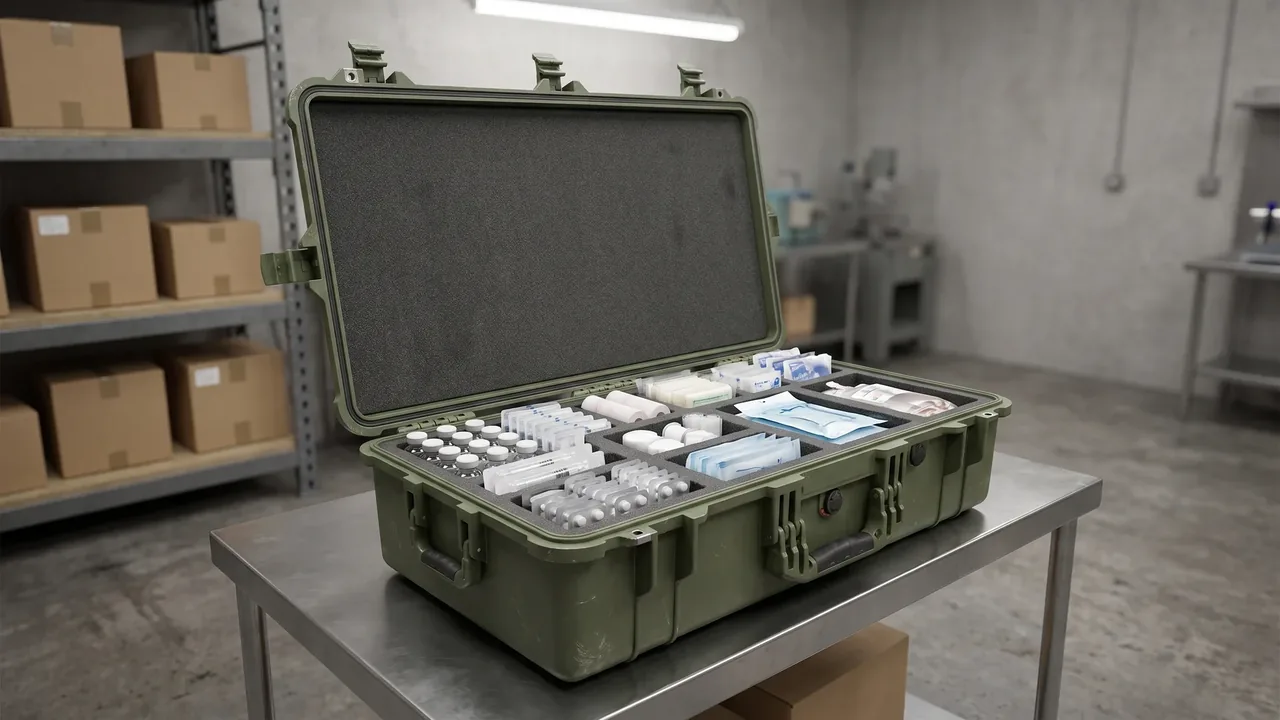
Extended Producer Responsibility shifts the cost of end-of-life waste management from public systems onto the producers that place products on the market. For protective cases built from engineering plastics, aluminium alloys and composites, EPR compliance is no longer optional: it has become a market-access gate across the European Union, the United Kingdom, France, Germany and China. Key point: any manufacturer, importer or own-brand seller that places cases on a covered market must complete producer registration and obtain a unique identification number before launch, or face blocked customs, marketplace delisting and administrative penalties. This article focuses strictly on the case as a container and explains registration duties, material marking, recycling marks and take-back logistics, with practical steps for procurement and compliance teams.
1. What EPR Means and Where Cases Sit in Scope
Extended Producer Responsibility is an environmental policy instrument that internalises end-of-life costs into the producer. For the case industry, the object in scope is the container itself: the shell, lid, latches, gaskets and foam liners, together with the packaging components, not the equipment carried inside. Whether the case serves military storage, industrial equipment protection or medical logistics, it falls under EPR once it is manufactured, imported or sold under an own brand as an independent commodity.
The logic differs from traditional "polluter pays" because EPR pushes the producer to design for recyclability, material simplification and traceable marking from the start. Case makers should assess material recipes during project kick-off and avoid inseparable multi-layer composites in the shell. A rotomolded polyethylene case, for instance, is far easier to recycle than a body coated repeatedly and fitted with non-removable metal plates that defeat sorting.
A case is captured by EPR when three dimensions are met: it enters commerce for sale; its primary material sits within the regulated packaging or plastic category; and the market of placement has an established producer responsibility organisation. Meeting any single market threshold triggers registration in that market. JUNZHIJIA has built EPR material-friendliness into its structural review for export cases, helping customers cut downstream compliance cost before tooling begins.
It is also vital to separate the case from its contents. EPR targets the case as packaging, not the ammunition, instruments or medical goods inside. When goods are packed into a case for transit, the EPR duty rests with the case producer, while the cargo owner carries separate obligations. This boundary must be stated clearly in contracts and documents so the producer identity is never confused with the downstream user.

2. Thresholds That Bring a Case Under EPR
Most jurisdictions define "packaging" consistently: any container used to contain, protect, handle, deliver or present goods that is normally discarded after use. A protective case wears two hats, as transit packaging and as a long-life storage container, so the call blends service life with recyclability. Even an industrial case rated for five or more years of repeated use is usually still in scope, because it eventually enters the waste stream.
Material is the second ruler. Homopolymer and copolymer polypropylene, polyethylene, acrylonitrile-butadiene-styrene and polycarbonate thermoplastic shells are counted as recyclable plastic packaging; aluminium shells fall under metal packaging with a mature recovery chain; glass-fibre and carbon-fibre sandwiches are often classed as hard-to-recycle and must be declared separately because separation is costly.
Weight and placement volume also shape the duty. Some jurisdictions grant simplified registration or exemption below a micro-enterprise tonnage threshold, but the threshold is measured in tonnes per year, and a single case model easily crosses it. A rotomolded case with a six-hundred-millimetre outer dimension and a net weight around four point five kilograms, shipped ten thousand units a year, already reaches forty-five tonnes, well above most micro thresholds. A maker should never assume "we are small" exempts it.
The "associated packaging" scope also matters. The cardboard outer, stretch film, desiccant pouch and foam tray shipped with the case count toward the declared total if placed together. Many companies register only the hard shell and omit soft packaging, leaving the declaration incomplete. List shell, lid, latch, gasket, carton and foam as separate line items mapped to material codes in the bill of materials.
3. Registration Duties Across Major Jurisdictions
The European Union built a unified framework through the Packaging and Packaging Waste Regulation and the earlier Packaging Directive, with member states running national portals. Germany operates the LUCID platform under the Central Packaging Register; France runs through ADEME and eco-organisations such as Citeo and Leko; Italy uses the CONAI system. The United Kingdom established its own pEPR after Brexit, registered through the Environment Agency. All require producer registration before first placement, though the mechanics differ.
Germany is the strictest: registration plus purchased recovery shares in LUCID, public data and random audits. France stresses landfill diversion and eco-modulation, rewarding recycled content with lower fees. UK pEPR has shifted cost upstream to producers since 2024 with material-differentiated fees. China applies Extended Producer Responsibility through its Solid Waste Law and pilots in electronics and batteries; cases are not yet a standalone category, but plastic packaging recovery targets already appear in planning.
A supplier serving several markets must register in each country of sale; an EU-wide registration does not replace national duty. A frequent error is assuming "we have a German subsidiary, so Germany registers everything", when goods routed to a French terminal still require French registration by the importer or authorised representative. Cross-border B2B sellers must watch who is deemed the producer along the distribution chain.
On registration identity, jurisdictions accept either a local entity registering directly or an overseas producer appointing a local authorised representative. The mandate must define data filing, fee payment and incident response, and the representative contact must sit in the case technical file. Step-by-step forms and field notes are covered in EU Packaging Directive for Cases: Compliance Points and Document Preparation.
4. Producer Registration and the Unique Identification Number
The core output of registration is a Unique Identification Number that follows the case from factory through customs to recovery. In Germany LUCID the flow is: create the company account, file entity data, register brands and material combinations, buy recovery shares, receive the number and print it on documents. With complete data the cycle is a few business days to a few weeks; audit corrections extend it.
French eco-organisation registration builds a three-level brand-product-material archive and reports placement quarterly. UK pEPR reports by calendar year and separates brand owner, importer and online marketplace identities. In every model the UIN is not issued once and forgotten; it must be maintained as annual data, brands and materials change, and lapsing renewal flags the producer as unreachable.
To apply, a case maker should prepare: business licence and tax ID, brand list, bill of materials with net weight per model, primary material codes, annual placement estimate and authorised-representative letter if used. JUNZHIJIA supplies export customers with material composition lists and test files that shorten the eco-organisation review cycle.
Once obtained, the UIN must appear on the commercial invoice, customs paperwork, product nameplate or case document so distributors and recyclers can trace it. Build a mapping between UIN and model number so one UIN does not cover wildly different material mixes that invite audit challenge. When a model is discontinued, file a zero-placement note for that year rather than deleting the record, preserving compliance continuity.
5. Material Composition Declaration and Marking
Material declaration is the technical bedrock of EPR. A case maker must submit to the PRO the polymer type, filler ratio, additive class and separable-parts list for each case family. For a polypropylene shell, state homopolymer or copolymer, talc filler, colour masterbatch and flame-retardant grade; for aluminium, the alloy designation and surface treatment; for composite liners, the foam type such as EVA, PE or PU and any adhesive.
Marking externalises this on the shell. The common practice is to mould the resin identification code such as >PP<, >ABS<, >PC< or the metal triangle "ALU" in a visible spot. Place it away from load ribs and latch mounts, prefer the lid interior or base plane, and use engraving or weatherproof ink so it stays legible after years outdoors. GB/T 16288 covers plastic recycling marks in China, while the EU references harmonised packaging marking standards.
Restricted substances must also be marked. If the shell carries a flame retardant or stabiliser, check it against RoHS and REACH limits; if restricted, list it separately and warn sorters in the recovery guide. For painted bodies, record the coating resin because some fluorinated or chromated coatings lower the reuse grade of the regrind.
Declaration is not one-time. Any formula tweak, supplier switch or process change should update the PRO file. Many recalls and fines stem from "formula changed, file did not". Fold material change into the engineering-change process so any modification affecting polymer or additive triggers a PRO revision. For restricted-substance lists and declaration templates, see Chemical Compliance for Cases: Restricted Substance Lists and Declaration Files.
6. Recycling Marks and Sorting Guidance
The recycling mark is the visual interface between the case and the recovery system. Beyond the resin code, cases often carry a "recyclable" symbol, a Green Dot or the local eco-organisation logo, plus sorting text. Printing must meet clarity and durability: minimum height around eight millimetres is advised, with UV and abrasion resistance. On dark shells use contrast ink or engraving to keep readability.
Sorting guidance should match the use scene. Military and industrial cases mostly circulate inside enterprises and are sorted by trained staff; consumer and outdoor cases more easily enter household waste, so the body or manual should state clearly, for example, "hand empty cases to a plastic collection point". Language must match the market; supplying the EU multinationally calls for at least English plus the local language.
Marks should distinguish the shell from the liner. Foam, EPE and thermoformed trays are often outside the rigid-plastic stream and should be guided out before shell disposal. Wrong "throw it all in" lowers regrind purity. The symbol reference chart and print positions are detailed in Recycling Mark Cases: Material Marking and Sorting Guidance.
In mark management, keep a "mark version archive" per model recording symbol, language, position and effective batch. When a market updates the symbol, old batches may run out within stock but new production must switch. Do not cram every country's symbols onto one panel to save cost; that confusion is itself treated as non-compliant marking.
7. Recovery Targets and Design for Recyclability
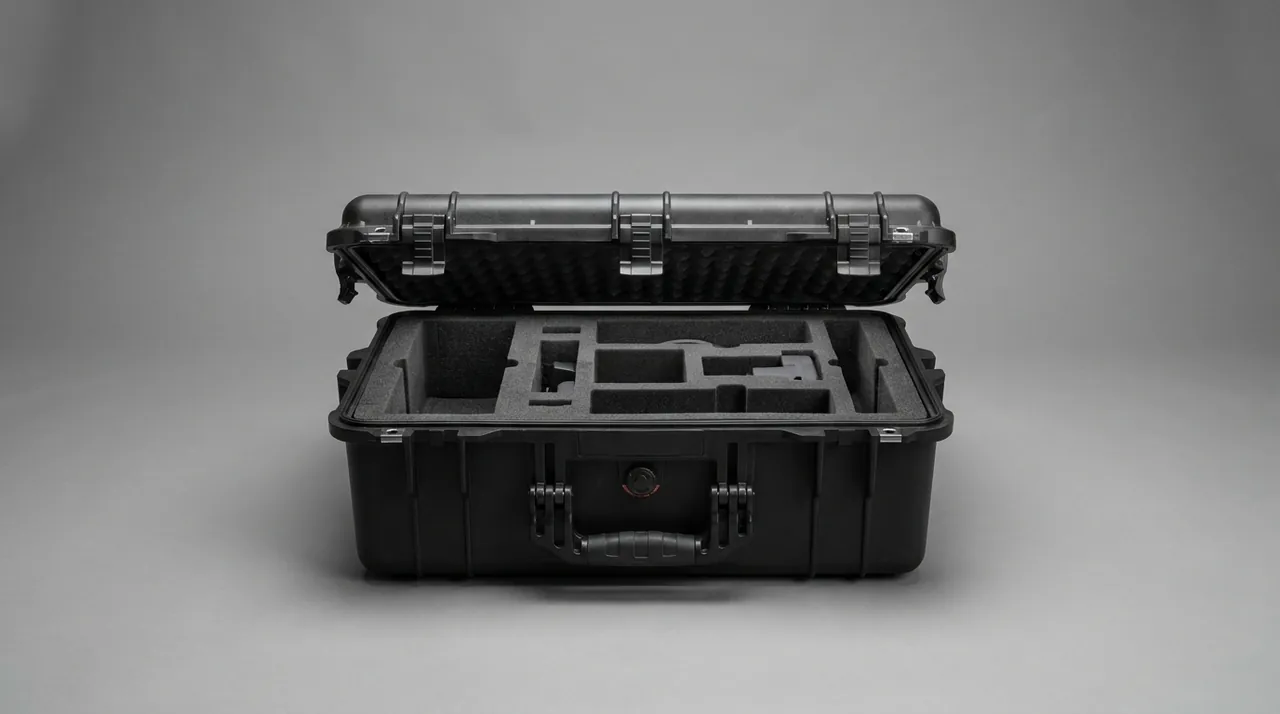
EPR uses recovery targets to steer design. Most jurisdictions set staged plastic packaging recycling or reuse rates, and a durable plastic case is priced by how recyclable it is. Structural recyclability has three pillars: single material, separable parts, clean coating. A one-piece rotomolded case wins on material singleness, while a body with metal hinges, plastic latches and rubber gaskets must work on easy disassembly, which does not conflict with reliability under MIL-STD-810H.
Design moves that raise recyclability include: clip-fix rather than permanently glue the liner; use quick-release standard latches and hinges; make the gasket pull-out rather than co-extruded; and keep shell and lid in the same polymer to avoid sorting confusion. These interfaces serve end-of-life while preserving transit robustness.
Reuse beats recycling. Industrial cases are long-life by nature, so encourage customers to repair, re-line and re-gasket to extend service, cutting the number that enter the waste stream. JUNZHIJIA offers custom liner and gasket replacement so an old case returns to duty after refurbishment, lowering the customer's total cost and the declared waste volume.
When a case truly reaches end of life, send it to formal recovery, not landfill. Follow the disposal checklist in Packaging Waste Management: Case Scrapping and Recycling Disposal and choose a qualified recycler, keeping the transfer note. Recovery rate is built on proof of actual entry into the recycle stream; design recyclability alone will not pass audit.
8. Recovery System and Reverse Logistics
Reverse logistics returns spent cases from the user to the processor. Case makers commonly use three modes: entrust the PRO network where end users drop off; sign take-back agreements with large customers for batch return and refurbish or regrind; or join the reusable turnover programme described in Circular Packaging Protective Case: Building a Reusable Turnover System, treating the case as a multi-cycle asset rather than single-use packaging.
Each mode shifts responsibility differently. The PRO model is transparent on fee but weak on control; the buy-back model yields real recovery data and supports carbon accounting yet needs a return warehouse; the circular model costs more upfront but wins clear EPR fee relief, ideal for high-frequency customers like defence and automotive. Recommend the fit by customer profile.
In practice, the shell mark, UIN and batch number are the tracking keys. Laser-engrave or mould a serial segment on the outer surface so a recycler scans it to read material and producer, avoiding mixing with low-value mixed plastic. For bodies with metal parts, pre-separate by magnetism before recovery to lift the recycled-aluminium purity grade.
On cost, EPR is usually levied as placement volume times material rate, modulated up or down by recyclability. Switching a hard composite to a single thermoplastic and proving real recovery often drops you to a lower rate. This eco-modulation is exactly how policy steers design, and case makers should put it into product cost, not treat it as a late surcharge.
9. Recycled Content Ratio and Recycled-Material Compliance
Using recycled content is the direction EPR rewards. Many jurisdictions cut fees for packaging with recycled plastic and raise mandated ratios over time. A case maker using recycled polypropylene or recycled polyethylene regrind must declare the virgin-to-recycled ratio and keep the supplier's material certificate. The recycled source must trace to a compliant stream, avoiding unknown, contaminated regrind.
Recycled content performs differently from virgin. Recycled polypropylene may shift in melt index and impact strength, so reinforce the formula or reduce risk at critical wall sections, then run ISTA or equivalent transit tests before adoption to confirm no degradation below the design threshold. Performance limits and compliance for recycled plastics are detailed in Recycled Material Protective Case: Performance and Compliance Limits of Recycled Plastics.
Food and medical contact add limits. A case touching food or drugs must use super-clean recycled resin and pass migration tests; ordinary industrial cases are free of this but should state the boundary in the manual to prevent misuse.
Higher recycled ratio is not automatically better. Too much can cause colour drift, odour and strength variation that hurt brand perception and life. Engineering often uses "recycled shell, virgin liner" or "recycled non-load part, virgin load rib" zoning to balance fee relief and reliability. JUNZHIJIA can set the recycled gradient in OEM or ODM per the customer's market and issue the matching declaration.
10. Where EPR Meets Chemical Regulation
EPR declaration overlaps chemical law. RoHS limits lead, cadmium, mercury and hexavalent chrome in electronics-related products; REACH sets registration, notification and restriction for substances of very high concern; a case with an electronic lock, sensor or thermal module may also trigger WEEE for waste electrical equipment. Beyond material declaration, keep a separate restricted-substance ledger.
Marking must reflect chemical compliance. If a shell carries a flame retardant that is a REACH concern, warn sorters in the recovery guide to keep it out of the ordinary food-grade stream. Chromated passivation or fluorinated coating should be recorded with process parameters and backed by a compliance declaration for EU market access.
The hard part is "one body, several duties". Build a master table with EPR, RoHS, REACH, WEEE, CE and the Packaging Directive across the top and each case model down the side, ticking applicability and evidence per cell. At customer audit or inspection you present one evidence chain instead of scrambling. The substance list and templates are in Chemical Compliance for Cases: Restricted Substance Lists and Declaration Files.
For a purely mechanical case with no electronics, WEEE usually does not apply, but EPR, RoHS where an electronic lock exists and REACH may still hold. Do not relax chemical compliance because "it is just a box"; for EU export, coatings and plasticisers are common violation hotspots.
11. Compliant Label Printing and Marking
The label lands all compliance info on the case. Beyond resin code and recycling symbol, export cases may need transport marks, warning signs and producer data. Balance durability with recyclability: engraving and laser leave no ink and are most recycle-friendly; solvent ink may remain in regrind, so prefer water-based or low-migration ink. Packaging Labeling Compliance: Case Label Content and Printing Requirements systematically covers label fields and print durability.
The label should at least carry: producer name or trademark, UIN, material code, recycling tip and the market flag. For multinationals, use a swappable label zone or partitioned print rather than piling conflicting symbols on one case. Military outfitting cases may add an asset number where the customer allows, but never cover the material or recycling mark.
Print position should serve both recyclability and use. The lid interior plane and base exterior are first choices; avoid handles, latches and seal interfaces where wear erases data. Size must satisfy scan and naked-eye reading; keep a quiet zone around the QR code so embossed ribs do not break the read.
Label version control matters. When a market updates a symbol or adds a field, issue a new label spec and cap the old version by batch. Treat the label as a controlled document, co-signed by compliance and engineering, and keep the trail in the model archive so audit can prove the "version applicable at placement" was used.
12. Carbon Footprint and Green Supply Chain Linkage
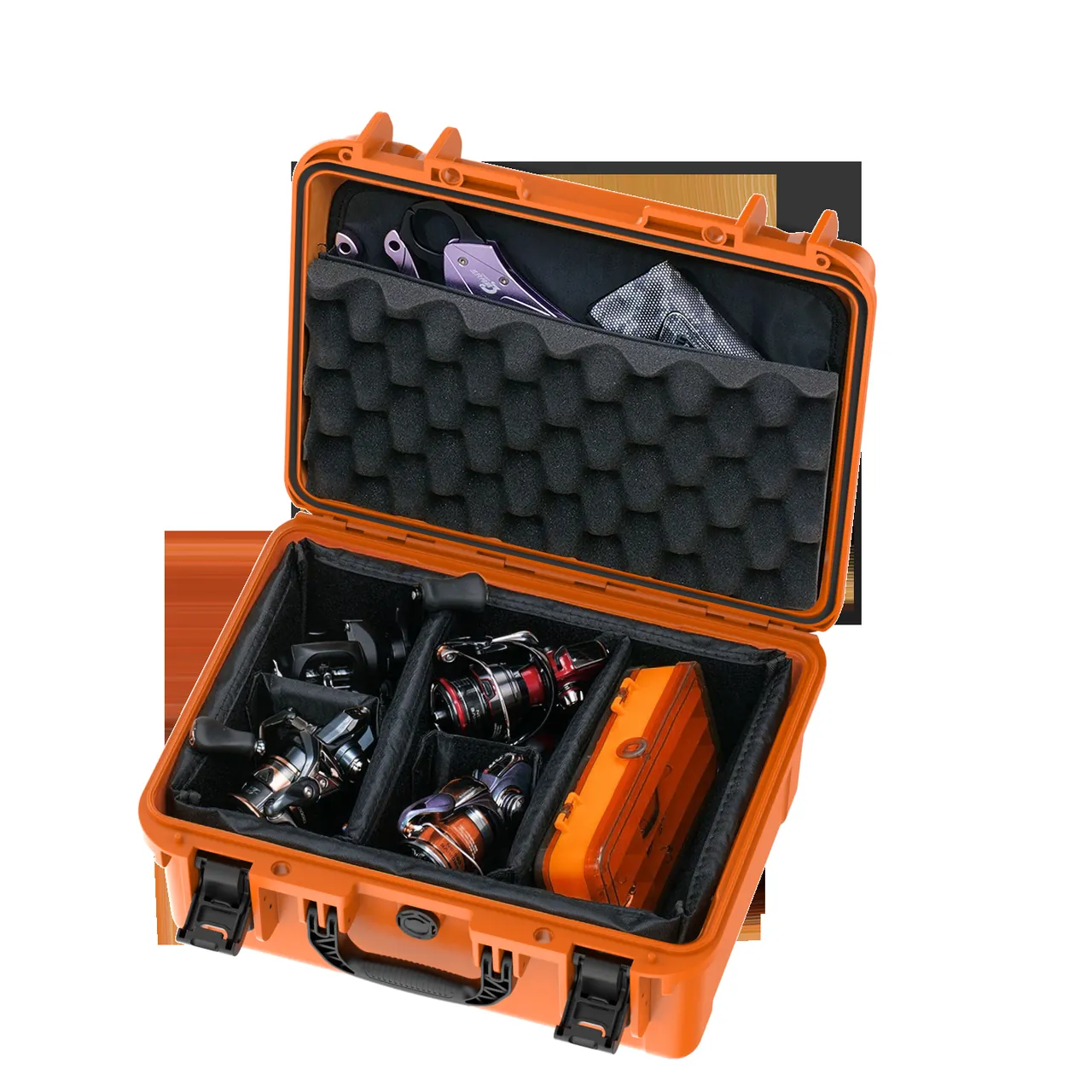
EPR and carbon management are converging. Some jurisdictions and large buyers require product carbon footprint disclosure; a case's material choice, recycled ratio and transport mode all enter the accounting. Recycled content, local recovery and lightweighting directly cut per-case emissions. ISO 14067 gives the product carbon footprint method, letting a maker build a model from resin, moulding, transport to recovery.
Green supply chain pushes compliance upstream. Case makers should require resin, aluminium and foam suppliers to provide material declarations and carbon data, and add EPR-friendliness to supplier audits. Procurement standards and audit points are in Green Supply Chain Cases: Procurement Standards and Supplier Audits; footprint measurement and reduction are in Packaging Carbon Footprint: Measuring and Reducing Case Emissions.
On the synergy, lightweighting and recyclability often point the same way. Thinning non-load walls, replacing solid with foam structure and swapping composite for single polymer cut weight and emissions while raising recovery. But lightweighting must hold the protection line; drop and stacking metrics are non-negotiable. Use MIL-STD-810H and ISTA as baselines for sensitivity tests to find the weight-reliability balance.
Carbon data is also an audit asset. Keep the boundary, emission-factor source and activity evidence so a customer can trace it during tender or self-check. Archiving the carbon report with the EPR declaration cuts management cost and gives the case a quantifiable edge in green procurement scoring.
13. Documentation and Audit Readiness
Compliance sustainability rests on the document system. Build a per-model compliance file containing: registration proof and UIN, material composition list, restricted-substance ledger, recovery-share purchase voucher, annual placement report, recovery transfer note and label version record. Retain beyond the statutory period, preferably in permission-tiered electronic archive.
Audits come in three flavours: PRO spot check, customer factory audit and regulator enforcement. The answer is a closed evidence loop: from UIN to model, from model to material and placement, from placement to recovery voucher. Any broken link reads as incomplete declaration. Run a quarterly self-check that simulates regulator questions and patches weak spots early.
When a historical deviation surfaces, correct proactively rather than hide it. Most jurisdictions treat voluntary correction leniently; deliberate false filing draws fines or market bans. The correction itself should be archived with cause, scope and remediation as proof of good-faith compliance. JUNZHIJIA delivers a compliance package alongside export cases, shrinking the document gap at customer audits.
Finally, move EPR compliance upstream to engineering, not downstream as patchwork. Make single material, separability, markability and recyclability hard criteria in structural review, more efficient than per-market fixes after launch. For multi-market plans, add a "regulatory fit" chapter to the project charter covering EPR, chemicals, labelling and carbon as design inputs, building compliance competitiveness from the source.
FAQ
Q: Which case producers must register for EPR?
A: The test is whether you place case goods on a covered market. A manufacturer, importer or own-brand seller whose case enters commerce and whose primary material sits in the regulated category usually must register. The in-scope object is the container itself: the shell, lid, latches, gaskets and any foam liners, together with the packaging components shipped with it, not the equipment carried inside. Pure toll processing where the customer brands and registers overseas can allocate duty by contract, but the processor should still keep the written allocation on file. Micro-enterprise exemptions are tonnage-based, and industrial cases are heavy per unit, so they cross the line easily; a single rotomolded model can exceed the threshold within one production run, and scale is not a safe excuse. Multiple brands in a group should register separately or name one lead registrant to avoid a responsibility gap. Distributors and online marketplaces may also be deemed producers under local rules. Keep the producer identity explicit in every commercial document so audits never confuse the maker with the end user.
Q: How do I obtain an EPR registration number and how long is it valid?
A: The path runs through platforms such as Germany's LUCID, a French eco-organisation or the UK Environment Agency: open the company account, file entity and brand data, register each case's material mix and annual placement, buy the recovery shares, then receive the unique number. Print it on invoices, customs papers and case documents so the whole supply chain can trace the container back to its producer. The UIN is not permanent; it must be maintained as data, brands and materials change, and lapsed renewal flags you as unreachable and triggers checks. Map the UIN to model numbers, and for discontinued models file a zero-placement note instead of deleting the record, preserving continuity across years and audits. Most registrations take a few business days to a few weeks when documents are complete, but expect longer if a PRO requests proof of material composition or a sample label. Treat the number as a living record, not a one-time certificate, and review it every time you change a shell polymer, a liner material or a market of sale.
Q: Do imported cases need separate registration in the country of sale?
A: Yes. EPR follows the market of placement, not the country of production. A case made abroad and sold directly to a national terminal is normally registered there by the importer or the overseas producer's local authorised representative; a home-country registration does not substitute. Cross-border platform sellers should note the platform itself may be deemed the producer and need its own registration. Contracts must state who carries registration and fees, and the UIN should appear in the paperwork so clearance or listing is never blocked by unclear responsibility along the distribution chain. For goods routed through several countries before reaching the end user, treat the final consumption market as the decisive one and confirm registration in each. A common failure is assuming a regional hub registration covers downstream states; it rarely does. Keep a table that lists every sales market, the responsible legal entity and the valid UIN, and update it whenever you open or close a channel so no market is left unregistered.
Q: Where should the material mark be placed on a case?
A: Prefer a flat, non-load, low-wear zone such as the lid interior plane or the base exterior, away from latches, hinges and seal interfaces. Engraving or laser marking is best, then weatherproof water-based ink, with a minimum height around eight millimetres for legibility. Dark shells need contrast colour or carving so the mark survives fading. Soft liners such as foam should be guided to separate sorting, not mixed with the rigid shell, because mixing lowers the purity of the regrind stream. The mark must stay readable for the whole service life of the container, so avoid areas that rub against straps, trolleys or stacking corners. Where a case carries both a resin code and a market eco-mark, keep them in one controlled label field rather than scattering them. Treat the mark version as controlled: when a market updates the symbol, new batches must switch and the change must be logged in the model archive for audit, while old stock may run to expiry under the previous version.
Q: Does using recycled content hurt EPR compliance?
A: It helps rather than hurts. Most jurisdictions reward packaging with compliant recycled plastic through lower fees, provided you declare the virgin-to-recycled ratio and keep the supplier certificate. The recycled source must trace to a clean stream, and performance must pass transit tests confirming no drop below the design threshold; food and medical contact also need migration safety. Engineering often zones recycled shell with virgin liner or recycled non-load part with virgin load rib to balance fee relief and reliability. A case built from recycled polypropylene should still meet the same drop, stacking and sealing targets as a virgin one, so validate before launch. Abusing unknown regrind that fails quality or compliance is what draws penalties, not recycled content itself. Keep a material passport that names the recycler, the batch and the tested properties, and renew it with every new supply lot. Used this way, recycled content lowers both cost and environmental load while keeping the container fit for demanding transit duty.
Q: What happens if I fail to register or file falsely?
A: Consequences vary by jurisdiction but are uniformly serious. At best you are ordered to register and pay back fees; at worst you face administrative fines scaled to placement volume, marketplace and channel delisting, customs holds and even blacklisting that blocks future market entry. Deliberate false filing of material or volume can be treated as fraud with heavier liability. Most jurisdictions treat voluntary correction leniently, so surface deviations early and archive the fix with its cause, scope and remediation. Building compliance into engineering and filing from the start is far cheaper than remediation after a regulator knocks. For a case maker, the practical risk is a shipment stopped at the border because no valid UIN appears on the documents, or a retailer that refuses the product until proof of registration is shown. Keep evidence of every registration, fee payment and label version so a single request never escalates into a multi-market problem, and review your filings each year before volumes are locked.
Q: How is the EPR fee for a case calculated?
A: The fee is usually annual placement volume times the material rate, with the rate modulated by recyclability so hard-to-recycle composites cost more. First total the tonnage from each model's net weight and shipment count, then match material codes to rates for the estimate. Recycled content, single polymer and separable design can drop you to a lower rate band. Payment is made by buying PRO recovery shares; fold the fee into product cost and update the budget as formula and volume change so year-end catch-up never strains cash flow or surprises management. For a case, the shell polymer drives most of the bill, while metal latches, rubber gaskets and foam liners may be priced under separate streams, so itemise them in the bill of materials. Keep a simple model that links each case SKU to its weight, material class and market rate, and refresh it whenever you change resin grade, add a market or shift annual output so the quoted compliance cost stays realistic.
Q: How does EPR differ from WEEE and the battery directive?
A: All three belong to the extended-producer family but govern different objects. EPR in the packaging sense governs the case as a container; WEEE governs waste electrical and electronic equipment, so a case integrating an electronic lock, sensor or thermal module may trigger it when scrapped as equipment; the battery directive governs built-in or accompanying cells. A purely mechanical case usually meets only EPR, but add a circuit board or lithium battery and duties stack. Judge by component attribute, not the whole-box name, and keep a horizontal compliance master ticking applicability and evidence per cell. For a case maker, that means a plain rotomolded shell stays in EPR scope alone, while a smart case with a powered tag or heater falls under several regimes at end of life. Design the container so electronic and battery parts are easy to remove before the shell enters the plastic stream, and document which directive covers each component so recycling and reporting stay clean and auditable.