

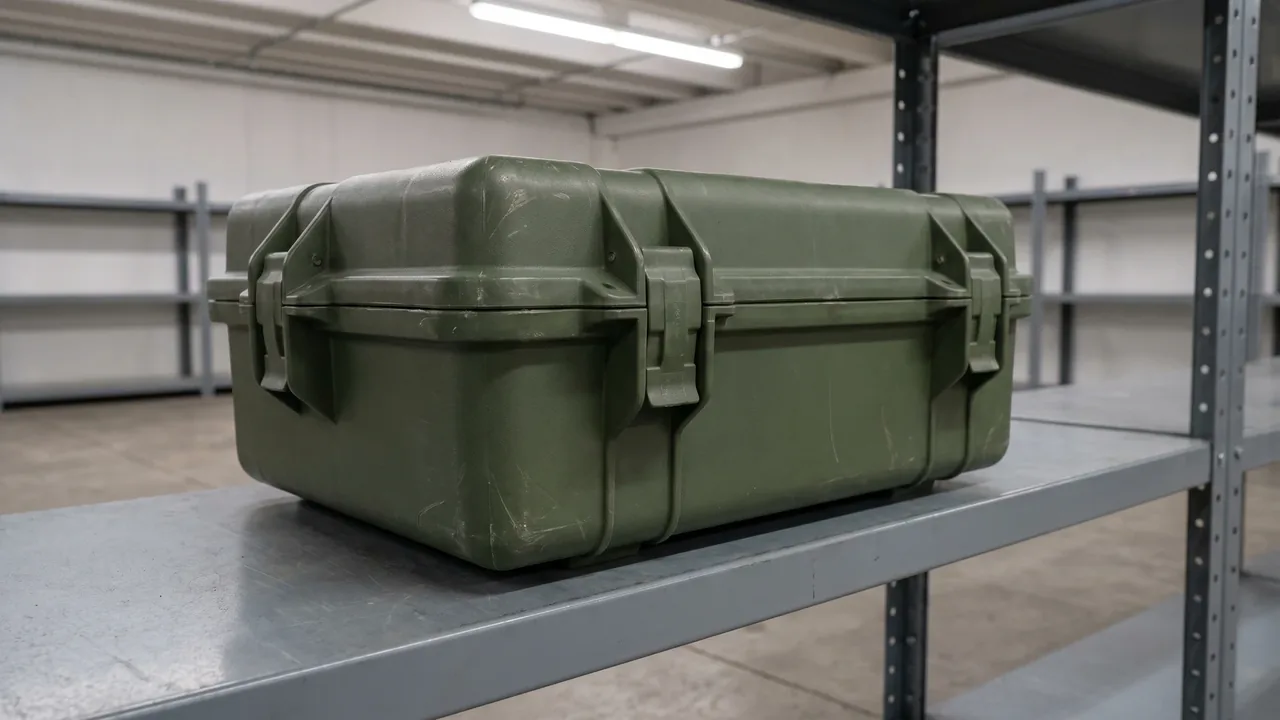
Sustainability certification is quickly moving from a nice-to-have extra to the entry ticket for protective cases in green supply chains. For case manufacturers, GRS recycled-content verification, ISO 14001 environmental management, ISO 14067 product carbon footprint, and FSC chain of custody for wooden parts answer four separate questions: where the material comes from, how the factory is managed, how much carbon is emitted, and whether the wood is legal. For buyers, these certificates are the only way to turn the word "green" from marketing copy into verifiable fact. Experience shows that procurement projects which write certification scope, certificate numbers, and batch traceability documents into the technical specification see far fewer disputes and rework over environmental claims than projects that decide from brochures alone. This article walks through the certification landscape, pre-application preparation, audit process, certificate maintenance, and buyer verification, so factories and buyers share one verifiable language.
1. Overview of the Sustainable Packaging Certification Landscape
Sustainability certification relevant to protective cases falls into four layers. The first layer is material and chain-of-custody certification, which answers where the recycled plastic and aluminium in the case come from and in what ratio. Typical schemes are the Global Recycled Standard (GRS) and the Recycled Claim Standard (RCS), the Aluminium Stewardship Initiative (ASI) chain-of-custody standard for recycled aluminium, and the Forest Stewardship Council (FSC) chain of custody for wooden parts. The second layer is management-system certification, which answers how the factory systematically controls environmental and energy risk, represented by ISO 14001 environmental management systems and ISO 50001 energy management systems. The third layer is product-level declaration, which answers how much carbon one case emits over its life cycle, represented by ISO 14067 product carbon footprint, the GHG Protocol Product Standard, and Environmental Product Declarations (EPD) based on Product Category Rules. The fourth layer is market-access labels, such as the EU Ecolabel, the China Environmental Label, and recycled-content obligations embedded in packaging regulations such as the EU Packaging and Packaging Waste Regulation, which sets staged targets for recycled material in packaging.
None of these layers can substitute for another. An ISO 14001 certificate proves the factory runs an environmental management system; it says nothing about recycled content. A GRS scope certificate proves a compliant recycled-material chain of custody; it says nothing about carbon footprint. The most common buyer mistake is mixing the layers, ending with a wall of certificates that still cannot answer one concrete question. The correct approach is to define the question first, then work backwards to the certification type needed, and check whether the certified scope actually covers protective cases. For factories just starting out, it is wiser to progress in stages - substance compliance, recycled content, management system, carbon footprint - rather than launching everything at once.
Several well-known schemes map onto these layers. For forest sourcing, PEFC (the Programme for the Endorsement of Forest Certification) sits alongside FSC with a similar chain-of-custody logic and strong recognition in European markets. Among Type I eco-labels, the German Blue Angel complements the China Environmental Label and the EU Ecolabel. For end-of-life claims, industrial compostability schemes built on EN 13432, such as OK compost, apply to bio-based inserts like molded pulp. For full life-cycle rating, Cradle to Cradle Certified assesses material health, circularity, and renewable energy. Any self-declared environmental claim should also follow ISO 14021 and its national adoption GB/T 24021, which demand that claims be verifiable, accurate, and not vague.
2. Which Certifications Actually Apply to Protective Cases
A protective case is a multi-material system: shells in PP, ABS, PC, rotomolded PE, or aluminium alloy; liners in EPE, EVA, PU foam, or molded pulp; latches and hinges in zinc alloy and stainless steel; outer packaging in corrugated board, with wooden crates for large rotomolded and aviation cases. Each component maps to a different certification. Shells made with recycled PP or recycled ABS can be brought under GRS or RCS chain of custody; recycled aluminium shells can be brought under ASI chain of custody. Recycled-content maturity for foam liners is low - most foam suppliers cannot produce a scope certificate - so buyers should request material composition statements instead of vague "eco" wording. Molded pulp inserts and corrugated outer boxes can be brought under FSC chain of custody or recycled-fibre claims. Wooden crates must additionally meet FSC legal-sourcing and export phytosanitary requirements.
Buyers should also recognize certifications that sound relevant but do not apply. The EU Ecolabel product group list does not include protective cases, so a claim made under that name should be backed by the actual certificate and checked against the product group. Commercial "green product" awards carry no standard-based weight. The compliance track that genuinely binds protective cases is RoHS and REACH chemical substance restriction, covering lead, cadmium, and phthalates; it runs parallel to, not combined with, recycled content and carbon footprint - see the RoHS and REACH case compliance guide for the classification method. One practical rule: any environmental claim that cannot cite a specific standard number, certification body, and certificate number should be treated as marketing information only.
3. Pre-Application Data and Document Preparation
The quality of a certification application is decided by the data baseline built beforehand. Case factories should complete four preparations before signing with a certification body. First, close the bill of materials (BOM): for each flagship model, list shell, liner, latch, seal, and outer packaging with material, grade, supplier, and purchase ratio, flagging recycled-input ratios and purchase vouchers. Second, keep a recycled-material traceability ledger by batch - purchase date, quantity, supplier scope-certificate number, inspection report, and usage destination - so any finished batch can be traced back to its recycled source. This is the core of GRS and RCS on-site audits. Third, compile energy and emissions data for the last twelve months: electricity, natural gas, and compressed air, converted into greenhouse-gas emissions as the baseline for ISO 14001 environmental aspects and ISO 14067 product carbon footprint. Fourth, prepare the system document framework: environmental policy, targets, legal register, internal audit and management review records. Most factories stall at "documents without records".
Buyers prepare a different set: translating environmental requirements into acceptable clauses. First define the purpose - meeting EU packaging recycled-content obligations, supplying carbon data to a customer's ESG program, or feeding your own ESG report with supply-chain emission factors. Each purpose demands different documents: recycled-content and substance compliance files, an ISO 14067 report or EPD, or per-model emission factors with a calculation note. Write these requirements into the request for quotation rather than adding them after contract signature. The parameter-table approach in the protective case selection guide works well here: put environmental indicators on the same acceptance sheet as structural, sealing, and drop-test indicators so green requirements are not stranded in an appendix.
4. Recycled Content Verification: GRS, RCS, and Recycled Metals
GRS and RCS are the most frequently applied recycled-content verifications in the case industry, and both follow a chain-of-custody model. RCS has a lower threshold and verifies only recycled content and the chain of custody, applying to products with at least five percent recycled content; GRS adds environmental and social responsibility requirements and applies to products with at least fifty percent recycled content. The usual route is: the factory passes document and on-site audits to obtain a scope certificate (SC) confirming segregated storage, measurement, and record-keeping for recycled input; each recycled-material purchase is then linked by batch using the supplier's scope certificate and transaction certificate (TC); at shipment, the factory requests the corresponding TC from the certification body for the downstream customer. If any link breaks, the recycled claim collapses.
Three practical points for protective cases. First, physically segregate and label recycled and virgin material storage so mixing does not disqualify a whole batch. Second, manage stock first-in-first-out by batch so TCs match shipments one to one. Third, when using recycled PC or recycled ABS for shells, account for the mechanical penalty: recycled grades usually show lower impact strength than virgin grades, so wall thickness and rib design must be recalculated and verified by drop testing where needed - never trade protection for a recycled ratio. Material comparisons are covered in the recycled material case guide. Recycled aluminium cases can additionally pursue ASI chain of custody, bringing ingot source, casting, and processing into the chain for high-end equipment projects with ESG sourcing requirements. Manufacturers with established recycled-content programs, such as JUNZHIJIA, typically keep the batch ledger and TC archive audit-ready year-round instead of rebuilding paperwork before each audit, which is a practical signal of a mature chain of custody.
5. Environmental and Energy Management Systems: ISO 14001 and ISO 50001
ISO 14001 certifies the factory rather than the product, but it determines whether product-level claims such as recycled content and clean production can hold up over time. Environmental aspects at a case factory concentrate on injection-molding and rotomolding energy use, trim and scrap rates, coatings and cleaning agents, noise and exhaust. The key is identifying significant aspects and quantifying them: put per-case trim rate, cleaning-water recycling rate, and hazardous-waste transfer count into monthly indicators tracked by the management representative. The certification cycle is three years with annual surveillance audits and a recertification audit in year three; the certified scope must cover the actual production site, and products from sites outside the scope cannot use the certificate for claims.
ISO 50001 shares the ISO 14001 structure but focuses on energy performance. Concrete levers at a case factory include servo conversion and heat recovery on injection machines, timed cycling of rotomolding ovens, rooftop solar, and compressed-air leak surveys. As a rule of thumb, systematic air-leak repair and heat recovery typically cut energy intensity per unit output by ten to twenty percent. Energy data is also the baseline for product carbon footprint, so building both systems together lets you share one metering and record architecture. For small single-line factories, start with ISO 14001 and fold energy targets into environmental objectives rather than pursuing ISO 50001 separately; spend limited audit resources on the certificates customers actually reference.
6. Product Carbon Footprint and EPD: ISO 14067 and Environmental Declarations
Product carbon footprint turns "green" into arithmetic. ISO 14067 sets quantification and communication requirements for product greenhouse gases, mirrored domestically by GB/T 24067; its methodology backbone is life-cycle assessment per ISO 14040 and ISO 14044, with a boundary from raw-material acquisition to factory gate (cradle to gate) or to end of life (cradle to grave). For a protective case, the functional unit is typically one flagship model in loaded condition, and the data collected includes raw-material acquisition emissions for shell and liner, inbound logistics emissions, electricity and natural gas for injection or rotomolding, packaging emissions, and quality-based allocation of indirect emissions. The result is expressed as kilograms of carbon dioxide equivalent per case, with data sources and uncertainty stated.
After the footprint report, two communication routes exist. One is third-party verification followed by a published product carbon footprint statement, commonly used to answer customer ESG procurement demands. The other is preparing and registering an Environmental Product Declaration under ISO 14025 and the applicable Product Category Rules, disclosing multiple indicators such as global warming, acidification, and eutrophication, which suits tenders with green procurement requirements. In either case, buyers should request the boundary statement: does it cover only inside the factory gate, or also raw materials and transport; is recycled input treated as burden-free or by cut-off allocation. Different allocation assumptions can change the footprint of the same case several-fold, so a footprint without a stated boundary is not comparable. Boundary examples are given in the packaging carbon footprint guide.
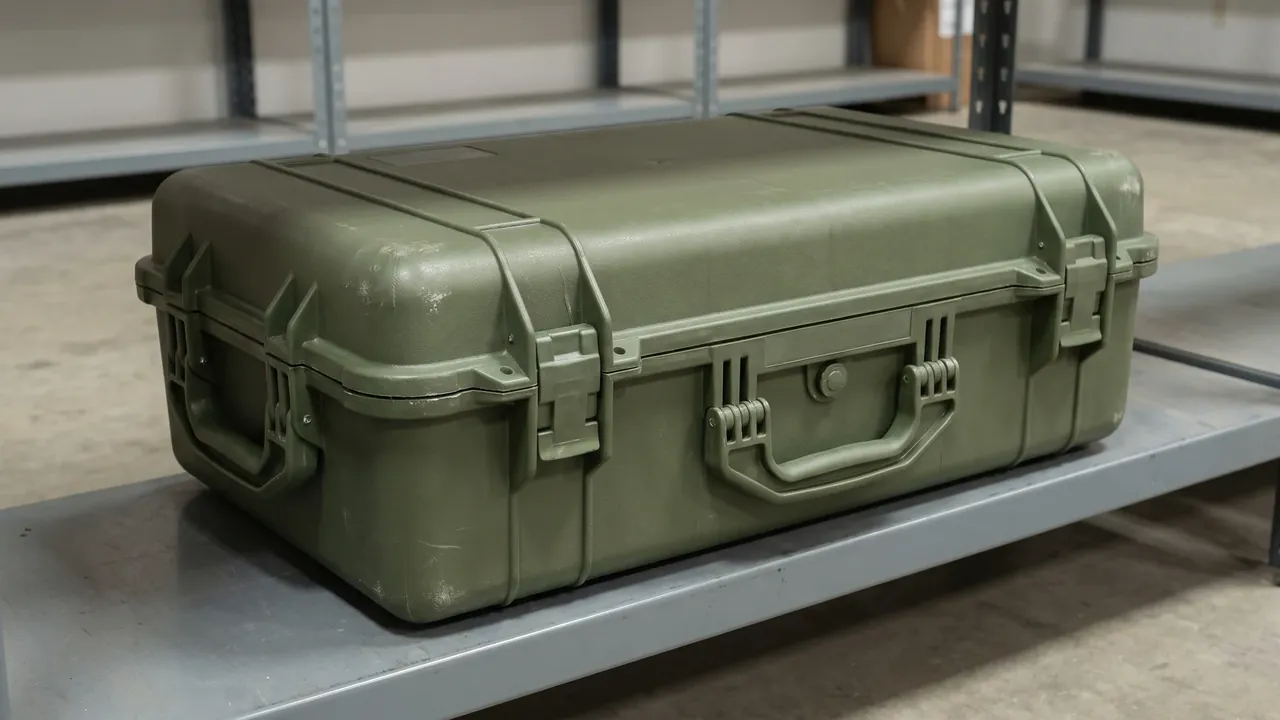
7. FSC Chain of Custody for Wooden and Paper Components
For wooden crates, plywood, molded-pulp liners, and corrugated outer boxes, the mainstream sustainability framework is FSC chain-of-custody certification. FSC labels come in three types: FSC 100 percent means all material from certified forests; FSC Mix means certified material mixed with controlled material; FSC Recycled means reclaimed wood fibre. For case factories, the application route mirrors GRS: first obtain a chain-of-custody scope certificate, then link batches with upstream TCs, then declare per label category. Wooden parts also sit on a second compliance line: export wood packaging must meet ISPM 15 treatment (heat treatment or fumigation) and bear the IPPC mark, which is an independent requirement from FSC sustainability claims - see the wood packaging quarantine case guide.
In practice, wooden parts are the most common break point in case certification: many factories subcontract crates, and FSC chain of custody requires subcontractors inside the audit scope plus contractual obligations for wood source and TC provision. If the subcontractor cannot provide TCs, the fallback is split claims - recycled-content claims only for your own injection-molded shells, and honest sourcing statements for the wooden parts - rather than a blanket "fully green case" claim. When verifying, buyers should check that the FSC certificate number is searchable in the issuing body's database, that the scope includes wood products processing or similar, and that the product description on the TC matches the physical goods.
8. Application Process and Audit Scheduling
The application process can be summarized in six steps. Step one, choose the body: prefer certification bodies accredited by CNAS and signatory to the IAF Multilateral Recognition Arrangement for overseas recognition, and confirm the body has case-industry audit experience in plastics or packaging. Step two, contract and acceptance: submit the application form, business licence, and system document list; the body performs document review and confirms auditor-days. Step three, stage-one audit: mainly document and record review covering system framework, legal compliance identification, and key records; gaps can be corrected within a deadline without directly blocking certification. Step four, stage-two on-site audit: covers all declared sites and processes, sampling BOMs, recycled-material ledgers, metering data, and label use. Step five, nonconformity closure: split into minor and major nonconformities; minor typically requires cause analysis and corrective evidence within thirty days, while major may require a re-audit. Step six, certification and publication: after technical committee review the certificate is issued and becomes searchable on the body's website.
Typical ranges for schedule and cost: from kick-off to certificate, a single system certification usually takes three to six months; each added system or product declaration increases auditor-days, and cost scales with site count and process complexity. Certification is not something you buy - audit intensity correlates with system maturity, and relying on a consultant to ghost-write everything tends to collapse at the on-site audit when records and practice diverge. Factories planning to certify should run one internal pre-audit against the checklist in section nine and fix hard gaps before the formal audit.
9. Audit Scope and On-Site Preparation
The on-site audit checks whether written documents and actual practice agree. Case factories should prepare five categories of evidence. First, site and process evidence: every site and line in the declared scope (injection, rotomolding, stamping, assembly) must match reality, with clear explanations for idled or outsourced steps. Second, material segregation and labelling: recycled storage, work in process, and finished-goods areas need clear labels and segregation, and auditors will sample material cards and batch records on the spot. Third, metering and records: electricity and gas meter readings, energy ledgers, scrap and trim records, hazardous-waste transfer manifests, retained for at least three years. Fourth, staff awareness: random interviews ask operators about the environmental policy and recycled-material rules; evasive answers generate nonconformities. Fifth, label-use compliance: certification marks must follow scheme rules in artwork, size, and context, with no use on uncovered products and no distortion.
For buyer-run second-party audits (supplier factory assessments), the logic is the same but tighter: do not accept a certificate scan alone - check the scope page in the certificate annex to confirm the production address and product category match the purchased model; sample one shipment's TC against recycled-input purchase records; open a finished case and compare the declared BOM material with the physical label. The assessment checklist can be merged with the supplier evaluation table in the green supply chain case guide, keeping environmental, quality, and delivery criteria on one scorecard so the green audit does not run as an isolated annual ritual.
10. Common Nonconformities and Corrective Action
Industry audit practice shows nonconformities at case factories cluster in six types. First, record breaks: recycled material is purchased but there is no batch ledger, or the ledger does not match TCs - the most frequent finding in recycled-content certification. Second, scope mismatch: the certificate scope says "plastic products processing" while the actual product is a composite case with aluminium frame and seals, so the claim exceeds scope. Third, unreliable data: footprint energy figures are estimates with no original meter records, so verification cannot reproduce them. Fourth, label misuse: certification marks used on uncertified products or marketing material, or "certified" claimed while the certificate has lapsed. Fifth, outsourcing loss of control: wooden or paper parts subcontracted without the subcontractor inside the chain of custody and without its TCs. Sixth, a paper system: environmental targets not cascaded to departments, internal audit records signed but empty, management review going through the motions.
Corrective action hinges on root-cause analysis and closed evidence. For a minor nonconformity, state both direct and systemic causes - for example, the direct cause of a missing ledger is that the record form was not a controlled document, and the systemic cause is weak document review - then submit the revised document, supplementary records, and training evidence. For a major nonconformity, the related claim may need suspension until re-audit. The correction window is usually thirty days, with possible extension on justified request. Very few factories pass a first audit with zero findings; treating findings as a system health report and closing each one properly makes certification serve management rather than a certificate wall.
11. Certificate Maintenance, Surveillance Audits, and Scope Extension
Holding a certificate is the beginning. Three maintenance routines must be institutionalized. First, annual surveillance audits: management-system certifications (ISO 14001, ISO 50001) are audited yearly, and missing the surveillance window can suspend the certificate; chain-of-custody certifications (GRS, RCS, ASI) renew per certificate validity, typically one year. Second, major-change notification: site relocation, outsourcing of key processes, changes to the shell material system (for example from virgin ABS to recycled ABS), and adjustments to certified product scope must be reported to the certification body before implementation so it can decide whether a change audit is needed; unreported changes can void the certificate. Third, label and claim management: environmental wording in marketing, websites, and tender documents must match the certificate scope, and when a certificate is suspended or withdrawn, all live materials and web pages must drop the claim in step.
Scope extension is the maintenance action most often overlooked. When a factory adds materials (a new molded-pulp liner line), sites (a branch plant), or standards (ISO 14067 after ISO 14001), the extension route is faster than a fresh application but still requires audit. In supplier management, buyers should set "certificate status and scope match the supplied product" as an annual re-verification item: check validity, surveillance conclusions, and scope-page changes once a year, and start alternative-supplier evaluation when a certificate lapses or scope narrows, so a certification gap does not propagate into your orders and ESG disclosures. The periodic-management thinking in the protective case maintenance guide applies here as well.
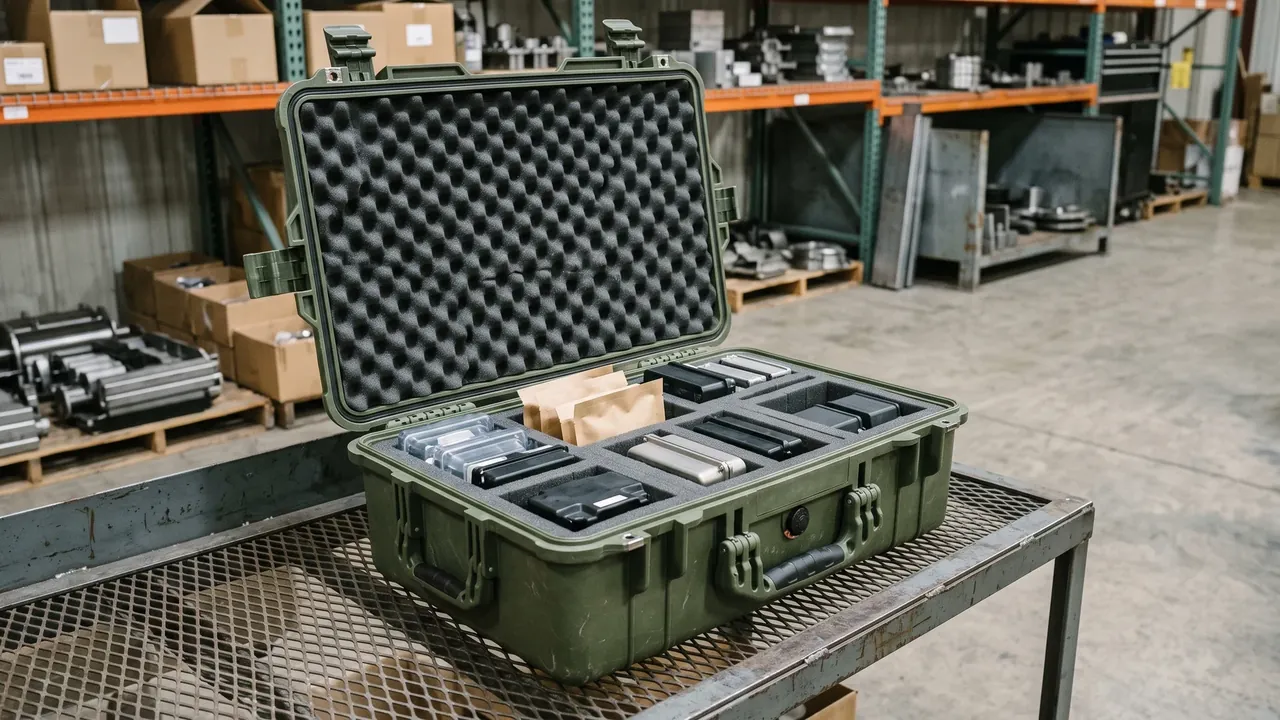
12. How Buyers Verify Certificates and Claims
Buyer verification starts with "findable". Ask the supplier for the certificate number or scan and check it on the issuing body's public database: standard, scope, covered sites, validity, and current status (valid, suspended, withdrawn, expired). If only an image is supplied with no number, search the database in reverse by company name. Second, "matching": confirm on the certificate scope page that the listed production address is the actual origin of the supplied product, and that the product description covers the complete protective case, not just the shell or just the plastic part. Third, "connected": for recycled-content claims, request the TC for the shipped batch and check product description, quantity, invoice, and factory batch; for carbon-footprint claims, request the full report and boundary statement and confirm it covers the purchased model. Fourth, guard against greenwashing: be wary of absolute wording such as "carbon neutral", "zero pollution", or "fully green" without standard backing; the regulatory trend is that claims must be substantiated.
Verification results should be archived. File certificate scans, database screenshots, TCs, and footprint report numbers in the supplier record, and contract a written reminder obligation before certificate expiry. For strategic suppliers, add an environmental clause to the quality agreement allocating liability and costs when a certificate lapse, scope mismatch, or false claim causes the buyer to be claimed against downstream. This is not harshness; it puts both parties on the same verifiable facts and reduces disputes over time. Clause drafting can follow the agreement points in the green procurement case guide, keeping environmental terms inside the same framework as quality and delivery.
13. Turning Certification into Procurement and Tender Terms
The final value of certification lands in contracts and acceptance. In the technical specification, write environmental terms in three layers. Layer one, mandatory thresholds: for example, shell recycled content of at least thirty percent with a GRS scope certificate and shipment TCs; wooden parts with FSC chain-of-custody certificate and IPPC treatment mark; whole-case substance compliance with RoHS and REACH limits backed by third-party test reports. Layer two, process requirements: for example, the bidder provides an ISO 14067 product carbon footprint report or calculation note for the offered model, and the factory maintains ISO 14001 within certificate validity. Layer three, acceptance and default: define sampling verification (database screenshots, TC-to-batch reconciliation, incoming inspection) plus rectification and liability when claims prove false. With all three layers written, environmental requirements move from bonus points to hard thresholds.
In bid evaluation, keep environmental scores inside the same framework as structure, sealing, and drop performance, weighted neither too high nor zero: too high induces certificate stacking at the expense of product performance, zero leaves green supply-chain requirements unenforced. A workable balance is ten to fifteen percent of the technical score, with mandatory-threshold failures treated as disqualifying. After contract award, write certificate verification, TC archiving, and annual re-verification into supplier management, aligned with label compliance as described in the recycling mark case guide, closing the loop from purchase through use to disposal. Certification is not the finish line; turning claims into a verifiable, traceable, and maintainable data chain is the real contribution of sustainable packaging certification to the protective case industry. Manufacturers such as JUNZHIJIA, which support OEM and ODM programs, can attach recycled-content and per-model carbon documentation to the quotation package, so the environmental layer of a specification can be checked at bid evaluation rather than after contract award.
FAQ
Q: Which certification should a protective case manufacturer apply for first? A: It depends on the question the business most needs to answer. If customers only ask whether the case uses recycled material, prioritize GRS or RCS recycled-content verification - it is fast and targeted. If customers come from automotive or energy sectors with ESG audit requirements, ISO 14001 usually comes first because it answers whether the factory manages environmental risk systematically. If downstream customers demand carbon data, then move to ISO 14067 or an EPD. A sensible sequence is to build RoHS and REACH substance compliance first as the hard threshold for export and most tenders, then layer on recycled content, management system, and footprint in the order customers ask about them. Launching every certification at once multiplies auditor-days and management cost while customers may reference only two or three certificates, so concentrate resources on the most cited ones. A short internal survey of the last twelve months of customer questionnaires and tender documents usually reveals that ranking without guesswork; the ranking, not industry fashion, should set the certification roadmap.
Q: What is the difference between GRS and RCS, and which should a case maker choose? A: Both follow the same chain-of-custody logic requiring batch traceability from recycled source to finished shipment; the difference is threshold and audit content. RCS verifies only recycled content and the chain of custody with a minimum five percent recycled content, suiting entry-level models with low recycled ratios. GRS adds environmental and social responsibility requirements, widens the audit scope, and requires at least fifty percent recycled content, suiting product lines where recycled material is the core selling point. A practical path for case makers is to start with RCS for flagship models using around thirty percent recycled PP or ABS to build the chain, then upgrade to GRS when the ratio passes fifty percent and customers explicitly ask. The two certificates can be held in parallel; the deciding factor is continuity of the batch ledger and TCs, since any broken link invalidates the recycled claim at every audit. In practice the boundary between the two schemes matters less than ledger continuity, because auditors sample the weakest link in the chain rather than the strongest claim on the label.
Q: Does an ISO 14001 certificate prove a protective case is a green product? A: No, and this is the most common misuse. ISO 14001 certifies the factory's environmental management system, proving that the factory identifies and manages its environmental aspects, meets legal requirements, and operates continual improvement. It does not target a specific product and reaches no conclusion on recycled content, carbon footprint, or material safety. A case made in an ISO 14001 factory can be entirely virgin material with a high footprint, while a factory without ISO 14001 can still produce high-recycled-content cases. Buyers should read system certificates and product-level declarations separately: ISO 14001 answers how well the factory is managed, while GRS, ISO 14067, and EPD answer what this specific case is. Cross-checking both information classes builds the complete picture and avoids paying a premium for an irrelevant certificate. A useful field test is to ask the supplier which of their certificates would survive a customer site audit next month; answers that name only the easiest certificate to obtain reveal where the system is thin.
Q: Why do product carbon footprint figures vary so widely, and how is credibility judged? A: The variance comes mainly from boundary and allocation assumptions. The same protective case counted only for in-gate molding electricity versus counted from raw-material acquisition through transport, use, and disposal can differ several-fold, and treating recycled input as burden-free versus cut-off allocation also shifts the result materially. Judge credibility on four points: whether the boundary is stated as cradle to gate or cradle to grave; whether energy data rests on original meter records rather than industry-average estimates; whether the functional unit is explicit, such as one whole case or one kilogram of material; and whether a third party has verified the report with a qualified verifier. Buyers should request the full report rather than a headline number, check that model and specification match the purchased product, and only then compare suppliers on a like-for-like basis. Where two reports conflict, the one with a stated boundary, primary metering data, and a named qualified verifier should prevail over the one offering only a headline figure.
Q: If wooden parts hold FSC certification, is export fumigation or heat treatment still required? A: Yes, the two requirements are entirely independent. FSC chain of custody addresses the legality and sustainable sourcing of wood material and belongs to environmental and sustainable procurement. Export wood packaging treatment follows ISPM 15 under the International Plant Protection Convention and exists to stop cross-border pest spread, belonging to quarantine market access. One crate can hold both an FSC chain-of-custody certificate and an IPPC treatment mark; neither replaces the other. For factories, the practical step is to contract both the FSC sourcing declaration obligation and the treatment and marking obligation, then check heat-treatment or fumigation records and the IPPC mark on receipt. The wood packaging quarantine case guide lists the document sets for both lines together and can be used directly as an acceptance checklist to avoid cargo being returned for incomplete paperwork. Buyers should also confirm that the treatment provider itself is registered and that a valid treatment record exists, since an IPPC mark without supporting records is treated as non-compliant at most borders.
Q: After a certificate is suspended or withdrawn, can cases already produced keep the original claims? A: No. Once the certificate status changes to suspended or withdrawn, the products lose valid third-party backing, and continued use of the claim - in marketing, tender documents, or product labels - becomes a false statement. On the factory side, the correct actions are to stop using the mark and claim immediately, assess affected batches, notify customers with open orders, complete corrective action and apply for reinstatement within the deadline; if the certificate is withdrawn, re-application is required and previously shipped products may only carry claims that remain independently verifiable. On the buyer side, fold certificate status into annual re-verification and contract an immediate-notification obligation for status changes; if a supplier's certificate is suspended, pause claim-related orders and require reinstatement evidence or an alternative compliant route such as raw material from an already TC-documented batch, so a certification gap does not propagate into your own supply chain and disclosures. Keeping a dated audit trail of certificate checks turns this obligation into evidence rather than correspondence, which matters if the buyer's own ESG report is later subject to assurance.
Q: A buyer without environmental audit experience - how can certificates be verified quickly? A: A four-step method finishes within half a day. Step one, obtain the certificate number, certification body, and query URL, then check the issuing body's public database directly, confirming valid status and scope covering the origin site and category of the purchased product; a scan without a searchable number goes straight onto the watch list. Step two, check the scope page in the certificate annex, confirming the production address and product description match the supplied model, since many certificates cover only some sites or some products. Step three, for recycled-content claims, request the transaction certificate for the shipped batch and check product description and quantity against the order. Step four, archive screenshots of all materials in the supplier file, and contract reminder-before-expiry and status-change notification duties. None of these steps requires professional training, yet together they filter out most over-packaged green claims. Repeat the exercise annually and after any major supplier change, because certificate status, like any other control, decays without a calendar.
Q: Do sustainability certifications add cost to protective cases, and are they worth it? A: There is incremental cost, but it is usually controllable. Cost comes from three places: audit fees and consulting for the certification itself, typically a one-time investment per system and site; the price gap between recycled and virgin grades, which is small for some PP and ABS grades but remains for high-performance ones; and management cost for batch ledgers, metering records, and internal audits. On the benefit side, certification is the ticket into green supply chains: passing customer ESG audits, meeting EU packaging recycled-content obligations, and not losing points in green tenders - for export-oriented and equipment-support case factories these often map directly to order eligibility. The sound calculation weighs total cost of ownership against order-winning probability rather than a few yuan per case; spread over volume, the per-unit increment is small for larger factories, a logic expanded in the circular packaging case guide. Buyers can reinforce the same logic by offering multi-year framework agreements that amortize the certification investment across volume, making the certified case the commercially rational choice rather than a charitable one.
Q: Why is recycled content in foam liners so hard to certify? A: Because the recycled-material chain of custody for foam is far less mature than for shells. EPE, EVA, and PU foams are made on continuous foaming lines where recycled input is heterogeneous and batch quality fluctuates, and most foam plants lack the batch segregation and measurement conditions GRS requires, so no scope certificate can be issued. Molded pulp liners can use reclaimed fibre, but the wet-forming process sets fibre-grade requirements, and excessive recycled ratio hurts forming strength. The realistic approach is graded treatment: insist on recycled-content verification and TCs for main materials such as shells; for foam liners, require composition statements and safety data sheets describing recycled content and its range rather than chain-of-custody certificates; and bring molded pulp and corrugated boxes under FSC or recycled-fibre claims. Buyers should accept partial claims and concentrate verification resources on the components with the largest mass share and the highest break risk, as graded in the eco-friendly lining material guide. For small factories with limited resources, the smarter path is staged: make RoHS and REACH compliance real first, then add ISO 14001 with RCS in parallel, and decide on GRS, ISO 14067, or EPD only once records have accumulated.
Conclusion and Further Reading
Certification is not a count of certificates but proof behind every claim: standard number, certificate number, batch record. Start with one flagship model, run the loop from documents to maintenance, then extend. Related reading: the circular packaging case guide and the EPR compliance case guide.