

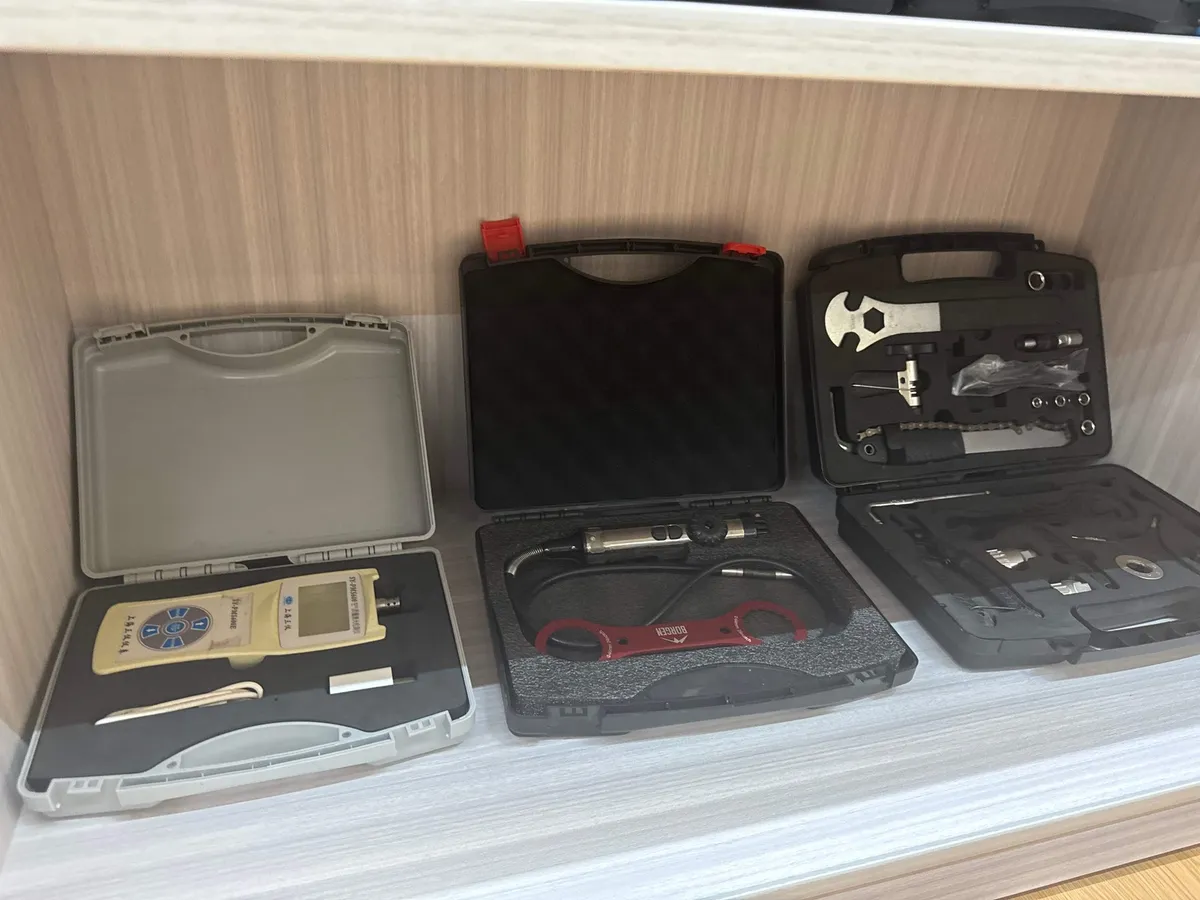
A protective case fails at its hardware long before it fails at its shell. The shell is designed once and validated by drop testing; the latches are worked every single day, and the number of cycles they accumulate in a working life is far larger than most buyers imagine.
Why over-centre geometry is the design that works
The latch does not hold the lid closed by being strong. It holds it closed by being past the point of maximum resistance. Once the toggle crosses that point, any force trying to lift the lid increases the closing reaction rather than overcoming it, so the mechanism is stable in the closed position and needs no spring to stay there.
- Self-energising in closure. Vibration and internal pressure push the lid outward, which seats the latch harder rather than releasing it.
- Positive stop. The closed position is defined by geometry, so the user can feel and hear it - an important feedback signal in the field.
- Tolerance for wear. Because closure depends on geometry rather than on a friction fit, a slightly worn latch still closes, which is why wear is progressive and inspectable rather than sudden.
The corollary is that damage matters more than wear. A bent toggle or a cracked housing moves the mechanism off its designed geometry, and no amount of force at the handle will restore the self-energising behaviour.
The three material families
| Property | Glass-filled nylon | Stainless 304 | Stainless 316 |
|---|---|---|---|
| Strength and load capacity | Good | Very good | Very good |
| Wear at the pivot | Good with a steel pin | Very good | Very good |
| Weight | Lightest | Heaviest | Heaviest |
| Corrosion in salt water | Does not pit; UV-stabilised grades needed for sun exposure | Will pit over time if not rinsed | Substantially better pitting resistance |
| Behaviour in the cold | Stays comfortable to touch | Conducts cold to the hand | Conducts cold to the hand |
| Contact with equipment | Will not scratch | Will scratch | Will scratch |
| Relative cost | Lowest | Mid | Highest |
Aluminium sits between these as a fourth option where weight matters but nylon lacks the stiffness - typically in handle structures and hinge rods rather than in the latch body itself. Where aluminium meets stainless, ask about galvanic corrosion: two dissimilar metals in contact with an electrolyte will corrode, and salt water is a very good electrolyte.
Choosing by environment
- General inland industrial. Glass-filled nylon for the latch body with a stainless pin is the economical default and performs well.
- Marine, coastal, offshore. 316 stainless, or nylon if weight and handling comfort matter more than ultimate strength. Rinse with fresh water either way.
- Heavy or load-bearing lids. Stainless. Where the lid is large and heavy, or the case is strapped down and the latch takes strap load, the latch is structural.
- Cold-chain and freezer transport. Nylon, primarily because it does not conduct cold to bare hands and does not become brittle in the range a freezer case sees.
- High-abuse logistics. Stainless, and specify that the pin is stainless too - a nylon body with a steel pin is a common and sensible hybrid, but the reverse is not.
- Chemical or de-icing salt exposure. Raise it explicitly. Chlorides attack stainless by pitting, and not every cleaning agent is compatible with every polymer.
Inspection and maintenance
- Check for play at the pivot by trying to move the toggle sideways with the latch closed. Any movement is wear, and wear is progressive.
- Open and close each latch through its full travel at each service interval; a latch that sticks part-way is usually corroded at the pin rather than failing at the catch.
- Rinse with fresh water after salt exposure and dry; pay attention to the pin and the spring area, where salt concentrates.
- Lubricate sparingly with a dry film or light silicone. Avoid heavy grease in dusty environments.
- Replace in sets on a case that is in daily service, not one at a time - mismatched wear between latches changes how the lid seats and can compromise the seal.
- Keep the latch body and the pin as a matched pair when replacing; mixing a new pin into a worn body leaves the original play in place.
Hardware is the only part of a protective case designed to be worked to wear, which makes it the only part where routine inspection changes the outcome. On JUNZHIJIA cases the latch and hardware specification is matched to the series and its intended service; for marine, chemical or sustained low-temperature duty, state the exposure at enquiry so the material and pin combination is selected against it rather than assumed.
Related Products
- 7 Series — Hardware Tool Cases; Precision Instrument Cases
- WL7-2708 Hardware Tool Case — model WL7-2708
- All protective cases and toolboxes: 7 series, 158 models