


Direct answer: Choosing a mobile workshop tool cart comes down to four practical questions. How much can it carry? How fast can operators find tools? How easily does one person push it? How well does it survive repeated impacts? Resolve those four questions separately and match them to the drawer module (depth, width, dividers), cabinet material (PP, ABS, cold-rolled steel, stainless steel), wheel set (load per wheel, diameter, material), and frame structure (reinforcement ribs, stacking bosses, latch type). A qualified cart should deliver drawer load ≥ 25 kg per layer, total cabinet load ≥ 200 kg, single-wheel load ≥ 80 kg, and reach IP54 dust and splash protection so it can rotate between shop floor, field work and outdoor sites.
Contents
- 1. Mobile workshop tool carts: working mode and four core requirements
- 2. Cabinet materials: PP, ABS, cold-rolled steel, stainless steel
- 3. Drawer module design: depth, width, dividers, latch
- 4. Frame structure: reinforcement ribs, stacking bosses, latch style
- 5. Wheels and push handle: load, diameter, brake, swivel
- 6. Capacity planning: derive cart size from the tool list
- 7. Typical configurations and scenario fit
- 8. Common mistakes and how to avoid them
- 9. FAQ: six frequent questions
- 10. Conclusion and inquiry
1. Mobile workshop tool carts: working mode and four core requirements
A mobile workshop tool cart is a drawer-equipped rolling work unit, widely used in factory maintenance crews, equipment service teams, machine repair bays, construction site electromechanical rescue, rail transit maintenance, and mine equipment inspection. Operators roll it next to a workstation, slide a drawer open, take the tool, close the drawer and continue. The whole cart moves with the project.
Compared with household tool carts or single-layer toolboxes, the core demands are capacity, findability, pushability and durability. The table summarises the four:
| Demand | Meaning | Key parameters |
|---|---|---|
| --- | --- | --- |
| Capacity | Hold wrenches, sockets, screwdrivers, pliers, measuring tools, consumables and machine parts | Number of drawers, drawer depth × width, dividers |
| Findability | Identify tools quickly in poor light on site | Drawer label slots, dividers, color coding |
| Pushability | One person can push it without fatigue | Net weight, wheel diameter, swivel, handle height |
| Durability | Withstand push, press, impact and drop when fully loaded | Main structure, reinforcement ribs, hinges, axles |
A cart only becomes a true "mobile workshop" once those four requirements are met. Evaluate carts not by appearance but by drawer load rating, single-wheel load rating, latch type and IP rating.
2. Cabinet materials: PP, ABS, cold-rolled steel, stainless steel
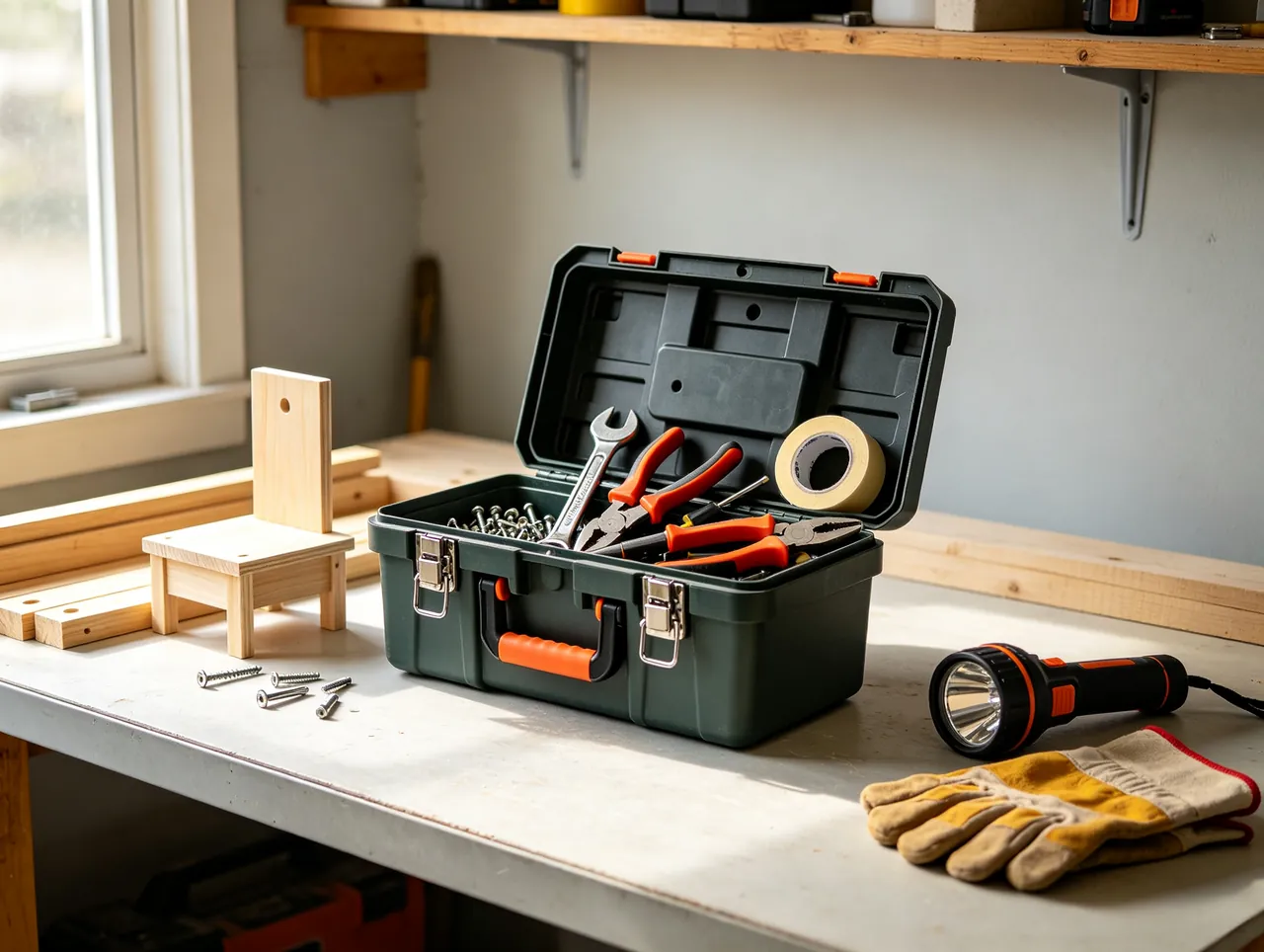
Cabinet material decides impact resistance, corrosion resistance, net weight and maintenance. Four common materials compare as follows:
| Material | Impact resistance | Corrosion resistance | Net weight | Maintenance | Typical scenario |
|---|---|---|---|---|---|
| --- | --- | --- | --- | --- | --- |
| PP (polypropylene) | High toughness, -20~80°C | Excellent | Light | Low | General electromechanical maintenance, outdoor sites |
| ABS | High surface hardness | Good | Medium | Medium | Factory shop floor, projects where appearance matters |
| Cold-rolled steel | High strength | Average (needs powder coating) | Heavy | Medium | Heavy machine repair, long-distance rolling |
| Stainless steel 304 | Strong | Excellent | Heavy | Medium | Food, pharmaceutical, humid, corrosive |
Selection recommendations:
- Electromechanical maintenance + outdoor rescue: prefer PP cabinet. PP keeps toughness at low temperature, does not shatter when dropped, and the cart is 30–40% lighter than a steel cart of the same size.
- Heavy machine repair + long-distance rolling: prefer cold-rolled steel cabinet (1.0–1.2 mm wall thickness). Steel deforms less when fully loaded and stacked, and supports higher drawer loads.
- Humid / corrosive environments (aquaculture, marine, chemical): prefer stainless steel 304 or powder-coated steel.
- Visual appearance requirements (client visits, subcontractor reception): prefer ABS cabinet. ABS has a high-gloss surface that is easy to clean and presents logos well.
A note of caution: PP and ABS resist most acids and alkalis, but ABS yellows under long UV exposure. For outdoor carts, prefer PP or add a UV-resistant coating to ABS.
3. Drawer module design: depth, width, dividers, latch
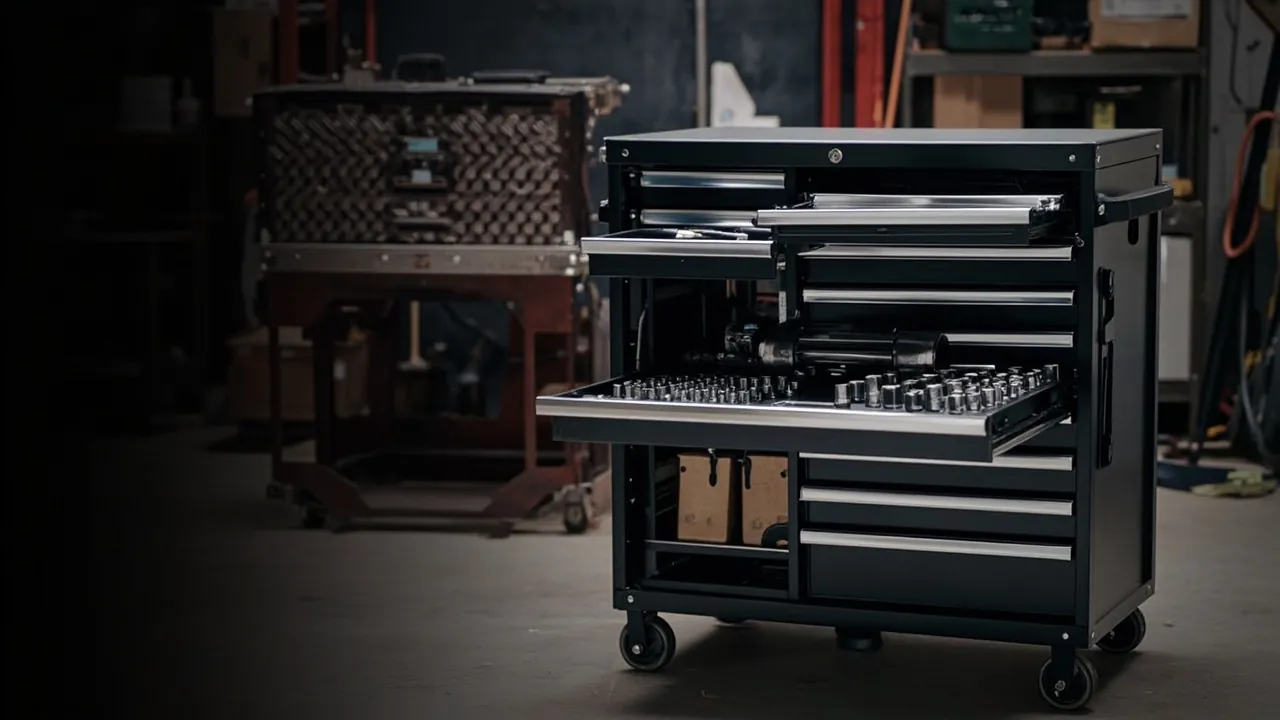
Drawers are the "core battleground" of a tool cart. Five elements matter:
1. Per-drawer load rating Common ratings fall into three tiers: 15 kg, 25 kg, 35 kg. Heavy carts reach 50 kg. Strongly recommend 25 kg or higher. The 15 kg tier only fits small tools; once socket sets, wrench sets and battery packs go in, the drawer deforms.
2. Drawer depth Common depths: 50 mm, 75 mm, 100 mm, 150 mm, 200 mm. Deeper drawers hold larger tools. Use a mixed-depth combination of 50 + 75 + 100 + 150 + 200 mm: frequently used tools in shallow drawers, large tools in deep drawers.
3. Drawer width Single drawer widths: 400 mm, 560 mm, 720 mm. Wider drawers mean a bigger cart and reduced maneuverability. For single-person push, keep single-layer width under 720 mm.
4. Dividers Dividers decide findability. Three divider options:
| Type | Best for | Strength | Limitation |
|---|---|---|---|
| --- | --- | --- | --- |
| Equal plastic partitions | Socket sets of similar size | Low cost | Inflexible |
| Removable partition strips | Mixed tools | Flexible | Occupies space |
| EVA molded foam inlay | Fixed tool positions | Shock absorption, anti-slip, fast identification | Higher cost, not re-purposable |
5. Latch mechanism Two latch types: uniform latch (one lock closes all drawers) and per-drawer independent latch. For heavy carts, use per-drawer independent latch to avoid the entire drawer bank flying open when one drawer is pulled.
Each drawer panel should have a label slot. Number drawers or tag them by tool category, and use color coding (red = frequently used, yellow = consumables, blue = measuring tools). On-site identification within three seconds becomes possible.
4. Frame structure: reinforcement ribs, stacking bosses, latch style
The "skeleton" of the cart is the frame structure, deciding torsion resistance, compression resistance and lifetime.
Reinforcement ribs Reinforcement ribs are raised skeletons on the side walls of the cabinet that significantly increase torsional stiffness. Rib spacing should be 80–120 mm; the tighter the spacing, the stronger the torsion resistance. Ribs prevent deformation when the cart rolls over thresholds, steps or potholes.
Stacking bosses Mobile workshop carts frequently work with storage boxes and protective cases stacked on top. The top should have interlocking stacking bosses that lock storage boxes in place so they do not slide off when the cart moves.
Latch style The whole cart should have a central lock (two-position or four-position lock) that locks the entire cart with one key. A side-door lock prevents drawers from being pulled open by unauthorised hands. Recessed (flush) locks are preferable: protruding locks are easy to damage on impact.
Structural problems to avoid: thin-wall cabinets without reinforcement ribs, missing stacking bosses (no stackable storage boxes), protruding latch bolts (impact damage), no side-door lock (drawers slide out).

5. Wheels and push handle: load, diameter, brake, swivel
The wheel set is the cart's "legs", directly affecting pushability. Four parameters determine the wheel set:
| Parameter | Meaning | Typical value | Selection guidance |
|---|---|---|---|
| --- | --- | --- | --- |
| Load per wheel | Each wheel's load capacity | 60–150 kg | Full-load weight ÷ 4 × 1.5 safety factor |
| Wheel diameter | Wheel diameter | 100/125/160/200 mm | The rougher the floor, the larger the wheel |
| Wheel material | PU / rubber / nylon | Each has its niche | Indoor PU, rough floor rubber |
| Swivel | Number of swivel casters | 2 fixed + 2 swivel / 4 swivel | Long-distance push: 4 swivel for flexibility |
Brakes must be fitted on at least two fixed wheels to prevent the cart sliding on slopes. Push-handle height should align with the operator's waist (about 950–1050 mm): too high cannot be pushed, too low causes back pain. The handle should have a rubber or soft overlay for grip and comfort.
A note of caution: 4 swivel casters suit flat floors with frequent direction changes; 2 fixed + 2 swivel suit long-distance push. Heavy carts should select wheel diameter ≥ 125 mm PU wheels to balance load capacity and quiet operation.
6. Capacity planning: derive cart size from the tool list
The most common mistake when buying a tool cart is wrong capacity. Use this three-step reverse method:
Step 1: List the tool inventory, including wrench sets, socket sets, screwdriver sets, pliers, measuring tools, consumables and machine parts. Group them by size into large, medium and small categories.
Step 2: Estimate the total weight. Sum the weight of every item to get the total tool weight. Multiply by 1.3 safety factor to derive the design load.
Step 3: Estimate the total volume. Sum the volume of every item to get net volume. Multiply by 1.5 to account for dividers, buffers and handles, then derive the required cabinet inner volume.
Example: a 30-person team shares a tool cart; each person has 0.005 m³ of tools and the total tool weight is 90 kg. Then the cart needs inner volume ≥ 0.225 m³ and total cabinet load ≥ 117 kg. Select a cabinet with total drawer volume 0.3 m³ and total cabinet load 200 kg to reserve 30% margin.
Capacity planning also considers drawer module count. Recommended drawer configurations by maintenance type:
| Maintenance type | Drawer count | Depth combination |
|---|---|---|
| --- | --- | --- |
| General electromechanical maintenance | 5–6 drawers | 50+75+100+150+200 |
| Equipment inspection | 3–4 drawers | 75+100+150 |
| Rescue crew | 7–8 drawers | Multi-layer small drawers |
| Crew leader dedicated | 6 drawers + top work surface | 75+100+150+200 + work surface |
7. Typical configurations and scenario fit
Three reference configurations for fast decision-making:
| Item | Entry PP cart | Main ABS cart | Heavy steel cart |
|---|---|---|---|
| --- | --- | --- | --- |
| Cabinet material | PP | ABS | Cold-rolled steel 1.2 mm |
| Drawer count | 5 | 6 | 7 |
| Per-drawer load | 15 kg | 25 kg | 35 kg |
| Total cabinet load | 120 kg | 200 kg | 280 kg |
| Wheel set | 2 fixed + 2 swivel PU 100 mm | 4 swivel PU 125 mm | 4 heavy PU 160 mm |
| Central lock | 1-position | 2-position | 4-position |
| IP rating | IP54 | IP54 | IP54 |
| Net weight | ~18 kg | ~28 kg | ~65 kg |
| Scenario | Light electromechanical, household | Factory shop floor, outdoor rescue | Heavy machine repair, long-distance push |
Scenario fit recommendations:
- Budget under 2000: PP entry tier.
- Budget 2000–5000: ABS main tier, the best cost-performance ratio.
- Budget over 5000: heavy steel tier, long lifetime and high drawer load.
A note of caution: the configurations above are a general framework. OEM/ODM customization can adjust drawer count, drawer depth, wheel specifications, cabinet color, logo printing. Bulk inquiries, spec-sheet requests and customization cooperation go through the on-site contact page or inquiry form.
8. Common mistakes and how to avoid them
The most common mistakes when choosing a mobile workshop tool cart:
Mistake 1: judging by appearance, ignoring drawer load rating Many carts look great but the drawer rating is only 12–15 kg per layer. Once a socket set (typical 25-piece socket set about 6 kg + toolbox about 5 kg) goes in, the drawer deforms. Prioritise drawer load rating ≥ 25 kg.
Mistake 2: ignoring wheel set configuration A poor wheel set makes the cart hard to push and easy to tip on potholes. At least 4 PU wheels, single-wheel load ≥ 80 kg, and select larger wheel diameter for uneven floors.
Mistake 3: ignoring stacking bosses Many carts have a flat top and cannot stack storage boxes or protective cases. Interlocking stacking bosses allow stacking, increasing on-site space utilisation.
Mistake 4: choosing the wrong dividers Wrong dividers turn tools into a mess. EVA molded foam inlay is the best option but more expensive; on a tight budget choose removable partition strips for flexibility.
Mistake 5: ignoring environmental adaptability In outdoor, humid or corrosive environments, steel carts without powder coating will rust. Prefer PP, stainless steel, or powder-coated steel.
Mistake 6: no spare parts after purchase Tool carts are consumables; drawer slides, latches and wheels are wear parts. Ask the supplier about spare-part stock to avoid long-term downtime.
9. FAQ: six frequent questions
Q1: Does a mobile workshop cart have to use 4 swivel wheels? Not necessarily. Long-distance push: 2 fixed + 2 swivel saves effort. Tight spaces and frequent direction changes: 4 swivel is more flexible. Heavy machine repair: 2 fixed + 2 heavy swivel balances load capacity and steering.
Q2: How much difference is there between 25 kg and 35 kg drawer rating? A big difference. 25 kg suits most scenarios; 35 kg suits mixed loading of socket sets, wrench sets, battery packs and power tools. If per-layer tool weight exceeds 25 kg, go directly to the 35 kg tier.
Q3: Will PP carts become brittle at low temperature? PP keeps toughness down to -20°C, so normal low-temperature environments (workshop, outdoor winter) are not affected. But for extreme cold such as liquid nitrogen or cryogenic storage, prefer ABS or modified PP formulas.
Q4: How much more expensive is stainless steel than PP? A 304 stainless steel cart is about 2–3× the price of a same-spec PP cart. But stainless steel lasts longer in humid or corrosive scenarios, so the long-term total cost is not necessarily higher.
Q5: Does a tool cart need IP67 protection? A tool cart is a shop/field mobile device, not an underwater transport device. IP54 (dust and splash protection) is sufficient. But the tools inside the drawer are sensitive to humidity, so consider humidity indicator cards or small desiccant packs.
Q6: How long does a custom tool cart take? Generic specifications ship within 3–5 working days. Custom specifications (special drawer size, cabinet color, logo printing, reinforcement rib adjustment) usually take 15–25 working days. Larger batches stabilise the delivery time.
10. Conclusion and inquiry
Conclusion: Choosing a mobile workshop tool cart comes back to four questions: capacity, findability, pushability and durability. Resolve them separately and match to drawer module, cabinet material, wheel set and frame structure. Recommended: ABS main tier or heavy steel tier, with drawer load ≥ 25 kg per layer, single-wheel load ≥ 80 kg, total cabinet load ≥ 200 kg, IP54 protection.
Recommended drawer configurations by maintenance type: general electromechanical maintenance 5–6 drawers (50+75+100+150+200), equipment inspection 3–4 drawers (75+100+150), rescue crew 7–8 drawers with multi-layer small drawers, crew leader dedicated 6 drawers + top work surface.
Recommended cabinet materials by scenario: electromechanical maintenance / outdoor rescue choose PP; heavy machine repair / long-distance push choose cold-rolled steel (wall thickness 1.0–1.2 mm); humid / corrosive scenarios choose stainless steel 304 or powder-coated steel; appearance requirements choose ABS.
Recommended tiers by budget: ≤ 2000 PP entry, 2000–5000 ABS main, ≥ 5000 heavy steel.
Inquiry: bulk inquiries, spec-sheet requests and customization cooperation go through the on-site contact page or inquiry form.
11. Application cases: three real scenarios
Case 1: automotive 4S shop electromechanical maintenance crew
A 4S shop maintenance crew of 6 staff needs to respond quickly to vehicle faults. The crew's tool cart uses an ABS main tier 6-drawer solution, with per-layer load 25 kg and total cabinet load 200 kg. Drawer configuration:
- Layer 1 (50 mm): frequently used small tools (screwdrivers, hex keys, circlip pliers)
- Layer 2 (75 mm): medium tools (wrench sets, 1/4" socket sets)
- Layer 3 (100 mm): power tools (electric wrenches, drills, battery packs)
- Layer 4 (150 mm): large tools (crowbars, jack accessories)
- Layer 5 (200 mm): consumables (gloves, rags, cable ties, seals)
- Top plate: temporary work surface for diagnostic equipment
Cabinet configuration: 4 PU 100 mm swivel casters + 2-position central lock + stacking bosses (for stacking tool bags). Push is smooth, 30 seconds from workshop to workstation. Tool inventory checked monthly, missing tools replenished. Total solution around 3500 RMB, 3 years without drawer deformation.
Case 2: wind farm maintenance crew
A wind farm maintenance crew needs to move between mountain wind farms. The tool cart uses a PP entry tier 5-drawer solution, per-layer load 20 kg, total cabinet load 150 kg. Drawer configuration:
- Layer 1 (75 mm): inspection tools (wrenches, tape measures, thermometers)
- Layer 2 (100 mm): electrical tools (multimeters, clamp ammeters)
- Layer 3 (150 mm): consumables (grease, seals, cleaners)
- Layer 4 (100 mm): safety equipment (insulating gloves, goggles)
- Layer 5 (200 mm): spare parts (bolts, nuts, washers)
Cabinet configuration: 4 rubber wheels 160 mm + reinforcement ribs + trolley handle. PP keeps toughness at mountain low temperatures, no crack on drop. Wheel bearings greased monthly, lifetime over 5 years.
Case 3: metro maintenance crew
A metro maintenance crew needs to circulate tools between tunnel and workshop. The tool cart uses a cold-rolled steel heavy tier 7-drawer solution, per-layer load 35 kg, total cabinet load 280 kg. Drawer configuration:
- Layer 1 (50 mm): precision gauges (calipers, micrometers)
- Layer 2 (75 mm): small tools (screwdrivers, pliers)
- Layer 3 (100 mm): electrical tools
- Layer 4 (150 mm): large tools
- Layer 5 (100 mm): consumables
- Layer 6 (200 mm): heavy tools (hydraulic jack accessories)
- Layer 7 (150 mm): safety equipment
Cabinet configuration: 4 PU 160 mm heavy casters + 4-position central lock + side-door lock. Cold-rolled steel does not deform in tunnel humid environment, with anti-rust powder coating, lifetime over 8 years.
12. Maintenance: daily, wear parts, cleaning
The maintenance of tool carts directly affects service life. Key points:
Daily maintenance:
- Wipe the cabinet after pushing with a dry cloth, keep it clean;
- Lubricate drawer slides monthly (sewing machine oil or silicone oil);
- Check latches monthly, adjust when not smooth.
Wear parts list:
- Drawer slides (steel or plastic): replace every 3–5 years;
- Wheel bearings: grease every 5 years, replace every 10 years;
- Sealing ring (waterproof case): check every 6 months, replace when aged;
- Latch spring: check every 3 years, replace when damaged;
- Drawer panel label: replace when worn.
Deep cleaning:
- Vacuum drawer interior dust quarterly (vacuum cleaner + soft brush);
- Wipe cabinet exterior with warm water + neutral cleaner, do not use strong acid or alkali;
- Open drawers to ventilate when not in use long-term, to avoid internal moisture buildup.
Storage recommendations:
- Place in dry ventilated place when not in use long-term (>3 months);
- Do not expose to direct sunlight (plastic parts age faster);
- Do not stack other heavy items on the cabinet top (drawer load drops);
- Avoid prolonged storage in humid environment (≥ 80% RH causes oxidation).
13. Selection checklist: printable comparison table
A printable tool cart selection checklist (check item by item at purchase):
| No. | Item | Expected value | Actual value | Note |
|---|---|---|---|---|
| --- | --- | --- | --- | --- |
| 1 | Cabinet material | PP / ABS / steel / stainless steel | ||
| 2 | Drawer count | 5–7 | ||
| 3 | Per-layer load | ≥ 25 kg | ||
| 4 | Total cabinet load | ≥ 200 kg | ||
| 5 | Drawer depth combination | 50+75+100+150+200 | ||
| 6 | Drawer width | ≤ 720 mm | ||
| 7 | Dividers | EVA molded / removable partition | ||
| 8 | Latch form | per-drawer independent + central lock | ||
| 9 | Reinforcement ribs | spacing 80–120 mm | ||
| 10 | Stacking bosses | interlocking type | ||
| 11 | Wheel count | 4 PU wheels | ||
| 12 | Per-wheel load | ≥ 80 kg | ||
| 13 | Wheel diameter | ≥ 100 mm | ||
| 14 | Push handle height | 950–1050 mm | ||
| 15 | IP rating | IP54 | ||
| 16 | Net weight | per spec | ||
| 17 | Top plate work surface | per requirement | ||
| 18 | Label slot | per drawer | ||
| 19 | Color | per requirement | ||
| 20 | Logo printing | per requirement | ||
| 21 | Wear parts stock | ask supplier | ||
| 22 | Warranty | ≥ 1 year | ||
| 23 | Lead time | per spec | ||
| 24 | Inquiry channel | on-site contact page / inquiry form |
14. Future trends: smart, modular, lightweight
Future trends of the tool cart industry concentrate in three directions:
1. Smart
- Electronic label system: each drawer gets an electronic label, automatic tool inventory, no more missing tools;
- Weight sensor: built-in weight module in drawer, automatic tool usage frequency identification;
- IoT integration: networked tool cart can remotely view tool inventory and locate the cart.
2. Modular
- Detachable drawers: drawers can be removed as individual tool boxes;
- Replaceable top plate: top plate can be swapped for work surface, charging station, display;
- Extendable racks: side-mounted tool racks, parts boxes, file bags.
3. Lightweight
- Carbon fiber cabinet: carbon fiber + engineering plastic hybrid, 60% lighter than steel;
- Aluminum alloy + honeycomb plate: aluminum alloy skeleton + honeycomb filling, 30% lower net weight;
- Electric assist: built-in small motor assists pushing (like electric bike), one person can push a 300 kg fully loaded cart.
15. Terminology
- Drawer load: the maximum weight a single drawer can carry (including tools).
- Total cabinet load: the maximum total weight the cabinet can carry.
- Per-wheel load: the maximum weight each wheel can carry.
- Central lock: a latch that locks multiple drawers with one lock.
- Flush-mount lock: the lock head is flush with the cabinet surface, avoiding impact damage.
- Reinforcement ribs: raised skeleton on the cabinet inner wall, improves torsional stiffness.
- Stacking bosses: protrusions on the cabinet top and matching grooves on the bottom, for stable stacking.
- EVA molded foam inlay: custom EVA foam cut slots matching the tool shape.
- IP54: dust-protected and splash-proof rating.
- OEM: contract manufacturing (client brand).
- ODM: design + contract manufacturing (design and production).
- MIL-STD-810H: US military standard environmental test methods; environmental adaptability verification follows this method.
16. 5-year total cost comparison: ABS vs steel
Many buyers look only at the initial purchase cost of a tool cart and ignore the 5-year total cost. Compare ABS main tier with cold-rolled steel heavy tier 5-year total cost (per unit):
| Item | ABS main tier | Cold-rolled steel heavy tier |
|---|---|---|
| --- | --- | --- |
| Initial purchase | 3500 RMB | 6500 RMB |
| Annual maintenance | 150 RMB (grease, seals) | 250 RMB (grease, seals) |
| Drawer slide replacement (5 years) | 0 RMB (no replacement) | 400 RMB (steel slide 1 replacement) |
| Wheel replacement (5 years) | 0 RMB | 0 RMB (PU wheel 8-year life) |
| Drawer panel update (5 years) | 200 RMB (label wear) | 200 RMB |
| Salvage value | 500 RMB (plastic recycling) | 800 RMB (steel recycling) |
| 5-year total cost | 3350 RMB | 6350 RMB |
Conclusion: ABS main tier 5-year total cost is 47% lower than cold-rolled steel heavy tier. If tool cart lifetime requirement is high (10+ years), choose steel; if 5–8 years replacement is acceptable, choose ABS main tier for better value.
17. Drawer depth combination reverse formula
Drawer depth combination should be derived from tool weight distribution + access frequency:
Reverse formula:
`` D_total = Σ (n_i × d_i) ``
Where:
- D_total: total drawer depth (mm)
- n_i: number of the i-th tool
- d_i: maximum outer dimension of the i-th tool (mm)
Example: a crew's tool list:
| Tool | Quantity | Max dimension (mm) | Frequency |
|---|---|---|---|
| --- | --- | --- | --- |
| Screwdriver | 20 | 250 | High |
| Hex key | 15 | 150 | High |
| Wrench set | 10 | 300 | Medium |
| Socket set | 8 | 80 | High |
| Electric wrench | 4 | 350 | Medium |
| Crowbar | 2 | 600 | Low |
Reverse result:
- Screwdriver (high frequency, small size): 1 × 50 mm shallow drawer
- Hex key (high frequency, small size): 1 × 50 mm shallow drawer
- Socket set (high frequency, small size): 1 × 50 mm shallow drawer
- Wrench set (medium frequency, medium size): 1 × 100 mm medium drawer
- Electric wrench (medium frequency, large size): 1 × 150 mm deep drawer
- Crowbar (low frequency, oversized): 1 × 200 mm ultra-deep drawer
Total drawer count 6, depth combination 50+50+50+100+150+200.
Related reading and products
On-site related reading (grouped by topic):
- What is a toolbox? Main types, materials and applications
- Common types of toolboxes and how to choose by scenario
- Difference between industrial and household toolboxes
- What kind of toolbox suits industrial maintenance crews
- Difference between wheeled and normal toolboxes
- Which industries suit trolley toolboxes
- Roles of hinges, latches and seals on protective cases
- How to choose internal foam for toolboxes
- Difference between PP, ABS and PC protective cases
- Engineering plastic vs normal plastic protective cases
18. Industry-specific custom configurations
1. Aviation maintenance dedicated tool cart
Aviation maintenance has extreme tool traceability requirements. The tool cart is configured with RFID identification + weight sensor. Each drawer has a built-in RFID reader that automatically identifies tool removal/return events, working with a central database for end-to-end tool traceability. The complete solution is 30–50% more expensive than a regular ABS tool cart, but the compliance requirement is high and the configuration is mandatory.
2. Nuclear power maintenance dedicated tool cart
Nuclear power maintenance has strict requirements on tool cart material, fire resistance and sealing. All-metal cabinet + fire-resistant coating + electrostatic discharge (ESD) design. Each drawer has a grounding wire to avoid ESD impact on precision instruments. The complete solution is 2–3× the price of a regular steel tool cart.
3. Mine underground dedicated tool cart
Mine underground is humid and explosive. The tool cart needs explosion-proof + waterproof + corrosion-resistant. Aluminum cabinet + IP65 + ESD design. The complete solution requires MA (coal safety) certification and is 3–5× the price of a regular tool cart.
4. Food and pharmaceutical dedicated tool cart
Food and pharmaceutical industries require easy to clean + no shedding + no contamination. Stainless steel 304 cabinet + rounded corner design + dust-proof sealing. The complete solution requires food-grade certification.
5. Military field operation tool cart
Field operation requires high strength + portable + multi-function. Aircraft-grade panel cabinet + trolley handle wheels + folding top plate. The complete solution requires MIL-STD-810H environmental adaptability verification (as a product environmental adaptability test basis, not "military certification").
19. Cabinet color and LOGO printing
Color schemes:
- Enterprise color customization: customize cabinet color per client VI color, MOQ 50 units;
- Safety identification color: common yellow-black stripe (warning), red-white stripe (prohibition), green-white stripe (safety);
- International common colors: ISO 3864 safety color standard.
LOGO printing methods:
- Screen printing: low cost, suitable for mass production, color limit (max 3 colors);
- UV printing: high resolution, full color, suitable for small batches;
- Laser engraving: permanent no fade, suitable for high-end, single color only;
- Gold/silver stamping: metallic texture, suitable for high-end brands;
- Sticker / adhesive label: low cost, suitable for temporary, event use.
LOGO printing positions:
- Cabinet front (most common);
- Cabinet side (easy to identify during transport);
- Drawer panel (each drawer can be printed with different marks);
- Top plate work surface (temporary work area mark).
20. Transport and packaging
Packaging solutions:
- Single unit packaging: carton + EPE pearl cotton corner guards;
- Multi-unit packaging: pallet + stretch film + carton;
- Container transport: pallet + container packaging.
Transport modes:
- Domestic: road / express / logistics (3–7 days);
- International: sea / air / land (7–30 days).
Packaging cost:
- Single unit packaging: 50–100 RMB;
- Multi-unit packaging: 20–50 RMB per unit;
- Container transport: 5000–10000 RMB per container.
21. Comparison with other toolboxes on the site
This article discusses mobile workshop tool carts (drawer-equipped rolling work units), different from other tool types on the site:
- Regular toolbox (one/two layers): for household use, light carry;
- Mobile workshop tool cart (multi-drawer + rolling): for workshop, crew, outdoor maintenance;
- Trolley toolbox (trolley + wheels): for business trip, temporary work;
- Custom protective case (irregular + EVA inlay): for precious equipment, precision instruments.
Different scenarios pick different tools. The selection principle is the comprehensive match of the four questions: capacity, findability, pushability, durability.
22. Crew configuration list and procurement strategy
Crew tool cart configuration list (reference for 30-person workshop crew):
| Tool type | Unit value (RMB) | Quantity | Total value (RMB) | Note |
|---|---|---|---|---|
| --- | --- | --- | --- | --- |
| Tool cart (main tier) | 3500 | 6 | 21000 | 5 people / cart |
| Tool cart (heavy tier) | 6500 | 2 | 13000 | Heavy crew dedicated |
| Drawer divider upgrade | 200 | 8 | 1600 | Per requirement |
| Label sticker | 50 | 8 | 400 | One year usage |
| Wear parts (wheel, latch, slide) | 800 | 1 set | 800 | Spare parts |
| Total | 36800 |
Procurement strategy:
- Centralised procurement: bulk 8+ units can negotiate 15–20% discount;
- Batch procurement: buy 2 units first to try, replenish after 3 months;
- OEM customisation: 50+ units can customize color and LOGO;
- Accessories stock: wear parts (wheel, latch) purchase 1 set with the cart initially.
23. Brand history
KeXin New Materials (Guangdong) Co., Ltd., founded in 2014, with a Guangdong Zhongshan factory of 18000 square meters, 80+ equipment units and 100+ employees, producing 150+ specifications of plastic toolboxes and protective cases. The brand kexinMaterials / JUNZHJIA has passed ISO9001, REACH, California Prop 65 certifications; ABS/PP material has passed RoHS testing; the protective case product line performs MIL-STD-810H environmental adaptability verification (product-line level testing basis, not "military certification"); the company holds 20+ utility model and design patents. Provides one-stop OEM/ODM customisation service, covering product design, injection molding, mold manufacturing, LOGO printing, inlay/inner pad production.
18. Industry-specific custom configurations
Aviation maintenance dedicated tool cart has extreme tool traceability requirements, configured with RFID identification and weight sensor. Each drawer has a built-in RFID reader that automatically identifies tool removal/return events, working with a central database for end-to-end tool traceability. The complete solution is 30 to 50 percent more expensive than a regular ABS tool cart, but the compliance requirement is high and the configuration is mandatory.
Nuclear power maintenance dedicated tool cart has strict requirements on tool cart material, fire resistance and sealing. All-metal cabinet plus fire-resistant coating plus electrostatic discharge (ESD) design. Each drawer has a grounding wire to avoid ESD impact on precision instruments. The complete solution is 2 to 3 times the price of a regular steel tool cart.
Mine underground dedicated tool cart is humid and explosive. The tool cart needs explosion-proof, waterproof, and corrosion-resistant. Aluminum cabinet plus IP65 plus ESD design. The complete solution requires MA (coal safety) certification and is 3 to 5 times the price of a regular tool cart.
Food and pharmaceutical dedicated tool cart requires easy to clean, no shedding, and no contamination. Stainless steel 304 cabinet plus rounded corner design plus dust-proof sealing. The complete solution requires food-grade certification.
Military field operation tool cart requires high strength, portable, and multi-function. Aircraft-grade panel cabinet plus trolley handle wheels plus folding top plate. The complete solution requires MIL-STD-810H environmental adaptability verification (as a product environmental adaptability test basis, not "military certification").
19. Cabinet color and LOGO printing
Color schemes: enterprise color customization per client VI color, MOQ 50 units; safety identification color common yellow-black stripe (warning), red-white stripe (prohibition), green-white stripe (safety); international common colors ISO 3864 safety color standard.
LOGO printing methods: screen printing low cost suitable for mass production color limit max 3 colors; UV printing high resolution full color suitable for small batches; laser engraving permanent no fade suitable for high-end single color only; gold and silver stamping metallic texture suitable for high-end brands; sticker adhesive label low cost suitable for temporary event use.
LOGO printing positions: cabinet front most common; cabinet side easy to identify during transport; drawer panel each drawer can be printed with different marks; top plate work surface temporary work area mark.
20. Transport and packaging
Packaging solutions: single unit packaging carton plus EPE pearl cotton corner guards; multi-unit packaging pallet plus stretch film plus carton; container transport pallet plus container packaging.
Transport modes: domestic road express logistics 3 to 7 days; international sea air land 7 to 30 days.
Packaging cost: single unit packaging 50 to 100 RMB; multi-unit packaging 20 to 50 RMB per unit; container transport 5000 to 10000 RMB per container.
21. Comparison with other toolboxes on the site
This article discusses mobile workshop tool carts (drawer-equipped rolling work units), different from other tool types on the site: regular toolbox (one/two layers) for household use light carry; mobile workshop tool cart (multi-drawer plus rolling) for workshop crew outdoor maintenance; trolley toolbox (trolley plus wheels) for business trip temporary work; custom protective case (irregular plus EVA inlay) for precious equipment precision instruments. Different scenarios pick different tools. The selection principle is the comprehensive match of the four questions: capacity, findability, pushability, durability.
22. Crew configuration list and procurement strategy
Crew tool cart configuration list (reference for 30-person workshop crew): tool cart (main tier) 3500 RMB times 6 = 21000 RMB; tool cart (heavy tier) 6500 RMB times 2 = 13000 RMB; drawer divider upgrade 200 RMB times 8 = 1600 RMB; label sticker 50 RMB times 8 = 400 RMB; wear parts (wheel latch slide) 800 RMB times 1 set = 800 RMB. Total 36800 RMB.
Procurement strategy: centralised procurement bulk 8 plus units can negotiate 15 to 20 percent discount; batch procurement buy 2 units first to try, replenish after 3 months; OEM customisation 50 plus units can customize color and LOGO; accessories stock wear parts (wheel latch) purchase 1 set with the cart initially.
23. Brand history
KeXin New Materials (Guangdong) Co., Ltd., founded in 2014, with a Guangdong Zhongshan factory of 18000 square meters, 80 plus equipment units and 100 plus employees, producing 150 plus specifications of plastic toolboxes and protective cases. The brand kexinMaterials and JUNZHJIA has passed ISO9001, REACH, California Prop 65 certifications; ABS and PP material has passed RoHS testing; the protective case product line performs MIL-STD-810H environmental adaptability verification (product-line level testing basis, not military certification); the company holds 20 plus utility model and design patents. Provides one-stop OEM and ODM customisation service, covering product design, injection molding, mold manufacturing, LOGO printing, inlay and inner pad production.