

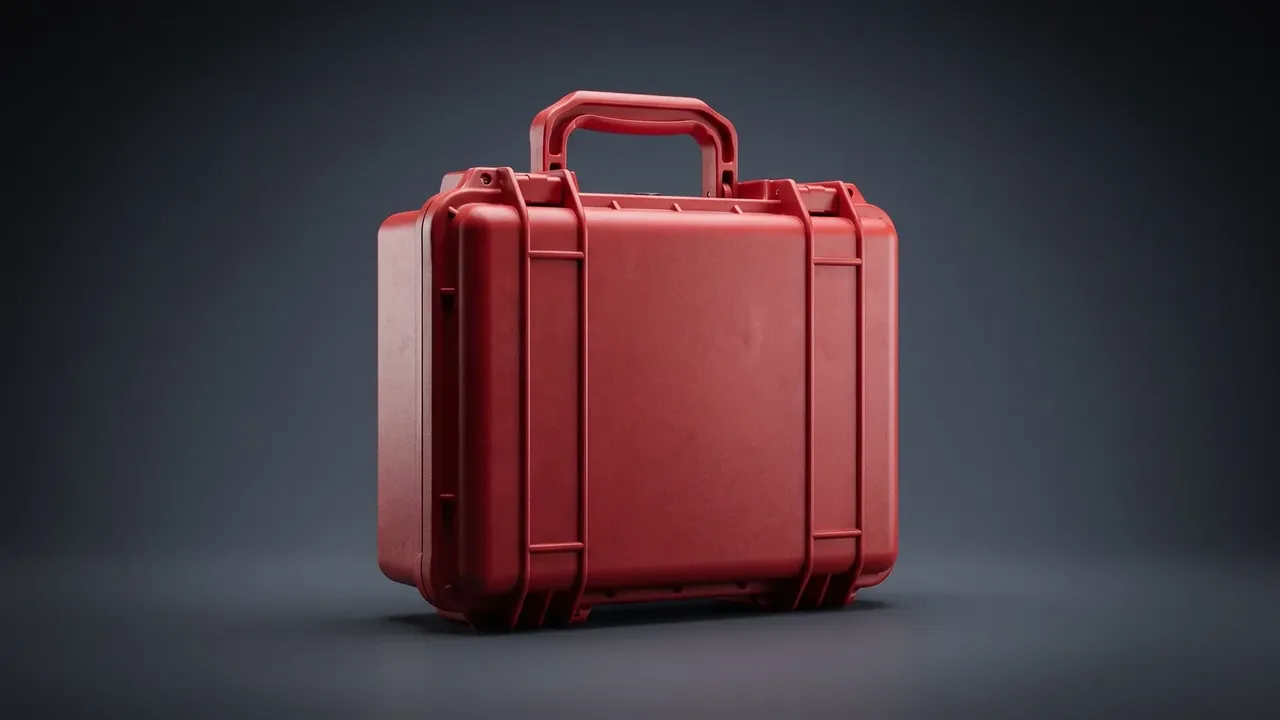
Quick answer: Moving a plastic rolling tool box between workshops comes down to four numbers: wheel diameter, the lowest sill, the narrowest passage, and one-way distance. Measure those first and the wheel size, handle height and restraint all follow.
Table of contents
- Four numbers before you buy a plastic rolling tool box
- Wheel diameter against floor type
- Kerbs and ramps: three moves
- Handle height and loading a tail lift
- FAQ
1. Four numbers before you buy a plastic rolling tool box
In-plant movement differs from outdoor work: floors are flat and runs short, but there are sills, ramps and a tail lift at the end. Whether a plastic rolling tool box handles that route depends on four numbers, not on colour.
Measure in order: wheel diameter, sill height, clear passage width, one-way distance. Diameter decides gap crossing, the sill decides whether someone has to lift, width decides how the box turns, distance decides wheel compound and handle stiffness. The sill is the one most often mis-measured, because what counts is the clearance under the frame, not the nominal thickness of the stone.
| Number | Typical in-plant value | What it decides | Cost of getting it wrong |
|---|---|---|---|
| Wheel diameter | 100, 125, 160 mm | Gap and sill crossing | Small jams on grating, large sits high |
| Sill height | 15 to 20 mm | Whether a lift is needed | Understated, and every crossing takes two people |
| Passage width | 900 mm and up | Turning style | Narrow, and the box is dragged backwards |
| One-way distance | 50 to 300 m | Wheel compound, handle stiffness | Long, and the wheels wear flat first |
Four numbers are a ceiling, not a target. Choose the wheel for the worst floor on the route.
2. Wheel diameter against floor type
Concrete carries expansion joints and grit, epoxy is flat but hates sharp debris, grating gaps reach 30 mm, and ramp surfaces are usually textured. The same wheel behaves differently on all four, and a plastic rolling tool box is easiest on concrete, most likely to jam on grating.
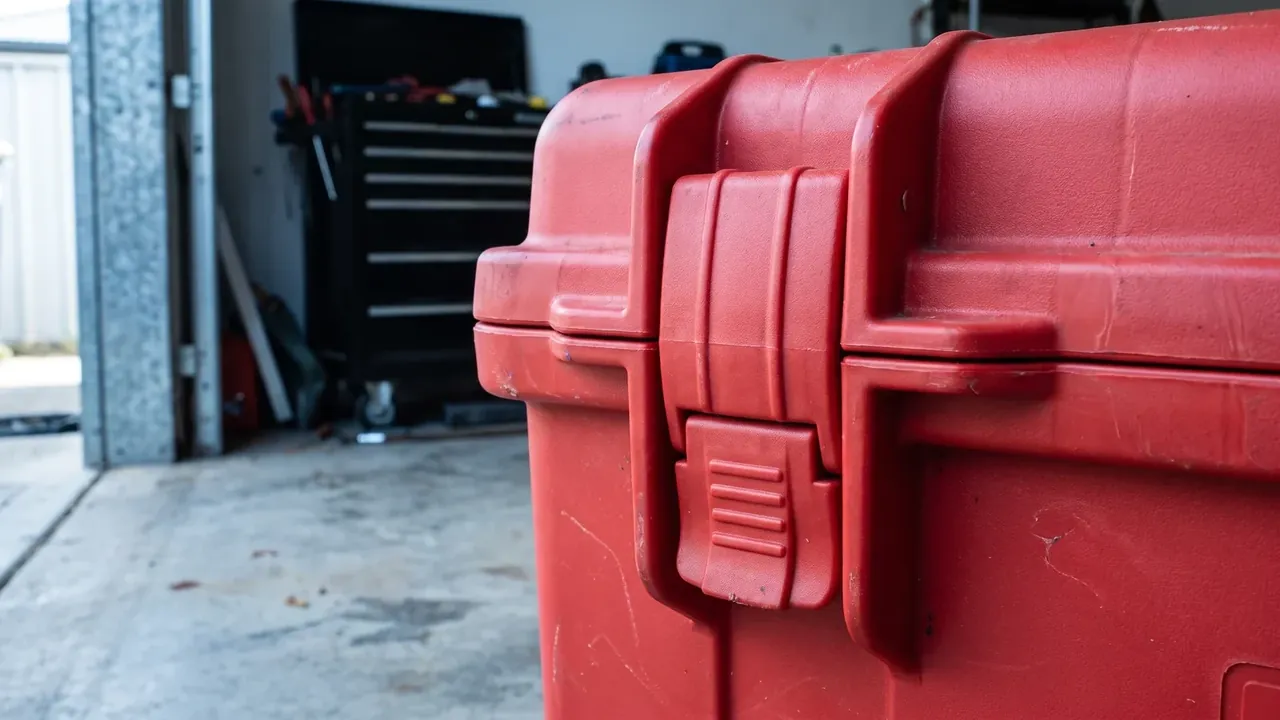
For a plastic rolling tool box, a grating gap wider than a third of the wheel diameter traps the wheel. A 160 mm wheel crosses a 30 mm gap without drama; a 100 mm wheel needs momentum, and when momentum runs out it jams sideways. Textured ramps punish hard wheels: polyurethane rolls quietly, nylon rattles the whole way.
| Floor | Minimum wheel | Compound | On site |
|---|---|---|---|
| Concrete | 125 mm | Polyurethane | Avoid the steel strips in joints |
| Epoxy | 100 mm | Polyurethane or rubber | Keep grit off the tread |
| Grating | 160 mm | Polyurethane | Cross diagonally, not square on |
| Textured ramp | 125 mm | Rubber faced | Slow the descent, never let go |
Bigger is not automatically better. Every 25 mm of diameter raises the centre of gravity about 12 mm, and the box leans further in a turn.
3. Kerbs and ramps: three moves
Crossing a sill with a plastic rolling tool box takes three moves: lift, press, straighten. Lift puts the front wheels on the sill, press loads the rear wheels through the handle, straighten recovers the line before the next push. Break the sequence and the box rocks in the doorway while the shift waits.
- Lift: tilt to about 30°, front wheels 20 mm off the floor, no higher;
- Press: at 30 kg the handle takes about 45 N, the weight of a 4.5 kg bag;
- Straighten: recover the line before accelerating, or the rear wheel catches;
- Stop: never let go on a ramp, because these wheels carry no brake.
An 8° ramp is typical in a plant, and 30 kg up it needs about 45 N, which one person can supply. Past 8 m of ramp, plan a pause and block the rear wheel with a foot. Downhill is harder than uphill, because the box accelerates on its own and the handle has to be pushed down rather than pulled up. A 20 mm sill is a different problem: it costs no force, it costs rhythm, and forty crossings a day wear out a wrist before they wear out a wheel. On a wet day the concrete between shop and loading bay loses about a third of its grip under polyurethane, and rushing that stretch ends in a slide. Almost every plastic rolling tool box that goes over in a plant does so on a ramp or wet floor.
4. Handle height and loading a tail lift
Handle height follows the person, not the case. Walking behind it, the top of the handle sits about 50 mm above the hip bone, which for most adults is around 950 mm. An adjustable range covering 900 to 1000 mm lets the next shift use the same box.
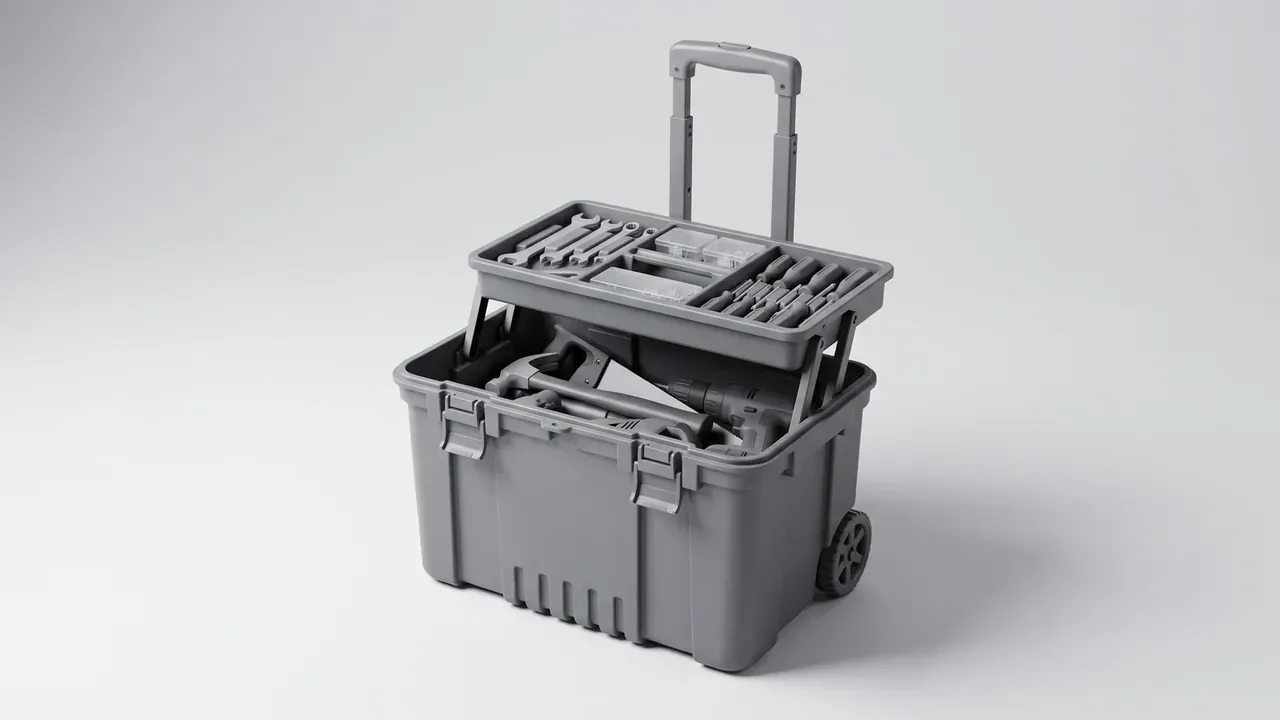
Loading is the last leg and the one that tips boxes over. A tail lift usually sits at 800 mm, so the case goes up first and forward second; with two people, one holds the handle, one takes the base. Where the drop exceeds 150 mm, do not lift it — use a board kept under 15°.
On the vehicle, restraint matters more than rolling. The box travels on its own wheels, so a 25 mm strap through the handle root to a floor anchor is what stops it under braking. Wheels toward the cab, handle toward the tail, and it pulls out in one movement.
Conclusion
Whether a plastic rolling tool box works inside a plant is decided mostly by four numbers taken before the order, not by technique afterwards. Match the wheel to the floor, the handle to the operator, the strap to the vehicle, and the run between workshops stays quiet. Get the numbers wrong and the best-built box still travels by hand. Put them on paper first, and the purchase order never has to say roughly.
This article discusses only the container (case body) side of specifications and design intent, and does not cover any handling, loading or use of the contents.
Related Reading
- Rolling a tool case between sites
- Comparing rolling cases on the numbers
- Tool boxes on an assembly line
Related Products
- 8 Series — Gun Cases; Military Equipment Cases; Camera Equipment Cases; Drone Cases; Watch Cases; Knife Cases; First Aid Cases; Electronics Equipment Cases
- WL8-2812 PP Gun Case — model WL8-2812
- All protective cases and toolboxes: 7 series, 158 models