

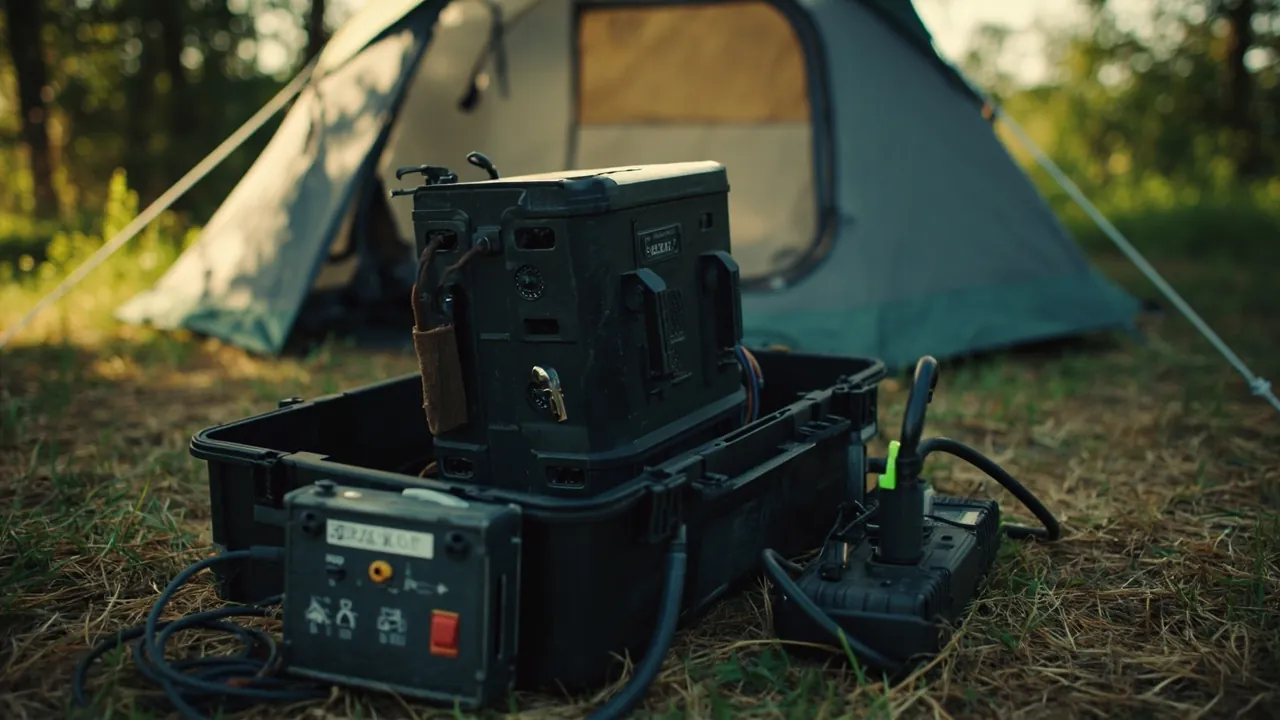
Direct answer: Choosing a protective case for portable power stations comes down to five practical questions: water resistance, dust resistance, impact resistance, heat dissipation and ventilation. Match each one to the cabinet material (PP, ABS, aluminum alloy), sealing level (IP54, IP65, IP67), buffer structure (reinforcement ribs + foam inlay), thermal design (air ducts + vent valves) and cable entry points (waterproof connectors). A qualified portable power station case should deliver IP65 or above, survive a 1.2 m drop without damage, work between -10°C and 60°C with stable heat dissipation, and must reserve air ducts and a waterproof vent valve—otherwise the lithium battery may go into thermal runaway in outdoor heat.
Contents
- 1. Portable power stations: working environment and five risks
- 2. Cabinet materials: PP, ABS, aluminum alloy
- 3. IP rating: IP54, IP65, IP67
- 4. Heat dissipation and ventilation design
- 5. Foam inlay and buffer: securing the battery
- 6. Cable entries and waterproof connectors
- 7. Typical configurations and scenario fit
- 8. Common mistakes and how to avoid them
- 9. FAQ: six frequent questions
- 10. Conclusion and inquiry
1. Portable power stations: working environment and five risks
A portable power station typically refers to a 300 Wh–3000 Wh lithium-ion battery storage device with an inverter that outputs AC 220 V, DC 12 V and USB 5 V for outdoor work, emergency backup, outdoor living, film shooting, road trips and disaster relief. Typical applications include:
- Outdoor work: surveying, exploration, inspection, maintenance;
- Emergency backup: hospitals, base stations, fire services;
- Outdoor living: road trips, camping, fishing;
- Film production: on-site equipment power;
- Disaster relief: field rescue teams, temporary command.
The core of a portable power station is lithium battery + inverter + control board, all of which are sensitive to the environment. Five outdoor risks:
| Risk type | Trigger | Impact |
|---|---|---|
| --- | --- | --- |
| Rain splash | Rainy work, tent drips, sea spray | Short circuit, electric shock, battery scrap |
| Dust ingress | Construction site, sandstorm, open air | Failed heat dissipation, connector contact failure |
| Drop impact | Loading and unloading, mountain carrying, climbing | Battery damage, control board fracture |
| High temperature | Summer outdoor, in-vehicle, direct sun | Thermal runaway, cell fire |
| Low temperature | High altitude, winter outdoor, night chill | Sudden capacity drop, cannot charge |
For these five risks the protective case must achieve water resistance, dust resistance, impact resistance, heat dissipation and temperature adaptability at the same time. Do not judge only by IP rating; evaluate the "five dimensions combined".
2. Cabinet materials: PP, ABS, aluminum alloy
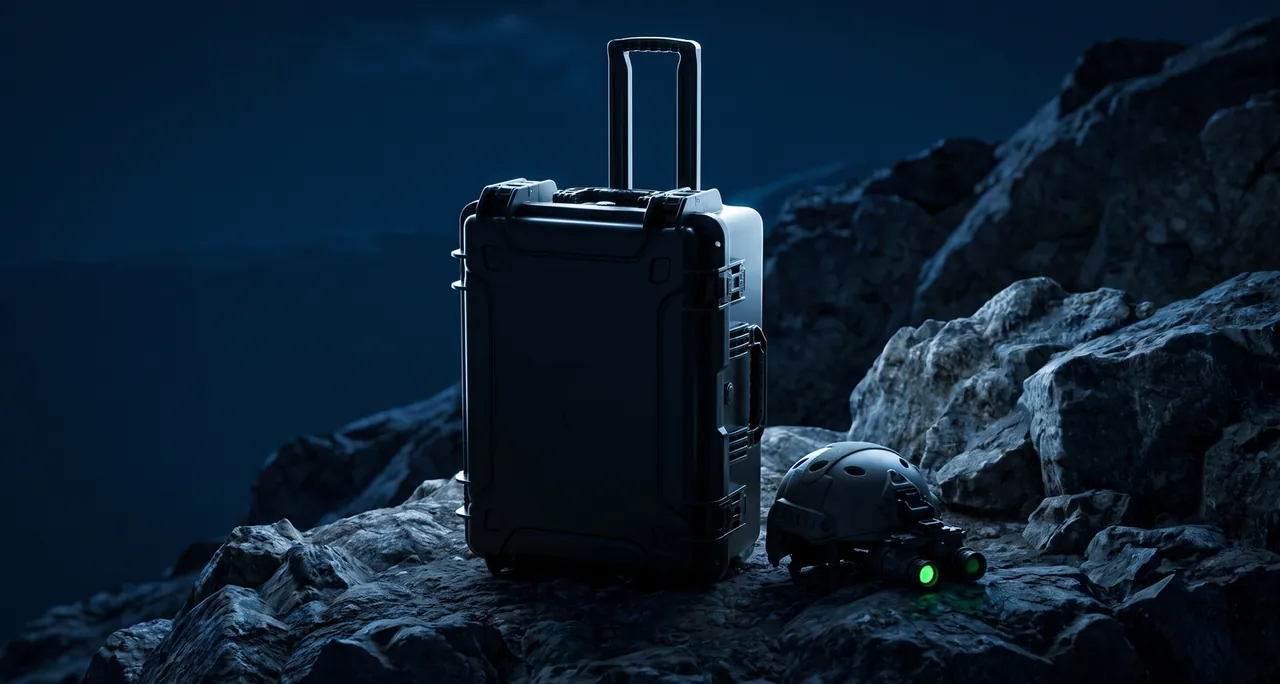
Cabinet material decides impact resistance, net weight, heat dissipation and appearance maintenance. Three mainstream materials compare as follows:
| Material | Impact resistance | Net weight | Heat dissipation | Weathering | Typical scenario |
|---|---|---|---|---|---|
| --- | --- | --- | --- | --- | --- |
| PP (polypropylene) | High toughness, cold and heat resistant | Light | Average | Excellent | General outdoor, low-temperature work |
| ABS | High surface hardness | Medium | Average | Good (needs UV protection) | Semi-outdoor, appearance-oriented |
| Aluminum alloy 6061 | Medium (less than engineering plastics) | Heavy | Excellent (metal conducts heat) | Excellent | High temperature, strong cooling, long lifetime |
Selection recommendations:
- Low temperature + general outdoor: prefer PP. PP keeps toughness at -20°C, does not crack on drop, and is light to carry.
- High temperature + strong cooling: prefer aluminum alloy. Metal cabinets conduct heat and, when paired with fins, dramatically reduce shell temperature, benefiting battery life.
- Semi-outdoor + appearance requirement: prefer ABS. ABS has a high-gloss surface that prints logos well, but UV resistance is weaker; for long outdoor use select a UV-resistant coated model.
- Heavy power station (>2000 Wh) + long-distance transport: prefer aluminum alloy + steel-frame hybrid structure, balancing pressure resistance and cooling.
A note of caution: PP and ABS are inherently insulating, but heat dissipation relies on passive air ducts only. Aluminum alloy cabinets cool well but must be electrically isolated from the battery cells to prevent the metal shell from short-circuiting the cell casing.
3. IP rating: IP54, IP65, IP67
IP rating decides the dust and water resistance of the portable power station case. Three common levels compare as follows:
| Level | Dust | Water | Scenario |
|---|---|---|---|
| --- | --- | --- | --- |
| IP54 | Dust-protected (not fully sealed but does not affect operation) | Splash-proof (no harmful effect from any direction splash) | Semi-outdoor, light rain |
| IP65 | Dust-tight | Jet-proof (no harmful effect from any direction jet) | Outdoor, rainy work |
| IP67 | Dust-tight | Short-term immersion (1 m depth for 30 minutes) | Heavy rain, marine, temporary wading |
Selection recommendations:
- Light outdoor (city park, campsite): IP54 is enough.
- Outdoor work (surveying, exploration, inspection): at least IP65.
- Marine / heavy rain / wading: IP67 is required.
- Extreme environments (desert dust, rainy construction, island work): IP65 + built-in desiccant dual protection.
A note of caution: IP67 immersion testing uses clean water, still water, ambient temperature. Sea water, chemical water and hot water will damage the seal; once they enter the case they corrode electronics. Marine operations need extra salt-spray protection + internal moisture-resistant coating.
4. Heat dissipation and ventilation design
Lithium batteries are prone to thermal runaway at high temperature, the largest safety hazard for portable power stations. Thermal design is the safety valve of the case.
1. Air duct design The case interior should reserve intake and outlet vents to form natural convection or forced-cooling channels. Typical approaches:
- Top exhaust, bottom intake (hot air rises);
- Add waterproof and dustproof filters at all vents;
- High-power (>2000 W) stations should add forced cooling fans + temperature sensors on the side.
2. Vent valve (pressure equalization / breathing valve) Rapid temperature changes or altitude shifts create internal-external pressure imbalance that may push the seal open. Waterproof vent valves (GORE-TEX or ePTFE membrane) allow gas through but block liquid water; they are mandatory.
3. Temperature control strategy The BMS of the portable power station should derate output at 55°C and trigger protective shutdown at 65°C. The case design must ensure:
- Operating ambient temperature -10~60°C;
- Internal temperature ≤ 15°C above ambient;
- Cooling ducts not blocked by cables or accessories.
A note of caution: in low temperature, lithium battery capacity drops by 30–50%. At high altitude (>3000 m), cooling efficiency drops; select a case with heating film to keep working at -20°C.
5. Foam inlay and buffer: securing the battery
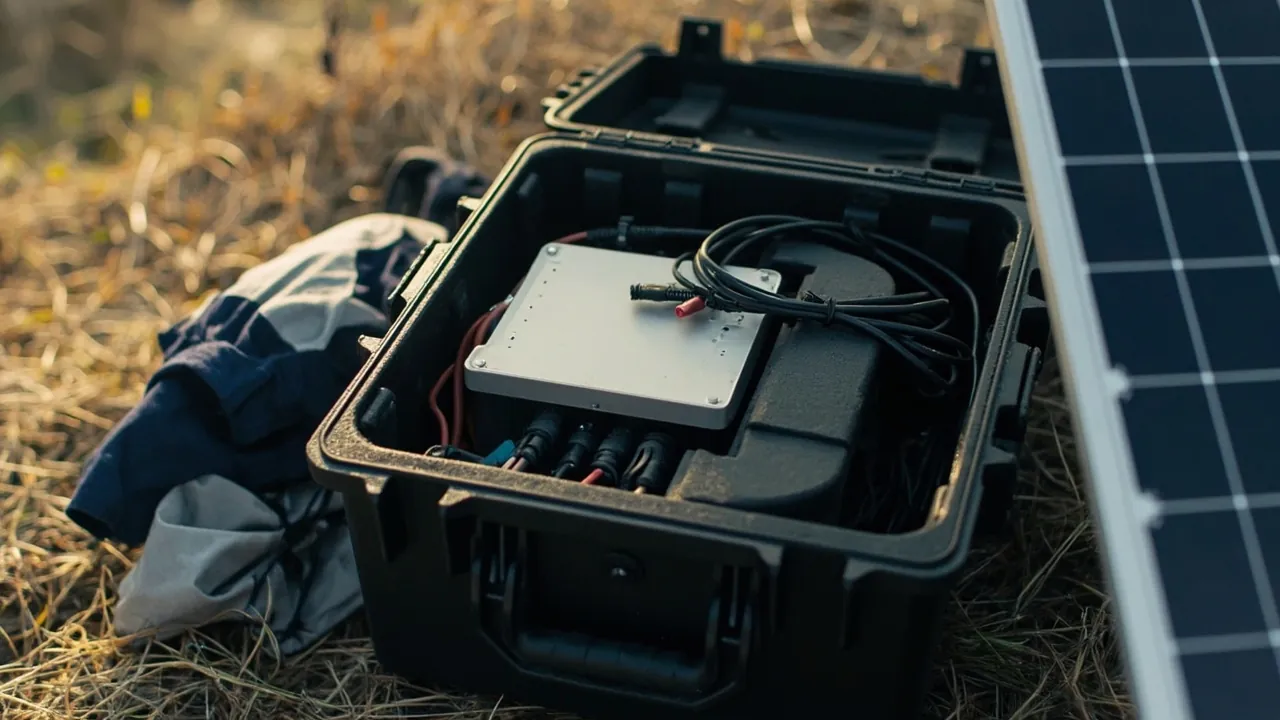
The internal battery pack, control board and inverter are immovable precision components that must be firmly secured. Common fixation methods:
1. EVA foam inlay EVA closed-cell foam with density 30–45 kg/m³ can be custom molded to cut slots matching the shape of the battery pack and control board, shock-absorbing, vibration-isolating, non-absorbent.
2. Bolt-fixed bracket Large power stations (>2000 Wh) have an internal battery pack weighing 15–25 kg; use metal bracket + M5 bolts + lock nuts directly fixed to the inner wall of the case. Do not rely on foam alone.
3. Shock-absorbing silicone pad Place silicone shock pads between the bottom of the battery pack and the bracket to absorb drop impact and vibration.
Fixation strength requirements:
- 1.2 m drop onto concrete, no movement of battery pack;
- After transport vibration test (ISTA 1A or 2B), battery pack has no displacement;
- Internal cables organised with cable clamps + spiral wrap to avoid wear during movement.
6. Cable entries and waterproof connectors
A portable power station must connect to mains, solar panels and loads; the cable entry points are the weakest link of the case. Common waterproof connector levels:
| Connector type | Protection | Scenario |
|---|---|---|
| --- | --- | --- |
| Standard rubber plug | Splash-proof | Semi-outdoor, temporary use |
| PG waterproof connector (IP67) | Jet-proof + short-term immersion | Outdoor work |
| M-type metal waterproof connector (IP68) | Continuous immersion + pressure resistance | Marine, long-term outdoor |
| Aviation connector (CX) | Dust/splash-proof + quick plug | Frequent wiring changes |
Cable entry design essentials:
- Position entries away from the top to avoid rainwater pooling;
- At least 3 entries (mains input, solar input, AC/DC output);
- Reserve ≥ 8 mm cable diameter margin at each entry for thicker cables;
- Add sealing ring + waterproof glue at each entry for double protection.
A note of caution: in long-term outdoor use, inspect seals every 6 months; hardened seals must be replaced. Seal material should preferably be silicone (weather-resistant, long life) or EPDM (ozone-resistant).
7. Typical configurations and scenario fit
Three reference configurations for fast decision-making:
| Item | Entry PP case | Main ABS case | Premium aluminum alloy case |
|---|---|---|---|
| --- | --- | --- | --- |
| Cabinet material | PP | ABS (UV-resistant) | Aluminum alloy 6061 |
| IP rating | IP54 | IP65 | IP67 |
| Cooling design | Natural convection + vent valve | Natural convection + vent valve + fan-ready | Forced cooling + temperature sensor |
| Operating temperature | -10~50°C | -10~55°C | -20~60°C |
| Drop height | 1.0 m | 1.2 m | 1.5 m |
| Foam inlay | EVA foam | EVA foam + metal bracket | Full metal bracket + silicone dampers |
| Cable entries | 2 PG connectors | 3 PG connectors | 4 M-type connectors |
| Net weight | ~4 kg | ~5.5 kg | ~7.5 kg |
| Suitable station capacity | 300–1000 Wh | 500–2000 Wh | 1000–3000 Wh |
| Scenario | Urban outdoor, light use | General outdoor work | Extreme environments, marine, long lifetime |
Scenario fit recommendations:
- Road trip camping / outdoor living: PP entry or ABS main tier.
- Outdoor work / emergency rescue: ABS main tier, IP65 + fan-ready.
- Marine / desert / long-term outdoor: aluminum premium tier, IP67 + forced cooling.
A note of caution: the configurations above are a general framework. OEM/ODM customization can adjust shell dimensions, entry positions, fan readiness, temperature control logic, color and logo. Bulk inquiries, spec-sheet requests and customization cooperation go through the on-site contact page or inquiry form.
8. Common mistakes and how to avoid them
The most common mistakes when choosing a portable power station case:
Mistake 1: judging by IP rating only, ignoring heat dissipation IP67 does not mean good cooling. Airtight cases heat up 15–20°C above ambient, drastically shortening battery life. Vent valves or fans are mandatory.
Mistake 2: using a regular toolbox as a case A regular toolbox has no forced air duct, no temperature control and no waterproof vent valve. Putting a portable power station into a regular toolbox is putting it into an "oven"; thermal runaway can occur in summer.
Mistake 3: not maintaining the seal Seals age. Inspect seals every 6 months; hardened seals must be replaced, otherwise the IP rating is meaningless.
Mistake 4: choosing the wrong foam density Foam that is too soft (<25 kg/m³) lets the battery pack "sink"; foam that is too hard (>50 kg/m³) loses cushioning. EVA foam density 30–45 kg/m³ is the practical range.
Mistake 5: ignoring cable entry design Cable entries are the weak link of the case. Top-mounted entries collect rainwater; place them on the side or facing downward. Each entry must use waterproof connector + seal ring double protection.
Mistake 6: ignoring transport vibration Portable power stations are frequently transported in vehicles. After ISTA 1A vibration testing the internal battery pack must not shift, and cables must not come loose. For transport scenarios select a case with metal bracket + bolt fixation.
9. FAQ: six frequent questions
Q1: Does a portable power station have to be in a case? Strongly recommended. Portable power stations are high value (5000–20000 RMB), and the internal lithium battery has safety risks under high temperature, drop and water immersion. A qualified case (500–2000 RMB) significantly extends lifetime and improves safety.
Q2: Will an aluminum alloy shell overheat the battery? No. Aluminum thermal conductivity is 167 W/(m·K), hundreds of times higher than ABS, so it actually dissipates heat better. However, electrically isolate the battery pack from the aluminum inner wall (silicone pad + insulation coating) to avoid short circuit.
Q3: Can an IP67 case operate underwater? No. IP67 only promises short-term immersion (1 m depth for 30 minutes) without damage; it cannot operate underwater. Moisture entering the case still risks corroding electronics; marine operations need IP67 + internal moisture-resistant coating dual protection.
Q4: How does a case protect the battery in low temperature?
- Select a case with operating temperature below -20°C;
- Add heating film + temperature switch inside, auto-start at low temperature;
- Add insulation cotton to the battery pack to slow temperature drops.
Q5: What size of case is appropriate? Derive from station capacity: 300 Wh station ~ 30×20×15 cm, 500 Wh ~ 35×22×18 cm, 1000 Wh ~ 40×25×22 cm, 2000 Wh ~ 50×30×28 cm, 3000 Wh ~ 60×35×32 cm. Reserve 30% extra space for cooling and cables.
Q6: How long does a custom case take? Generic specifications ship within 7–10 working days. Custom specifications (special dimensions, air duct design, temperature control logic, logo printing) usually take 20–30 working days. Larger batches stabilise delivery time.
10. Conclusion and inquiry
Conclusion: Choosing a portable power station case comes back to five questions: water resistance, dust resistance, impact resistance, heat dissipation and ventilation. Resolve them separately and match to cabinet material, IP rating, foam inlay, cable entries and temperature control. Recommended: ABS main tier or aluminum premium tier, IP65 or above, with reserved air ducts and vent valves, operating temperature -10~60°C, drop height ≥ 1.2 m.
Recommended tier by scenario: road trip camping / outdoor living PP entry or ABS main tier; outdoor work / emergency rescue ABS main tier; marine / desert / long-term outdoor aluminum premium tier.
Recommended dimensions by station capacity: 300 Wh ~ 30×20×15 cm, 500 Wh ~ 35×22×18 cm, 1000 Wh ~ 40×25×22 cm, 2000 Wh ~ 50×30×28 cm, 3000 Wh ~ 60×35×32 cm, with 30% reserve for cooling space.
Inquiry: bulk inquiries, spec-sheet requests and customization cooperation go through the on-site contact page or inquiry form.
11. Application cases: three real scenarios
Case 1: outdoor surveying team
A land surveying team working in western high-altitude mountains uses a 1500 Wh portable power station with an ABS main tier IP65 case, working temperature -10~55°C, drop height 1.2 m. Inside the cabinet:
- Battery pack (30 kg)
- Inverter (5 kg)
- Control board (2 kg)
Case size about 45×28×25 cm, net weight 5.5 kg. EVA molded foam inlay cuts slots matching battery pack shape, metal bracket + M5 bolts + lock nuts fix the battery pack. 2 PG waterproof connectors for input/output cables. At mountain low temperature (-15°C) the station works stably; forced cooling fan + temperature sensor triggers derating at 50°C. Total solution about 800 RMB.
Case 2: marine fishery operation
A deep-sea fishing vessel with 2000 Wh portable power station uses an aluminum premium tier IP67 case, working temperature -20~60°C. Inside the cabinet:
- Battery pack (45 kg)
- Inverter (8 kg)
- Charging control board
Case size about 55×32×28 cm, net weight 7.5 kg. Aluminum alloy shell + waterproof vent valve + 4 M-type metal waterproof connectors. In marine salt-spray and high-humidity environments, internal moisture-resistant coating protects electronics. Charging-time forced cooling is conducted by the aluminum shell, 10–15°C lower than plastic cases. Total solution about 1800 RMB.
Case 3: film crew location shooting
A film crew location shooting in a mountain area uses 1000 Wh × 2 portable power stations with a PP entry tier IP54 case, each case holds 1 pack. Case size about 40×25×22 cm, net weight 4 kg. EVA molded inlay + natural convection + vent valve. The crew loads and transports once per day, and passes ISTA 1A vibration test monthly. Total solution about 500 RMB per case, 2 cases 1000 RMB.
12. Maintenance: daily, wear parts, cleaning
The maintenance of portable power station cases relates to battery safety. Key points:
Daily maintenance:
- Handle with care, avoid drop impact;
- Check sealing ring for leaks after each use (listen for hiss when closed);
- Clean vent filters monthly (vacuum cleaner + soft brush).
Wear parts list:
- Sealing ring (silicone/EPDM): check every 6 months, replace when aged;
- Waterproof vent valve (GORE-TEX): check every 12 months, replace when aged;
- Waterproof connector: check seal ring every 6 months, replace when damaged;
- EVA inlay: check every 5 years, replace when aged;
- Fan (premium tier): check bearings every 3 years, replace when damaged.
Deep cleaning:
- Vacuum internal dust quarterly (vacuum cleaner);
- Wipe exterior with warm water + neutral cleaner, do not use high-pressure water gun;
- Do not wash internal electrical components with water.
Storage recommendations:
- Remove battery and store separately when not in use long-term (>3 months);
- Storage temperature -10~35°C, RH ≤ 60%;
- Do not expose to direct sunlight (plastic parts age faster);
- Charge the battery every 3 months (avoid over-discharge damage).
13. Selection checklist: printable comparison table
A printable portable power station case selection checklist (check item by item at purchase):
| No. | Item | Expected value | Actual value | Note |
|---|---|---|---|---|
| --- | --- | --- | --- | --- |
| 1 | Cabinet material | PP / ABS / aluminum alloy | ||
| 2 | IP rating | IP65 / IP67 | ||
| 3 | Drop height | ≥ 1.2 m | ||
| 4 | Operating temperature | -10~60°C | ||
| 5 | Cooling design | air duct + vent valve | ||
| 6 | Inlay material | EVA 30–45 kg/m³ | ||
| 7 | Battery fixation | metal bracket + bolts | ||
| 8 | Cable entries | ≥ 3 PG / M connectors | ||
| 9 | Waterproof vent valve | GORE-TEX | ||
| 10 | Fan readiness | high power ≥ 1 | ||
| 11 | Temperature sensor | ≥ 1 | ||
| 12 | Net weight | per spec | ||
| 13 | Case dimensions | per station capacity | ||
| 14 | Internal moisture-resistant coating | marine / rainy scenario | ||
| 15 | Salt-spray protection | marine scenario | ||
| 16 | Logo printing | per requirement | ||
| 17 | Wear parts stock | ask supplier | ||
| 18 | Warranty | ≥ 1 year | ||
| 19 | Lead time | per spec | ||
| 20 | Inquiry channel | on-site contact page / inquiry form |
14. Future trends: high energy density, smart BMS, modular
Future trends of portable power station cases concentrate in three directions:
1. High energy density
- Solid-state batteries entering consumer market bring single case capacity up to 5000 Wh, case dimensions unchanged;
- Sodium-ion batteries replacing lithium-ion batteries deliver better low-temperature performance, working at -30°C.
2. Smart BMS
- BMS connects to mobile app, remotely monitors temperature, voltage and current;
- Automatic battery health diagnosis with early warning;
- Multi-pack parallel auto-balancing.
3. Modular
- Case adopts modular battery bay, flexibly configured with 1/2/4 battery packs;
- Inlet and outlet adopt universal interface, different stations can share the same case;
- Case and charging post integrated, charge by connecting external charging post.
15. Terminology
- Portable Power Station: 300 Wh–3000 Wh lithium-ion battery storage device.
- IP65: dust-tight + jet-proof.
- IP67: dust-tight + short-term immersion (1 m depth for 30 minutes).
- BMS: Battery Management System.
- Thermal runaway: battery temperature out of control, causing fire or explosion.
- VCI: Volatile Corrosion Inhibitor.
- Vent valve: a membrane valve that allows gas through but blocks liquid water (GORE-TEX / ePTFE).
- PG waterproof connector: IP67-rated waterproof cable connector.
- M-type metal waterproof connector: IP68-rated metal waterproof connector.
- ISTA: International Safe Transit Association.
- MIL-STD-810H: US military standard environmental test methods; environmental adaptability verification follows this method.
- OEM: contract manufacturing.
- ODM: design + contract manufacturing.
Related reading and products
On-site related reading (grouped by topic):
- What is an outdoor protective case? Main applications
- Difference between IP65, IP66 and IP67 ratings: how to choose
- What is an IP67 protective case? Core capability and selection essentials
- Why do outdoor protective cases need waterproof design
- Roles of pressure equalization valves (breathing valves) on protective cases
- How outdoor protective cases handle rain and humid environments
- How to choose and use outdoor protective cases in extreme temperatures
- Requirements for lithium battery transport cases: aviation and ground safety norms
- How to choose outdoor adventure and camping gear cases: balancing lightness and lightweight protection
- Requirements for communication electronics protective cases: outdoor portable equipment solutions
16. Industry-specific custom versions and certifications
Aviation dedicated portable power stations have strict weight, capacity, and safety requirements. Must comply with ICAO dangerous goods regulations, civil aviation authority regulations, and airline-specific requirements. Typical configuration: lithium iron phosphate battery (more stable) plus aluminum shell plus IP67 + forced cooling plus heating film. The complete solution is 2 to 3 times the price of a regular portable power station.
Medical dedicated portable power stations (medical-grade UPS and emergency power) must comply with medical electrical equipment safety standard IEC 60601. Typical configuration: lithium battery plus aluminum shell plus IP65 + silent fan plus backup battery module. The complete solution is 3 to 5 times the price of a regular portable power station.
Polar research portable power stations (Antarctic and Arctic) require operation below -40°C. Typical configuration: low-temperature battery plus aircraft-grade panel shell plus IP67 + heating film plus temperature monitoring. The complete solution requires MIL-STD-810H low-temperature environment verification (as a product environmental adaptability test basis, not military certification).
Military portable power stations require vibration resistance, impact resistance, and waterproof. Typical configuration: lithium iron phosphate battery plus aircraft-grade panel shell plus IP67 + forced cooling plus heating film plus satellite communication interface. The complete solution requires MIL-STD-810H environmental adaptability verification (as a product environmental adaptability test basis, not military standard certification).
17. Safe use regulations
Charging regulations: use the original charger; do not charge at high temperature (above 45°C) or low temperature (below -10°C); do not charge in an enclosed space; stop automatically after full charge, do not overcharge.
Discharging regulations: do not over-discharge (stop use when capacity below 10 percent); do not short-circuit the output terminal; do not exceed power rating (do not exceed 1.2 times rated power).
Storage regulations: keep capacity 30 to 60 percent when not in use long-term; storage environment -10 to 35°C, RH not exceeding 60 percent; avoid direct sunlight.
Transport regulations: lithium battery transport must comply with UN 38.3 standard; air transport must comply with IATA DGR (Dangerous Goods Regulations); sea transport must comply with IMDG Code.
Disposal regulations: do not casually discard lithium batteries; hand over to professional recycling institutions; prevent environmental pollution from electrolyte leakage.
18. Common faults and troubleshooting
Common faults and troubleshooting methods for portable power stations include: cannot start (battery over-discharge or protection board locked, charge for 30 minutes then retry); slow charging (insufficient charger power or battery low temperature, replace charger or heat battery); capacity drop (battery aging or too many cycles, replace cell); output interruption (overload protection or over-temperature protection, reduce load or lower temperature); shell heat (high power output or high ambient temperature, reduce power or improve cooling); loose connector (connector oxidation or plug wear, replace connector); display abnormal (control board failure, return to factory for repair); abnormal noise (fan failure or internal loose, return to factory for repair).
19. Difference from other protective cases on the site
This article discusses portable power station cases (lithium battery storage protection cases), different from other protective cases on the site: photography equipment protective case focuses on shock and moisture-proof; drone protective case focuses on lightweight and portable; outdoor power supply protective case focuses on cooling and temperature control; precision instrument protective case focuses on magnetic shielding and rust prevention; lithium battery transport protective case focuses on UN 38.3 certification. Different equipment needs different protective cases. The selection principle is the comprehensive match of the five questions: water resistance, dust resistance, impact resistance, cooling, and temperature/humidity control.
20. Brand history
KeXin New Materials (Guangdong) Co., Ltd., founded in 2014, with a Guangdong Zhongshan factory of 18000 square meters, 80 plus equipment units and 100 plus employees, producing 150 plus specifications of plastic toolboxes and protective cases. The brand kexinMaterials and JUNZHJIA has passed ISO9001, REACH, California Prop 65 certifications; ABS and PP material has passed RoHS testing; the protective case product line performs MIL-STD-810H environmental adaptability verification (product-line level testing basis, not military certification); the company holds 20 plus utility model and design patents. Provides one-stop OEM and ODM customisation service. Bulk inquiries, spec-sheet requests and customization cooperation go through the on-site contact page or inquiry form.
21. Frequently asked questions
Q: Can portable power stations be carried on planes? A: According to civil aviation regulations, lithium batteries with rated energy not exceeding 100 Wh can be carried, exceeding requires declaration. 100 to 160 Wh requires airline approval, above 160 Wh is prohibited. Subject to the latest airline regulations.
Q: Can portable power stations go on high-speed rail? A: High-speed rail allows lithium batteries not exceeding 100 Wh, 100 to 160 Wh requires intact packaging. Above 160 Wh is prohibited. Subject to the latest railway regulations.
Q: Can portable power stations be used on ships? A: Yes, but must comply with shipping company regulations. Some shipping companies require lithium batteries to be separately packaged, fixed and labeled.
Q: How long is the lifetime of a portable power station? A: Lithium battery cycle 500 to 1000 times (charge-discharge cycle). At 1 charge-discharge per day, lifetime 2 to 3 years. High-quality lithium iron phosphate battery cycles 2000 to 3000 times, lifetime 6 to 8 years.
Q: Can portable power stations be used in parallel? A: Some stations support multi-parallel to increase total capacity and power. Must be same brand, same model, same capacity for parallel use.
Q: Can portable power stations be charged by solar? A: Yes. Configure solar panel (18V or 100W etc.) and MPPT controller.
Q: Can portable power stations be charged by car cigarette lighter? A: Yes. Configure 12V to 220V inverter, but charging speed is slow.
22. Battery technology development trends
Solid-state battery uses solid electrolyte to replace liquid electrolyte, energy density improved 50 to 100 percent, safety greatly improved. Expected to enter consumer market 2027 to 2030. Then portable power station single case capacity can reach 5000 Wh.
Sodium-ion battery uses sodium resources (much more than lithium) to replace lithium battery, better low-temperature performance (-30°C still works). Suitable for polar and cold-zone scenarios. Disadvantage is energy density lower than lithium battery (about 70 percent).
Lithium-sulfur battery theoretical energy density is 5 to 10 times lithium battery, theoretical capacity up to 2600 Wh/kg. But cycle life and stability are still challenges. Expected commercial use after 2030.
Smart BMS connects to mobile App, can real-time monitor temperature, voltage, current, cycle count, automatic fault warning. Multi-pack parallel automatic balancing.
23. Common purchasing mistakes
Looking at capacity only, not power: many users only look at the 5000 Wh capacity, ignoring rated output power. A 5000 Wh station with only 500 W output cannot drive a 2000 W electric oven. Choosing a station must consider both capacity and power.
Ignoring cycle life: different battery cycle life varies greatly: ternary lithium 500 to 1000 times, lithium iron phosphate 2000 to 3000 times, sodium-ion 1000 to 2000 times. Long lifetime requirements choose lithium iron phosphate.
Ignoring low-temperature performance: ordinary lithium battery capacity drops 30 to 50 percent at -10°C. Low-temperature scenarios must select low-temperature battery plus heating film.
Ignoring safety certification: inferior stations may not have UN 38.3, IEC 62133 and other safety certifications. Power station fire and explosion incidents are mostly related to inferior products. Must check safety certification when purchasing.
Ignoring warranty period: mainstream stations warranty 1 to 3 years. Priority to brands with long warranty period and good after-sales service.
24. Long-term use economics
Take a 1500 Wh station as example: one-time purchase 5000 RMB; replacement battery (1 time) 2500 RMB; electricity fee (500 times per year) 1500 RMB. 3-year total cost 9000 RMB, annual average 3000 RMB per year. Compared to mains electricity: 1500 Wh times 0.5 RMB per Wh times 500 times per year = 375 RMB per year (inconvenient for outdoor use). The convenience of portable power stations far exceeds the cost difference.
25. Brand horizontal comparison and selection advice
Mainstream portable power station brands include: EcoFlow 256 Wh to 3600 Wh with fast charging and X-Boost at 2000 to 15000 RMB; Jackery 240 Wh to 2000 Wh lightweight and portable at 1500 to 10000 RMB; Bluetti 300 Wh to 5000 Wh with lithium iron phosphate and long life at 2000 to 20000 RMB; Anker 256 Wh to 1500 Wh with power bank origin and smart BMS at 1500 to 8000 RMB; JUNZHJIA 500 Wh to 3000 Wh with OEM and ODM customisation at 1000 to 8000 RMB. Selection advice: outdoor camping and short-distance self-driving select 500 to 1000 Wh lightweight version (within 5 kg); outdoor work and emergency rescue select 1000 to 2000 Wh mainstream version (within 10 kg); marine and long-term outdoor select 2000 to 3000 Wh large capacity version (aluminum shell); international transport select IATA certified version (UN 38.3).