

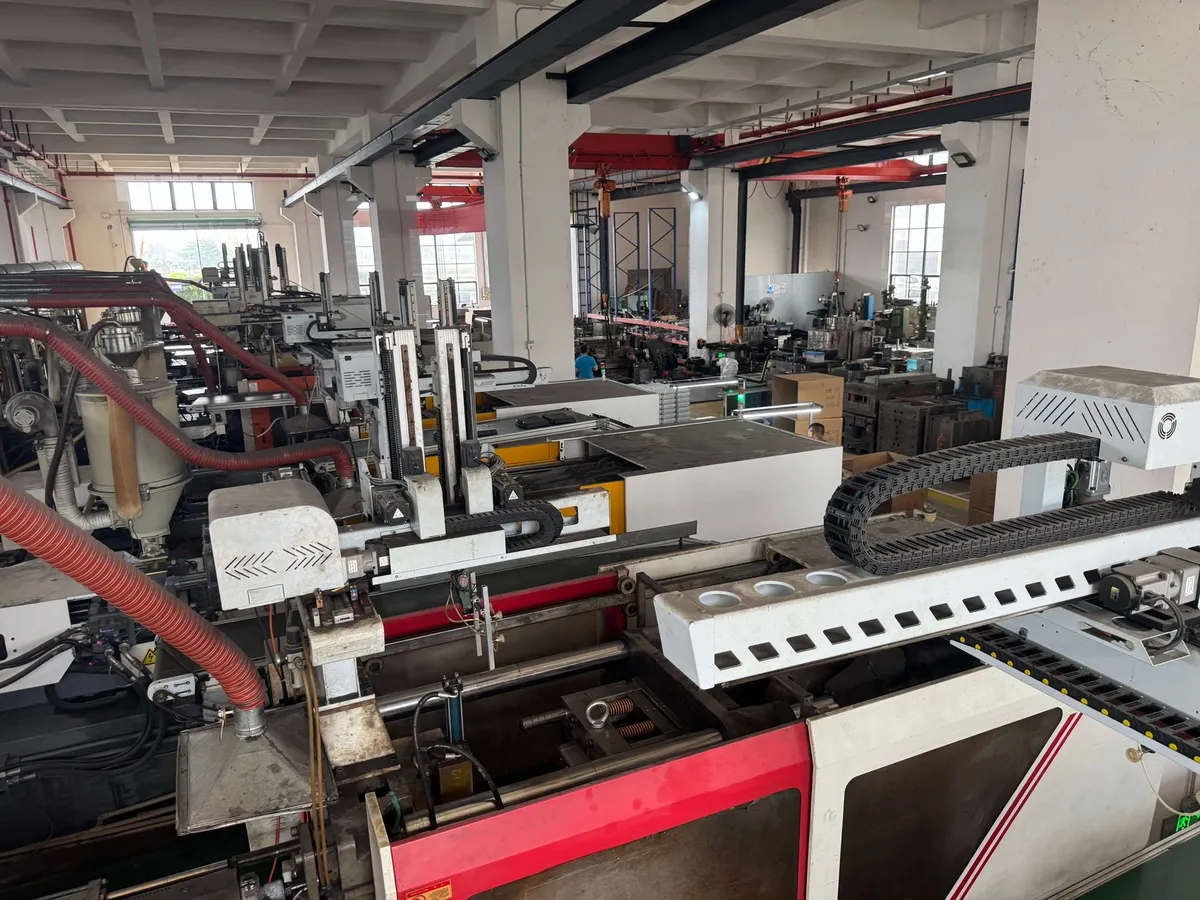
A case carrying power tools is an ordinary packaging problem until it carries lithium-ion batteries. The moment batteries are in it - as spares, as kits, or installed in the tools - the consignment is regulated dangerous goods, and the case has to support requirements that have nothing to do with impact protection.
This article is a design and planning overview of how a case supports lithium battery transport. It is not a dangerous goods declaration, and it does not replace the current IATA DGR, the applicable UN Manual revision, your carrier's conditions, or advice from a certified dangerous goods adviser. The rules in this area are revised; verify before shipping.
What the rules require, and what the case contributes
| Requirement | What it means | How the case supports it |
|---|---|---|
| UN38.3 test series | Cells and batteries must pass eight tests before transport; a test summary must be available | Documentation, not case design - but the case must not alter the battery's configuration |
| Correct UN number and packing instruction | UN3480 / PI965 standalone; UN3481 / PI966 packed with equipment; UN3481 / PI967 contained in equipment | The case must match the declared configuration - tools with batteries installed is a different shipment from spares in a case |
| State of charge limit | A maximum charge level for standalone and spare batteries, tightened from the 2026 DGR edition | Not a case function, but the case is where the discharge record travels with the kit |
| Short circuit prevention | Terminals must be protected and batteries separated | Individual cavities in non-conductive foam, one battery per cavity |
| Movement and impact protection | Packaging must prevent movement, crushing and impact damage | Cut foam cavities, no voids, structural shell |
| Stack strength | Packages must withstand stacking equivalent to a defined stack test | Rigid shell, load distributed through the structure rather than through the contents |
The UN38.3 test series in plain terms
- Altitude simulation. Low pressure, as in an aircraft cargo hold.
- Thermal cycling. Repeated passage between hot and cold extremes.
- Vibration. Sustained transport vibration.
- Shock. A high-acceleration mechanical impact.
- External short circuit. Behaviour when the terminals are shorted.
- Impact or crush. Mechanical abuse of the cell itself.
- Overcharge. Charging beyond the normal limit.
- Forced discharge. Driving current backwards through the cell.
The point of the series is to answer one question: if this battery is abused in the way transport abuses batteries, does it contain the failure or does it propagate? Everything downstream - the state-of-charge limit, the separation requirements, the packing instructions - exists to reduce the energy available if the answer is unfavourable.
Case design: separation is the deliverable
Whatever else a battery case does, its primary job under the regulations is to guarantee separation. That is a design outcome, not a packing instruction, and it is the difference between a case that enforces safety and a box that merely permits it.
- One battery per cavity. Not a compartment that batteries are placed into. A cut cavity per battery, sized so the battery cannot rotate or lie across two terminals.
- Non-conductive foam throughout. The foam is the separator; it must not be a conductive or anti-static grade that creates a path between terminals.
- Terminal recesses. Where the battery format allows it, recess the terminal end so it cannot contact the cavity wall under load.
- Retention under vibration. The cavity should grip the battery body, not the terminals, and hold it without the lid pressing on the cell.
- Separate the metal. Bits, blades, chuck keys and fixings in the same case as batteries are a short-circuit risk. Give them their own cavity, physically separated from the battery zone.
Anti-static foam, correct for electronics, is the wrong choice for an uninsulated battery cavity. It is deliberately resistive rather than insulating, and the requirement here is the opposite. Say which you need when specifying.
Planning a shipment
- Classify first: are the batteries installed in tools, packed with them, or shipped alone? The packing instruction follows from the answer, not from preference.
- Confirm the current state-of-charge requirement with your carrier, and record the discharge evidence.
- Confirm whether UN-specification packaging is required for your consignment, or whether your reusable case is accepted as the outer layer.
- Get the test summary for the actual cells being shipped, and check which revision of the manual it cites.
- Check quantity and weight limits per package - these are per-package, not per-shipment, and a single oversized case can fail where two smaller ones pass.
- Confirm markings and labels before the case arrives at the airport; a technically compliant case without the correct label is still refused.
The case is the part of this that you control, and it is where the physical requirements - separation, retention, movement prevention, stack strength - are either guaranteed by design or left to chance. For JUNZHIJIA cases intended to carry lithium batteries, describe the battery format, the count, whether terminals are insulated, and the classification you will ship under, so the cavity layout and foam specification are designed against the separation requirement rather than adapted afterwards.
Related Products
- 8 Series — Gun Cases; Military Equipment Cases; Camera Equipment Cases; Drone Cases; Watch Cases; Knife Cases; First Aid Cases; Electronics Equipment Cases
- WL8-2812 PP Gun Case — model WL8-2812
- All protective cases and toolboxes: 7 series, 158 models