

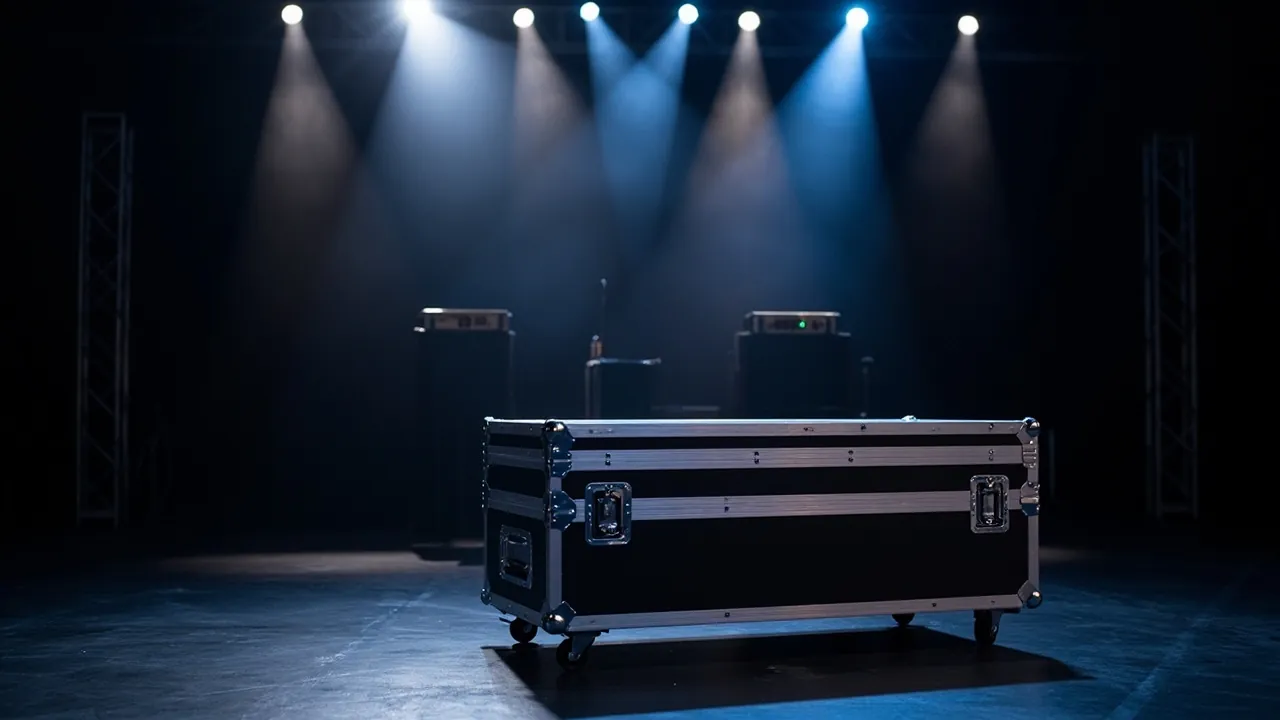
Direct answer: Choosing a protective case for stage lighting and audio equipment comes down to six practical questions. How well does it absorb vibration? How well does it resist impact? Can it stack safely? Can it be identified quickly? Can it survive different transport modes? Can it be loaded and unloaded efficiently? Match each one to the cabinet material (PP, ABS, aircraft-grade panel), buffer system (EVA molded foam + honeycomb plate), stacking structure (interlocking bosses), identification system (labels + color + numbering), transport mode (road, air, sea), and loading efficiency (forklift slot, trolley handle, wheels). A qualified touring case should deliver drop height ≥ 1.5 m without damage, ISTA 3A vibration test pass, single-box load ≥ 80 kg, stackable layers ≥ 4—enough to handle the high-intensity transport of national and international tours.
Contents
- 1. Six risks of touring transport
- 2. Cabinet materials: PP, ABS, aircraft-grade panel
- 3. Buffer and inlay: EVA molded foam, honeycomb, suspension
- 4. Stacking and interlocking: bosses, locating blocks, anti-slip
- 5. Identification and labeling: tags, color, numbering
- 6. Transport modes: road, air, sea
- 7. Loading and unloading: forklift, trolley, wheels
- 8. Typical configurations and scenario fit
- 9. Common mistakes and how to avoid them
- 10. FAQ: six frequent questions
- 11. Conclusion and inquiry
1. Six risks of touring transport
Stage lighting and audio equipment (PAR lights, moving heads, laser lights, fog machines, control consoles, amplifiers, microphones, cables) face six typical risks during touring transport:
| Risk type | Trigger | Impact |
|---|---|---|
| --- | --- | --- |
| Loading impact | Forklift loading, truck loading and unloading | Equipment housing fracture, internal components drop |
| Road vibration | Long-distance road, pothole roads | Loose screws, optical element shift, solder joint crack |
| Stacking pressure | Multi-layer stacking in truck, warehouse | Bottom case deformation, bottom equipment crush |
| Rain splash | Rainy loading, marine show | Control board short circuit, power failure |
| Dust contamination | Construction stage, outdoor concert | Optical element dust, heat dissipation failure |
| High temperature | Summer outdoor, sealed truck at night | Lithium battery / capacitor bulge, equipment damage |
For these six risks, the touring case must deliver vibration resistance, impact resistance, stackability, identification, transport adaptability, and loading efficiency at the same time.
2. Cabinet materials: PP, ABS, aircraft-grade panel
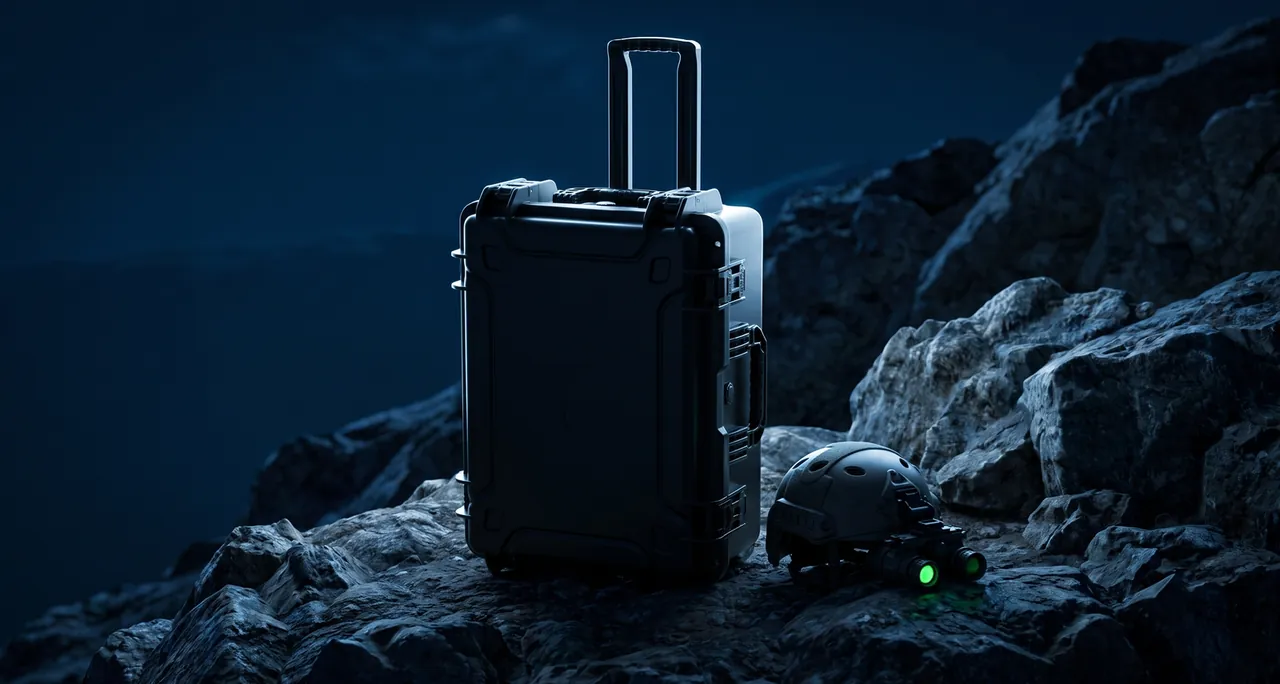
Cabinet material decides impact resistance, net weight, lifetime and appearance. Three mainstream materials compare as follows:
| Material | Impact resistance | Net weight | Lifetime | Appearance | Typical scenario |
|---|---|---|---|---|---|
| --- | --- | --- | --- | --- | --- |
| PP (polypropylene) | High toughness, cold and heat resistant | Light | 5–8 years | Matte | General touring |
| ABS | High surface hardness | Medium | 5–8 years | High gloss | High-end shows |
| Aircraft-grade panel (ABS+PC) | Extremely strong, low-temperature -40°C | Medium | 8–10 years | Matte/textured | International tours, extreme environments |
Selection recommendations:
- Domestic tours + mid-budget: prefer PP. PP has high toughness, does not crack on drop, and is light.
- High-end shows + appearance requirement: prefer ABS. Glossy surface and excellent logo printing.
- International tours + extreme environments: prefer aircraft-grade panel (ABS+PC). Low-temperature resistance -40°C, impact resistance is extremely strong; the mainstream choice for touring aviation cases.
A note of caution: aircraft-grade panel costs 2–3× a PP case, but the lifetime is 50–100% longer, so the long-term total cost is not necessarily higher. Strongly recommended for international tours and high-end shows.
3. Buffer and inlay: EVA molded foam, honeycomb, suspension
The buffer system is the core of a touring case, deciding equipment safety under transport vibration and impact. Three common buffer methods compare as follows:
| Buffer method | Impact resistance | Vibration resistance | Cost | Scenario |
|---|---|---|---|---|
| --- | --- | --- | --- | --- |
| EVA molded foam inlay | Excellent | Medium | Medium | Irregular equipment (PAR lights, consoles) |
| Honeycomb plate | Good | Excellent | High | Standard equipment stacking |
| Suspension system (spring/air-cushion) | Excellent | Excellent | Very high | Ultra-precious equipment (laser, projector) |
1. EVA molded foam inlay EVA closed-cell foam with density 30–45 kg/m³ is custom molded to cut slots matching the equipment shape. EVA inlay is the first choice for touring cases: impact-resistant, identifiable (equipment positions at a glance), non-absorbent.
2. Honeycomb plate Honeycomb plate is a corrugated plastic plate with light weight and good compression; suitable for stacking standard-sized equipment. Combined with EVA inlay, bottom honeycomb plate + top EVA inlay is a common configuration.
3. Suspension system Spring or air-cushion suspension is used for ultra-precious equipment (professional lasers, high-end projectors), absorbing more than 80% of vibration and impact. Very high cost, only used for equipment priced over 500,000 RMB.
A note of caution: EVA inlay density selection is critical. 30–35 kg/m³ is on the soft side for lightweight equipment; 40–45 kg/m³ is on the firm side for heavy equipment (moving heads, amplifiers). Density too low: equipment sinks in; density too high: buffer is lost.
4. Stacking and interlocking: bosses, locating blocks, anti-slip
Touring cases must stack in trucks, containers and warehouses at multiple layers. Stacking structure is the hard craft of a touring case.
1. Interlocking bosses The top of the case should have bosses, and the bottom should have matching grooves. When stacking multiple layers, the bosses of the upper case lock into the grooves of the lower case, anti-slip, anti-displacement. Boss height ≥ 5 mm, groove depth ≥ 6 mm.
2. Locating blocks Some touring cases add metal locating blocks at the four corners; when stacking multiple layers, the blocks engage with each other to provide 360° anti-slip protection.
3. Anti-slip pad The bottom of the case should have rubber anti-slip pads to prevent sliding when stacked as a single layer.
Stacking safety:
- Single-box top load ≥ 80 kg;
- Stacking layers ≥ 4 (about 2.5–3 m high);
- Forklift slot position should not break the stacking structure;
- For high stacking, fix with straps to prevent collapse during transport.
5. Identification and labeling: tags, color, numbering
The identification system of a touring case directly affects loading, finding and returning efficiency. Three common identification methods:
| Identification | Use | Strength |
|---|---|---|
| --- | --- | --- |
| Label stickers | Equipment name, case number, weight, destination | Detailed information |
| Color coding | By equipment type / department | Fast visual identification |
| Number / QR code | Unique number + QR code | Asset management, scan query |
Identification design essentials:
- Each case should have a unique number (e.g., SHOW-2026-001);
- The number maps to an equipment list; scanning shows equipment, weight, purpose inside the case;
- Color coding convention: red = lighting, yellow = audio, blue = cables, green = props;
- Identification should be on at least two faces (front + top) so it can be seen from above after loading;
- Identification should be wear-resistant, waterproof, UV-resistant; laser engraving or UV printing is recommended.
A note of caution: the touring team should check case numbers after each show, and replenish missing or damaged cases promptly. A good identification system can lift touring loading efficiency by 30–50%.
6. Transport modes: road, air, sea
Different transport modes impose different requirements on the case:
| Transport mode | Vibration intensity | Drop risk | Protection requirement |
|---|---|---|---|
| --- | --- | --- | --- |
| Road | Medium | Medium | IP54 + ISTA 3A |
| Air | Low | High (handling) | IP54 + high drop test |
| Sea | High (long voyage) | Low | IP65 + moisture-proof + salt-spray |
Road is the most common touring transport mode; vibration intensity is medium, requiring the case to pass ISTA 3A vibration testing (simulating 1000 km of truck transport).
Air requires the case single-box weight ≥ 1.5× net weight, otherwise it is treated as "low-density cargo" with surcharge. Drop test requirement ≥ 1.5 m.
Sea requires the case IP65 + internal moisture-proof packaging + salt-spray protection; long voyages (30+ days) of high temperature and humidity corrode metal components.
A note of caution: international tours usually combine road, air and sea transport. International leg by air or sea, domestic leg by road. The case must adapt to multiple transport modes.
7. Loading and unloading: forklift, trolley, wheels
The loading and unloading efficiency of touring cases directly determines touring cost. Three loading methods compare as follows:
| Loading method | Suitable case size | Efficiency |
|---|---|---|
| --- | --- | --- |
| Forklift | Large case (with forklift slot) | High |
| Trolley | Medium case (with trolley handle and wheels) | Medium |
| Wheels | Small case (with wheels) | High |
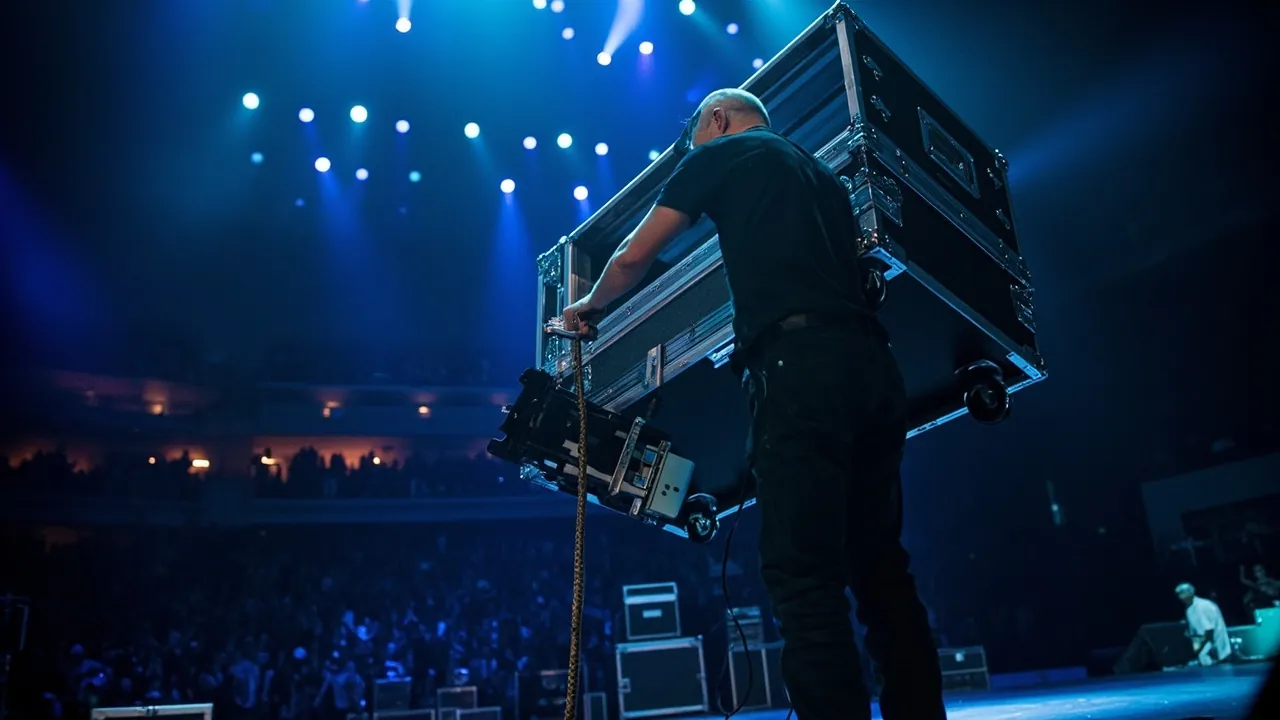
Forklift slot: large cases (>1 m) should have forklift slots so the forklift can insert directly, single-box load ≥ 200 kg. The slot position should not break the case sealing.
Trolley handle: medium cases (0.5–1 m) should have a telescopic handle + 2 wheels, easy for one person to push. Handle load ≥ 60 kg.
Wheels base: small cases (<0.5 m) should have 4 silent wheels that can roll on the floor.
A note of caution: loading sequence design matters. Common tools / temporary equipment go on the top, hard-to-reach equipment goes on the bottom. Loading manifests should be printed in advance.
8. Typical configurations and scenario fit
Three reference configurations for fast decision-making:
| Item | Entry PP touring case | Main ABS touring case | Premium aircraft-grade panel touring case |
|---|---|---|---|
| --- | --- | --- | --- |
| Cabinet material | PP | ABS | ABS+PC aircraft-grade panel |
| Drop height | 1.0 m | 1.2 m | 1.5 m |
| Buffer inlay | 30 kg/m³ EVA | 35 kg/m³ EVA + honeycomb plate | 45 kg/m³ EVA + honeycomb plate + suspension-ready |
| Stacking layers | 3 | 4 | 5 |
| Interlocking bosses | Basic | Two-way interlock | 360° interlock |
| Identification | Label stickers | Labels + color | Laser engraving + QR code |
| Net weight | Light | Medium | Medium |
| Scenario | Domestic small and medium tours | Domestic large tours | International tours, high-end shows |
Scenario fit recommendations:
- Domestic small and medium tours: PP entry tier.
- Domestic large tours: ABS main tier.
- International tours, high-end shows: aircraft-grade panel premium tier.
A note of caution: the configurations above are a general framework. OEM/ODM customization can adjust inlay mold, stacking structure, identification system, color and logo. Bulk inquiries, spec-sheet requests and customization cooperation go through the on-site contact page or inquiry form.
9. Common mistakes and how to avoid them
The most common mistakes when choosing a touring case:
Mistake 1: judging only by the cabinet, ignoring the inlay EVA inlay is the core of a touring case. With the same cabinet, different inlay designs give completely different protection results.
Mistake 2: too many stacking layers Multi-layer stacking (>5 layers) increases bottom-case load risk. Recommend stacking ≤ 4 layers; high stacking should be strap-fixed.
Mistake 3: ignoring loading efficiency Touring loading time is tight (usually 4–8 hours); identification system + forklift slot + trolley handle determine loading efficiency. Inefficient cases raise show cost.
Mistake 4: ignoring international transport requirements International touring involves air and sea transport. International legs have stricter requirements on weight, drop, and IP rating; select aircraft-grade panel premium tier + ISTA 3A tested.
Mistake 5: ignoring moisture-proof for sea transport Marine high temperature and humidity corrode metal components. Sea transport scenarios must have IP65 + internal moisture-proof packaging.
Mistake 6: ignoring identification durability Standard label stickers fade within 1 month outdoors. Touring case identification should use laser engraving or UV printing, lifetime 5+ years.
10. FAQ: six frequent questions
Q1: Do touring cases have to use EVA molded foam inlay? Strongly recommended. EVA inlay can cut slots matching the equipment shape, impact-resistant, identifiable, non-absorbent, the core of a touring case. Standard-sized equipment can use honeycomb plate, but irregular equipment (PAR lights, consoles) must use EVA inlay.
Q2: How much stronger is aircraft-grade panel than ABS? Aircraft-grade panel (ABS+PC) impact strength is 2–3× ordinary ABS, working temperature -40~80°C. Strongly recommended for international tours and high-end shows.
Q3: How many stacking layers are safest? ≤ 4 layers is the safest, about 2.5–3 m high. Stacking > 4 layers requires strap fixation + bottom-case load verification.
Q4: Do touring cases need IP67? Usually IP54 is enough (dust and splash proof). Marine tours / rainy outdoor / long sea voyages need IP65. IP67 is not needed (the case does not directly contact water).
Q5: How long does custom inlay take? Standard EVA inlay ships within 7–10 working days. Custom molds (special equipment shapes) take 20–30 working days. Larger batches stabilise delivery time.
Q6: How much more expensive is an aircraft-grade panel case? An aircraft-grade panel case is about 50–80% more expensive than a same-spec ABS case. But the lifetime is 50–100% longer, so the long-term total cost is not necessarily higher.
11. Conclusion and inquiry
Conclusion: Choosing a touring case comes back to six questions: vibration resistance, impact resistance, stackability, identification, transport adaptability and loading efficiency. Resolve them separately and match to cabinet material, buffer system, stacking structure, identification system, transport mode and loading method. Recommended: ABS main tier or aircraft-grade panel premium tier, drop height ≥ 1.5 m, ISTA 3A vibration test pass, stacking layers ≥ 4.
Recommended tier by scenario: domestic small and medium tours PP entry tier; domestic large tours ABS main tier; international tours and high-end shows aircraft-grade panel premium tier.
Recommended configuration by transport mode: road IP54 + ISTA 3A; air single-box weight ≥ 1.5× net weight + drop ≥ 1.5 m; sea IP65 + moisture-proof + salt-spray protection.
Inquiry: bulk inquiries, spec-sheet requests and customization cooperation go through the on-site contact page or inquiry form.
12. Application cases: three real scenarios
Case 1: pop concert national tour
A pop singer national tour (30 shows) requires transporting 60 PAR lights, 30 moving heads, 10 laser lights, 4 control consoles and 8 amplifiers. The case uses an aircraft-grade panel premium tier + 45 kg/m³ EVA molded inlay solution. Each PAR light in one case (case size 60×40×35 cm), every 4 moving heads in one case (case size 80×60×50 cm), each control console in one case (case size 90×70×40 cm). Total solution about 350 cases, stacking layers 4, per-layer load 80 kg. Identification system uses laser engraving + QR code + color coding (red = lighting, yellow = audio, blue = cables). Loading 4 hours, unloading 3 hours per show, the solution lifts loading efficiency by 40%.
Case 2: drama troupe national tour
A drama troupe national tour (20 shows) requires transporting light stands, microphones, mixers, cables and props. The case uses an ABS main tier + 35 kg/m³ EVA molded inlay + honeycomb plate solution. Trolley handle and wheels allow one person to push medium cases. Identification system uses labels + color coding. Loading 3 hours per show, total solution about 100 cases, budget about 8000 RMB.
Case 3: international music festival tour
An international music festival (5 countries 10 shows) requires transporting the full set of lighting and audio equipment. The case uses an aircraft-grade panel premium tier + 45 kg/m³ EVA + honeycomb plate + suspension-ready solution. ISTA 3A vibration test + 1.5 m drop test all passed. Identification system uses laser engraving + QR code (multi-language) + color coding. Sea segment: IP65 + moisture-proof packaging + salt-spray protection. International segment transport weight optimization: each case weight kept above 1.5× net weight to avoid low-density surcharge. Total solution budget about 300,000 RMB, zero equipment damage across 5 countries.
13. Maintenance: daily, wear parts, cleaning
The maintenance of touring cases directly relates to tour safety and cost. Key points:
Daily maintenance:
- Handle with care, avoid drop impact;
- Clean case exterior stains after each show;
- Check identification system regularly (label fading, laser engraving clarity).
Wear parts list:
- EVA inlay: replace every 3–5 years (heavy use);
- Honeycomb plate: check every 5 years, replace when damaged;
- Latch: check spring elasticity every 3 years, replace when damaged;
- Casters (wheeled case): check bearings every 5 years, replace every 10 years;
- Trolley handle (telescopic): check spring every 3 years, replace when damaged;
- Interlocking bosses: check cracks every 3 years, replace when damaged.
Deep cleaning:
- Vacuum inlay dust quarterly (vacuum cleaner);
- Wipe exterior with warm water + neutral cleaner;
- Internal electronics (if any) cannot be washed with water.
Storage recommendations:
- Place in dry ventilated place when not in use long-term (>1 month);
- Do not expose to direct sunlight;
- Load calculation must follow specs when stacking, to avoid crushing the bottom case;
- Check for moisture buildup after sea transport.
14. Selection checklist: printable comparison table
A printable touring case selection checklist (check item by item at purchase):
| No. | Item | Expected value | Actual value | Note |
|---|---|---|---|---|
| --- | --- | --- | --- | --- |
| 1 | Cabinet material | PP / ABS / aircraft-grade panel | ||
| 2 | Drop height | ≥ 1.5 m | ||
| 3 | ISTA test | ISTA 3A pass | ||
| 4 | Buffer inlay | EVA 35–45 kg/m³ | ||
| 5 | Honeycomb plate | combined with EVA | ||
| 6 | Interlocking bosses | 360° interlock | ||
| 7 | Stacking layers | ≥ 4 | ||
| 8 | Single-box top load | ≥ 80 kg | ||
| 9 | Identification system | laser engraving / UV printing | ||
| 10 | Color coding | red, yellow, blue, green, etc. | ||
| 11 | Numbering system | unique number + QR code | ||
| 12 | Forklift slot | large case ≥ 1 | ||
| 13 | Trolley handle | medium case ≥ 1 | ||
| 14 | Casters | silent PU | ||
| 15 | IP rating | IP54 / IP65 | ||
| 16 | Operating temperature | -40~80°C | ||
| 17 | Net weight | per spec | ||
| 18 | Logo printing | per requirement | ||
| 19 | Wear parts stock | ask supplier | ||
| 20 | Warranty | ≥ 2 years | ||
| 21 | Lead time | per spec | ||
| 22 | Inquiry channel | on-site contact page / inquiry form |
15. Future trends: smart touring, modular transport, green environmental protection
Future trends of touring cases concentrate in three directions:
1. Smart touring
- RFID identification: each case gets an RFID tag, scan to know the equipment inside, weight, position;
- GPS positioning: built-in GPS module, remote location viewing;
- Vibration monitoring: built-in vibration sensor, overload alarm during transport.
2. Modular transport
- Detachable inlay: EVA inlay detachable, no need to change case when swapping equipment;
- Extendable racks: side-mounted tool racks, file bags, battery bays;
- Unified specs: international tours adopt unified case specs for high interchangeability.
3. Green environmental protection
- Recyclable materials: PP / ABS / aircraft-grade panel all recyclable, recovery rate ≥ 90%;
- Lightweight design: carbon fiber + engineering plastic hybrid, 30% lower net weight;
- Electric assist: built-in motor assists pushing, one person can push a 300 kg fully loaded case.
16. Terminology
- PAR light: Parabolic Aluminized Reflector lamp, common stage spotlight.
- Moving head: a stage light with adjustable rotation angle.
- ISTA: International Safe Transit Association.
- ISTA 3A: simulates 1000 km truck transport vibration test.
- EVA molded foam inlay: custom EVA foam cut slots matching equipment shape.
- Honeycomb plate: corrugated plastic plate, pressure-resistant and lightweight.
- Aircraft-grade panel: ABS+PC composite material, low-temperature resistant -40°C, extremely impact-resistant.
- Interlocking bosses: top protrusions and bottom grooves interlock for stable stacking.
- Forklift slot: bottom slot for forklift insertion.
- Trolley handle: telescopic push rod used with wheels.
- OEM: contract manufacturing.
- ODM: design + contract manufacturing.
- MIL-STD-810H: US military standard environmental test methods; environmental adaptability verification follows this method.
Related reading and products
On-site related reading (grouped by topic):
- What is an outdoor protective case? Main applications
- How outdoor protective cases protect cameras, drones and communication devices
- How outdoor protective cases handle rain and humid environments
- Why do protective cases use rounded corners? Difference from sharp and flat corners
- Role of reinforcement ribs in protective cases: how thin-wall cases become rigid
- How protective cases achieve stable stacking: stacking ribs, locating bosses and interlock structure
- How to choose high-strength hinges for protective cases: flush-mount, metal, plastic comparison
- How to choose protective case latches: types, clamping points and selection checklist
- Advantages of EVA foam: inlay material comparison and applicable scenarios
- Difference between EPE foam and EVA foam for toolboxes
16. Touring cost control
Centralised procurement to reduce cost: 100 plus cases bulk purchase unit price drops 20 to 30 percent; multiple touring projects combined procurement enjoy wholesale price.
Standardised design: multi-project universal case types reduce customisation cost; standard EVA inlay plus modular dividers.
Wear parts management: wheels, latches, and slides are consumables; centralised spare parts procurement reduces unit price.
Transport optimisation: standardised case dimensions improve container loading rate; weight balance loading avoid low-density surcharge.
Maintenance: regular maintenance extends case lifetime; damaged cases repaired promptly to avoid scrap.
17. Environmental protection and recycling of touring cases
Environmental materials: PP, ABS, and aircraft-grade panel are all recyclable, recovery rate at least 90 percent; some OEM manufacturers provide recycled PP and ABS (recycled material regenerated), more environmental.
Lifetime extension: regular maintenance extends lifetime 30 to 50 percent; EVA inlay replacement (3 to 5 years) can restore 80 percent performance.
Recycling process: scrap cases sent to professional recycling institutions; metal parts (aluminum alloy, stainless steel) returned to furnace for remaking; plastic parts (PP and ABS) crushed and regenerated; avoid landfill and incineration.
18. Common touring problems and solutions
Cases slide off during loading, what to do? Use straps plus anti-slip pads dual fixation. Straps pass through the case handles, anti-slip pads at the bottom.
Cases vibrate too much on truck? Use shock-absorbing pads plus shock-absorbing straps. Place shock pads between case and truck floor.
Case identification fades and cannot be seen? Use laser engraving plus UV printing dual identification. Laser engraving never fades.
Case drop damage, what to do? Immediately use backup case to replace. Damaged cases sent for repair or scrap.
Case rained wet, what to do? Wipe dry with cloth, ventilate and dry at least 24 hours. Wet inlay needs replacement.
Internal equipment damaged, what to do? Immediately record damaged equipment, apply for insurance claim. Show organiser should purchase show insurance.
19. Brand history
KeXin New Materials (Guangdong) Co., Ltd., founded in 2014, with a Guangdong Zhongshan factory of 18000 square meters, 80 plus equipment units and 100 plus employees, producing 150 plus specifications of plastic toolboxes and protective cases. The brand kexinMaterials and JUNZHJIA has passed ISO9001, REACH, California Prop 65 certifications; ABS and PP material has passed RoHS testing; the protective case product line performs MIL-STD-810H environmental adaptability verification (product-line level testing basis, not military certification); the company holds 20 plus utility model and design patents. Provides one-stop OEM and ODM customisation service. Bulk inquiries, spec-sheet requests and customization cooperation go through the on-site contact page or inquiry form.
20. Touring team practical experience
Before tour: confirm protective case list and quantity 1 month in advance; customise EVA inlay 2 weeks in advance (per equipment shape); complete loading drill 1 week in advance; prepare 10 percent spare cases (emergency replacement).
During tour: check case quantity after each show; damaged cases immediately recorded, replenished before next tour; faded identification immediately reprinted; loading and unloading process standardised (SOP document).
After tour: all cases put in storage, numbered and archived; damaged cases repaired or scrapped together; tidy up the list, update next tour configuration; customer satisfaction survey.
21. Frequently asked questions
Q: Can touring protective cases be contract manufactured? A: Yes. Provide 3D drawings plus equipment list, OEM and ODM manufacturers can complete in 20 to 30 working days.
Q: Can touring protective cases be laser engraved with LOGO? A: Yes. Laser engraving never fades, suitable for high-end brands. Recommend engraving on front plus top.
Q: Can touring protective cases add QR code? A: Yes. QR code can link to equipment list, loading guide, maintenance instructions. Scan to get information.
Q: Can touring protective cases pass ISTA test? A: Yes. Mainstream OEM manufacturers can provide ISTA 1A, 2A, 3A test reports.
Q: Can touring protective cases customise color? A: Yes. 50 plus units can customise color, 10 to 20 units limited to manufacturer standard colors.
Q: Can touring protective cases add forklift slots? A: Yes. Large cases at least 1 m should have forklift slots for easy loading and unloading.
22. International standards for touring equipment packaging
IATA Dangerous Goods Regulations (DGR): lithium battery transport must comply with UN 3480 (lithium-ion battery) or UN 3481 (lithium-ion battery contained in equipment). Each battery must pass UN 38.3 test.
IMDG Code (Sea dangerous goods regulations): sea transport lithium battery must be marked, stacked, fixed per IMDG Class 9 dangerous goods. Protective cases must have UN number markings.
ADR and RID (Land dangerous goods regulations): European land transport lithium battery must be marked per ADR and RID Class 9.
ASTM and ISTA (Transport testing): ISTA 1A, 2A, and 3A simulate different transport modes of vibration and drop test; ASTM D4169 transport packaging performance test; ASTM D4728 free drop test.
ISO 11683 (Packaging and transport): international common packaging and transport standard.
23. Touring insurance and liability
Touring insurance types: equipment transport insurance (equipment damage, loss compensation during transport); equipment damage insurance (equipment damage compensation during show); public liability insurance (damage to third parties during show compensation); cancellation insurance (loss compensation for show cancellation due to reasons).
Touring liability: show organiser liability (equipment and personnel safety during show); transport party liability (equipment safety during transport); venue liability (venue facility safety issues).
Role of protective cases in insurance: high-quality protective cases can reduce equipment damage rate; protective cases are one of the evidence during insurance claim; recommend photo archive after each show.
24. Sustainable design of touring protective cases
Recyclable materials: PP, ABS, and aircraft-grade panel all support recycling, recovery rate at least 90 percent, can significantly reduce plastic waste.
Modular structure: detachable EVA inlay can be replaced, when single component is damaged no need to replace the whole, lifetime extended 50 percent.
Long lifetime design: aircraft-grade panel shell lifetime 8 to 10 years, steel 5 to 8 years, reduce replacement frequency.
Energy-saving manufacturing: OEM manufacturers use injection molding leftover material recycling, energy consumption reduced 20 percent.