

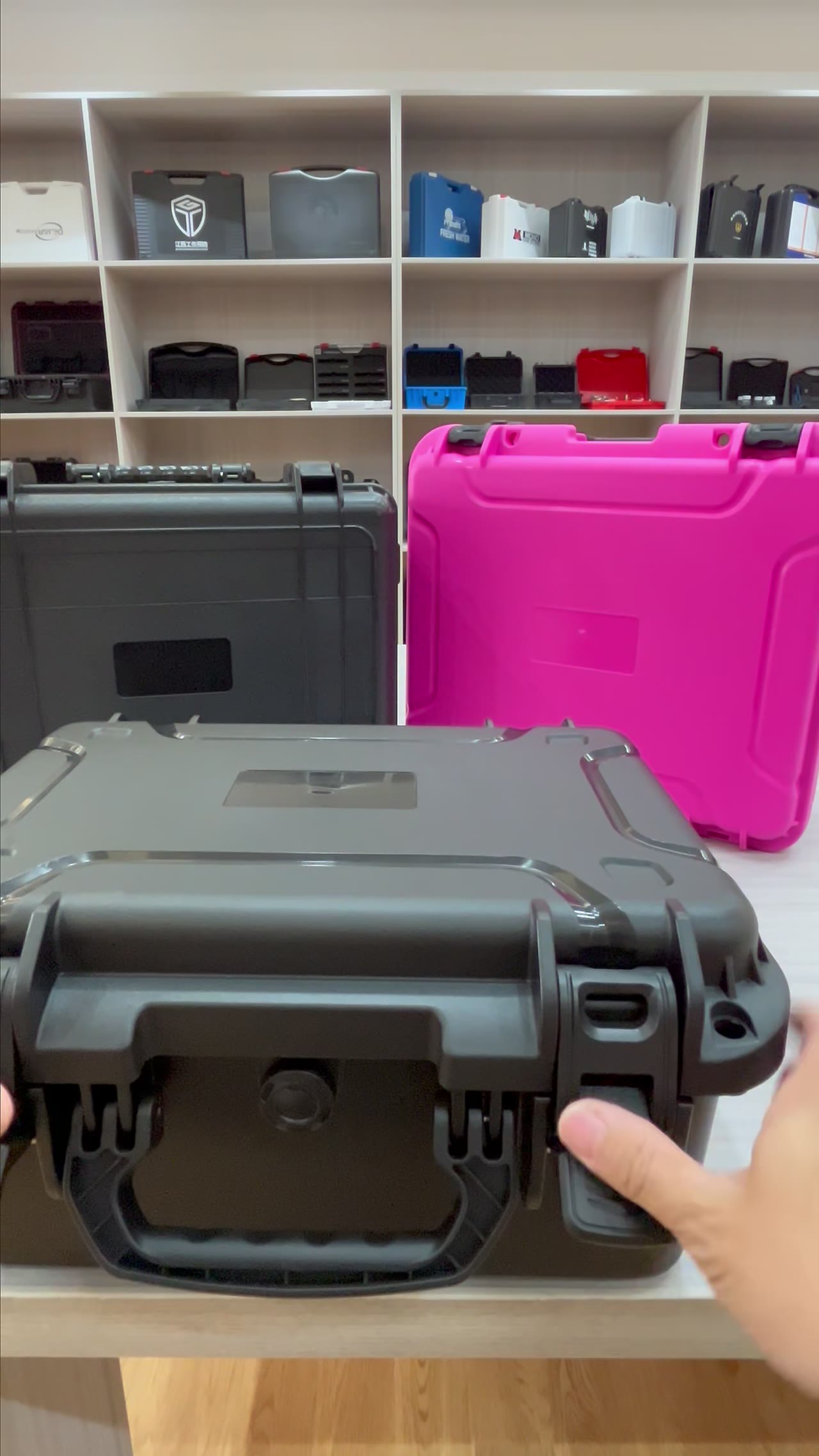
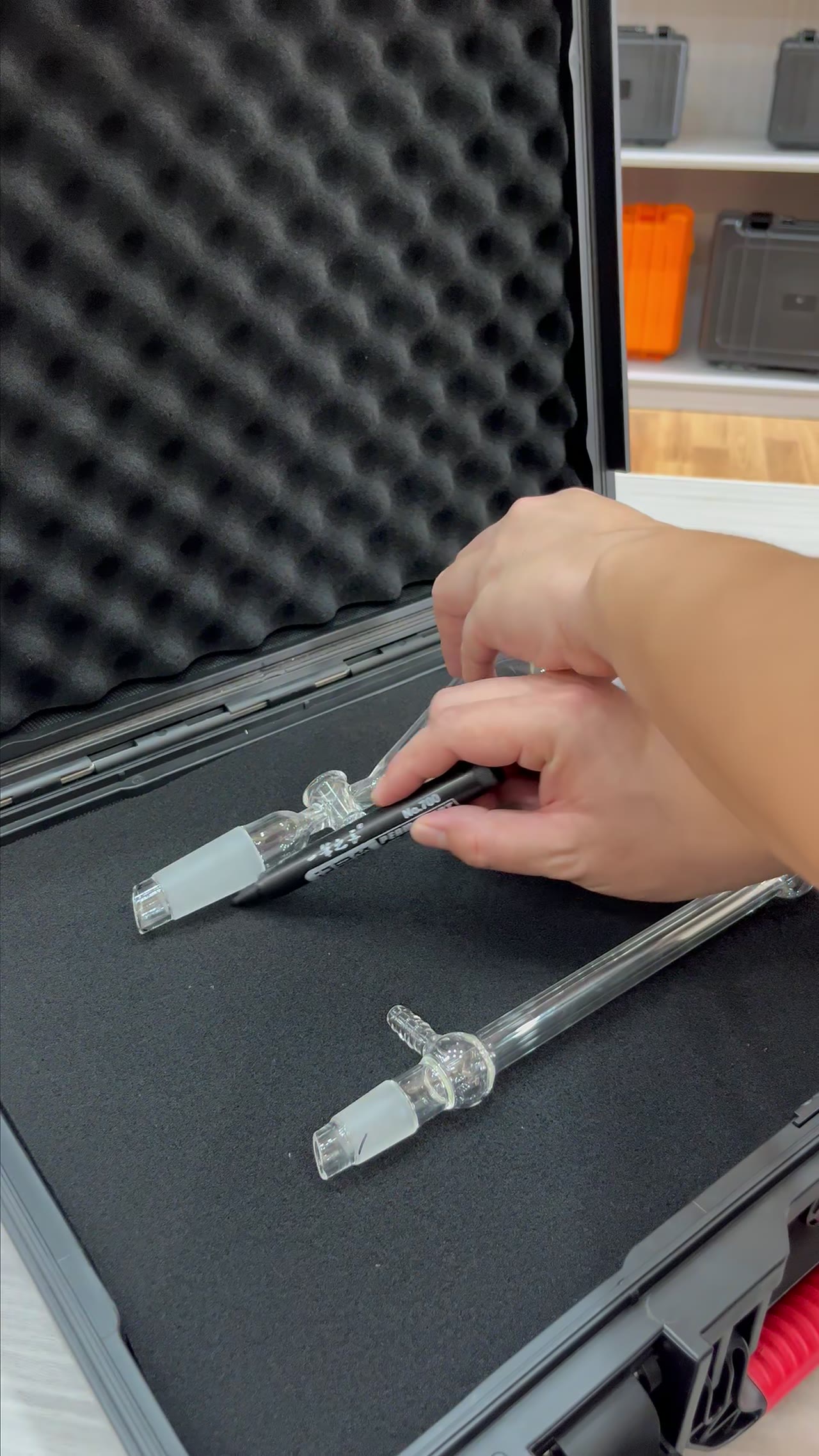
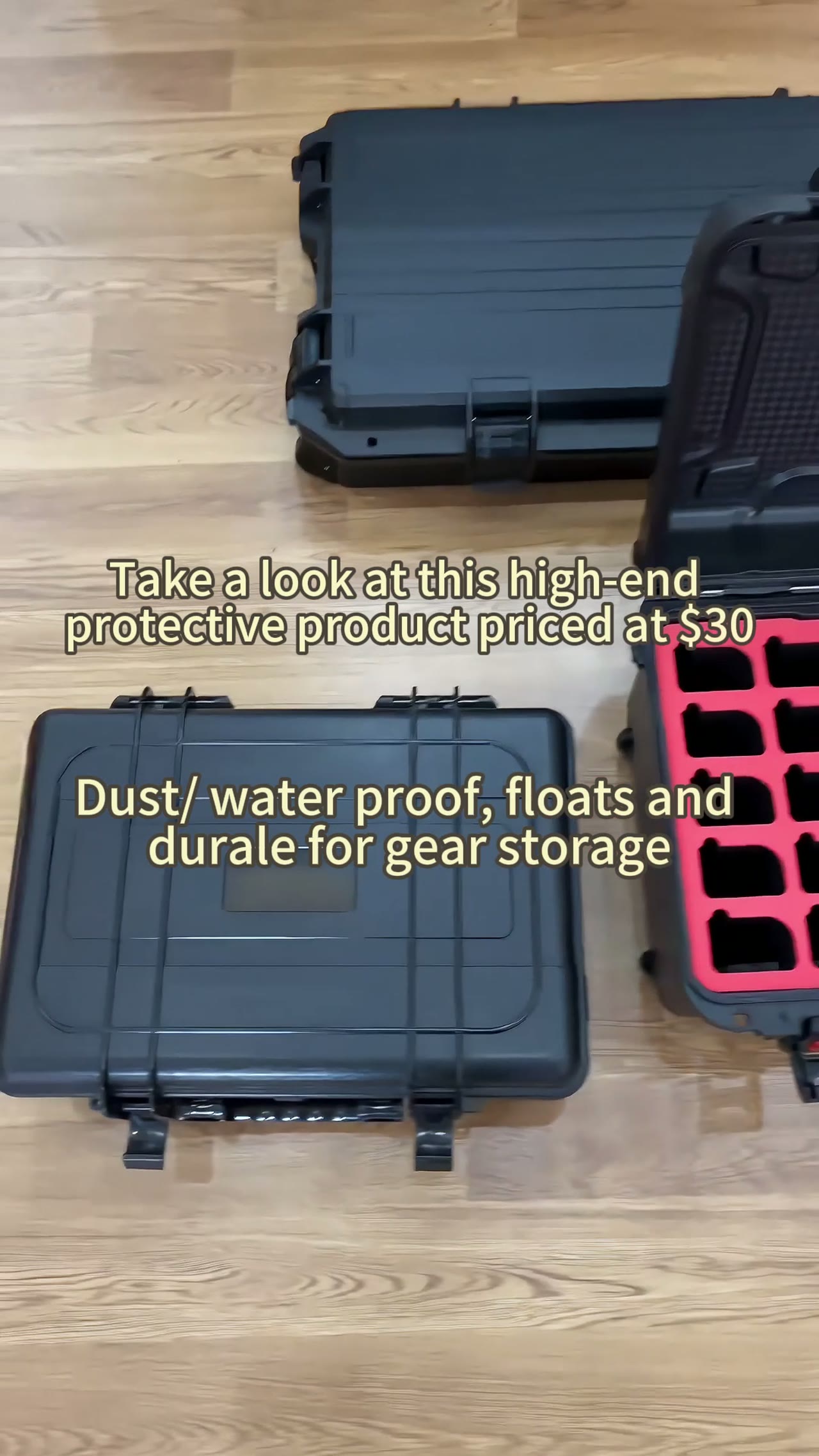
Building a Case That Lasts
Most cases are scrapped at a joint, not at the shell. Three joints do the damage: the hinge pin that turns lid and base into one axis, the latch that gets snapped shut dozens of times a day, and the handle root that funnels the weight of a loaded case into a patch of plastic. Each one announces itself before it fails, and each can be pinned down at the drawing stage with a clearance, a torque figure and a wall section. Settled once on paper, those three numbers carry the case through years of loading.
01The Shell Is Rarely the First to Go
Drop a loaded case off a tail lift and the shell may only scuff while the hinge has already shifted. The reason is geometry: a shell spreads load across a large area, a joint collects it into a point. At the pin, the latch and the handle root, stress concentration runs several times the panel value, and fatigue starts there.
Assembly is the other half that gets ignored. Torque the handle screws from 1.2 N·m to 1.8 N·m and preload at the root changes by half, while the rate at which vibration loosens it changes threefold. Without a torque record on the line, every tolerance upstream is wasted. Critical screws here are run down with a torque wrench and sampled daily, not tightened by feel.
02A Three to Four Millimetre Pin with a Tenth of Play
Pin diameter lands at 3 mm to 4 mm, worked back from lid weight and cycle count. Too thin and the lid's own mass bends the pin, so the rim meets one side first. Too thick and the boss grows with it, which a 3 mm to 4 mm wall cannot afford. Clearance sits between 0.1 mm and 0.2 mm: under 0.1 mm the pin needs a hammer, over 0.2 mm the lid rocks.
How the pin is pressed into the boss was covered in case-pins, so only the outcome matters: after pressing, clearance returns to 0.1 mm to 0.2 mm. Life is set by the lubricant film inside that clearance and by how coaxial the two ears are. Misalign them past 0.15 mm and the pin works as a beam in bending; ten thousand cycles later the bore is oval and the rim catches your hand.
03Ten Thousand Closures Wear the Hook, Not the Spring
A latch rated for 10000 closures is a seven-year part at four openings a day. The number describes wear at the hook, not the spring. Every cycle drags the hook over a ramp, and once 0.3 mm has gone, holding force drops by half and the lid begins to pop open on its own. Springs rarely fail unless the material rusts first in salt spray.
So two things decide latch life: whether the hook face is hardened, and whether the hook lands where the drawing says. A landing point 1 mm off keeps it grinding on a slope and halves the life. Measure holding force after 10000 cycles and accept no more than a 20% loss; that beats judging by look or by a supplier's word.
04The Handle Root Funnels Load Into a Small Patch
The moment a loaded case leaves the ground, its weight enters the shell through two handle ends, landing on a few square centimetres. On a 3 mm to 4 mm wall this needs a thickened boss, at least three screw diameters across, or the crack starts at a hole edge. A drop from 1.2 m to 1.8 m loads that root in bending plus impact, not simple pull.
You do not have to wait for a drop. Load the case, carry it one-handed for thirty seconds, set it down, and watch the seam between handle base and wall. Whitening means the section has yielded. Then drop it once from 1.2 m, handle down: no crack at the holes, no tilt in the handle, and the root passes. Ten minutes on the line.
05Repairable Beats Stronger
Half of service life is repairability. Make the pin, the latch and the handle removable and the shell keeps working; heat-stake them or mould them in and one failure scraps the whole case. The design allowance is cheap: a pin that slides out, a latch base on two standard screws, a counterbored handle seat. That is what lets a service desk fix something.
Ageing outdoors belongs in the same budget. Neutral salt spray of 48 h to 96 h covers the hardware; UV exposure of 500 h to 800 h covers shell chalking. Those two decide whether a case lasts five years outside or three. Five years means hundreds of loadings, dozens of rain events and tens of thousands of hours of sun, so joints are sized for the total, not one bad afternoon.
| Hinge pin diameter | 3–4 mm |
|---|---|
| Pin to boss clearance | 0.1–0.2 mm |
| Latch closure life | 10000 cycles |
| Neutral salt spray | 48–96 h |
| UV exposure | 500–800 h |
| Loaded drop, six faces | 1.2–1.8 m |
| Critical screw torque | 1.2–1.8 N·m |
| Design service life | 5 years |
FAQ
Where does a case fail first?
At the joints, in this order: latch hook, hinge bore, handle root. The shell carries load over a wide area and is usually the last thing to go. All three joints squeeze force into a small section, so fatigue begins there and can be designed out with clearance, bosses and torque control.
Why not machine the hinge clearance to zero?
Zero clearance will not assemble. Pressing it in distorts the bore, which then wears oval even faster. Running at 0.1 mm to 0.2 mm leaves room for a lubricant film and still limits lid rock. Past 0.2 mm the rim meets one side first and the parting line goes out of register.
How is the ten-thousand-cycle figure derived?
Four openings a day for seven years. It is a wear allowance on the hook, not a spring rating. Once 0.3 mm has worn off the hook face, holding force halves. So specify a hardened hook and check where it lands, rather than judging a latch by how stiff it feels.
What does repairability cost?
A few standard screws and a bore that lets the pin slide out. The added cost per unit is small; the return is that a worn joint costs a part, not a case. Two questions settle it: can the pin come out in five minutes, and is the latch base a catalogue item?