


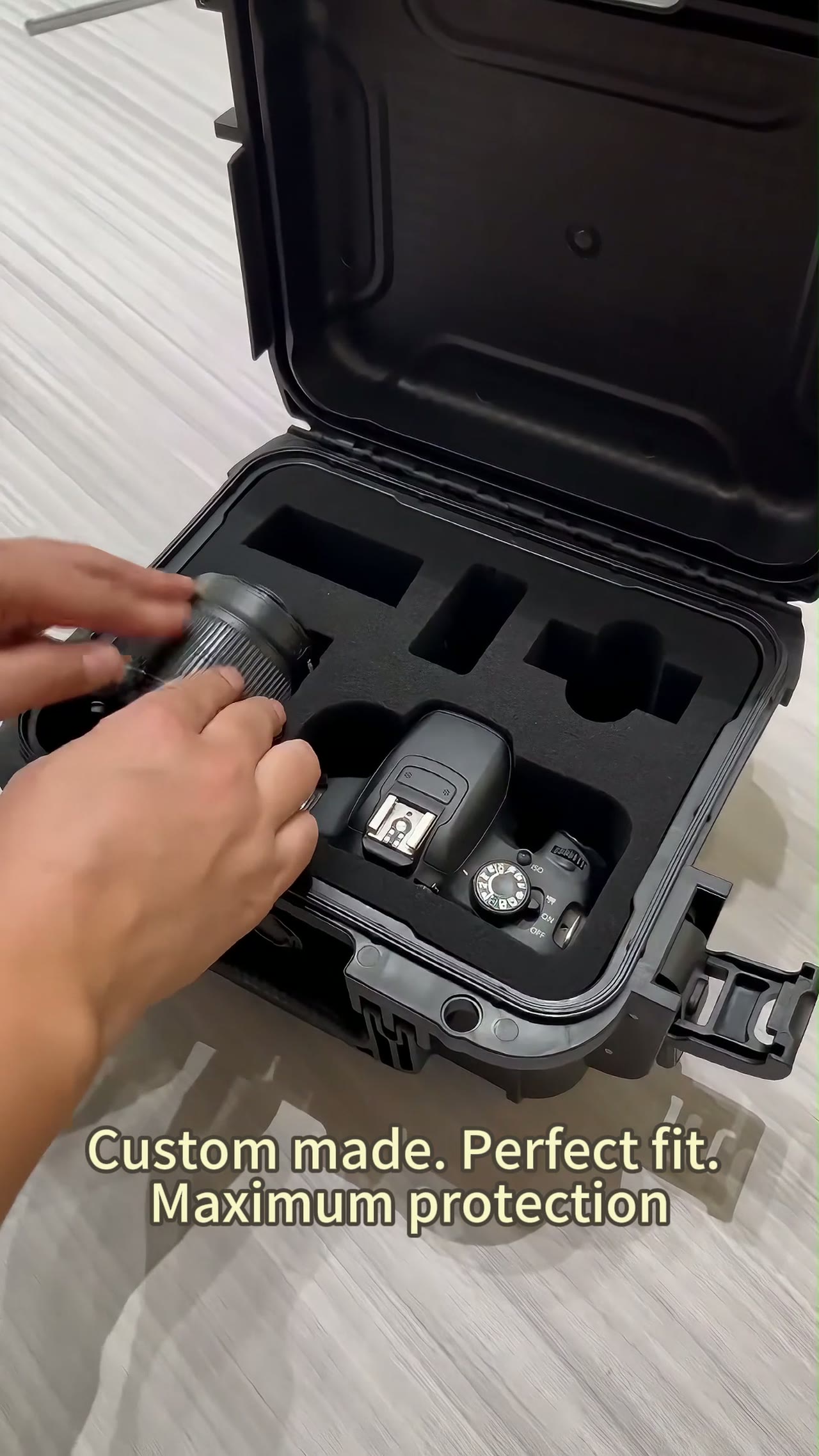
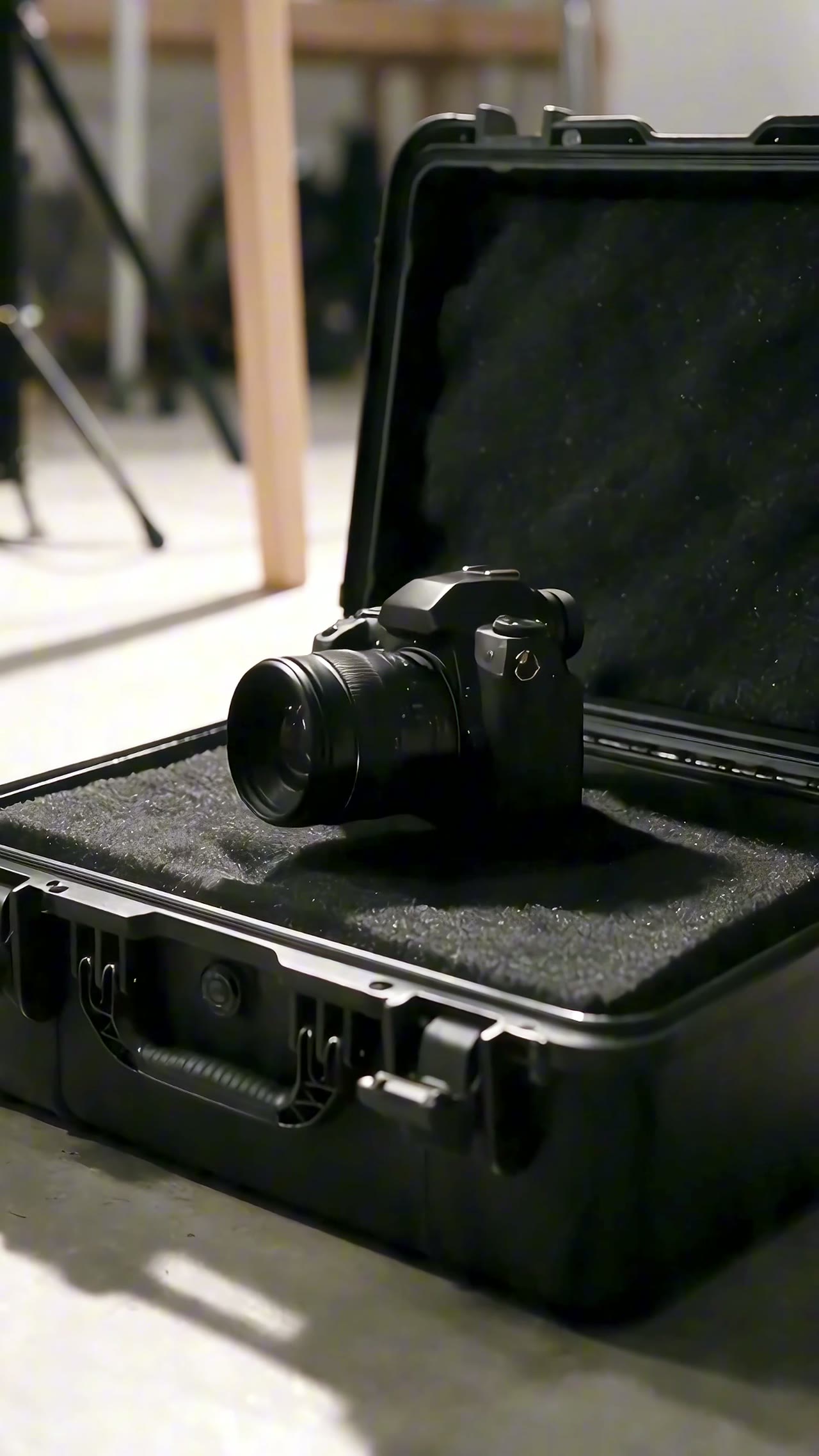
Looks and Protection: Balancing Both
A case's looks are settled in the tool, not on the drawing. Deeper grain reads as tougher and hides scuffs, but it drags on ejection and traps grit in every groove. Ribs turn a soft lid into a stiff panel and leave a shrink valley on the face you actually look at. Gloss sells the product in a photo and shows every scratch in a van. Here are the four trades — grain, ribs, gloss, coating — and what each costs in tooling days, added weight and rework, before the first sample even ships.
01Grain depth: one 0.05 mm step, two separate bills
Texture starts at 0.05 mm and runs past 0.15 mm, and a thumb can feel every step. Going deeper roughens the tool surface, which raises flow resistance and puts more load on the draft that pushes the part out. Too little draft and the wall tears into white streaks that no polish will remove; the shell is scrap. Deep grain is workable, but ejection, mould temperature and packing pressure must be retuned together.
Dirt is the second bill. At 0.25 mm the grooves are wide enough to hold oil and grit, so one season outdoors turns the corners grey. Cleaning means a soft brush and neutral detergent; a stiff one flattens the peaks, and flattened peaks catch light as a bright patch. Shallow grain from 0.05 to 0.10 mm wipes clean, but it hides nothing, so scratches read clearly.
02A rib at 1.5–3.0 times wall leaves a shadow on the face
Flat lids sag, especially the wide ones. Ribbing the inside at 1.5 to 3.0 times the wall thickness usually buys 15–40% more bending stiffness for only 5–15% more weight, which is close to free in structural terms. Spacing runs 40–100 mm between rib centres: tighter costs tool time and cooling, looser still bulges between the ribs and flexes audibly under a thumb.
The bill lands on the outside. A rib root is roughly twice the wall, so it cools last and pulls a shallow valley into the visible face. Matte paint covers it; gloss does not. Thinning the root to 0.6–0.8 times the wall, or moving ribs to a hidden side and trading spacing for flatness, is the usual fix. Gloss panels want few deep ribs, never many shallow ones.
03Gloss 10–60%: the brighter the finish, the shorter its life
Gloss is read at 60 degrees. Matte sits at 10–20%, semi-gloss at 30–40%, high gloss at 50–60%. The brighter the surface, the more it behaves like a mirror, so a single fine scratch scatters the reflection into a white line. Matte micro-texture spreads light out, and a scratch of the same depth barely registers. That is why most tool cases ship matte.
Scrub resistance is counted in back-and-forth cycles. On the same paint, a matte face will take 100–500 cycles while gloss tends to sit at the low end of that band. Wanting both means a hard coat, which adds cost and chips at impact. The working compromise: matte on large exposed panels, gloss kept for logos and latch recesses.
04Coating is priced by area, rework by the batch
Mould texturing is quoted by area, and a mid-size case tool usually needs 3–8 days of graining and polishing before it ships. On the part itself there are three levels: bare, painted, painted plus an abrasion coat. Paint adds roughly 8–20% to unit cost; the wear layer stacks on top, priced against exposed surface, so a big lid feels it while small parts barely register.
Rework is the line that hurts. Grain that tears during trials means repolishing and re-texturing, which costs days, and the re-cut never matches the old depth, so the previous samples are dead. Flow marks or uneven paint across a run mean repainting the whole lot, doubling paint and labour. Settle the cosmetic spec before the tool is cut; changing texture halfway costs a schedule, not a surcharge.
05Choose the look, then accept its three costs
Coarse grain costs harder ejection, more trapped dirt and more scrubbing. Ribs for stiffness cost a shrink valley plus a harder paint job. High gloss costs visibility of every scratch and a coating to survive them. Asking for all three at once usually returns two, and the missing one shows up in the reject rate rather than the quote.
So run the questions in order. Where does the case live — a trade show, a site, the back of a van? Who wipes it down, the owner or a cleaner? When it fails, do you replace the whole shell or a panel? Those answers set grain at 0.05 mm or 0.25 mm, rib spacing at 40 mm or 100 mm. Looks are a cost table, not a taste question.
| Shell wall, typical range | 2.5–5.0 mm |
|---|---|
| Rib height to wall ratio | 1.5–3.0 times wall |
| Rib spacing, centre to centre | 40–100 mm |
| Grain depth, textured tool | 0.05–0.25 mm |
| Surface roughness Ra | 0.8–6.3 μm |
| Stiffness gain from ribs | 15–40% |
| Gloss level at 60 degrees | 10–60% |
| Scrub resistance, cycles | 100–500 cycles |
FAQ
Does deeper grain mean better scratch resistance?
No. Deep grain only hides light scratches, and the peaks themselves chip under impact. What resists abrasion is the paint and the hard coat, not the texture, so do not trade a coating for a coarser pattern.
Do ribs add much weight?
Usually 5–15%. Ribs belong on load paths; piling material at the root makes things worse, with deeper sink marks, slower cooling and a face that is harder to keep flat after painting.
Can high gloss survive outdoor use?
It can, if you accept two things: scratches show, and cleaning needs a soft cloth rather than a brush. Airborne grit slowly dulls the surface, so measured gloss drops noticeably within a year of field use.
Which step of finishing actually costs the most?
Tool texturing and rework. Graining is priced by area and takes 3–8 days; tearing it during trials means repolishing and re-cutting the pattern, which doubles the lead time and outruns the paint cost.