

New Case Launch: First Look
The usual mistake with a launch film is treating fifteen seconds as a compressed datasheet. A vertical viewer gives you three layers of attention in order: does the shape read, where would this thing be opened, and only then, why should I believe it. Each layer has its own shot grammar, its own time budget, and its own way of failing. What follows splits those layers into a shot list, then a release matrix from T−7 to T+3, and explains why this edit carries no numbers at all.
01Shape: Three Seconds on Silhouette, Proportion, Opening
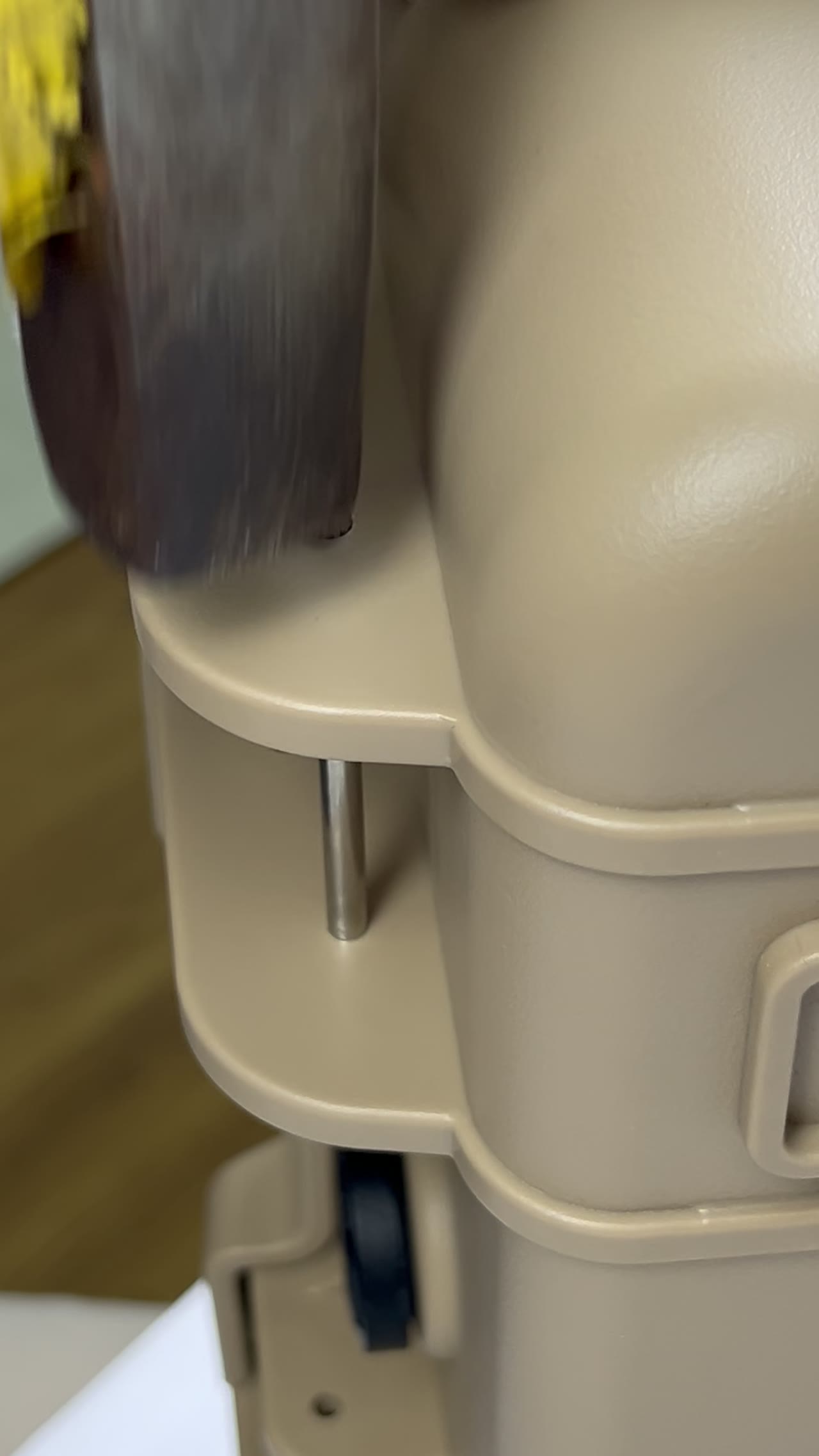
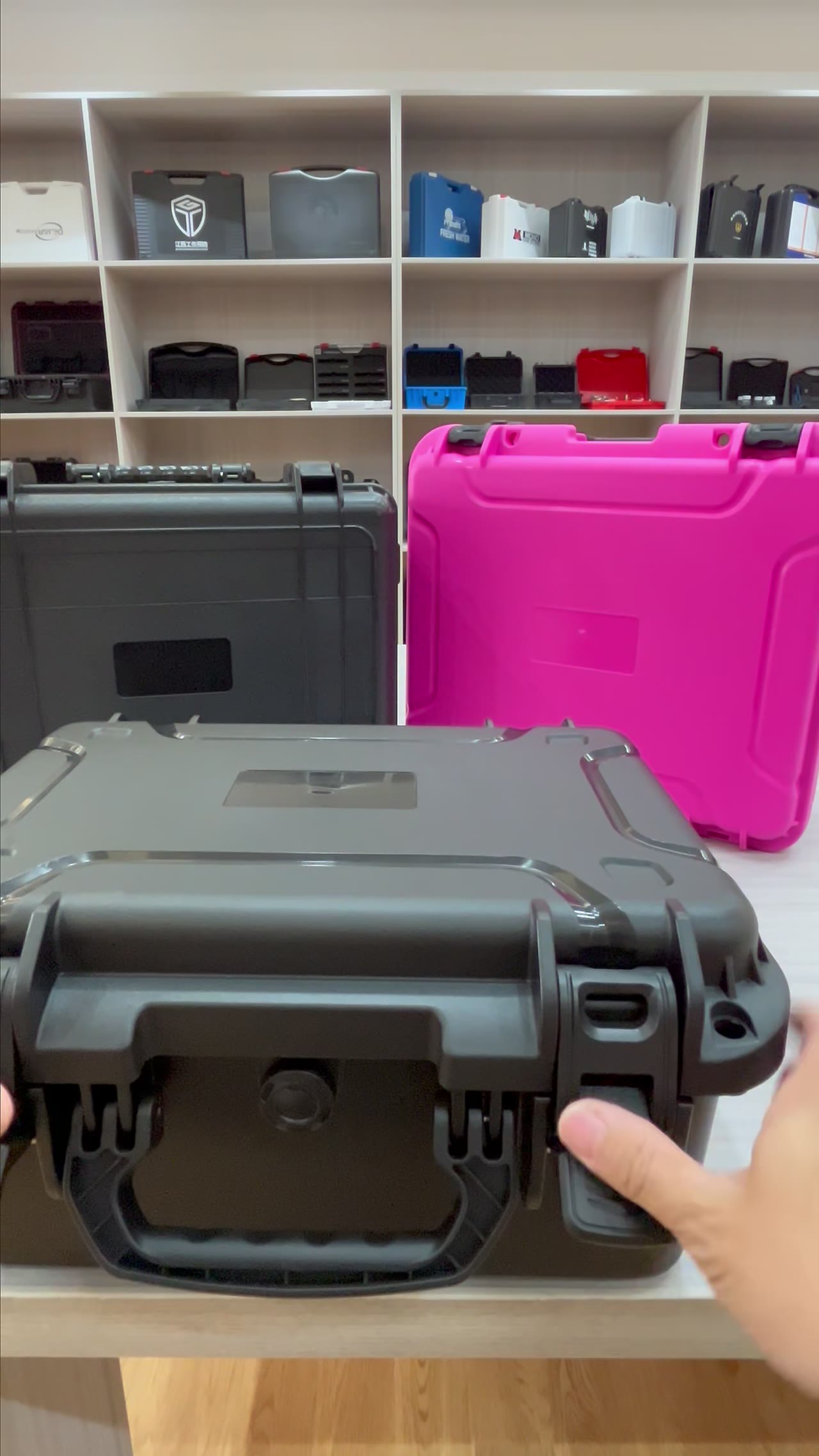
This layer says nothing about material or process. It answers three things: how big, what proportion, how it opens. The whole case has to be on screen within the first 1.5 s, lit from a 45° side with one top light to carve the outline, camera level with the case centreline so a high angle does not flatten the depth. A second shot, 0.8 s, holds on the latch or hinge so the opening method reads.
Scale comes from objects, not voiceover. Put a hand, a pen, a familiar cup in frame and the viewer does the conversion. Keep this layer between 8 s and 12 s with shots of 1.5 s to 3 s, and keep text off the screen entirely. The moment a caption appears people start reading, and the impression of shape breaks.
02Use: Show Who Opens It, and Under What Conditions
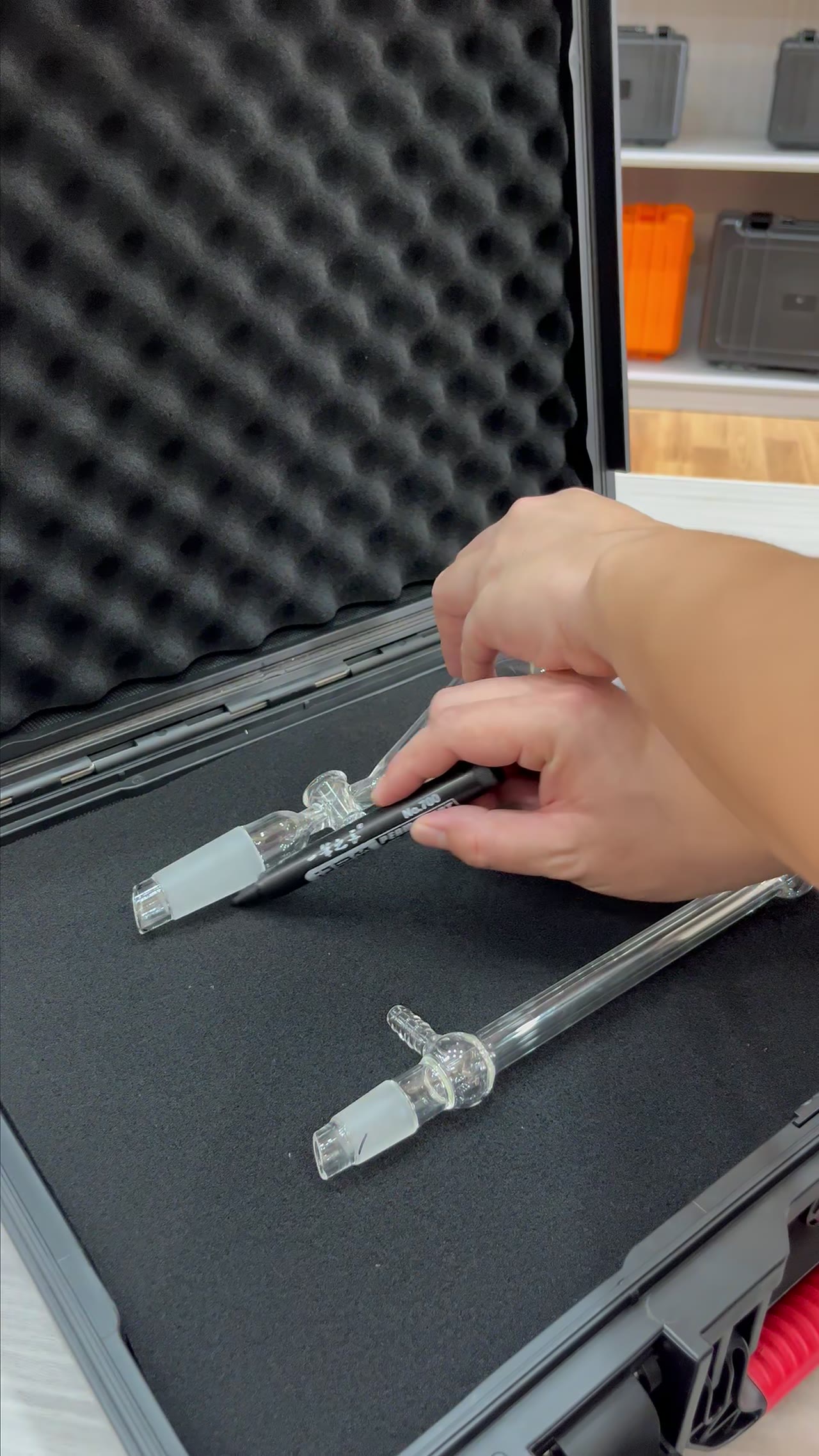
This is not footage of a product in use. It is footage of a person handling a problem. A working sequence has four moves: take out, open, place or retrieve, close. Miss one and it reads as a staged shot. Budget 18 s to 25 s, four to six seconds per move, and no more than three camera positions; more cuts look like advertising, fewer look like a record.
Make the condition specific: rain, a car boot, a site, the inside of a vehicle at night. Specific conditions let people place themselves without a narrator explaining that it suits the outdoors. One caption is allowed here, no wider than 14 characters, and it should supply the condition rather than praise the product. Rain, rear seat beats all-weather protection every time.
03Proof: Replace Adjectives With Repeatable Actions
Proof is the layer most often ruined, because adjectives are cheap. A workable substitute is three repeatable actions: press the four corners after closing and watch the rebound, lift the loaded case and take three steps, open and close it five times and listen to the latch. Two to three seconds each, no effects, no speed ramps, so the viewer can judge whether the action lands.
Criteria have to be visible, not merely audible. The lid gap should return to within 1 mm, the handle root should show no permanent set, the latch should sound the same on the fifth cycle as the first. Ten to fourteen seconds is enough. Insert no unreleased figure here: a number that later changes turns the whole edit into single-use material.
04The Matrix: One Hero Cut Into 15 s, 6 s and Three Stills
The hero runs 45 s to 60 s and is the only version that carries all three layers. The vertical cutdown keeps shape plus one action in 15 s at 9:16, still showing the case within 1.5 s. The 6 s bumper holds a single shot, the lid closing, with a caption of two characters or fewer, bought as a pre-roll slot so the silhouette is remembered before the skip button.
Three cover stills map to the three layers: outline, scene, action. Hold them at 5000 K to 5600 K so a single feed never mixes warm and cool frames. Keep the case in the same area of frame across every version, so the eye does not have to search after a cut. That consistency moves completion rate more than resolution does.
05Why This Cut Carries No Specs
No model name, no dimensions, no certification claims appear in this release, so no figures appear in the edit either. The reason is practical: a launch film lives for a quarter, while wall thickness, internal volume and hardware positions still move until tooling is signed off. Show 3 mm and ship 3.5 mm, and the entire asset has to be reshot or pulled, media spend included.
The substitute is to film criteria as actions and push numbers to a technical page after T+3. Viewers retain a lid that springs back flat far better than a decimal, and buyers know where to look when they want figures. The launch film stops the scroll; the technical page earns the trust. Cramming both into sixty seconds usually loses both.
| Hero cut length | 45–60 s |
|---|---|
| Vertical cutdown | 15 s |
| Bumper length | 6 s |
| Cover stills | 3 frames |
| Release beats | T−7 / T−0 / T+3 |
| Case on screen by | ≤1.5 s |
| Caption line width | ≤14 characters |
| Shot length | 1.5–3 s |
FAQ
Does a launch film without specs look amateur?
Not if the actions carry the argument. Corner rebound after closing, three steps under load, five latch cycles by ear: those say more about structure than a column of figures. Hold the numbers for the technical page and publish them once, after tooling is fixed.
Should the 15 s vertical have a voiceover?
Better without. Most vertical feeds play muted, so narration reaches very few viewers. One caption under 14 characters plus a clear action does the work. Place captions above the lower 12% of frame so platform overlays do not cover them.
Can the three layers run in a different order?
Yes, at a cost. Proof first suits an audience that already knows the product, and completion drops. Shape first is the default because silhouette is the only thing recognised within 1.5 s. For anyone new, keep shape, use, proof.
What goes out at T+3?
A technical page and detail footage: settled dimensions, wall thickness, hardware positions, plus three exploded stills. This beat catches the search traffic the hero film generates and converts looks into checkable figures. It is the only place in the release where numbers belong.