

Why These Pins Matter
A worn pin never announces itself. What arrives first is a lid that shifts a millimetre under your hand, then a lid you have to guide shut, then a seam that no longer lines up — one side of the gasket crushed flat, the other barely touching. The leak shows up months later, on a wet day, when the contents are already damp. Every step in that chain has a number attached: play, lid offset, gasket compression. All of them can be measured at the case, without taking anything apart.
01Loose Comes Before Broken
A new lid has almost no play. Push the rim sideways with a finger and it moves less than 0.3 mm. That figure grows with every cycle: roughly 0.05 mm to 0.2 mm of added clearance per ten thousand open-and-close events, and not in one neat direction — a little fore and aft, a little side to side. By the time it reaches 1.5 mm the lid finds its own position as it closes, and the case simply feels loose without an obvious reason.
Service life sorts into three bands. Under 5000 cycles is light duty; a household opening the case a few hundred times a year will never finish it. Between 5000 and 20000 cycles is ordinary commercial duty — a dozen openings a day, three thousand a year, five to seven years. Above 20000 cycles calls for a different hinge design and sits outside this band. You do not need a counter to place yourself: years in service and openings per day will do.
02Half a Millimetre of Offset, Uneven Gasket Load
Lid offset follows play. With clearance in the hinge, one side of the gasket meets the rim first while the other hangs 0.5 mm to 2 mm above it. Close the latch and that side is pulled down by force, so the gasket stretches instead of compressing. Sealing depends on even compression. Once the two sides differ by 5% to 12%, the thin side is the way in for water.
This is the step people get wrong. Water inside gets blamed on an aged gasket or a weak latch; almost nobody suspects an ovalised bore. The test is quick: close the lid without latching and sight along the seam from one end. If the gap width changes along the length, the pins are the problem, not the gasket. A gasket that has genuinely aged goes hard all the way round; it does not fail on one side only.
03Three Checks: Rock It, Sight the Seam, Read the Imprint
Rock the lid first. Release both latches, hold the case down and work the lid by its opposite corners. A practised hand separates 0.3 mm from 1 mm by feel. If you are not practised, slide a sheet of paper into the seam — the thickness that fits is roughly the play. A faint click as you rock means you are already past 1 mm.
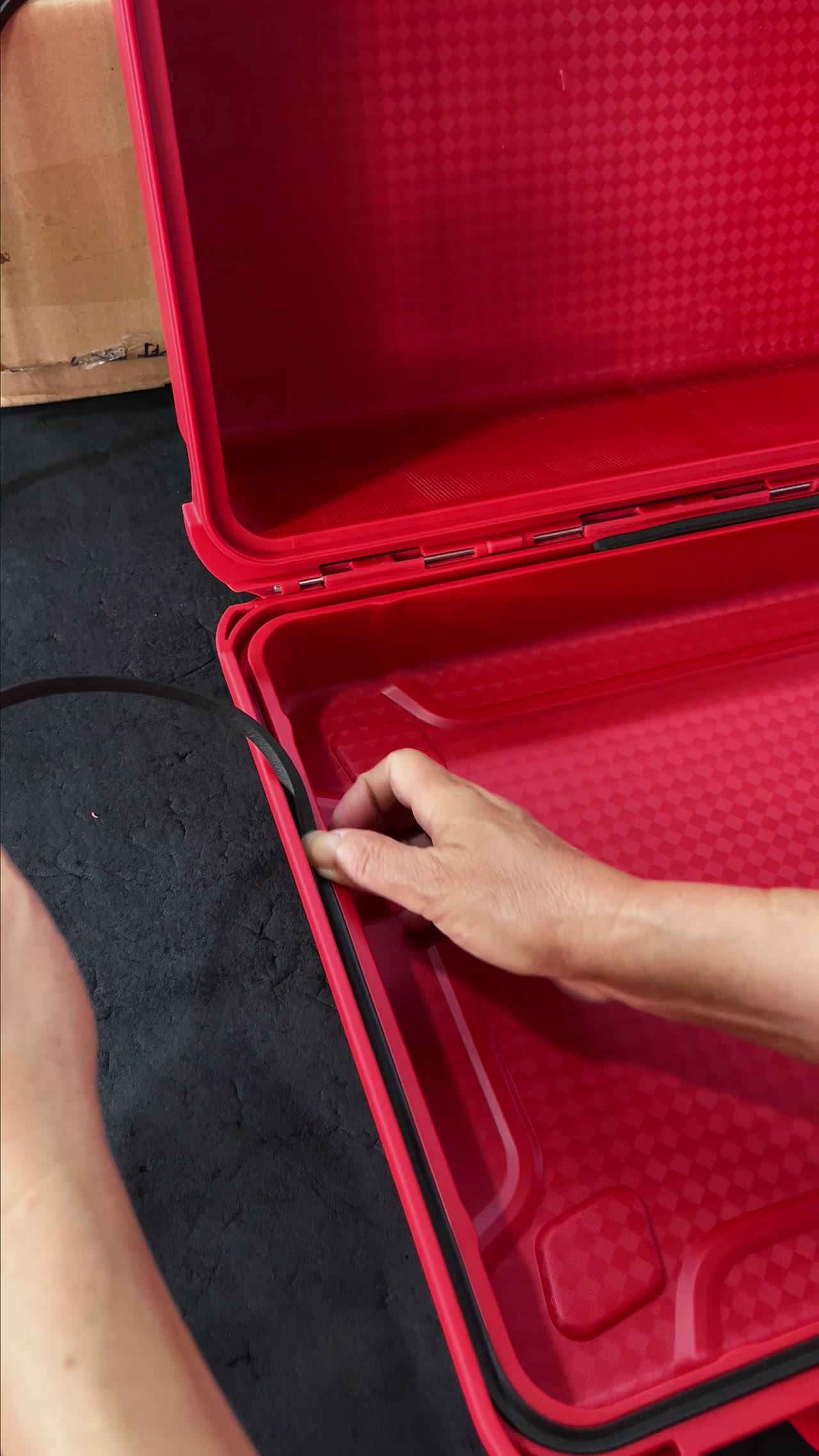
Sight the seam next. Close the lid without latching, crouch to eye level and look from one end to the other. Then open it and read the imprint on the gasket. A healthy gasket shows one continuous band of even width. A band that narrows or breaks on one side means that side was never loaded. All three checks take under 60 seconds and need no tools.
04Replacement: 600 to 1200 Seconds Per Pin
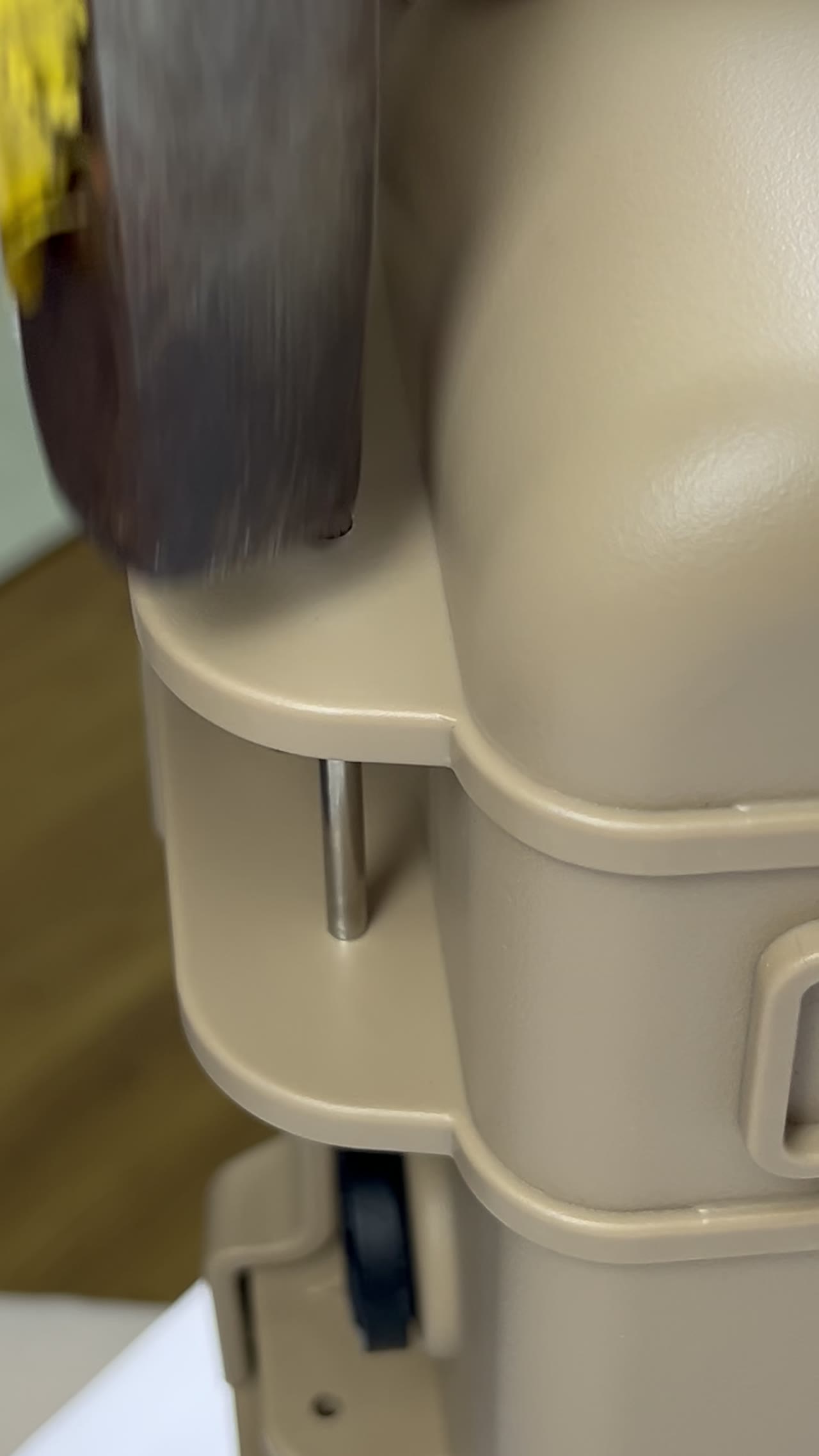
Two of the three checks failing means replacement. Budget 600 seconds to 1200 seconds per pin, and two tools: a drift slightly smaller than the pin and a light hammer. Open the lid to its widest angle so the hinge ear carries the least load, then drive the old pin out from one end, keeping the drift in line with the pin. Tilt it and you will score the bore, and a scored bore will not hold the new pin either.
Look at the bore mouth before fitting anything. Fine white cracks mean the bore is already damaged and a new pin will not last. Pins in this class run 3 mm to 6 mm; match the original size rather than going up for a tighter feel. One tenth of a millimetre larger has to be hammered in, and a hammered pin carries stress from day one. Repeat the rock test straight away: under 0.3 mm of play and the job is done.
05Keep 2% to 5% on the Shelf
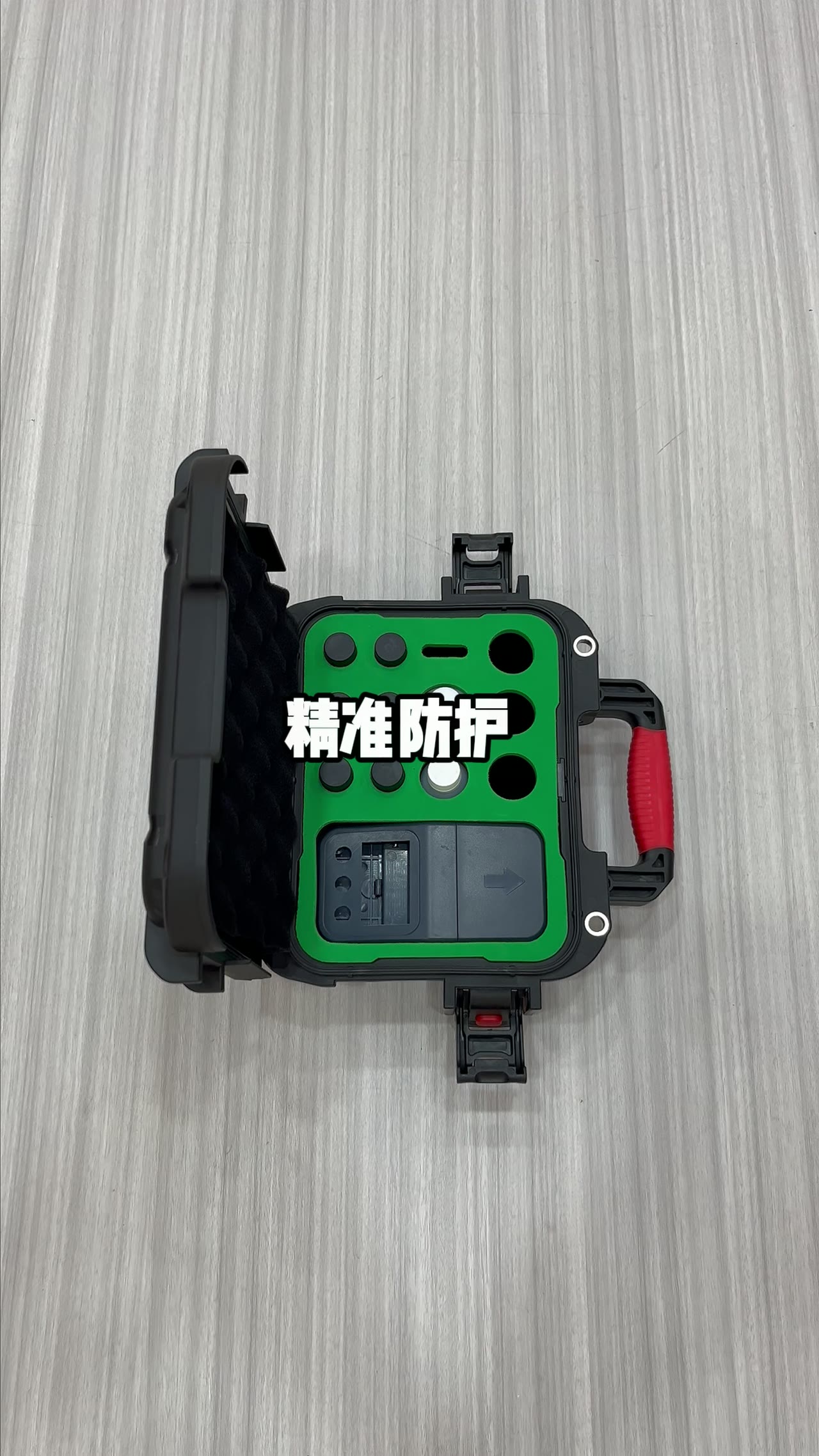
Hold spares at 2% to 5% of the fleet. The figure is not arbitrary: across a hundred cases over three years, the share needing a pin lands in that range. At 2% you run short around year five; at 5% you finish with leftovers. Store them sorted by diameter. Pins do not interchange between case types, and a mixed bag costs half a day of searching at exactly the wrong moment.
The arithmetic is blunt. A pin costs almost nothing. A stopped line, a shipment back to the factory, a device sitting idle in a customer's hands — those are orders of magnitude more. So the sensible move is a small bag per case at 5%, kept in a fixed compartment beside the drift. Fit and press depth belong to a separate article; on the user's side there is one rule: replace at 1 mm of play, not at the first leak.
| Working play | ≤0.3 mm when new |
|---|---|
| Cycle life bands | 5,000–20,000 cycles |
| Clearance growth | 0.05–0.2 mm per 10k cycles |
| Replacement time | 600–1200 s |
| Spares held | 2–5% |
| Pin diameter | 3–6 mm |
| Lid offset | 0.5–2 mm |
| Gasket compression change | 5–12% |
FAQ
The lid rocks slightly. Does that mean new pins?
Measure the play first. Under 0.3 mm is normal, 0.3 mm to 1 mm is worth watching, past 1 mm replace. Left alone, offset crushes the gasket on one side and leaves the other hanging, and that is when water starts getting in.
Do I have to take the hinge apart?
No. Open the lid as far as it goes, drive the pin out from one end with a drift, and catch it at the other. Never hammer the hinge ear — plastic ears crack. Clear any burr from the bore mouth before the new pin goes in.
Why store spares by diameter?
Pins do not interchange between case types. A 3 mm and a 6 mm look close enough to try, and forcing the wrong one opens the bore for good. Sorted compartments with the size marked on the lid save that experiment.
The imprint is shallow on one side. Gasket or pin?
Close the lid unlatched and sight the seam. Gap width that changes along the length points at the pins. Even width with a shallow imprint points at the gasket. Replacing a gasket on a pin problem changes nothing.