

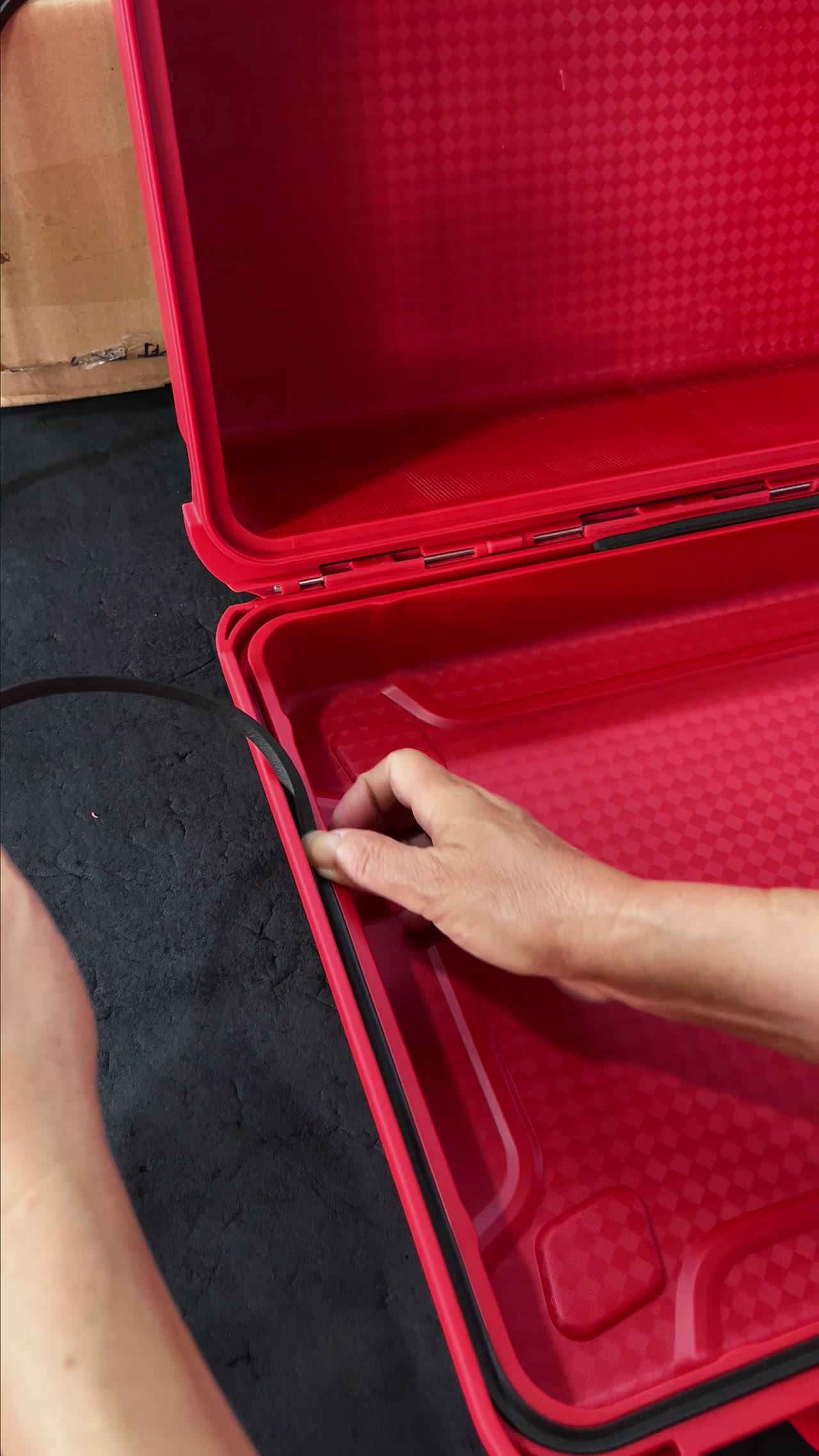
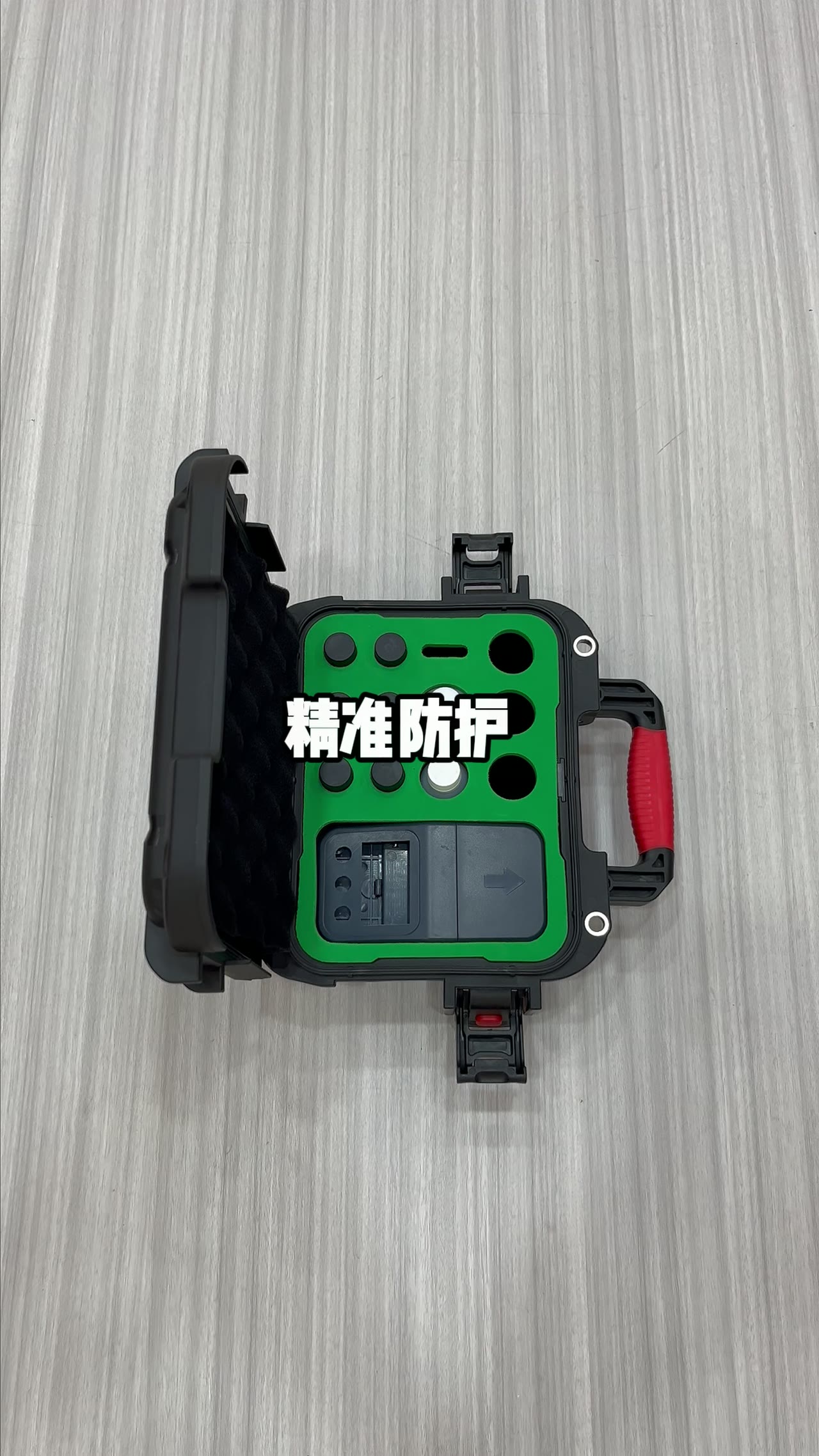
POV: Installing the Foam Insert
Two people can fit the same insert into the same case and finish forty seconds apart. One presses it home and moves on; the other spends the difference chasing a corner that keeps lifting. The foam did not change between them. What changed is where the force went. An insert holds itself against the wall by being slightly larger than the cavity, and that same oversize is what pushes back at your hands. What follows is the order of operations: where resistance comes from, how much powder is enough, which corner to seat first, how failures divide, and what it takes to pull an insert back out.
01Why One Insert Takes 60 Seconds and Another 150
Resistance starts with interference. The insert is cut a little wider than the cavity so it grips the wall and does not shift in transit. More interference means a tighter fit and a harder push. Across one production batch, measured insertion force runs from 40 N to 180 N, and the spread inside a single batch can reach 30 N purely because foam density varies from block to block.
Static is the second source, and the one most often misread. In dry weather the foam clings to the wall, and when you let go it slides back 10 mm. Nothing is wrong with the dimensions; the charge simply has nowhere to go. Third comes the corners, the stiffest part of any insert and the first part to enter. A corner that lands 3 mm off puts the whole push on a narrow edge, and the harder you press the tighter it jams. Cold makes all of it worse.
02Powder: Two Grams Does Nothing, Eight Grams Makes a Mess
Talc breaks friction and bleeds off static, and the useful window is narrow: 2 g to 8 g per case. Under 2 g it does almost nothing. Over 8 g it leaves a white film that has to be wiped, and whatever is missed ends up on the equipment. Apply it with a cloth bag, dusting the cavity walls only. Never sprinkle it onto the insert itself, because the pockets are where the device will sit.
Silicone spray covers a dozen cases from one pass, and it migrates. The oil creeps through the open cells and reaches the pocket faces within months, leaving a haze on whatever sits there. Optical gear cannot tolerate that. Lines using spray should confine it to the walls, stop 30 mm short of the pocket edge, and let the case stand until it is tack-free before loading. Which one you choose depends on what the case will carry.
03Corners Down First, Middle Last
One rule is worth teaching: seat all four corners before pressing the middle. Corners locate the insert. Once they sit down in the cavity corners, the flat panels follow on their own. Do it the other way and the middle bonds first while the corners stand 5 mm to 10 mm proud, and recovering from that means peeling up everything you already pressed.
Work each corner two to four times with the heel of your hand along the edge, not a fingertip. A fingertip concentrates force into a few square centimetres, crushes the cells and leaves a dent that never returns. That dent becomes the spot where the device rocks later. After the corners, push from the centreline outward, one hand holding what is already seated, the other sweeping air ahead of it.
04Three Ways an Insert Fails
Lifted corners account for 55% to 70% of bad installs, and most trace back to a corner landing 3 mm to 5 mm off or a scrap of trimmed material left in the cavity. Bulges take 20% to 35%, usually because air is trapped between the insert back and the case floor with no path out. Jams are only 5% to 15%, yet they cost the most time, because a jam means lifting the whole insert and re-dusting afterwards.
The categories exist to tell you which action to take. A lifted corner: back off that one and leave the other three alone. A bulge: chase the air from the bulging side toward the opposite edge, never press down in the middle. A jam: find the edge it is caught on, lift 30 mm to let air in, drop it again. Only the jam needs a full redo, and that is most of the gap between 60 seconds and 150.
05Getting It Back Out
Removal takes roughly half the effort of insertion, measured at 60 N to 200 N. Start at a corner. Hold the case down with one hand and peel along the wall with the other, keeping force on the edge of the foam. Never lift by a pocket face: the walls stretch, and that pocket stays loose for the rest of its life. Re-dust the walls afterwards and lay the insert flat to recover.
Recovery runs 1 h to 4 h depending on how long it was compressed. Half an hour of pressure and an hour is enough. A full shift before anyone noticed means four hours, otherwise the insert still carries the old shape and lifts again in the same place. Check two things before it moves down the line: all four corners seated, and no creases pulled into the pocket faces.
| Insertion force | 40–180 N |
|---|---|
| Shop temperature | 18–28 ℃ |
| Install time per case | 60–150 s |
| Talc per case | 2–8 g |
| Jam defect share | 5–15% |
| Removal force | 60–200 N |
| Corner press passes | 2–4 passes |
| Rebound recovery | 1–4 h |
FAQ
One corner keeps lifting. Is the insert cut wrong?
Usually not. Check whether that corner is sitting on trim scrap or a radius, then measure how far off it lands — past 3 mm it will lift. Hold the other three corners down and reseat only that one; it takes half the time of a full redo.
Does talc get onto the equipment?
Only if it stays in the pockets. Dust the cavity walls, never the insert, and wipe the pocket faces with a dry cloth once fitted. Optical gear and anything with a cooling vent needs a second pass, since powder that enters an air path is hard to remove.
Winter installs are much harder. Any fix?
Let the insert lie flat in a room above 20℃ for 2 h to 4 h first. Cold foam stiffens, and the same travel takes about 30% more force. In a hurry, warm the corners from a distance on a low heat setting rather than aiming at one spot.
Can a reworked insert be used again?
Yes, if it rests long enough — 1 h to 4 h, longer for longer compression. Check two things: all four corners bedded down, and no creases in the pocket faces. A creased pocket stays loose and lets the device move. Replace that one.