

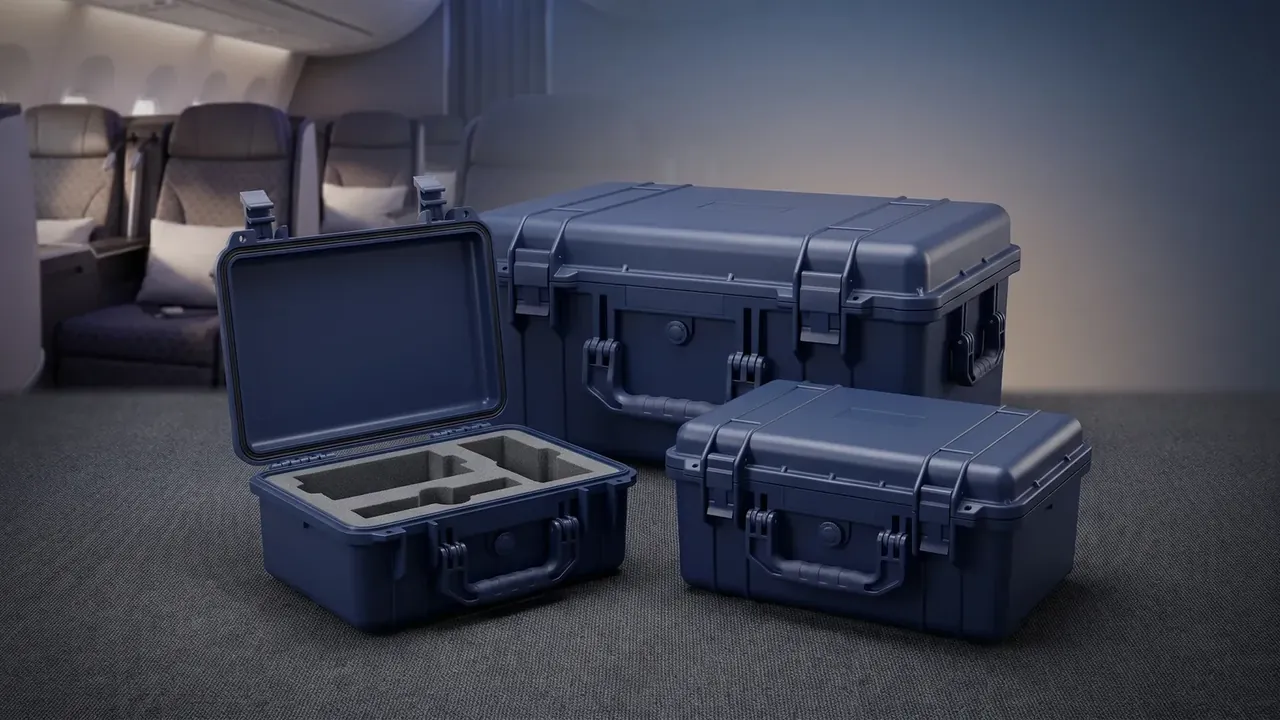
Quick answer: Judge Bulk Protective Case Orders on five criteria before comparing unit prices: the price ladder, the sampling plan, palletisation, split delivery, spares and lead times. On a 2,000-piece run that means a three-tier quote, AQL 2.5, 40 cases per pallet and 2% spares.
Table of contents
- Bulk Protective Case Orders and the Price Ladder
- Writing the Inspection Plan and AQL Level
- Packaging Counts and Palletisation
- Split Deliveries and Spare Ratios
- Latches, Spares and Lead Time Terms
- FAQ
1. Bulk Protective Case Orders and the Price Ladder
A quote for Bulk Protective Case Orders is a staircase, not a line. Most factories publish three bands, 500 to 999, 1,000 to 1,999 and 2,000 and above, with a fourth at 5,000; the step between neighbours runs 6% to 8% per unit, about 12% across two.
Test a step by isolating the fixed cost: mould amortisation, purge loss after a colour change and first-article inspection total near CNY 20,000. Divide that by the run size and the height of the step becomes visible.
| Band | Quantity | Price index | What changes |
|---|---|---|---|
| One | 500 to 999 | 100% | Full setup recovery |
| Two | 1,000 to 1,999 | 92% to 94% | Setup halved |
| Three | 2,000 to 4,999 | 85% to 88% | Continuous shifts |
| Four | 5,000 and above | 80% to 83% | Dedicated colour stock |
Sit in the band a six-month forecast supports, not one budget cycle's ceiling.
2. Writing the Inspection Plan and AQL Level
No bulk run is inspected piece by piece, so write the acceptance level early. A workable default: level II, AQL 2.5 for majors, 4.0 for minors, zero for critical. On 2,000 pieces the sample code is K, or 80 pieces.
Pin the tests in the order annex: latch force of 180 to 220 N, gasket compression at four points held at 30% to 40%, a 1.2 m drop on one corner, three edges and six faces, then 30 seconds immersed.
Lot definition doubles the cost of Bulk Protective Case Orders quietly: the same 2,000 pieces in three drops is three lots, each sampled separately.
3. Packaging Counts and Palletisation
At 6 to 9 kg per case, weak packaging shows as a deformed lid rim. One double-wall carton per case with corner boards, then pallets of 1,200 by 1,000 mm: eight cases per layer, five layers, 1,350 mm overall.
Freight on Bulk Protective Case Orders follows the load factor. A 40-foot high cube at about 12.03 by 2.35 by 2.39 m takes 14 pallets, 560 cases, near 92%. A 1,650 mm stack adds a layer and a fifth more pieces, at a higher damage rate.
Export wood must be heat treated or fumigated and IPPC stamped, or the pallet is refused whole.
4. Split Deliveries and Spare Ratios
Taking 2,000 cases in one drop ties up floor and cash. Three drops at 40, 40 and 20 percent, 15 days apart, relieve the warehouse for one to two points.
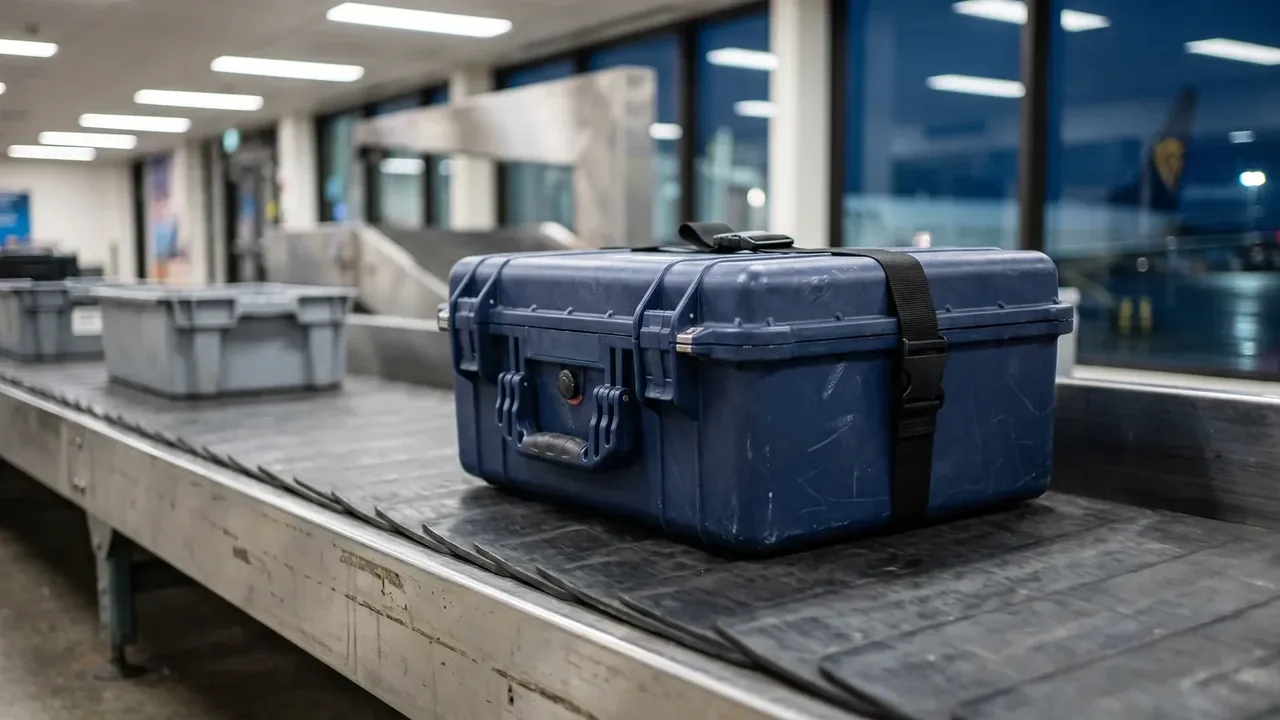
Two percent spares is the working ratio: 40 units on 2,000, invoiced rather than gifted, in their own cartons with the same colour batch.
Watch the tail window: a last drop 60 days after the first may meet a swapped mould and re-matched colour, so keep the gap inside 45 days.
5. Latches, Spares and Lead Time Terms
Latches fail first, so carry 3% spare latches and 1% hinge pins per shipment, bagged and marked with the lot number; the cost is trivial next to an emergency purchase later.
Lead time needs two lines: a first order covers tooling, trials and first-article approval, 25 days; a repeat ships in 18. Write both, and attach a 0.03% per day late penalty.
| Term | Suggested value | Purpose |
|---|---|---|
| Spare latches | 3% | Two years of wear |
| Spare hinge pins | 1% | Lost pin replacement |
| First order | 25 days | Tooling and approval |
| Repeat order | 18 days | No tooling change |
| Late penalty | 0.03% per day | Scheduling priority |
The criteria pull against each other: a higher band ties up cash, more drops lift the unit price, and a strict AQL forces a defect buffer on Bulk Protective Case Orders.
Conclusion
The five criteria set the real cost of an order rather than its headline price. Once the steps are modelled, the AQL fixed and the drops written down, the vague lines in a quotation become visible. Do that first, and Bulk Protective Case Orders can be argued on price and delivered on schedule.
This article discusses only the container (case body) side of specifications and design intent, and does not cover any handling, loading or use of the contents.
Related Reading
- Wholesale case pricing and minimum order quantities
- Pallet marking and case identification rules
- Layered design of export packaging for cases
- Unpacking rules for mixed model orders
Related Products
- 8 Series — Gun Cases; Military Equipment Cases; Camera Equipment Cases; Drone Cases; Watch Cases; Knife Cases; First Aid Cases; Electronics Equipment Cases
- WL8-2812 PP Gun Case — model WL8-2812
- All protective cases and toolboxes: 7 series, 158 models