

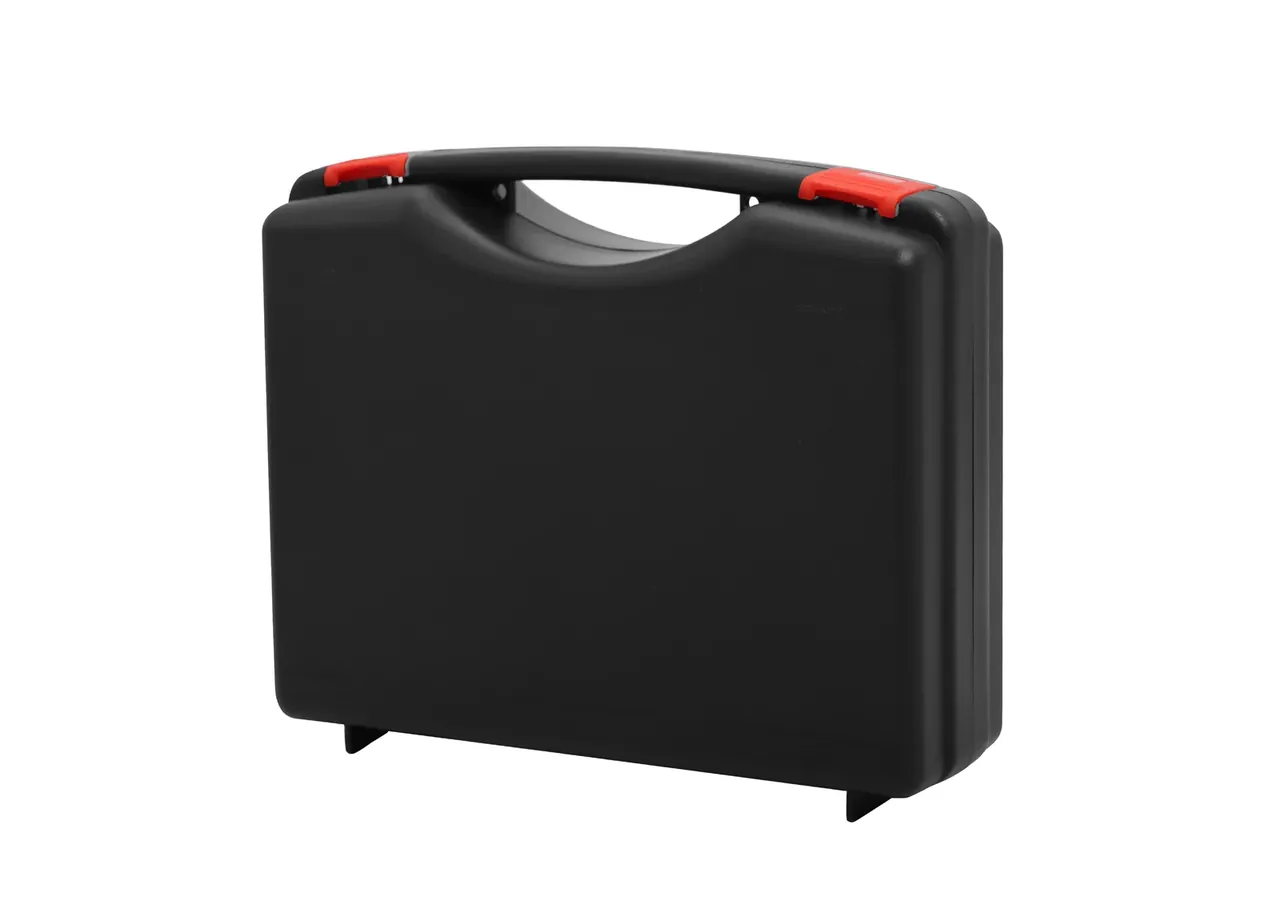
Quick answer: Protective Case Upfront Cost is one of six lines; add parts, repair, storage and disposal, subtract residual, and a 2,400 CNY case runs 550 CNY a year.
Table of contents
- Six Lines Before Any Comparison
- Where the Money Actually Sits
- Annualised Cost and Payback Trips
- Corrections: Volume, FX, Tooling
- FAQ
1. Six Lines Before Any Comparison
Most purchase sheets carry one line: unit price times quantity, which omits every cost the next five years will produce. The full sum is purchase plus parts, repair, storage and disposal, minus residual value at year five, divided by five. Skip a line and you have priced a unit, not measured a cost.
Of the six, purchase is easiest to see and easiest to overweight. A 2,400 CNY rotomoulded case spends 300 CNY on parts, 240 on repair, 150 on storage and 18 on disposal, while 360 returns as residual. The total is 2,748 CNY: purchase holds 87.3%, running costs 25.8%, residual gives back 13.1%.
Five percent off the unit price is 4.4% off the five-year total.
Storage is the line most often booked at zero. Space is charged by volume, and at 0.02–0.05 m³ a case and 1,000 CNY per m³ a year that is 20–50 CNY annually, or 100–250 CNY across five years for a 1,000-case store.
Five years is a choice, not a convention. Latches rated for 5,000–8,000 closures reach that in five years at 200 trips annually, and gaskets are replaced at 30% compression set, a four to six year interval. A shorter window hides running costs, a longer one distorts residual.
2. Where the Money Actually Sits
Parts come second after purchase at 2–5% of value a year. Of latches, valves, handles and hinges, latches move fastest: two to four replacements per case over five years at 30–45 CNY each, which with valves and gaskets lands near 300 CNY.
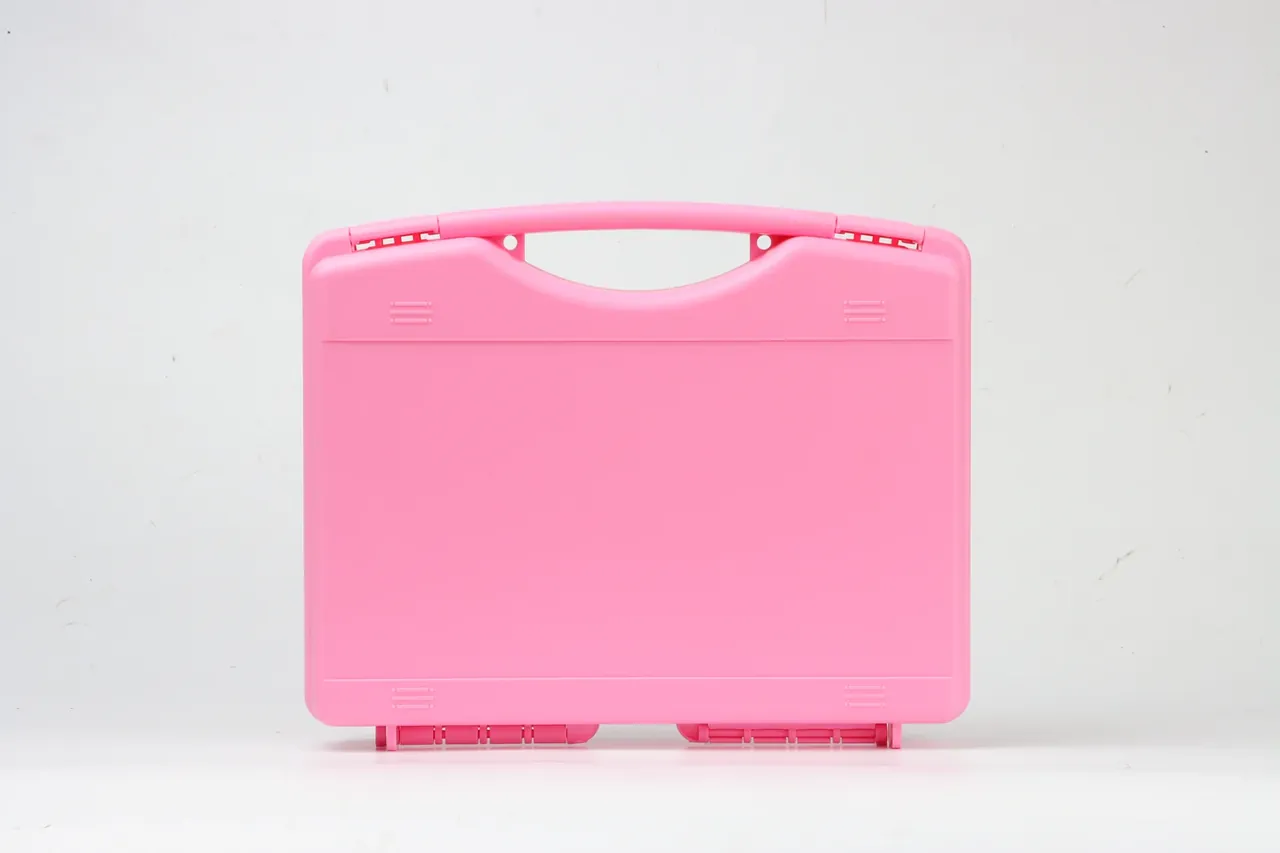
Repair spends labour rather than material: 0.5–1.5 h at 100 CNY an hour is 50–150 CNY a job, and at 0.3–0.5 jobs a year roughly 240 CNY over five years. Low-frequency fleets treat it as noise, high-frequency fleets see it triple, because repair tracks closures rather than calendar years.
Disposal as general solid waste runs 18 CNY a case, rising to 60–120 CNY where chemical residue demands cleaning and a residue test. Ask at purchase, not at scrapping.
Residual is the only line that subtracts. Ten to twenty-five percent at year five turns on wall margin and hardware completeness: above 0.5 mm takes the upper bound, below 0.3 mm falls to scrap value.
| Cost line | Five years (CNY/case) | Share | Basis |
|---|---|---|---|
| Purchase | 2,400 | 87.3% | Unit price with standard foam |
| Parts | 300 | 10.9% | 60 CNY a year, 2.5% of purchase |
| Repair | 240 | 8.7% | 2 jobs × 1.2 h × 100 CNY/h |
| Storage | 150 | 5.5% | 0.03 m³ × 1,000 CNY/m³ × 5 |
| Disposal | 18 | 0.7% | General solid waste |
| Residual | −360 | −13.1% | 15% recovery |
| Total | 2,748 | 100% | 550 CNY annualised |
3. Annualised Cost and Payback Trips
Annualising flattens the lump sum and lets two duty levels be compared. At 20 trips a year the case totals 2,748 CNY, 550 a year and 27.5 a trip; at 60 trips it reaches 3,588 CNY, 718 a year and 12.0 a trip, because parts and repair climb with use. Cheaper per trip as use rises is the whole logic of owning.
The payback trip count follows. Divide 550 CNY by an external service price of 25–30 CNY and you get 18–22; allow for price movement and the band sits at 18–25 trips a year. Below it, paying per trip is cheaper; above it, ownership pulls ahead.
The count is annual, not cumulative over five years.
Batch size shifts the line. A 20-case order earns no discount and stays at the table figure; above 500 cases an 8–15% discount cuts the annualised cost by 8–13% and moves the band to 16–20 trips.
External prices move too. Peak season lifts service rates 20–30%, concentrated in March to April and September to October, which pushes the band to 20–28 trips. Own only if both the average-price and peak-price calculations land inside it.
| Item | 20 trips a year | 60 trips a year |
|---|---|---|
| Five-year parts | 300 CNY | 540 CNY |
| Five-year repair | 240 CNY | 720 CNY |
| Five-year storage | 150 CNY | 150 CNY |
| Disposal | 18 CNY | 18 CNY |
| Residual | −360 CNY | −240 CNY |
| Five-year total | 2,748 CNY | 3,588 CNY |
| Annualised | 550 CNY | 718 CNY |
| Per trip | 27.5 CNY | 12.0 CNY |
4. Corrections: Volume, FX, Tooling
The sections above price a standard case. Three corrections follow, each landing in a different line: volume on purchase, currency on parts, tooling on foam.
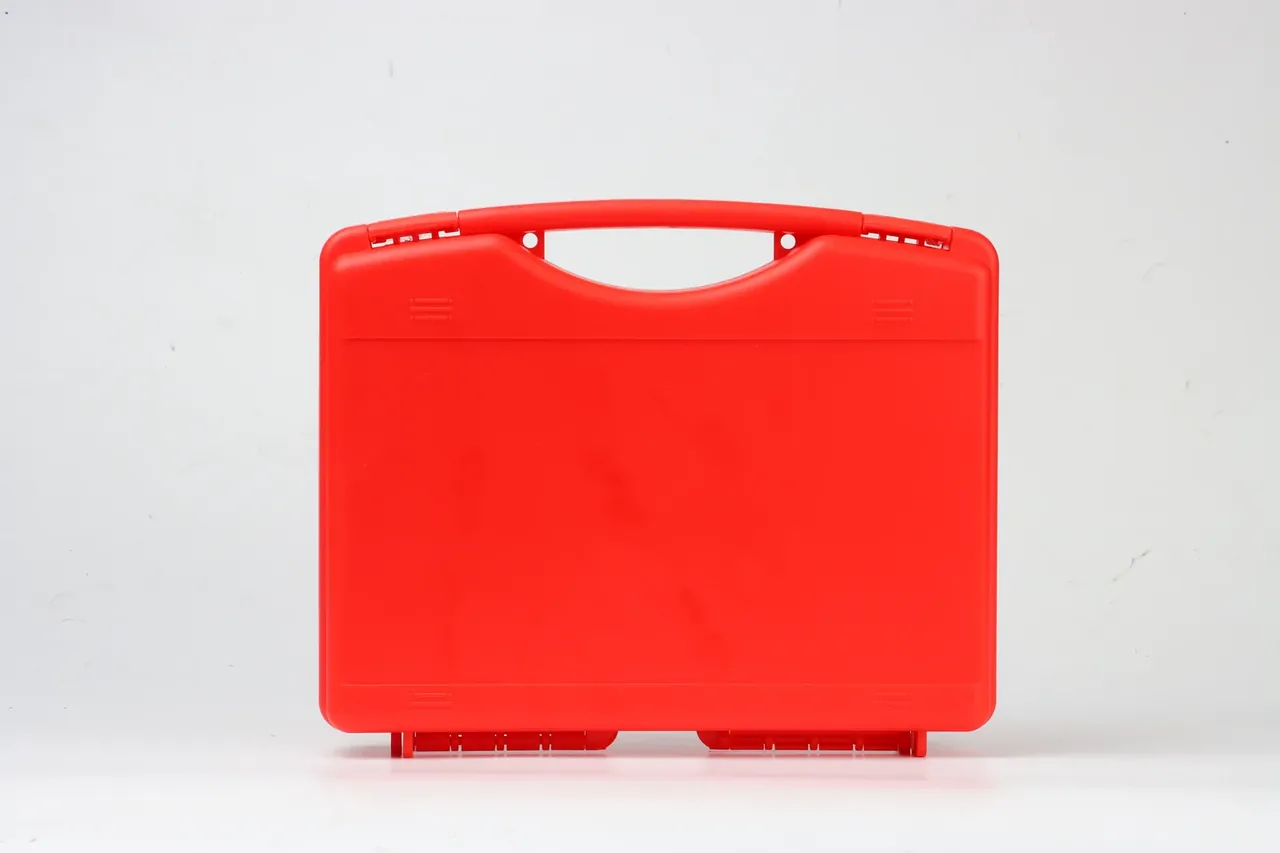
Volume discounts start at 500 cases and run 8–15%. On 500 units at 2,400 CNY, ten percent is 120,000 CNY, the price of 218 more cases. Applied to purchase, the five-year total drops 8.7% and the annualised figure falls from 550 to 502 CNY.
Currency touches imported parts. Valves and stainless latches hold 12–18% of purchase value, so a ±5% swing moves 14–22 CNY per case, or 0.5–0.8% of the total. Small, but the quotation needs a rate date, or a year of movement lands on the inspection batch.
Tooling is the correction most often miscalculated. A foam mould at 180,000 CNY spreads to 6 CNY a case across a 30,000-shot life and to 60 CNY at 3,000. Fix the amortisation batch before the order is placed; bargaining room disappears after the first delivery.
With those done, return to the share table. Only the corrected annualised cost is worth comparing, since a Protective Case Upfront Cost comparison that ignores it measures the buyer rather than the case.
Conclusion
The value of a Protective Case Upfront Cost exercise is not the number at the end but the discipline of laying out six lines at once. Purchase holds 87.3% and looks like the lead actor, yet the variables that matter are the parts rate, repair hours, floor space and residual, which decide whether the annualised cost is 550 or 718 CNY and whether payback lands at 18 trips or 25. Work in order: trips a year, then batch and tooling, then a rate date to hold imported parts.
This article discusses only the container (case body) side of specifications and design intent, and does not cover any handling, loading or use of the contents.
Related Reading
- Writing an exchange-rate clause into a quotation
- Rotomould life and how to amortise tooling
- Which parts belong on a spare-parts list
- Setting the cost boundary in a warranty clause
Related Products
- 8 Series — Gun Cases; Military Equipment Cases; Camera Equipment Cases; Drone Cases; Watch Cases; Knife Cases; First Aid Cases; Electronics Equipment Cases
- WL8-2812 PP Gun Case — model WL8-2812
- All protective cases and toolboxes: 7 series, 158 models