

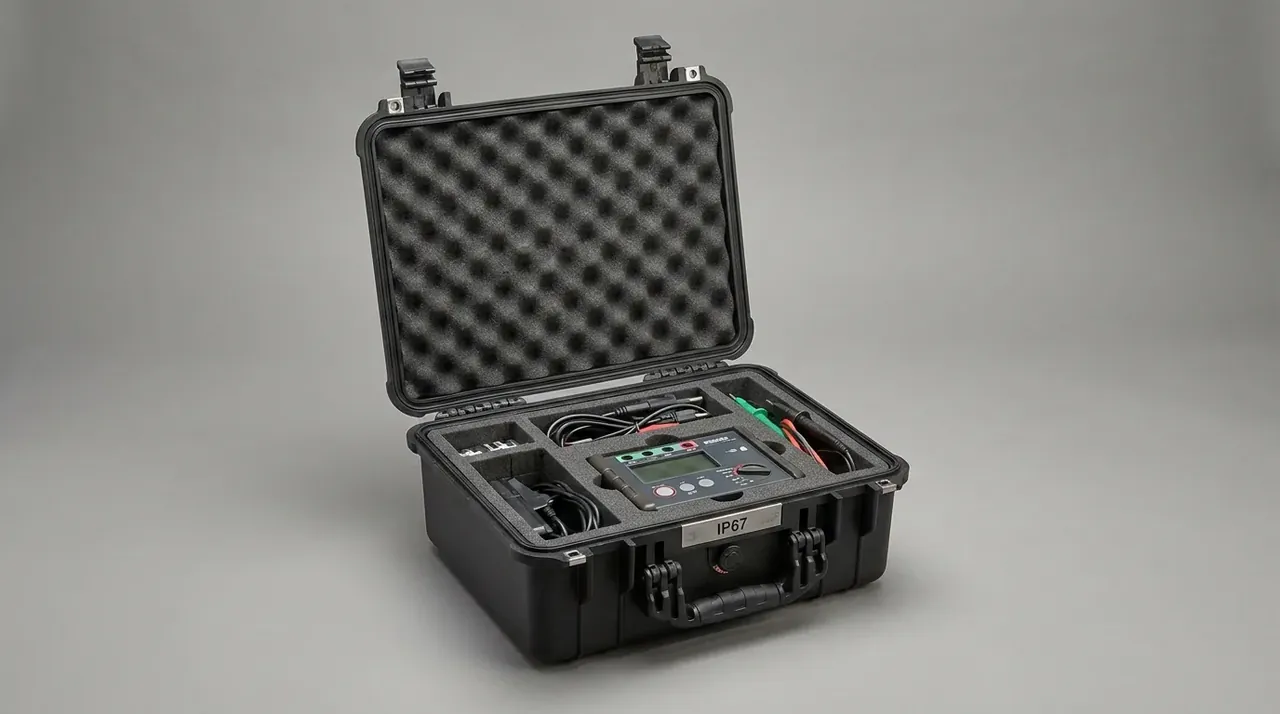
Quick answer: Case central procurement runs in one order: converge models, pool the batch, then negotiate. Four sites cut 12 models to 5 and took 8.5% off.
Table of contents
- Converge models first: 12 into 5
- Allocating quotas across four sites
- Why 3000 units buys 8.5%
- Central warehouse and 48-hour transfer
- Lead time risk and substitution validation
- FAQ
1. Converge models first: 12 into 5
Four sites bought separately, and one duty was carried by 12 part numbers: cavities 3 mm to 40 mm apart, walls from 1.8 mm to 3.0 mm, 5 colours, two latch patterns. Annual volume sat across 4 orders of under 800 units, a size no factory schedules alone.
Case central procurement has to cut at the model list. Three tests run in order: does the cavity still cover the loaded footprint, can both products share one liner plate, and do they all land on IP67. A model that clears all three merges; one that fails stays.
The usual failure folds a 600 mm cavity into a 480 mm model, which removes 120 mm of height, tilts the load and cracks the shell on the first drop test. Pooling is coverage, not resemblance: a small case never replaces a large one.
Five models survive: 480 mm, 560 mm, 600 mm and 720 mm cavities plus one low wheeled unit. They cover 98% of the pick records held by the old numbers; the last 2% is one-off engineering stock moved to project purchase.
| Site | Old models | Annual units | Main models after | First quota |
|---|---|---|---|---|
| East | 5 | 6200 | 560 mm, 720 mm | 3000 |
| South | 3 | 3400 | 480 mm, 560 mm | 1500 |
| Southwest | 2 | 2100 | 600 mm, 720 mm | 1000 |
| North | 2 | 1800 | 480 mm, 600 mm | 800 |
2. Allocating quotas across four sites
Do not split quotas by last year's invoices, because that repeats last year's waste. Forecast 12 months of picks, apply a 1.1 factor, sum by model, then work back to each site. The four sites need 13,500 units a year, and the 720 mm model alone takes 4100.
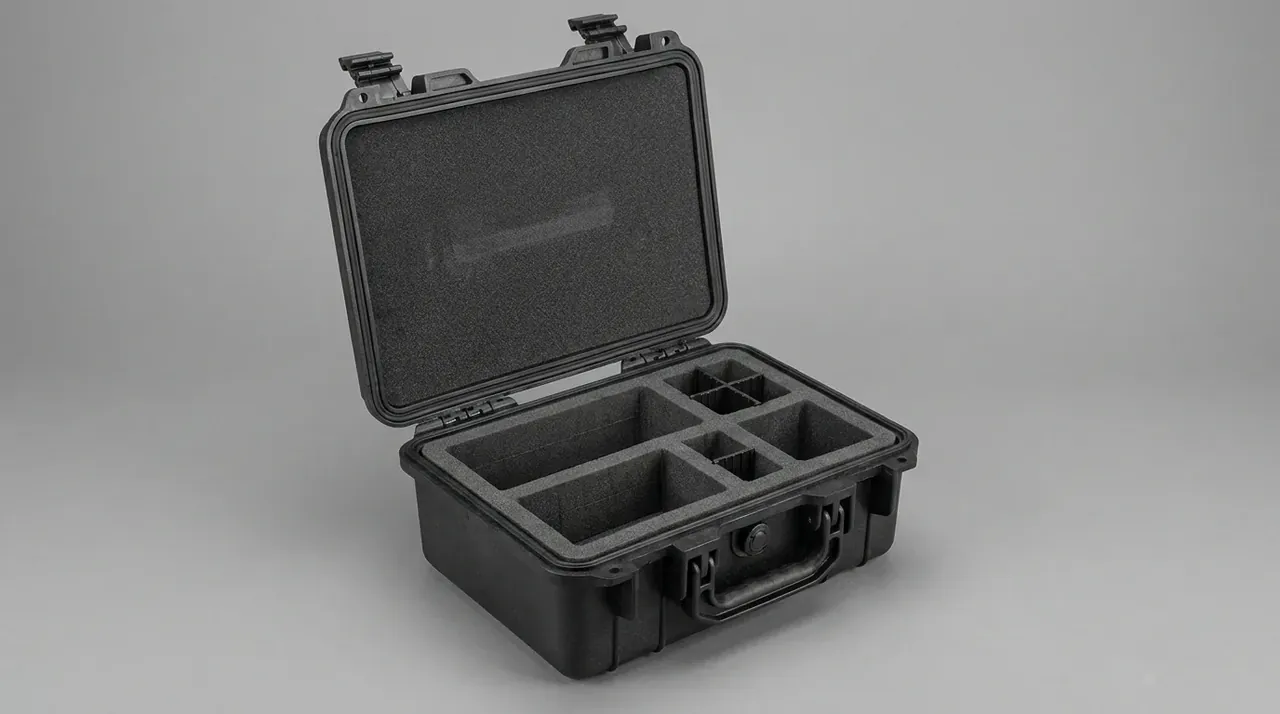
Quotas go into the framework agreement and roll each quarter, with the swing capped at ±15%. The cap protects factory scheduling: a model whose quarterly volume jumps forces the plant to hold stock, and that stock returns to the unit price.
Pooling turns a quota into an order. Site demand is merged by model, the minimum run is 500 units, and a batch ships only at 3000. The window is 30 days, cut-off on the 15th and release on the 25th. A shorter window never fills the batch, a longer one misses site spikes.
Quotas also lock convergence in place: a site that adds a model finds no row in the table, and procurement rejects the order.
3. Why 3000 units buys 8.5%
On one mould the quote moves in three steps: 100% at 500 units, 95.8% at 1000 and 91.5% at 3000. The 8.5% gap is not haggling, it is mould changes and start-up losses spread over more parts.
| Batch | Price index | Mould changes a year | Vs 500 units |
|---|---|---|---|
| 500 | 100% | 12 | Baseline |
| 1000 | 95.8% | 8 | −4.2% |
| 3000 | 91.5% | 5 | −8.5% |
Four sites ordering separately forced the same mould off the press 12 times a year, and each change with first-off approval costs 4 hours, so 48 hours. Quarterly orders cut that to 5 changes and release 28 hours, enough for one more batch.
Split the 8.5% honestly: about 5 points come from batch spreading and 3.5 from cutting 12 moulds to 5, which lowers the amortisation base. A supplier cannot close the discussion with a flat refusal once both parts are on the table.
Tooling and validation are costed separately. Five models need 5 first-article rounds, each with a full dimensional check, a six-face drop from 1.2 m and 30 minutes of immersion, booked to the project budget rather than the unit price.
Hold the price for 12 months, then index it from month 13 against a published resin index with a ±5% trigger, so year two does not reopen from zero.
4. Central warehouse and 48-hour transfer
All five models sit centrally, and each regional warehouse keeps its two fastest movers. The centre holds 45 days of group demand and the regions 15, so the tiers cover 60 days. Stock points fall from 12 to 6.
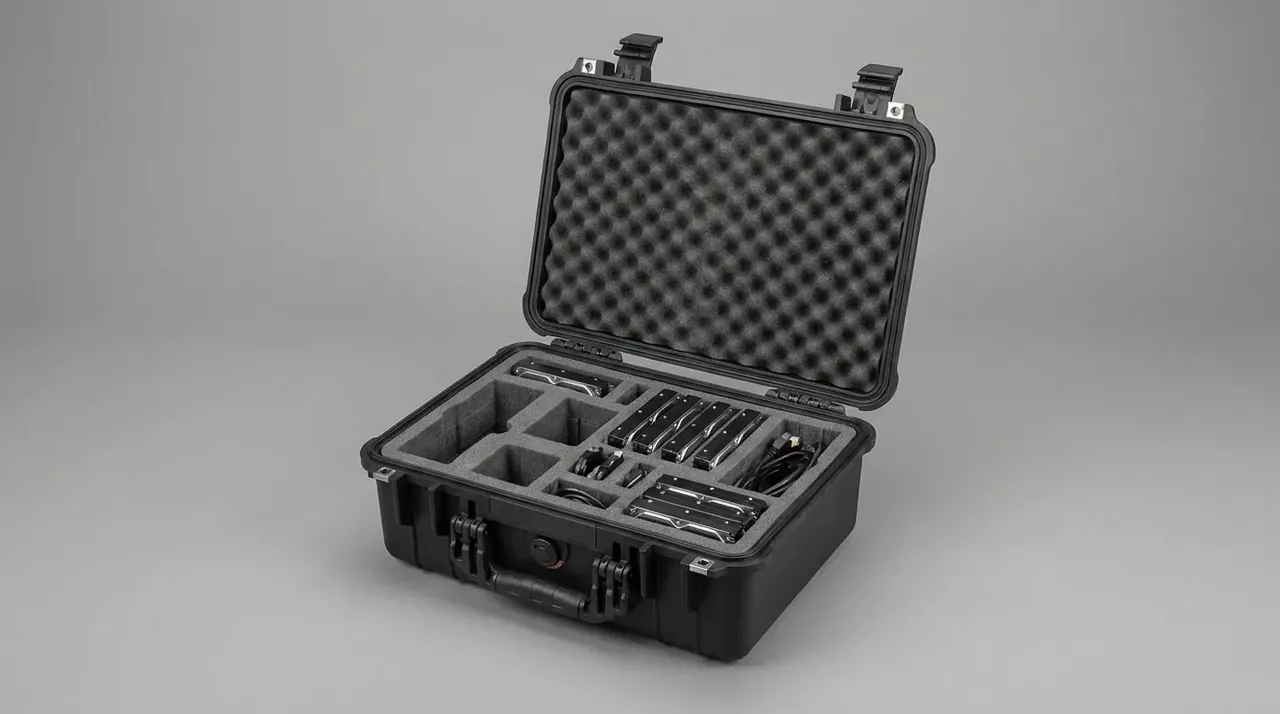
Transfer time is 48 hours inside an 800 km radius. East to south is 1100 km with a cross-dock and lands at 60 hours, so that lane promises nothing and instead runs fixed Tuesday and Friday departures that sites schedule against.
Inventory turns are the health check. Separate stocking turned stock 4.2 times a year; the two-tier structure reached 6.5. The gain is fewer shortages, not less stock: 3 stock-outs per site per quarter before, 0.8 after.
Ownership must be written down. The central warehouse holds goods on the group account, a site books cost the day it draws, and month-end reconciliation follows, so no site inflates demand to guard its own buffer.
5. Lead time risk and substitution validation
Going from 12 models to 5 takes suppliers from 7 to 2, and concentration arrives with it. One plant down 5 days hits all four sites at once, which could not happen before. Case central procurement needs a risk list ready, not a scramble after the line stops.
Fix substitution tests in advance. Cavity tolerance ±0.5 mm, wall 3.0 mm ±0.1 mm, latch opening force 45 N to 60 N, IP67 immersion for 30 minutes and a 1.2 m drop on six faces. All five must pass; a partial pass is a temporary substitution valid 90 days.
Validation runs 3 batches of 300 units, and mean dimensional drift across three consecutive batches must stay within 0.3 mm before regular supply starts. Three batches measure stability rather than luck: one proves the process can be set, three prove it holds.
Lead time lengthens too. A site ordering from a local plant got 45 days; a 3000-unit batch schedules at 60. Plan the gap with a 10% buffer, 6 days on top of 60, so schedule at 66.
The real exposure is a simultaneous stop: one power restriction can reach both plants, so the framework carries a clause requiring 1.6 times capacity within 15 days if either side stops for 5 consecutive days.
Conclusion
Case central procurement is won on the model list, not at the negotiating table. Twelve models became 5, 13,500 units a year became 4 batches of 3000, and the price fell 8.5%; stock points went from 12 to 6, turns from 4.2 to 6.5, quarterly stock-outs from 3 to 0.8. The costs are a 60-day lead time instead of 45 and 2 suppliers instead of 7, both offset by the 10% scheduling buffer and the five-criteria substitution test. Three steps, in this order: freeze the catalogue, sign the quota framework, pool by quarter. Swap the order and the group drifts back to four sites buying alone. A model with no row in the quota table does not belong on a pick list. It is the cheapest control available, and the easiest to audit at quarter end.
| Item | Before | After |
|---|---|---|
| Models in use | 12 | 5 |
| Suppliers | 7 | 2 |
| Batch size | 300 to 800 | 3000 |
| Price index | 100% | 91.5% |
| Stock points | 12 | 6 |
| Inventory turns | 4.2 a year | 6.5 a year |
| Quarterly stock-outs | 3 | 0.8 |
| Lead time | 45 days | 60 days |
This article discusses container-side specifications and design implications only, and does not cover any handling, loading or use of the contents.
Related Reading
- How consolidated tool kit procurement merges demand
- Comparing and sampling plastic case suppliers
- Procurement rules for case warehousing and transfer
- Checking capacity at domestic case suppliers
Related Products
- 8 Series — Gun Cases; Military Equipment Cases; Camera Equipment Cases; Drone Cases; Watch Cases; Knife Cases; First Aid Cases; Electronics Equipment Cases
- WL8-2812 PP Gun Case — model WL8-2812
- All protective cases and toolboxes: 7 series, 158 models