

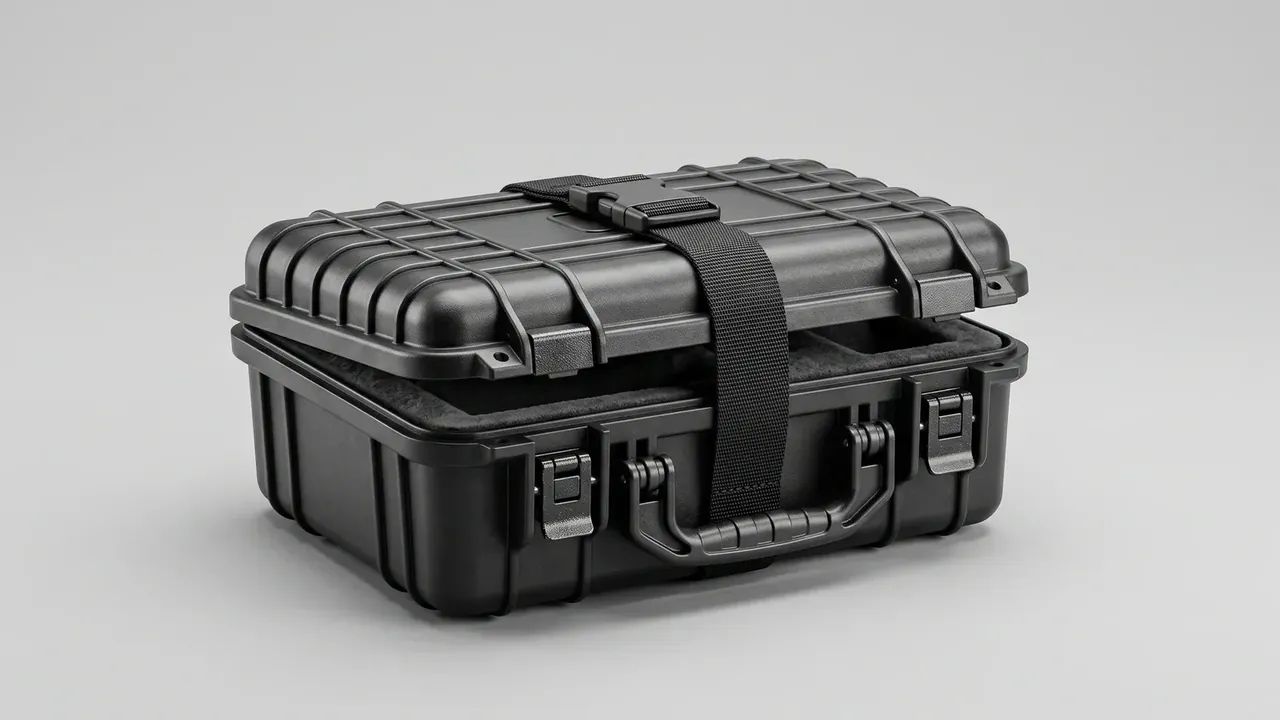
Quick answer: Settle the size last on a deployable hard case. Count openings per shift, metres moved per trip and the usual number of carriers first, since those three figures narrow the envelope faster than any catalogue. Usage then caps the dimensions, dimensions set weight and wheels, and handles and wheels decide how much stacking face survives. Reverse the order and the case that arrives holds everything and still cannot be lifted at all.
Table of contents
- Deployable hard case: size follows the way it is used
- Mobility check: wheels, handles and one-person weight
- Stacking and transport restraint
- Fast access: latches and liner layout
- What to ask the spec sheet
- FAQ
1. Deployable hard case: size follows the way it is used
Dimensions come last. Record openings per shift, metres per trip and usual carriers, and the envelope drops to a short list. A bench role then caps height by working height and width by shelf depth.
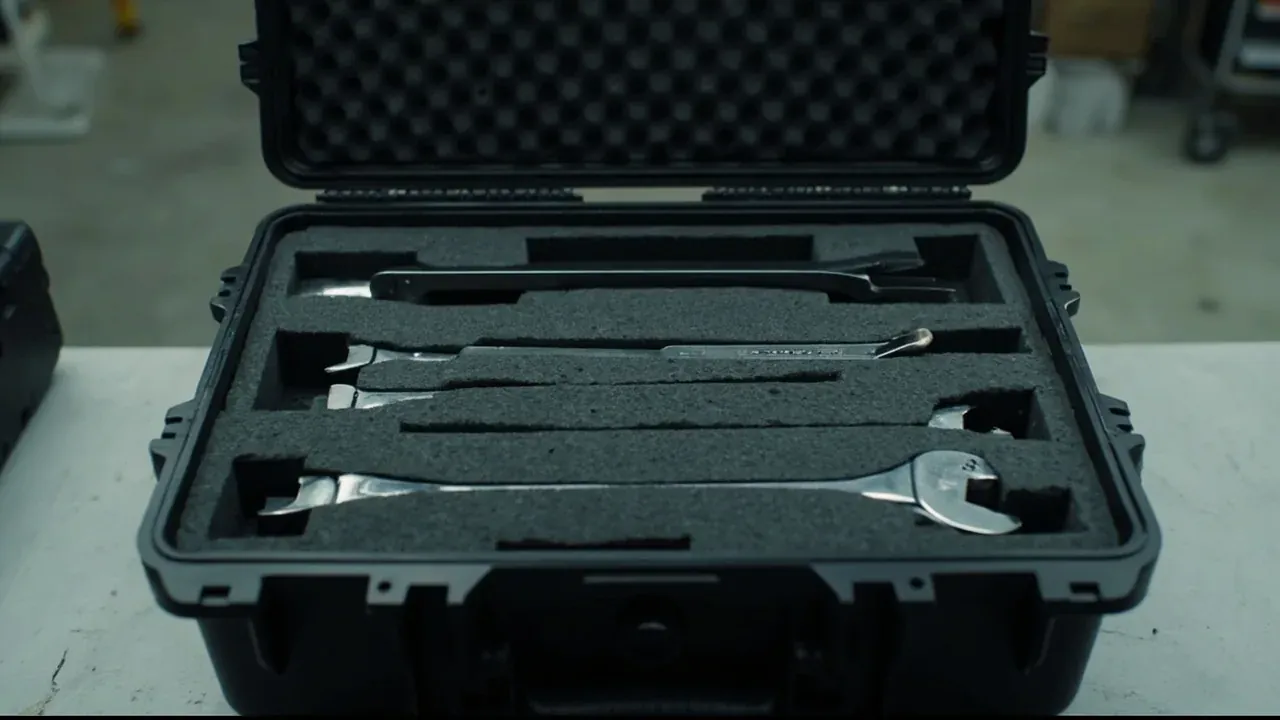
External size is not usable space. Lid foam, base foam and divider grooves all take depth first, and a routed channel serves one width only. Work from internal clearance and subtract the liner.
2. Mobility check: wheels, handles and one-person weight
Judge a deployable hard case in three states: rolling, lifting over a threshold, raising into a vehicle. Each state wants different hardware, so the build is ideal in only one. The rest is crew technique.
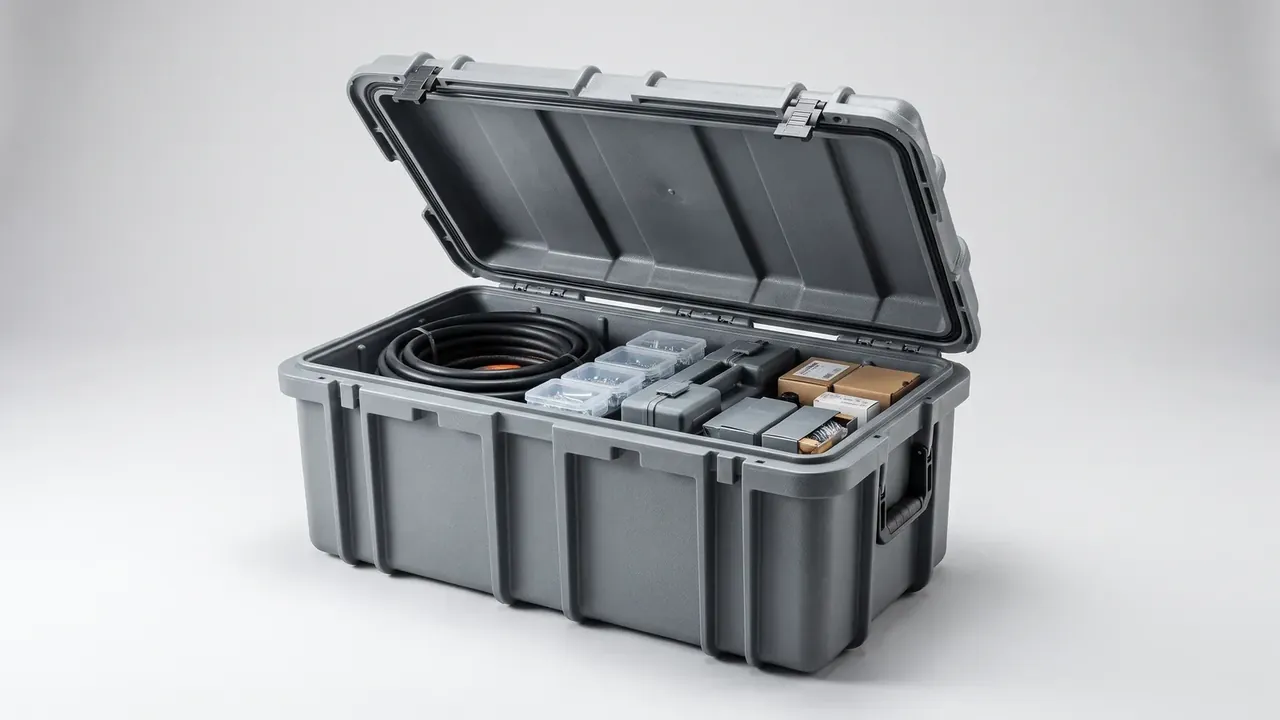
Without a liner the load shifts its centre of gravity each time, as the loose cable above shows. Moulded handles carry best and press hardest, while folding handles keep stacking height and gather grit. One person is comfortable to about 20 kg loaded; beyond that, wheels or extra hands cost less.
3. Stacking and transport restraint
Three inputs set the layer count: how lid and base locate, the static rating, and how long the pile stands. Duration is the one buyers forget. If one input is vague, take fewer tiers than the data sheet prints.
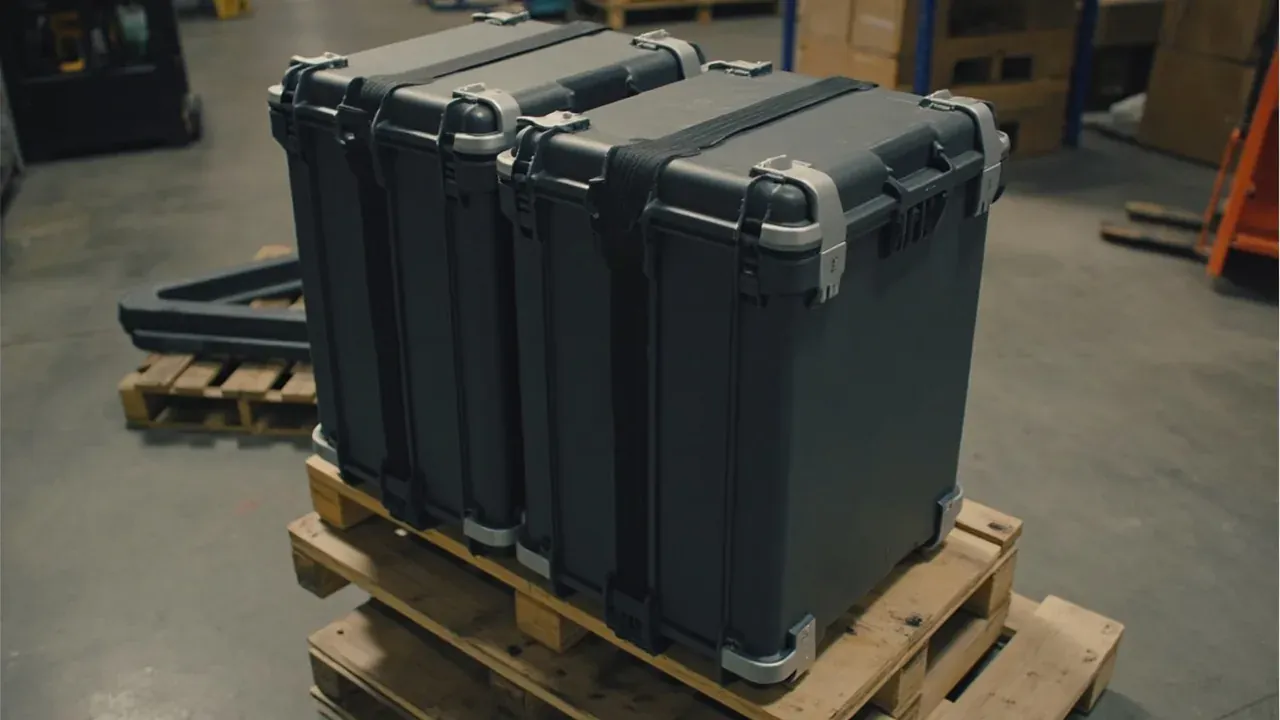
A lid recess meeting a base boss centres the upper case, so a third tier stays aligned. Ribs parallel to a rack beam squeeze the load between them, and a lid left that way sags. Handles and wheels standing proud break the stacking face, while restraint is separate: webbing over the lid holds what height never will.
4. Fast access: latches and liner layout
Access time is release plus lift plus find. Only the third belongs to the liner, yet the first two decide whether a shift feels slow. A second saved on release beats any pocket.
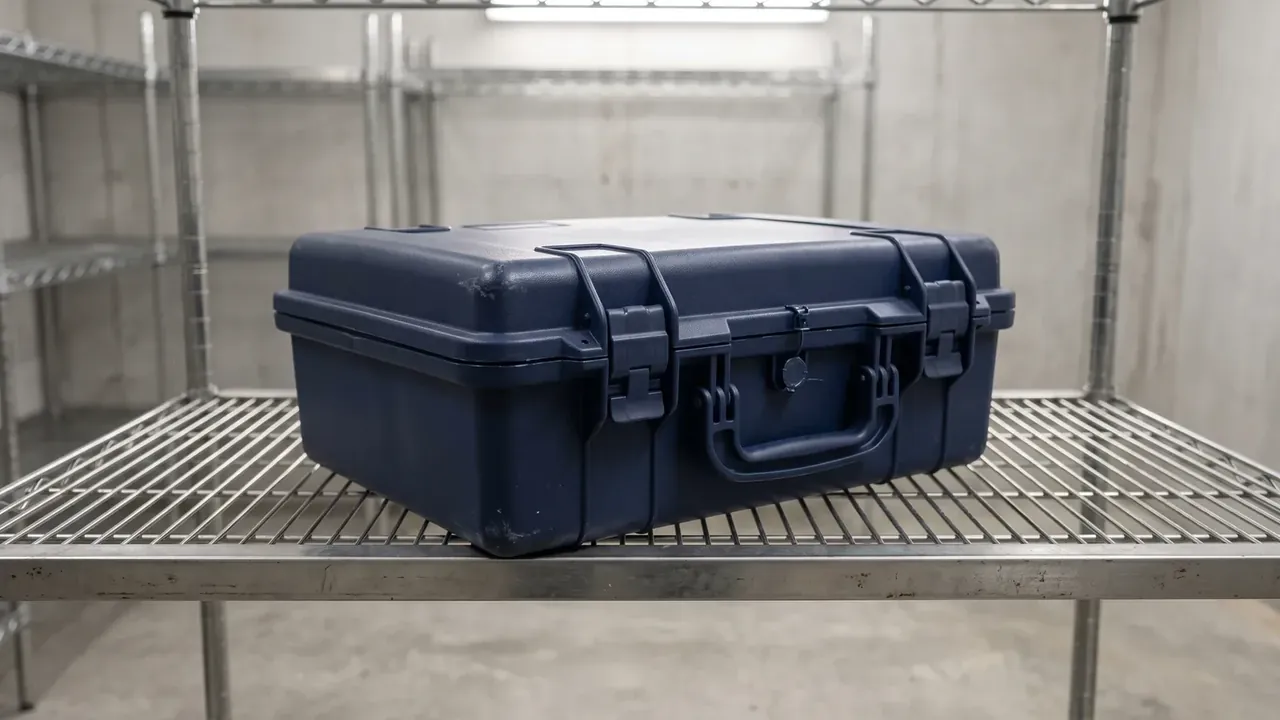
Latch count is action count: two draw latches are two moves, four are four, and a padlock eye adds one. Past twenty openings a shift, the fourth latch becomes lost time. Routed foam returns an item in one movement but serves one shape, dividers recut in minutes, and a bare interior trades search time for volume.
5. What to ask the spec sheet
Wrong numbers are rare on a deployable hard case; unstated bases are common, and external, internal and usable sizes can differ by a full step.
| Item | Basis to request | Wording to distrust |
|---|---|---|
| Dimensions | Internal clear L × W × D | External size only |
| Weight | Empty and loaded rating apart | One load figure |
| Stacking | Static rating plus duration | Stacks three high |
| Lid | Travel angle and hold-open method | Wide opening |
| Latches | Count, material, adjustable pull | Reinforced latches |
| Wheels | Detachable, bores sealed | Wheeled |
| Sealing | Structural grade and test basis | Waterproof |
Each row has a consequence: an external-only figure arrives as a case that will not take the load, and a layer count without duration sags in a wet season.
Confirm before ordering:
- Internal dimensions net of the liner
- Loaded weight matched to the usual crew
- Layer count with one tier spare
- Lid opens fully inside actual clearance
- Latch count suited to daily openings
Conclusion
Fix the envelope of a deployable hard case from openings, distance and crew size, then trade handle against wheels at the loaded weight, and set latches and liner from the access rhythm. The order cannot be reversed, because each choice constrains the next. A spec sheet matters only after that, and its basis outranks its values.
This article covers container-side specifications and design implications only.
Related Reading
- What a deployable hard case is and how it opens on site
- Balancing case weight against strength
- Handle ergonomics and load capacity
Related Products
- 8 Series — Gun Cases; Military Equipment Cases; Camera Equipment Cases; Drone Cases; Watch Cases; Knife Cases; First Aid Cases; Electronics Equipment Cases
- WL8-2812 PP Gun Case — model WL8-2812
- All protective cases and toolboxes: 7 series, 158 models