

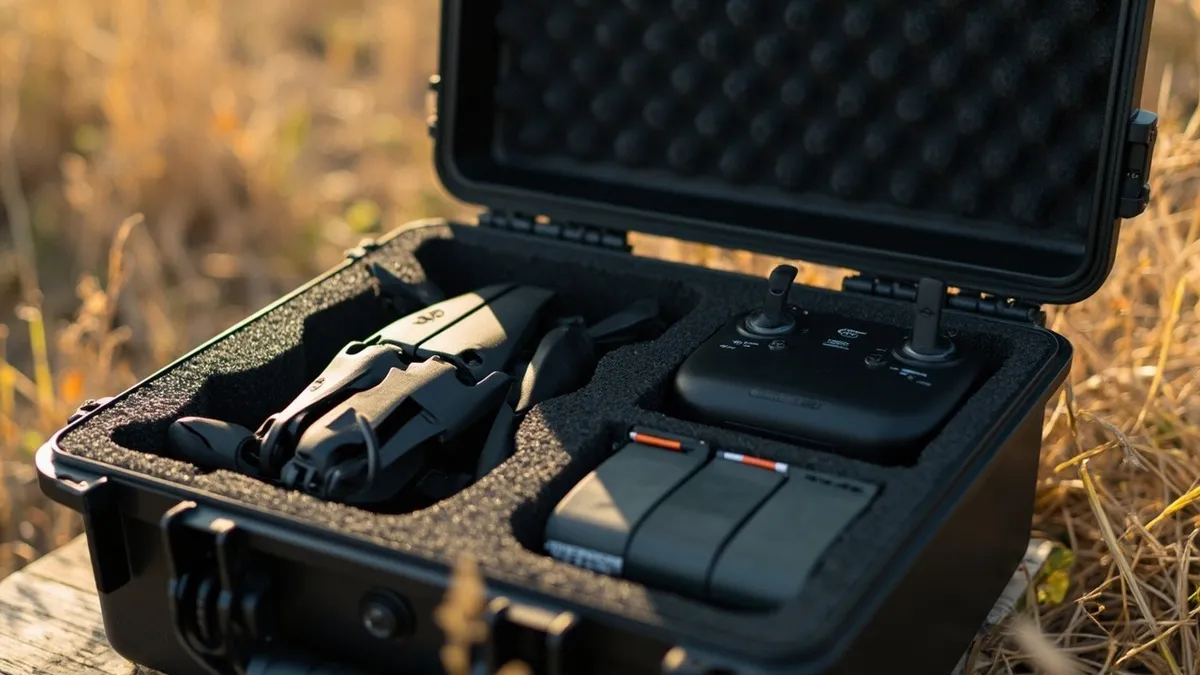
A drone is most vulnerable when it is not flying: in the trunk, on a boat deck, at a dusty survey site. The right drone case combines an IP67-sealed rigid shell, foam cut around the airframe with clearance for the gimbal and propellers, a layout that respects lithium battery transport rules, and wheels once the kit outgrows one pair of hands.
Why Drones Need Purpose-Built Protection
Three drone systems fail silently in transport. The gimbal is a precision mechanism that misaligns under point loads; motors and bearings ingest dust that shortens their life; and flight electronics corrode when condensation forms inside a damp bag. A backpack solves none of these. A sealed hard case solves all three at the transport stage, which is where most damage actually happens.
The Four Features That Matter
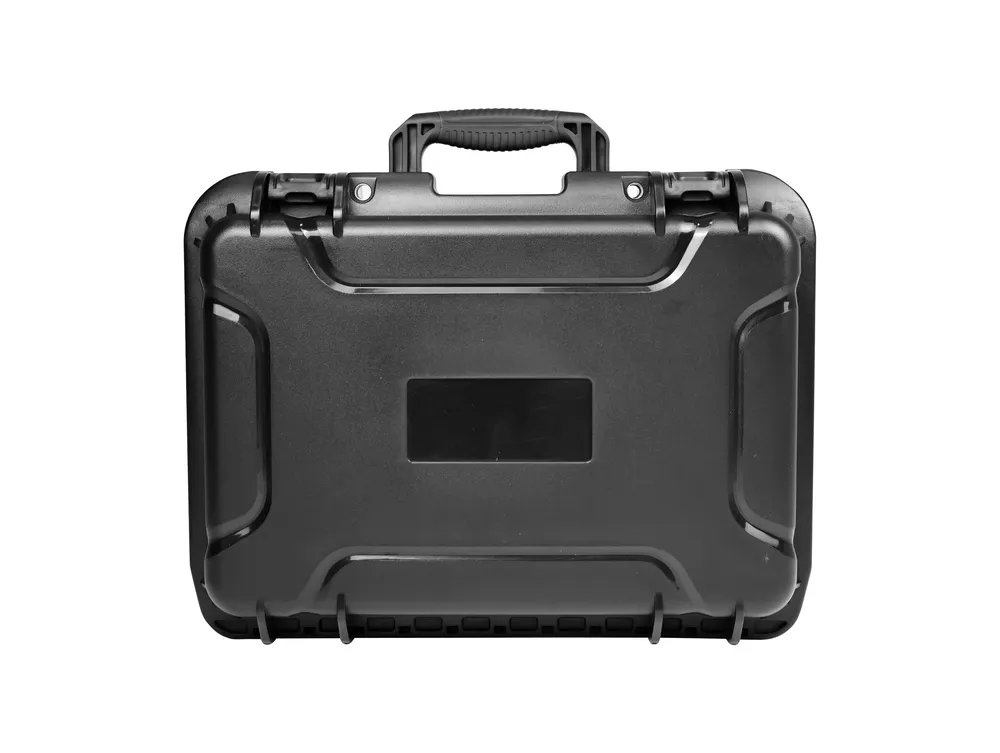
- IP67 sealing — a continuous gasket keeps dust and water out; a pressure equalization valve makes the case easy to open after altitude changes
- Gimbal and prop clearance — the foam cradles the airframe, not the delicate appendages
- Battery pockets — dedicated foam slots that keep LiPo packs separated, terminals protected, and counted at a glance
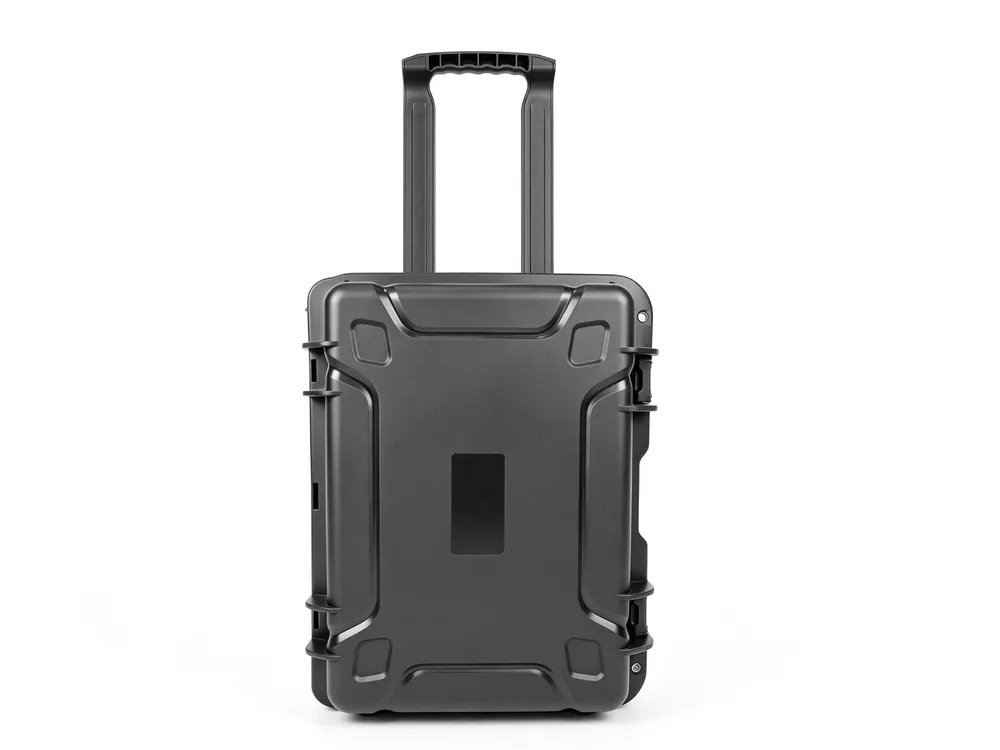
- Carry system matched to weight — handles for compact kits, wheels and a telescoping handle for enterprise kits
Foam Layout: Pick-and-Pluck vs Custom-Cut
| Criterion | Pick-and-pluck foam | Custom-cut foam (CNC / die-cut) |
|---|---|---|
| Best for | Single consumer drone, changing layouts | Enterprise kits, fixed layouts, resale packaging |
| Fit quality | Good if done carefully | Exact cavity per item, cleaner edges |
| Durability | Torn edges degrade with use | Long service life, replaceable layers |
| Cost | Included with many cases | Added one-time tooling or cutting cost |
| Inventory check | Harder to spot a missing item | Empty pocket = missing item, instantly visible |
Plan Around the Batteries
Air travel adds a constraint that shapes the whole case: lithium batteries generally must travel in the cabin, with packs up to 100 Wh widely accepted in carry-on baggage when terminals are protected. That usually means two containers in practice — a small battery case or pouch that stays with you, and the main drone case that can be checked. Designing the foam so battery pockets are removable makes this split painless.
Matching the Case to the Mission
- Mapping and surveying: mid-size hard case, drone plus controller plus 4–6 batteries, dust sealing prioritized
- Agriculture: chemical-resistant PP shell, easy-clean interior, room for spare props and tools
- Power-line and infrastructure inspection: wheeled case, drone plus tablet, charger hub, and safety gear in one load
- Emergency response: bright color options, fast-open latches, layout readable at night with a headlamp
JUNZHIJIA molds PP equipment cases used for camera, drone, and electronics kits — start with the 8 Series for compact UAV kits or the wheeled series for full field sets, and see our custom foam guide for layout options.
Related Products
- 8 Series — Gun Cases; Military Equipment Cases; Camera Equipment Cases; Drone Cases; Watch Cases; Knife Cases; First Aid Cases; Electronics Equipment Cases
- WL8-2812 PP Gun Case — model WL8-2812
- All protective cases and toolboxes: 7 series, 158 models